

Note: This article contains affiliate links. If you click on these links and make a purchase, I may earn a small commission at no extra cost to you. This helps support my research and content. Read my full affiliate disclosure here.
Potted banana trees need a potting mix that drains quickly yet holds enough moisture and nutrients between feedings. The right soil keeps roots oxygenated, prevents crown rot, and supports steady leaf and stem growth in containers. This guide covers six shortlisted soils suited for banana trees grown in pots, with practical notes on drainage, organic matter, and fertilization frequency. Read on to see which soil attributes matter most for container banana palms and how we evaluated mixes for real-world patio and balcony growing.
Top Picks at a Glance
| Best Overall The best all-around choice for most situations | Gardenera Banana Tree Potting Mix (1 Quart) |  |
| Best Quality Built to a higher standard if you want something more solid | Soil Sunrise Banana Tree Potting Soil Mix (12 Quarts) |  |
| Best Value The sweet spot between price and what you get | Rosy Soil Organic Houseplant Potting Mix, Peat-Free, 4 Quart |  |
| Best Budget The cheapest option that still gets the job done reliably | Doter Banana Tree Potting Mix, 2 qt |  |
| Highest Rated A top-rated pick with lots of positive feedback | E.B. Stone Organics Citrus & Palm Mix Potting Soil, 1.5 cu ft |  |
| Most Popular A crowd favorite that many people choose with confidence | Miracle-Gro Tropical Potting Mix (6 qt., 2-Pack) |  |
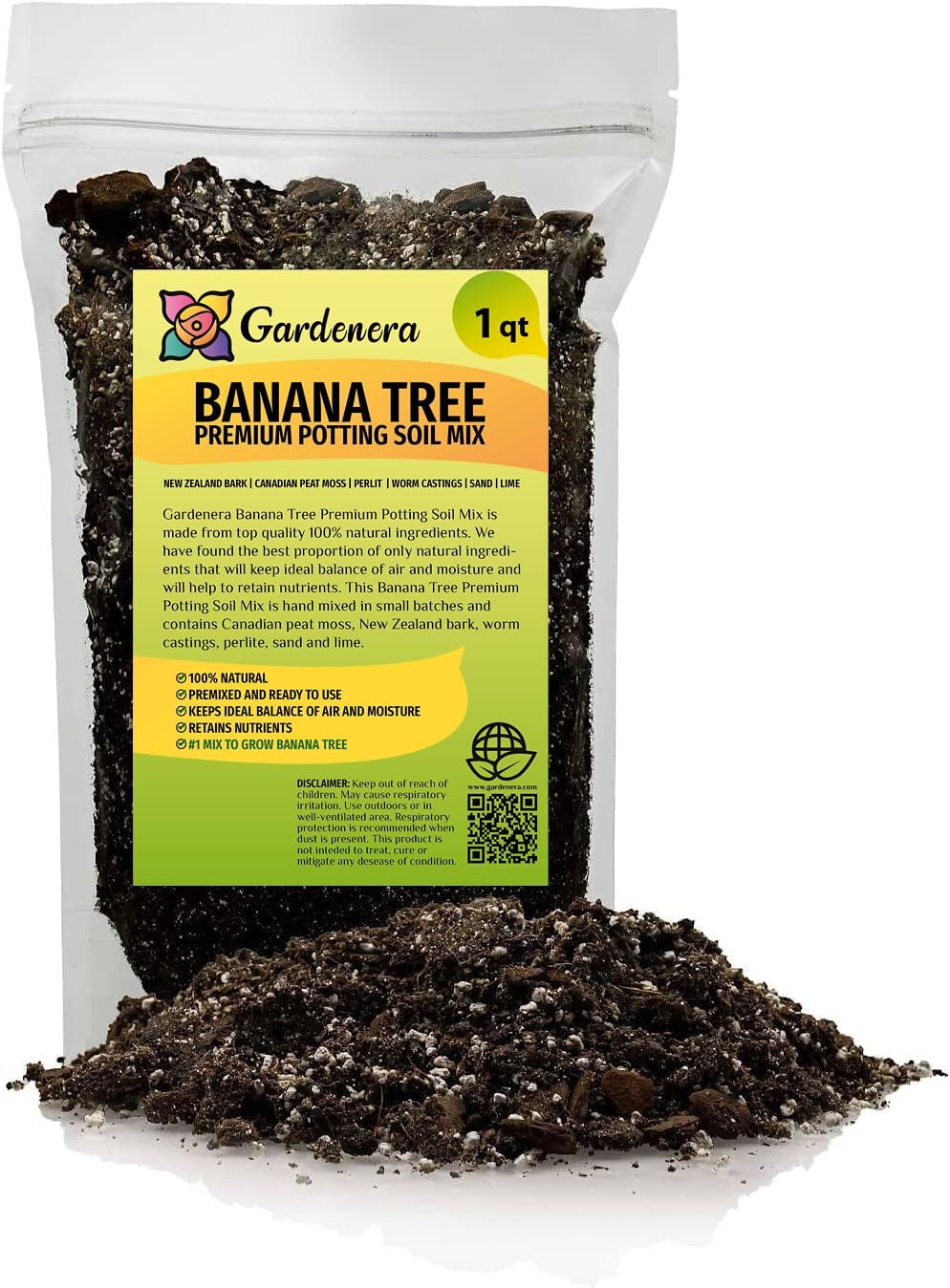
Gardenera Banana Tree Potting Mix (1 Quart)
| Brand Name | Gardenera |
|---|---|
| Unit Count | 64 Ounce |
| Item Type Name | Banana Tree Potting Mix |
| Volume | 1 quarts |
Gardenera Banana Tree Potting Mix is a small-format, specialty potting soil designed for planting or repotting banana trees in containers. The blend pairs Canadian peat moss and New Zealand bark for moisture retention and organic structure, with perlite and sand added to keep the root zone loose and well drained. Worm castings provide a baseline of organic nutrients while lime helps moderate pH for better nutrient uptake. In practice this mix is useful for potted banana varieties that need both consistent moisture and strong drainage to avoid root rot. The lightweight, airy texture makes it easy to fill pots and work around roots, and the nutrient content supports leafy growth and fruiting without immediate fertilizer. Limitations are the small unit size and quart volume which means multiple bags are needed for larger containers and you may still need periodic fertilization for heavy-feeding mature plants.
Best for: Gardeners who grow banana plants in pots and want a ready-made mix that balances moisture retention with drainage for steady growth and simpler repotting.
Less Ideal for: People repotting large, mature banana trees or filling many containers at once who need bulk quantities or a complete fertilization program.
- Formulated ingredients (peat moss, bark, worm castings) that support root health and organic fertility
- Perlite and sand improve aeration and drainage to reduce risk of waterlogging
- Includes lime to help balance pH for better nutrient availability
- Sold in a small 1 quart unit so larger pots require many bags
- No guaranteed nutrient analysis or slow-release fertilizer included
Verdict: Choose this mix when you want a purpose-built, airy potting soil that balances moisture retention and drainage for healthy potted banana trees.
Soil Sunrise Banana Tree Potting Soil Mix (12 Quarts)

| Volume | 12 quarts |
|---|---|
| Ingredients | Peat moss, perlite, worm castings, sand, pine bark, lime |
| Unit Count | 1 Count |
This Soil Sunrise mix is a purpose-built potting medium for banana trees grown in containers. It combines peat moss, perlite, sand, pine bark, worm castings, and lime to create a loose, fast-draining yet nutrient-holding blend that helps prevent root rot while feeding rapid-growing tropical foliage. Use it when repotting or filling large indoor or patio containers; the aerated structure improves oxygen at the root zone and the worm castings provide organic nutrients to support steady growth. The added lime moderates pH for better nutrient uptake and the resealable bag makes storage easy between uses. Because the bag is 12 quarts, it is convenient for one repot or top-up for medium containers but modest in volume for very large specimens. Users should still monitor watering closely since the fast-draining formula dries quicker than heavy potting mixes and will need more frequent watering in full sun or warm conditions. For growers focused on strong, healthy banana plants in pots, this mix delivers a ready-made, plant-focused option.
Best for: Buyers who want a ready-made, performance-focused potting mix to encourage quick, healthy growth of banana trees in containers and prefer a blend tuned to tropical plants rather than mixing ingredients themselves.
Less Ideal for: Gardeners who need bulk soil for planting multiple large trees or those who prefer a water-retentive, low-maintenance mix that requires less frequent watering.
- Formulated blend of peat, perlite, sand, pine bark, and worm castings for good drainage and nutrient content
- Fast-draining texture reduces risk of root rot in container-grown banana plants
- Includes lime to help balance pH for improved nutrient availability
- Resealable packaging keeps remaining mix fresh between uses
- 12-quart bag is relatively small for large banana specimens or multiple repots
- Fast-draining mix requires more frequent watering than heavier soils
Verdict: A purpose-blended, fast-draining potting mix that makes it easy to give potted banana trees the drainage, nutrients, and pH balance they need to grow vigorously.
Rosy Soil Organic Houseplant Potting Mix, Peat-Free, 4 Quart

| Unit Count | 128 Ounce |
|---|---|
| Style Name | Houseplant |
| Ingredients | Biochar, Bark Fines, Compost, Worm Castings, Mycorrhizae |
| Volume | 4 quarts |
Rosy Soil Houseplant Potting Mix is an organic, peat-free potting medium designed to boost root health and keep containers well drained. It combines biochar, worm castings, mycorrhizal fungi and compost in a chunky texture that resists compaction, so pots stay aerated and water moves through instead of pooling. You would use this as a straight potting mix for tropical houseplants or blend it into existing soil when repotting; the manufacturer says 4 quarts fills two to three medium pots. The inclusion of mycorrhizae and beneficial microbes supports stronger root establishment and better nutrient uptake, which is useful if you are prioritizing vigorous growth. Practical benefits include reduced need for frequent repotting because biochar holds structure, and improved foliage health from the added micronutrients in worm castings. Limitations are the small bag size for larger shrubs or multiple jasmines and the need to monitor water for plants that prefer very dry conditions, since organic components still retain some moisture. Always wear gloves when handling and follow safety guidance to avoid inhaling dust.
Best for: A grower focused on maximizing root performance and steady vegetative growth who wants a ready-to-use, organic peat-free mix for container-grown tropicals and flowering houseplants.
Less Ideal for: Not the best choice for someone planting large outdoor jasmine beds or managing many plants on a tight budget who needs bulk soil; also avoid if you need an ultra-sandy, cactus-specific mix.
- Peat-free organic formula with biochar and worm castings for lasting structure and micronutrients
- Contains mycorrhizal fungi and beneficial microbes to improve root colonization and nutrient uptake
- Chunky, well-draining texture reduces compaction and helps prevent root rot
- Resealable bag and stable biochar mean mix stays usable longer between repots
- Small 4 quart volume may be insufficient for multiple plants or large pots
- Not formulated specifically for very dry-loving plants so some adjustment to watering may be needed
Verdict: Choose this mix if you want an organic, peat-free potting soil that promotes stronger roots and reliable drainage for container-grown jasmine and other tropical houseplants.
Doter Banana Tree Potting Mix, 2 qt

| Brand Name | Doter |
|---|---|
| Item Type Name | Garden soil |
| Manufacturer | Doter |
| Volume | 2 quarts |
This 2-quart Doter potting mix is formulated specifically for banana plants and is useful for repotting young specimens, filling planters, or topping up containers. The blend is described as nutrient-rich while offering both good drainage and moisture retention, so it helps prevent waterlogged roots without drying out quickly. In practice the small bag is convenient for spot work and trialing a new medium before committing to larger quantities. Notable features include organic matter and balanced nutrients aimed at supporting leaf development and fruiting. The practical benefits are easy use in pots and improved root aeration compared with heavy garden soil. The main limitation is pack size: at 2 quarts this is only enough for small pots or minor topdressing, so you will need multiple bags for full-size containers or several plants. Also the listing does not provide a full ingredient breakdown or exact nutrient numbers, so growers wanting precise fertilizer or pH control may need to supplement or test separately.
Best for: Buyers who want an affordable, ready-to-use potting mix to refresh or repot a single banana plant in a small to medium container and who prefer a product tailored to bananas rather than a generic soil.
Less Ideal for: Those planting multiple full-size banana trees or filling large pots should choose bulk soil or a larger-volume specialized mix instead.
- Formulated specifically for banana plants to support large leaves and fruiting
- Balanced mix that claims both good drainage and moisture retention
- Nutrient-enriched to encourage healthy root development
- Compact 2 quart bag is handy for small pots, repotting seedlings, or topdressing
- Small 2 qt volume is insufficient for large containers or multiple plants
- No detailed ingredient percentages or fertilizer analysis provided
Verdict: A budget-friendly, banana-specific potting mix that is convenient for repotting or topping up single potted banana plants.
E.B. Stone Organics Citrus & Palm Mix Potting Soil, 1.5 cu ft

| Brand Name | E.B. Stone Organics |
|---|---|
| Unit Count | 1536 Ounce |
| Volume | 1.5 cubic feet |
| Style Name | Potting Soil |
E.B. Stone Organics Citrus & Palm Mix is a ready-to-use organic soil blend designed for container and in-ground planting of citrus, palms, avocados and tropical foliage. The mix pairs aged fir bark and pumice to keep the root zone well aerated and fast-draining so plants that dislike soggy feet avoid root rot, while added mycorrhizae improve nutrient and water uptake. It is intended to be used straight from the bag for potting or worked into beds when planting, which simplifies planting and repotting tasks. For gardeners seeking reliability, this blend delivers consistent structure and moisture retention without heavy amendments, and the organic base supports longer-term soil biology. Limitations are the single bag volume of 1.5 cubic feet, which means larger projects will require multiple bags and mixing on site, and it does not list N-P-K numbers or slow-release fertilizer content so supplemental feeding may be needed for heavy-feeding specimens.
Best for: Gardeners who prioritize reliable, low-maintenance potting media for citrus and tropical plants and want a ready-made organic blend that supports healthy roots.
Less Ideal for: People who need large volumes for landscaping projects or who prefer a potting mix with specified fertilizer content and tailored nutrient ratios.
- Formulated specifically for citrus, palms and tropicals to match their root needs.
- Aged fir bark and pumice provide good drainage and aeration to reduce risk of root rot.
- Contains beneficial mycorrhizae to enhance root nutrient and water uptake.
- Ready-to-use bag simplifies repotting or planting without on-site blending.
- Single bag is only 1.5 cubic feet so multiple bags are required for larger trees or beds.
- No detailed fertilizer analysis provided so additional feeding may be necessary for heavy feeders.
Verdict: Choose this mix when you want a consistent, ready-to-use organic soil that promotes healthy, well-aerated roots for citrus and tropical plants.
Miracle-Gro Tropical Potting Mix (6 qt., 2-Pack)

| Item Form | Granules |
|---|---|
| Specific Uses For Product | Plant Growth |
| Coverage | tropical plants |
| Liquid Volume | 6 quarts |
Miracle-Gro Tropical Potting Mix is a ready-to-use container soil designed for tropical houseplants like monstera, pothos, and fiddle‑leaf fig. The mix includes lava rock to improve aeration and drainage, and built-in nutrients that the manufacturer says feed plants for up to six months, so it is convenient for repotting or topping up containers. In practical use it produces a light, well-draining medium that helps prevent waterlogging and reduces the likelihood of fungus gnat attraction compared with denser soils. It works both indoors and outdoors and is easy to handle straight from the bag without blending other amendments. Important limitations are that bag size is small (6 qt per unit listed) so larger specimens will need multiple bags, and the precharged nutrients mean you should delay additional fertilizing for about a month and monitor feeding afterward. Also, if you prefer a custom mix with specific proportions of peat, coco coir, or chunky orchid bark, this premix may not match those exact ratios.
Best for: Buyers who want a convenient, low-effort potting mix that supports tropical houseplants and speeds up repotting without custom blending.
Less Ideal for: Experienced growers who prefer to custom-blend their own soil recipes or who need large volumes for mature, heavy-rooted specimens.
- Formulated specifically for tropical/container plants so composition suits species like monstera
- Lava rock included for improved drainage and aeration
- Feeds plants for up to six months reducing immediate need for fertilizer
- Less likely to attract fungus gnats than heavier soils
- Ready-to-use straight from the bag for easy repotting
- Small unit volume means multiple bags required for large pots or repotting mature plants
- Pre-mixed nutrient level requires waiting before adding extra fertilizer
Verdict: A convenient, well-draining premix that makes repotting and maintaining tropical houseplants like monstera faster and easier.
Choosing the Right Soil for Banana Tree in Pot: Key Factors to Consider
Drainage and Aeration
Banana trees are tropical plants with vigorous root systems that demand freely draining soil. In a pot, poor drainage quickly leads to root oxygen deprivation, yellowing leaves, and crown rot. Look for a mix with coarse particles such as perlite, pumice, washed coarse sand, or chopped bark to keep pore spaces open.
Adequate aeration matters for both young and established potted bananas because it supports beneficial microbial activity and root hair development. When assessing a mix, check that it does not compact when moist and that it feels light rather than clay-heavy. If a chosen soil seems dense, boost aeration with added coarse material before planting.
Moisture Retention Balance
Container soils must balance quick drainage with enough moisture-holding capacity so the plant is not underwatered between waterings. Ingredients like coconut coir, well-aged compost, or peat help retain moisture without becoming waterlogged when mixed correctly.
The right balance reduces watering frequency and dampens swings between soggy and bone dry conditions, which stress banana palms. For larger pots, mixes can lean slightly toward retention because the greater volume dries more slowly. For small pots or hot, windy sites, choose mixes that favor faster drying to protect roots from rot.
Nutrient Holding and Release
Banana trees are heavy feeders and require a steady supply of nitrogen, potassium, and micronutrients. A container soil should hold nutrients so they are available between feedings rather than flushing out immediately. Materials like compost, well-rotted leaf mold, and slow-release organic granules improve nutrient holding capacity.
Consider how quickly the soil releases nutrients and plan a fertilization schedule accordingly. Fast-release potting soils require more frequent feeding, while mixes with organic matter or incorporated slow-release amendments let you feed less often while maintaining vigorous growth.
Particle Size and Organic Matter Stability
Over time, organic components in potting mixes break down and reduce porosity. Choosing a soil with stable structural components-such as coarse bark, perlite, or pumice-helps preserve air space as finer organics decompose. Stable structure reduces the need to repot as frequently and keeps roots healthy.
When selecting a mix, look for a clear list of ingredients and avoid those relying only on fine peat or uncomposted green waste. Regular top-dressing and occasional partial substrate replacement can extend the life of a potting mix.
pH and Salt Management
Banana plants prefer slightly acidic to neutral conditions. Container soils should be close to that pH range and resist rapid shifts from acidic amendments or alkaline tap water. A balanced pH supports nutrient availability and prevents deficiencies.
Because salts from fertilizer and irrigation can build up in pots, pick mixes that drain well and consider using components that buffer salts. Periodic leaching and occasional repotting help manage accumulated salts and protect root health.
Weight and Container Suitability
Soil weight matters for safety and mobility-especially for larger banana varieties in balcony or rooftop containers. Heavy garden loam or wet peat can make a filled pot very heavy and hard to move. Lightweight mixes that still provide structure let you use larger containers without creating an unsafe load.
Also consider the pot material and placement. Clay pots increase overall weight and retain moisture longer than plastic. Match the mix weight and water retention to the container type to avoid tipping or waterlogging issues.
Mix Components That Work Best
Successful potted banana soils blend coarse inorganic particles with moisture-retaining organics. Common components include chunky bark, perlite or pumice for aeration, coconut coir or aged compost for water retention, and a small share of composted organic matter for nutrients.
Aim for visible texture differences in the mix so you can see the balance between pores and water-holding pieces. Avoid uniform, dusty mixes that will pack down in a pot.
- Perlite or pumice for open pore space
- Coconut coir or aged compost for moisture buffering
- Coarse bark for long-term structure
- A small proportion of compost for nutrients
Adjusting Mixes for Pot Size and Climate
Large containers retain moisture longer, so mixes for big tubs can include more coarse particles and slightly higher organic content to keep water available through warm spells. Small pots and hot exposed sites need quicker-draining blends to prevent root heat and rot.
In dry, arid climates add more water-retaining ingredients like coir and compost. In cool, wet climates, favor drainage with more pumice or bark and reduce retained-organic content to avoid soggy conditions.
- Large pot: increase structure, slightly more retention
- Small pot: increase drainage, reduce heavy organics
- Hot/dry: boost moisture-holding elements
- Cool/wet: emphasize aeration and drainage
How to Amend an Existing Potting Mix
If a purchased potting mix seems heavy or drains poorly, lighten it with perlite, pumice, or coarse sand at a rate of 10 to 30 percent by volume. If it seems too fast-draining and the plant dries quickly, add coir or compost in small increments and monitor moisture.
Also consider incorporating a slow-release organic fertilizer or mixing in finished compost to increase nutrient retention. Always test changes on a single pot before treating an entire collection to avoid unintended moisture shifts.
- Lighten dense mixes with 10-30% perlite or pumice
- Improve retention with small additions of coir or compost
- Add slow-release amendments for steady nutrition
Repotting and Refreshing Container Soil
Banana trees in pots benefit from periodic refreshes because organic components break down and compaction reduces aeration. For actively growing plants, check roots and top-dress annually with fresh compost or replace a portion of the soil every 18 to 24 months.
When repotting, inspect the rootball for circling roots and prune lightly if necessary. Replace compacted soil with a fresh, well-structured mix to restore drainage and nutrient-holding capacity.
- Top-dress annually with compost
- Partial soil replacement every 18-24 months
- Inspect and correct circling roots during repotting
Watering and Feeding Practices for Container Bananas
Soil choice interacts closely with watering and fertilization. Water thoroughly until runoff, then allow the top inch or so to dry depending on pot size and ambient conditions. Consistent moisture without saturation supports leaf production and flowering.
Because container soils lose nutrients faster, schedule regular feedings with balanced fertilizers and consider occasional applications of potassium-rich amendments during fruiting stages. Flush pots periodically to prevent salt buildup if you feed frequently.
- Water deeply, then let surface dry slightly
- Regular balanced feeding with extra potassium when fruiting
- Leach pots occasionally to manage salts
How We Chose the Best Soil for Banana Tree in Pot
We prioritized attributes that directly affect banana trees grown in containers. First, drainage and aeration were a primary filter because banana roots need oxygen and are vulnerable to waterlogging. Second, water retention and moisture distribution were assessed to reduce the need for constant watering while avoiding soggy pockets. Third, nutrient density and release profile were considered so the soil supports fast growth without excessive fertilizer. Fourth, organic matter content and particle stability were evaluated for long-term tilth and to prevent rapid compaction in pots. Finally, pH buffering and salt buildup resistance were included because container soils can drift acidic or accumulate salts from feedings. We excluded mixes designed solely for seed starting, cactus-only blends, and heavy garden loams not intended for containers. Blends that rely on a single component without amendments were also filtered out. The final picks reflect a balance across drainage, moisture retention, nutrient-holding capacity, and long-term structure-criteria that gardeners can verify by checking mix components and testing a small planting before scaling up.
FAQ
Can I use regular garden soil for a banana tree in a pot?
Garden soil is usually too dense for potted bananas and can compact, reducing oxygen to roots. If you must use garden soil, lighten it substantially with coarse amendments and ensure the container has excellent drainage.
How often should I repot a banana tree in a container?
Most potted banana plants benefit from partial refreshes every 12 to 24 months and a full repot when roots are rootbound or the soil has compacted. Watch for reduced growth or poor drainage as cues to repot.
What pH should container banana soil be?
Bananas do best in slightly acidic to neutral soil. Aim for a pH around 5.5 to 7.0. If your mix drifts outside this range, nutrient uptake can be affected and you may see deficiency symptoms.
How can I tell if my potting mix is holding too much water?
Signs include yellowing lower leaves, a musty smell from the soil, or slow growth. Test by lifting the pot when moist and comparing weight or inserting a moisture meter or finger into the root zone to check for persistent wetness.
Should I add fertilizer directly into the potting mix before planting?
Incorporating a modest amount of slow-release organic fertilizer or well-rotted compost into the mix can give young plants a nutrient head start. Avoid overloading the mix with fresh high-nitrogen manures that can burn roots.
Final Verdict
For banana trees in pots, prioritize a potting mix that balances drainage with moisture retention and holds nutrients between feedings. Structural components like perlite, pumice, or coarse bark keep air in the root zone while coir or compost provide buffering water and food. Tradeoffs are inevitable: mixes that drain fastest need more frequent watering, while richer blends require careful salt and pH management. Use the criteria above to match a soil blend to your pot size, climate, and maintenance habits so you can get vigorous foliage and the best chance of flowering and fruiting.
