

Note: This article contains affiliate links. If you click on these links and make a purchase, I may earn a small commission at no extra cost to you. This helps support my research and content. Read my full affiliate disclosure here.
Picking the right soil for eggplant changes how well plants set fruit, resist stress, and survive hot patio summers. You want a mix that drains reliably but still holds enough water and nutrients between feedings, and one that supports big roots without compacting in the pot or bed. This guide narrows the options to seven shortlisted soils that match common home-garden needs, from containers to in-ground beds. We evaluated mixes on texture, nutrient profile, and moisture behavior so you can choose the best fit for your growing situation. Read on for practical notes about each soil type and the decision points that matter in an eggplant patch.
Top Picks at a Glance
| Best Overall The best all-around choice for most situations | Espoma Organic Potting Mix, 16-Quart |  |
| Best Quality Built to a higher standard if you want something more solid | FoxFarm Ocean Forest Potting Soil, 12 qt |  |
| Best Value The sweet spot between price and what you get | Back to the Roots Organic Expanding Coconut Coir Potting Soil Brick |  |
| Best Budget The cheapest option that still gets the job done reliably | Miracle-Gro Organic Outdoor Potting Mix, 16 qt. |  |
| Highest Rated A top-rated pick with lots of positive feedback | FoxFarm Happy Frog Potting Soil, 2 cu ft (Container Garden) with 2 Plant Tags |  |
| Most Popular A crowd favorite that many people choose with confidence | Miracle-Gro Potting Mix, 16 qt. (2-Pack) |  |
| Best Seller A high-volume bestseller chosen again and again | Back to the Roots Premium Organic Potting Mix, 6 Quart |  |
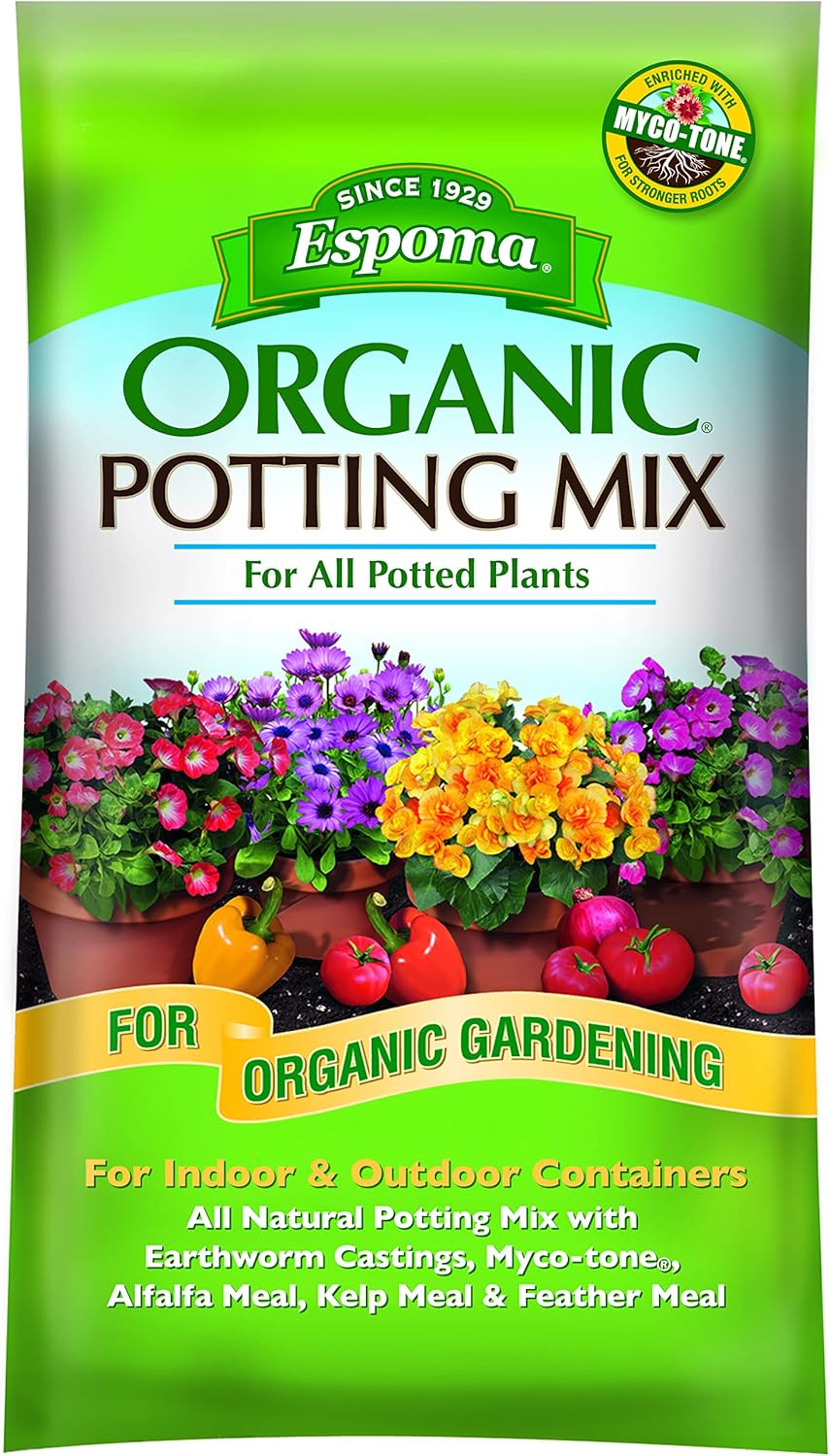
Espoma Organic Potting Mix, 16-Quart
| Brand | Espoma |
|---|---|
| Volume | 16 quarts |
| Style Name | Mix |
| Item Weight | 16 ounces |
Espoma Organic Potting Mix is a ready-to-use organic blend designed for container plants, including vegetables like eggplant. It combines sphagnum peat moss, humus and perlite with organic amendments such as earthworm castings, alfalfa meal, kelp meal and feather meal to improve structure and slow-release nutrition. The included Myco-tone mycorrhizae help roots establish faster and access nutrients, which is useful when transplanting seedlings or repotting into larger containers. In practice the mix holds moisture while remaining airy enough to prevent waterlogging, and it provides a low-maintenance starting medium so you can focus on watering and feeding schedules rather than soil fixes. Limitations are typical of peat-based mixes: it will compress over time and may need fresh top-up or replacement between growing seasons, and it does not include specific granular fertilizer ratios so heavier feeding may be required for heavy-feeding varieties. For container eggplants it works well as a baseline soil that you can augment with targeted fertilizers as plants mature.
Best for: Home gardeners growing eggplant in containers who want an organic, ready-made potting mix that supports establishment and reduces initial soil prep.
Less Ideal for: Growers who prefer completely peat-free media or who need an all-in-one fertilized mix with defined nutrient analysis should look elsewhere.
- Organic ingredients and no synthetic chemicals listed
- Contains mycorrhizal inoculant to support root establishment
- Blend of peat, humus and perlite balances moisture retention and drainage
- Includes natural amendments (worm castings, kelp, alfalfa) for slow-release nutrition
- Peat-based mix can compress and lose structure over a season
- Does not state specific N-P-K fertilizer levels so additional feeding may be needed
Verdict: A convenient organic potting mix with amendments and mycorrhizae that gives container eggplants a strong, low-effort start.
FoxFarm Ocean Forest Potting Soil, 12 qt

| Item Form | Granules |
|---|---|
| Specific Uses For Product | Dry Fertilizer |
| Coverage | 4.8 sq ft |
| Mixing Ratio | 1:1 |
FoxFarm Ocean Forest is a pre-mixed potting soil aimed at getting plants off to a vigorous start in containers and beds. It combines aged forest products, sandy loam, and sphagnum peat moss for a light, well-aerated medium you can use straight from the bag. The mix includes fish meal, crab meal, and earthworm castings so it supplies available nutrients for the first weeks of growth and reduces the need for immediate fertilizing. Practical benefits include good drainage with moisture retention, pH adjusted for nutrient uptake, and a texture that eases transplanting and root development. It is commonly used for potting up seedlings, filling containers for vegetables like eggplant, and top-dressing or blending with other soils. Limitations to note are that the bag covers a relatively small area per unit and it contains granular/dry fertilizer rather than a slow-release profile for an entire season, so heavier feeders will need supplemental feeding after the initial month. Handle with gloves and store dry to avoid clumping.
Best for: Gardeners who prioritize strong, early performance from container-grown vegetables like eggplant and want a ready-made, nutrient-rich medium to jump-start root and shoot growth.
Less Ideal for: Large-scale growers or anyone needing bulk soil coverage for many plants should choose larger-volume or bulk blends to reduce cost and handling.
- Ready-to-use mix with balanced aeration and drainage
- Contains organic amendments (fish meal, crab meal, earthworm castings) to supply early nutrients
- pH adjusted to improve nutrient uptake for young plants
- Light, friable texture that helps root development and easy transplanting
- 12 quart bag covers a small area so multiple bags are needed for larger plantings
- Nutrient boost is concentrated in the early weeks so regular feeding is required for heavy-feeding crops over the season
Verdict: Use Ocean Forest when you want a ready-to-use, nutrient-rich potting mix that gives container eggplants and seedlings a fast, vigorous start.
Back to the Roots Organic Expanding Coconut Coir Potting Soil Brick

| Item Highlight | 10 lb compressed coco coir brick; peat-free; OMRI Listed |
|---|---|
| Item Type Name | Coconut Coir |
| Volume | 2 cubic feet |
| Ingredients | Coconut Coir |
This compressed coconut coir brick expands into a light, airy growing medium when you add water, making it a convenient alternative to bulky bagged soil for pots, raised beds, and seed starting. Gardeners typically hydrate the block, fluff the coir, then use it by itself for improved drainage and aeration or mix it into existing garden soil to lighten heavy clay. Notable features include OMRI listing for organic use, a balanced pH, and a compact 10 lb compressed format that is easy to store and transport. Practical benefits for growing eggplant include better root oxygenation, improved water retention compared with straight sand, and a disease-free, peat-free base that is simple to amend with compost or fertilizer. Limitations are that coco coir is low in nutrients on its own so you will need to add fertilizer or compost for heavy feeders like eggplant, and the fluffy texture may require blending with denser material for long-term raised-bed stability.
Best for: Gardeners who prioritize practical, space-saving products and want a reliable peat-free medium to improve drainage and root health for container-grown or bed-grown eggplants.
Less Ideal for: Growers who prefer a ready-to-plant all-in-one potting mix with built-in fertilizer or those looking for a dense, high-organic-matter soil without adding amendments.
- Expands to about 2 cubic feet from a compact 10 lb brick for easy storage and transport
- OMRI listed and peat-free so it fits organic gardening practices
- Light, airy texture improves drainage and aeration when used alone or as an amendment
- Contains no appreciable nutrients and requires fertilization or compost when used for heavy-feeding crops
- May need mixing with denser soil or compost for long-term structural stability in raised beds
Verdict: A compact, peat-free coco coir brick that expands into a lightweight, organic medium ideal for gardeners who want to optimize drainage and root health for eggplant with minimal storage space.
Miracle-Gro Organic Outdoor Potting Mix, 16 qt.

| Unit Count | 1 Count |
|---|---|
| Item Highlight | Plant Soil For Outdoor Container Plants, Contains Quick-Release Natural Fertilizer, OMRI Listed |
| Manufacturer | Scotts Miracle Gro |
| Volume | 1 cubic feet |
This 16 qt bag of Miracle-Gro Organic Outdoor Potting Mix is blended for outdoor containers and is intended for vegetables, herbs, flowers, annuals, and perennials. It contains responsibly sourced peat, upcycled green waste, and a quick-release natural fertilizer that the brand says feeds plants for up to two months. Typical use is filling pots, loosening root balls, planting, and watering until drainage; one bag fills roughly a 12-inch container. For eggplant in containers the mix offers good moisture retention and a nutrient boost early in the season, which helps seedlings and transplants establish. It is OMRI listed so it fits organic gardening approaches. Limitations include the relatively small 16 qt volume per bag, so larger or multiple eggplant containers will need several bags and routine replenishing or top-dressing; the fertilizer is short-term so ongoing feeding or slow-release amendments will be necessary for fruiting plants. The mix is designed specifically for outdoor container use rather than in-ground beds.
Best for: Budget-minded gardeners growing eggplant in containers who want an organic-labeled, ready-to-use potting mix that helps young transplants establish quickly.
Less Ideal for: Gardeners planting eggplant directly in raised beds or in-ground vegetable plots who need bulk soil amendments or long-term fertility solutions.
- OMRI listed for organic container gardening
- Includes quick-release natural fertilizer that feeds up to two months
- Formulated to hold moisture suitable for outdoor pots
- Contains responsibly sourced peat and upcycled green waste
- Small 16 qt bag provides limited coverage per container requiring multiple bags for bigger setups
- Fertilizer effect is short-term so additional feeding is needed for fruiting cycles
Verdict: A compact, OMRI-listed outdoor potting mix that gives container-grown eggplants an easy organic start with short-term feeding.
FoxFarm Happy Frog Potting Soil, 2 cu ft (Container Garden) with 2 Plant Tags

| Brand Name | FoxFarm |
|---|---|
| Unit Count | 600 Ounce |
| Volume | 2 cubic feet |
| Style Name | Container Garden |
FoxFarm Happy Frog Potting Soil is a premixed container blend designed to give potted vegetables and ornamentals a strong start without additional amendments. It is typically used to fill pots and planters for container-grown crops like eggplant, where roots cannot access garden soil. The mix contains beneficial soil microbes and mycorrhizal fungi plus organic amendments such as earthworm castings and bat guano that support nutrient availability and root development. Because it is pH adjusted and marketed as ready-to-use, you can plant directly after filling containers and expect consistent, nutrient-rich conditions for flowering and fruit set. Practical benefits include reduced need for immediate fertilizer, improved root vigor in confined containers, and included plant tags for tracking varieties and dates. Limitations are that this is a container-specific mix so heavy feeders may still need periodic feeding during the season and the 2 cu ft bag only covers a few large pots, so larger plantings require multiple bags.
Best for: Gardeners who want a reliable, ready-to-plant container mix that promotes strong root development and consistent nutrient availability for potted eggplants and other container vegetables.
Less Ideal for: Growers planting directly in-ground beds or those who prefer to build custom soil mixes from base components should look elsewhere.
- Formulated with beneficial microbes and mycorrhizal fungi to improve root efficiency
- Contains organic amendments like earthworm castings and bat guano for nutrient richness
- pH adjusted and ready to use for immediate planting in containers
- Includes plant tags to label varieties and planting dates
- Sized as a 2 cu ft bag so multiple bags are needed for several large containers
- May require supplemental fertilizer over the season for heavy-feeding crops
Verdict: Choose this ready-to-use, microbe-rich potting soil when you need a dependable container mix that promotes root health and supports productive eggplant growth.
Miracle-Gro Potting Mix, 16 qt. (2-Pack)

| Feeds Plants | Up to 6 months |
|---|---|
| Volume | 16 quarts |
| Number of Packs | 2 |
| Intended Use | Outdoor containers |
| Ingredients | Sphagnum Peat Moss, Peat, Perlite, Compost, Fertilizer |
Miracle-Gro Potting Mix is a lightweight, fast-draining container soil made for outdoor pots, hanging baskets, and planters. Typical use is filling a pot about one-third, setting the plant and topping off so roots have loose media to establish in. The formula combines sphagnum peat moss, perlite, compost and a built-in fertilizer to improve aeration and hold moisture without waterlogging, which the brand says feeds plants for up to six months. For eggplant grown in containers this helps seedlings and transplants develop roots quickly and reduces watering frequency. Practical benefits include ready-to-use convenience, consistent texture that minimizes compaction, and nutrient boost for the early growing season. Important limitations are that the bag is designed for containers rather than in-ground beds and nutrients decline after the advertised feeding period so follow-up fertilizing is needed for a full season of heavy-feeding vegetables. Also the mix contains peat, which some gardeners avoid for sustainability reasons.
Best for: Gardeners growing vegetables, including eggplant, in containers who want an easy, ready-made potting mix that encourages quick root growth and reduces early-season watering and feeding chores.
Less Ideal for: Those planting eggplant directly in raised beds or in-ground vegetable gardens where amended garden soil is a better choice, or gardeners prioritizing peat-free or fully organic media.
- Formulated for containers with good drainage and aeration.
- Includes fertilizer that feeds plants for up to six months.
- Consistent, loose texture reduces risk of soil compaction in pots.
- Comes as a two-pack suitable for filling multiple 12-inch containers.
- Not formulated for in-ground bed use where denser garden soil is preferable.
- Fertilizer strength diminishes after the stated feeding period so additional feeding is required for heavy feeders.
Verdict: A convenient, container-focused potting mix that gives potted eggplants a quick start with built-in nutrients and reliable drainage.
Back to the Roots Premium Organic Potting Mix, 6 Quart

| Unit Count | 192 Fluid Ounces |
|---|---|
| Item Highlight | Peat-free potting soil for outdoor plants, indoor plants, vegetables, herbs and flowers; yucca for moisture control; USA made |
| Item Type Name | 100% Organic Potting Mix | Premium Blend | Made in the USA |
| Volume | 6 quarts |
Back to the Roots Premium Blend is a small‑bag organic potting mix designed for use with indoor and outdoor plants, including vegetables like eggplant. The mix is peat‑free and made from upcycled plant matter and wood fines, and it includes organic plant food plus yucca extract to help with moisture control and dolomitic limestone to moderate pH. For planting eggplants in containers or raised beds, this mix offers a ready‑to‑use medium that supports drainage while retaining enough moisture for steady growth. It is convenient for transplanting seedlings and filling multiple small pots thanks to the 6‑quart size. Because it contains a balanced organic feed, you can expect good early growth without immediate fertilizer additions, though heavier feeders like mature eggplants will still need periodic fertilizing through the season. The small bag size is handy for targeted planting but means you may need multiple bags for several plants or larger beds. Overall this mix is a reliable, low‑risk choice for gardeners who want an organic, peat‑free option that performs well for vegetables in containers.
Best for: Buyers who prefer a low‑risk, ready‑to‑use organic potting mix for container vegetables and want peat‑free, USA‑made soil that supports seedling and early growth.
Less Ideal for: Gardeners planting many eggplants or filling large raised beds who need bulk quantities should choose a larger volume product instead.
- Peat‑free organic blend made from upcycled plant matter and wood fines
- Includes yucca extract to improve moisture control
- Contains dolomitic limestone to help balance pH
- Pre‑mixed with organic plant food for better early growth
- 6‑quart bag is small for multiple plants or larger raised beds
Verdict: A dependable peat‑free organic potting mix that simplifies starting and growing eggplants in containers or small beds.
Choosing the Right Soil for Eggplant: Key Factors to Consider
Drainage and Aeration
Eggplants need soil that drains well to prevent root rot and crown collapse, especially in containers or raised beds. Good drainage comes from a blend with coarse components such as bark, coarse sand, or perlite that create air pockets while avoiding an overly light mix that dries out instantly.
Aeration supports healthy root tips and nutrient uptake. If the soil compacts and becomes dense, roots can suffocate even if moisture levels look fine on the surface. Consider the growing container depth and whether you will be hand-watering or using a drip system when choosing drainage characteristics.
Water Retention Balance
Successful eggplant culture requires a balance between moisture that sustains fruiting and quick drying that prevents waterlogging. Soils high in fine peat or coco coir hold moisture well but can stay wet if drainage is poor. Conversely, very sandy mixes shed water and need frequent irrigation.
Match the soil's retention to your irrigation schedule, container size, and climate. In hot, dry areas choose a mix with more water-holding constituents; in cool or rainy climates prioritize faster-draining blends to avoid persistent wetness.
Nutrient Content and Retention
Eggplants are heavy feeders during bloom and fruit set, so starting fertility and the mix's ability to hold added nutrients matter. A soil with some compost or slow-release organic fertilizer gives plants a runway for early growth and reduces the need for daily feeding.
Equally important is cation exchange capacity. Soils rich in organic matter or clay particles will hold ammonium and potassium longer than inert, soilless mixes. Consider whether you plan to side-dress or use liquid feeds and choose a mix that will keep amendments available between applications.
pH and Amendment Compatibility
Eggplants prefer a slightly acidic to neutral pH, roughly 6.0 to 7.0. Some commercial mixes skew acidic due to peat content, while others are closer to neutral. Knowing the starting pH helps you plan lime or sulfur adjustments and prevents nutrient lockout during fruiting.
Also check how the mix responds to common amendments. High-peat or high-sand soils may need more lime or organic matter to stabilize pH and nutrient release. If you grow in containers, use mixes that tolerate straightforward pH adjustments without rapid swings.
Organic Matter Quality and Longevity
The type and quality of organic matter influence soil structure throughout the season. Well-composted materials improve nutrient supply and water retention without breaking down too quickly, while fresh or woody amendments can change moisture behavior and nutrient availability as they decompose.
For reuse or long-term beds, choose mixes with stable organic fractions that maintain crumb structure. In containers, mixes that lose volume rapidly will increase watering frequency and may require top-ups or repotting.
Pest, Disease, and Weed Cleanliness
Soil that introduces insect pests, fungal spores, or weed seeds can derail an eggplant crop. Commercially screened mixes are often sterilized or composted to reduce these risks, while homemade composts or unprocessed topsoil can carry hitchhikers that attack roots or compete for nutrients.
If you are planting in pots or raised beds near other vegetable crops, favor mixes with a reputation for cleanliness. For garden soil amendments, pasteurizing or properly composting inputs reduces the chance of introducing problems.
Container Growing Tips for Eggplant
Eggplants in containers need deeper, well-structured soil to support heavy fruit and a vigorous root system. Use a mix that keeps its shape inside the pot and provides steady moisture without becoming soggy.
Choose containers with ample drainage holes and consider adding a coarse layer or a few inches of chunky material at the bottom only when the potting mix itself is extremely fine. Adjust watering frequency to match the pot size and the soil's moisture-holding characteristics.
- Use pots at least 12 inches deep for compact varieties and 18 inches or more for larger types.
- Stick to mixes labeled for vegetables or fruiting plants, and supplement with slow-release feeding midseason.
- Check soil moisture with a finger or moisture meter rather than relying on surface dryness.
In-Ground Bed Preparation
When planting eggplant directly in the garden, focus on improving native soil structure more than replacing it. Incorporate well-aged compost and a handful of coarse sand or grit into heavy clay beds to improve drainage while building fertility.
Avoid excessive tilling close to planting time; gentle incorporation preserves soil aggregates and reduces compaction around new roots.
- Work in 2 to 4 inches of compost to boost organic matter.
- If drainage is poor, consider raised rows or mounding to lift roots out of waterlogged zones.
Adjusting Soil pH and Nutrient Strategy
Test your soil before planting to confirm pH and baseline nutrient levels. Small pH shifts can influence availability of iron and manganese during fruiting, so correct imbalances before heavy feeding begins.
Plan a feeding schedule that pairs a balanced starter nutrient with potassium-rich feeds as fruits develop. Slow-release organic fertilizers in the soil can reduce labor while liquid feeds top up deficiencies quickly.
- Aim for pH 6.0 to 7.0 for consistent nutrient uptake.
- Use a balanced N-P-K mix early, then increase potassium during fruit set for better yields.
Custom Mixes Versus Ready-Made Blends
Custom mixes let you tailor drainage, retention, and fertility to your climate and watering habits. A typical custom container recipe for eggplant combines a quality potting base with added compost, perlite, and a slow-release organic amendment.
Ready-made blends save time and reduce variability, but read labels to confirm they are intended for vegetables and have sufficient organic content. Avoid sterile seed-starting mixes for fruiting plants unless you plan to enrich them first.
- For DIY mixes: base potting mix, 20 to 30 percent compost, 10 to 20 percent perlite or coarse sand.
- Topdress containers midseason with compost tea or gentle organic fertilizer rather than over-amending at planting.
Managing Moisture Stress and Mulching
Mulch helps stabilize soil moisture and temperature in beds and can reduce watering frequency in containers when used sparingly. Organic mulches near the plant base keep fruit clean and moderate evaporation, but avoid piling mulch against stems which can encourage rot.
In containers, a thin layer of straw or shredded bark can slow drying but expect to adjust irrigation accordingly during hot spells.
- Keep mulch 2 to 3 inches from the main stem to prevent moisture buildup at the crown.
- Replenish organic mulches annually as they decompose and mix into the soil.
How We Chose the Best Soil for Eggplant
We prioritized criteria that matter to gardeners growing eggplant in beds and containers. Texture and drainage were weighted heavily because eggplant prefers soil that moves excess water away from the crown yet keeps moisture near roots. Nutrient retention and starter fertility were included to reflect how quickly fruiting plants draw down available nutrients. pH stability and amendment compatibility were assessed since eggplant performs best in a slightly acidic to neutral range and often needs lime or sulfur adjustments. Organic matter content and long-term structure were checked to predict how mixes behave through a season in pots or raised beds. Finally, pest and weed seed screening was applied to avoid mixes that introduce problems into garden soil. We excluded mixes intended solely for seedlings, sterile blends without any slow-release nutrients, and heavy clay soils unsuited to containers. The remaining candidates were evaluated on the concrete dimensions above so the shortlist favors practical, year-round performance for fruit production.
FAQ
Can I use regular garden soil in containers for eggplant?
Regular garden soil is usually too heavy and may compact in pots, restricting roots and drainage. If you must use it, lighten the mix with plenty of compost and coarse material to improve aeration and water movement.
How often should I water eggplant in containers compared with in-ground plants?
Containers dry out faster, so expect more frequent watering, sometimes daily in hot weather. In-ground plants retain moisture longer, especially in amended beds, but still need consistent moisture during bloom and fruit set.
What is the ideal pH range for eggplant soil?
Eggplants do best in slightly acidic to neutral soil, roughly pH 6.0 to 7.0. Stay in this range to keep key nutrients available during the heavy fruiting period.
Should I add fertilizer at planting or later for eggplants?
A modest starter of balanced fertilizer at planting helps early growth, but heavier feeding is most effective once flowering begins. Use slow-release amendments in the soil and supplement with liquid feeds as fruits develop.
Is compost enough to feed eggplants all season?
Compost supplies steady nutrients but may not meet the high potassium demands of fruiting eggplants alone. Use compost as a foundation and plan periodic fertilization tailored to fruit set and growth vigor.
Final Verdict
Choose soil for eggplant by matching drainage, water-holding capacity, and nutrient retention to your container size and climate. Prioritize mixes that balance aeration with enough organic matter to feed heavy fruiting and support root health. Accept tradeoffs: mixes that retain more moisture reduce watering but may need better drainage, while very free-draining mixes demand more frequent feeding and irrigation. Focus on texture, pH stability, and clean organic matter to pick the right soil and grow a reliable eggplant harvest.
