

Note: This article contains affiliate links. If you click on these links and make a purchase, I may earn a small commission at no extra cost to you. This helps support my research and content. Read my full affiliate disclosure here.
Growing elephant ears successfully depends as much on what you plant them in as how you water or fertilize them. The right soil keeps tubers damp but not waterlogged, supplies steady nutrients through the growing season, and supports the enormous leaves these plants produce. This guide shortlists seven top soils suited for elephant ears and explains why each type works in real garden beds, containers, and boggy borders. We evaluated mixes for drainage, water retention, organic matter, and ease of use so you can match a soil to your planting method. Read on to understand the tradeoffs and pick a soil that helps elephant ears thrive in your situation.
Top Picks at a Glance
| Best Overall The best all-around choice for most situations | Top Tier Genetics AROID Potting Mix for Monstera and Aroids (4 qts) |  |
| Best Quality Built to a higher standard if you want something more solid | Molly's Aroid Potting Mix — Chunky Soilless Mix for Indoor Aroids, 10 Dry Quarts |  |
| Best Value The sweet spot between price and what you get | Soil Sunrise Elephant Ear Potting Soil Mix (8 Quarts) |  |
| Best Budget The cheapest option that still gets the job done reliably | ZeeDix 1 qt Tropical Potting Mix for Houseplants |  |
| Highest Rated A top-rated pick with lots of positive feedback | FoxFarm Happy Frog Potting Soil, Container Garden, 2 cu ft (with 2 Plant Tags) |  |
| Most Popular A crowd favorite that many people choose with confidence | Rosy Soil Aroid Potting Mix, Chunky Biochar Soil, 4 Quarts |  |
| Best Seller A high-volume bestseller chosen again and again | Back to the Roots Organic Indoor Potting Mix, 6 Quart |  |
Top Tier Genetics AROID Potting Mix for Monstera and Aroids (4 qts)
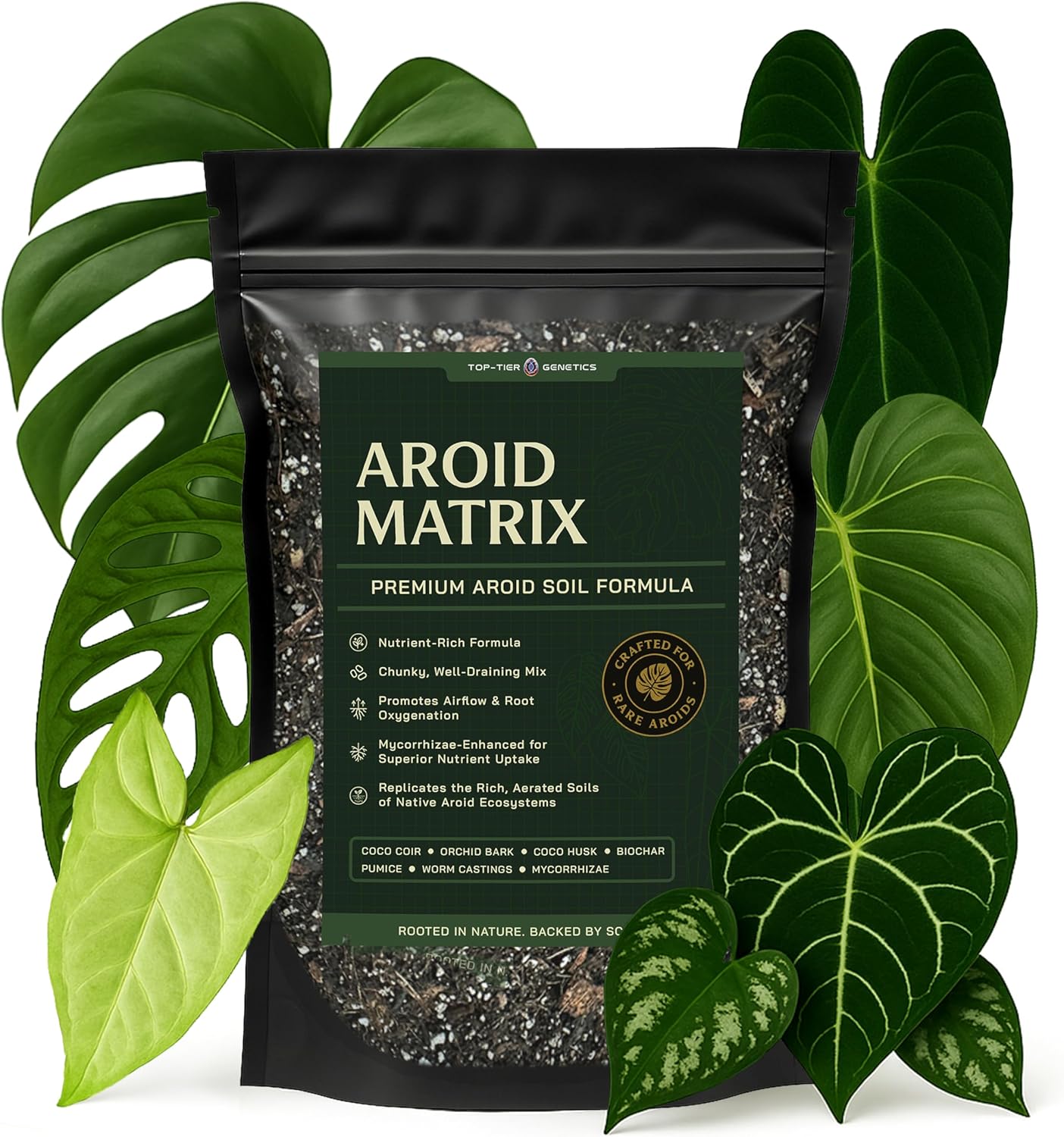
| Brand | Top Tier Genetics |
|---|---|
| Unit Count | 128 Ounce |
| Ingredients | Orchid bark; Coco coir; Pumice; Coco husk; Worm castings; Biochar; Mycorrhizae |
| Volume | 4 quarts |
This AROID potting mix is formulated specifically for monsteras and other aroids and is ready to use straight from the bag. The chunky texture from orchid bark, coco husk, and pumice gives strong drainage and aeration, which helps prevent waterlogged roots and encourages fibrous root growth in large-leaved tropicals. Coco coir provides moisture retention without compaction, while worm castings and mycorrhizae supply a gentle, ongoing nutrient and microbial boost for healthier foliage. Biochar adds longer-term soil health benefits by improving nutrient retention and supporting microbial life. It is practical for repotting and regular refreshes of Monstera deliciosa because you do not need to mix components yourself. The main limitation is the small 4 quart volume, which makes it best for individual plant repots or top-ups rather than filling large containers or multiple plants at once. Shoppers who want a dependable, aroid-focused medium will appreciate the balanced moisture control and built-in biological amendments.
Best for: Buyers who want a reliable, ready-made potting medium tailored to Monstera and other aroids and prefer a mix that minimizes setup and reduces repotting risk.
Less Ideal for: Gardeners needing large volumes for many plants or big container fills who should look for bulk mixes or larger bags.
- Chunky mix (orchid bark, coco husk, pumice) provides excellent drainage and root aeration
- Contains worm castings and mycorrhizae to support steady nutrient availability and root health
- Coco coir balances moisture retention without promoting compaction
- Includes biochar to improve long-term soil microbial activity and nutrient holding capacity
- Small 4 quart bag size is insufficient for large pots or multiple repots
Verdict: A convenient, aroid-focused potting mix that delivers reliable drainage, moisture balance, and microbial support for healthy Monstera growth.
Molly's Aroid Potting Mix — Chunky Soilless Mix for Indoor Aroids, 10 Dry Quarts

| Volume | 11 liters |
|---|---|
| Style Name | Houseplants & Aroids |
| Ingredients | Orchiata Bark, Coco Chips, Worm Castings, Horticultural Charcoal, Mycorrhizae |
Molly's Aroid Potting Mix is a chunky, soilless blend intended for Monstera, Philodendron and similar tropical houseplants. You use it straight from the bag as a container medium or when repotting to replace heavy garden soils. The mix combines coco chips, orchid bark, perlite and worm castings with horticultural charcoal and mycorrhizae to keep the root zone airy and well drained, which reduces the chance of soggy roots and root rot. Because it contains organic amendments and mycorrizal fungi, it supports steady root development and nutrient uptake without needing frequent amendment. The resealable bag and heat-sealed packaging help keep the mix fresh between uses. Limits to be aware of are that it is a soilless potting medium so you may need to supplement with slow-release or liquid fertilizer for heavy feeders over time, and the chunky texture can dry faster so watering cadence may need adjustment compared with standard potting soils. For growers who prioritize clean, fast-draining media for aroids, this mix is a reliable option.
Best for: Growers who want a dependable, clean potting medium that reduces overwatering risk for Monstera and other tropical houseplants and who value steady root health over time.
Less Ideal for: People who prefer a moisture-retentive, soil-based mix or those who want an all-in-one fertilized medium without planning to top up nutrients.
- Chunky, soilless formula drains quickly and resists compaction
- Includes mycorrhizae to aid root nutrient and water uptake
- Contains organic amendments like worm castings for gradual nutrition
- Resealable, heat-sealed bag preserves freshness between uses
- May require supplemental fertilization for heavy-feeding plants
- Chunky texture can dry faster than traditional potting soil, requiring more frequent watering
Verdict: Choose this mix when you need a clean, fast-draining, mycorrhizae‑boosted medium that reliably protects Monstera roots from overwatering.
Soil Sunrise Elephant Ear Potting Soil Mix (8 Quarts)

| Volume | 8 quarts |
|---|---|
| Ingredients | Peat moss, perlite, sand, worm castings, lime |
| Style Name | Peat Moss,Potting,Potting Soil Mix |
This 8-quart Soil Sunrise mix is made specifically for elephant ear plants and combines peat moss, sand, perlite, worm castings, and lime to recreate a loose, tropical-style growing medium. In practice it is used straight from the bag for repotting or filling patio containers and provides steady moisture retention from peat and sand while perlite keeps the mix airy so roots do not suffocate. Worm castings add slow-release nutrients that support vigorous foliage and root development, and the formulation is suitable for both indoor specimens and outdoor containers. The resealable bag and natural ingredients make it easy to store and handle with gloves, but the peat content means growers who prefer peat-free or fully organic-certified mixes will need a different product. Volume is modest at 8 quarts, so you may need multiple bags for large containers or multiple plants. For a balanced, purpose-made potting mix that reduces compaction and encourages lush leaves, this is a convenient option for container elephant ears.
Best for: Buyers who want an off-the-shelf, ready-to-use potting mix tailored to elephant ear plants and who value balanced moisture, aeration, and natural nutrient support for container growing.
Less Ideal for: Growers seeking peat-free or bulk landscape soil for in-ground planting, or those needing large volumes for multiple large containers.
- Formulated specifically for Alocasia and Colocasia, matching tropical soil needs
- Good moisture balance from peat moss and sand while perlite improves aeration
- Contains worm castings for organic nutrient support
- Works for both indoor specimens and outdoor container plantings
- Resealable bag for easier storage
- Small 8-quart volume may require multiple bags for large pots or several plants
- Contains peat moss, which some growers avoid for environmental or peat-free preferences
Verdict: A ready-made, balanced potting mix that simplifies repotting and container growing for elephant ear plants.
ZeeDix 1 qt Tropical Potting Mix for Houseplants

| Brand Name | ZeeDix |
|---|---|
| Item Highlight | Perlite Coco Coir Vermiculite Peat Moss |
| Item Type Name | soil |
| Volume | 1 quarts |
This 1 quart ZeeDix tropical potting mix is a pre-mixed soil designed for repotting and general container use with tropical houseplants. It combines coco coir for structure, perlite for aeration, and vermiculite plus peat moss for slow-release moisture retention, so you can open the bag and pot without measuring or blending components. In practice it makes potting small specimens quick and tidy and helps maintain a loose medium that drains yet holds enough moisture for moisture-loving plants. The mix is labeled for monstera, pothos, philodendron and ferns, so it will suit elephant ear seedlings or small containers when you need a moisture-retentive but airy medium. Limitations are its small 1 qt volume, which means you will need multiple bags for larger containers or mature elephant ears, and the formula is a general-purpose blend rather than tailored specifically for large tropical bulbs that prefer very rich, deep soil amendments. For budget buyers this is a convenient starter potting mix but plan to supplement or buy larger volumes for big plants.
Best for: Buyers looking for an inexpensive, ready-to-use potting mix to repot small tropical houseplants or to try a new soil blend without committing to a large bag.
Less Ideal for: Gardeners repotting mature or large elephant ear plants, or anyone who needs bulk quantities or a heavy-feeding, specialist soil blend for large tropical bulbs.
- Ready-to-use pre-mixed blend requires no preparation
- Balanced components for both aeration (perlite) and moisture retention (vermiculite, peat, coco coir)
- Suitable for common tropical houseplants and small elephant ear seedlings
- Small bag is convenient for single repots or trialing a mix
- Only 1 quart volume so not practical for large containers or mature elephant ears
- General-purpose formula not specifically optimized for heavy feeders or large tuberous tropicals
Verdict: A convenient, budget-friendly 1 qt tropical potting mix that works well for small elephant ear seedlings and routine repotting.
FoxFarm Happy Frog Potting Soil, Container Garden, 2 cu ft (with 2 Plant Tags)

| Brand | FoxFarm |
|---|---|
| Style Name | Container Garden |
| Unit Count | 600 Ounce |
| Volume | 2 cubic feet |
FoxFarm Happy Frog Potting Soil is a premixed container blend made to nourish potted plants without additional amendments. It comes ready to use and is formulated with beneficial microbes and mycorrhizal fungi alongside organic inputs such as earthworm castings, bat guano, and aged forest humus to support root development and nutrient uptake. For growing hot peppers in containers this mix offers a nutrient-rich, well-amended medium that encourages strong vegetative growth and flowering when paired with proper watering and feeding. The included plant tags make keeping track of varieties and planting dates convenient. Practical limits to note are that this is a potting soil designed for containers rather than field beds, so peppers in ground or very large planters may still need different soil or additional bulk amendments. Also, while the mix is nutrient-dense at planting, active growers should plan a feeding schedule because high-demand fruiting crops benefit from supplemental fertilizer over the season.
Best for: Growers who want a dependable, ready-made potting medium for container-grown hot peppers and prefer a product that supports root health out of the bag.
Less Ideal for: Gardeners planting directly in raised beds or open ground who need large volumes of soil or want to custom-blend base soil at scale.
- Pre-amended with earthworm castings, bat guano, and aged forest products for immediate nutrient availability
- Contains beneficial microbes and mycorrhizal fungi to improve root health and nutrient uptake
- Ready to use straight from the bag for quick potting and repotting
- Includes plant tags to track varieties and planting dates
- Formulated specifically for containers so may not be ideal for in-ground garden beds
- Nutrient levels diminish over time for heavy-feeding crops and require supplemental fertilization
Verdict: A reliable, microbe-rich potting mix that simplifies container pepper growing by delivering immediate nutrients and strong root support.
Rosy Soil Aroid Potting Mix, Chunky Biochar Soil, 4 Quarts

| Unit Count | 128 Ounce |
|---|---|
| Volume | 4 quarts |
| Item Highlight | Peat-Free, Microbially Active, Superior Aeration & Drainage |
| Style Name | Aroid Soil |
Rosy Soil Aroid Potting Mix is designed specifically for Monsteras, philodendrons, anthuriums and other tropical aroids that need fast-draining, airy media. The mix combines pine bark fines, pumice and biochar to give a chunky structure that resists compaction and lets roots breathe while water moves through quickly. It is also enriched with worm castings, mycorrhizae and compost to create a microbially active medium that supports nutrient uptake and root vigor over time. Because it is peat-free and formulated to be carbon negative, it is a good choice for growers who want an environmentally friendlier alternative to peat-based mixes. In practical use the mix fills multiple small pots from a 4-quart bag, comes in a resealable bag to stay fresh, and is well-suited for repotting and top-ups where drainage and aeration are priorities. Limitations are the small package size for larger collections and the chunky texture may dry faster than peat blends, requiring more frequent watering for some indoor conditions.
Best for: Buyers who prioritize plant performance and root health for Monsteras and other tropical aroids and who want a fast-draining, microbially active soil that keeps roots airy.
Less Ideal for: Casual plant owners who prefer low-maintenance, moisture-retentive peat blends or who need large volumes for many pots should consider other options.
- Chunky mix with pine bark and pumice provides excellent drainage and prevents compaction
- Includes biochar and beneficial microbes to boost nutrient availability and root health
- Peat-free, designed to reduce carbon impact compared with traditional peat mixes
- Resealable bag and 4-quart volume convenient for repotting multiple small houseplants
- 4-quart bag is small for larger collections or multiple repots
- Chunky texture dries faster than peat-based mixes and may require more frequent watering
Verdict: Choose this mix if you want a high-performance, chunky potting medium that gives Monsteras and other aroids superior drainage, aeration, and microbial support.
Back to the Roots Organic Indoor Potting Mix, 6 Quart

| Unit Count | 192 Fluid Ounces |
|---|---|
| Item Type Name | Indoor Potting Mix 6qt |
| Item Highlight | Peat-free, 100% organic, made in the USA |
| Ingredients | Coconut Coir, Yucca, Mycorrhizae, Perlite, Horticultural Sand |
This Back to the Roots indoor potting mix is a ready-to-use, 6-quart blend designed for common houseplants such as pothos, monstera and ferns. It combines coconut coir, yucca extract, mycorrhizae, perlite and horticultural sand to improve moisture retention, drainage and root development without peat. In practice it feels light and friable, so it is easy to pot seedlings or repot mature plants and it reduces compaction that can suffocate roots. The added mycorrhizae helps young roots establish and take up nutrients more efficiently while yucca extract helps the mix hold water between waterings, which is convenient for forgetful or busy plant owners. Because it is peat-free and made in the USA, it is a more sustainable choice versus traditional peat-based mixes. Limitations are the small 6-quart size, which means frequent repurchasing for larger collections, and the bag does not include fertilizer so you will need to feed plants separately as they grow.
Best for: Buyers who prioritize low-risk, easy-care houseplant solutions and want an organic, ready-to-use potting mix that reduces watering hassles and supports healthy root growth.
Less Ideal for: Not ideal for gardeners who need large-volume soil for many pots or for those expecting a mix that includes built-in fertilizer for long-term feeding.
- Peat-free organic formula that reduces environmental impact
- Yucca extract improves moisture retention between waterings
- Contains mycorrhizae to support root development and nutrient uptake
- Light, well-draining texture suitable for repotting seedlings and houseplants
- Small 6-quart volume may require frequent repurchasing for larger plant collections
- Does not include fertilizer so additional feeding is necessary
Verdict: A compact, peat-free potting mix that simplifies indoor plant care by holding moisture and boosting root establishment.
Choosing the Right Soil for Elephant Ears: Key Factors to Consider
Water Retention Versus Drainage
Elephant ears need consistent moisture to support rapid leaf expansion, but tubers will rot in saturated soil. A good soil holds enough water between waterings while still allowing excess to escape. In practice that means a mix with a balance of fine particles and coarse components that creates pore spaces for air and gravity drainage.
Gardeners planting in heavy clay should add coarse amendments to improve drainage, while container growers may choose a blend with more water-holding components so the potting mix does not dry out too fast. Evaluate how quickly your site dries and adjust amendments accordingly.
Organic Matter and Nutrient Supply
Elephant ears are heavy feeders with large leaf area, so soils should provide steady, accessible nutrients throughout the season. High organic matter content improves nutrient retention, supplies slow-release fertility, and supports beneficial soil life that helps roots access phosphorus and nitrogen.
Fresh compost, well-rotted manure, or long-lasting organic amendments in the soil will reduce the need for frequent side-dressings. However, soils that are too rich and hot can burn young tubers, so aim for balanced, well-aged organic inputs rather than fresh, high-nitrogen materials at planting time.
Soil Texture and Space for Tubers
Elephant ear tubers need loose, friable soil to expand freely and avoid constriction. Texture influences how easily roots penetrate and how the soil holds shape when dug. A mix that is too compact or heavy will impede tuber growth and can increase rot problems.
For in-ground planting, incorporate organic matter and coarse components to create a crumbly tilth. For containers, select potting mixes formulated for large-rooted perennials that retain structure over the season so the tuber has space to grow without constant repotting.
pH and Nutrient Availability
Soil pH affects how well elephant ears can access essential nutrients like iron, calcium, and magnesium. Most elephant ears prefer a slightly acidic to neutral range where macronutrients are readily available. Extremes of pH can cause nutrient lockup and deficiency symptoms, which show as chlorosis or stunted growth.
Test your soil before planting and choose a mix or amendments that bring the pH into the appropriate range. Lime or sulfur can be used carefully to adjust pH, but pre-mixed soils with balanced pH save time and reduce the need for corrections.
Drainage Adaptability for Different Sites
Elephant ears are adaptable across marshy edges, moist borders, and container plantings, but the ideal soil changes with the site. In boggy or pond-edge situations, choose soils that retain moisture without becoming anaerobic. In pots and raised beds, select mixes with good structure that resist compaction and can be watered frequently without losing oxygen.
Consider how water enters and leaves the planting location and pick a soil that complements that hydrology rather than working against it.
Ease of Amendment and Maintenance
Gardeners often need to tweak soil over time as tubers expand and plants demand more nutrients. Soils that accept compost, slow-release organic fertilizers, or mineral amendments make long-term care easier. A soil that is overly modified at purchase may limit your ability to fine-tune texture or fertility later on.
Think about how frequently you want to top-dress or refresh soil and choose a base mix that simplifies those maintenance tasks. Good structure and stable organic content reduce the frequency of major overhaul.
Best Soils by Planting Situation
Where you plan to grow elephant ears determines the soil you should choose. In-ground beds with decent drainage do well with amended garden soil that has plenty of compost and coarse material added. Containers need potting mixes formulated to retain moisture and resist compaction while allowing regular watering without drowning the tuber.
If you are planting at the edge of a pond or in a consistently wet border, a mix higher in organic content that still contains coarse components provides moisture and oxygen. For raised beds, aim for a lighter, friable mix that warms and drains faster than heavy native clay while retaining enough moisture between waterings.
- In-ground beds: amend native soil with compost and coarse grit or bark
- Containers: choose stable potting mixes with extra organic matter and aeration
- Boggy edges: use moisture-retentive but open mixes that avoid anaerobic pockets
- Raised beds: aim for balanced tilth that supports tuber expansion
How to Amend Existing Garden Soil
Improving native garden soil can be simpler and more economical than replacing it. Start by loosening the planting area to at least a foot deep so tubers have room. Work in generous amounts of well-rotted compost to increase organic matter and improve nutrient retention.
If the soil is heavy clay, add coarse sand or grit plus compost to open the structure. For very sandy sites, add compost and leaf mold to increase water-holding capacity. After planting, apply a 1 to 2 inch organic mulch to conserve moisture and moderate soil temperature.
- Loosen soil to provide tuber space
- Incorporate 30 to 50 percent organic matter when possible
- Adjust texture with sand, grit, or bark for drainage or retention
Potting and Repotting Tips for Containers
Choose a deep container to accommodate the tuber and heavy foliage. Use a high-quality potting mix formulated for large perennials and consider a small proportion of moisture-retaining amendment if you live in a hot, dry climate. Ensure the container has effective drainage holes and consider using a saucer or reservoir only if you can monitor water levels.
When repotting, inspect tubers for firmness and signs of rot. Replace compacted mix with fresh potting soil and add a slow-release organic fertilizer to support leaf growth. Repot every couple of years or when the tuber fills the container to avoid stress and poor growth.
- Pick deep pots with good drainage
- Refresh potting mix when it becomes compacted
- Use slow-release organic fertilizer at repotting
Managing Moisture and Irrigation
Consistent moisture is key for elephant ears. Water deeply and regularly during the active season but allow the upper layer to dry slightly between waterings to keep oxygen in the root zone. The soil you choose should match your irrigation pattern so you are not fighting against the substrate.
Mulches and drip irrigation help maintain even moisture and reduce splash that can cause foliar issues. In containers, check moisture more often because mixes dry faster; in-ground beds with high organic content will buffer variability but still need regular watering in dry spells.
- Water deeply and monitor soil moisture
- Use mulch to conserve soil moisture and regulate temperature
- Adjust irrigation frequency for containers versus in-ground plantings
Preparing Soil for Overwintering Tubers
In cold climates where tubers are lifted for winter, a well-draining soil makes it easier to dig and clean the tubers without excess clinging wet soil. Allow tubers to dry slightly before lifting so they are less prone to damage and rot during storage.
If tubers remain in the ground, improve drainage in the planting area and add a protective mulch layer to reduce freeze-thaw cycles. Soils with stable structure and moderate organic matter are easiest to insulate and protect through the winter months.
- Ensure good drainage before lifting tubers
- Dry tubers slightly before storage to prevent rot
- Use mulch to protect in-ground tubers from freeze-thaw damage
How We Chose the Best Soil for Elephant Ears
We focused on the soil properties that directly affect elephant ear growth and ornamental performance. Primary evaluation criteria included water retention versus drainage balance, organic nutrient content and slow-release fertility, texture and tilth for tuber expansion, pH suitability for nutrient uptake, and suitability across planting situations such as containers, raised beds, and heavy garden clay. We also considered ease of amendment for gardeners who prefer to tweak mixes with compost or sand, and the long-term structure retention so soils do not compact under repeated wet-dry cycles. Products were excluded if they lacked clear composition information, were designed only for succulents or cacti, or relied entirely on synthetic gels without organic matter. We did not include soils that require specialist equipment to apply or are only meant for hydroponic systems. Our picks represent a range of textures and organic content so you can choose the best match for your watering habits and site conditions.
FAQ
What soil pH is best for elephant ears?
Elephant ears do best in slightly acidic to neutral soils, usually around pH 5.5 to 7.0. That range keeps most nutrients available; if your soil is outside that range, use amendments to adjust pH before planting.
Can I plant elephant ears in heavy clay soil?
You can plant in clay if you amend it to improve structure. Incorporate generous amounts of compost and coarse grit or bark to open the soil and improve drainage so tubers do not sit in waterlogged conditions.
How often should I fertilize when using a rich organic soil?
Rich organic soils may only need light feeding during the season. Usually an initial boost at planting and a midseason side-dressing of compost or slow-release organic fertilizer is sufficient, depending on growth and leaf size.
Is potting mix different from garden soil for elephant ears?
Yes. Potting mixes are formulated to be lighter, drain reliably in containers, and resist compaction. Garden soil is generally denser and needs significant amendment before using in pots. Choose a potting mix designed for large-rooted perennials for container-grown elephant ears.
How do I prevent tuber rot in wet summers?
Prevent rot by improving drainage and avoiding overwatering. Use raised beds or add coarse material to the planting hole, and ensure containers have adequate drainage. Mulch to moderate soil moisture but avoid piling organic material directly against the crown.
Final Verdict
Choose a soil that matches your planting situation and watering habits. Prioritize a balance of water retention and drainage, ample but stable organic matter, and a texture that allows tubers to expand without compacting. Match the soil to whether you are planting in-ground, in containers, or in wet-edge sites, and be prepared to amend existing soil as needed. With the right substrate and basic maintenance, elephant ears will produce bold foliage and healthy tubers season after season.
