

Note: This article contains affiliate links. If you click on these links and make a purchase, I may earn a small commission at no extra cost to you. This helps support my research and content. Read my full affiliate disclosure here.
Picking the right mix can make the difference between a thriving fiddle fig and one that struggles with yellow leaves, slow growth, or root rot. You need a potting medium that drains well yet holds enough water and nutrients for steady growth in indoor conditions. This guide collects six shortlisted soils chosen for the fiddle fig use case and explains how each performs for drainage, aeration, and nutrient retention. Read on to understand the features that matter for repotting or top-dressing, plus practical care tips to help your plant recover after transplanting.
Top Picks at a Glance
| Best Quality Built to a higher standard if you want something more solid | Soil Sunrise Fiddle Leaf Fig Potting Mix (12 Quarts) |  |
| Best Value The sweet spot between price and what you get | Leaves and Soul Professional Fiddle Leaf Fig Soil Mix, 2.2 Quart |  |
| Best Budget The cheapest option that still gets the job done reliably | Novaterra Fiddle Leaf Fig Potting Soil Mix, 2.4 Quart |  |
| Highest Rated A top-rated pick with lots of positive feedback | Top Tier Genetics Optimal Fiddle Leaf Fig Potting Mix (8 qts) |  |
| Most Popular A crowd favorite that many people choose with confidence | Fiddle Leaf Fig Plant Food Organic Potting Soil Mix (7.5 L) |  |
| Best Seller A high-volume bestseller chosen again and again | Perfect Plants Fiddle Leaf Fig Soil, 8 qt (Coconut Coir Blend) |  |
Soil Sunrise Fiddle Leaf Fig Potting Mix (12 Quarts)

| Volume | 12 quarts |
|---|---|
| Ingredients | Peat moss, pine bark, perlite, charcoal, lime |
| Intended use | Fiddle leaf fig potting mix |
This 12-quart Soil Sunrise mix is formulated specifically for fiddle leaf figs and is intended for repotting or container growing indoors or outdoors. The blend of peat moss and pine bark helps retain moisture and organic matter while perlite and horticultural charcoal improve aeration and drainage so roots avoid waterlogging. Lime is included to help stabilize pH for nutrient availability. Because it is hand-mixed in small batches and contains only natural ingredients, it is a straightforward, low-maintenance medium for growers who prioritize plant health without synthetic fertilizers. Practical benefits include easier root development, reduced risk of soggy roots, and suitability for larger pots or raised beds. The main limitations are bag volume and that no fertilizer is included, so users who want immediate boost will need to add a slow-release or liquid feed; those repotting very large trees will need multiple bags. For growers focused on performance, this mix provides a reliable base that encourages vigorous fiddle leaf fig growth when combined with a proper watering and feeding routine.
Best for: Growers who prioritize plant performance and root health and want a dedicated, natural potting medium for repotting or container-grown fiddle leaf figs.
Less Ideal for: Casual buyers seeking an all-in-one, fertilized potting mix or those needing soil volume for large landscape plantings.
- Formulated specifically for fiddle leaf figs with ingredients that balance moisture retention and drainage
- Contains perlite and horticultural charcoal to improve root aeration and reduce compaction
- Hand-blended small-batch production for consistent texture
- All-natural ingredients without synthetic fertilizers or chemicals
- Comes without added fertilizer so feeding is required after repotting
- 12-quart bag may be insufficient for repotting very large specimens
Verdict: Choose this mix when you want a performance-focused, natural potting medium that balances drainage and moisture to help fiddle leaf figs develop strong, healthy roots.
Leaves and Soul Professional Fiddle Leaf Fig Soil Mix, 2.2 Quart

| Brand Name | Leaves and Soul |
|---|---|
| Volume | 2.2 quarts |
| Made in | USA |
| Unit Count | 35.2 Ounce |
This ready-to-use mix is designed specifically to give fiddle leaf figs a balanced root environment by combining peat for moisture retention with coarse sand and pine bark for drainage and aeration. You use it straight from the resealable 2.2 quart bag when repotting young or mature Ficus lyrata or when refreshing potting media for indoor tropical houseplants. The loose texture helps roots expand and improves oxygen movement around the root ball, which can reduce waterlogging when paired with a pot that drains. Practical touches include resealable packaging and a mix aimed at supporting nutrient uptake so standard liquid or slow-release fertilizers work efficiently afterward. Limitations to note are that the formula includes sawdust and peat, which can compact over time in heavy watering regimes and may benefit from periodic perlite or pumice amendments for long-term drainage in large pots. Also choose a planter with adequate drainage and adjust watering to room conditions since drying times vary by pot material and indoor climate.
Best for: Buyers who want a convenient, plant-specific potting mix to repot fiddle leaf figs quickly and reduce guesswork about drainage and moisture balance.
Less Ideal for: Gardeners repotting very large trees or those who prefer fully inorganic, long-lasting mixes should consider larger bags or mixes with higher pumice or perlite content.
- Blend balances moisture retention and drainage suitable for fiddle leaf figs
- Loose texture with sand and pine bark improves aeration and root expansion
- Resealable bag keeps unused soil contained for later projects
- Ready-to-use out of the bag so no additional mixing is required
- Contains peat and sawdust which can compact in persistently wet conditions
- Small 2.2 quart size may not be sufficient for larger specimens or multiple repots
Verdict: A convenient, ready-to-use potting mix that simplifies repotting fiddle leaf figs by providing balanced moisture retention and improved root aeration.
Novaterra Fiddle Leaf Fig Potting Soil Mix, 2.4 Quart

| Unit Count | 76.8 Fluid Ounces |
|---|---|
| Volume | 2.4 quarts |
| Ingredients | Coco coir, dolomite, peat moss, perlite |
| Included Components | bag |
This ready-to-use Novaterra mix is designed specifically for Ficus lyrata and makes potting or repotting quick and simple. The blend of coco coir and peat moss holds moisture without turning soggy while the added perlite keeps the mix airy to reduce the risk of root rot. Dolomite lime buffers pH and supplies calcium and magnesium, which helps plants take up nutrients more reliably. The product comes in a resealable stand-up pouch that helps preserve freshness between uses, which is convenient for owners with one or a few plants. As a small 2.4 quart package it is ideal for refreshing soil in nursery pots or topping off containers, but gardeners with larger trees will need multiple bags or a larger bulk mix. Users should handle the dry mix carefully to avoid inhaling dust and follow the safety note about pets and children. For budget-focused plant owners this saves time over mixing components yourself and provides consistent results for fiddle leaf figs in indoor pots.
Best for: Ideal for cost-conscious indoor plant owners who want a purpose-built, no-mix soil to maintain fiddle leaf figs in nursery pots or small to medium containers.
Less Ideal for: Not a good fit for growers who need large volumes for full-size trees or for those seeking a peat-free bulk mix for many plants.
- Formulated for fiddle leaf figs with coco coir and perlite for balanced moisture and aeration
- Includes dolomite lime to buffer pH and supply calcium and magnesium
- Resealable, airtight pouch preserves mix between uses
- Ready-to-use so no measuring or blending required
- Small 2.4 quart volume means multiple bags are needed for large plants or full repots
- Contains peat moss and should be handled to avoid inhaling dust
Verdict: A compact, ready-made fiddle leaf fig mix that saves time and gives reliable drainage and moisture balance for small to medium indoor pots.
Top Tier Genetics Optimal Fiddle Leaf Fig Potting Mix (8 qts)

| Brand | Top Tier Genetics |
|---|---|
| Style Name | OPTIMAL Fiddle Leaf Fig Potting Mix |
| Volume | 4 quarts |
| Item Weight | 2 pounds |
This potting mix is designed specifically for fiddle leaf fig (Ficus lyrata) care and is sold ready to use for potting or repotting indoor specimens. The formula blends organic materials to create a fast-draining yet moisture-retentive texture that helps prevent waterlogged roots while keeping enough available moisture for steady growth. Nutrients and minerals are included to support leaf development and encourage healthy root expansion during transplanting. In practice it suits routine repotting of established trees and gives beginners a simple option without needing to blend amendments. The small 4 quart volume and lightweight packaging make it convenient for handling and for testing on single plants, though multiple bags are needed for larger trees or full repots. Because the mix is tailored to fiddle leaf figs, it reduces the need to supplement with perlite or extra fertilizer immediately, but heavy feeders or very large specimens may need additional amendments over time.
Best for: Buyers who want a dependable, plant-specific potting mix for indoor fiddle leaf figs and prefer a ready-made organic option that minimizes mix-and-match preparation.
Less Ideal for: People repotting large trees that need a high volume of soil or growers who require custom mixes for heavy feeding plants.
- Formulated specifically for fiddle leaf fig plants to promote root development
- Ready-to-use organic blend that balances drainage and moisture retention
- Includes nutrients and minerals to support leaf growth
- Fast-draining texture helps reduce risk of root rot
- Small 4 quart volume means multiple bags are required for large repots
Verdict: A convenient, fiddle-leaf-fig–focused organic potting mix that delivers reliable drainage and nutrient support for healthy indoor Ficus growth.
Fiddle Leaf Fig Plant Food Organic Potting Soil Mix (7.5 L)
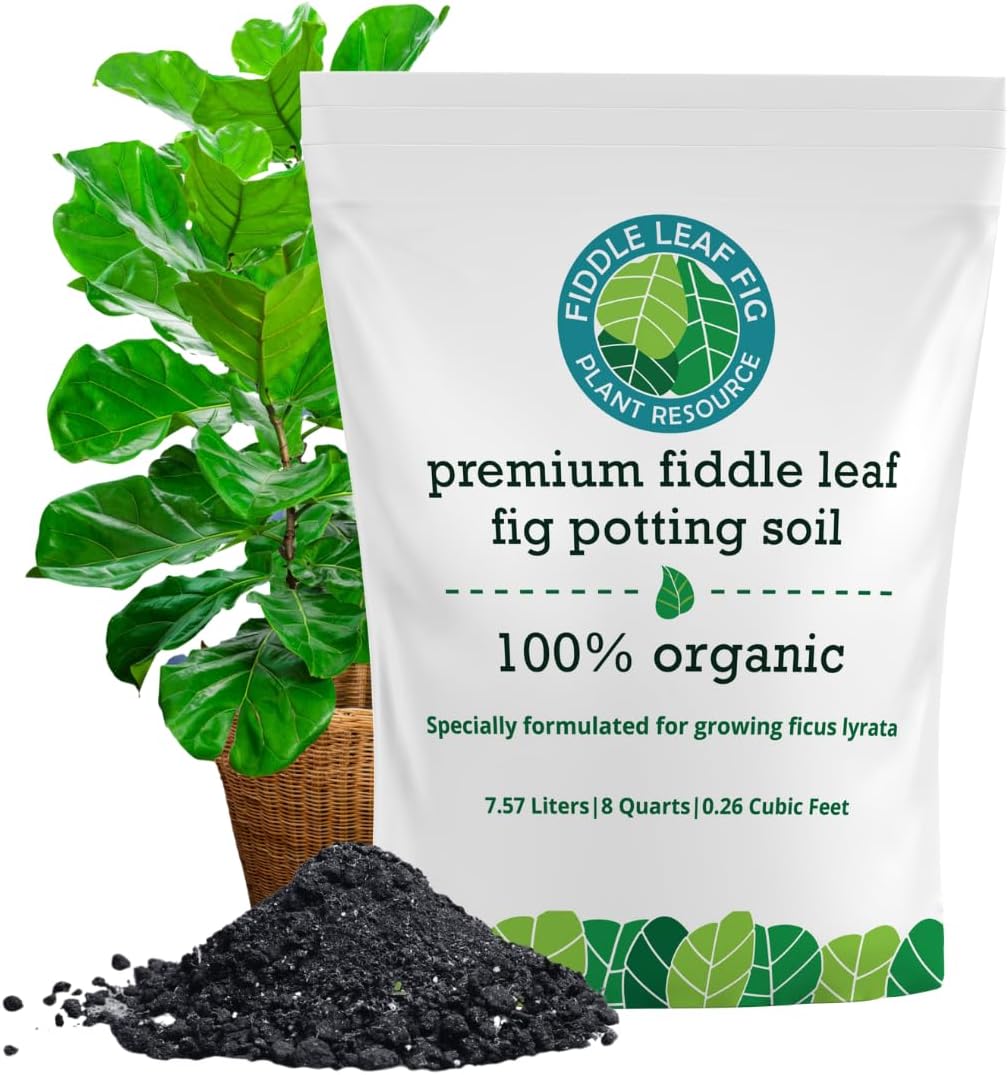
| Volume | 7.57 liters |
|---|---|
| Formulation | 18% compost, 28% coco coir, 17% bark nuggets, 9% biochar, 23% pumice |
| Usage Instructions | Use in well-draining pots |
| Ideal For | Fiddle Leaf Figs and Ficus Varieties |
This is a purpose-built potting mix for fiddle leaf figs and similar indoor tropical trees. The blend combines aged bark, compost, coco coir, biochar and pumice to create a chunky, well-aerated medium that helps prevent waterlogging while still retaining enough moisture for roots. In practice it is used at repotting time or when you want to refresh a tired rootball: layer into a clean pot, position the plant, then fill and lightly firm the mix around the roots. Notable features include added minerals (calcium and magnesium), a high-organic-content formula that supports leaf color and root growth, and a resealable bag for storage. Practical benefits are fewer brown spots and dropped leaves from better drainage, faster recovery after repotting, and less frequent overwatering issues. Limitations are that it is sold in a single 7.5 L bag so larger plants need multiple bags, and the chunky texture can make delicate repotting a little messier than standard fine potting soil.
Best for: Buyers who want a ready-made, organic potting mix targeted to fiddle leaf figs and who prioritize healthy drainage and visible foliage improvement.
Less Ideal for: People potting many large specimens or filling big containers who need bulk volume or a finer-textured general-purpose houseplant soil.
- Formulated specifically for fiddle leaf figs and similar ficus varieties
- Chunky, fast-draining mix reduces risk of root rot and overwatering
- Contains compost and minerals to support leaf color and root health
- Includes biochar and pumice for improved aeration and long-term soil structure
- Single 7.5 L bag may be insufficient for large trees or multiple repots
- Chunky components can be harder to work into fine root systems or small pots
Verdict: Pick this mix when you want an organic, chunky potting soil that improves drainage and helps fiddle leaf figs recover and grow healthier foliage.
Perfect Plants Fiddle Leaf Fig Soil, 8 qt (Coconut Coir Blend)

| Volume | 8 quarts |
|---|---|
| Unit Count | 256 Fluid Ounces |
| Item Highlight | Drains excess water, feeds foliage 6 months |
This 8-quart Perfect Plants potting mix is built specifically to give potted fiddle leaf figs a healthier root environment by combining coconut coir, pine bark, perlite and sand with a slow-release fig food. Use it when repotting or topping up container-grown ficus to reduce compaction, improve aeration and keep roots moist without waterlogging. The coconut coir holds a useful moisture cycle while pine bark and perlite keep the mix light and well drained, which helps prevent root rot in larger indoor containers. The included plant food feeds foliage for about six months, so newly potted trees get a nutrient boost without immediate fertilizing. The bag is resealable for easier storage and smaller jobs. Limitations are its bag size and volume for larger trees—an 8-quart bag is best for small to medium pots or for blending into existing soil rather than filling very large containers by itself.
Best for: Gardeners who want a ready-to-use, ficus-focused potting mix to improve drainage and root health when repotting or refreshing small to medium potted fiddle leaf figs.
Less Ideal for: Owners of very large trees or those needing bulk soil for multiple large containers should choose larger volumes or mix several bags together.
- Formulated blend (coconut coir, pine bark, perlite, sand) that improves drainage and reduces compaction
- Contains slow-release fig food to feed foliage for up to six months
- Lightweight, airy texture that promotes root aeration in container-grown figs
- Resealable heavy-duty bag for convenient storage and partial use
- Only 8 quarts per bag, which is small for repotting large fiddle leaf figs
- Not a complete substitute for regular fertilizing after the included six-month feed
Verdict: A convenient, ficus-focused potting mix that improves aeration and drainage while giving new repots a six-month nutrient boost.
Choosing the Right Soil for Fiddle Fig: Key Factors to Consider
Drainage and Aeration
Fiddle figs are prone to root rot if roots sit in water. A mix with chunky components such as perlite, pumice, or coarse bark creates air pockets that let oxygen reach roots and allow excess water to escape. Good aeration also encourages vigorous root growth, which supports large leaves and overall resilience.
When evaluating mixes, look at component size and the proportion of inorganic pieces. Too much fine material will pack down and reduce air space after repeated waterings. Aim for a balance that clears quickly after watering but still leaves some moisture available around the root ball.
Water-Holding Capacity
Indoor fiddle figs often face irregular watering intervals, so the soil should hold enough moisture to bridge gaps between waterings without becoming waterlogged. Organic components such as coconut coir, peat, or well-aged compost increase the mix's ability to retain plant-available water while releasing it gradually.
Too much water retention without adequate drainage creates anaerobic pockets. The best mixes pair moisture-retaining organics with gritty material so the substrate remains damp but well oxygenated.
Nutrient Profile and Slow-Release Feeding
Fiddle figs are moderate feeders that benefit from a steady supply of macro- and micronutrients. A potting medium with a balanced nutrient profile or integrated slow-release fertilizer reduces the need for immediate heavy feeding after repotting. Look for mixes that include a modest, well-balanced starter charge rather than aggressive, high-nitrogen spikes.
Overly rich soils can encourage leggy growth and frequent repotting. Prefer mixes formulated to support several months of indoor growth before supplemental fertilization is required.
pH and Chemical Stability
Fiddle figs favor a slightly acidic to neutral range, roughly between pH 5.5 and 7.0. A stable pH helps roots access essential nutrients and prevents micronutrient lockup. Choose soils made from components with predictable pH behavior; for example, aged bark and coconut coir tend to be closer to neutral, while raw peat can be more acidic.
Avoid mixes with unknown or highly variable components that could shift pH over time. If you use a soil with a known acidity tendency, plan for pH testing and minor adjustments with lime or sulfur as needed.
Texture and Root Penetration
A medium that allows fine roots to explore while supporting the heavier top growth of a fiddle fig improves establishment after repotting. Materials that are too coarse will not retain enough moisture at the root hairs, while materials that are too fine will compact and limit oxygen.
Aim for a friable, crumbly texture that sustains root branching. Consider mixes with a range of particle sizes so the soil holds its structure over multiple water cycles and pot changes.
Longevity and Repotting Frequency
How long a potting mix remains functional affects how often you need to repot or refresh topsoil. Organic components break down with time, causing compaction and reduced drainage. A mix designed for container trees will include stable components that slow decomposition and extend usable life.
If you prefer less frequent repotting, select soils with more inert components like pumice or coarse perlite combined with quality organic matter. Also factor in how rootbound the plant tends to become in your chosen pot size.
When to Repot a Fiddle Fig
Repotting is usually required when roots circle the pot, water runs straight through the container, or growth slows despite proper light and care. Repot in spring or early summer when the plant is actively growing to minimize stress.
Choose a pot only one size larger than the current container. Moving a fiddle fig into a much larger vessel increases moisture retention and can lead to root rot if the soil cannot dry evenly. After repotting, water lightly and allow the root ball to reestablish before resuming regular fertilization.
- Check for roots at drainage holes or on the soil surface
- Avoid repotting during dormancy or low-light months
- Use fresh soil that matches the drainage and retention profile the plant needs
Mixing Your Own Fiddle Fig Soil
Custom mixes let you tune drainage and water-holding characteristics. A reliable starting blend is two parts high-quality potting medium, one part coarse inorganic material like pumice or perlite, and one part organic matter such as coconut coir or well-aged compost.
Adjust proportions to your home environment. In dry, warm rooms increase the organic fraction slightly. In cooler, lower-light spaces favor more inorganic grit to speed drainage. Always pre-moisten and screen components to remove fines that will compact.
- Typical recipe: 2 potting mix : 1 coarse grit : 1 coir/compost
- Sift out dust and fines to preserve air space
- Consider adding a small amount of slow-release fertilizer if the mix lacks nutrients
Top-Dressing and Refreshing Soil
Top-dressing with a thin layer of fresh mix every 12 to 18 months refreshes nutrients and improves surface drainage without the disruption of full repotting. Lightly remove the top inch or two of old soil before applying new mix to avoid creating a layered barrier to water.
For plants in smaller pots, replace the top third of the soil rather than the entire root ball to reduce stress. Monitor moisture behavior after top-dressing since fresh material may change how often you need to water.
- Refresh surface soil to restore nutrients
- Avoid thick layers that trap water next to the stem
- Repeat routinely rather than waiting for visible decline
Dealing with Overwatering and Compact Soils
If your fiddle fig shows yellowing leaves and slow growth, compacted soil and poor drainage may be the cause. Remove the plant and examine the root ball for dense, soggy soil and root rot. Trim clearly dead roots and repot into a faster-draining mix.
To improve an existing pot without full repotting, remove some soil from the surface and work in coarse grit or fresh coarse material to increase porosity. Ensure the pot has adequate drainage holes and use a saucer only when necessary to avoid standing water.
- Inspect roots before deciding between refresh and full repot
- Increase porosity with pumice or coarse perlite
- Ensure water drains freely from the pot after watering
Watering Practices That Complement Soil Choice
How you water interacts with soil properties. For faster-draining mixes soak thoroughly until water drains from the bottom, then allow the top inch of soil to dry before the next watering. For mixes with greater water retention, check moisture at root level with a probe or finger to avoid overwatering.
Consistent, moderate watering encourages deep rooting. Avoid frequent shallow waterings that keep only the surface damp. Adjust volume and frequency seasonally as growth and indoor humidity change.
- Soak-and-dry works well for well-draining mixes
- Use a moisture meter for accurate readings in retention-heavy soils
- Reduce watering in lower light or cooler months
How We Chose the Best Soil for Fiddle Fig
We focused on characteristics that directly affect fiddle fig health in container culture. Key evaluation criteria included drainage and aeration to reduce the risk of root rot; water-holding capacity so plants do not dry out between routine indoor watering; nutrient profile and slow-release feeding to support steady foliage growth; pH neutrality or slight acidity because fiddle figs prefer slightly acidic to neutral substrates; texture and component sizing to allow roots to penetrate without compacting; and suitability for common pot sizes and indoor light conditions. We excluded mixes formulated only for succulents, outdoor garden beds, or exclusively for seed starting because those do not meet the moisture and nutrient needs of a medium to large-leaved indoor tree. We also filtered out soils with very high percentages of fine silt or uncomposted bark that compress quickly. The shortlisted soils balance porous components with organic matter and predictable moisture behavior so you can repot with confidence.
FAQ
What pH should soil for a fiddle fig be?
Fiddle figs prefer slightly acidic to neutral soil, generally around pH 5.5 to 7.0. A stable pH in that range helps the plant access essential nutrients. Test periodically if you use homemade mixes or amendments that can shift acidity.
Can I use standard houseplant potting mix for a fiddle fig?
Standard mixes can work if they provide good drainage and do not compact quickly. You may need to amend a basic potting mix with pumice or coarse perlite and a bit of coir to improve aeration and moisture balance for larger-leaved indoor trees.
How often should I repot a fiddle fig?
Repotting frequency depends on growth rate and pot size. Many fiddle figs need repotting every 2 to 3 years, or sooner if roots become pot-bound. If the soil compacts and drainage deteriorates, repotting or refreshing the top layer is warranted.
Is adding perlite the best way to improve drainage?
Perlite is an effective and widely available option to increase porosity, but pumice or coarse sand also improve drainage and remain stable longer. Choose a coarse, inorganic amendment rather than fine sand, which can compact and reduce aeration.
Should I use fertilizer built into the potting mix?
A modest starter nutrient charge or slow-release fertilizer can be helpful after repotting to support new root growth. Avoid mixes with very high initial nutrient levels that may promote weak, rapid growth. Plan to supplement feeding during the growing season as needed.
Final Verdict
Prioritize a soil that balances rapid drainage with sufficient water retention and a stable nutrient profile. For most indoor fiddle figs, a blend of porous inorganic material and quality organic matter gives the best combination of aeration, moisture control, and root development. Consider your indoor light, pot size, and watering routine when choosing or mixing soil, and favor mixes that maintain structure over time to reduce repotting frequency. Focus on those tradeoffs and you will choose a medium that promotes steady, healthy growth.
