

Note: This article contains affiliate links. If you click on these links and make a purchase, I may earn a small commission at no extra cost to you. This helps support my research and content. Read my full affiliate disclosure here.
Picking the right soil for Hoya Carnosa changes how the plant drinks, roots, and blooms. These vining succulents need a growing medium that drains quickly, holds a bit of moisture, and stays airy around the roots so you avoid rot while supporting regular flowering. The shortlist below includes the top seven soil options gardeners reach for when repotting or refreshing pots for Hoya carnosa. We evaluated mixes for how well they shed excess water, keep the root zone oxygenated, and supply gentle, lasting nutrients. Read on to understand the soil traits that suit Hoya carnosa and to match a mix to your pot size and watering style.
Top Picks at a Glance
| Best Overall The best all-around choice for most situations | Soil Sunrise Hoya Potting Mix (8 Quarts) |  |
| Best Quality Built to a higher standard if you want something more solid | Gardenera Premium Potting Mix for Hoya Plants — 1 Quart |  |
| Best Value The sweet spot between price and what you get | Prime Plants California Organic Hoya Potting Mix (12 oz) |  |
| Best Budget The cheapest option that still gets the job done reliably | Doter Hoya Potting Soil Mix, 1 qt |  |
| Highest Rated A top-rated pick with lots of positive feedback | rePotme Hoya Classic Potting Soil Mix (2 Quart) |  |
| Most Popular A crowd favorite that many people choose with confidence | HydraGarden Forbidden Cereal Aroid Potting Mix, 6.5 QT |  |
| Best Seller A high-volume bestseller chosen again and again | Back to the Roots Organic Expanding Coco Coir Potting Soil Brick (10 lb) |  |
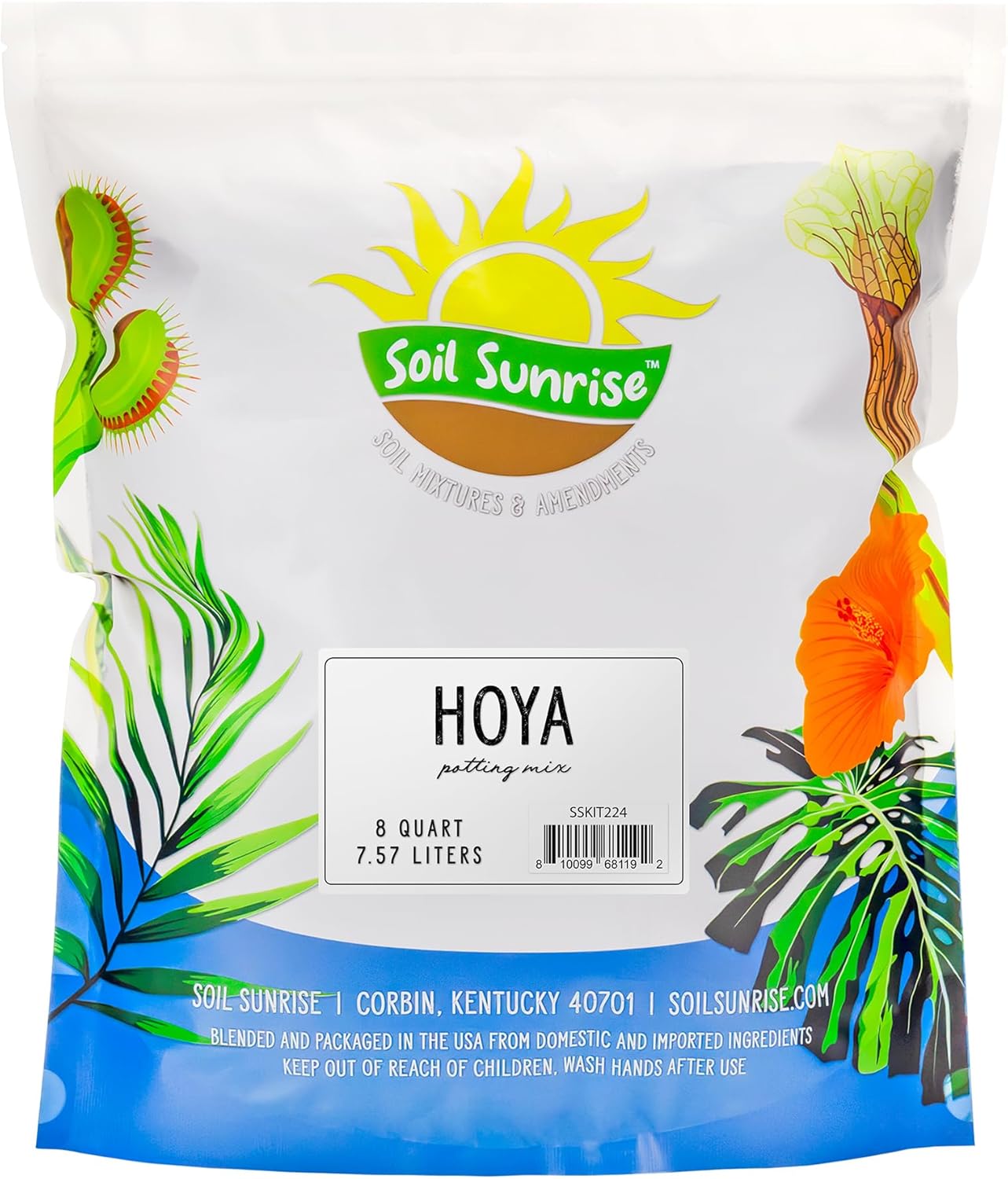
Soil Sunrise Hoya Potting Mix (8 Quarts)
| Unit Count | 1 Count |
|---|---|
| Volume | 8 quarts |
| Ingredients | Peat, perlite, mulch, charcoal, worm casting, lime |
| Brand Name | Soil Sunrise |
This Soil Sunrise mix is designed specifically for wax plants like Hoya carnosa and aims to recreate the airy, organic substrate those epiphytic vines prefer. The bagged blend combines peat moss, perlite, pine bark mulch, horticultural charcoal, worm castings, and lime to deliver light structure, good drainage, and some nutrient content without synthetic additives. In practice it works well for tabletop pots, hanging baskets, and propagation trays where fast drainage and reduced compaction matter; water passes through readily and the bark content helps keep roots aerated. The included charcoal and castings add gentle long‑term benefits for root health and soil biology. Limitations are its peat base, which will break down over time and may require periodic refresh or top dressing, and the 8 quart size may be small for repeated repotting of larger plants. For growers who want a ready-made, epiphyte-style medium that minimizes root rot and supports healthy Hoyas, this mix is a practical choice.
Best for: Buyers who want a ready-made, epiphyte-inspired potting medium to keep Hoya carnosa healthy in containers and hanging baskets with minimal mixing.
Less Ideal for: Gardeners seeking a sustainable peat-free medium or those repotting large mature Hoyas who need larger volumes of soil at once.
- Formulated for Hoyas with bark, perlite, and charcoal to promote drainage and aeration
- Contains worm castings for gentle nutrient release and improved soil biology
- No artificial fillers or dyes listed, using natural ingredients only
- Lightweight, loose structure that reduces compaction and helps prevent root rot
- Peat-based mix will compact and degrade over time and needs refreshing
- 8 quart bag is relatively small for frequent repotting of larger specimens
Verdict: A convenient, epiphyte-style potting mix that makes it easy to give Hoya carnosa the drainage and aeration they need to thrive.
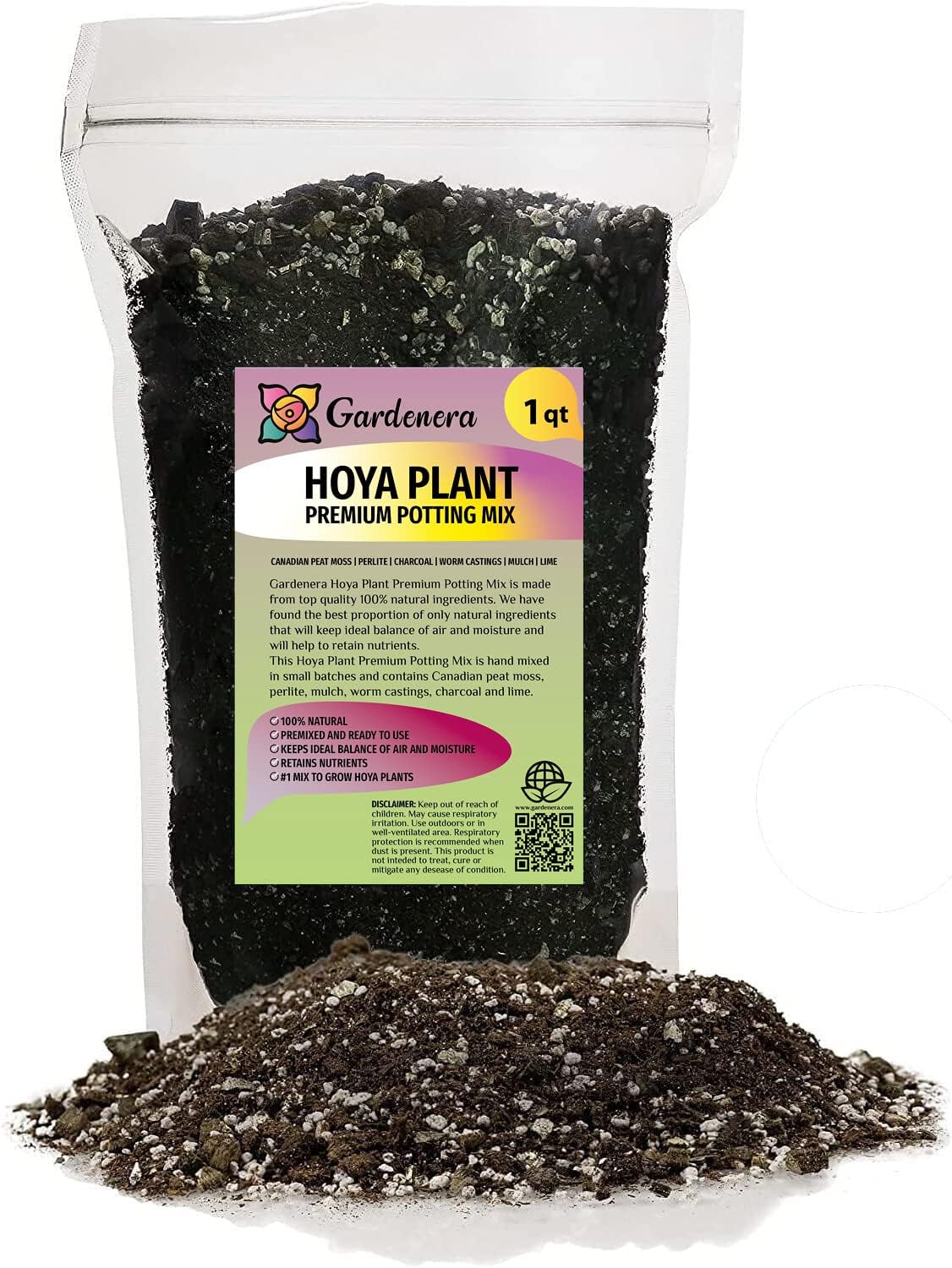
Gardenera Premium Potting Mix for Hoya Plants — 1 Quart
| Brand Name | Gardenera |
|---|---|
| Item Type Name | HOYA PLANT |
| Volume | 1 quarts |
| Unit Count | 1 Count |
| Manufacturer | Gardenera |
This Gardenera potting mix is designed specifically for Hoyas and aims to give plants a fast start with a balanced, airy medium. It is typically used for repotting Hoya carnosa and similar species in small containers or for top-ups in hanging baskets. The formula lists Canadian peat moss and perlite for drainage and moisture retention, warm castings and mulch for nutrients and organic matter, and charcoal plus lime to help with soil pH and microbial health. In practice that means easier root development, reduced risk of waterlogging compared with straight potting soil, and fewer immediate fertilizer needs after repotting. The 1 quart size is convenient for single-plant jobs but needs multiple units for several pots. Limitations are the small volume for larger collections and that ingredient proportions are proprietary so exact drainage and nutrient levels can vary between batches. For growers focused on consistent performance, this mix is a reliable ready-made option for keeping Hoya carnosa vigorous without custom blending at every repot.
Best for: Hoya growers who prioritize plant performance and want a ready-made mix that promotes strong roots and reliable moisture control when repotting individual Hoya carnosa plants.
Less Ideal for: Collectors with many plants or those who prefer to custom-blend potting media should consider larger bags or components sold separately.
- Formulated for Hoyas with peat moss and perlite to balance moisture and aeration
- Includes organic castings and mulch to supply nutrients and support root growth
- Charcoal and lime included to help with soil health and pH balance
- Pre-mixed ready-to-use bag simplifies repotting and reduces prep time
- Small 1 quart volume requires buying multiple bags for several plants
- Does not list exact ingredient proportions or N-P-K values for precise nutrient planning
Verdict: Buy this mix if you want a performance-focused, ready-made potting medium that promotes healthy roots and balanced moisture for Hoya carnosa repotting.
Prime Plants California Organic Hoya Potting Mix (12 oz)

| Unit Count | 12 Ounce |
|---|---|
| Item Type Name | Soil |
| Volume | 12 fluid ounces |
| Brand Name | Prime Plants California |
This 12 oz Prime Plants California mix is a ready‑to‑use, soilless medium formulated specifically for Hoya species. It combines New Zealand moss, coconut chips, and perlite to deliver strong drainage and good aeration while retaining enough moisture for Hoya roots. In practice it is best for repotting cuttings, seedlings, or a single small mother plant and the bag size is convenient for 2–4" or one 6" pot. The lightweight, organic components reduce compaction and help prevent root rot, and the absence of heavy garden soil makes it easy to adjust watering and fertilizing routines. Because it is a focused mix rather than a complete potting soil, you may need to topdress or supplement with a diluted fertilizer for longer‑term potted plants. The small 12 oz quantity is economical for trialing or caring for a few plants but will not suit larger repotting projects without multiple bags.
Best for: Buyers who want a purpose‑built mix to optimize drainage and root health for Hoya carnosa cuttings, seedlings, or small potted specimens and prefer a ready‑to‑use organic blend.
Less Ideal for: Not a good fit for growers needing large volumes or a complete fertilized potting soil for mature, high‑maintenance plants.
- Formulated for Hoyas with materials that promote drainage and aeration
- Soilless, organic ingredients reduce risk of compaction and root rot
- Ready to use straight from the bag for quick repotting of cuttings and seedlings
- Small 12 oz package is convenient for single pots or trial batches
- Small bag size limits use to a few pots and requires buying multiple bags for bigger collections
- No added nutrients listed so frequent light fertilizing is needed for long‑term growth
Verdict: A compact, ready‑to‑use soilless mix that gives Hoya carnosa excellent drainage and aeration for cuttings and small pots.
Doter Hoya Potting Soil Mix, 1 qt

| Brand Name | Doter |
|---|---|
| Unit Count | 32 Ounce |
| Item Type Name | Garden soil |
| Volume | 1 quarts |
This one-quart Doter potting mix is blended specifically for Hoya plants and is intended for potting or repotting individual houseplants. The formula combines chunky perlite, pine bark and peat-like components to improve drainage and airflow so roots avoid waterlogging, while added nutrients and pH balancing aim to support foliage and flowering. In practical use the lightweight texture makes filling small pots and top-ups easy, and the mix will suit hanging baskets and compact containers where Hoyas prefer a fast-draining medium. Because this is a single-quart retail package it is best for small-scale use, trial repots, or grafting mixes rather than filling many larger pots. Buyers should expect a modest quantity and plan to blend with additional perlite or bark for very coarse preferences. The product is simple to use straight from the bag and is a convenient option for hobbyists who want a Hoya-oriented mix without mixing components themselves.
Best for: Hoya owners and indoor plant hobbyists who want a purpose-made, ready mix for single pots or occasional repotting and prefer a simple, low-effort solution.
Less Ideal for: People who need large volumes for many plants or who want exact component ratios to create highly customized, extra-coarse mixes.
- Formulated specifically for Hoya with pH-balanced and nutrient-enriched blend
- Good drainage and aeration from chunky perlite and bark components
- Ready-to-use small bag convenient for single pots, top-ups, and repotting
- Lightweight texture that is easy to handle when filling small containers
- Only a one-quart volume so not practical for repotting multiple or larger plants
- No detailed ingredient ratios provided, limiting precise mix customization
Verdict: A convenient, Hoya-focused potting mix in a small bag that delivers good drainage and ready-to-use convenience for single pots and beginner repots.
rePotme Hoya Classic Potting Soil Mix (2 Quart)

| Brand Name | rePotme |
|---|---|
| Unit Count | 64 Ounce |
| Item Type Name | Potting Soil |
| Volume | 2 quarts |
This rePotme Classic potting soil is a 2-quart, hand-blended mix made for indoor plants and oriented toward growers who want consistent, ready-to-use media for Hoyas and other houseplants. It is produced in small batches and comes in a reusable resealable pouch that helps preserve freshness between uses. The formulation emphasizes drainage and optimal water content, which suits Hoya species that prefer airy, well-draining mixes rather than heavy, moisture-retentive soils. Typical use is repotting or topping up containers for pothos, monstera, Hoya, and similar houseplants. Practical benefits include a consistent blend that reduces the need to improvise with perlite or bark, convenience of the small bag for single pots, and safety guidance to avoid inhaling dust during handling. Limitations are its small 2-quart volume, which means multiple bags are needed for larger collections, and the listing does not specify exact ingredient ratios so advanced growers who custom-blend for specific Hoya species may prefer to amend or use a larger professional mix.
Best for: Buyers who prioritize a reliable, ready-made houseplant mix and want a consistent, easy-to-use medium for repotting individual Hoyas or a small collection without mixing ingredients themselves.
Less Ideal for: Growers with large collections or those who need precise, customizable ingredient ratios for specialist Hoya species should consider bulk mixes or custom blends instead.
- Hand-blended in small batches for consistent quality
- Designed for good drainage and optimal water content suitable for Hoya
- Comes in a resealable pouch to preserve freshness between uses
- Convenient 2-quart size ideal for single-pot repotting or trialing a new mix
- Small 2-quart volume requires buying multiple bags for larger collections
- No detailed ingredient ratios listed for growers who prefer exact mixes
Verdict: A dependable small-batch potting mix that gives Hoyas good drainage and consistent results without the fuss of mixing your own media.
HydraGarden Forbidden Cereal Aroid Potting Mix, 6.5 QT

| Unit Count | 6.5 Ounce |
|---|---|
| Brand Name | HydraGarden |
| Style Name | Houseplants & Aroids |
| Ingredients | Orchid Bark, Charcoal, Perlite, Coco Chunks, Coco Coir, LECA Clay Pebbles, Worm Castings, Sphagnum Moss |
HydraGarden Forbidden Cereal is a high-drainage, soilless potting mix built from chunky components like orchid bark, coco coir, coco chips, perlite, biochar, worm castings and LECA clay pebbles with a small bag of New Zealand sphagnum moss layered on top. It is used as a repotting and growing medium for aroids and many common houseplants where preventing waterlogging and improving root oxygenation are priorities. The mix’s large particle profile lets water move quickly through containers, reduces the chance of root rot, and keeps roots from becoming compacted while still offering organic matter and nutrients from castings and charcoal. The separated sphagnum allows you to add a moisture-retaining topper when needed without compromising overall drainage. Practical limits are that its chunky texture holds less water than peat-rich mixes so watering frequency will increase for moisture-loving species, and the soilless formula may require more frequent feeding compared with a loam-based soil. For growers who prioritize fast drainage, root health, and a lightweight, peat-free blend, this mix delivers predictable, performance-focused results.
Best for: Serious growers who prioritize root health and fast drainage for aroids and tropical houseplants and who monitor watering and feeding closely to maximize plant performance.
Less Ideal for: Casual owners who want a low-maintenance, moisture-retentive potting medium or growers of very moisture-loving species that require consistently damp substrate.
- Very high drainage and aeration from chunky ingredients reduces risk of root rot
- Peat-free, soilless organic components including worm castings and biochar for nutrient support
- Layered sphagnum moss gives flexible moisture retention as a topper or propagation aid
- Includes LECA clay pebbles for improved structure and long-term stability
- Holds less moisture than peat-based mixes so plants may need more frequent watering
- Soilless formula typically requires more regular fertilizing for sustained nutrient supply
Verdict: Choose this mix if you need a chunky, peat-free medium that maximizes drainage and root aeration for high-performance aroid growing.
Back to the Roots Organic Expanding Coco Coir Potting Soil Brick (10 lb)

| Item Highlight | 10 lb compressed coco coir brick; peat-free; OMRI Listed |
|---|---|
| Item Type Name | Coconut Coir |
| Volume | 2 cubic feet |
| Ingredients | Coconut Coir |
| Style Name | Expanding Potting Soil |
This compressed coco coir brick provides a lightweight, peat-free potting medium that expands when you add water to create loose, airy substrate for containers and seed flats. It is typically used by hydrating the 10 lb block to about 2 cubic feet of coir and then using it alone for potted plants, mixing it into garden soil to improve drainage and aeration, or blending with compost for starting seeds. Notable features include OMRI listing for organic use, a balanced pH suited to a wide range of plants, and compact storage before expansion which saves space. Practical benefits are improved root aeration and water retention compared with heavy garden loam, easier handling than bulky bags, and versatility across vegetables, herbs, and ornamentals. Important limitations are that coco coir is a soilless substrate and does not supply significant nutrients on its own so you will need to add fertilizer or compost for long-term potted herbs like rosemary, and the product requires time and a water source to expand before use.
Best for: Buyers who prioritize low-risk, easy-to-handle, organic potting media and want a versatile base for container herbs and seed starting without dealing with heavy bags.
Less Ideal for: Gardeners who want a ready-to-plant, nutrient-rich potting mix out of the box or those who prefer soil with built-in slow-release fertilizer.
- Peat-free OMRI listed organic coco coir suitable for organic growing
- Expands from a compact brick to about 2 cubic feet for easy storage and transport
- pH balanced and airy texture that improves drainage and root aeration
- Versatile use: can be used alone, for seed starting, or mixed into existing soil
- Provides little inherent fertility so supplemental feeding or compost is needed for nutrient-hungry plants
Verdict: A compact, peat-free coco coir brick that expands into an airy, pH-balanced base ideal for low-risk organic container gardening and seed starting when paired with fertilizer or compost.
Choosing the Right Soil for Hoya Carnosa: Key Factors to Consider
Drainage and Porosity
Hoya carnosa is prone to root rot if its roots sit in water. A soil that drains rapidly and has an open, chunky texture helps excess water pass through without stripping all available moisture. Look for mixes that include coarse components such as pumice, perlite, or bark to create air pockets within the pot, which lets roots breathe and supports the plant's semi-succulent root habits.
Too-fine soils compact and reduce pore space over time, causing slow drainage and oxygen-poor conditions that stress the plant. For pots with limited bottom drainage, favor coarser mixes or add a drainage layer to preserve porosity.
Moisture Retention Balance
Hoyas need some available moisture between waterings but do not tolerate constant wet feet. The ideal mix holds enough water to feed roots for several days while releasing excess quickly after watering. Components like coco coir or aged bark can retain usable moisture without becoming soggy, while mineral components control how quickly the media dries.
Your local indoor climate and watering cadence influence the ideal balance. In dry heated homes, a slightly moister blend helps prevent rapid desiccation. In humid or poorly ventilated rooms, choose a drier, faster-draining mix to reduce rot risk.
Root Aeration
Good root aeration supports healthy root hair development and encourages a compact, fibrous root system instead of long, spindly roots that indicate poor oxygen access. Aeration is delivered by coarse particles and chunky organic pieces that prevent total collapse of pore spaces as the soil settles.
When repotting, avoid pressing the mix too firmly. Gentle packing maintains air channels and helps new roots establish quickly. Aeration also matters for potted hoyas grown in small containers where root density can become high.
pH and Nutrient Profile
Hoya carnosa prefers a slightly acidic to neutral root environment. The mix should not shift pH dramatically as it ages. A balanced, low-strength nutrient profile supports steady growth and flowering without causing salt buildup that damages feeder roots.
Slow-release, mild fertilizers or mixes with modest starter nutrients are useful if you prefer lower-maintenance feeding. Avoid media that rely on heavy immediate fertilization to perform, since constant high salts can harm hoya roots.
Ingredient Stability and Longevity
Stable ingredients keep the soil structure intact for longer between repottings. Components such as well-aged bark and inorganic aggregates resist rapid breakdown and maintain porosity. Fast-decomposing materials compact and reduce drainage over a single season.
Consider how often you want to repot. If you prefer infrequent repotting, choose a more inert, long-lasting mix. If you repot annually and refresh media regularly, a lighter, faster-decomposing organic blend may be acceptable.
How Hoya Carnosa Roots Behave in Containers
Hoya carnosa has a root system adapted to cling and search within gaps rather than sit in dense, uniform soils. In containers the roots prefer spaces they can enter and exit easily, so mixes that mimic an epiphytic or coarse forest-floor substrate are often best. That means more inorganic pieces and chunky organics than a typical potting soil.
When repotting, inspect roots for compacted zones and gently tease them into the new mix. Avoid burying the crown too deep; the top of the root ball should sit slightly lower than the pot rim so water drains away from the stem junction.
- Look for visible chunks of bark, perlite, or pumice in the mix.
- Avoid dense, peat-only media that stay soggy.
- Use pots with adequate drainage holes and consider raised shelves or trays for airflow under pots.
Adapting Mixes to Your Watering Schedule
Match the soil to how often you water. If you prefer to water frequently with small amounts, a mix that holds a little more moisture can reduce watering frequency. If you water thoroughly and let pots dry between sessions, favor faster-draining blends.
Observe how the top inch of the mix dries. For hoyas, allow the top layer to dry slightly between waterings, but do not let the entire root ball go bone dry for extended periods, especially during active growth.
- Frequent light watering: include more moisture-retaining components like coco coir.
- Infrequent deep watering: prioritize chunky drainage materials.
- Always adjust based on indoor humidity and pot size.
Repotting Frequency and Pot Selection
Hoyas like being slightly root bound, so you do not need to repot every year. Repot when roots circle the pot excessively or the mix has broken down and no longer drains well. Choosing the right pot material also affects soil performance: terracotta wicks moisture and speeds drying, while plastic holds moisture longer.
For hanging baskets or shallow pots, use a lighter, more aerated mix to prevent compaction. In deeper containers, ensure the bottom layers are not too fine to avoid water pooling.
- Repot every 2 to 3 years or when mix breaks down.
- Choose terracotta for quicker drying, plastic for more moisture retention.
- Select a pot size that gives roots room without excessive extra soil volume.
Managing Fertility Without Overfeeding
Hoyas do not require heavy feeding. Use a low-strength, balanced fertilizer during the growing season or choose a mix with a mild starter nutrient charge. Excessive fertilizer encourages leaf growth at the expense of flowers and can lead to salt buildup in the soil, which harms roots.
Flush the pot occasionally if you suspect salt accumulation and repot with fresh media when buildup persists. Slow-release nutrients in the mix are acceptable if they are formulated for indoor flowering houseplants.
- Use dilute fertilizer during spring and summer growth.
- Avoid high-nitrogen formulas that favor foliage over blooms.
- Consider periodic soil refreshes instead of heavy feeding.
Adjusting Mixes for Different Climates
Indoor humidity and seasonal heating change how quickly a potting mix dries. In dry winter heating, mixes that hold a touch more moisture may prevent stress. In humid climates, choose drier, faster-draining blends and increase airflow to reduce rot risk.
If you move plants outdoors in summer, monitor watering closely because outdoor conditions often speed up evaporation and may require different soil behavior than when the plant is indoors.
- Dry indoor air: add moisture-retentive components sparingly.
- Humid conditions: increase inorganic drainage materials.
- Outdoor summer placement: watch for faster drying and adjust watering.
How We Chose the Best Soil for Hoya Carnosa
We focused on characteristics that directly affect Hoya carnosa health in typical indoor and sheltered outdoor situations. Key evaluation criteria included drainage and porosity to reduce root rot risk, moisture-holding balance so mixes do not dry out too fast or stay waterlogged, and nutrient profile aimed at steady growth without forcing excessive vegetative growth over flowering. We also assessed pH suitability and ingredient stability so the mix does not compact over time, plus ease of use for repotting into common container sizes. Exclusions: heavy all-purpose garden soils, pure peat-only mixes, and media designed for aquatic or fully outdoor ground planting were excluded because they do not match Hoya carnosa needs. Products that made the list demonstrated consistent drainage, a stable open texture, and a nutrient approach appropriate for slow-growing vining houseplants. We avoided mixes with high salt content or those that depend on frequent, complex fertilizing to stay healthy.
FAQ
How often should I repot Hoya carnosa?
Repotting every 2 to 3 years is typical, or sooner if the mix has compacted or roots are circling the pot. Choose a slightly larger pot only if the plant is clearly root bound; hoyas often bloom better when a bit constrained.
Can I use regular indoor potting soil for my Hoya?
Regular potting soil can be too fine and may retain too much moisture, increasing rot risk. If you use it, amend with coarse materials like perlite, pumice, or bark to improve drainage and aeration.
What components help a mix dry faster without drying out completely?
Inorganic aggregates such as perlite, pumice, and crushed lava rock create stable pore spaces that speed drainage while chunky bark or coco coir provides moderate moisture retention. The combination keeps the mix balanced.
Should I worry about pH for Hoya carnosa soil?
Hoyas prefer a slightly acidic to neutral pH, but they are tolerant within a moderate range. Most indoor mixes aimed at aroids and epiphytes fall into a suitable pH band; avoid mixes that are extremely alkaline or purposefully limed for outdoor lawns.
Is adding a drainage layer helpful for hoyas?
A drainage layer can help in pots with limited hole size, but it does not replace a well-draining mix. The best approach is an airy soil and proper drainage holes; a layer of coarse material at the bottom can assist water flow in some setups.
Final Verdict
Choose a soil that prioritizes drainage and stable porosity while holding enough moisture for your watering routine. Balance coarse inorganic particles with a modest amount of organic matter so the mix stays open, feeds roots gently, and resists compaction. Prioritize the tradeoffs that matter most to your conditions: faster-drying mixes for humid rooms and outdoor placements, slightly moisture-retentive blends for dry indoor air. With the right mix you will reduce rot risk and support healthy growth and flowering in Hoya carnosa.
