

Note: This article contains affiliate links. If you click on these links and make a purchase, I may earn a small commission at no extra cost to you. This helps support my research and content. Read my full affiliate disclosure here.
Getting the right soil for fiddle leaf fig trees in pots changes how the plant drinks, breathes, and roots. These trees need a mix that drains freely to prevent root rot while still holding enough moisture between waterings so leaves stay glossy and growth continues. This guide shortlists seven top soils suited to potted fiddle leaf figs and explains the practical tradeoffs you should weigh. We evaluate mixes for drainage, nutrient balance, aeration, and longevity to help you pick the right substrate for your light, watering, and container setup.
Top Picks at a Glance
| Best Overall The best all-around choice for most situations | Leaves & Soul Professional Fiddle Leaf Fig Soil Mix, Ready-to-Use (8.2 Quarts) |  |
| Best Quality Built to a higher standard if you want something more solid | Duspro Fiddle Leaf Fig Potting Mix, 5-in-1 Pre-Mixed Soil, 6 Quarts |  |
| Best Value The sweet spot between price and what you get | Perfect Plants Indoor Plant Soil, 8 qt Coco Coir Potting Mix |  |
| Best Budget The cheapest option that still gets the job done reliably | Doter Organic Fiddle Leaf Fig Potting Mix (1 qt) |  |
| Highest Rated A top-rated pick with lots of positive feedback | Top Tier Genetics Optimal Fiddle Leaf Fig Potting Mix (8 qts) |  |
| Most Popular A crowd favorite that many people choose with confidence | Perfect Plants Fiddle Leaf Fig Soil, 8 qt (Coconut Coir Blend) |  |
| Best Seller A high-volume bestseller chosen again and again | Back to the Roots Organic Indoor Potting Mix, 6 Quart |  |
Leaves & Soul Professional Fiddle Leaf Fig Soil Mix, Ready-to-Use (8.2 Quarts)

| Brand | Leaves and Soul |
|---|---|
| Volume | 8.2 quarts |
| Made in | USA |
| Blend components | Peat, sawdust, coarse sand, pine bark |
This ready-to-use soil mix is designed specifically to give fiddle leaf figs a balanced root environment during potting and repotting. The blend of peat, coarse sand, pine bark, and sawdust creates a looser medium that holds useful moisture while allowing excess water to drain, which helps reduce prolonged saturation that often leads to root issues. It comes in a resealable 8.2 quart bag so you can store leftovers between projects. Typical use is straightforward: fill a pot with drainage, position the root ball, and add the mix around it without compacting. Practical benefits include improved aeration for root expansion, easier watering management compared with heavy all-peat mixes, and a ready-made option so beginners do not need to measure amendments. Limitations are that the formula is general for indoor tropicals rather than tailored to a specific soil pH or fertilizer schedule, and very large trees or growers wanting custom mixes may still prefer to add perlite, coco coir, or slow-release fertilizer to tune drainage and nutrients for their specific setup.
Best for: Plant owners who want a practical, store-bought potting mix that simplifies repotting fiddle leaf figs and other indoor tropicals without blending ingredients themselves.
Less Ideal for: Growers seeking a precisely tuned professional or diagnostic mix for advanced specimens or those who prefer to custom-blend amendments and fertilizers.
- Blend balances moisture retention and drainage to reduce risk of overwatering
- Components (peat, pine bark, coarse sand, sawdust) create a loose, airy root zone
- Ready-to-use formula saves time and removes need to mix amendments
- Resealable bag keeps unused soil contained for later repotting projects
- Not customized for specific nutrient ratios or pH so additional fertilization may be needed
- May require extra drainage amendment for very fast-draining or very large containers
Verdict: Buy this if you want a convenient, ready-made soil that gives fiddle leaf figs better drainage and aeration than generic potting soils.
Duspro Fiddle Leaf Fig Potting Mix, 5-in-1 Pre-Mixed Soil, 6 Quarts

| Volume | 6 quarts |
|---|---|
| Brand Name | Duspro |
| Item Type Name | Premium Fiddle Leaf Fig Soil |
| Item Highlight | Coco coir, coconut fiber, perlite, pumice & pine bark |
This Duspro fiddle leaf fig potting mix is a pre-mixed blend of coco coir, coconut fiber, perlite, pumice and pine bark made to simplify repotting and everyday care for Ficus lyrata. You use it straight from the bag when repotting or refreshing topsoil; the coir and coconut fiber retain moderate moisture while pumice and perlite improve drainage and reduce compaction around roots. Pine bark adds structure so the mix does not become dense in larger containers. The 6 quart bag is convenient for a single medium pot or a few small plants and is packaged to pour cleanly during repotting. Important limitations are the small volume for large trees and the absence of added nutrients, so you will still need to fertilize during active growth and buy larger quantities for big repots. Overall it is a practical, low-mess option if you want a balanced, ficus-focused mix without assembling ingredients yourself.
Best for: Ideal for plant owners who want a ready-made, ficus-focused potting mix to streamline repotting and reduce mess when refreshing soil in medium indoor pots.
Less Ideal for: Not a good fit for people repotting large mature trees in one job or those who prefer a soil with built-in fertilizers and slow-release nutrients.
- Pre-mixed 5-in-1 formula removes the need to blend separate components
- Blend of coco coir and coconut fiber helps retain balanced moisture
- Pumice and perlite improve drainage and root airflow to reduce compaction
- Pine bark provides structure helpful for larger pots and mature plants
- 6 quart volume is small for repotting large fiddle leaf figs
- No fertilizers or nutrients included so separate feeding is required
Verdict: Buy this if you want a convenient, pre-balanced potting mix that improves drainage and root airflow specifically for fiddle leaf figs.
Perfect Plants Indoor Plant Soil, 8 qt Coco Coir Potting Mix
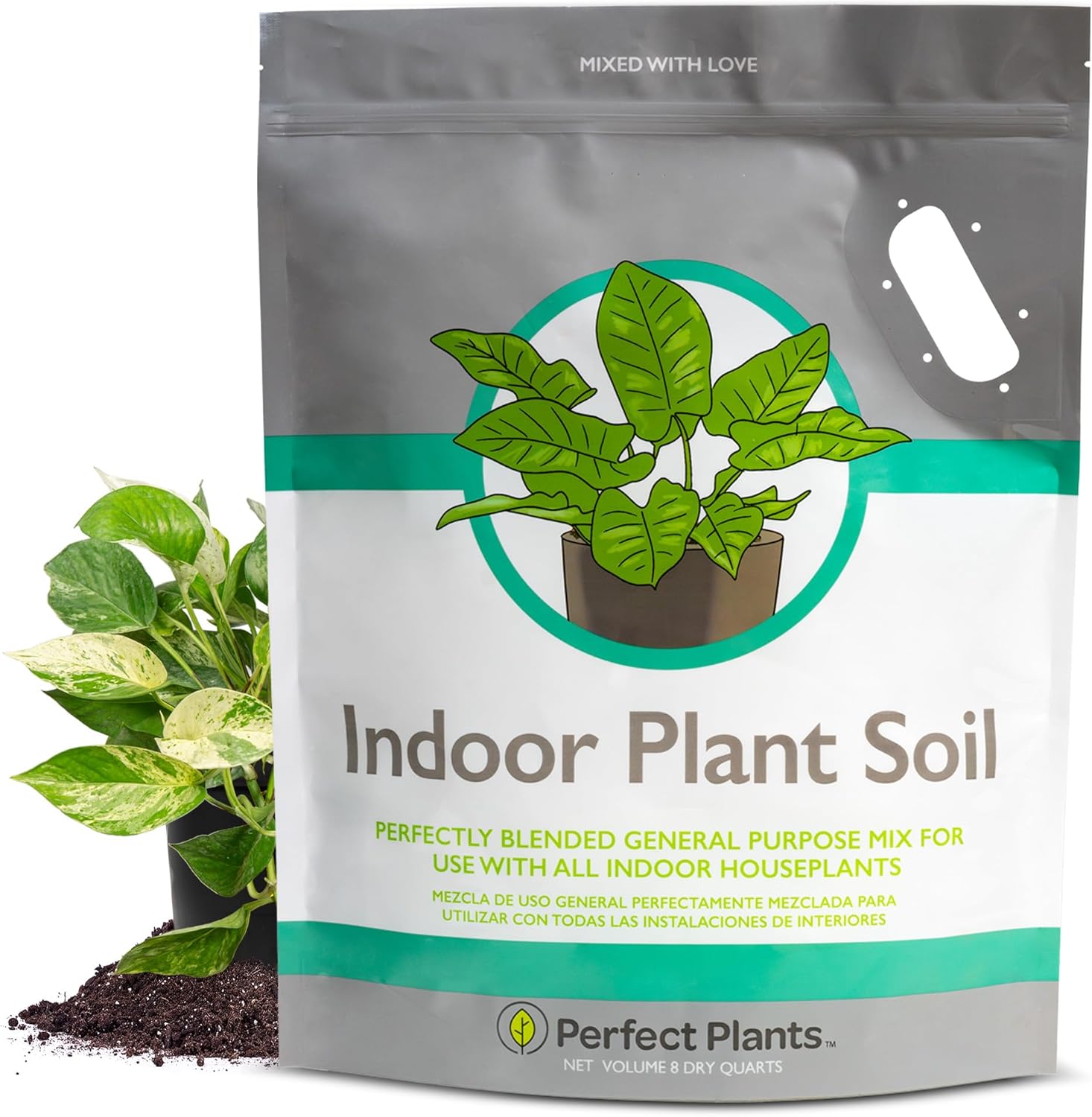
| Brand | PERFECT PLANTS |
|---|---|
| Volume | 8 quarts |
| Composition | Coconut coir, pine bark, perlite, sand, garden lime |
This 8-quart Perfect Plants indoor potting mix is a ready-to-use, organic blend aimed at potted houseplants and larger indoor specimens like fiddle leaf figs. The mix combines coconut coir for structure, pine bark for root texture, perlite for aeration, sand for improved drainage and garden lime to stabilize pH. In practice it drains quickly while retaining enough moisture for roots, which helps prevent waterlogged soil that commonly stresses Ficus lyrata in pots. The resealable heavy-duty bag makes storage convenient between repots. Important limitations are bag volume and the lack of added fertilizer, so you will likely need to incorporate slow-release pellets or a liquid feed after repotting to support long-term growth of a mature fiddle leaf fig. Also, for very large trees or heavy clay pots you may prefer a larger commercial bale or to mix in extra chunky bark for even faster drainage. For typical home repotting of medium to large fiddle leaf figs this mix provides a balanced, user-friendly medium that improves aeration and reduces compaction.
Best for: Buyers who want a ready-made, well-draining indoor potting mix to repot or refresh medium to large fiddle leaf figs and other tropical houseplants without blending components themselves.
Less Ideal for: Those needing bulk quantities for very large trees or landscape use or growers who prefer pre-fertilized mixes for long-term feeding without additional amendments.
- Organic blend (coconut coir, pine bark, perlite, sand) that promotes good drainage and root aeration
- Formulated to reduce compaction so roots of indoor trees establish more easily
- Resealable heavy-duty bag for tidy storage between uses
- Garden lime included to help maintain a stable pH suitable for many houseplants
- No added fertilizer so plants need supplemental feeding after repotting
- Only 8 quarts per bag which may be small for repotting very large fiddle leaf figs
Verdict: A convenient, well-draining organic potting mix that simplifies repotting fiddle leaf figs and improves root aeration for healthier indoor trees.
Doter Organic Fiddle Leaf Fig Potting Mix (1 qt)

| Brand Name | Doter |
|---|---|
| Unit Count | 32 Ounce |
| Item Type Name | Garden soil |
| Manufacturer | Doter |
| Volume | 1 quarts |
This 1 quart Doter potting mix is formulated for fiddle leaf figs and other indoor tropicals, combining bark, perlite, coarse sand and organic compost to create a fast-draining, airy medium. You would use it for repotting young or potted fiddle leaf figs and topping up containers where better drainage and aeration are needed. Notable features include a slightly acidic to neutral pH tailored for ficus, added slow-release fertilizer for ongoing nutrients, and a coarse texture that helps prevent waterlogging and root rot. In practice the mix speeds drying between waterings and supports fuller foliage by keeping roots oxygenated while supplying steady nutrition. The small 1 qt size is convenient for trial repots or for plants in small pots, but you will need multiple bags for larger plants or full repots. Expect to combine it with larger quantities of chunky amendments if you are creating a custom ficus blend for big specimens. For gardeners on a budget this product offers a purpose-built option in a compact package that is easy to handle and store.
Best for: For cost-conscious indoor plant owners who want a ready-made, ficus-friendly mix for small repots, topdressing, or trial runs without blending components themselves.
Less Ideal for: Not a good fit for growers repotting large or mature fiddle leaf figs who need bulk bags or a custom coarse-heavy bonsai-style mix.
- Formulated blend (bark, perlite, coarse sand) for improved drainage and aeration
- Includes organic compost and slow-release fertilizer for ongoing nutrients
- pH tuned slightly acidic to neutral suitable for fiddle leaf figs
- Small 1 qt bag is easy to handle and convenient for small repots or topdressing
- Small volume means multiple bags are required for larger plants or full repots
- No detailed ingredient percentages or complete nutrient analysis provided
Verdict: A compact, ficus-focused potting mix that gives small fiddle leaf figs better drainage and steady nutrition without DIY mixing.
Top Tier Genetics Optimal Fiddle Leaf Fig Potting Mix (8 qts)

| Brand | Top Tier Genetics |
|---|---|
| Style Name | OPTIMAL Fiddle Leaf Fig Potting Mix |
| Volume | 4 quarts |
| Item Weight | 2 pounds |
This potting mix is designed specifically for fiddle leaf fig (Ficus lyrata) care and is sold ready to use for potting or repotting indoor specimens. The formula blends organic materials to create a fast-draining yet moisture-retentive texture that helps prevent waterlogged roots while keeping enough available moisture for steady growth. Nutrients and minerals are included to support leaf development and encourage healthy root expansion during transplanting. In practice it suits routine repotting of established trees and gives beginners a simple option without needing to blend amendments. The small 4 quart volume and lightweight packaging make it convenient for handling and for testing on single plants, though multiple bags are needed for larger trees or full repots. Because the mix is tailored to fiddle leaf figs, it reduces the need to supplement with perlite or extra fertilizer immediately, but heavy feeders or very large specimens may need additional amendments over time.
Best for: Buyers who want a dependable, plant-specific potting mix for indoor fiddle leaf figs and prefer a ready-made organic option that minimizes mix-and-match preparation.
Less Ideal for: People repotting large trees that need a high volume of soil or growers who require custom mixes for heavy feeding plants.
- Formulated specifically for fiddle leaf fig plants to promote root development
- Ready-to-use organic blend that balances drainage and moisture retention
- Includes nutrients and minerals to support leaf growth
- Fast-draining texture helps reduce risk of root rot
- Small 4 quart volume means multiple bags are required for large repots
Verdict: A convenient, fiddle-leaf-fig–focused organic potting mix that delivers reliable drainage and nutrient support for healthy indoor Ficus growth.
Perfect Plants Fiddle Leaf Fig Soil, 8 qt (Coconut Coir Blend)

| Volume | 8 quarts |
|---|---|
| Unit Count | 256 Fluid Ounces |
| Item Highlight | Drains excess water, feeds foliage 6 months |
This 8-quart Perfect Plants potting mix is built specifically to give potted fiddle leaf figs a healthier root environment by combining coconut coir, pine bark, perlite and sand with a slow-release fig food. Use it when repotting or topping up container-grown ficus to reduce compaction, improve aeration and keep roots moist without waterlogging. The coconut coir holds a useful moisture cycle while pine bark and perlite keep the mix light and well drained, which helps prevent root rot in larger indoor containers. The included plant food feeds foliage for about six months, so newly potted trees get a nutrient boost without immediate fertilizing. The bag is resealable for easier storage and smaller jobs. Limitations are its bag size and volume for larger trees—an 8-quart bag is best for small to medium pots or for blending into existing soil rather than filling very large containers by itself.
Best for: Gardeners who want a ready-to-use, ficus-focused potting mix to improve drainage and root health when repotting or refreshing small to medium potted fiddle leaf figs.
Less Ideal for: Owners of very large trees or those needing bulk soil for multiple large containers should choose larger volumes or mix several bags together.
- Formulated blend (coconut coir, pine bark, perlite, sand) that improves drainage and reduces compaction
- Contains slow-release fig food to feed foliage for up to six months
- Lightweight, airy texture that promotes root aeration in container-grown figs
- Resealable heavy-duty bag for convenient storage and partial use
- Only 8 quarts per bag, which is small for repotting large fiddle leaf figs
- Not a complete substitute for regular fertilizing after the included six-month feed
Verdict: A convenient, ficus-focused potting mix that improves aeration and drainage while giving new repots a six-month nutrient boost.
Back to the Roots Organic Indoor Potting Mix, 6 Quart

| Unit Count | 192 Fluid Ounces |
|---|---|
| Item Type Name | Indoor Potting Mix 6qt |
| Item Highlight | Peat-free, 100% organic, made in the USA |
| Ingredients | Coconut Coir, Yucca, Mycorrhizae, Perlite, Horticultural Sand |
This Back to the Roots indoor potting mix is a ready-to-use, 6-quart blend designed for common houseplants such as pothos, monstera and ferns. It combines coconut coir, yucca extract, mycorrhizae, perlite and horticultural sand to improve moisture retention, drainage and root development without peat. In practice it feels light and friable, so it is easy to pot seedlings or repot mature plants and it reduces compaction that can suffocate roots. The added mycorrhizae helps young roots establish and take up nutrients more efficiently while yucca extract helps the mix hold water between waterings, which is convenient for forgetful or busy plant owners. Because it is peat-free and made in the USA, it is a more sustainable choice versus traditional peat-based mixes. Limitations are the small 6-quart size, which means frequent repurchasing for larger collections, and the bag does not include fertilizer so you will need to feed plants separately as they grow.
Best for: Buyers who prioritize low-risk, easy-care houseplant solutions and want an organic, ready-to-use potting mix that reduces watering hassles and supports healthy root growth.
Less Ideal for: Not ideal for gardeners who need large-volume soil for many pots or for those expecting a mix that includes built-in fertilizer for long-term feeding.
- Peat-free organic formula that reduces environmental impact
- Yucca extract improves moisture retention between waterings
- Contains mycorrhizae to support root development and nutrient uptake
- Light, well-draining texture suitable for repotting seedlings and houseplants
- Small 6-quart volume may require frequent repurchasing for larger plant collections
- Does not include fertilizer so additional feeding is necessary
Verdict: A compact, peat-free potting mix that simplifies indoor plant care by holding moisture and boosting root establishment.
Choosing the Right Soil for Fiddle Leaf Fig Trees in Pots: Key Factors to Consider
Drainage and Percolation
Drainage determines how quickly excess water moves away from roots after watering. For fiddle leaf figs in pots, fast percolation prevents waterlogged conditions that lead to root rot and yellowing leaves.
A good container mix combines particle sizes so water flows through but leaves pockets of moisture. Sands, pumice, or perlite in the blend speed drainage; too little and the mix stays soggy, too much and the plant dries out quickly between waterings.
Moisture Retention and Water-Holding Capacity
Fiddle leaf figs prefer consistent moisture without being saturated. Water-holding materials such as fine bark, coco coir, or peat alternatives moderate how quickly a pot dries out.
Balance is important because highly retentive mixes reduce the frequency of watering but increase the risk of anaerobic soil when drainage is poor. Consider your schedule and humidity: if you forget water occasionally, a slightly more retentive mix helps, but only with adequate drainage.
Aeration and Root Structure
Air in the root zone is as important as water. A loose, chunky soil texture with irregular particles encourages roots to grow outward and access oxygen, which supports vigorous top growth and resilience.
Ingredients like chunky bark, coarse perlite, or pumice create stable pore space. Fines and silt that dominate a mix will compact and suffocate roots over time, so choose blends that emphasize structure for indoor container use.
Nutrient Balance and Fertility
A starting nutrient profile determines how soon you must begin fertilizing. Some mixes provide a slow-release base fertilizer or contain composted materials that supply early nutrients, while others are intentionally lean to let you control feeding.
For houseplants like fiddle leaf figs, a moderate baseline fertility is helpful during the first few months after repotting. If the mix is low in nutrients, plan a feeding schedule. Avoid mixes with unpredictable organic content that can vary in nutrient strength or attract pests.
pH and Mineral Availability
Soil pH affects how readily a fiddle leaf fig can access essential minerals such as iron and magnesium. These trees tend to do well in slightly acidic to neutral mixes where common micronutrients remain available.
While most indoor potting mixes fall into an acceptable pH range, very alkaline substrates can lead to leaf chlorosis. If your tap water is alkaline or your plant shows deficiency symptoms, select a mix designed to maintain slightly acidic conditions or amend accordingly.
Longevity and Breakdown Rate
Potting mixes change as they age: fine components decompose, and aggregates can collapse. A mix that holds structure for a couple of years reduces the need for frequent repotting and keeps roots healthy.
Look for materials that resist rapid breakdown, such as coarse bark and inorganic aggregates. If a mix contains a lot of composted or fine peat-like material, expect compaction and plan to refresh or repot sooner.
Matching Soil to Container Size and Drainage Configuration
Container volume and drainage holes change how a soil behaves. Small pots dry faster and benefit from a mix with greater water-holding capacity, while large pots can tolerate mixes with faster drainage because their larger volume buffers moisture fluctuations.
- For small decorative pots, include more moisture-retentive components to avoid frequent watering.
- For deep or large pots, prioritize drainage and structure to keep the lower root ball oxygenated.
- Always use a container with adequate drainage holes; soil choice cannot fully compensate for a sealed bottom.
Adjusting Mix for Your Watering Schedule and Home Climate
Your watering frequency and indoor humidity should guide your soil choice. Homes with low humidity and frequent watering can use a looser mix, while humid rooms benefit from a slightly faster-draining blend to prevent prolonged wetness.
- If you water on a strict schedule, choose a mix with predictable drying times.
- For erratic watering, favor mixes with moderate retention to protect roots between sessions.
- Consider adding pumice or perlite to speed drying in humid environments.
Amending or Custom Mixing Soil at Home
Many gardeners create custom blends to tune drainage and fertility. Start with a high-quality indoor potting base and add measured amounts of chunky bark, perlite, or pumice to increase aeration. Coconut coir or composted bark can adjust moisture retention without overly compacting the mix.
- Aim for a mix that holds together slightly when squeezed but breaks apart easily.
- Use coarse bark for long-term structure and perlite for immediate drainage improvement.
- Avoid heavy garden soils or straight compost in pots; they can compact and retain too much water.
Repotting Signs and When to Refresh Soil
Repotting frequency depends on how fast the mix breaks down and how rapidly the tree grows. Signs that soil needs refreshing include slow drainage, compacted texture, persistent wetness after watering, or visible root circling at the drainage holes.
- Repot or top-dress every 12 to 24 months depending on mix stability.
- Gently tease roots and replace at least one-third of the old media when refreshing the pot.
- If soil compresses heavily, fully replace the mix to restore aeration.
Dealing with Common Soil-Related Problems
Yellow leaves, brown edges, or sudden drop of lower leaves can stem from soil factors such as poor drainage, inconsistent moisture, or nutrient imbalance. Diagnose by checking the root zone for firmness, smell, and root color: healthy roots are firm and pale, while rotten roots are soft and dark.
- If soil smells sour, remove the tree and trim rotten roots before repotting into a fresh, fast-draining mix.
- For persistent nutrient deficiency, apply a balanced indoor plant fertilizer according to label directions rather than adding unknown organic materials.
- To improve aeration without full repotting, incorporate coarse amendments and reduce watering frequency.
How We Chose the Best Soil for Fiddle Leaf Fig Trees in Pots
We evaluated candidate soils using criteria that matter in everyday container care for fiddle leaf figs. First, drainage and percolation rates were assessed because poor drainage is the leading cause of root rot in potted figs. Second, moisture retention and water-holding capacity were considered so mixes can keep roots hydrated between reasonably spaced waterings without staying soggy. Third, nutrient profile and baseline fertility were reviewed to determine whether a mix supports steady growth or will need frequent feeding. Fourth, structure and aeration were checked; a loose, chunky texture encourages root branching and oxygen exchange. Fifth, longevity and stability were examined to see how the mix breaks down over time and whether it compacts or requires repotting. Finally, we considered pest and disease risk related to organic components that can harbor pathogens. We excluded soils formulated for outdoor beds, pure topsoil, and mixes that lack basic labeling on drainage or components. The shortlisted soils met minimum standards for container suitability, contained ingredients appropriate for indoor tropical trees, and aligned with the evaluation dimensions listed above.
FAQ
How often should I water a fiddle leaf fig in potting soil?
It depends on pot size, light, and the soil mix. Usually water when the top 1-2 inches of soil are dry; in a well-draining mix that is often every 7-14 days. Check moisture with a finger or moisture meter rather than following a strict schedule.
Can I use outdoor garden soil in a pot for my fiddle leaf fig?
Usually not. Outdoor garden soil often compacts in containers and has poor drainage, which raises risk of root rot. Container-specific mixes are formulated to remain airy and drain well for indoor trees.
Will adding perlite damage a fiddle leaf fig?
No. Perlite is an inert mineral that improves aeration and drainage. Use it sparingly to avoid making the mix drain too quickly; a balanced amount helps roots access oxygen while retaining some moisture.
Should I add fertilizer to new potting soil?
Some mixes include starter nutrients, but many are intentionally low in fertility. If the mix lacks a clear nutrient source, begin a light feeding regimen a few weeks after repotting using a balanced houseplant fertilizer.
How can I tell if the soil is causing root rot?
Look for wilted or yellowing leaves coupled with a foul or sour smell from the potting mix and soft, dark roots. If you suspect rot, remove the plant, inspect roots, trim damaged tissue, and repot into a fast-draining fresh mix.
Is coco coir a good ingredient for fiddle leaf fig soil?
Yes. Coco coir holds moisture without becoming waterlogged, improves structure, and is a renewable alternative to peat. Combine it with chunky bark and perlite or pumice to balance retention and drainage.
Final Verdict
Choose a potting mix that balances drainage, moisture retention, and stable structure for fiddle leaf fig trees in pots. Prioritize aeration and percolation to avoid root rot, then tune nutrient content based on whether the mix includes starter fertility. Expect to refresh or repot as components break down, and match the mix to your container size, watering rhythm, and home humidity. Ultimately, pick a substrate that makes watering predictable and keeps roots oxygenated. That approach simplifies care and gives you the best chance of long-term, vigorous growth.
