

Note: This article contains affiliate links. If you click on these links and make a purchase, I may earn a small commission at no extra cost to you. This helps support my research and content. Read my full affiliate disclosure here.
Choosing the right soil for fiddle leaf figs matters because these tropical houseplants are prone to both root rot from overwatering and stress from poor aeration. The wrong mix can stunt growth, cause leaf drop, or invite pests and disease. In this guide we shortlisted the top potting soils tailored for fiddle leaf fig care, focusing on mixes that support both good drainage and steady moisture. You will see how we evaluated texture, water-holding capacity, and nutrient balance to find options suited to common indoor setups. Read on to find a soil that helps your fiddle leaf fig develop strong roots and healthy leaves.
Top Picks at a Glance
| Best Quality Built to a higher standard if you want something more solid | Rosy Soil Aroid Potting Mix, Chunky Biochar Soil, 4 Quarts |  |
| Best Value The sweet spot between price and what you get | Leaves and Soul Professional Fiddle Leaf Fig Soil Mix, 2.2 Quart |  |
| Best Budget The cheapest option that still gets the job done reliably | Doter Organic Fiddle Leaf Fig Potting Mix (1 qt) |  |
| Highest Rated A top-rated pick with lots of positive feedback | Top Tier Genetics Optimal Fiddle Leaf Fig Potting Mix (8 qts) |  |
| Most Popular A crowd favorite that many people choose with confidence | Fiddle Leaf Fig Organic Potting Mix, 7.5 L |  |
| Best Seller A high-volume bestseller chosen again and again | Perfect Plants Fiddle Leaf Fig Soil, 8 qt (Coconut Coir Blend) |  |
Rosy Soil Aroid Potting Mix, Chunky Biochar Soil, 4 Quarts

| Unit Count | 128 Ounce |
|---|---|
| Volume | 4 quarts |
| Item Highlight | Peat-Free, Microbially Active, Superior Aeration & Drainage |
| Style Name | Aroid Soil |
Rosy Soil Aroid Potting Mix is designed specifically for Monsteras, philodendrons, anthuriums and other tropical aroids that need fast-draining, airy media. The mix combines pine bark fines, pumice and biochar to give a chunky structure that resists compaction and lets roots breathe while water moves through quickly. It is also enriched with worm castings, mycorrhizae and compost to create a microbially active medium that supports nutrient uptake and root vigor over time. Because it is peat-free and formulated to be carbon negative, it is a good choice for growers who want an environmentally friendlier alternative to peat-based mixes. In practical use the mix fills multiple small pots from a 4-quart bag, comes in a resealable bag to stay fresh, and is well-suited for repotting and top-ups where drainage and aeration are priorities. Limitations are the small package size for larger collections and the chunky texture may dry faster than peat blends, requiring more frequent watering for some indoor conditions.
Best for: Buyers who prioritize plant performance and root health for Monsteras and other tropical aroids and who want a fast-draining, microbially active soil that keeps roots airy.
Less Ideal for: Casual plant owners who prefer low-maintenance, moisture-retentive peat blends or who need large volumes for many pots should consider other options.
- Chunky mix with pine bark and pumice provides excellent drainage and prevents compaction
- Includes biochar and beneficial microbes to boost nutrient availability and root health
- Peat-free, designed to reduce carbon impact compared with traditional peat mixes
- Resealable bag and 4-quart volume convenient for repotting multiple small houseplants
- 4-quart bag is small for larger collections or multiple repots
- Chunky texture dries faster than peat-based mixes and may require more frequent watering
Verdict: Choose this mix if you want a high-performance, chunky potting medium that gives Monsteras and other aroids superior drainage, aeration, and microbial support.
Leaves and Soul Professional Fiddle Leaf Fig Soil Mix, 2.2 Quart

| Brand Name | Leaves and Soul |
|---|---|
| Unit Count | 35.2 Ounce |
| Volume | 2.2 quarts |
| Made in | USA |
Leaves and Soul Professional Fiddle Leaf Fig Soil Mix is a small, ready-to-use bagged potting medium aimed at indoor Ficus lyrata and similar houseplants. The blend of peat, coarse sand, sawdust, and pine bark produces a loose, airy texture that holds useful moisture while allowing excess water to drain, which helps reduce the risk of prolonged saturation. Use it for repotting young or mature fiddle leaf figs by placing the plant at the proper depth in a container with drainage holes and filling around the root ball without compacting. The mix is designed to support root expansion and improve oxygen movement to roots, so plants establish more quickly after potting. Resealable packaging keeps leftover soil contained between projects. Limitations: the bag is relatively small for large trees, and the mix contains peat and sawdust, so you may want to supplement with coarse perlite or bark for extra drainage in very heavy pots or for growers who prefer peat-free blends.
Best for: Plant owners who prioritize practical, low-fuss repotting solutions and want a mix that creates a balanced root environment for fiddle leaf figs and other indoor tropicals. Ideal for people who prefer a pre-mixed blend they can use straight from the bag.
Less Ideal for: Growers who need large volumes for big trees or who strictly avoid peat-based media should consider larger bags or peat-free alternatives.
- Ready-to-use formula tailored for fiddle leaf figs and similar indoor plants
- Balanced blend that retains moisture while promoting drainage and aeration
- Resealable bag keeps unused soil fresh between uses
- Small 2.2 quart bag may not be enough for large repotting jobs
- Contains peat and sawdust which some growers avoid or may want to amend further
Verdict: A compact, ready-to-use soil blend that gives fiddle leaf figs balanced moisture and improved root aeration for straightforward repotting.
Doter Organic Fiddle Leaf Fig Potting Mix (1 qt)

| Brand Name | Doter |
|---|---|
| Unit Count | 32 Ounce |
| Item Type Name | Garden soil |
| Manufacturer | Doter |
| Volume | 1 quarts |
This 1 quart Doter potting mix is formulated for fiddle leaf figs and other indoor tropicals, combining bark, perlite, coarse sand and organic compost to create a fast-draining, airy medium. You would use it for repotting young or potted fiddle leaf figs and topping up containers where better drainage and aeration are needed. Notable features include a slightly acidic to neutral pH tailored for ficus, added slow-release fertilizer for ongoing nutrients, and a coarse texture that helps prevent waterlogging and root rot. In practice the mix speeds drying between waterings and supports fuller foliage by keeping roots oxygenated while supplying steady nutrition. The small 1 qt size is convenient for trial repots or for plants in small pots, but you will need multiple bags for larger plants or full repots. Expect to combine it with larger quantities of chunky amendments if you are creating a custom ficus blend for big specimens. For gardeners on a budget this product offers a purpose-built option in a compact package that is easy to handle and store.
Best for: For cost-conscious indoor plant owners who want a ready-made, ficus-friendly mix for small repots, topdressing, or trial runs without blending components themselves.
Less Ideal for: Not a good fit for growers repotting large or mature fiddle leaf figs who need bulk bags or a custom coarse-heavy bonsai-style mix.
- Formulated blend (bark, perlite, coarse sand) for improved drainage and aeration
- Includes organic compost and slow-release fertilizer for ongoing nutrients
- pH tuned slightly acidic to neutral suitable for fiddle leaf figs
- Small 1 qt bag is easy to handle and convenient for small repots or topdressing
- Small volume means multiple bags are required for larger plants or full repots
- No detailed ingredient percentages or complete nutrient analysis provided
Verdict: A compact, ficus-focused potting mix that gives small fiddle leaf figs better drainage and steady nutrition without DIY mixing.
Top Tier Genetics Optimal Fiddle Leaf Fig Potting Mix (8 qts)

| Brand | Top Tier Genetics |
|---|---|
| Style Name | OPTIMAL Fiddle Leaf Fig Potting Mix |
| Volume | 4 quarts |
| Item Weight | 2 pounds |
This potting mix is designed specifically for fiddle leaf fig (Ficus lyrata) care and is sold ready to use for potting or repotting indoor specimens. The formula blends organic materials to create a fast-draining yet moisture-retentive texture that helps prevent waterlogged roots while keeping enough available moisture for steady growth. Nutrients and minerals are included to support leaf development and encourage healthy root expansion during transplanting. In practice it suits routine repotting of established trees and gives beginners a simple option without needing to blend amendments. The small 4 quart volume and lightweight packaging make it convenient for handling and for testing on single plants, though multiple bags are needed for larger trees or full repots. Because the mix is tailored to fiddle leaf figs, it reduces the need to supplement with perlite or extra fertilizer immediately, but heavy feeders or very large specimens may need additional amendments over time.
Best for: Buyers who want a dependable, plant-specific potting mix for indoor fiddle leaf figs and prefer a ready-made organic option that minimizes mix-and-match preparation.
Less Ideal for: People repotting large trees that need a high volume of soil or growers who require custom mixes for heavy feeding plants.
- Formulated specifically for fiddle leaf fig plants to promote root development
- Ready-to-use organic blend that balances drainage and moisture retention
- Includes nutrients and minerals to support leaf growth
- Fast-draining texture helps reduce risk of root rot
- Small 4 quart volume means multiple bags are required for large repots
Verdict: A convenient, fiddle-leaf-fig–focused organic potting mix that delivers reliable drainage and nutrient support for healthy indoor Ficus growth.
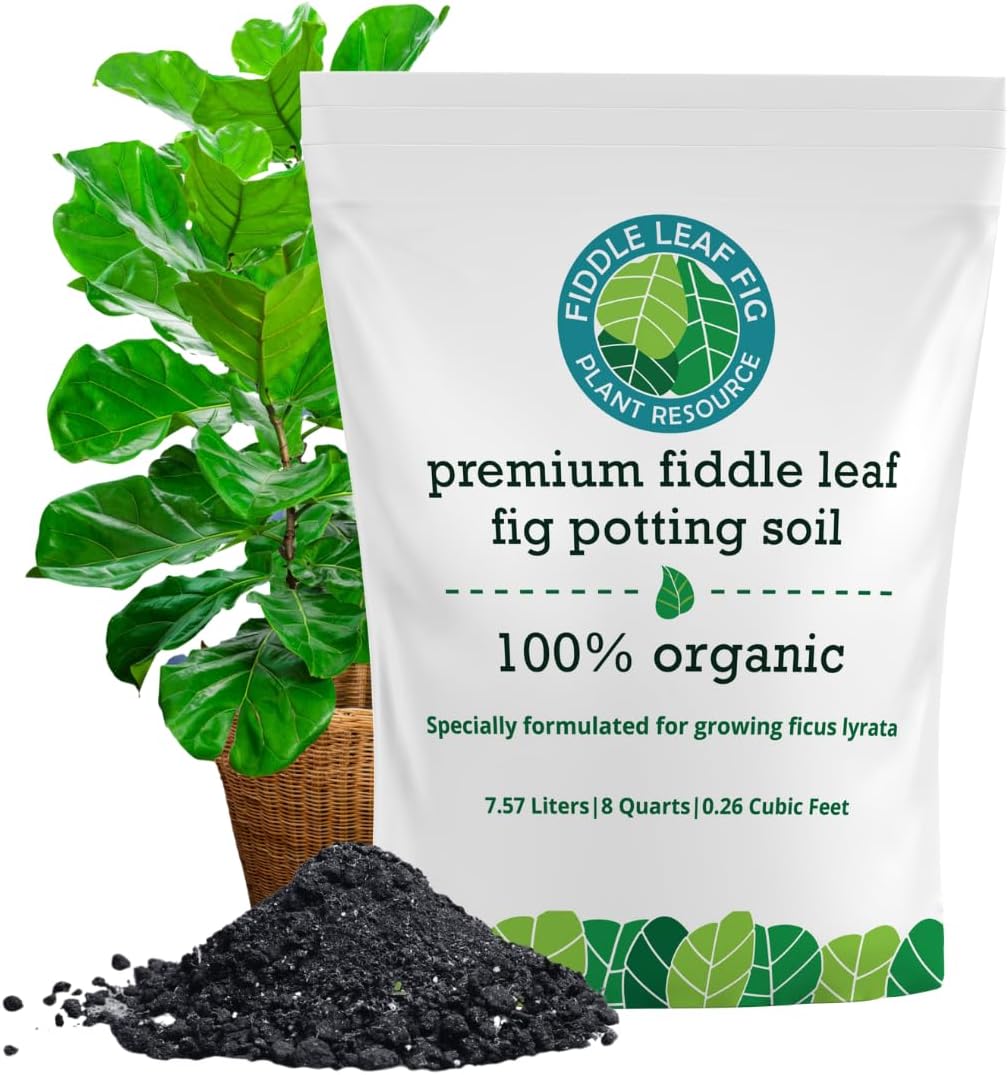
Fiddle Leaf Fig Organic Potting Mix, 7.5 L
| Volume | 7.57 liters |
|---|---|
| Formulation | Blend with compost, coco coir, bark, biochar and pumice |
| Ideal For | Fiddle leaf figs and ficus varieties |
| Usage Instructions | Use in well-draining pots |
| Made in | USA |
This ready-to-use potting mix is built for fiddle leaf figs and similar indoor trees; it combines aged bark, coco coir, compost, biochar and pumice to create a chunky, airy medium that drains quickly yet holds enough moisture for steady root uptake. Typical use is repotting or refreshing topsoil in well-draining containers where you want to reduce brown spots, leaf drop and root-sogginess. Notable features include an organic nutrient base with added minerals, a high-pumice and bark fraction for aeration, and a resealable bag to keep the mix fresh between uses. In practice the mix encourages darker, glossier leaves and steadier growth because roots get oxygen and avoid long wet periods that cause rot. Expect easier watering routines and fewer moisture-related problems, especially on larger potted specimens. Limitations are that it is a specialty houseplant mix rather than a general garden soil and you may still need to adjust fertilizing for long-term potted trees since the bag supplies initial nutrients but not indefinite feeding.
Best for: Buyers who prioritize proven, plant-specific solutions and want a low-risk repotting mix that reduces moisture problems and supports visible leaf health.
Less Ideal for: Gardeners seeking a multipurpose outdoor soil or an all-in-one long-term fertilizer solution should consider other products tailored to those needs.
- Formulated for fiddle leaf figs with a chunky, well-aerated texture that reduces root rot risk
- Contains organic compost and biochar to supply initial nutrients and improve soil biology
- High proportion of pumice and bark improves drainage and prevents compaction
- Resealable bag preserves freshness between uses and small-batch US production supports quality control
- Not a complete long-term fertilizer so regular feeding is still required for mature trees
Verdict: A plant-specific, well-aerated organic mix that lowers watering risk and helps fiddle leaf figs develop healthier leaves and roots.
Perfect Plants Fiddle Leaf Fig Soil, 8 qt (Coconut Coir Blend)

| Volume | 8 quarts |
|---|---|
| Unit Count | 256 Fluid Ounces |
| Item Highlight | Drains excess water, feeds foliage 6 months |
This 8-quart Perfect Plants potting mix is built specifically to give potted fiddle leaf figs a healthier root environment by combining coconut coir, pine bark, perlite and sand with a slow-release fig food. Use it when repotting or topping up container-grown ficus to reduce compaction, improve aeration and keep roots moist without waterlogging. The coconut coir holds a useful moisture cycle while pine bark and perlite keep the mix light and well drained, which helps prevent root rot in larger indoor containers. The included plant food feeds foliage for about six months, so newly potted trees get a nutrient boost without immediate fertilizing. The bag is resealable for easier storage and smaller jobs. Limitations are its bag size and volume for larger trees—an 8-quart bag is best for small to medium pots or for blending into existing soil rather than filling very large containers by itself.
Best for: Gardeners who want a ready-to-use, ficus-focused potting mix to improve drainage and root health when repotting or refreshing small to medium potted fiddle leaf figs.
Less Ideal for: Owners of very large trees or those needing bulk soil for multiple large containers should choose larger volumes or mix several bags together.
- Formulated blend (coconut coir, pine bark, perlite, sand) that improves drainage and reduces compaction
- Contains slow-release fig food to feed foliage for up to six months
- Lightweight, airy texture that promotes root aeration in container-grown figs
- Resealable heavy-duty bag for convenient storage and partial use
- Only 8 quarts per bag, which is small for repotting large fiddle leaf figs
- Not a complete substitute for regular fertilizing after the included six-month feed
Verdict: A convenient, ficus-focused potting mix that improves aeration and drainage while giving new repots a six-month nutrient boost.
Choosing the Right Soil for Fiddle Leaf: Key Factors to Consider
Drainage and Aeration
Fiddle leaf figs need soil that drains freely so roots get oxygen between waterings. A mix with coarse particles such as perlite, pumice, or coarse sand creates air pockets and prevents prolonged saturation. Good aeration reduces risk of root rot and supports the plant's relatively large root mass.
When evaluating mixes, look for visible chunky components and avoid overly fine, dust-like potting media. Even with regular watering, a well-aerated soil lets excess water move away from the root ball quickly, which is critical for indoor pots without natural soil buffering.
Moisture Retention
While drainage is important, fiddle leaf figs still need consistent moisture between waterings. A mix that includes modest amounts of organic matter such as coco coir, aged compost, or peat alternatives will retain enough water to keep roots hydrated without staying waterlogged.
Balance is the key. Too little retention causes rapid drying and leaf drop; too much retention creates anaerobic conditions. Choose a soil that pairs water-holding organics with chunky mineral components to smooth moisture availability over several days.
Nutrient Content and Buffering
Fiddle leaf figs are heavy feeders compared with many houseplants, so the base mix should provide a modest nutrient reserve and accept supplemental feeding. Slow-release organic components or an initial light fertilizer charge will sustain growth while allowing you to top up with liquid feedings as needed.
A neutral, well-buffered mix prevents sudden nutrient spikes or salt buildup. Avoid soils loaded with high initial fertilizer charges that can burn fine roots; instead prefer mixes that accept fertilizer inputs predictably and distribute nutrients evenly.
pH and Salt Levels
A near-neutral pH (slightly acidic to neutral) suits nutrient uptake for fiddle leaf figs. Excessively alkaline or acidic mixes can limit availability of key nutrients like iron, magnesium, and manganese, causing leaf yellowing and poor growth. Check product details for pH range and avoid mixes with unclear or extreme pH claims.
Low soluble salt levels are also important, especially for indoor plants that receive regular feeding. High salt concentration stresses roots and can cause edge burn on leaves. A good mix will report low initial salts or be described as safe for sensitive container plants.
Particle Size and Texture
Particle size drives both drainage and moisture retention. Medium-to-large particles promote airflow and drainage, while fine particles contribute to moisture-holding capacity. For fiddle leaf figs, a heterogeneous texture that mixes both types is ideal because it prevents compaction while retaining enough water.
Inspect the mix visually when possible. Avoid soils that look like uniform dust or that crumble into a compact mass when wet. A visibly chunky, well-graded texture is a reliable indicator of good long-term behavior in pots.
Long-Term Structural Stability
Potted mixes that break down quickly will compact, reducing aeration and causing drainage problems within months. Stable components like bark, perlite, and pumice keep the structure open over time. Consider mixes formulated for container longevity or those that list slow-decomposing ingredients.
If you repot infrequently, prioritize structural stability even if that means slightly lower initial moisture retention. Stable mixes retain their beneficial properties and reduce the frequency of root-bound or waterlogged issues.
Mixes to Use with Different Pot Types
The pot material and drainage hole design change how soil behaves. Terracotta wicks moisture faster than glazed ceramic or plastic, so a faster-draining mix pairs well with terracotta. For plastic pots that retain moisture longer, choose a slightly chunkier mix to avoid sogginess.
Self-watering containers alter the root zone moisture profile. In those systems, use a coarser mix to keep the root crown from sitting in continually wet media. For hanging baskets or shallow containers, prioritize lighter mixes that reduce overall weight without sacrificing structural integrity.
- Terracotta pots: slightly higher moisture retention is acceptable
- Plastic pots: lean toward faster-draining, chunkier mixes
- Self-watering pots: use coarse blends that prevent waterlogging
Adapting Soil for Repotting and Root Health
When repotting a fiddle leaf fig, refresh only part of the root ball if the plant is large and healthy. Loosen compacted roots and integrate fresh mix around the outer edges to give new roots a place to grow. Avoid burying the trunk deeper than it previously sat.
If a plant shows signs of root stress, a temporary mix with higher drainage can help roots recover. Be cautious with abrupt changes: transition by mixing old and new media to allow roots to adjust to different moisture regimes.
- Mix old and new soil when repotting to reduce shock
- Avoid deep reburial of the stem to prevent crown rot
- Increase drainage temporarily for recovering roots
Watering Strategies Based on Soil Choice
Soil choice should inform your watering routine. Faster-draining mixes require more frequent, thorough waterings that allow the top inch to dry between events. Heavier mixes with more organic matter can be watered less often but monitor the lower root zone for moisture retention.
Use a moisture meter or finger test to check the root zone rather than relying strictly on a schedule. Consistent season-to-season adjustments are necessary because indoor light and humidity change throughout the year.
- Fast-draining soil: water thoroughly, then let top inch dry
- Water-retentive soil: water less frequently, monitor lower root zone
- Use moisture meters or manual checks rather than strict schedules
Amendments to Improve Existing Potting Mixes
If an existing potting mix is too dense, amend it with coarse perlite, pumice, or chunky bark to boost aeration. For mixes that dry out too quickly, add a measured amount of coco coir or well-aged compost to increase water-holding capacity without creating compaction.
Avoid over-amending. Small incremental changes are safer and easier to reverse. Test the amended mix in a spare pot or on a small section of the root ball before applying broadly to large plants.
- Use perlite or pumice to increase aeration
- Add coco coir or aged compost to boost moisture retention
- Make small changes and test before full repotting
pH Adjustment and Fertilizer Compatibility
If mix pH is outside the preferred range, use mild, gradual amendments rather than aggressive fixes. Elemental sulfur can lower pH slowly, while dolomitic lime raises pH over time. Test pH periodically to ensure it remains in a range that supports nutrient uptake.
Choose fertilizer types that match the mix's buffering capacity. Well-buffered mixes accept both organic and mineral feeds, but very inert mixes will need more frequent, balanced fertilizer inputs to sustain foliage growth.
- Test pH occasionally, particularly after major amendments
- Match fertilizer schedule to how quickly the soil releases or holds nutrients
How We Chose the Best Soil for Fiddle Leaf
We selected mixes that suit the specific needs of fiddle leaf figs in indoor environments. Our filters prioritized physical structure and water behavior first: texture and aeration determine oxygen availability at the roots, while drainage characteristics reduce the risk of prolonged soggy conditions. We also checked nutrient balance and slow-release feeding potential so the soil supports steady leaf production without frequent fertilizer stress. Longevity and stability of the mix mattered because soils that compact quickly lead to drainage problems. pH neutrality and suitability for container culture were required to fit common fiddle leaf fig care routines. We excluded generic outdoor garden soils, raw composts that need further processing, and mixes formulated only for succulents or orchids. The evaluated dimensions that actually mattered were drainage and perlite/leca content, organic matter and nutrient buffering, particle size and aeration, pH and salt levels, and long-term structural stability for container plants. These criteria guided our shortlist and align with the scoring metrics used in per-product evaluations.
FAQ
How often should I repot a fiddle leaf fig into fresh soil?
Usually every 1.5 to 3 years depending on growth rate and pot size. Repot sooner if roots circle the pot, drainage declines, or the mix becomes compacted.
Can I use all-purpose indoor potting soil for a fiddle leaf fig?
Often you can, but many all-purpose mixes are too fine or retain too much water. Improve them by adding coarse material like perlite or bark to increase aeration.
Is it better to use peat-based mixes or coco coir for fiddle leaf figs?
Both can work. Coco coir is more sustainable and holds moisture while remaining airy if mixed with chunky components. Peat can retain water well but may compact faster without coarse amendments.
How can I tell if my soil is causing root rot?
Symptoms include yellowing leaves, limp growth, and a foul smell from the root ball. Gently remove the plant to inspect roots; healthy roots are firm and light-colored while rotten roots are mushy and brown or black.
Should I sterilize used potting mix before reusing it?
Sterilizing can reduce pests and pathogens but also kills beneficial microbes and alters structure. For reused mix, prefer mixing with fresh media and adding coarse amendments rather than full sterilization.
What particle size mix is best for large, mature fiddle leaf figs?
A well-graded mix with noticeable chunky particles and modest fines supports large root systems. This texture prevents compaction and maintains airflow around a mature plant's extensive roots.
Final Verdict
Prioritize a soil that balances drainage with moisture retention and that stays structurally stable in containers. For most indoor fiddle leaf figs, mixes that combine chunky mineral elements with modest organic matter provide the best compromise between oxygenation and steady hydration. Match the mix to your pot type and watering habits, and be prepared to adjust amendments if drainage or compaction issues appear. Focusing on texture, pH, and long-term stability will help you choose a soil that keeps a fiddle leaf fig vigorous and less prone to root problems.
