

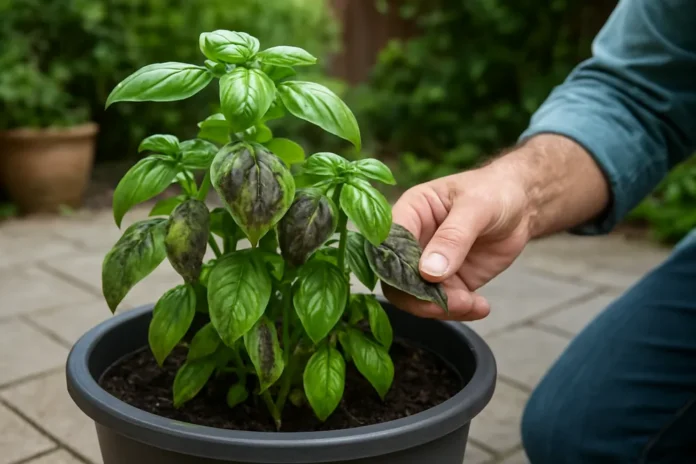
Basil leaves usually turn black because the plant got too cold, stayed too wet, or developed a fungal or bacterial leaf problem. Blackening can also come from bruising, severe sun stress after a sudden change, or natural leaf decline on older growth.
Basil is one of those herbs that looks lush and easy right up until it suddenly doesn't. When basil leaves turning black show up, the change can happen fast, especially in warm, humid weather or after a cool night. Sometimes the leaves develop scattered black spots. Other times whole leaves darken, wilt, and collapse.
In my experience, basil usually tells you a lot by how the blackening appears. A few soft dark patches after cold weather point in a very different direction than crisp black edges on stressed leaves or round lesions spreading through the plant. Once you match the symptom pattern to the cause, the fix becomes much clearer.
What Black Basil Leaves Usually Mean
Black leaves on basil are most often a sign of tissue damage. That damage can come from cold, soggy roots, disease, physical bruising, or environmental stress. Basil is a tender warm-season herb, so it reacts quickly when conditions slip outside its comfort zone.
The key is to look at the pattern. If the entire leaf turns dark and limp after a chilly night, cold injury is the likely culprit. If the leaves have distinct spots with yellow halos, disease climbs higher on the list. If the plant is drooping and the stems feel soft near the soil line, root trouble from overwatering may be behind it.
- Whole leaves darkening suddenly often points to cold exposure or severe stress
- Soft black patches can signal rot, disease, or bruising
- Dry black edges may come from sun stress, drought, or fertilizer burn
- Black spotting mixed with yellowing often suggests a leaf disease
- Black stems near the base can indicate damping off or crown rot, especially in young plants
When I diagnose basil, I first compare old leaves, new leaves, and the stems. If every age of leaf is blackening at once, I suspect weather or root stress before I suspect a nutrient issue.
Cold Damage Is One of the Most Common Causes
Basil hates cold. Even temperatures in the 40s can stress it, and anything close to frost can blacken leaves almost overnight. This is especially common in spring when gardeners set basil out a little too early, or in fall when a cool snap arrives before harvest is finished.
Cold-damaged basil leaves often look water-soaked at first, then turn dark brown or black and collapse. The damage may affect the uppermost exposed growth first, but after a cold night, the whole plant can look limp and discolored by morning.
Signs That Point to Cold Injury
- Blackening appears suddenly after a cool night
- Leaves feel limp or mushy rather than dry
- The entire plant may droop at once
- Damage is often worse on exposed plants in containers or near drafty windows
- New growth may be less affected if the cold was brief
If cold is the issue, move potted basil somewhere warmer right away or protect outdoor plants with row cover before the next cold night. Trim away completely black leaves after the plant has had a day or two to recover. If stems remain green and firm, basil often pushes new growth once warmth returns.
Overwatering and Soggy Soil Can Blacken Leaves
Basil likes steady moisture, but it does not like wet feet. When the soil stays soggy, roots struggle to breathe, and the plant starts to fail from the bottom up. Leaves may first droop, then yellow, develop dark blotches, or turn black as root damage worsens.
This problem is especially common in containers without enough drainage, heavy potting mix, saucers left full of water, or garden beds that stay wet after rain. Wet soil also opens the door to fungal root diseases that can make the decline happen even faster.
Clues That Overwatering Is the Problem
- Leaves droop even though the soil is wet
- Lower leaves discolor first
- Blackening is paired with yellowing or soft stems
- The pot feels heavy for days after watering
- Roots may smell sour or look brown instead of white
To help an overwatered basil plant, stop watering until the top inch of soil dries out. Empty saucers under pots, improve drainage, and consider repotting if the mix is compacted or sour. Remove badly damaged leaves so the plant can direct energy into healthy regrowth.
I do not judge basil watering by the calendar. I stick a finger into the soil, and if the top inch is still moist, I wait. That simple habit prevents a lot of black leaf problems.
Fungal and Bacterial Leaf Diseases Can Create Black Spots
If your basil leaves have clear spots rather than broad collapse, a leaf disease may be involved. Basil is prone to several fungal and bacterial issues, especially in humid weather, crowded plantings, and gardens where leaves stay wet for long stretches.
Bacterial leaf spot and some fungal leaf spots often begin as small dark lesions. These may enlarge, merge together, and eventually make whole sections of the leaf black. In severe cases, stems can also become streaked or weakened.
Disease Patterns to Watch For
- Round or irregular black spots with defined edges
- Spots surrounded by yellow halos
- Damage spreading from leaf to leaf over time
- Worsening after overhead watering or prolonged humidity
- Crowded plants with poor airflow
Remove the worst affected leaves promptly and discard them rather than composting if disease seems active. Water at the soil line instead of splashing the foliage. Thin nearby plants or prune lightly to improve airflow. If the plant is badly infected, it may be better to remove it entirely so the problem does not spread.
Sanitation matters here. Clean pruning snips, avoid handling wet plants, and do not reuse infected debris around new basil plantings. Disease pressure can linger longer than many gardeners expect, especially during hot, muggy stretches.
Downy Mildew Can Make Basil Darken and Collapse
Downy mildew deserves special attention because it is one of the most destructive basil problems. It usually starts with yellowing between veins on the upper leaf surface, but as it progresses, leaves can brown, darken, and become unusable. The undersides may show a grayish or purplish fuzzy growth in humid conditions.
Many gardeners miss it early because it does not always begin as obvious black spots. By the time leaves are turning dark and dropping, the disease can already be well established. Sweet basil is particularly vulnerable.
How Downy Mildew Differs From Simple Watering Stress
- Yellowing often appears before blackening
- Leaf undersides may have fuzzy growth
- The pattern follows leaf veins at first
- Humid weather makes it spread fast
- Multiple plants can develop the same symptoms at once
Unfortunately, heavily infected basil usually does not recover well. Remove affected plants, avoid wetting foliage, and give future basil more spacing and better airflow. If this has been a recurring issue in your garden, look for varieties bred for better downy mildew resistance.
When basil yellowing looks angular and neatly boxed in by veins, I get suspicious of downy mildew early. That vein-shaped pattern is more telling than the dark color that shows up later.
Bruising, Handling Damage, and Harvest Injury Can Turn Leaves Black
Not every black mark means the plant is sick. Basil leaves bruise easily. Rough handling, wind damage, rubbing against cages or containers, insect chewing, or harvesting with dull tools can leave darkened patches that later turn black.
This is especially common with basil brought in from the garden, washed, or refrigerated. Chilling injury from the refrigerator can also darken harvested leaves. If the blackening is limited to damaged areas and the plant otherwise looks healthy, this is usually a cosmetic issue rather than a major growing problem.
When Bruising Is the Likely Cause
- Dark patches line up with torn or bent tissue
- Only a few leaves are affected
- The plant is otherwise green and vigorous
- Blackening shows up after harvest, washing, transport, or storage
- Spots do not continue spreading across new leaves
Use clean, sharp snips when harvesting. Handle basil gently and avoid storing fresh leaves in the coldest part of the refrigerator. If only a few leaves are bruised, you can pinch them off and keep growing the plant as usual.
Sun Stress, Drought, and Fertilizer Issues Can Darken Leaf Edges
Basil loves sun, but sudden environmental swings can still stress it. A plant moved from indoor shade to strong outdoor sun may scorch. Drought stress can make leaf edges crisp and dark. Too much fertilizer, especially in containers, can burn roots and show up as blackened or brown leaf margins.
These cases usually look different from cold injury or disease. Instead of soft black collapse, you may see dry, brittle edges or irregular patches on the most exposed leaves. The plant may also look stalled, with small new leaves and a generally tired appearance.
Stress Signs That Fit This Category
- Leaf edges darken and dry out
- Damage is strongest on upper or outer leaves
- Soil dries very quickly between waterings
- The problem starts after feeding or after a move into intense sun
- Leaves feel crisp rather than mushy
For sun stress, give the plant a few days of gentler light or partial afternoon shade while it adjusts. For drought, water deeply and then keep moisture more even. If fertilizer burn is suspected, flush container soil with plain water and pause feeding until healthy new growth appears.
How to Fix Black Basil Leaves Without Making Things Worse
Once basil leaves turn fully black, they usually do not turn green again. The goal is to stop the cause and protect healthy new growth. A lot of basil declines further because gardeners react by changing everything at once, which adds more stress.
A Practical Recovery Approach
- Move the plant into stable warmth if cold may be involved.
- Check soil moisture before watering again.
- Remove fully black, mushy, or clearly diseased leaves.
- Improve airflow around the plant.
- Switch to watering at the base instead of wetting foliage.
- Hold off on fertilizer until you see healthy new growth.
- Watch the newest leaves closely, because they show whether the plant is actually recovering.
If roots are rotting, recovery may be limited, but lightly affected plants can bounce back. If disease is severe and spreading fast, replacing the plant is often the smarter choice. Basil grows quickly, so saving one heavily infected plant is not always worth the risk to the rest of the bed.
I judge basil recovery by the next flush of leaves, not by the damaged ones. If new growth comes in clean and green, the treatment is working even if the old leaves still look rough.
How to Prevent Black Leaves on Future Basil Plants
Prevention is mostly about giving basil the warm, bright, well-drained conditions it prefers. Healthy basil grows fast enough to shrug off minor stress, but repeated moisture problems or cool nights weaken it quickly.
- Wait until nights are reliably warm before planting outdoors
- Use containers and beds with excellent drainage
- Water when the top inch of soil dries, not on a rigid schedule
- Space plants generously to improve airflow
- Water early in the day and keep leaves as dry as possible
- Harvest regularly with clean snips to prevent bruising and encourage branching
- Avoid overfeeding, especially with strong liquid fertilizer
- Choose disease-resistant basil varieties when humidity is a recurring issue
If you grow basil indoors, keep it away from cold glass, air conditioning drafts, and soggy decorative pots without drainage. Indoor basil often suffers from the combination of cool nights and overwatering, which is enough to start blackening even without a true disease problem.
When to Keep the Plant and when to Replace It
A basil plant is often worth saving if the stems are still mostly firm and green, the roots are not badly rotted, and new growth looks healthy. Minor cold injury, light bruising, or a one-time watering mistake can be corrected.
It is usually better to replace the plant if blackening keeps spreading, stems are collapsing at the base, the foliage is heavily infected with downy mildew or bacterial spotting, or the plant smells rotten. With basil, a fresh healthy plant often outperforms a badly compromised one in just a couple of weeks.
If you do replace it, start with clean soil or a fresh potting mix, sanitize containers, and rethink the conditions that caused trouble the first time. That step is what prevents the new plant from following the same path.
FAQ
Can Black Basil Leaves Turn Green Again?
No. Once basil tissue has turned fully black, that part is damaged for good. Focus on stopping the cause and encouraging healthy new growth.
Is It Safe to Eat Basil Leaves with Black Spots?
Small bruised areas on otherwise healthy leaves may be harmless, but leaves with spreading disease, mushy patches, or rot are best discarded. When in doubt, do not eat damaged basil.
Why Did My Basil Turn Black Overnight?
Sudden overnight blackening usually points to cold damage or a sharp environmental stress. Basil can react very quickly to chilly temperatures, especially in containers.
Do Black Leaves Mean My Basil Has Root Rot?
Not always. Root rot is one possibility, especially if the soil is soggy and stems are soft, but black leaves can also come from cold, disease, bruising, or severe stress.
Should I Cut Off Black Basil Leaves?
Yes, if the leaves are fully black, mushy, or clearly diseased. Removing them improves airflow, reduces disease spread, and lets you monitor whether new growth is healthy.
Why Are My Indoor Basil Leaves Turning Black?
Indoor basil often blackens from cool drafts, cold windows, poor drainage, and overwatering. Low airflow and wet foliage can also increase disease problems indoors.
Can Too Much Sun Make Basil Leaves Black?
Yes, especially if the plant was moved suddenly into intense sun without hardening off. Sun stress usually causes dry dark edges or scorched patches rather than soft black collapse.
Need the right fix fast? Read our guide to the best basil fertilizers, fungicides, and watering tools so you can revive stressed plants and prevent black leaves from coming back.
