

Note: This article contains affiliate links. If you click on these links and make a purchase, I may earn a small commission at no extra cost to you. This helps support my research and content. Read my full affiliate disclosure here.
Picking the right soil makes a tangible difference in how many blooms you get, how long they last, and how healthy the plants stay through the season. Whether you grow perennials, annuals, or potted patio specimens, the soil supplies water, air, nutrients, and the physical support the root system needs. This guide covers seven shortlisted soils for flowering plants that perform well in garden beds, containers, and mixed borders. We evaluated mixes for drainage, nutrient retention, and pH suitability so you can match a soil to your planting situation. Read on for clear guidance that helps you choose a soil that encourages bigger, more consistent flowering without unnecessary guesswork.
Top Picks at a Glance
| Best Overall The best all-around choice for most situations | FoxFarm Strawberry Fields Potting Soil, 1.5 cu ft (2-pack) |  |
| Best Quality Built to a higher standard if you want something more solid | BuildASoil Build-A-Flower Organic Top Dress Kit for Flowering Plants, 1 Gallon |  |
| Best Value The sweet spot between price and what you get | Espoma Organic Vegetable & Flower Garden Soil Mix, 1 cu ft |  |
| Best Budget The cheapest option that still gets the job done reliably | Halatool 3 QT Potting Soil Mix for Indoor and Outdoor Plants |  |
| Highest Rated A top-rated pick with lots of positive feedback | FoxFarm Ocean Forest Potting Soil, 12 Quart |  |
| Most Popular A crowd favorite that many people choose with confidence | Miracle-Gro Indoor Potting Mix for All Plants, 6 qt., 2-Pack |  |
| Best Seller A high-volume bestseller chosen again and again | Back to the Roots Premium Organic Potting Mix, 6 Quart |  |
FoxFarm Strawberry Fields Potting Soil, 1.5 cu ft (2-pack)

| Number of Packs | 2 |
|---|---|
| Unit Count | 2 Count |
| Item Type Name | Soil |
| Volume | 1.5 cubic feet |
FoxFarm Strawberry Fields is a ready-to-use potting soil blend aimed at boosting blooms and fruit set in containers and garden beds. It pairs a high proportion of coco fiber with peat, perlite and aged forest products to improve water retention and aeration, while added fertilizers and amendments such as earthworm castings and oyster shell supply immediate nutrients and buffering. The included mycorrhizae may enhance root efficiency and nutrient uptake, which is useful for strawberries and other fruiting annuals planted in pots. Use it to fill containers or top-dress existing mixes; lightly firm around roots and water in. Practical benefits include good moisture holding without compaction and a nutrient mix tailored for flowering and fruit production, reducing the need for frequent feedings early on. Limitations are that it contains pre-mixed fertilizer so growers who prefer precise, long-term nutrient programs will need to monitor feeding and pH over time, and the soil volume per bag is moderate for multiple containers.
Best for: Enthusiastic container gardeners who want a ready-made mix that supports bigger blooms and better fruit set without extensive soil blending. Ideal for growers prioritizing early-season performance for strawberries and other fruiting plants.
Less Ideal for: Growers who follow strict, long-term fertigation or organic-only programs and those who need large bulk volumes for in-ground beds.
- Formulated for fruiting and flowering with added fertilizers and organic amendments
- High coco fiber content improves water retention in containers
- Includes mycorrhizae to support root nutrient uptake
- Light, airy mix with perlite and aged forest products to reduce compaction
- Pre-charged fertilizer may not match precise long-term feeding plans
- Contains peat and coco fiber which may require pH monitoring over time
Verdict: Buy this if you want an out-of-the-bag potting mix tuned to boost blooms and fruit production in container strawberries.
BuildASoil Build-A-Flower Organic Top Dress Kit for Flowering Plants, 1 Gallon

| Item Form | Granules |
|---|---|
| Application Method | Top dressing |
| Coverage | Flowering plants |
| Liquid Volume | 1 gallons |
BuildASoil Build-A-Flower is a ready-to-use organic top dress kit designed to be scattered around the base of flowering plants to supply phosphorus, potassium and a suite of micronutrients. Typical use is simple: sprinkle a few handfuls across the soil surface before or during the flowering stage and water to activate nutrient release. The formula blends premium composts, worm castings, kelp meal, rice bran and biochar pre-charged with microbes, so it both feeds plants and stimulates beneficial soil biology rather than relying on synthetic fertilizers. For gardeners focused on flower performance this product helps support bud set, stronger stems and improved nutrient uptake without heavy-handed soil disruption. Limitations are the small 1 gallon bag size for larger beds and a noticeable organic odor during warm weather, so plan applications accordingly and use gloves or a mask if sensitive. Overall it is a practical, low-effort way to give flowering plants a measured boost while building long-term soil health.
Best for: Gardeners who prioritize flower performance and prefer organic, biology-focused amendments for targeted top-dressing during the bloom period.
Less Ideal for: People needing bulk amendments for large landscape areas or those who want odor-free, inorganic fertilizer alternatives.
- Formulated specifically for flowering plants with added phosphorus and potassium to support blooms
- Contains diverse organic inputs (compost, worm castings, kelp, rice bran, biochar) to feed plants and soil microbes
- Easy, no-mix top-dress application that activates with watering
- All-natural ingredients with no synthetic fertilizers
- Small 1 gallon bag is not economical for large beds or multiple plants
- May produce a strong organic odor in warm conditions
Verdict: Use this convenient organic top-dress kit to give flowering plants a targeted nutrient and biology boost that supports bigger, healthier blooms.
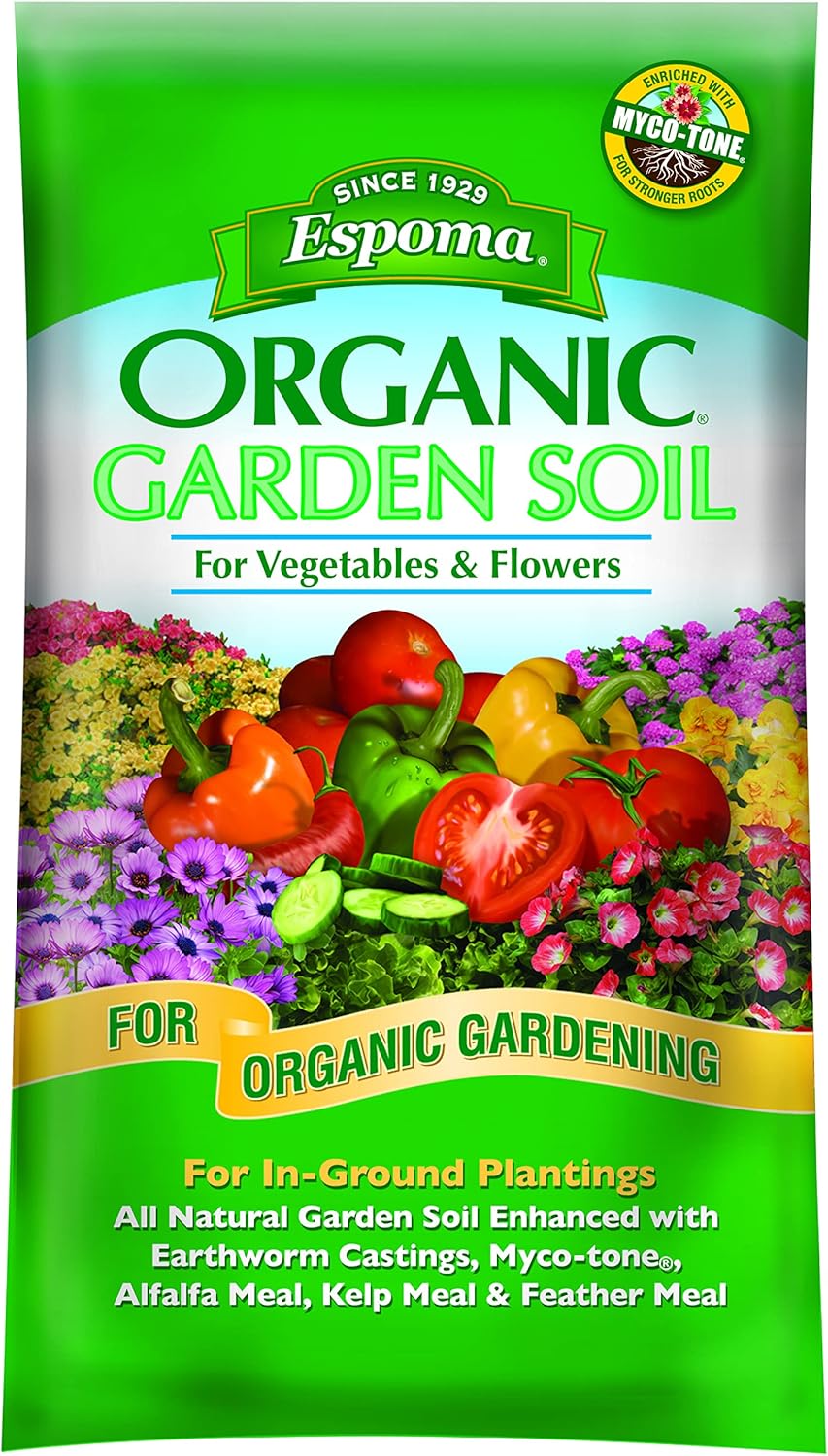
Espoma Organic Vegetable & Flower Garden Soil Mix, 1 cu ft
| Volume | 1 cubic feet |
|---|---|
| Style Name | Peat Moss |
| Unit Count | 1536 Ounce |
Espoma Organic Vegetable & Flower Garden Soil is a 1 cubic foot, peat-based planting mix designed to be blended into native garden soil at planting or transplanting. It contains Canadian sphagnum peat moss, earthworm castings, alfalfa meal, kelp meal, feather meal, limestone for pH adjustment, and a mycorrhizal blend to help root establishment. In practice you work a few inches of this mix into planting holes or rows to loosen dense soil, add organic matter, and give young squash transplants a nutrient-rich root zone. The organic amendments supply slow-release nutrients and biological activity that support early growth, while the mycorrhizae improve water and nutrient uptake. Limitations to note are the peat-heavy base, which dries faster than compost-rich mixes and may require more frequent watering, and the small 1 cu ft bag size that means multiple bags are needed for larger beds. For gardeners who prefer organic inputs and want an easy-to-use planting mix to boost transplant success, this product is straightforward and effective.
Best for: Gardeners who prioritize organic inputs and want a convenient planting mix to boost transplant success for vegetables like squash in established beds.
Less Ideal for: Large-scale landscapers or gardeners needing bulk soil amendments for entire raised beds who prefer compost-rich mixes or peat-free alternatives.
- Formulated with organic amendments like earthworm castings, alfalfa meal, kelp meal, and feather meal for slow-release nutrients
- Contains a mycorrhizal blend to support root establishment and improved nutrient uptake
- pH adjusted with limestone to better suit common garden plants
- Ready-to-use planting mix that blends easily with native soil when transplanting
- Peat-heavy base can dry out faster than compost-rich mixes, increasing watering frequency
- Small 1 cubic foot bag requires many bags for larger squash beds
Verdict: A compact, organic planting mix that makes transplanting squash easier by giving young roots nutrient-rich, biologically active soil.
Halatool 3 QT Potting Soil Mix for Indoor and Outdoor Plants

| Brand | Halatool |
|---|---|
| Volume | 3 quarts |
| Item Highlight | Nutrient-rich, well-draining |
| Unit Count | 1 Count |
This Halatool 3-quart potting soil is a ready-to-use mix that combines peat, vermiculite, perlite, humic acid, and coconut bran to create a light, well-draining medium suitable for container-grown flowering plants. It arrives in a resealable foil bag that helps keep the mix dry and makes small-scale potting or repotting straightforward. The ingredients promote aeration and drainage while supplying organic matter and nutrients that support root development and flowering in potted annuals and perennials. For gardeners working on a budget, the bag is sized for several small pots or a couple of medium containers and is easy to blend with extra perlite or compost if you need richer fertility. Limitations are the small volume for larger projects and the lack of specific fertilizer ratios, so heavier feeders will need supplemental feed. Also handle carefully to avoid dust and store in a ventilated place to retain quality.
Best for: Cost-conscious gardeners who need a convenient, ready-mixed potting medium for a few containers or to refresh small flowering pots without mixing ingredients themselves.
Less Ideal for: Gardeners planning to fill many large pots, raised beds, or support heavy-feeding flowering shrubs should choose bulk mixes or amend with additional compost and fertilizer.
- Balanced blend of peat, perlite and vermiculite for good drainage and aeration
- Includes humic acid and coconut bran to add organic matter and support root growth
- Resealable foil bag helps keep the soil dry and easier to store
- Suitable for a wide range of plants from succulents to herbs and flowering pots
- Only 3 quarts which is small for larger containers or multiple flowering beds
- No listed fertilizer analysis so heavier feeding plants will require supplements
Verdict: A budget-friendly, ready-to-use 3-quart potting mix that gives small flowering containers improved drainage and organic support without extra prep.
FoxFarm Ocean Forest Potting Soil, 12 Quart

| Item Form | Granules |
|---|---|
| Specific Uses For Product | Dry Fertilizer |
| Coverage | 4.8 sq ft |
| Mixing Ratio | 1:1 |
FoxFarm Ocean Forest is a pre-mixed potting soil that combines aged forest products, sandy loam and sphagnum peat moss with organic amendments like fish meal, crab meal and earthworm castings. It is sold ready to use straight from the bag for planting in containers, seed starting or top dressing; the manufacturer recommends no additional nitrogen fertilizer for the first 30 days. The mix has a light, aerated texture that promotes drainage while still retaining moisture, and the built-in micronutrients make it practical for growers who want strong early growth without immediate feeding. Practical benefits include easy pot filling, good root zone aeration for roses in containers, and built-in organic fertility to support blooms. Limitations to consider are that the bag is best for containers or small beds only and heavier feeders may need supplemental feeding after the initial month; users should also follow handling precautions to avoid skin or eye irritation.
Best for: Gardeners who want a high-quality, nutrient-rich potting medium to get container roses or plant starts off to a strong, flowering start and prefer a ready-made organic blend.
Less Ideal for: Large in-ground rose beds or landscapers needing bulk soil amendments should look for bulk garden soil or custom rose mixes instead.
- Ready-to-use out of the bag so you can pot immediately
- Organic amendments (fish meal, crab meal, earthworm castings) supply early nutrients
- Light, aerated texture that supports drainage and root development
- pH adjusted for optimal nutrient uptake per product description
- Pack size (12 qt) covers a small area and may require multiple bags for several roses
- No long-term feeding provided after the first 30 days so additional fertilizer is needed for sustained heavy bloom
Verdict: Choose this soil if you want a ready-made, organically amended potting mix that jump-starts container roses and seedlings with good drainage and early fertility.
Miracle-Gro Indoor Potting Mix for All Plants, 6 qt., 2-Pack

| Number of Packs | 2 |
|---|---|
| Unit Count | 400.58 Ounce |
| Item Highlight | Feeds for up to 6 Months |
| Ingredients | Sphagnum Peat Moss, Coir, Perlite, Fertilizer, Wetting Agent |
This Miracle-Gro indoor potting mix is formulated as an all-purpose soil for indoor container plants and is sold in a two-pack of 6‑quart bags. It combines sphagnum peat moss, coconut coir, and perlite to create a lightweight, well-draining mix that holds moisture yet releases it to roots, which helps tropical houseplants like a Dragon Tree avoid waterlogged roots. The bagged mix includes a slow-release fertilizer meant to feed plants for up to six months so you do not need to amend immediately after potting. Notably the formula excludes bark and compost, which can reduce habitats for fungus gnats — useful when repotting indoor specimens. Use is straightforward: fill a pot with drainage, set the plant, backfill with mix, and water. Limitations are that the fertilizer schedule is fixed to the included feed and heavy feeders may need additional fertilizing after several months, and serious growers who want a custom cactus or orchid-style mix will find the texture too fine. For routine repotting of Dragon Trees and similar tropical houseplants this mix is convenient and consistent.
Best for: Buyers who want a reliable, low-effort potting mix for repotting tropical houseplants like Dragon Trees and prefer a product with built-in feeding and pest-reduction features.
Less Ideal for: Specialist growers who need custom texture blends for succulents, orchids, or aggressive feeders should choose purpose-formulated mixes or amend this product accordingly.
- Balanced blend of peat moss, coir, and perlite for good moisture retention and drainage
- Includes slow-release fertilizer that feeds up to six months for low-maintenance care
- Bark- and compost-free formula reduces places for fungus gnats to breed
- Ready-to-use bag makes repotting quick with no mixing required
- Fertilizer is fixed for about six months so additional feeding may be necessary for heavy feeders
- Texture may be too fine for plants that prefer very fast-draining or chunky mixes
Verdict: A convenient, low-maintenance indoor potting mix that keeps Dragon Trees healthy with good drainage and up to six months of built-in feeding.
Back to the Roots Premium Organic Potting Mix, 6 Quart

| Unit Count | 192 Fluid Ounces |
|---|---|
| Volume | 6 quarts |
| Item Highlight | Peat-free potting soil for outdoor plants, indoor plants, vegetables, herbs and flowers |
| Made in | USA |
Back to the Roots Premium Organic Potting Mix is a small-batch, all-purpose soil designed for indoor and outdoor container plants, including flowers, herbs, and vegetables. The 6 quart bag contains a peat-free blend made from upcycled plant matter and wood fines, with added organic plant food, yucca extract to help retain and regulate moisture, and dolomitic limestone to stabilize pH. In practice this mix is easy to use straight from the bag for potting annuals and bedding plants or for refreshing topsoil in containers. Its light, well-draining texture helps roots establish without becoming waterlogged while still holding enough moisture for frequent flowering plants. Because it is organic and made in the USA, it suits growers who want a lower-carbon-footprint option. Limitations are the small bag size for larger projects and that very heavy feeders or long-term container plantings may need periodic fertilization or larger volumes of soil to maintain vigor.
Best for: Buyers who want a safe, organic, ready-to-use potting mix for potted flowers and small container gardens and prefer products with predictable performance and lower environmental impact.
Less Ideal for: Gardeners planning large-scale repotting, heavy-feeding perennials, or long-term container plantings that require bulk soil or extended nutrient release.
- Peat-free organic formula made from upcycled plant matter and wood fines
- Includes yucca extract for improved moisture retention and control
- Dolomitic limestone added to help balance soil pH for flowering plants
- Light, well-draining texture suitable for container-grown flowers and annuals
- Small 6 quart bag is not economical for large pots or multiple containers
- Does not include slow-release fertilizer strong enough for long-term heavy feeders
Verdict: A reliable, peat-free organic potting mix that delivers predictable moisture control and pH balance for potted flowers and small container gardens.
Choosing the Right Soil for Flowering Plants: Key Factors to Consider
Drainage and Aeration
Flowering plants need a balance between moisture retention and free drainage. Soil that stays waterlogged suffocates roots and encourages root rot, reducing bud set and causing drop of developing flowers. Conversely, mixes that drain too quickly can leave roots drought stressed during hot, sunny periods when blooms form.
Assess particle size and the presence of coarse materials like perlite or fine grit. In-ground beds often tolerate a bit more moisture retention because the surrounding soil buffers extremes, while containers rely entirely on the potting mix so they benefit from a lighter, more aerated texture. When in doubt, choose a mix that lists both organic components and inert aerators or plan to add them yourself.
Nutrient Retention and Release
Plants forming buds and flowers draw on nitrogen, phosphorus, and potassium at different stages, plus micronutrients. A soil with good nutrient-holding capacity reduces the need for constant feeding and supports a steady bloom period. Organic matter such as compost or well-processed bark holds nutrients and releases them slowly as microbes break it down.
Be aware of mixes that rely solely on short-lived soluble fertilizers; they give a quick green-up but may require frequent reapplication to sustain flowering. For many gardeners a balanced mix of slow-release organics and a modest starter nutrient charge provides the most consistent bloom performance over weeks to months.
pH Level and Ease of Adjustment
Soil pH affects nutrient availability, especially of iron, phosphorus, and manganese which can influence flowering vigor and color. Many popular flowering species prefer a slightly acidic to near-neutral range. A mix with a documented pH or one that responds predictably to common amendments makes it easier to correct issues.
Consider how easy it is to raise or lower pH in the selected soil. Materials like lime and dolomitic limestone increase alkalinity, while sulfur or acidic organic amendments lower pH. For container gardening, frequent watering can slowly change pH, so choose a base mix that sits close to your target range and adjust as needed.
Organic Matter Type and Quality
Not all organic matter is equal. Well-decomposed compost and humus improve structure, water retention, and nutrient availability without robbing nitrogen from plants. Fresh wood chips or uncomposted bark can tie up nitrogen as they break down and temporarily stunt flowering if not managed.
Look for mixes that specify the type and maturity of organic inputs. High-quality organics support beneficial soil life, which aids nutrient cycling and helps plants withstand stress through the bloom period. If buying a basic mix, plan to topdress with mature compost rather than relying solely on raw materials.
Suitability for Containers Versus In-Ground Beds
Container soils must be lighter, more uniform, and fast-draining than in-ground mixes because pots restrict root zone volume and dry out faster. A soil that works well in a raised bed may compact or retain too much moisture in a container and reduce bloom set.
When choosing, match the product to the planting method. For pots, prioritize mixes labeled for container use with good aeration components. For beds, a richer, more moisture-retentive garden soil amended with compost can be appropriate, keeping in mind the existing native soil texture and drainage.
Salt Content and Starter Fertilizer
Excess soluble salts from added fertilizers or from certain composts can harm sensitive flowering species, causing leaf scorch or preventing proper bud formation. Conversely, mixes with no nutrient charge require immediate fertilization after planting to support blooms.
Check whether a mix lists soluble fertilizer content or an initial nutrient charge. For salt-sensitive varieties, select low-salt organic mixes and add controlled-release fertilizers designed for flowering plants. For quick results with established blooms, choose mixes with a modest starter nutrient level rather than heavy, high-salt additives.
Matching Soil Texture to Flower Type
Different flowering plants have different root habits and moisture preferences. Shallow-rooted annuals and bedding plants prefer a lighter, friable mix that lets roots spread and air reach fine root hairs. Deep-rooted perennials and shrubs tolerate denser soils if drainage is adequate.
Observe how your preferred flowers behave in the current soil. If seedlings struggle to establish or bulbs rot, adjust texture by adding coarse sand or perlite for drainage or compost and coco coir for moisture retention. Small textural tweaks often produce bigger flowering responses than fertilizer alone.
- Light texture benefits bedding annuals and containers
- Moderate texture suits most perennials and border mixes
- Coarse amendments improve drainage for bulbs and tubers
Using Amendments to Extend Bloom Period
You can stretch a flowering season by adding targeted amendments. Controlled-release organic fertilizers provide phosphorus and potassium for bud set, while compost teas and mulch conserve moisture and feed soil life that supports sustained blooming.
Timing matters. Apply slow-release nutrients at planting or early in the growth cycle, and use light liquid feeds during peak flowering if blooms begin to fade. Avoid heavy nitrogen late in the season as it encourages leaf growth at the expense of flowers.
- Apply slow-release organics at planting
- Use light liquid feeds during peak bloom if needed
- Avoid high nitrogen once buds form
Preparing Soil for Container Flower Displays
Containers need consistent watering and a stable, well-aerated medium. Start with a mix formulated for pots or create your own by combining quality potting soil with perlite and a small amount of compost. Ensure the pot has drainage holes and use saucers only sparingly to avoid standing water.
Top-dress containers with compost or a thin layer of slow-release fertilizer mid-season to maintain bloom vigor. Replace or refresh the top few inches of potting mix annually to prevent compaction and salt buildup from repeated feeding.
- Use pot mixes with aeration components
- Ensure adequate drainage and avoid standing water
- Refresh top layer yearly to prevent compaction
Soil Testing and Simple Corrections
A basic soil test tells you pH and major nutrient levels and helps avoid guesswork. If pH is off, correct it before planting or choose acid-loving or neutral-preferring species accordingly. Amend slowly and retest after a season to track changes.
For minor nutrient deficiencies, use targeted organic amendments rather than blanket fertilizer. For drainage issues, consider raised beds or improving subsoil structure rather than relying solely on surface additions.
- Test pH and major nutrients before major planting
- Amend gradually and retest after a season
- Use raised beds to fix chronic drainage problems
Storing and Handling Soil for Best Results
Store unopened bags in a dry, cool place to prevent mold and nutrient loss. Once opened, keep mixes covered to retain moisture and avoid contamination from weeds or pests. If a mix looks compacted or dry, fluff it before use to restore aeration.
When mixing soils on-site, blend thoroughly so texture and nutrient distribution are even. Avoid using raw yard waste or unprocessed compost without confirming maturity, as these can introduce pests or tie up nitrogen.
- Keep bags dry and covered after opening
- Fluff compacted mixes before planting
- Use mature compost to avoid nitrogen tie-up
How We Chose the Best Soil for Flowering Plants
We focused on attributes that directly affect flowering performance and everyday garden use. Key evaluation criteria included drainage and aeration behavior, because excess water or compaction quickly reduces bloom set; nutrient retention and release profile, to sustain flowers through bud formation and bloom; pH balance and amendability, since many flowering species prefer slightly acidic to neutral media; and organic content and quality, which influences long-term soil biology and nutrient cycling. We also assessed suitability for different planting situations such as in-ground beds versus containers, and how easily a mix can be modified with lime, sulfur, or additional compost. Practical handling factors like dust level, salt hazard, and odor were considered because they affect planting and potting work. Products that were clearly formulated for non-flowering uses or that lacked basic information on texture and nutrient content were excluded. The final list includes soils that align with these measurable, gardener-relevant criteria.
FAQ
How often should I fertilize flowering plants in new soil?
It depends on the soil's initial nutrient content. Mixes with a starter nutrient charge may not need feeding for several weeks, while inert mixes benefit from an initial feeding at planting and light monthly feeds during active bloom.
Can I use the same soil for bulbs and annuals?
Often you can, but bulbs prefer excellent drainage and are vulnerable to rot in overly rich, moisture-retentive mixes. Modify a general-purpose flowering soil with extra grit or perlite for bulbs.
Will adding compost always improve flowering soil?
Mature compost generally improves structure and nutrients, but raw or unfinished compost can tie up nitrogen and harm blooms. Use well-rotted compost and avoid heavy fresh organic loads in containers.
How do I lower pH if the soil is too alkaline for my flowers?
Common approaches include applying elemental sulfur or acidifying organic amendments like peat or composted pine needles. Make changes gradually and retest after several months since pH shifts are slow.
Is potting mix different from garden soil for flowering plants?
Yes. Potting mix is formulated to be lighter, more uniform, and faster-draining to suit containers. Garden soil can be amended for beds but may compact or drain poorly in pots without modification.
How can I prevent salt buildup from fertilizers in containers?
Leach containers periodically by thoroughly watering until excess drains from the bottom. Use low-salt organic fertilizers and refresh the top layer of mix annually to reduce accumulated salts.
Final Verdict
Choose a soil that matches how and where you grow flowering plants. Prioritize drainage and aeration for containers and bulbs, and favor mixes with stable organic matter and a predictable nutrient release for beds and long-season displays. Keep pH and salt levels in check and use targeted amendments rather than blanket fixes. Focusing on the few measurable traits covered here will help you pick a soil that supports larger, longer-lasting blooms without extra effort. Decide based on planting method and flower type, and treat amendments as fine-tuning rather than a substitute for the right base mix.
