

Note: This article contains affiliate links. If you click on these links and make a purchase, I may earn a small commission at no extra cost to you. This helps support my research and content. Read my full affiliate disclosure here.
Choosing the right soil for a Meyer lemon tree can make the difference between slow growth and a productive, healthy citrus. Meyer lemons need a mix that drains quickly but still holds enough water and nutrients between irrigations. In this guide we shortlisted six top soils suited for Meyer lemon trees in containers and garden beds, then evaluated them on drainage, nutrient retention and root health. Below you will find practical notes on what each soil type brings to a citrus planting, plus the decision factors we used to compare options and tips for using soil effectively in the landscape or pots.
Top Picks at a Glance
| Best Overall The best all-around choice for most situations | GARDENWISE Organic Lemon Tree Soil (3 quarts) |  |
| Best Quality Built to a higher standard if you want something more solid | Miracle-Gro Cactus, Palm & Citrus Potting Mix, 8 qt. |  |
| Best Value The sweet spot between price and what you get | Soil Sunrise Citrus Tree Potting Soil Mix (12 Quarts) |  |
| Best Budget The cheapest option that still gets the job done reliably | Doter Citrus Tree Potting Soil Mix (1 qt) |  |
| Highest Rated A top-rated pick with lots of positive feedback | Wekiva Foliage Meyer Lemon Tree Soil Mix (4 Quarts) |  |
| Most Popular A crowd favorite that many people choose with confidence | Soil Sunrise Citrus Tree Potting Soil Mix (30 Quarts) |  |
GARDENWISE Organic Lemon Tree Soil (3 quarts)

| Unit Count | 96 Fluid Ounces |
|---|---|
| Included Components | Perlite, coarse sand, coconut coir, vermiculite, garden compost, peat moss, dolomite, organic fertilizer |
| Item Type Name | Lemon Tree Soil |
| Volume | 3 quarts |
This citrus-specific potting mix is designed to give potted lemon trees the acidic, well-draining root zone they prefer. The blend combines perlite, coarse sand, coconut coir, vermiculite, compost, peat moss and dolomite with organic fertilizer and mycorrhizal fungi to improve aeration, moisture retention and nutrient uptake. It is typically used for repotting or topping up containers for Meyer lemons and other citrus where good drainage and slightly acidic pH matter. The included organic fertilizer claims up to six months of feeding, which reduces the need for frequent fertilizing early on. Notable features are the optimized pH range of 5.5 to 6.5 and the extra coarse particles that help prevent waterlogging and root rot. Because the product comes in a small 3 quart volume, it suits small potted trees, starter plants, or targeted soil amendments rather than full repots of large containers. Expect to supplement with additional soil if you are filling larger pots or planning long-term container culture.
Best for: Buyers who want a ready-made, citrus-focused potting mix that simplifies feeding and improves drainage for potted lemon or Meyer lemon trees.
Less Ideal for: Gardeners needing large volumes for in-ground planting or repotting very large containers should look for bulk mixes or larger bags.
- Formulated pH of 5.5–6.5 ideal for citrus health
- Contains a mix of drainage materials (perlite and coarse sand) to reduce overwatering issues
- Includes organic fertilizer that supplies nutrients for up to six months
- Lightweight, breathable texture that promotes strong root development
- Small 3 quart volume means multiple bags are required for repotting larger containers
Verdict: A ready-to-use, citrus-tuned potting mix that gives potted lemon trees the acidic pH and drainage they need with built-in organic feeding.
Miracle-Gro Cactus, Palm & Citrus Potting Mix, 8 qt.
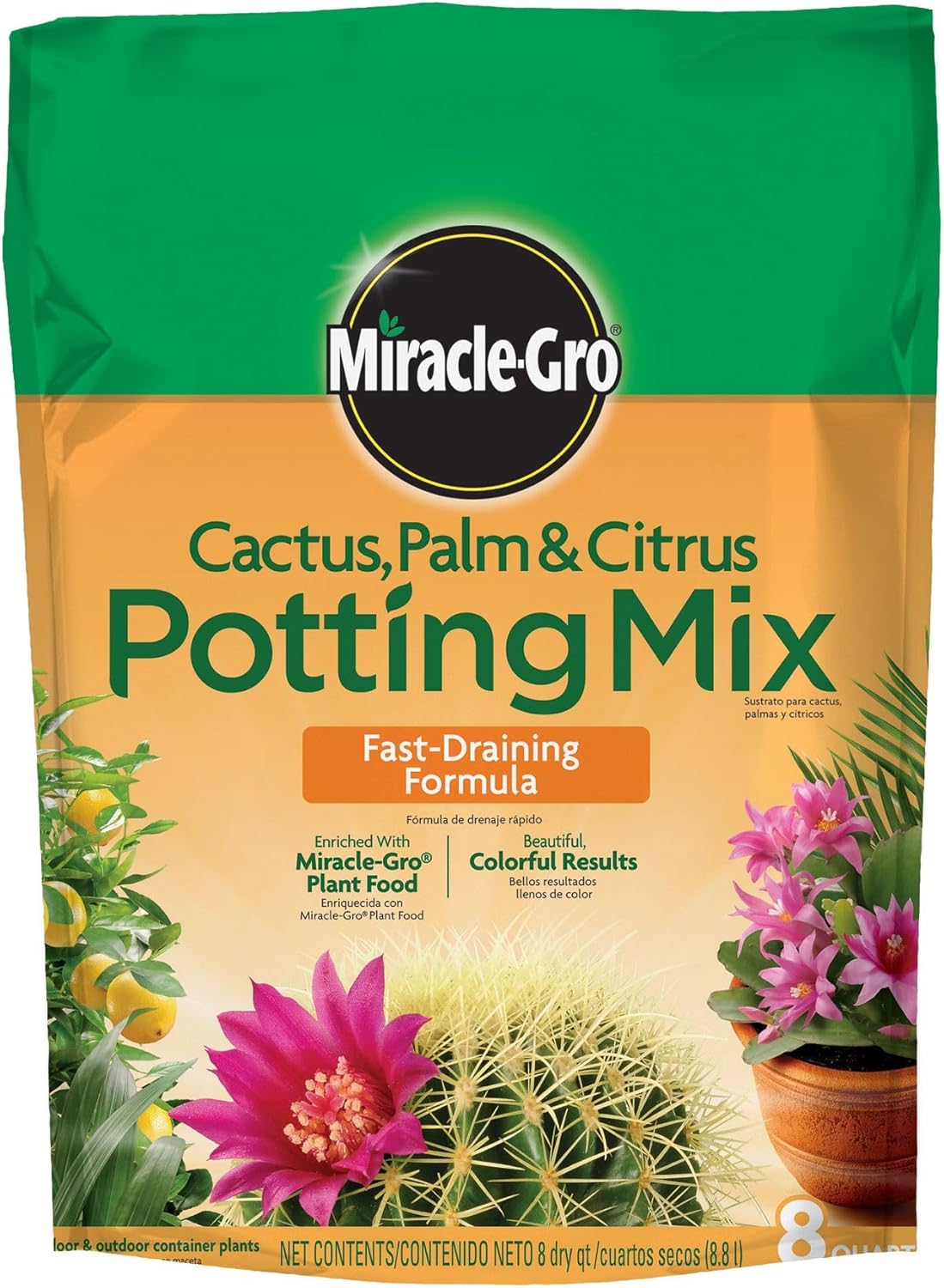
| Brand Name | Miracle-Gro |
|---|---|
| Volume | 8 quarts |
| Unit Count | 1 Count |
This 8-quart Miracle-Gro potting mix is designed for container-grown cacti, palms, and citrus and combines peat moss, sand, perlite, and forest products for faster drainage and reduced compaction. It arrives ready to use and is enriched with Miracle-Gro plant food so newly potted citrus get an initial nutrient boost without immediate fertilizing. Typical use is straightforward: choose a pot with drainage, fill about one third, set the root ball and top up, then water and allow to drain. The formula helps soil dry between waterings, which is important for citrus root health in containers, and one bag is enough for two 8-inch pots. Limitations are the small volume for larger trees and the presence of peat moss if you prefer peat-free mixes; heavier or older citrus will need larger volumes and eventual repotting. For growers wanting a quick, reliable container medium that balances moisture retention with drainage, this mix performs as expected.
Best for: Growers who repot or maintain container citrus and want a ready-to-use mix that balances drainage and initial feeding for healthier root development.
Less Ideal for: Gardeners potting mature or large citrus specimens that need large volumes of soil or those seeking a peat-free or custom mineral-heavy citrus bonsai substrate.
- Fast-draining blend reduces risk of waterlogged roots for container citrus
- Pre-enriched with plant food to give newly potted plants an initial nutrient boost
- Contains perlite and sand to resist compaction and maintain aeration
- Formulated for indoor or outdoor containers so it works across sites
- 8-quart bag is small for larger or multiple citrus containers
- Contains peat moss which some buyers avoid for sustainability reasons
Verdict: A convenient, fast-draining, plant-food–enriched container mix that makes repotting small to medium citrus trees quick and reliable.
Soil Sunrise Citrus Tree Potting Soil Mix (12 Quarts)

| Volume | 12 quarts |
|---|---|
| Ingredients | Peat moss, perlite, sand, worm castings, lime |
| Unit Count | 1 Count |
| Style Name | Peat Moss,Potting Soil Mix |
Soil Sunrise Citrus Tree Potting Soil is a 100% natural, hand-blended mix intended for growing potted citrus like Meyer lemons, key limes, and dwarf mandarins. The formula combines peat moss for moisture retention, perlite and sand for improved drainage and aeration, worm castings for gentle nutrients, and lime to stabilize pH—ingredients gardeners typically mix themselves but pre-blended here. In practice this makes repotting or starting citrus in containers simpler and reduces the risk of soggy roots that cause rot. The resealable 12-quart bag is sized for several small repots or one larger container, and the absence of fillers means you get a predictable texture. Limitations are that peat-based mixes compress over time and will need occasional refreshing or adding organic amendments, and it does not include slow-release fertilizer so planned feeding is still required for fruit production. For buyers who prefer a ready-to-use citrus blend, this delivers appropriate drainage and pH control but expect to supplement nutrients seasonally for best yields.
Best for: Home growers who want a ready-made, citrus-focused potting mix to simplify repotting and container growing of lemon and lime trees and who value proven ingredient combinations backed by other buyers.
Less Ideal for: Growers seeking an all-in-one fertilized potting media or those who avoid peat for environmental reasons should look at alternatives.
- Custom blend targeted to citrus with peat, perlite, sand and lime for balanced drainage and pH.
- Includes worm castings to provide natural, mild nutrient support.
- Hand-blended, all-natural formula without fillers or synthetic additives.
- Resealable 12-quart bag suitable for multiple small repots or one larger container.
- Peat-based mix can compact or settle over time and may require refreshing.
- Does not contain built-in slow-release fertilizer so regular feeding is still necessary.
Verdict: Choose this mix if you want a ready-to-use, citrus-specific potting soil that improves drainage and pH control for healthier potted lemon trees.
Doter Citrus Tree Potting Soil Mix (1 qt)
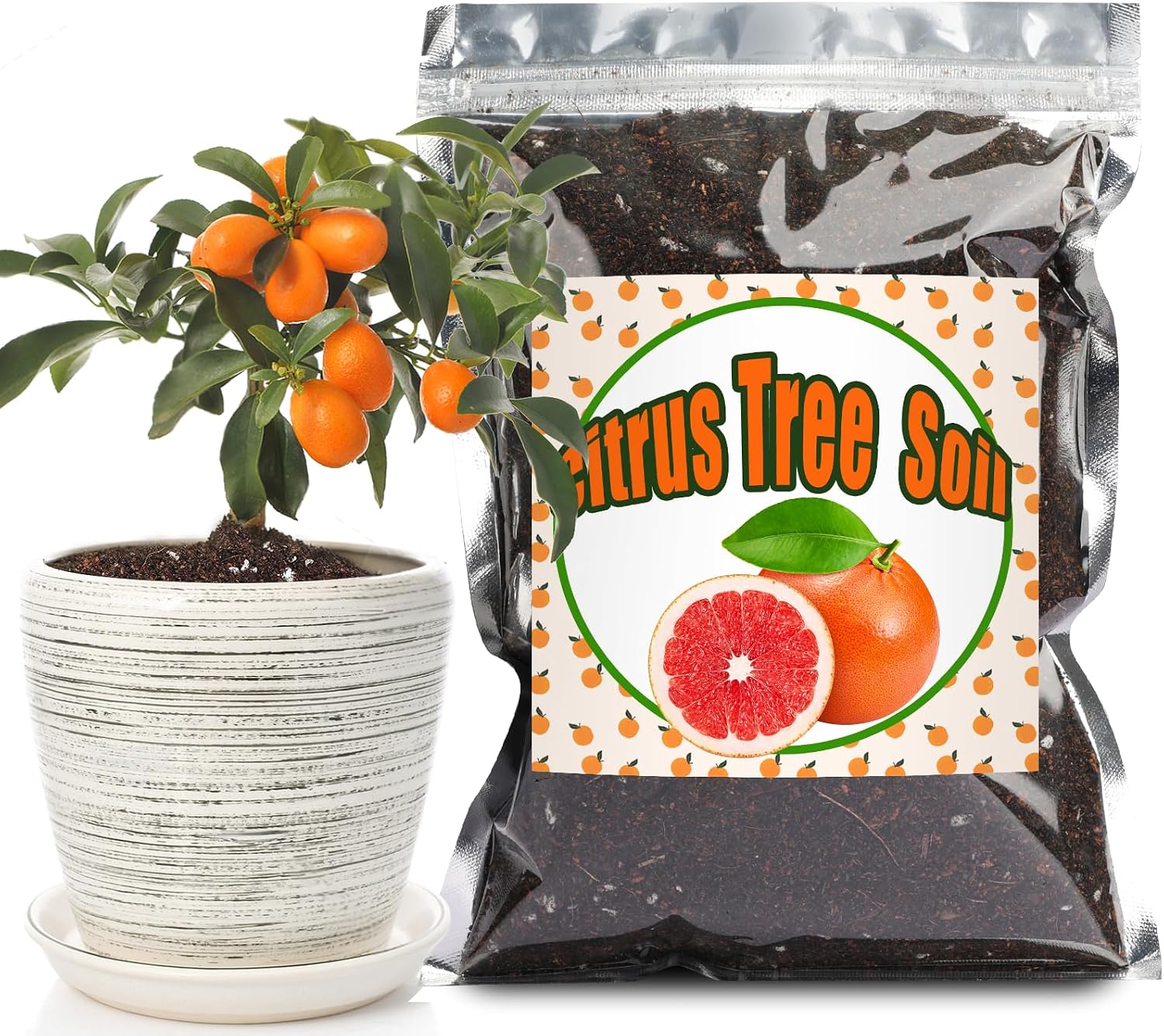
| Brand Name | Doter |
|---|---|
| Item Type Name | Garden soil |
| Volume | 1 quarts |
| Item Weight | 224 g |
This Doter citrus potting mix is a small, 1-quart, ready-to-use soil blend designed for container-grown lemon, lime, orange and other citrus trees. It mixes organic and mineral components to deliver a balanced nutrient profile and claims an ideal pH between 6.0 and 7.1, which helps citrus roots access nutrients. The formulation emphasizes drainage and aeration so pots do not stay waterlogged, and the bagged format makes it convenient for repotting seedlings or refreshing the top layer in containers. For budget-conscious gardeners the single-quart size is useful for small projects, trial runs, or blending into larger mixes, but you will likely need multiple bags for a single mature container tree. The product works best as a component or short-term potting medium rather than a sole long-term planting substrate for large trees. Expect good seedling establishment and faster drainage compared with generic garden soil, but plan to supplement with larger volumes or slow-release fertilizer for sustained feeding on mature citrus.
Best for: Gardeners looking for an inexpensive, small-batch citrus-specific soil to repot seedlings, top-dress containers, or trial a citrus blend before committing to larger quantities.
Less Ideal for: Growers with mature potted citrus or those who need large volumes for in-ground planting should choose bulk soils or custom mixes instead.
- Formulated pH between 6.0 and 7.1, suitable for citrus nutrient uptake
- Designed for improved drainage and aeration to reduce root rot risk
- Nutrient-rich blend of organic and mineral components to support growth
- Ready-to-use bag convenient for repotting seedlings and small containers
- Small 1-quart volume means multiple bags are required for larger pots or trees
- Not marketed as a long-term complete potting substrate for mature trees
Verdict: A convenient, budget-friendly small bag of citrus-specific potting mix ideal for repotting seedlings and topping up container citrus plants.
Wekiva Foliage Meyer Lemon Tree Soil Mix (4 Quarts)

| Brand Name | Wekiva Foliage |
|---|---|
| Unit Count | 4 Count |
| Volume | 1 quarts |
This Meyer Lemon Tree Soil Mix is a ready-to-use potting medium tailored to potted Meyer lemons and other container citrus. It combines coarse perlite for open drainage with coarse peat and hydra fiber to hold moisture without waterlogging, and lime to help stabilize pH for citrus uptake. In practice it makes repotting and top-dressing simpler: the blend encourages quick root establishment, reduces the risk of root rot in containers, and supplies an immediately hospitable environment for flowering and fruit set. The mix is lightweight and easy to work with, so it is convenient for indoor and patio use and for growers who repot annually. Limitations are its small 4 quart size, which means multiple bags are needed for larger containers or for multiple trees, and it does not list specific fertilizer analysis or long-term nutrient release, so growers who want multi-season fertility may need to supplement with slow-release fertilizer or regular feedings.
Best for: Serious home growers or performance-oriented gardeners repotting or top-dressing potted Meyer lemon trees who prioritize fast root establishment and reliable drainage.
Less Ideal for: Casual gardeners with many large containers or those who want an all-in-one fertilized soil for multiple seasons without additional feeding.
- Formulated specifically for Meyer lemons with lime for pH balance
- Coarse perlite improves drainage and reduces risk of root rot in pots
- Hydra fiber and peat components retain moisture while maintaining aeration
- Ready-to-use mix suitable for indoor and patio container use
- Sold in a small 4 quart bag that is insufficient for large pots or multiple trees
- No listed N-P-K or fertilizer longevity information for multi-season feeding
Verdict: Choose this mix if you want a citrus-focused potting medium that promotes strong roots and dependable drainage for potted Meyer lemon trees.
Soil Sunrise Citrus Tree Potting Soil Mix (30 Quarts)

| Volume | 30 quarts |
|---|---|
| Ingredients | Peat moss, perlite, sand, worm castings, lime |
| Unit Count | 1 Count |
| Style Name | Sandy |
This Soil Sunrise mix is a lightweight, well-draining potting soil designed for container fruit trees. It combines peat moss for water retention, perlite and coarse sand for quick drainage and aeration, worm castings for slow-release nutrients, and lime to keep pH suitable for acid-sensitive fruit. In use you would fill pots or repot rootballs with this blend to reduce soggy roots and encourage steady growth and fruiting. The resealable 30-quart bag and all-natural ingredient list make it a low-fuss option for regular repotting and seasonal top-ups. Important limitations: the formula is targeted at citrus and formulated with lime, so its pH profile and ingredient balance are optimized for citrus preferences rather than apple-specific needs; heavier-feeding or larger potted apple varieties may also require supplemental fertilizer over time. For growers seeking a clean, airy base for container fruit trees this mix provides a reliable starting medium, but you should monitor soil fertility and adjust amendments for apples as they mature.
Best for: Home gardeners who want a clean, well-draining base mix for potted fruit trees and prefer an all-natural, low-maintenance soil to encourage steady growth.
Less Ideal for: Growers who need a soil tailored precisely to apple tree pH or nutrient demands, or those planting large standard apple trees in oversized containers without planned fertilization.
- Designed for container fruit with a balance of peat, perlite, and sand to prevent waterlogging
- Includes worm castings to provide natural nutrients and improve soil biology
- Lime added to stabilize pH for fruit-bearing trees that prefer slightly higher pH
- All-natural, hand-blended ingredients with no fillers listed
- Resealable bag and 30-quart volume suited to repotting small to medium trees
- Formulated specifically for citrus so pH and lime content may not match apple preferences exactly
- May require additional fertilization for heavier-feeding apple varieties over a growing season
Verdict: A well-draining, all-natural container mix that gives small to medium potted fruit trees a healthy airy foundation and low-maintenance starting point.
Choosing the Right Soil for Meyer Lemon Tree: Key Factors to Consider
Drainage and Aeration
Meyer lemons are sensitive to waterlogged roots, so drainage and aeration are a top priority when choosing soil. A good citrus mix contains coarse components like perlite, pumice, or coarse sand to create pore space that lets excess water move away from the root zone. That same pore network supplies oxygen to fine roots, supporting healthy root hair development and faster recovery after transplanting.
Poorly drained soil holds water against the trunk and main roots, increasing the risk of root rot and nutrient lockup. For container trees especially, pick or amend soils to ensure water passes through the mix within a few minutes of thorough watering while still leaving enough moisture for the next cycle.
Nutrient Retention and Release
Citrus trees are steady feeders that benefit from a mix that holds nutrients while releasing them gradually. Materials such as composted bark, coconut coir, or well-aged compost contribute cation exchange capacity, helping the soil retain ammonium, potassium, and other useful ions between feedings. Slow-release organic inputs and blended potting mixes can reduce the frequency of fertilizing and lower the risk of nutrient spikes that burn fine roots.
However, too much dense organic matter can compact and reduce drainage, so look for mixes that balance retention with structure. If a soil is low in natural nutrient-holding capacity, plan to supplement with an appropriate citrus fertilizer on a regular schedule.
Soil pH and Nutrient Availability
Meyer lemons prefer slightly acidic to neutral conditions because many micronutrients are most available in that range. Soil pH affects uptake of iron, manganese, and phosphorus, and a poorly matched pH can cause deficiency symptoms even when nutrients are present. Many packaged citrus soils are buffered or include amendments to move pH into the preferred range, but you should still test the soil or water in your garden to confirm.
If the soil tends alkaline, iron chelates or acidifying amendments can correct availability problems. For in-ground trees, consider the existing garden soil pH and whether amending or planting in raised beds or large containers is a better long-term strategy.
Texture and Rooting Volume
The physical texture of the soil influences how roots spread and how stable the tree is in its pot or planting hole. A texture that is too fine will compact around roots and restrict growth, while overly coarse mixes may drain too quickly and force more frequent irrigation. For Meyer lemons, aim for a loamy, open texture that supports both fibrous root development and anchoring of the trunk.
Container-grown trees need mixes that maintain structure over time without breaking down into fines. For ground plantings, mixing native soil with well-structured amendments can create a rooting environment that encourages deeper, stronger root systems.
Organic Content and Microbial Health
Organic matter feeds soil life, improves structure, and slowly supplies nutrients. For citrus, modest organic content supports beneficial microbes that help with nutrient cycling and disease suppression. Well-composted materials are preferable to raw manures or fresh wood chips, which can tie up nitrogen or produce phytotoxic compounds.
When using potting mixes, look for evidence of stabilized organic matter and, if possible, inoculants or components that support microbial diversity. Overly sterile mixes may need supplementation with compost tea or microbial amendments to encourage a robust root zone ecology, particularly in long-term containers.
Container Versus In-Ground Soil Needs
Growing Meyer lemon trees in containers requires a different soil strategy than planting in the ground. Containers need mixes that shed excess water quickly while still retaining pockets of moisture between waterings. In the landscape, the emphasis shifts to creating a planting pocket with good drainage and slightly amended native soil to allow roots to transition into the surrounding ground.
For containers, choose a light, well-structured mix and avoid heavy garden loam unless amended. For in-ground plantings, incorporate coarse amendments and organic matter to break up clay and improve long-term drainage and rooting volume.
- Container mixes should prioritize aeration and stable structure.
- In-ground plantings benefit from amending the native soil to improve drainage and nutrient access.
- Use root-stretching irrigation and mulching strategies appropriate to the chosen planting method.
Amendments That Improve Citrus Soil
Several simple amendments can tune a soil for Meyer lemon trees. Coarse sand, pumice, or perlite increases porosity and prevents compaction. Composted bark or well-aged compost adds nutrient-holding capacity without creating a sticky, waterlogged mass.
For slightly acidifying a mix, small amounts of elemental sulfur or acid-forming organic materials can help, but changes should be gradual. When amending, mix thoroughly and test performance across a season before making further adjustments.
- Pumice and perlite improve drainage without adding weight.
- Aged compost boosts nutrient retention and microbial life.
- Avoid excessive peat alone; pair it with coarse particles to maintain structure.
Watering Practices That Match Your Soil Choice
Soil choice affects how you water. Fast-draining mixes need more frequent, measured irrigation to keep the root zone evenly moist without saturating it. Dense mixes hold moisture longer but risk oxygen starvation if left wet.
Use a soak-and-drain approach for containers: water until it flows from drain holes, then allow the top inch or two to dry before the next deep watering. In the landscape, monitor soil moisture around the rootball and adjust schedules seasonally.
- Match irrigation frequency to how quickly the soil drains.
- Deep, infrequent waterings encourage deeper rooting compared with light daily sprinkling.
- Consider a moisture meter or simple finger test for consistent schedule tuning.
Feeding Strategy with Different Soils
Soils with higher organic content and better cation exchange capacity hold nutrients longer and can be paired with less frequent feeding. Lighter, fast-draining mixes often require a more regular feeding schedule because nutrients leach more quickly.
Select a fertilizer formulated for citrus and follow label guidance, adapting frequency to observed leaf color and growth rate. Slow-release formulas or a combined program of granular plus occasional liquid feeds can keep Meyer lemons vigorous without nutrient swings.
- Track leaf color and new growth as signs of nutrient needs.
- Plan feeding frequency based on the soil's retention characteristics.
- Flush containers lightly a couple times a year if salts build up from fertilizer or hard water.
Preparing a Planting Mix From Scratch
If you prefer to blend your own soil for Meyer lemon trees, start with a well-draining base and add components for nutrition and structure. A workable recipe balances coarse mineral components with stabilized organic matter to create a loamy, airy mix that supports root health.
Test small batches in pots to observe drainage and root response before committing to large-scale mixing. Adjust ratios seasonally or as the tree matures to maintain structure and fertility.
- Trial small pots to evaluate drainage and moisture retention.
- Adjust coarse to fine particle ratios based on container size and climate.
- Topdress and refresh container mixes periodically to replenish organic matter.
How We Chose the Best Soil for Meyer Lemon Tree
We focused on selection criteria that matter to gardeners growing Meyer lemon trees in containers and ground plantings. First, drainage and aeration were essential because citrus roots rot in waterlogged mixes. We looked for soils and blends with components that promote free drainage yet maintain some moisture between waterings. Second, nutrient retention and slow-release feeding mattered because citrus is a steady feeder; mixes that hold and release nutrients reduce feeding frequency. Third, pH buffering and acidity were considered since Meyer lemons prefer slightly acidic to neutral media that help nutrient uptake. Fourth, texture and root space were evaluated to ensure the mix supports fine-root development and transplanting. We also assessed organic matter content for long-term soil health and compatibility with common potting or in-ground practices. We excluded products that were strictly decorative topdressings or that lacked information on particle size and composition. We did not include specialty soils made only for other fruit types or mixes that require extensive additives to be suitable for citrus. The final shortlist consists of soils and blends that meet practical drainage, nutrient, pH, texture, and organic content thresholds for Meyer lemon trees.
FAQ
Can I use regular garden soil for a potted Meyer lemon tree?
Regular garden soil is usually too heavy for containers because it compacts and holds water. If you must use it, mix in coarse materials like pumice or perlite plus aged compost to improve drainage and structure.
What pH should soil for Meyer lemon tree be?
Meyer lemons do best in slightly acidic to neutral soil, roughly pH 6.0 to 7.0. Test the soil and use small, gradual amendments if you need to shift pH to improve nutrient availability.
How often should I repot a Meyer lemon tree to refresh the soil?
Young container trees often need repotting every 1 to 2 years to refresh media and check roots. Mature trees in large containers may only need surface refreshes or partial soil replacement every few years unless roots are pot-bound.
Is it better to use peat or coconut coir in citrus mixes?
Both can work as organic components. Coconut coir holds water well and is more sustainable, while peat holds water and is acidic. Use either with ample coarse particles to ensure the overall mix drains properly.
How much compost should I add to citrus soil?
Moderate amounts of well-aged compost are beneficial, but avoid overloading the mix. Compost should improve nutrient retention without dominating the volume; roughly 10 to 25 percent by volume is a common approach depending on the starting texture.
Will soil additives prevent root rot entirely?
No single additive guarantees prevention. Good drainage, proper watering habits, and healthy root oxygenation together minimize root rot risk. Amendments that improve porosity help, but monitoring moisture and avoiding overwatering remain essential.
Final Verdict
When selecting soil for Meyer lemon tree plantings, prioritize drainage and aeration alongside sufficient nutrient retention and an appropriate pH. The right mix depends on whether the tree is in a container or the ground, so choose or amend soils to create a loamy, well-structured root zone. Balance tradeoffs between fast drainage and nutrient-holding capacity, and align your watering and feeding routine with the soil's behavior. With a soil that supports oxygenated roots, stable nutrients, and slightly acidic conditions, you can focus on pruning, pest control, and fruiting with confidence.
