

Note: This article contains affiliate links. If you click on these links and make a purchase, I may earn a small commission at no extra cost to you. This helps support my research and content. Read my full affiliate disclosure here.
Growing fruit trees in containers changes how roots access water, air, and nutrients. The right soil keeps roots healthy, balances moisture, and reduces transplant stress so trees fruit reliably on patios, balconies, or small yards. This guide covers seven shortlisted soils suited for fruit trees in pots, with attention to drainage, nutrient retention, and long-term structure. Below we explain the evaluation criteria and practical differences you should expect between mixes, then present the top options for container fruit production.
Top Picks at a Glance
| Best Overall The best all-around choice for most situations | FoxFarm Ocean Forest Potting Soil, 12 qt |  |
| Best Quality Built to a higher standard if you want something more solid | Lechuza Citruspon Citrus Potting Soil, 2.7 US Dry Gallon |  |
| Best Value The sweet spot between price and what you get | Duspro Pre‑Mixed 4‑in‑1 Citrus Tree Potting Soil Mix, 6 Quarts |  |
| Best Budget The cheapest option that still gets the job done reliably | Doter Citrus Tree Potting Soil Mix (1 qt) |  |
| Highest Rated A top-rated pick with lots of positive feedback | E.B. Stone Organics Citrus & Palm Mix Potting Soil, 1.5 cu ft |  |
| Most Popular A crowd favorite that many people choose with confidence | Miracle-Gro Organic Outdoor Potting Mix, 16 qt. |  |
| Best Seller A high-volume bestseller chosen again and again | Back to the Roots Organic Expanding Coco Coir Potting Soil Brick (10 lb) |  |
FoxFarm Ocean Forest Potting Soil, 12 qt

| Item Form | Granules |
|---|---|
| Specific Uses For Product | Dry Fertilizer |
| Coverage | 4.8 sq ft |
| Mixing Ratio | 1:1 |
FoxFarm Ocean Forest is a packaged potting soil formulated for container gardening and houseplants. It combines aged forest products, sandy loam, and sphagnum peat moss to create a light, well-aerated mix that drains yet retains moisture. The blend is enriched with fish meal, crab meal, and earthworm castings so young plants and transplants get an initial nutrient boost without immediate fertilizing. Typical use is straightforward: fill pots or top-dress containers and water thoroughly, and it is suitable for seedlings, plant starts, and established container trees. Notable features include pH adjustment for nutrient uptake, a 1:1 mixing ratio listed for blending, and guidance that no extra fertilizer is needed for the first 30 days. Practical benefits for potted fruit trees are improved root aeration, organic nutrient content, and ready-to-use convenience. Limitations are that the bagged volume covers a limited area, and heavier feeding needs beyond the first month will require supplemental fertilization; users should also follow handling precautions to avoid skin or eye irritation.
Best for: Gardeners who want an easy, nutrient-rich potting mix to get potted fruit trees off to a strong start and who prefer a ready-made, organic-leaning soil for containers.
Less Ideal for: People planting large specimen trees in very large containers or filling many pots who need bulk soil or a long-term fertilizing plan without supplemental feeds.
- Light, aerated texture supports root growth and drainage in containers
- Pre-mixed organic amendments (fish meal, crab meal, earthworm castings) provide initial nutrients
- pH adjusted to help plants take up nutrients efficiently
- Ready to use straight from the bag with instructions for planting and top-dressing
- 12 quart bag covers only a few containers so multiple bags are needed for several potted trees
- Not intended as a complete long-term fertilizer beyond the first 30 days
Verdict: A ready-to-use, nutrient-rich potting mix that gives potted fruit trees improved root aeration and a strong early nutrient boost.
Lechuza Citruspon Citrus Potting Soil, 2.7 US Dry Gallon

| Brand Name | Lechuza |
|---|---|
| Item Highlight | peat-free mineral substrate; improves drainage and aeration; for lemon, orange and citrus |
| Volume | 12 liters |
Lechuza Citruspon is a purpose-built potting medium for lemons, oranges, limes and other container-grown citrus that prioritizes root health and steady feeding. It is a mineral, peat-free substrate engineered for high drainage and aeration so excess water moves away from roots quickly and oxygen reaches the root zone, which helps prevent the waterlogging that commonly reduces fruit set and vigor in potted trees. The mix arrives pre-fertilized to supply nutrients for roughly six to eight months, reducing the need for immediate feeding after repotting and supporting blooms and fruit development through the season. Because it is mineral-based it is cleaner and more stable than many organic mixes, holding and releasing nutrients predictably. Limitations are that the bag is relatively small for larger specimens and you will need a follow-up fertilization plan after the initial feeding period; also the mineral base means it will not contribute organic matter to soil biology the way compost-rich mixes do.
Best for: Serious growers who want a reliable, performance-focused medium that reduces root rot risk and delivers predictable nutrition for potted citrus trees.
Less Ideal for: Gardeners who prioritize building soil biology or those repotting very large specimen fruit trees without access to multiple bags or bulk mixes.
- Formulated for citrus with high drainage and aeration to reduce root waterlogging
- Pre-fertilized to feed plants for six to eight months after repotting
- Peat-free mineral composition for a stable, clean medium
- Supports flowering and fruiting by holding and releasing nutrients predictably
- Small 2.7 US dry gallon bag may require multiple bags for larger container trees
- Does not add organic matter or soil biology like compost-rich mixes
Verdict: Choose this if you want a high-drainage, pre-fertilized, peat-free substrate that helps potted citrus set fruit and avoid waterlogged roots.
Duspro Pre‑Mixed 4‑in‑1 Citrus Tree Potting Soil Mix, 6 Quarts

| Style Name | 6 Quarts |
|---|---|
| Brand Name | Duspro |
| Item Weight | 0.81 kg |
| Item Highlight | Indoor Fruit Tree Mix for Potted Lemon Tree, Oranges & Other Citrus Trees, Drainage, Root Aeration & Balanced Moisture |
This Duspro 4‑in‑1 citrus potting mix is a pre‑blended soil made for repotting lemon, lime, orange and similar potted fruit trees. It combines coco coir and coco fiber to hold moisture, vermiculite to moderate water retention, and perlite to improve drainage and root aeration. In practice you pour it into a pot with drainage holes, set the tree, backfill around the root ball and water. The main benefits are convenience and consistency: you do not need to measure and mix components, and the double‑screened blend pours cleanly for less mess. The mix is suitable for indoor and outdoor container use and can be combined with other substrates if you need a heavier or lighter texture. Limitations to note are the dry, dusty condition on opening that may require care when handling and the small 6‑quart size which covers only a couple of standard 8‑inch pots, so buy larger sizes for bigger trees or multiple repots.
Best for: Buyers who want a no‑fuss, ready‑to‑use potting medium tailored to potted citrus that saves time mixing components and delivers predictable results when repotting.
Less Ideal for: Gardners who need large volumes for full‑size trees or those who prefer to custom‑blend exact proportions for specialty soil recipes should consider bulk mixes or individual components instead.
- Pre‑mixed blend of coco coir, coco fiber, perlite and vermiculite for consistent moisture balance and drainage
- Double‑screened ingredients for a cleaner texture that pours and repots easily
- Designed specifically for potted citrus and other container fruit trees so you can use it straight from the bag
- Available in multiple volumes so you can choose a size appropriate for one or several repots
- 6‑quart size is small for larger citrus or multiple repots
- Product is dry and can be dusty on opening, so handle with care
Verdict: A convenient, pre‑screened 4‑in‑1 potting mix that lets you repot potted citrus quickly while providing reliable drainage and moisture balance.
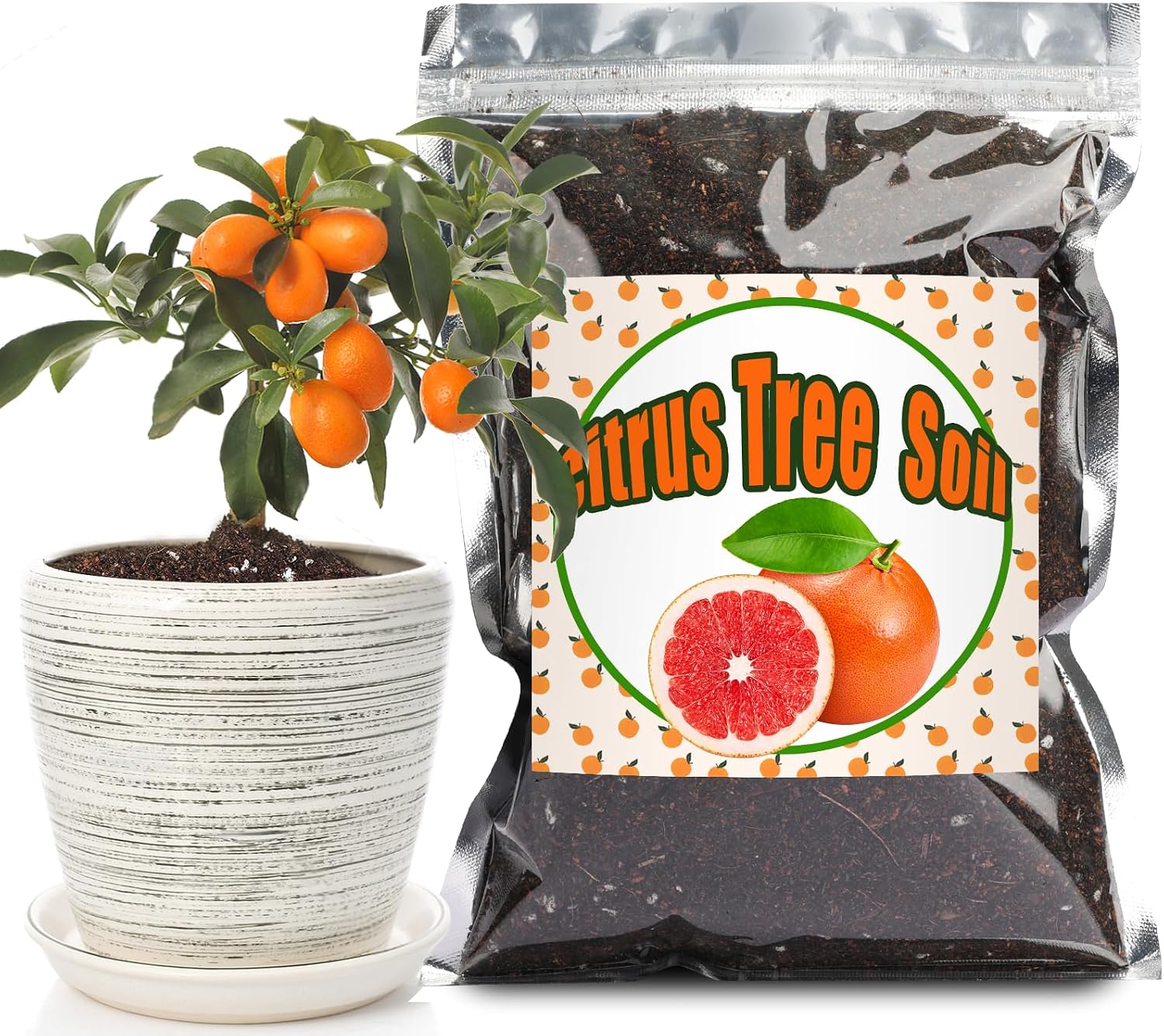
Doter Citrus Tree Potting Soil Mix (1 qt)
| Brand | Doter |
|---|---|
| Item Type | Garden soil |
| Volume | 1 quarts |
This 1 quart Doter citrus potting soil is a small, ready-to-use mix made for growing lemon, lime, orange, and other citrus trees in containers. It is advertised as a loamy, nutrient-rich blend with a targeted pH of about 6.0 to 7.1 and components to improve drainage, so you can pot saplings or top up container soil without mixing your own amendments. In typical use you fill or top-dress pots, repot young trees, or refresh the root zone for better aeration and water movement. The practical benefits are ease of use, a citrus-specific pH profile that helps nutrient uptake, and drainage-focused texture that reduces the risk of root rot in containers. Because the product comes in a small one-quart volume, it is convenient for trialing a new mix or for hobbyists who only need a little soil, but you will need multiple bags or a larger supply for full-size potted trees. Expect to supplement with fertilizer over time since a small packaged mix will not replace ongoing feeding for fruit production.
Best for: A budget-minded container gardener who grows one or a few young citrus trees and wants an easy, citrus-specific mix to repot or top up pots without blending ingredients.
Less Ideal for: Growers with mature, large potted citrus trees or those who need bulk soil for multiple containers should look for larger-volume professional mixes or bulk blends.
- Formulated pH between 6.0 and 7.1 suited to citrus nutrient uptake
- Loamy mix designed for improved drainage to reduce waterlogging in containers
- Nutrient-enriched composition that supports vigor and fruiting
- Ready-to-use packaging convenient for potting or top-dressing small containers
- Sold in a small 1 quart volume so multiple bags are needed for large pots
- Likely requires supplemental fertilization for sustained fruit production
Verdict: A convenient, citrus-targeted potting mix that makes it easy and cheap to trial a pH-balanced, well-draining medium for potted lemon or lime trees.
E.B. Stone Organics Citrus & Palm Mix Potting Soil, 1.5 cu ft

| Brand | E.B. Stone Organics |
|---|---|
| Volume | 1.5 cubic feet |
| Intended plants | Citrus, palms, avocado, tropical plants |
This citrus and palm mix is designed for container-grown fruit trees and tropicals and is ready to use straight from the bag. The blend of aged fir bark and pumice creates fast drainage and good aeration, which helps prevent root rot in potted citrus and avocado trees while still holding enough moisture for steady growth. Added mycorrhizae and organic components improve nutrient uptake and can support stronger root development after repotting. It works well as a straight potting medium for container fruit trees or as an amendment when planting palms and citrus in garden beds. The 1.5 cubic foot bag is convenient for repotting one or two medium pots but may require multiple bags for larger trees or multiple containers. Because it is pre-mixed, you do not need to measure or blend components, but you cannot customize particle mix or fertilizer levels beyond what is in the product.
Best for: Buyers who prioritize a dependable, purpose-built potting medium for potted citrus and tropical fruit trees and want a plug-and-play organic mix that supports healthy root development.
Less Ideal for: Growers who need bulk soil for large landscape planting or who prefer to create fully custom soil blends with specific fertilizer or texture ratios.
- Formulated specifically for citrus, palms, avocado and tropical plants to meet their root needs
- Aged fir bark and pumice provide fast drainage and good aeration to reduce risk of root rot
- Contains beneficial mycorrhizae to improve nutrient and water uptake
- Ready-to-use mix that requires no additional blending before potting
- 1.5 cu ft bag may be small for multiple or larger container fruit trees
- Pre-mixed formula limits ability to adjust particle size or nutrient content for specific preferences
Verdict: Choose this ready-to-use organic mix when you want a reliable, drainage-focused potting soil made specifically for container citrus and tropical fruit trees.
Miracle-Gro Organic Outdoor Potting Mix, 16 qt.

| Volume | 1 cubic feet |
|---|---|
| Item Highlight | Plant Soil For Outdoor Container Plants, Contains Quick-Release Natural Fertilizer, OMRI Listed |
| Brand Name | Miracle-Gro |
| Manufacturer | Scotts Miracle Gro |
This 16 qt. Miracle-Gro Organic Outdoor Potting Mix is made for planting and maintaining containerized outdoor plants. It is a peat-based, OMRI-listed mix blended with upcycled green waste and a quick-release natural fertilizer that feeds for up to two months. Typical use is filling pots, loosening the plant root ball, and topping off before thorough watering; the manufacturer notes one bag fills a 12-inch container. For fruit trees grown in pots, the mix’s organic nutrients and moisture-holding peat help young root systems get established and support regular feeding cycles without immediate supplemental fertilizer. Practical benefits include consistent texture for easy planting, organic certification for those avoiding synthetic inputs, and locally crafted sourcing. Limitations are that peat can compact over time in heavy-use containers so bi-annual repotting is recommended, and the bag size is modest for larger fruit tree containers so you will likely need multiple bags or a larger volume soil for mature trees. It performs best for starting or maintaining small to medium container fruit trees rather than replacing larger potting volumes for established specimens.
Best for: Gardeners who want an organic, ready-to-use potting mix for starting or maintaining small to medium potted fruit trees and who prioritize certified organic inputs and ease of use.
Less Ideal for: Growers with large, established fruit trees in oversized containers or those seeking a long-term no-peat mix should consider larger-volume or different peat-free blends.
- OMRI listed for organic container gardening
- Contains quick-release natural fertilizer that feeds up to two months
- Blended to retain moisture and provide a workable texture for potting and repotting
- Contains peat which can compact over time and may require bi-annual repotting
- 16 qt. bag is small for large or mature fruit tree containers
Verdict: A convenient OMRI-listed potting mix that gives small and medium container fruit trees an easy organic start with short-term feeding.
Back to the Roots Organic Expanding Coco Coir Potting Soil Brick (10 lb)

| Item Highlight | 10 lb compressed coco coir brick; peat-free; OMRI Listed |
|---|---|
| Item Type Name | Coconut Coir |
| Volume | 2 cubic feet |
| Ingredients | Coconut Coir |
This compressed coco coir block is a lightweight, peat-free potting medium that expands with water to roughly 2 cubic feet of loose substrate suitable for pots or garden beds. You hydrate the 10 lb brick, break it apart, and either use it alone for containers or mix it with existing soil to improve aeration and water retention. It is OMRI listed and labeled organic, so it fits organic gardening needs and avoids peat. For potted fruit trees the coir’s fluffy structure helps roots breathe and holds moisture without becoming heavy or compacted, which reduces root rot risk in containers. The product is easy to store and transport compared with bulky soil bags. Limitations: coco coir is low in nutrients so you will need to add fertilizer or compost for long-term fruit tree feeding, and it may require periodic rewetting in hot, dry conditions because it drains readily when pot mixes are very coarse.
Best for: Buyers who prioritize a low-mess, peat-free growing medium and want an easy-to-handle base for potting or mixing soil for potted fruit trees.
Less Ideal for: Gardeners who want a ready-to-feed potting soil straight out of the bag or those who prefer heavier, nutrient-rich mixes for long-term container plantings.
- Peat-free, OMRI listed organic substrate suitable for organic gardens
- Expands to about 2 cubic feet, saving storage space before use
- Improves aeration and water retention in container mixes, reducing compaction
- Lightweight and convenient to handle compared with loose bagged soil
- Contains no significant plant nutrients so fertilizer or compost is required for fruit trees
Verdict: A convenient, peat-free coco coir brick that expands into a well-aerated base ideal for mixing and potting fruit trees in containers.
Choosing the Right Soil for Fruit Trees in Pots: Key Factors to Consider
Drainage and Aeration
Fruit tree roots in containers need both water and oxygen. A soil that holds too much water can cause root suffocation and fungal root rot; a soil that drains too quickly may not supply enough moisture between waterings. Look for a mix with chunky components such as pine bark, coconut coir, or coarse perlite that create pore space. Those larger particles maintain air pockets as the finer materials settle, keeping roots healthy while still allowing excess water to escape.
How a mix behaves after a season matters. Some blends compress and lose pore space, which reduces aeration over time. Choosing a formulation with a stable balance of coarse and fine materials reduces repotting frequency and keeps roots thriving during growth and fruiting periods.
Nutrient Retention and Release
Container soils must store and slowly release nutrients because fruit trees have higher mineral needs during flowering and fruit development. Soils with some mineral components, aged compost, or slow-release organic fertilizers can provide steady feeding. Pure soilless mixes with no organic content will need frequent fertilization to prevent deficiencies.
Consider how the soil binds and holds nutrients. Materials with cation exchange capacity, like fine aged organic matter, help retain essential ions and reduce nutrient leaching during heavy watering. That matters in pots where every watering can flush nutrients quickly.
Structure Stability and Longevity
Over time, container soils can break down, compact, and hold less oxygen. Structure stability refers to how well a mix keeps its particle size distribution and pore network across seasons. Stable mixes reduce the need for annual full repots and keep root systems healthier.
Stable structure comes from mixing durable components such as bark or grit with softer organics. A mix that resists compaction also improves watering consistency and reduces the risk of overwatering mistakes. Think about expected lifespan relative to the pot size and tree growth rate when choosing a soil.
pH and Soil Chemistry
Most common fruit trees prefer a slightly acidic to neutral root zone. The soil pH affects nutrient availability, especially for iron, magnesium, and phosphorus. Using a mix with a known pH or one that can be adjusted easily makes it simpler to avoid deficiency symptoms.
Some container amendments, like lime or wood ash, will raise pH, while sphagnum peat or certain acidic composts lower it. When selecting a soil, consider the original pH of the mix and how easy it will be to tweak with routine amendments or fertilizer choices if your trees show signs of nutrient lockup.
Water-Holding Capacity
Balancing water retention and drainage is critical. In hot, exposed locations a mix that holds more moisture reduces watering frequency; in cooler shaded spots a faster-draining mix prevents waterlogging. The ideal soil for fruit trees in pots holds enough water to sustain growth between watering cycles but releases excess moisture quickly.
Materials like coconut coir or well-aged compost increase water-holding capacity, while grit and coarse perlite reduce it. Choose a blend that suits your climate, pot size, and the watering schedule you can realistically maintain.
Weight and Handling
Potted fruit trees can become heavy. Soil weight matters if you need to move containers seasonally or place them on balconies and patios with load limits. Heavier mixes with a lot of mineral content give stability for top-heavy trees, while lighter mixes are easier to reposition.
Consider the tradeoff between a heavier mix that resists tipping and a lighter mix that is manageable during repotting. You can offset some weight concerns with pot selection and by situating large containers in permanent locations.
Matching Soil to Container Size and Tree Age
Young fruit trees in small pots need a faster-draining, lighter mix to encourage root branching and avoid soggy conditions. As trees mature and move into larger containers, the soil should provide more water storage and stable structure to support bigger root volumes.
For seedlings or small liners, a blend with higher proportion of fine components and some slow-release nutrition is acceptable because frequent monitoring and watering are typical. For larger trees, prioritize mixes that resist compaction and offer longer-term nutrient reserves to reduce repotting stress.
- Small pots benefit from quick drainage and frequent feeding.
- Large pots need structural stability and greater water reserve.
- Match the mix to how often you can water and fertilize.
Adapting Soil for Different Fruit Species
Different fruit trees have slightly different root zone preferences. Citrus often prefers a well-draining, slightly acidic medium, while apples and pears tolerate more neutral mixes. Stone fruits like peaches and plums appreciate good aeration and moderate moisture retention to prevent crown and root rots.
Learn the general rooting habits of your chosen species and choose a base mix you can tweak. Small amendments like adding horticultural grit for extra drainage or a bit more compost for feeding can tailor a standard container mix to the species needs.
- Citrus: leaner mix, good drainage, slightly acidic pH.
- Apples/Pears: balanced mix with steady nutrients.
- Stone fruits: airy mixes with moderate moisture retention.
Seasonal Care and Soil Management
Container soils respond to seasonal cycles. In active growth months, trees use more water and nutrients, so monitoring moisture and applying regular feedings matters. In winter, reduced watering and protecting root balls from freeze-thaw cycles keeps plants healthy.
Top-dressing with compost or a light organic fertilizer in spring maintains nutrient availability without disturbing roots. If the mix begins to compact after a couple of seasons, refresh the top layer or plan a repot into fresh mix to restore aeration and structure.
- Increase watering and feeding during bloom and fruit set.
- Reduce water in dormancy and protect roots from frost.
- Top-dress annually to replenish organic matter.
Practical Tips for Repotting and Refreshing Soil
When repotting, avoid removing all the original soil unless it is diseased. Gently tease out the root ball and replace only the most compacted soil with fresh mix. This reduces transplant shock and preserves beneficial soil life.
If you must refresh a container without full repotting, remove several inches of the old surface soil and replace it with a nutrient-rich top-dressing. Mix that layer into the upper root zone rather than burying it deeply to keep oxygen exchange intact.
- Repot during late winter or early spring before active growth.
- Refresh topsoil annually to maintain nutrients.
- Inspect roots for girdling and prune sparingly when necessary.
Amendments and Additives That Help
Certain amendments let you tune a base container soil for better performance. Coarse sand or grit improves drainage and reduces compaction when mixed in. Coconut coir or well-rotted compost increases moisture-holding capacity and feeds soil life. Perlite and pumice enhance aeration without adding much weight.
Use mineral amendments to adjust structure and organic materials to support microbial activity. Apply them thoughtfully and in small test batches so you can observe how the tree responds before treating all containers.
- Add grit for drainage and strength in larger pots.
- Use compost sparingly to boost nutrient retention.
- Choose pumice or perlite for aeration without excessive weight.
How We Chose the Best Soil for Fruit Trees in Pots
We selected soils based on attributes that matter for potted fruit trees in real-world garden use. Key criteria included drainage and aeration to prevent root rot; nutrient retention and slow-release feeding to support flowering and fruit set; structure stability so mixes do not compact overly fast; pH buffering because many fruit trees prefer slightly acidic to neutral ranges; and organic matter content to feed soil life and sustain moisture. We excluded any mixes formulated solely for annuals, seed starting, or bog plants. Lightweight potting foams or pure soilless seed mixes were not considered because they lack long-term nutrient reserves fruit trees need. Products that rely entirely on uncharacterized 'proprietary blends' without clear media components or lab pH data were also excluded. The shortlisted soils were chosen for documented component lists, appropriate particle sizes for containers, and composition that balances water-holding with free drainage.
FAQ
How often should I repot a fruit tree in a container?
It depends on growth rate and mix stability. Most young trees need fresh soil or a larger pot every one to three years, while established trees in stable mixes can go three to five years. Repot when roots begin to circle heavily or the mix compacts and drains poorly.
Can I use garden soil in a pot for fruit trees?
Garden soil is usually too dense for containers and can compact, reducing aeration. It also tends to retain too much water and may harbor pests or pathogens. Better options are formulated container mixes or amended blends that balance drainage and moisture retention.
What pH should the soil be for most container fruit trees?
Most common fruit trees do best in slightly acidic to neutral soil, roughly pH 6.0 to 7.0. Some species, like blueberries, prefer more acidic conditions. Test the potting mix and adjust pH slowly using appropriate amendments if deficiencies appear.
How do I know if my container soil needs more nutrients?
Symptoms include poor leaf color, reduced flowering, or small fruit. Because potted trees have limited soil reserves, periodic fertilization is normal. A soil test or leaf tissue test will confirm deficiencies, but regular feeding with balanced fertilizers during the growing season often prevents problems.
Should I add slow-release fertilizer to potting mix before planting?
Adding a modest amount of slow-release fertilizer or aged compost at planting helps establish young trees by providing a steady nutrient supply. Avoid overloading the mix, which can burn roots. Supplement with routine feedings tailored to the tree's growth stage.
Final Verdict
Choose a container soil that matches your tree size and local climate. Prioritize mixes that balance drainage with moisture-holding ability, offer stable structure, and contain some organic matter for nutrient retention. Consider pH and the specific needs of your fruit species when fine-tuning the mix. By focusing on drainage and nutrient balance, you reduce transplant shock and ongoing maintenance. Pick the blend that fits your watering routine and pot size, and plan simple seasonal refreshes to keep container fruit trees productive year after year.
