

Note: This article contains affiliate links. If you click on these links and make a purchase, I may earn a small commission at no extra cost to you. This helps support my research and content. Read my full affiliate disclosure here.
Picking the right soil for green beans matters more than many gardeners realize. Beans are sensitive to waterlogged roots yet need steady, accessible nutrients during rapid growth and pod set. The wrong mix can slow germination, stunt vines, or reduce yields. This guide reviews seven top soil options for green beans tailored to garden beds, containers, and raised planters. We shortlisted mixes that balance drainage, nutrient retention, and structure, and evaluated them on practical criteria gardeners care about. Read on to find the right soil approach for your planting situation.
Top Picks at a Glance
| Best Overall The best all-around choice for most situations | Burpee Premium Organic Potting Mix with Coco Coir (9 Quart) |  |
| Best Quality Built to a higher standard if you want something more solid | Gaia Green Organic Living Soil – Pre‑Charged Potting Mix (1.5 cu ft) |  |
| Best Value The sweet spot between price and what you get | Back to the Roots All-Purpose Peat-Free Potting Mix, 12 qt (2-pack) |  |
| Best Budget The cheapest option that still gets the job done reliably | Back to the Roots 3-in-1 Seed Starting Mix, 6 Quart, Organic Peat-Free |  |
| Highest Rated A top-rated pick with lots of positive feedback | FoxFarm Ocean Forest Potting Soil, 12 qt (with 2 Plant Tags) |  |
| Most Popular A crowd favorite that many people choose with confidence | Miracle-Gro Potting Mix, 16 qt. (2-Pack) |  |
| Best Seller A high-volume bestseller chosen again and again | Back to the Roots Organic Expanding Coco Coir Potting Soil Brick (10 lb) |  |
Burpee Premium Organic Potting Mix with Coco Coir (9 Quart)

| Item Form | Powder |
|---|---|
| Specific Uses For Product | Plant Growth, Root Development, Seed Development, Soil Conditioning |
| Coverage | 9 Qt Container |
| Liquid Volume | 9 quarts |
Burpee Premium Organic Potting Mix is a ready-to-use container soil designed for indoor and outdoor pots, seed starting, and raised bed containers. The mix combines coco coir for improved aeration and moisture retention with a nutrient blend that feeds plants for up to three months, making it useful for establishing seedlings or repotting established vegetables, herbs, and ornamentals. It is OMRI listed, which suits organic growers, and the bag is sold in a convenient 9-quart size that fits most small to medium containers. Practical benefits include reduced watering frequency thanks to the coir component and a balanced medium that promotes root development and germination. Limitations are the small bag size for larger projects and that it supplies nutrients for only a limited period, so longer-term containers will need supplemental fertilizer. The mix is powdery and light, so it is easy to handle but may compress over time in deep pots and benefit from occasional loosening.
Best for: Gardeners who want a compact, ready-made organic potting mix that reduces maintenance and supports reliable seed starting and container growth.
Less Ideal for: Those establishing large beds or filling many large containers at once should choose bulk soil or larger bags instead.
- OMRI listed organic blend suitable for organic container gardening
- Coco coir improves moisture retention while maintaining good aeration
- Includes slow-release nutrients that feed plants for up to three months
- Light, easy-to-handle texture ideal for seed starting and repotting
- 9-quart bag is small for larger containers or multiple pots
- Nutrient supply is temporary so additional fertilizer is required for long-season crops
Verdict: A compact OMRI-listed potting mix with coco coir that simplifies seed starting and short-term container growing by improving moisture balance and early root development.
Gaia Green Organic Living Soil – Pre‑Charged Potting Mix (1.5 cu ft)
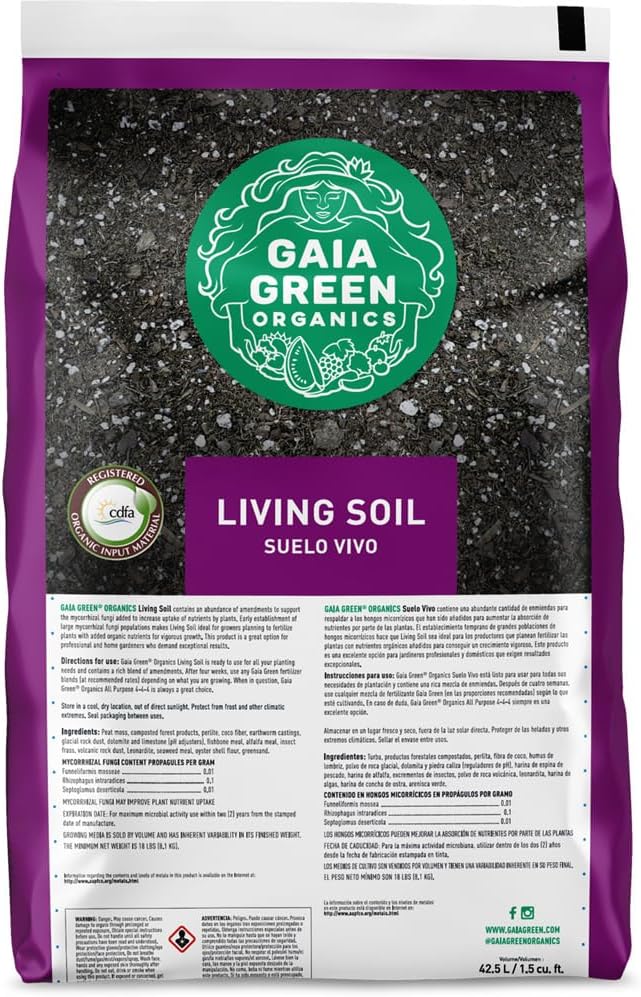
| Volume | 1.5 Cu Ft |
|---|---|
| Ready to Use | Pre-charged with nutrients |
| Suitable for | Seed starting, containers, houseplants, raised beds |
| Certification | CDFA-registered |
Gaia Green Organic Living Soil is a pre-mixed, biologically active potting mix designed to simplify planting and give vegetables and other plants a strong start. It is typically used to fill containers, seed trays, or raised beds without any additional amendments because it already contains worm castings, insect frass, kelp meal, bone meal, glacial rock dust and other organic inputs that release nutrients over time. The base blend of peat moss, perlite, coconut coir and fir bark gives a light, well-draining structure that encourages root development while retaining enough moisture for consistent growth. Practical benefits include convenience for busy gardeners and a steady supply of organic nutrients that reduce the need for frequent feeding. Important limitations are that volume comes in a single 1.5 cubic foot bag so larger plantings require multiple bags and the mix contains peat which some growers avoid for sustainability reasons. Also users sensitive to dust should handle it with gloves and a mask.
Best for: Gardeners who want a performance-focused, low-hassle soil that delivers steady organic nutrition for productive vegetable containers or small raised beds.
Less Ideal for: Large-scale growers on a strict budget or those seeking a peat-free or fully DIY-amended mix should consider other options.
- Ready-to-use blend requires no mixing or amending before planting
- Pre-charged with slow-release organic nutrients for steady feeding
- Biologically active ingredients (worm castings, insect frass) support soil life and root health
- Light, well-draining mix suitable for containers and raised beds
- Single 1.5 cu ft bag means you will need multiple bags for larger vegetable plots
- Contains peat moss, which some gardeners avoid for environmental reasons
Verdict: Use this pre-charged organic living soil when you want a high-performance, low-effort medium that feeds green beans and other vegetables consistently from planting onward.
Back to the Roots All-Purpose Peat-Free Potting Mix, 12 qt (2-pack)

| Number of Packs | 2 |
|---|---|
| Unit Count | 384 Ounce |
| Item Type Name | Natural & Organic All-Purpose Peat-Free Potting Mix |
| Style Name | Specialty Potting Mix |
This peat-free potting mix is designed as a ready-to-use growing medium for herbs, vegetables, and flowers in containers and raised beds. It blends coconut coir for moisture retention, beneficial mycorrhizae to support root growth, yucca extract to help move water and nutrients into roots, and dolomitic limestone to moderate pH. Typical use is topping or filling raised beds and large containers where you want a light, well-draining soil that still holds moisture and supplies initial nutrients. The organic components make it a good match for edible gardens, and the inclusion of mycorrhizae can speed early root establishment. Expect a lighter texture than traditional loam or compost-heavy mixes, so you may need to supplement with compost or aged manure for long-term fertility in production beds. Also, the bagged volume is modest per pack, so plan quantities for larger raised beds. For gardeners who avoid peat and want a plant-friendly, moisture-smart base mix, this is a practical option with clear environmental intent.
Best for: Gardeners who prioritize sustainable, peat-free products and want an easy-to-use, moisture-retentive base mix for filling or topping raised beds for vegetables and herbs.
Less Ideal for: Those building large-scale vegetable beds who prefer a heavy, compost-rich soil straight away or who want to rely solely on the bag mix for season-long fertility.
- Peat-free, organic formula supports environmentally conscious gardening
- Coconut coir and yucca extract improve moisture retention without becoming waterlogged
- Contains mycorrhizae to encourage stronger early root systems
- Dolomitic limestone helps balance pH to reduce acidity-related nutrient issues
- Light, coir-rich texture may require added compost or fertilizers for sustained vegetable production
- Small combined volume per pack means multiple bags needed for larger raised beds
Verdict: A sustainable, plant-friendly peat-free potting mix that gives raised-bed vegetable growers a moisture-smart, root-supporting base to build on.
Back to the Roots 3-in-1 Seed Starting Mix, 6 Quart, Organic Peat-Free

| Unit Count | 192 Fluid Ounces |
|---|---|
| Style Name | 3-in-1 Seed Starting Mix |
| Brand Name | Back to the Roots |
| UPC | 810667035822 |
This 6-quart Back to the Roots 3-in-1 Seed Starting Mix is a peat-free, organic blend aimed at making seed starting and early potting simple. You use it straight from the bag to fill trays, small pots, or starter cells; the mix includes coconut coir for water retention, dolomitic limestone to balance pH, mycorrhizae to support root uptake, and yucca extract for moisture control. Practically, that means fewer extra amendments for a new gardener and a more forgiving environment for delicate seedlings. The formula is designed to drain well while retaining enough moisture for even watering, and the included nutrients and worm castings can reduce early feeding. Limits to note are the small 6-quart volume, which is best for hobby-scale starting rather than large beds, and a lighter texture that may dry faster in very hot, exposed conditions. For budget growers who want an all-in-one starter mix without experimenting with multiple additives, this is a convenient choice.
Best for: Great for budget-minded home gardeners who want a single, ready-to-use seed starting mix that reduces extra amendments and simplifies starting herbs, vegetables, and flowers.
Less Ideal for: Not the best fit for landscapers or gardeners starting large numbers of plants or filling large containers where bulk bagged mixes would be more economical.
- Peat-free organic formula with coconut coir for moisture retention and aeration
- Includes mycorrhizae and worm castings to support early root development and nutrient uptake
- pH balancing with dolomitic limestone reduces the need for corrective amendments
- Ready-to-use blend suitable for seed trays, small pots, and indoor container starts
- Only 6 quarts per bag, so multiple bags are needed for larger projects
- Light, fast-draining texture can require more frequent watering in hot or windy conditions
Verdict: A convenient, peat-free all-in-one starter mix that saves time and extra purchases for home gardeners starting small batches of seeds.
FoxFarm Ocean Forest Potting Soil, 12 qt (with 2 Plant Tags)

| Brand Name | FoxFarm |
|---|---|
| Unit Count | 144 Ounce |
| Item Highlight | Light, Aerated Texture with Fish Meal, Crab Meal, Earthworm Castings |
| Volume | 12 quarts |
FoxFarm Ocean Forest is a pre-mixed potting soil built from aged forest products, sandy loam and sphagnum peat moss, amended with organic inputs like fish meal, crab meal and earthworm castings. It is designed to be used straight from the bag for container-grown plants and seedlings, providing a light, well-aerated texture that helps drainage and root development. Typical use is filling pots or raised beds for starts, houseplants and container vegetables or berries; the included plant tags make labeling varieties and planting dates easier. The nutrient-rich formula supplies an initial fertility boost so you can delay heavy nitrogen feeding while young plants establish. On the downside the 12 quart bag is relatively small for larger blackberry plantings in-ground or for filling many large containers and you may need to supplement specific soil pH or long-term fertility requirements for mature brambles. For container blackberries this mix gives an easy, reliable start but plan on larger volumes or soil amendments for permanent beds.
Best for: Gardeners who want a reliable, plug-and-play potting mix to start container blackberries or seedlings and value a nutrient-rich, well-aerated medium that reduces early feeding needs.
Less Ideal for: Growers preparing large in-ground blackberry beds or those needing specific soil pH control should choose bulk soil or amend based on a lab test rather than rely on this bag alone.
- Ready-to-use blend with organic amendments for immediate planting
- Light, aerated texture that promotes drainage and root growth
- Contains fish meal, crab meal and earthworm castings for early nutrient support
- Includes plant tags for easy labeling of varieties and planting dates
- 12 quart bag size is limited for larger plantings or multiple containers
Verdict: Use this nutrient-rich, aerated potting mix to give container or young blackberry plants a strong, low-effort start.
Miracle-Gro Potting Mix, 16 qt. (2-Pack)

| Feeds Plants | Up to 6 months |
|---|---|
| Volume | 16 quarts |
| Number of Packs | 2 |
| Intended Use | Outdoor containers |
| Ingredients | Sphagnum Peat Moss, Peat, Perlite, Compost, Fertilizer |
Miracle-Gro Potting Mix is a general-purpose container soil designed for outdoor pots, planters, and hanging baskets. It combines peat-based media, perlite, compost, and built-in fertilizer so you can pot vegetables, herbs, annuals, perennials, and shrubs without blending amendments. Typical use is straightforward: fill a pot about one third, set the plant at nursery depth, top off, and water until excess drains. Notable features are fast drainage to prevent root rot, an all-purpose nutrient charge that feeds plants for up to six months, and a texture that helps roots establish quickly. In practice this means less upfront prep and fewer immediate feedings compared with plain soil, and it is handy for seasonal repotting and new container plantings. Important limitations are that it is formulated for containers only (not in-ground beds) and the nutrient boost will diminish after the stated feeding period so you will need to supplement or repot for long-term specimens. Also peat-based mixes can compress over time and require refreshing each season.
Best for: Gardeners who want a low-effort, dependable potting soil for seasonal container planting and quick repots, especially those optimizing time and results across many pots.
Less Ideal for: Those wanting a soil to amend in raised beds or long-term in-ground planting should choose a garden soil formulated for in-ground use instead.
- Ready-to-use mix with built-in fertilizer that feeds up to six months
- Formulated for fast drainage to reduce risk of overwatering and root rot in containers
- Versatile for a wide range of outdoor container plants including vegetables, herbs, and flowers
- Not intended for in-ground garden beds
- Fertilizer effect is temporary and requires refeeding or repotting after about six months
Verdict: A convenient, fast-draining potting mix that simplifies container planting while providing up to six months of built-in nutrition.
Back to the Roots Organic Expanding Coco Coir Potting Soil Brick (10 lb)

| Item Highlight | 10 lb compressed coco coir brick; peat-free; OMRI Listed |
|---|---|
| Item Type Name | Coconut Coir |
| Volume | 2 cubic feet |
| Ingredients | Coconut Coir |
| Style Name | Expanding Potting Soil |
This compressed coco coir brick provides a lightweight, peat-free potting medium that expands when you add water to create loose, airy substrate for containers and seed flats. It is typically used by hydrating the 10 lb block to about 2 cubic feet of coir and then using it alone for potted plants, mixing it into garden soil to improve drainage and aeration, or blending with compost for starting seeds. Notable features include OMRI listing for organic use, a balanced pH suited to a wide range of plants, and compact storage before expansion which saves space. Practical benefits are improved root aeration and water retention compared with heavy garden loam, easier handling than bulky bags, and versatility across vegetables, herbs, and ornamentals. Important limitations are that coco coir is a soilless substrate and does not supply significant nutrients on its own so you will need to add fertilizer or compost for long-term potted herbs like rosemary, and the product requires time and a water source to expand before use.
Best for: Buyers who prioritize low-risk, easy-to-handle, organic potting media and want a versatile base for container herbs and seed starting without dealing with heavy bags.
Less Ideal for: Gardeners who want a ready-to-plant, nutrient-rich potting mix out of the box or those who prefer soil with built-in slow-release fertilizer.
- Peat-free OMRI listed organic coco coir suitable for organic growing
- Expands from a compact brick to about 2 cubic feet for easy storage and transport
- pH balanced and airy texture that improves drainage and root aeration
- Versatile use: can be used alone, for seed starting, or mixed into existing soil
- Provides little inherent fertility so supplemental feeding or compost is needed for nutrient-hungry plants
Verdict: A compact, peat-free coco coir brick that expands into an airy, pH-balanced base ideal for low-risk organic container gardening and seed starting when paired with fertilizer or compost.
Choosing the Right Soil for Green Beans: Key Factors to Consider
Drainage and Aeration
Green beans need a mix that sheds excess water while still holding enough moisture for steady root uptake. Poorly draining soil causes oxygen starvation at the root zone, which reduces root hair function and inhibits nitrogen-fixing nodules. In containers and heavy garden soils, add coarse materials or choose a lighter mix to maintain pore space. Good drainage also helps prevent common fungal problems in seedlings and young vines.
When assessing a soil, look at particle size and inclusion of components such as coarse sand, perlite, or aged compost. Those elements create larger pores that speed water movement and allow roots to respire.
Nutrient Availability and Starter Fertility
Beans fix nitrogen once established, but seedlings still benefit from accessible phosphorus and potassium during early root and flower development. A soil with modest starter fertility gives plants what they need for robust early growth without encouraging excessive leafy growth that delays flowering. Avoid mixes overloaded with high-nitrogen fertilizers that can suppress nodulation and reduce long-term benefits from biological nitrogen fixation.
Evaluate soil labelling or ingredient lists for soluble nutrient content and prefer mixes that combine a gentle starter nutrient charge with organic amendments that release nutrients over time.
Soil Structure and Root Penetration
Root structure determines how effectively green bean plants explore soil for water and nutrients. A fine-textured soil that compacts easily will restrict roots and lead to shallow root systems prone to drought stress. Conversely, a well-aggregated structure with stable crumbs supports deeper rooting and steadier water access. This matters for both in-ground beds and containers where restricted depth can amplify problems.
Good structure also affects how the soil responds to watering and weather cycles. Stable aggregation reduces crusting at the surface and preserves worm channels and pore continuity important for healthy root systems.
Organic Matter Content and Biological Activity
Organic matter supplies slow-release nutrients, improves water-holding capacity in sandy soils, and enhances drainage in clay soils through aggregation. It also feeds the microbial community that aids nutrient cycling and supports beneficial fungi and bacteria. For beans, a biologically active soil promotes healthier roots and better nodulation with rhizobia.
When choosing a mix, consider the type and maturity of organic matter. Well-aged compost and leaf mold are preferable to raw manures that can burn seedlings or introduce pathogens. Look for soils that list composted materials and promote microbial life.
pH and Salt Levels
Green beans prefer a slightly acidic to neutral pH range. Soils that are too acidic or alkaline can lock up nutrients and limit growth. High soluble salts in a mix from certain amendments or poor-quality compost can inhibit germination and damage young roots, especially in containers.
Check product information for pH ranges and avoid mixes with high reported EC or salt content. If you reuse potting mixes, flush them occasionally to prevent salt buildup and monitor pH periodically to keep it in the suitable range for legumes.
Container Planting Tips
Containers magnify risks of overwatering and salt accumulation, so choose a light, well-draining mix that still holds enough moisture between waterings. Use containers with ample drainage holes and consider adding a coarse layer or screen to prevent mix loss.
For container-grown green beans, select a mix with good structure and organic matter that will not compact quickly. Water deeply and less often to encourage roots to explore the full depth, and monitor for signs of nutrient deficiency since limited volume holds less reserve fertility.
- Use a potting mix with perlite or coarse sand for faster drainage
- Avoid heavy garden soil alone in pots; it compacts and retains too much water
- Top-dress with compost midseason for steady nutrient release
Preparing Garden Beds for Beans
Amend native garden soil to improve structure and nutrient balance before planting. Incorporate well-aged compost to boost organic matter and help balance drainage in both sandy and clay soils. Work amendments into the top 6 to 8 inches where most bean roots will be active.
If the garden soil is heavy and slow-draining, raise beds slightly or work in coarse amendments like poultry grit or horticultural sand to increase porosity. For very poor or contaminated sites, consider using a blended vegetable mix in a raised bed to control starting conditions.
- Aim for loose, crumbly tilth in the topsoil layer
- Avoid freshly tilled raw manure near planting time
- Test soil pH and adjust if it falls well outside the slightly acidic to neutral range
Mix Adjustments Based on Climate
In hot, dry climates choose mixes with higher organic matter and water-holding components so plants do not stress between waterings. Mulch the soil surface to reduce evaporation and keep root zones cooler.
In cool, wet climates prioritize drainage and avoid heavy mulches that can trap moisture. Light, fast-draining mixes with coarse components help roots stay oxygenated when temperatures are low.
- Increase coarse components in rainy climates
- Add water-retentive materials in arid regions
- Adjust watering frequency to local conditions rather than following a fixed schedule
Supporting Nodulation and Soil Biology
Green beans form beneficial relationships with rhizobia bacteria to fix nitrogen. Healthy nodulation depends on the presence of compatible bacteria, balanced soil pH, and moderate soil fertility. Extremely high available nitrogen early on can reduce nodulation activity.
If planting beans in a new or sterile medium, consider inoculating seeds with a legume-specific inoculant to ensure effective nodulation. Maintaining organic matter and microbial-friendly conditions supports long-term biological fertility.
- Avoid high-nitrogen starter feeds that suppress nodulation
- Use seed inoculant when planting in new or previously unused soils
- Keep soil biology active with periodic compost additions
Seed Starting and Transplant Considerations
For direct seeding, use a fine-textured but well-draining seed mix that supports quick emergence. For transplants, harden off seedlings and plant them into a looser, well-amended bed to reduce transplant shock.
Avoid planting seedlings too deeply and firm soil gently around the crown to ensure good root-soil contact without compaction. Monitor moisture closely during the first two weeks while roots establish.
- Choose a light seed-starting medium for germination
- Transplant into the prepared mix at the same soil depth the seedlings were growing
- Keep new transplants evenly moist but not waterlogged
How We Chose the Best Soil for Green Beans
We focused on attributes that directly influence germination, vine vigor, and pod production in green beans. Evaluation emphasized soil texture and drainage because excess moisture causes root rot and poor nodulation. Nutrient retention and starter fertility were considered to ensure young plants have accessible nitrogen and phosphorus without excessive, long-term nutrient lockup. Structure and tilth were included to assess how easy the soil is to work, how well roots penetrate the mix, and how the soil behaves in containers versus in-ground beds. Organic matter content and biological activity were used to judge how the mix supports beneficial microbes and long-term fertility. Finally, pH stability and salt levels were checked to avoid mixes that could harm seedling emergence or reduce nodulation. Products were excluded if they were niche blends not intended for edible vegetable production, if they relied solely on slow-release synthetic fertilizers without organic amendment, or if details on texture and organic content were unavailable. The criteria above guided selection so gardeners can choose mixes suited to their planting method and soil-management preferences.
FAQ
Can I use native garden soil for green beans?
Often you can if the soil is well-draining and has good structure. Amend heavy or compacted native soils with compost and coarse material to improve porosity. If the native soil is poor or contaminated, use a raised bed with a blended vegetable mix.
Should I add fertilizer when planting green beans?
Usually a modest starter fertilizer with phosphorus and potassium helps early root and flower development. Avoid high-nitrogen feeds that can suppress nodulation; beans will gain nitrogen as nodules establish.
Do green beans need acidic or alkaline soil?
Green beans prefer slightly acidic to neutral pH. Extremely acidic or alkaline soils can limit nutrient availability and reduce yields. Test and adjust pH if it falls well outside the common range for vegetables.
How often should I water beans in containers?
It depends on container size and mix but containers usually need more frequent checks. Water deeply when the top inch of mix feels dry, and ensure excess water can drain freely to avoid root oxygen loss.
Is inoculating bean seeds necessary?
In many garden soils with a history of legumes it is not necessary because compatible rhizobia are already present. In sterile mixes, new beds, or where legumes have not been grown recently, inoculation often improves nodulation and early nitrogen fixation.
How does compost affect green bean soil?
Compost improves structure, adds slow-release nutrients, and feeds soil life that supports root health. Use well-aged compost to avoid burning seedlings and incorporate it into the root zone before planting.
Final Verdict
Choose a soil that balances good drainage with enough nutrient-holding capacity and organic matter to support quick establishment and steady pod production. Prioritize mixes with stable structure so roots can penetrate deeply and avoid compaction, and keep pH and salt levels within a safe range for legumes. For containers and challenging native soils, tailor the mix to local climate and watering habits to reduce stress and support nodulation. By focusing on drainage, starter fertility, structure, and biological health, you can confidently pick a soil approach that helps green beans germinate quickly and produce reliable yields throughout the season.
