

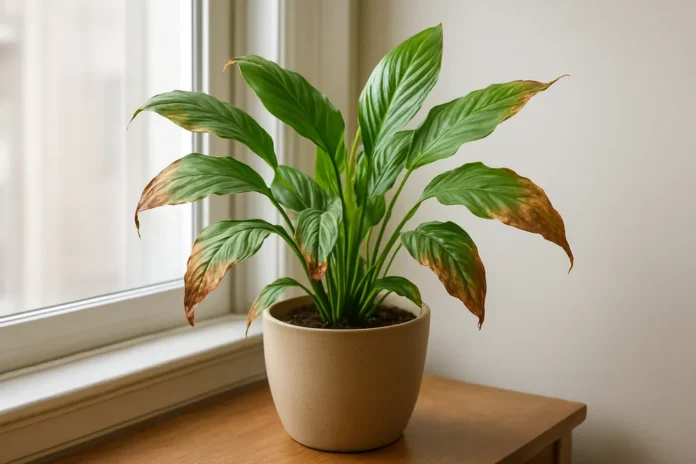
Peace lily leaves usually turn brown because of inconsistent watering, low humidity, excess fertilizer salts, or too much direct sun. Brown leaf tips and patches can also happen as older leaves naturally age.
Seeing peace lily leaves turning brown can be frustrating, especially when the plant looked healthy just a short time ago. In most homes, browning starts because the plant is getting too dry, staying too wet, sitting in harsh sunlight, or reacting to mineral and fertilizer buildup in the soil.
The good news is that brown leaves on a peace lily are common and usually fixable. The exact pattern matters. Crispy brown tips often point to dry air, underwatering, or salt buildup, while larger brown patches can suggest sun scorch, root stress, or watering problems that have gone on too long.
Once you match the symptoms to the cause, recovery is usually straightforward. A few changes to watering, light, humidity, and potting care can help new growth come in green and healthy again.
What Brown Leaves on a Peace Lily Usually Mean
Brown tissue means part of the leaf has died. Unlike some yellowing issues, brown areas do not turn green again. Your goal is to stop the problem so the rest of the plant stays healthy and new leaves emerge without damage.
Peace lilies are sensitive houseplants. They respond quickly to stress from moisture swings, low humidity, salts in tap water, poor drainage, or direct sun. That sensitivity makes them useful communicators. If you pay attention to where the browning starts and what the soil feels like, you can usually narrow the cause down fast.
- Brown tips often suggest dry air, underwatering, or salt buildup.
- Brown edges can point to water stress, fertilizer burn, or inconsistent moisture.
- Large tan or brown patches may be sun scorch or severe dehydration.
- Soft brown areas with yellowing can signal root trouble from overwatering.
- A single older leaf browning near the base may simply be normal aging.
Underwatering and Inconsistent Watering
Why Dry Spells Cause Brown Tips and Edges
Peace lilies prefer evenly moist soil, not bone dry soil followed by a heavy soaking. When the potting mix gets too dry, the plant loses moisture faster than the roots can replace it. The leaf tips and margins are often the first areas to dry out, so they turn tan, then brown and crispy.
This problem is especially common when a peace lily droops dramatically between waterings. While the plant can sometimes bounce back after wilting, repeated drought stress often leaves a trail of brown tips behind.
Clues That Underwatering Is the Issue
- Leaf tips are dry, brittle, and papery rather than soft.
- The whole plant droops when the soil dries out.
- The pot feels very light before watering.
- The soil may pull away from the sides of the pot.
- New leaves may be smaller than usual if drought stress has repeated.
How to Correct It
Water thoroughly when the top inch of soil feels dry, not when the pot has become completely dry all the way through. Soak the soil until excess water drains from the bottom, then empty any saucer or cachepot so roots are not left standing in water. If the mix has become so dry that water runs straight through, rewet it slowly or bottom-water once to help the root ball absorb moisture again.
Overwatering and Root Stress
Why Too Much Water Can Also Turn Leaves Brown
It seems backward, but overwatering can also lead to brown leaves. When soil stays wet too long, roots cannot get enough oxygen. Stressed roots stop moving water efficiently, and the leaves begin to show damage. Browning from overwatering is often paired with yellowing, limp foliage, or a generally tired-looking plant.
If soggy conditions continue, root rot may develop. In that case, leaf browning is a symptom of a deeper root problem rather than a leaf problem alone.
Signs the Roots May Be Staying Too Wet
- The soil stays wet for many days after watering.
- Leaves look limp even though the mix is moist.
- Brown areas may feel softer before they dry out.
- Yellow leaves appear along with browning.
- The pot has poor drainage or no drainage hole.
- You notice a sour smell from the potting mix.
How to Correct It
Let the top layer of soil dry slightly before watering again, and make sure the container has a drainage hole. If the plant has been sitting in dense, slow-draining mix, repot into a fresh indoor potting mix that drains well while still holding some moisture. Trim any mushy, dark roots during repotting and remove badly damaged leaves so the plant can focus on healthy regrowth.
Low Humidity and Dry Indoor Air
Peace lilies are tropical plants, so they are more comfortable in moderate to high humidity than many homes provide. Dry indoor air, especially during winter heating season or near vents, often causes brown tips and edges even when watering seems mostly correct.
Humidity stress is most obvious when the rest of the leaf stays green but the very ends turn crisp and brown. The plant is still functioning, but it is losing moisture from the foliage faster than it would like.
- Move the plant away from heating vents, radiators, and strong air conditioning drafts.
- Group it with other houseplants to create a slightly more humid microclimate.
- Use a small room humidifier if your air is consistently dry.
- Place the plant in a naturally more humid room with bright indirect light, such as a bathroom if light is adequate.
- Avoid relying on occasional misting alone, since the effect is brief.
Too Much Direct Sun
Sun Scorch Looks Different From Simple Tip Burn
Peace lilies prefer bright, indirect light. They tolerate lower light better than direct sun. If the plant sits in a hot south- or west-facing window, intense rays can scorch the leaves. This usually creates pale tan, bleached, or brown patches on the surface of the leaf rather than neat browning just at the tip.
Sun damage often appears on the side facing the window and can happen quickly during summer or after moving the plant to a brighter location without an adjustment period.
How to Correct It
Move the plant to bright filtered light or a spot a few feet back from a sunny window. Sheer curtains can soften strong light. Damaged tissue will not recover, but future leaves should emerge normally once the plant is out of direct sun.
Fertilizer Burn and Mineral Buildup
Peace lilies do not need heavy feeding. Too much fertilizer, or even a normal amount applied too often, can leave excess salts in the soil. Over time, these salts draw moisture away from the roots and leaf tips, causing brown tips and margins. Hard tap water with lots of dissolved minerals can create a similar effect.
This is a common cause when the plant is otherwise growing reasonably well but keeps developing brown tips no matter how carefully you water.
Signs Salt Buildup May Be Involved
- Brown tips keep returning on new leaves.
- A white crust appears on the soil surface or pot rim.
- You fertilize regularly year-round or use a strong dose.
- Your tap water is hard or heavily chlorinated.
- The plant has been in the same soil for a long time.
How to Correct It
Flush the pot thoroughly with clean water to wash out excess salts, letting plenty of water run through the drainage hole. If buildup is severe, repot in fresh mix. Fertilize lightly during active growth, usually spring and summer, and skip feeding when growth slows. If your water is very hard, switching to filtered, distilled, or rainwater can reduce future leaf-tip burn.
Water Quality Problems
Water quality issues usually produce a slow, recurring pattern. You trim the tips, the plant looks better for a while, and then the new leaves develop brown ends again.
- Use filtered or distilled water if your tap water is known to be hard.
- Collected rainwater also works well if it is clean.
- If using tap water, let it sit out before use if chlorine is the main concern, though this will not remove dissolved salts or fluoride.
- Flush the soil periodically to reduce mineral accumulation.
Temperature Stress and Drafts
Cold drafts, hot blasts of air, and abrupt temperature swings can stress peace lilies enough to damage leaf tissue. Browning may appear along the edges or in irregular patches, especially if leaves are touching a cold windowpane in winter or sitting next to a heater.
Peace lilies generally prefer stable indoor temperatures. They do best when kept away from exterior doors, drafty windows, heating vents, fireplaces, and strong air conditioning airflow.
- Keep the plant in a room that stays consistently warm.
- Do not let leaves press against cold glass.
- Avoid placing the pot where hot or cold air blows directly on it.
- If you move the plant seasonally, make the change gradually.
Potbound Roots and Old Potting Mix
A crowded peace lily can start drying out too quickly because there is more root than soil in the pot. Old potting mix can also break down and become compacted, which creates the opposite problem by holding too much water and reducing airflow to the roots. In both cases, brown leaves can follow.
If your plant needs water far more often than it used to, or if water sits on the surface before slowly draining, the root zone may be overdue for attention.
When Repotting Helps
- Roots circle densely around the inside of the pot.
- The plant wilts again quickly after watering.
- The soil has become compacted, stale, or crusted.
- Water drains too fast because there is very little soil left.
- The plant has been in the same potting mix for several years.
Repot into a container just one size larger with fresh, well-draining houseplant mix. Oversizing the pot can leave too much wet soil around the roots, so bigger is not always better.
Natural Aging and Old Leaf Decline
Not every brown leaf means something is wrong. Older peace lily leaves eventually decline, especially those low on the plant near the base. They may yellow first, then turn brown as the plant redirects energy into newer growth.
If only one or two of the oldest leaves are fading while the rest of the plant looks healthy, this is likely normal aging rather than a care mistake.
Simply prune the aging leaves at the base with clean scissors or pruners. If many leaves are browning at once, however, look for one of the environmental or watering causes above.
How to Tell Which Cause Is Most Likely
Because several problems can cause brown leaves, it helps to compare the symptoms side by side. Start with the texture, location, and timing of the damage.
- Crispy brown tips only: low humidity, slight underwatering, fertilizer salts, or hard water.
- Brown edges after severe drooping: underwatering or inconsistent watering.
- Soft brown areas with yellowing: overwatering or root rot.
- Large bleached or tan patches: too much direct sun.
- Browning near vents or cold windows: temperature stress or drafts.
- Only the oldest lower leaves browning: normal aging.
If two clues seem to fit, that is not unusual. Many peace lilies have more than one issue at the same time, such as low humidity plus hard tap water, or overwatering plus old compacted soil.
What to Do with Brown Peace Lily Leaves
Brown tissue does not heal, so cosmetic cleanup can improve the plant's appearance after you fix the underlying issue. Trim away just the dead brown portions by following the natural shape of the leaf, or remove the entire leaf at the base if it is mostly damaged.
Use clean scissors or pruners and avoid removing too much healthy green tissue. If a leaf is less than one-third brown, many gardeners simply tidy the tip and leave the rest to continue feeding the plant.
- Identify the most likely cause based on soil moisture, light, humidity, and leaf pattern.
- Correct that cause before pruning heavily.
- Trim brown tips or remove badly damaged leaves.
- Watch new growth over the next few weeks for improvement.
- Adjust care gradually rather than making several drastic changes at once.
How to Prevent Brown Leaves in the Future
Prevention is mostly about consistency. Peace lilies are happiest when they get stable moisture, bright indirect light, moderate humidity, and occasional light feeding instead of extremes.
- Water when the top inch of soil is dry, not on a rigid calendar.
- Use a pot with good drainage and empty standing water after watering.
- Keep the plant in bright indirect light rather than direct afternoon sun.
- Raise humidity if your home is very dry.
- Fertilize lightly during active growth only.
- Flush or refresh the soil occasionally to reduce salt buildup.
- Repot when the plant becomes rootbound or the mix breaks down.
A healthy peace lily can still get an occasional brown tip, especially in dry indoor conditions, so perfection is not the goal. What matters is whether new leaves are emerging healthy and the overall plant stays vigorous.
FAQ
Should I Cut the Brown Tips Off My Peace Lily?
Yes. You can trim brown tips for appearance, but use clean scissors and follow the natural point of the leaf. Leave as much green tissue as possible so the leaf can keep supporting the plant.
Do Brown Peace Lily Leaves Turn Green Again?
No. Brown tissue is dead and will not recover. Focus on correcting the cause so future growth comes in healthy.
How Often Should I Water a Peace Lily with Brown Leaves?
Water based on the soil, not a fixed schedule. In most homes, watering when the top inch of soil feels dry works better than waiting until the plant collapses or watering on the same day every week.
Can Tap Water Make Peace Lily Leaves Brown?
Yes. Hard water and water high in dissolved minerals can contribute to brown tips. Sensitive plants often do better with filtered, distilled, or rainwater.
Is Direct Sun Bad for a Peace Lily?
Yes, especially strong afternoon sun. Peace lilies prefer bright indirect light, and direct sun can scorch the leaves and leave tan or brown patches.
Why Are Only the Tips of My Peace Lily Leaves Turning Brown?
Brown tips are most often linked to dry air, inconsistent watering, or salt buildup from fertilizer or tap water. If the rest of the leaf looks healthy, root rot is less likely.
Can Overwatering Cause Brown Leaves Even if the Soil Feels Wet?
Yes. When roots stay too wet, they cannot function properly, and leaves may yellow, wilt, or develop brown areas. Wet soil does not always mean the plant is getting what it needs.
Need a healthier indoor plant setup fast? Read our guide to the best houseplant soils, watering tools, and humidifiers to stop brown leaf problems before they spread.
