

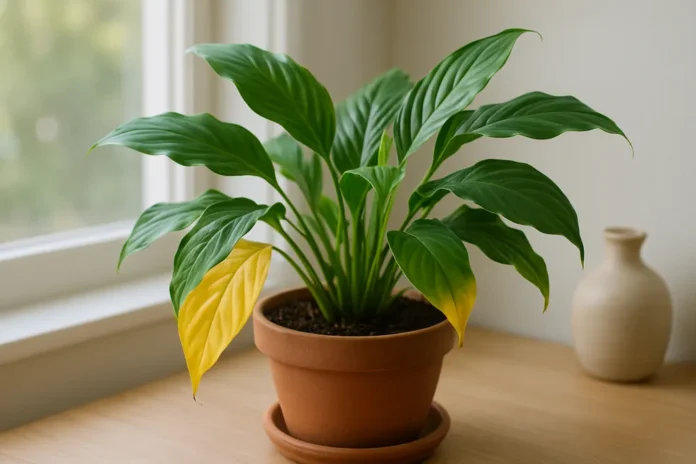
Peace lily leaves usually turn yellow because the plant is staying too wet, drying out too much, getting poor light, or going through normal leaf aging. Yellowing can also come from nutrient imbalance, mineral-heavy water, temperature stress, or pests.
A peace lily with yellow foliage is one of the most common indoor plant problems, and it usually points to stress rather than a mystery disease. When leaves lose their healthy green color and start turning yellow, the most likely causes are watering problems, poor drainage, low light, aging foliage, or an issue with feeding and water quality.
The good news is that peace lilies are very good at showing what they need. A single old leaf yellowing near the base can be completely normal, while several yellow leaves at once often suggest root stress, inconsistent moisture, or a less-than-ideal growing setup. Once you match the yellowing pattern to the cause, the fix is usually straightforward.
This guide walks through the most common reasons peace lily leaves turn yellow, how to tell them apart, and what to do so your plant can return to healthy, glossy growth.
What Yellow Leaves Usually Mean on a Peace Lily
Yellow leaves are a symptom, not a diagnosis. On peace lilies, they most often mean the roots are under stress. That stress can come from too much water, too little water, compacted soil, a pot without proper drainage, weak light, salt buildup, or sudden environmental changes.
Look at the whole plant instead of one leaf alone. If the oldest leaves at the bottom are yellowing one at a time while new growth still looks healthy, normal aging is likely. If several leaves are yellowing together, especially with drooping or brown tips, the plant is telling you something in its care routine needs attention.
- A few older bottom leaves yellowing slowly often means natural aging.
- Many leaves yellowing at once often points to watering or root problems.
- Yellow leaves with mushy stems or soggy soil often suggest overwatering.
- Yellow leaves with wilted, dry soil can indicate underwatering.
- Pale yellow foliage with slow growth may be linked to low light or nutrient issues.
Overwatering Is the Most Common Cause
Why Too Much Water Turns Peace Lily Leaves Yellow
Peace lilies like evenly moist soil, but they do not like sitting in water. When the potting mix stays wet for too long, air is pushed out of the root zone. Roots need oxygen to function, so constantly wet soil can cause them to weaken or rot. As the roots struggle, the leaves start turning yellow because the plant can no longer move water and nutrients properly.
Signs Overwatering Is the Problem
- Yellowing starts on several leaves, not just one old leaf.
- Soil feels wet for days after watering.
- The plant droops even though the soil is damp.
- Lower leaves turn soft or limp before browning.
- The pot feels heavy and may smell sour or swampy.
How Overwatering Happens
Overwatering is not always about frequency alone. You can water only once a week and still overwater if the pot is too large, the room is cool and dim, the soil is dense, or the container has poor drainage. Many peace lilies are sold in decorative sleeves or cachepots that trap excess water around the root ball, which quietly creates the same problem.
Underwatering Can Cause Yellowing Too
Peace lilies are famous for dramatic drooping when they get too dry, but repeated drought stress can also lead to yellow leaves. If the potting mix becomes bone dry over and over, the roots can be damaged and the oldest leaves may yellow and die back first.
Underwatering yellowing often looks different from overwatering. Instead of soft, limp yellow leaves with wet soil, you are more likely to see crisp edges, drooping, and a plant that perks up quickly after a thorough watering. Chronic dryness can also cause brown tips along with the yellowing.
- The soil pulls away from the sides of the pot.
- The pot feels very light.
- Leaves droop hard, then recover after watering.
- Yellow leaves may also have dry brown margins.
- New growth is smaller than usual.
Poor Drainage and Root Problems Make Yellow Leaves More Likely
Even if your watering schedule is reasonable, a peace lily can still develop yellow leaves when the soil drains poorly. Heavy potting mixes, compacted roots, and containers without drainage holes can trap moisture around the roots long enough to cause decline.
When Drainage Is the Hidden Issue
A plant in a nursery pot placed inside a decorative outer pot is especially vulnerable. Water may collect at the bottom after watering, and the root ball keeps soaking it up. Over time, the lower roots can rot while the top of the soil appears only slightly moist. That mismatch often confuses plant owners and leads to more watering.
Root-bound Plants Can Yellow Too
Peace lilies do not mind being slightly snug in their pots, but a severely root-bound plant can become difficult to water properly. Water may run straight through the pot, or the root mass may dry too quickly between waterings. In other cases, old compacted soil holds water unevenly. Both situations can produce yellowing leaves.
Light Levels Affect Leaf Color
Peace lilies are often described as low-light plants, but that does not mean no-light plants. In very dim conditions, growth slows and the plant may struggle to keep older leaves healthy. This can lead to fading green color, weak stems, and gradual yellowing.
On the other hand, harsh direct sun can scorch leaves and cause yellow patches that later turn tan or brown. A peace lily usually does best in bright, indirect light where it gets enough energy to maintain healthy foliage without being burned.
- Very low light often causes pale, washed-out yellowing and slow growth.
- Too much direct sun can cause patchy yellowing or bleaching on exposed leaves.
- Ideal light is bright and indirect, such as near an east window or several feet back from a bright south or west window.
Natural Aging Is Normal for Older Leaves
Not every yellow leaf means something is wrong. Peace lilies naturally shed older foliage as they grow. A leaf near the base of the plant may slowly turn yellow, then brown, while the rest of the plant remains green and vigorous. That is part of the normal life cycle.
Natural aging is more likely when only one or two of the oldest leaves are affected at a time. The yellowing tends to be gradual and even, not sudden or blotchy. If new leaves are emerging and look healthy, you are probably just seeing routine turnover.
Nutrient Issues and Salt Buildup Can Fade Leaves
Peace lilies are not heavy feeders, but they still need basic nutrients to maintain rich green foliage. If a plant has been in the same soil for a long time with no feeding, nutrient depletion may lead to pale yellow leaves and slow growth.
At the same time, too much fertilizer can also cause yellowing. Excess fertilizer leaves behind salts in the potting mix, which can damage roots and interfere with water uptake. This often shows up as yellow leaves with brown tips or margins.
Water Quality Can Contribute
Peace lilies can be sensitive to mineral-heavy tap water, fluoride, or chlorine, depending on your local water supply. Over time, these minerals can build up in the soil and contribute to tip burn, dull foliage, and general stress. Yellowing from water quality is usually gradual and often appears alongside browning at the tips.
Temperature Stress, Low Humidity, and Drafts
Peace lilies prefer stable indoor conditions. Cold drafts, hot air from vents, sudden temperature swings, and very dry air can all contribute to stress. While low humidity alone more often causes brown tips than fully yellow leaves, it can make other problems worse and speed up leaf decline.
- Cold damage can cause yellowing followed by browning or collapse.
- Hot, dry air from heaters can increase moisture loss and stress the plant.
- Drafts near doors, air conditioners, or winter windows can trigger leaf drop or discoloration.
Pests and Disease Are Less Common but Possible
Indoor peace lilies are not as pest-prone as some houseplants, but spider mites, mealybugs, and scale can still cause yellowing by feeding on plant tissue. You may notice stippling, sticky residue, distorted growth, or tiny insects on stems and leaf undersides.
Disease is less common indoors unless the plant stays chronically wet. Root rot is the biggest concern and often starts below the soil line before the leaves show widespread yellowing. If yellow leaves are paired with wilting in wet soil and a foul smell, root rot is high on the list.
How to Tell Which Cause Is Most Likely
The pattern of yellowing gives strong clues. Instead of guessing, compare what you see with the condition of the soil, the pot, the light, and the age of the affected leaves.
- Only older bottom leaves are yellow: usually natural aging or occasional drought stress.
- Many leaves are yellow and the soil is wet: likely overwatering, poor drainage, or root rot.
- Leaves are yellow, droopy, and the soil is dry: likely underwatering or a root-bound plant drying too fast.
- Leaves are pale all over with weak growth: likely low light or nutrient depletion.
- Yellowing with brown tips: often salt buildup, inconsistent watering, dry air, or water quality issues.
- Patchy yellow areas on sun-facing leaves: likely too much direct sun.
What to Do when Peace Lily Leaves Turn Yellow
Adjust Watering First
Water based on soil moisture, not the calendar. Let the top inch or so of soil dry slightly before watering again, then water thoroughly until excess drains out. Never let the pot sit in standing water.
Check the Container and Soil
Make sure the pot has drainage holes. If the plant is in a decorative outer pot, empty any collected water after watering. If the soil stays soggy for too long or smells bad, repot into a fresh, airy indoor potting mix.
Improve Light
Move the plant to bright, indirect light. Avoid harsh midday sun, but do not tuck it into a dark corner and expect strong growth. Better light helps the plant recover faster and supports healthy new leaves.
Trim Yellow Leaves when They Decline
A fully yellow leaf will not turn green again. Once a leaf is mostly yellow, trim it off near the base with clean scissors. Removing badly damaged foliage helps the plant direct energy to healthy growth.
Feed Lightly During Active Growth
If the plant has not been fertilized in a long time and seems pale, use a balanced houseplant fertilizer at reduced strength during spring and summer. Avoid heavy feeding, especially if the plant is already stressed.
Flush Salts if Needed
If you suspect fertilizer or mineral buildup, flush the potting mix by running water through it thoroughly and letting it drain well. Repeating this occasionally can help remove excess salts from the root zone.
When to Repot a Yellowing Peace Lily
Repot if the roots are crowded, the soil is compacted, drainage is poor, or you suspect root rot. Choose a pot only one size larger than the current one. A pot that is too big stays wet longer and can make yellowing worse.
During repotting, inspect the roots. Healthy roots are firm and light in color. Rotten roots are dark, mushy, and may smell unpleasant. Trim away damaged roots with clean scissors before replanting in fresh mix.
How to Prevent Yellow Leaves in the Future
Prevention comes down to consistency. Peace lilies do best when their care routine stays fairly steady and their roots have a balance of moisture, air, and warmth.
- Use a pot with drainage holes.
- Water when the top layer of soil is slightly dry, not on a rigid schedule.
- Give bright, indirect light.
- Do not leave excess water in saucers or outer pots.
- Repot when the soil becomes compacted or the plant is badly root-bound.
- Fertilize lightly during the growing season only.
- Keep the plant away from cold drafts and heating vents.
- Use filtered, distilled, or rested tap water if your water is very hard or heavily treated.
FAQ
Can Yellow Peace Lily Leaves Turn Green Again?
No. Once a leaf has turned yellow, it will not return to green. Focus on correcting the cause so new growth comes in healthy.
Should I Cut Off Yellow Leaves From My Peace Lily?
Yes, if a leaf is mostly yellow or clearly declining. Trim it near the base with clean scissors so the plant can put energy into healthy leaves.
How Often Should I Water a Peace Lily to Prevent Yellow Leaves?
There is no fixed schedule that fits every home. Water when the top inch of soil feels slightly dry, then water thoroughly and let the excess drain away.
Why Are My Peace Lily Leaves Yellow and Brown at the Tips?
That combination often points to inconsistent watering, fertilizer salt buildup, low humidity, or mineral-heavy tap water. It can also happen when roots are stressed from staying too wet.
Do Peace Lilies Get Yellow Leaves in Low Light?
Yes. In very dim conditions, peace lilies may develop pale or yellowing leaves and grow more slowly. Bright, indirect light usually supports better color and stronger growth.
Can Tap Water Make Peace Lily Leaves Turn Yellow?
Sometimes. Hard water and treated tap water can leave mineral deposits in the soil over time, which may contribute to yellowing, tip burn, and general stress.
Is One Yellow Leaf on a Peace Lily Normal?
Usually, yes. If it is one older leaf near the base and the rest of the plant looks healthy, natural aging is the most likely explanation.
Need the right fix fast? Read our peace lily care and troubleshooting guides to choose the best watering tools, potting mix, and indoor plant treatments for healthier leaves.
