

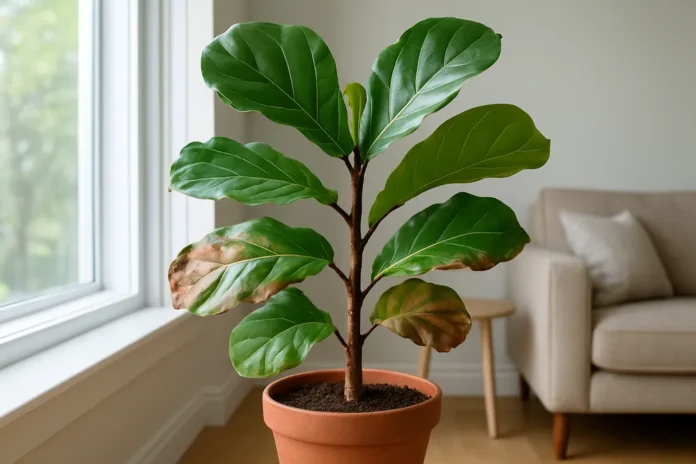
Fiddle leaf fig stems turn brown most often from normal stem aging, stress from overwatering or underwatering, sunburn, pests, or rot. The cause depends on whether the brown area looks dry and corky or dark, soft, and spreading.
If your fiddle leaf fig is developing brown stems, the cause may be harmless or it may be an early warning that the plant is under stress. Some brown coloration is a normal part of stem maturation, especially on older growth, while other cases point to overwatering, sun injury, pest activity, or disease.
The key is how the brown area looks and feels. Dry, firm, bark-like browning on older stems is often part of the plant hardening off as it matures. Dark, mushy, sunken, or spreading brown patches are more concerning and usually mean tissue damage that needs attention.
In most homes, the biggest reason fiddle leaf fig stems change color is a mismatch between water, drainage, light, and humidity. Once you know what normal aging looks like and what true stem damage looks like, it becomes much easier to decide whether your plant simply needs time or a change in care.
When Brown Stems Are Normal
Not every brown stem on a fiddle leaf fig is a problem. As the plant matures, green stems often become firmer, woodier, and more brown or tan. This process is sometimes called corking or lignification, and it helps support heavier leaves and taller growth.
Normal stem aging usually shows up on older parts of the plant first. The tissue stays dry and hard, and the color change tends to look even rather than blotchy. You should not see a wet surface, collapsing tissue, foul smell, or rapid spread.
- Browning is mostly on older lower stems or the main trunk
- The surface feels dry, firm, and slightly rough
- Leaves still look healthy overall
- The brown color develops slowly over time
- There is no soft rot, oozing, or bad odor
If that description matches your plant, the browning may be a normal sign that the stem is maturing. Many home gardeners worry because young fiddle leaf figs are sold with smooth green stems, so any color shift can look alarming at first.
Signs the Browning Is a Problem
Problem browning usually looks uneven or unhealthy. Instead of a dry woody texture, the stem may become dark brown, blackish brown, soft, wrinkled, split, or sunken. In severe cases, the plant may lean, drop leaves, or stop growing.
- The brown area is soft or mushy
- The damage spreads upward or around the stem
- Leaves yellow, droop, or fall at the same time
- The stem looks shriveled rather than woody
- You notice spotting, webbing, sticky residue, or pests
- The plant smells sour or rotten near the soil line
When browning is paired with leaf drop or weak roots, the issue is usually environmental or biological rather than cosmetic. In that case, the stem is giving you a useful clue before the whole plant declines.
Overwatering and Poor Drainage
Overwatering is one of the most common reasons fiddle leaf fig stems turn brown in homes. These plants dislike constantly wet soil. When the roots stay soggy, they cannot take in oxygen properly, and that stress can progress into root damage and stem discoloration.
At first, overwatered plants may simply look dull and droopy. As root stress worsens, stems can develop darkened areas, especially lower down near the soil line. If rot sets in, the brown tissue often turns soft and may spread quickly.
Why This Happens
Indoor containers dry more slowly than many gardeners expect. A pot without enough drainage holes, a cachepot that traps runoff, dense soil, or frequent light watering can all keep the root zone too wet. Fiddle leaf figs prefer a cycle where the upper portion of the potting mix dries slightly before the next deep watering.
Clues That Point to Excess Moisture
- Lower stem turns dark brown near the base
- Soil stays wet for many days after watering
- Leaves yellow before they drop
- The pot feels heavy all the time
- Roots look brown and soft if inspected during repotting
If the browning is concentrated where the stem meets the soil, take it seriously. Base rot can move fast, and once the main stem collapses, recovery becomes much harder.
Underwatering and Drought Stress
Although overwatering is more common, underwatering can also make fiddle leaf fig stems look brown. In a too-dry plant, stems and branches may become wrinkled, thin, or brittle as the tissues lose moisture. Instead of soft brown patches, you are more likely to see dry browning and shriveling.
Dry indoor air, missed waterings, a very root-bound plant, or a potting mix that has become too compact and water-repellent can all lead to chronic drought stress. Leaves may curl, crisp at the edges, and drop after turning brown or tan.
- Stem feels dry and slightly shrunken
- Leaves are crispy rather than yellow and limp
- Soil pulls away from the sides of the pot
- The plant perks up noticeably after thorough watering
- Damage often appears after heat, direct sun, or long dry spells indoors
Underwatering usually does not create a wet, black, decaying stem. If your plant looks dehydrated overall and the stem is browning in a dry way, moisture stress is more likely than rot.
Stem Rot and Fungal Disease
When brown stems are soft, dark, and spreading, stem rot is one of the biggest concerns. This often starts after prolonged overwatering or from pathogens that thrive in wet, stagnant conditions. Once the stem tissue begins to collapse, water and nutrients cannot move properly through the plant.
Rot is most dangerous near the base of the plant, but it can also affect branches or pruning wounds. Brown spots may look water-soaked at first, then become darker and mushier. In advanced cases, parts of the stem may cave in.
Conditions That Encourage Rot
- Consistently saturated potting mix
- Low light that slows water use
- Cold drafts or chilly root zones
- Containers with poor drainage
- Wounds on stems that stay wet
A fungal or bacterial issue is more likely when the stem damage spreads despite no recent drought and no obvious sunburn. If the plant is declining quickly, the problem is usually below the surface as well.
Sunburn, Heat, and Sudden Light Changes
Fiddle leaf figs like bright light, but sudden exposure to strong direct sun can scorch leaves and stems. This is especially common when a plant is moved from a lower-light room to a hot south- or west-facing window without an adjustment period.
Sunburned stems often develop tan, bronze, or brown patches on the side facing the light source. The damaged area is usually dry rather than mushy. Nearby leaves may have bleached spots, crispy edges, or papery brown sections.
- Browning appears mostly on the window-facing side
- The patch is dry, flat, and sometimes lighter brown at first
- Leaf scorch happens at the same time
- The problem began after moving the plant outdoors or closer to a bright window
Heat from vents, radiators, or hot glass can cause similar damage. In those cases, the issue is less about disease and more about tissue being physically stressed by intense light or temperature.
Pests That Damage Stems
Several houseplant pests can make fiddle leaf fig stems look brown, especially if they cluster along nodes, leaf joints, or the undersides of stems. Scale insects are a common culprit because they appear as small brown bumps and can be mistaken for stem discoloration.
Spider mites, mealybugs, and thrips are more likely to affect leaves first, but heavy infestations can still stress the stems and weaken overall growth. Sap-feeding pests damage tissue and leave plants looking dull, spotted, or stunted.
Pest Signs to Watch For
- Small fixed brown shells or bumps on stems that scrape off
- Sticky honeydew on stems or leaves
- Sooty mold growing on sugary residue
- Fine webbing between leaves and stems
- Twisted new growth or stippled leaves
If the brown areas look raised or insect-like instead of part of the stem itself, inspect closely before assuming the tissue is diseased. A simple wipe test often reveals whether you are seeing pests or natural stem color.
Physical Injury and Environmental Stress
Brown stems can also result from bruising, rubbing, pruning wounds, or sudden environmental swings. A branch that was bent, tied too tightly, or bumped during moving may form a brown scar as it heals. This kind of damage is often localized and does not spread unless infection follows.
Rapid shifts in temperature, low humidity, drafts from doors or air conditioners, and repeated relocation around the house can also stress a fiddle leaf fig. Stressed plants become more likely to show cosmetic stem discoloration and more vulnerable to secondary problems.
- A single brown patch where the stem was injured
- Damage near a stake, tie, or rubbing point
- No obvious wetness or rot
- Symptoms started after moving, repotting, or pruning
How to Tell Which Cause You Are Dealing With
The texture and location of the browning matter more than the color alone. Home gardeners often get the clearest answer by comparing the stem surface, the soil condition, and the leaf symptoms together.
- Dry, firm, woody brown on older stems: usually normal aging
- Dark, soft brown near the base: likely overwatering or rot
- Dry, shriveled brown with crispy leaves: often underwatering
- Flat tan or brown patch on the sunny side: likely sunburn or heat stress
- Raised brown bumps: often scale insects
- Localized scar after handling or pruning: usually physical injury
If more than one symptom is happening at once, the plant may have multiple stressors. For example, an overwatered fiddle leaf fig in low light can also develop pest issues because weak plants are easier targets.
What to Do Next
Once you match the browning pattern to the likely cause, focus on stabilizing the plant rather than making several big changes at once. Fiddle leaf figs respond best to steady care.
If the Stem Is Just Aging Naturally
Leave it alone and continue normal care. There is nothing to correct if the stem is hard, dry, and otherwise healthy.
If Overwatering Is the Likely Cause
Let excess moisture clear before watering again, and make sure the pot drains freely. If the mix stays soggy for too long, repot into a chunky indoor plant mix with better aeration.
If the Plant Is Too Dry
Water thoroughly so the root ball is evenly moistened, then return to a consistent schedule based on how fast the soil dries in your home. Avoid tiny splash waterings that only wet the top inch.
If Rot Is Present
Remove severely affected roots or stems if possible, use fresh well-draining mix, and improve light and airflow. Soft, collapsing base tissue can be difficult to reverse, so the faster you respond, the better the odds.
If Pests Are Involved
Isolate the plant and treat the infestation with methods appropriate for indoor houseplants, such as wiping stems, insecticidal soap, or horticultural oil. Repeat treatments are often needed, especially for scale.
If Sunburn Caused the Damage
Move the plant to bright indirect light or introduce direct sun more gradually. Existing scars may remain, but new growth should be healthier once the light level is corrected.
How to Prevent Brown Stems in the Future
Most stem problems in fiddle leaf figs come back to consistency. These plants do best when light, watering, drainage, and temperature stay fairly stable through the year.
- Use a pot with drainage holes
- Water deeply, then wait until the upper soil has dried before watering again
- Keep the plant in bright indirect light with gradual adjustment to stronger sun
- Avoid cold drafts and heating vents
- Inspect stems and leaf undersides regularly for pests
- Repot when roots are crowded or soil has broken down into a dense mass
- Do not let runoff sit around the root ball inside decorative pots
A healthy fiddle leaf fig can tolerate minor imperfections. The goal is not a perfectly green stem at all times. The goal is a firm, stable plant that keeps producing strong new leaves without ongoing decline.
FAQ
Are Brown Stems on a Fiddle Leaf Fig Always a Sign of Rot?
No. Dry, firm, woody browning on older stems is often normal aging. Rot is more likely when the stem is dark, soft, wet-looking, or collapsing.
What Does Normal Stem Aging Look Like on a Fiddle Leaf Fig?
Normal aging usually turns green stems tan or brown gradually, especially on older lower growth. The tissue stays hard, dry, and supportive rather than mushy or sunken.
Can Overwatering Make Fiddle Leaf Fig Stems Brown?
Yes. Constantly wet soil can stress roots and lead to dark brown stem discoloration, especially near the base. In severe cases it can progress to stem rot.
Can Underwatering Cause Brown Stems Too?
Yes. Underwatered plants may develop dry, shriveled brown stems along with crispy leaves and compacted dry soil. The browning is usually not soft or wet.
How Can I Tell if the Brown Spots Are Actually Scale Insects?
Scale often looks like small brown bumps attached to the stem. They may scrape off with a fingernail or cotton swab, unlike natural stem tissue or corking.
Will Brown Stems Turn Green Again?
Usually no. Mature woody stems stay brown, and damaged stem tissue rarely returns to green. The main sign of recovery is healthy new growth and stable, firm stems.
Should I Cut Off a Brown Stem on My Fiddle Leaf Fig?
Only if the stem is dead, rotten, or badly damaged. Do not prune healthy woody stems just because they turned brown with age.
Is Low Humidity the Main Cause of Brown Fiddle Leaf Fig Stems?
Usually not by itself. Low humidity can add stress, but watering problems, rot, sunburn, and pests are more common reasons for noticeable stem browning.
Need help fixing the real cause fast? Read our complete fiddle leaf fig care and troubleshooting guide to choose the right watering routine, soil mix, and pest treatment for a healthier plant.
