

Note: This article contains affiliate links. If you click on these links and make a purchase, I may earn a small commission at no extra cost to you. This helps support my research and content. Read my full affiliate disclosure here.
Growing a Japanese maple in a pot changes how the tree gets water, nutrients, and oxygen. The right soil mix helps roots breathe, holds enough water between waterings, and drains excess to prevent root rot. Poor soil either drowns roots or dries out too quickly, both of which stress fine-rooted maples. This guide looks at six top potting soils and blends suited for Japanese maples in containers. We shortlisted mixes that address drainage, moisture retention, nutrient profile, and longevity so you can pick a potting medium matched to your container size and watering routine. Below we explain what mattered in our selection and what to consider before you buy.
Top Picks at a Glance
| Best Overall The best all-around choice for most situations | The Soil Sage Bonsai Mix with Akadama, Pumice & Lava Rock — 5 qt |  |
| Best Quality Built to a higher standard if you want something more solid | Bonsai Outlet Deciduous Bonsai Soil Blend (2 Quarts) |  |
| Best Value The sweet spot between price and what you get | Miracle-Gro Organic Outdoor Potting Mix, 16 qt. |  |
| Best Budget The cheapest option that still gets the job done reliably | Doter Bonsai Soil Mix, 1 qt Ready-to-Use Organic Potting Mix |  |
| Highest Rated A top-rated pick with lots of positive feedback | ZzbTwinkle Japanese Akadama Kiryu Hyuga Bonsai Soil Mix (2 qt) |  |
| Most Popular A crowd favorite that many people choose with confidence | The Bonsai Supply Fast-Draining Bonsai Soil Mix (2 Quart) |  |
The Soil Sage Bonsai Mix with Akadama, Pumice & Lava Rock — 5 qt

| Brand | The Soil Sage |
|---|---|
| Unit Count | 1 Count |
| Volume | 5 quarts |
| Made in | U.S.A. |
This 5 quart bonsai mix is built for growers who prioritize root health and drainage. The combination of pumice and lava rock gives fast drainage and lasting pore space, while akadama and fine pine bark hold moisture without compacting, which helps roots breathe and reduces rot risk in repotted specimens. In practice it suits repotting and seasonal root work for Japanese maples and other bonsai that need an open, well-aerated medium. The mix is versatile for indoor or outdoor use and should reduce the frequency of corrective repots because the inorganic fractions retain structure over time. Limitations: the bag size is small for repeated large-tree repots and there is no nutrient profile included, so expect to add fertilizer for long-term growth. Also gardeners who prefer purely organic or coir-based mixes will find this formula more mineral-forward than those alternatives.
Best for: Gardeners who prioritize root performance and drainage control for bonsai or Japanese maple repotting and want a stable, high-porosity medium that supports precise watering and root work.
Less Ideal for: Buyers seeking an all-organic or moisture-retentive potting mix for houseplants or those who need large volumes for full-tree repotting projects.
- High drainage and aeration from pumice and lava rock to prevent waterlogging
- Akadama and pine bark fines retain moisture while minimizing compaction
- Durable inorganic components maintain structure over time, reducing frequent repotting
- Ready-to-use blend suitable for indoor and outdoor bonsai species
- Small 5 qt volume may be insufficient for multiple or larger repots
- No nutrient or fertilizer content specified, so additional feeding is required
Verdict: Choose this mix when you need a performance-oriented, high-drainage bonsai soil that preserves root aeration and structure for Japanese maples and other bonsai.
Bonsai Outlet Deciduous Bonsai Soil Blend (2 Quarts)
| Volume | 2 quarts |
|---|---|
| Style Name | Deciduous Blend |
| Unit Count | 74.5 Ounce |
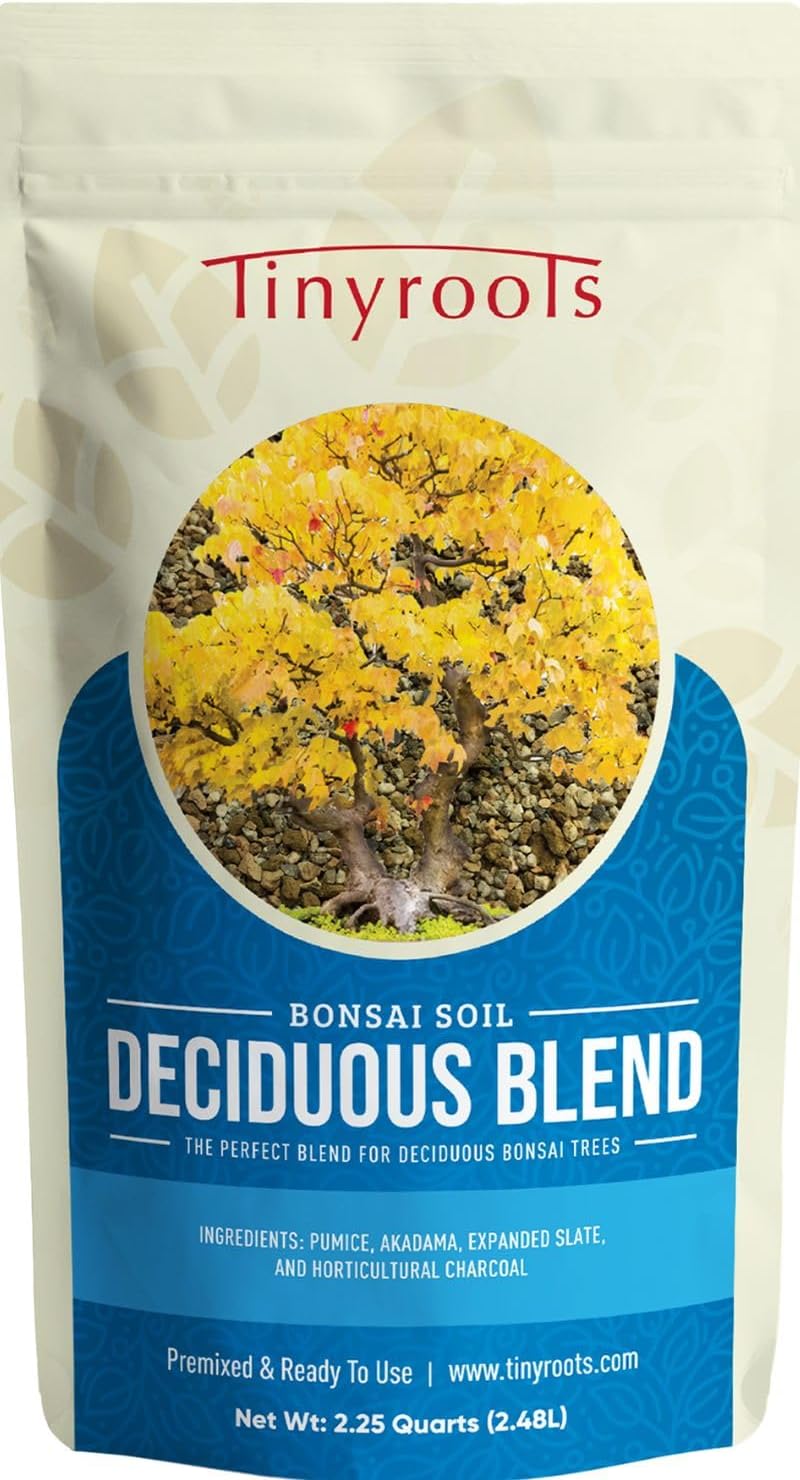
This two-quart bonsai soil is a ready-to-use, pre-sifted substrate designed for deciduous bonsai such as Japanese maple, hornbeam, and elm. The mix uses akadama, pumice, expanded slate, and horticultural charcoal to create a coarse, fast-draining medium that supports healthy root development and reduces water retention issues common with garden soils. Because it is pre-mixed and pre-sifted, it saves time for growers who prefer not to source and screen individual components. Practical benefits include improved aeration, clearer drainage paths, and a stable particle structure that helps prevent compaction during watering. The small two-quart volume is convenient for repotting a single tree or topping up soil in a finished bonsai but means multiple bags are needed for larger projects or several trees. Buyers should also expect an inorganic-dominant texture that requires regular fertilization for nutrient needs because it does not hold much organic matter. For someone managing Japanese maples, this blend provides a reliable, hobbyist-friendly substrate that streamlines routine repotting and care.
Best for: Gardeners who want a ready-made, high-drainage substrate for repotting or maintaining Japanese maples and other deciduous bonsai without mixing components themselves.
Less Ideal for: People who prefer an all-organic, moisture-retentive potting mix or who need large quantities for many trees should consider other substrates or bulk blends.
- Pre-sifted mix saves time and avoids dust and fines
- Coarse particle blend promotes fast drainage and good aeration
- Formulated specifically for deciduous bonsai species including Japanese maple
- Contains horticultural charcoal which can help with soil freshness and root health
- Small 2-quart bag may require multiple purchases for several trees
- Low organic content means you must fertilize regularly for nutrients
Verdict: A convenient pre-sifted bonsai soil that delivers the fast drainage and structure Japanese maples need, without the hassle of mixing components yourself.
Miracle-Gro Organic Outdoor Potting Mix, 16 qt.

| Volume | 16 qt. |
|---|---|
| Item Highlight | Plant Soil For Outdoor Container Plants, Contains Quick-Release Natural Fertilizer, OMRI Listed |
| Manufacturer | Scotts Miracle Gro |
This 16 qt. Miracle-Gro Organic Outdoor Potting Mix is designed specifically for outdoor container plants and is useful for planting strawberries in pots. The mix contains responsibly sourced peat and upcycled green waste and includes a quick-release natural fertilizer that feeds for up to two months, which helps young strawberry plants establish and start producing. It is OMRI listed so it fits an organic container-gardening approach. Typical use is to partially fill a 12-inch pot, set the plant with a loosened root ball, add more mix, and water thoroughly; a single bag is sized to fill about one 12-inch container. Practical benefits include moisture retention suitable for exposed pots and a built-in starter nutrient charge so you may not need immediate additional feeding. Important limitations are that nutrients last about two months so plan a feeding schedule for fruiting plants and that peat-based mixes can compact over time, so repotting or refreshing the soil biannually is recommended for continued vigor.
Best for: Gardeners who want an organic-ready potting mix for outdoor container strawberries and prefer a product that gives an initial nutrient boost while simplifying first-season care.
Less Ideal for: Growers who need a long-term, self-sustaining soil blend for mature strawberry beds or those who avoid peat entirely should consider alternatives.
- OMRI listed and made with responsibly sourced peat suitable for organic container gardening
- Includes quick-release natural fertilizer that feeds plants for up to two months
- Formulated to retain moisture for outdoor containers exposed to sun and wind
- Contains upcycled green waste and is locally crafted to reduce transport distance
- Fertilizer effect is limited to about two months so additional feeding is needed for ongoing fruiting
- Peat-based mix can compact over time and requires bi-annual repotting to refresh structure
Verdict: A convenient OMRI-listed container potting mix that gives outdoor strawberry starters an organic nutrient boost and good moisture retention for the first months.
Doter Bonsai Soil Mix, 1 qt Ready-to-Use Organic Potting Mix
| Brand Name | Doter |
|---|---|
| Unit Count | 32 Ounce |
| Item Type Name | Garden soil |
| Volume | 1 quarts |
| Style Name | Japanese |
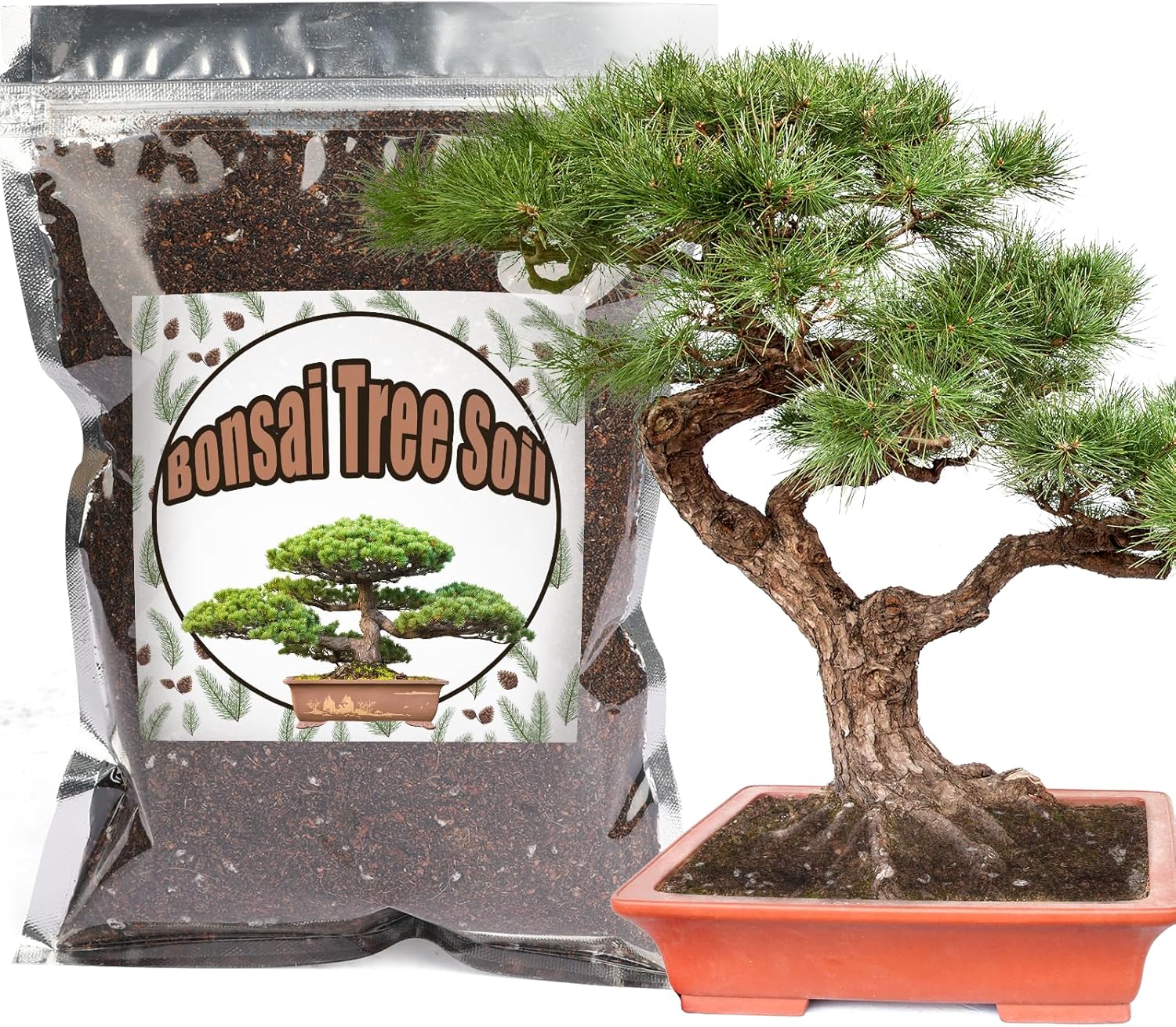
This 1 qt Doter bonsai soil mix is a pre-mixed potting medium aimed at small bonsai, seedlings, and repotting tasks. It is sold ready to use so you can fill a small pot or top-dress plants without blending components. The formulation emphasizes drainage and aeration while retaining moisture long enough to reduce watering frequency, which helps prevent root rot in compact containers. In practice it works well for beginners or collectors who need a convenient, small-quantity mix for Japanese-style and other small bonsai. Notable features are its organic-focused blend and a balanced texture that supports root development and foliage vigor without adding fertilizers separately for a short period. Limitations are its small 1 qt volume and basic nutrient profile, so you will need larger quantities or supplemental feeds for multiple trees or longer-term potted specimens. Also serious hobbyists who custom-mix specific ratios of pumice, akadama, or lava rock may find this premix less adjustable than raw components.
Best for: Budget-minded bonsai owners who want a convenient, ready-made soil for small pots, starter trees, or occasional repotting without mixing their own components.
Less Ideal for: Experienced bonsai growers who prefer to custom-blend specific inorganic components or anyone repotting multiple or larger trees who needs bulk soil.
- Ready-to-use 1 qt bag saves time mixing components for small pots or repotting
- Formulation balances drainage and moisture retention to reduce overwatering risk
- Organic blend supports root development and short-term plant health
- Compact size is convenient for trying a new mix or working with single trees
- Only 1 quart volume is insufficient for multiple trees or large repots
- Basic nutrient profile means you will need to fertilize for long-term growth
Verdict: A low-cost, ready-to-use 1 qt bonsai mix that makes repotting and trying a new soil easy for single small trees.
ZzbTwinkle Japanese Akadama Kiryu Hyuga Bonsai Soil Mix (2 qt)

| Brand Name | ZzbTwinkle |
|---|---|
| Item Type Name | BONSAI SOIL MIX |
| Style Name | Japanese |
| Volume | 2 quarts |
This pre-mixed Japanese-style bonsai soil combines akadama, kiryu, and hyuga to create a balanced, ready-to-use media for repotting and top dressing. It is typically used straight from the bag for bonsai, succulents, orchids, cacti and other potted specimens where good root aeration and quick drainage matter. The mix’s coarse mineral components promote airflow around roots and shed excess water quickly while still holding enough moisture to avoid rapid desiccation. For potted Japanese maples the blend helps reduce the risk of waterlogging and root rot when used in containers with drainage holes, and it can be adjusted with more organic matter if you need higher moisture retention. The small 2 quart volume is convenient for single repots or topping small pots but means you may need multiple bags for larger trees. Expect some settling of fine dust after shipping that is easily removed by sieving or rinsing before use. Overall it is a practical, no-fuss option when you want a proven mineral-based substrate for container-grown maples and other ornamentals.
Best for: Buyers who prioritize a reliable, mineral-based substrate for container-grown Japanese maples and other potted ornamentals and want a ready-made mix that promotes drainage and root health.
Less Ideal for: Gardeners who need large volumes for multiple trees or who prefer a high-organic, moisture-retentive potting mix should consider bulk or amended alternatives.
- Authentic three-way Japanese mineral blend designed for good drainage and aeration
- Ready-to-use straight from the bag, no mixing required for typical repotting tasks
- Suitable for a range of plants including bonsai, succulents, orchids and cacti
- Mineral composition helps prevent root rot in container-grown specimens
- Small 2 quart volume may require multiple bags for larger pots or full repotting
- Contains some fine dust that can settle during shipping and may need sieving
Verdict: A dependable, ready-made Japanese mineral mix that keeps roots airy and drains quickly, making it a safe choice for container-grown Japanese maples needing reliable root health.
The Bonsai Supply Fast-Draining Bonsai Soil Mix (2 Quart)

| Volume | 2 quarts |
|---|---|
| Unit Count | 64 Ounce |
| Style Name | Bonsai-specific, fast-draining, nutrient-rich potting mix |
| Ingredients | Pumice, Calcined Clay, Pine Bark Fines, Black Lava |
This 2-quart pre-mixed bonsai soil is formulated to give container-grown plants the drainage and aeration they need without extra mixing. It combines pumice, calcined clay, pine bark fines, and black lava to create a chunky, free-draining medium that helps prevent root rot and improves oxygen flow to roots. The bag arrives sifted and ready to use, so it is convenient for repotting Japanese maples into smaller containers or for top dressing. Practical benefits include improved moisture control compared with standard potting soil and good long-term stability so the mix does not compact quickly. Limitations to note are the small pack size for larger trees or multiple repots and that the fixed blend leaves no room to adjust particle size or organic content for very specific cultivars or microclimates. For gardeners who prefer a ready-made, consistent bonsai substrate this mix reduces prep time and uncertainty, but those wanting custom proportions will need to amend or combine it with coarser or finer components.
Best for: Gardeners who want a reliable, out-of-the-bag bonsai substrate to repot or top-dress Japanese maples and other container-grown trees without mixing components themselves.
Less Ideal for: Specialist growers who prefer to custom-blend particle sizes and organic content for particular cultivars or landscapes with unusual moisture regimes.
- Ready-to-use pre-mix saves time when repotting bonsai or container trees
- Fast-draining aggregate blend reduces risk of waterlogged roots
- Contains pumice, calcined clay and lava for stable, long-lasting structure
- Sifted texture makes it easy to fill pots and position roots neatly
- Small 2-quart volume is insufficient for large trees or multiple repots
- Fixed particle mix limits ability to fine-tune substrate for very specific soil preferences
Verdict: Buy this if you want a consistent, ready-made fast-draining bonsai soil that simplifies repotting Japanese maples.
Choosing the Right Soil for Japanese Maple in Pot: Key Factors to Consider
Drainage Rate
Drainage determines how quickly excess water leaves the root zone after watering. Japanese maples do not tolerate waterlogged roots, so any potting soil must let surplus water escape without holding a perched water table that soaks the bottom of the container. In practice this comes down to mix particle sizes and the presence of coarse materials such as grit or pumice.
Faster-draining mixes reduce root-rot risk but can dry too fast in shallow or small pots, so consider drainage in combination with container depth and your local climate.
Moisture Retention
Moisture retention is the soil's ability to hold water available to roots between waterings. For potted Japanese maples you want a balance: enough retention that the tree does not wilt on sunny days, but not so much that the soil stays saturated.
Organic components such as composted bark or coir improve retention without turning the mix into a sponge. Evaluate how often you can realistically water and choose a mix whose retention matches that schedule.
pH and Nutrient Balance
Japanese maples prefer slightly acidic to neutral soil and a steady supply of accessible nutrients. A potting mix should have a pH range and nutrient profile that supports slow, steady growth rather than a single heavy feeding spike.
Look for mixes with measured pH information or components that trend acidic, like conifer bark. Avoid blends with unspecified chemical amendments if you need long-term pH control in a pot.
Aeration and Bulk Density
Aeration affects root oxygenation and fine root development. In containers roots can suffocate if the mix compacts or becomes dense after repeated wet/dry cycles. Components such as pumice, perlite, or coarse sand keep the structure open and prevent compaction.
Bulk density also influences pot weight and root expansion. Lighter mixes are easier to move and warm up faster in spring, while very heavy mixes may slow temperature changes and increase stress on container walls.
Longevity In Containers
Over time, organic matter breaks down and fine particles accumulate, reducing porosity. A long-lasting potting soil maintains its structure through seasons so you do not have to repot or amend as often. Durable mixes use stable components like aged bark and inert aggregates to slow degradation.
Consider how often you want to refresh soil and whether the pot is accessible for repotting. Longevity also affects nutrient management, since fast-decomposing mixes require more frequent fertilization.
Particle Size and Container Fit
Particle size distribution should match the container size and root system. Small pots and bonsai-style containers benefit from finer particles that still allow drainage, while larger containers need coarser elements to prevent bottom compaction.
Matching particle sizes to pot dimensions helps maintain consistent moisture levels and supports healthy root architecture without creating zones that hold excessive water or dry out unevenly.
Choosing Mixes for Different Pot Sizes
Pot depth and volume change how a soil mix behaves. In small pots a mix that drains moderately and retains some moisture is preferable because shallow volumes heat and dry quickly. Larger containers tolerate coarser, faster-draining mixes because they hold more total water and buffer temperature swings.
Adjust the proportion of coarse aggregate, like pumice or grit, depending on pot size. Smaller pots usually need a higher proportion of organic fines to hold moisture, while large containers benefit from greater aeration and structural stability.
- Shallow pots: increase organic fines slightly for moisture buffering.
- Deep or large pots: boost coarse aggregates for drainage and aeration.
- Very narrow containers: prefer uniform particle sizes to avoid water pockets.
Amending Existing Potting Soil
If you are reusing potting soil, simple amendments can restore performance. Lightly mixing in coarse pumice or grit improves drainage and breaks up compacted zones. Adding a small amount of composted bark returns some structure without creating heavy, wet patches.
Avoid over-amending with fine compost or peat, which can reduce aeration. Instead, focus on restoring pore space and correcting any persistent waterlogging before repotting.
- Add 10 to 25 percent coarse aggregate to improve drainage.
- Topdress with composted bark for slow nutrient release.
- Refresh only the top few inches if the lower profile remains well-aerated.
Watering Habits and Seasonal Care
Soil choice and watering schedule must work together. In spring and summer maples in pots use more water and may benefit from mixes with slightly higher retention. In cooler seasons reduce watering frequency and allow the top layer to dry to avoid root issues.
Mulching the pot surface with organic material reduces evaporation and moderates surface temperature. Remove or replace mulch in winter to prevent excessive moisture retention during cold, wet periods.
- Check moisture at root depth, not just the surface.
- Increase watering frequency for fast-draining mixes in heat.
- Cut back watering in dormancy and when temperatures are low.
pH Testing and Adjustment in Containers
Regular pH checks help catch drift from ideal acidity. Container media can shift pH faster than garden soil because of limited buffering capacity. A slightly acidic range suits Japanese maples, so monitor pH annually or when you see nutrient symptoms.
If adjustment is needed, choose mild amendments and apply gradually. Overcorrecting pH in a confined root ball can cause nutrient lock-up or toxicity, so small steps are safer.
- Test pH in soil solution rather than relying on appearance.
- Use incremental amendments and re-test after a few weeks.
- Address nutrient deficiencies separately from pH corrections.
Repotting Timing and Signs You Need Fresh Soil
Repotting every few years refreshes depleted nutrients and restores structure. Signs you need fresh soil include very slow drainage, excessively compacted mix, visible root circling, or poor growth despite proper watering and light.
When repotting, consider replacing a portion of the old media with a fresh mix that corrects the previous mix's weaknesses rather than simply moving the tree into the same soil.
- Repot young trees every 2 to 3 years; mature specimens less often.
- Split roots and remove rotted material; refresh 30 to 50 percent of the soil.
How We Chose the Best Soil for Japanese Maple in Pot
We focused on factors that most affect potted Japanese maple health rather than broad consumer ratings. Evaluation prioritized drainage behavior under repeated watering, moisture-holding capacity that avoids rapid drying, and nutrient balance tailored to acid-loving maples. We also assessed mix stability over time, looking for components that resist compacting and maintain aeration in a confined root zone. Particle size distribution and organic content were reviewed to estimate how each soil will perform in small to large containers. Products lacking clear ingredient lists or those optimized only for large landscape planting were excluded. We filtered out mixes with heavy, clay-rich compositions that impede drainage and potting media with excessive peat that collapse quickly. The final criteria used were drainage rate, water retention, nutrient balance and pH friendliness, aeration and bulk density, and longevity under container conditions. These criteria map directly to the scoring metrics used on each product card.
FAQ
How often should I repot a Japanese maple in a pot?
Usually every 2 to 4 years for younger trees to refresh soil and check roots. Mature trees in large containers can go longer, but look for slow drainage, root binding, or poor growth as signals to repot.
Can I use standard all-purpose potting soil for a Japanese maple?
All-purpose potting soil can work short term, but it often lacks the balance of aeration and acidity maples prefer. Amending with coarse aggregate and acidic organic matter improves performance for container maples.
What is the ideal pH range for potted Japanese maples?
A slightly acidic to neutral range, typically around pH 5.5 to 6.5, suits most Japanese maples. Container media can shift pH quickly, so check periodically and make small adjustments if necessary.
How do I prevent the soil from drying out too quickly in hot weather?
Increase organic matter modestly, use mulch on the pot surface, water deeply and more frequently during heat, and consider a mix with slightly higher moisture retention. Also move pots to partial shade during the hottest part of the day if possible.
Should I add slow-release fertilizer to potting soil at planting?
Often a light, balanced slow-release fertilizer at planting helps establish trees, but it depends on the soil mix. If the mix contains composted components, start with a conservative application and supplement later based on growth.
Final Verdict
For Japanese maples in pots prioritize a soil that balances drainage and moisture retention while maintaining good aeration. Match particle size and organic content to your pot dimensions and watering routine. Expect tradeoffs: mixes that hold more water reduce watering frequency but can raise root-rot risk, while very open mixes need more frequent watering but improve root health. Focus on drainage rate, moisture-holding ability, pH friendliness, and long-term structure when choosing a potting medium. With those priorities in mind you can select a mix that keeps your container maple vigorous and easier to manage through seasons.
