

Note: This article contains affiliate links. If you click on these links and make a purchase, I may earn a small commission at no extra cost to you. This helps support my research and content. Read my full affiliate disclosure here.
Lithops are small succulent plants that live most of the year with little water and a need for exceptional drainage. Choosing the right soil for Lithops affects how water moves around the roots, how the plant regulates moisture through dormancy cycles, and how easily you can avoid common problems like rot and etiolation. This guide focuses on top soil options suited specifically for Lithops, shortlisted for their texture, mineral content, and consistency. We evaluated mixes by how well they drain, their mineral composition, and how they behave through pot-bound and seasonal watering. Read on for practical notes on what makes a potting medium reliable for these 'living stones' and how to match a mix to your growing routine.
Top Picks at a Glance
| Best Overall The best all-around choice for most situations | Rosy Soil Cactus & Succulent Potting Mix, 4 Quart |  |
| Best Quality Built to a higher standard if you want something more solid | Awesome Industries Lithops Grow Mix, 2 Quart Fast‑Draining Gritty Soil |  |
| Best Value The sweet spot between price and what you get | Boniosz Gritty Mix Pumice & Lava Rocks Soil Amendment for Succulents |  |
| Best Budget The cheapest option that still gets the job done reliably | NOHOBE Calcined Soil Amendment for Lithops, Succulents & Cacti (2.5 lb) |  |
| Highest Rated A top-rated pick with lots of positive feedback | Awesome Industries Lithops Seed Starting Gritty Mix, 2 Qt |  |
| Most Popular A crowd favorite that many people choose with confidence | Bonsai Jack Jack's Gritty Mix #111 Succulent and Cactus Soil, 2 Quarts |  |
Rosy Soil Cactus & Succulent Potting Mix, 4 Quart

| Unit Count | 64 Ounce |
|---|---|
| Ingredients | Biochar,Pumice,Mycorrhizae,Sand,Pine Bark Fines,Compost |
| Style Name | Cactus & Succulent |
This 4 quart Rosy Soil cactus and succulent mix is built for growers who need consistently fast-draining media. The chunky blend of pumice, sand, pine bark fines and biochar keeps the mix airy so roots do not sit in water, while added mycorrhizae and worm castings supply biological activity that supports steady root growth without synthetic fertilizers. Typical use is repotting small-to-medium cacti and succulent pots or refreshing the top few inches of established containers; the resealable bag makes it easy to store between jobs. Practical benefits include reduced risk of root rot, less frequent repotting from compacted soil, and improved transplant success for drought-tolerant species. Because the formula is peat-free it drains more quickly than peat-heavy mixes but may require slightly more frequent watering in very dry indoor conditions. The 4 quart size suits a few plants at a time rather than large collections, so performance-focused growers managing many specimens will need multiple bags.
Best for: Growers who prioritize drainage and root performance for cacti and succulents and want a biologically active, peat-free mix for repotting individual plants or small collections.
Less Ideal for: People who need large volumes of soil at once or who prefer a moisture-retentive mix for tropical houseplants should look elsewhere.
- Chunky, pumice- and bark-based texture promotes rapid drainage and prevents compaction
- Includes mycorrhizae and worm castings to support root health without synthetic fertilizers
- Peat-free formula reduces water retention and environmental impact
- Resealable bag keeps remaining mix fresh between uses
- Small 4 quart volume means multiple bags are required for larger collections or frequent repotting
- Faster drainage can lead to more frequent watering in very dry indoor environments
Verdict: Choose this mix when you need a fast-draining, biologically active peat-free soil that reliably reduces soggy roots for cacti and succulents.
Awesome Industries Lithops Grow Mix, 2 Quart Fast‑Draining Gritty Soil

| Brand | Awesome Industries |
|---|---|
| Unit Count | 64 Ounce |
| Style Name | Grow Mix 2 Quarts |
| Volume | 2 quarts |
This grow mix is designed specifically for lithops and similar succulents where rapid drainage and strong aeration are critical. It uses a high ratio of inorganic aggregate such as pumice, decomposed granite, and sand with minimal organic material, so the medium dries quickly and does not compact around delicate tap roots. Typical use is repotting established plants or filling small pots for mature seedlings; the diversity of grain sizes helps the substrate settle around the tap root for good anchoring while encouraging fine root development. Notable features include the absence of perlite and vermiculite to avoid floating media and a coarse texture aimed at preventing moisture retention that causes root rot. Practical benefits are more consistent dryness between waterings and improved root health for plants that need arid conditions. Important limitations are the small 2 quart volume, which covers only a few pots, and the mix is not formulated for water-loving seedlings or plants that need richer organic feeding.
Best for: Growers focused on maximizing lithops performance and root health who repot established plants and need a reliably fast-draining medium.
Less Ideal for: Beginners who prefer low-maintenance, nutrient-rich mixes for general houseplants or those growing moisture-tolerant seedlings should consider a different substrate.
- Fast-draining coarse texture reduces risk of root rot for lithops and other arid succulents
- High proportion of inorganic aggregates (pumice, decomposed granite, sand) for excellent aeration
- No perlite or vermiculite so particles do not float or retain excess moisture
- Grain diversity helps the mix settle around tap roots and supports fine root development
- Small 2 quart package provides only a few pots worth of mix for repotting multiple plants
- Low organic content means little built-in nutrient supply and may require separate fertilizing
Verdict: Choose this gritty grow mix when you need a fast-draining, mineral-rich substrate that promotes healthy tap root growth in lithops and similar succulents.
Boniosz Gritty Mix Pumice & Lava Rocks Soil Amendment for Succulents

| Unit Count | 32 Ounce |
|---|---|
| Style Name | Cactus/Succulent Mix |
| Ingredients | Red/Black Lava Rock, Maifanitum, Diatomite, Green Zeolite, Pumice |
This Boniosz gritty mix is a lightweight, multi‑component soil amendment intended to keep roots dry and well aerated for succulents, cacti and other plants that need fast drainage. You use it blended into potting mixes or as a top dressing; the product description gives practical blend ratios (for example 30–50% mix for lithops) so it is straightforward to mix to a target texture. The mix includes black and red lava rock, pumice, diatomite, maifanitum and green zeolite, which together reduce compaction, increase porosity and help stabilize pH. In practice it speeds drainage, reduces risk of root rot and makes repotting and top dressing cleaner and neater. The 2 lb/32 oz package is convenient for small batches, terrariums, bonsai and individual lithops pots, but you will need multiple bags for larger projects. It is not a complete potting medium on its own for most species, so expect to blend it with akadama, cactus soil or orchid bark depending on plants. For growers who value control over mix texture and drainage, this is a useful, easy‑to‑use addition.
Best for: Buyers who like to tailor potting mixes for exceptional drainage and want precise control over gritty texture for lithops and other succulents.
Less Ideal for: Gardeners needing a ready‑to‑use, complete potting soil for many plants or those working at large scale who do not want to mix multiple bags.
- Multi‑component mix (lava rock, pumice, diatomite, zeolite) that improves drainage and aeration
- Manufacturer provides blend ratios for specific plants including lithops and succulents
- Lightweight and porous particles reduce soil compaction and lower root rot risk
- Works as both a soil additive and decorative top dressing for small pots and terrariums
- Small 2 lb bag requires multiple packages for larger collections or repotting projects
- Not intended to be used alone as a complete potting medium for most plants
Verdict: Use this gritty mix when you need to create a fast‑draining, lithops‑friendly potting texture with predictable particle mix and clear blend ratios.
NOHOBE Calcined Soil Amendment for Lithops, Succulents & Cacti (2.5 lb)

| Unit Count | 40 Ounce |
|---|---|
| Item Type Name | Garden Soil |
| Brand Name | NOHOBE |
This calcined soil amendment is formulated for lithops, succulents and cacti to improve aeration, drainage and root development. It is a fired mineral mix that resists breaking down, so it can be used as a long-lasting top dressing or mixed into potting media to increase porosity. Typical use is sprinkling a thin layer on the surface, or blending 1:1 with potting mix for indoor succulents and propagation; the product listing also suggests mixing with materials like vermiculite, akadama or maifan stone. Notable features include a concave-convex particle shape that creates air pockets, built-in trace minerals to support root establishment, and a formulation that the brand says prevents root rot. Practical benefits are faster, sturdier rooting for delicate lithops and better long-term drainage compared with plain potting soil. Limitations: the product is a soil amendment rather than a complete potting mix so you will still need a base substrate and may need to adjust blends for larger plants, and the granular dust means you should wear gloves and avoid inhaling when mixing.
Best for: Buyers looking to improve drainage and root health in lithops or small succulent collections on a modest budget who are comfortable blending amendments with their potting mix.
Less Ideal for: Gardeners who want an all-in-one potting mix or who prefer prebalanced commercial succulent mixes for large specimens without mixing amendments.
- Calcined, high-temperature fired particles that resist breakdown and can be reused
- Concave-convex particle shape increases air pockets for improved root aeration
- Contains trace minerals to support faster root growth and healthier plants
- Improves drainage and helps prevent root rot when mixed into potting media
- Not a complete potting soil so needs to be mixed with a base substrate for most uses
- Can generate dust during handling so gloves and a mask are advised
Verdict: A budget-friendly, long-lasting calcined amendment that noticeably improves aeration and drainage for lithops and small succulents when mixed into your potting media.
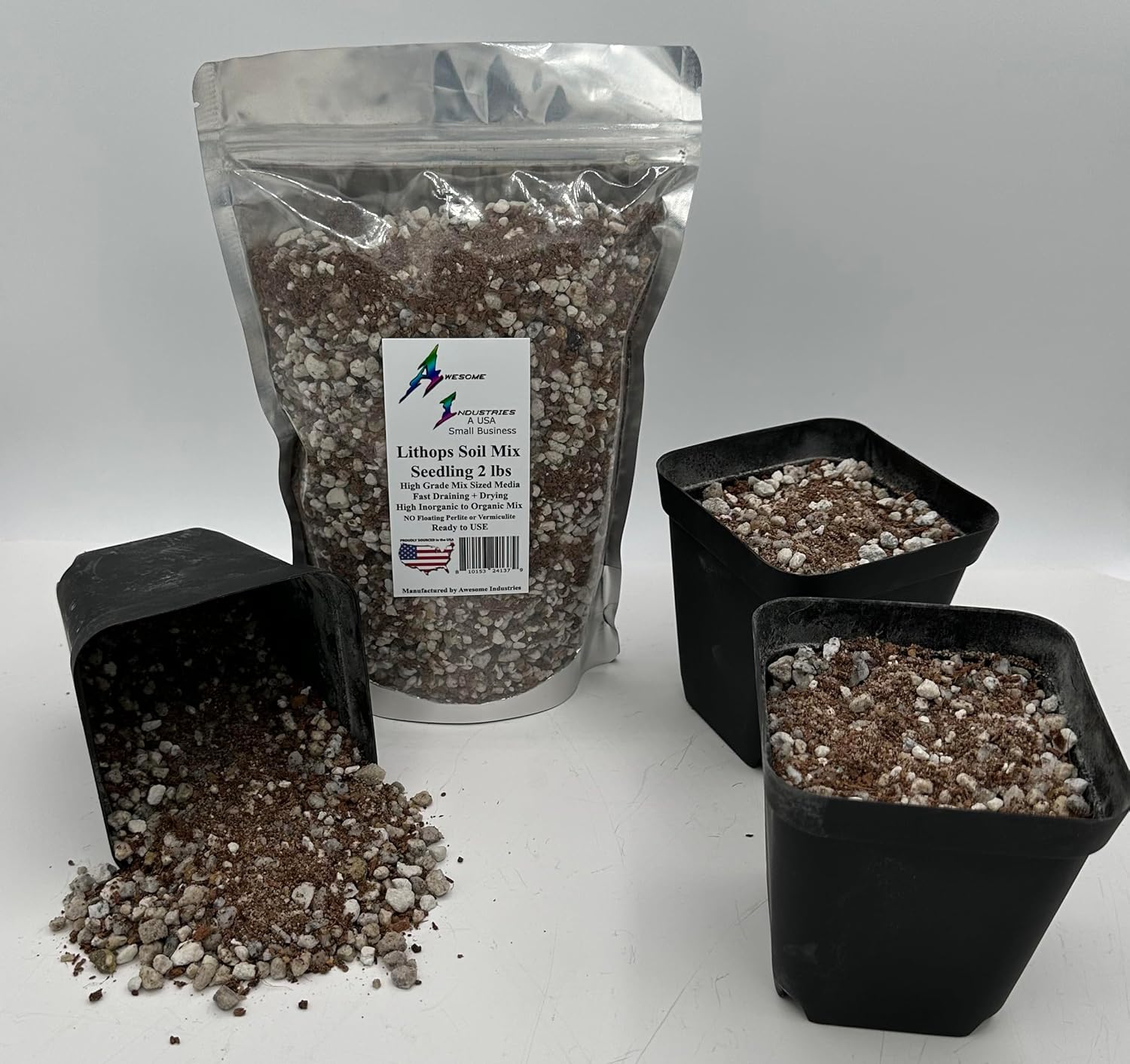
Awesome Industries Lithops Seed Starting Gritty Mix, 2 Qt
| Brand Name | Awesome Industries |
|---|---|
| Unit Count | 64 Ounce |
| Style Name | Seeding Mix 2 lbs |
| Volume | 2 quarts |
This gritty seed-starting mix is designed specifically for lithops and similar succulents and is meant to reduce the common problem of overwatering by promoting fast drainage and good root aeration. It contains a high ratio of inorganic aggregates such as pumice, decomposed granite, and sand with a modest organic component to provide some available water without staying wet. Use it for sowing seeds, repotting small living stones, or as a top-up for well-draining succulent containers; the finer seedling grade helps anchor tap roots and encourages development of fine feeder roots. Notable features are the varied particle sizes for good aeration and the deliberate exclusion of perlite and vermiculite to avoid floating media and excess moisture retention. The practical benefit is a lower risk of root rot and healthier root architecture in plants that need a dry, arid-like substrate. Because the product is a small 2 quart volume and a seedling-focused blend, you will need more or a coarser grow mix for larger pots or mature specimens.
Best for: Buyers who want a dependable, purpose-built substrate for starting lithops, mesembs and other small succulents and who prioritize consistent drainage and root health over bulk volume.
Less Ideal for: Gardeners seeking a bulk potting soil for larger succulent collections, mature cacti, or general-purpose container mixes should choose a coarser grow mix or larger package instead.
- High proportion of inorganic grit (pumice, decomposed granite, sand) for excellent drainage
- Varied particle sizes improve aeration and help soil settle around tap roots
- Formulated without perlite or vermiculite to reduce floating media and excess moisture retention
- Seedling-grade finer texture supports faster early growth and root development
- Small 2 quart volume may require frequent repurchasing for multiple plants or larger pots
- Finer seedling mix holds slightly more moisture than the coarser grow mix offered by the same brand
Verdict: Choose this gritty seedling mix when you need a reliable, fast-draining substrate to establish healthy roots in lithops and other small succulents.
Bonsai Jack Jack's Gritty Mix #111 Succulent and Cactus Soil, 2 Quarts

| Unit Count | 64 Ounce |
|---|---|
| Item Type Name | Gritty Mix #111 – Fast Draining – Zero Root Rot – Optimized pH |
| Manufacturer | Bonsai Jack |
| Style Name | Gritty Mix |
Jack's Gritty Mix #111 is a coarse, ready-to-use potting medium designed to keep roots dry between waterings for succulents, cacti and bonsai. It blends crushed Bonsai Block, montmorillonite clay and pine coir fines to create a stable, ultra-draining structure that resists compaction and dries out quickly after watering. In practice this mix is used straight from the bag for repotting agave or similar desert plants, or as a component when you need to increase aeration in heavier soils. Notable features are the washed ingredients to reduce dust and an optimized acidic pH aimed at plants that prefer slightly acidic conditions. The main benefits are lowered risk of root rot, easier watering control and long-term particle stability that supports shallow, spreading roots. Limitations are the coarse texture, which makes it unsuitable for moisture-loving houseplants and certain succulents that need finer, more moisture-retentive media; you may also need larger bag sizes for multiple agaves since this listing is a small 2 quart unit.
Best for: Buyers who want a reliable, low-maintenance medium for drought-tolerant plants and prioritize drainage and root health when repotting agave or other desert succulents.
Less Ideal for: Gardeners who need a moisture-retentive potting mix, those repotting many large plants at once, or growers of non-succulent houseplants should consider other blends.
- Ultra-fast draining formula reduces standing moisture and root rot risk.
- Stable, coarse particles resist compaction and support good airflow to roots.
- Washed components to lower dust and impurities.
- pH optimized for acid-preferring succulents and bonsai.
- Small 2 quart volume may be insufficient for larger agave or multiple repots.
- Not suitable for moisture-loving houseplants or succulents that prefer finer, water-retentive mixes.
Verdict: Choose this gritty mix when you want a ready-made, ultra-draining soil that protects agave and other desert succulents from root rot.
Choosing the Right Soil for Lithops: Key Factors to Consider
Drainage and Percolation
Fast surface-to-bottom drainage is critical for Lithops because their roots are shallow and prone to rot when water pools. A soil that allows water to percolate quickly prevents long wet periods after watering. Look for mixes with coarse sand, pumice, or grit that maintain open pore space even after repeated wetting and drying.
Drainage affects how often you water and how long the potting medium stays aerated. Better percolation reduces the chance of waterlogging in low-evaporation indoor settings and makes seasonal watering schedules easier to manage.
Particle Size Distribution
A well-graded mix contains a range of particle sizes from fine grit to larger aggregate. The right distribution creates stable structure: fine particles fill tiny gaps while coarser particles form the backbone that preserves aeration. Too many fines cause compaction and slow drainage; too much large rock can reduce water-holding capability excessively and stress young roots.
Particle size also affects root anchorage. Lithops need a medium that supports the plant without shifting during short, infrequent waterings. Stable, gritty mixes stay loosely structured but do not collapse into a dense mass over time.
Mineral Content and Nutrient Neutrality
Lithops evolved in mineral-rich, low-organic soils, so potting mixes should supply modest, slowly available minerals rather than high organic fertility. Heavy compost or peat-based mixes release nutrients and hold moisture longer than these succulents prefer. A neutral to slightly alkaline pH is acceptable for many Lithops, but avoid mixes with soluble salt build-up potential.
Mineral-based ingredients like pumice, lava rock, and coarse sand mimic native substrates and provide trace minerals without spiking nutrient levels. This helps prevent overly lush growth and reduces the need for frequent fertilization.
Moisture Retention Vs. Drying Rate
The ideal soil for Lithops strikes a balance: it retains enough moisture to sustain the plant between infrequent waterings but dries quickly on the surface and through the root zone. Materials such as calcined clay or expanded shale can moderate moisture without acting like peat. Avoid mixes that stay damp for days after a deep soak, especially in cooler months.
Consider your environment. Dry, warm homes allow for slightly more water retention; cool, humid rooms require grittier media to avoid prolonged wetness. Matching soil drying rate to your watering routine and climate reduces rot risk.
Aeration and Root Oxygenation
Roots need oxygen to function, and compacted, waterlogged soils suffocate shallow Lithops roots quickly. A soil with high macroporosity ensures oxygen reaches the root collar and branching roots. Components that resist compaction under watering cycles maintain air pockets and support healthier root architecture.
Aeration also affects temperature buffering of the root zone. Well-aerated, mineral-rich soils warm and cool predictably, which helps the plant follow its natural seasonal growth and dormancy rhythms.
Long-Term Stability and Repotting Frequency
Some mixes break down into fines over a few seasons, altering drainage and forcing more frequent repotting. For Lithops, which prefer to be slightly pot-bound, a stable medium that retains its gritty texture over years is beneficial. Consider the anticipated time between repots and choose materials that resist decomposition.
Using more mineral components increases stability. If you use any organic component, expect to refresh the top layer or repot more often to maintain ideal drainage and aeration.
Matching Soil Texture to Your Watering Rhythm
Your watering schedule should inform the mix you choose. If you water very sparingly and rely on humidity or occasional misting, a mix with slightly higher moisture retention is acceptable. For growers who perform periodic deep soaks followed by long drying periods, pick a very gritty blend that sheds excess water quickly.
Adjust texture by adding coarse components like pumice or horticultural grit to increase drainage, or a small proportion of calcined clay to moderate drying if your home is extremely dry.
- Deep soak growers: prioritize coarse grit and sharp sand.
- Light, frequent misting: allow a bit more fine grit or calcined clay.
- Indoor, cool environments: lean toward grittier mixes to prevent prolonged dampness.
Pot Choice and Soil Interaction
The pot material and size interact with soil behavior. Unglazed terracotta pots wick moisture and speed drying, which can compensate for a slightly more moisture-retentive mix. Plastic or glazed pots retain moisture longer and often require a grittier substrate to balance that effect.
Small pots dry faster but can lead to faster temperature swings. Match pot size to plant maturity and choose soil that provides enough water-holding capacity for the pot volume.
- Terracotta pots work well with mixes that retain a little moisture.
- Glazed or plastic pots need coarser, faster-draining soil.
- Shallow pots suit Lithops root habits and benefit from very open mixes.
Mixing Your Own Lithops Soil
Creating a custom mix lets you control drainage and mineral balance. A common approach is to combine coarse sand or builder's sand with pumice or lava rock and a small fraction of fine grit to fill voids. Keep organic components minimal, typically under 10 percent, to avoid excess moisture retention.
Measure by volume rather than weight for repeatable results. Sift components to remove dust and very fine particles. After mixing, wet-test a batch to confirm fast percolation and surface drying within a few days under your typical indoor conditions.
- Typical starting ratio: 50-70% coarse aggregate, 20-40% medium grit, up to 10% fine mineral or minimal organic matter.
- Sift to remove silt and dust before use.
- Wet-test a sample in the pot you plan to use to evaluate real-world drying time.
Adjusting Soil for Seasonal Dormancy
Lithops have distinct growth and dormancy periods that demand different moisture regimes. During dormancy, soils should dry quickly and remain mostly dry except for very cautious watering. Prepare soils that do not retain moisture into the cooler months to lower rot risk.
If you need to carry plants through a humid winter, repot into an even grittier mix beforehand or reduce pot volume to help soil dry faster between rare waterings.
- Ensure soil dries thoroughly before the dormancy season.
- Consider repotting into coarser media before winter in humid climates.
- Avoid feeding or adding moisture-retaining amendments before dormancy.
Troubleshooting Common Soil-Related Problems
If plants show signs of softening or collapse, excess moisture in the root zone is often the culprit. Check for fines or compacted layers that trap water near the root collar. Removing the plant and inspecting the root ball will reveal whether soil breakdown or poor drainage is the issue.
If plants appear etiolated or overly stretched, the soil may be too rich or water-retentive, encouraging weak, rapid growth. Switching to a grittier, lower-organic mix and adjusting light and watering frequency typically corrects this.
- Soft, mushy bodies: diagnose for overwatering and compacted soil.
- Stretched growth: reduce nutrient-rich components and improve light.
- Slow recovery after repotting: expect a short stabilization period as roots adapt to the new medium.
How We Chose the Best Soil for Lithops
We prioritized criteria that predict success with Lithops in containers and small pots where overwatering is the main risk. Drainage and particle size were the foremost filters because coarse, gritty media help prevent water from lingering around the thick, shallow root systems. Mineral composition and pH were used to ensure mixes do not retain excess organic moisture or supply strong, water-soluble nutrients during dormancy. Texture stability under repeated wet-dry cycles was checked to avoid compaction that reduces aeration. We also screened for mixes with low fine silt and clay content and limited peat or compost proportions, since those components hold moisture too long. Ingredients that supply gentle mineral nutrition without rapid release of salts were favored. Products that were extremely heavy, formulated for tropical plants, or clearly designed for long-term garden soil were excluded. The final list reflects soil behavior in typical indoor and greenhouse Lithops culture, focused on drainage, mineral neutrality, texture, and long-term stability.
FAQ
How often should I water Lithops in a gritty soil mix?
It depends on season and climate. Water sparingly during the growing season and withhold or drastically reduce water during dormancy. A gritty mix dries faster, so intervals between deep soaks will be longer in humid or cool conditions and shorter in hot, dry rooms.
Can I use cactus soil for Lithops?
Cactus mixes can be a starting point, but many commercial cactus soils contain more organic matter than Lithops prefer. Improve such mixes by adding coarse sand, pumice, or grit and removing some of the finer, moisture-retaining components.
Is tap water a problem for Lithops in certain soils?
Tap water with high dissolved minerals can build up over time, especially in low-porosity soils. Using distilled or rainwater occasionally, flushing the soil lightly when repotting, and ensuring adequate drainage reduces the risk of soluble salt accumulation.
How soon after repotting should I water my Lithops?
Allow a few days to a week for root wounds to callus before giving a light watering, especially if you disturbed the root ball. If you repotted into a dry, gritty mix, wait until the plant shows active growth or until the outer soil dries completely before a thorough soak.
Will adding perlite help Lithops soil?
Perlite increases aeration and drainage, but it can float to the surface in very shallow pots and may shrink the effective root zone. Use it sparingly and combine with heavier aggregates like pumice or grit to maintain stable structure.
Final Verdict
Prioritize drainage, particle stability, and mineral neutrality when choosing soil for Lithops. The right mix prevents rot, supports natural dormancy patterns, and reduces the need for frequent repotting. Balance drying rate with your pot choice and watering rhythm to match local conditions. Focus on gritty, mineral-based media that remain stable over time. If you adjust only one factor, make it improved drainage through coarser particles. That tradeoff reliably lowers risk and lets your Lithops maintain compact, healthy growth.
