

Note: This article contains affiliate links. If you click on these links and make a purchase, I may earn a small commission at no extra cost to you. This helps support my research and content. Read my full affiliate disclosure here.
Growing mint in containers is one of the easiest ways to enjoy fresh leaves year-round, but the wrong soil turns a productive herb into a weak, leggy plant. The right mix gives mint the quick drainage it prefers, while holding enough moisture and nutrients between waterings. This guide covers seven shortlisted soils that suit the constraints of pots and small planters and explains the practical reasons those mixes work in real garden containers. We evaluate each option for drainage, moisture retention, nutrient content, and ease of use so you can pick the best soil for your container-grown mint.
Top Picks at a Glance
| Best Overall The best all-around choice for most situations | FoxFarm Ocean Forest Potting Soil, 12 Qt — 4-Pack |  |
| Best Quality Built to a higher standard if you want something more solid | Rosy Soil Organic Herb Mix Potting Soil, 4 Quart |  |
| Best Value The sweet spot between price and what you get | Miracle-Gro Moisture Control Potting Mix, 16 qt. (2-Pack) |  |
| Best Budget The cheapest option that still gets the job done reliably | Miracle-Gro Organic Outdoor Potting Mix, 16 qt. |  |
| Highest Rated A top-rated pick with lots of positive feedback | FoxFarm Happy Frog Potting Soil, Container Garden, 2 cu ft (with 2 Plant Tags) |  |
| Most Popular A crowd favorite that many people choose with confidence | Miracle-Gro Indoor Potting Mix for All Plants, 6 qt., 2-Pack |  |
| Best Seller A high-volume bestseller chosen again and again | Back to the Roots Organic Indoor Potting Mix, 6 Quart |  |
FoxFarm Ocean Forest Potting Soil, 12 Qt — 4-Pack

| Brand Name | FoxFarm |
|---|---|
| Item Highlight | Ready-to-use, aerated soil with fish emulsion, crab meal and earthworm castings |
| Number of Packs | 4 |
| Volume | 12 quarts |
FoxFarm Ocean Forest is a pre-mixed potting soil designed for immediate use in pots and containers. The formula combines forest products, sandy loam and sphagnum peat moss to create a light, well-aerated texture that promotes drainage and prevents compaction in containers. It is enriched with fish emulsion, crab meal and earthworm castings so young plants and established container herbs get a dose of slow-release organic nutrients without extra mixing. For mint in pots this soil supports vigorous root growth, resists waterlogging, and reduces the need for early nitrogen additions. Practical benefits include easy filling of pots straight from the bag and improved moisture balance compared with garden soil alone. Limitations to note are that it is a concentrated retail bag volume so heavy feeders or very large containers will still need additional amendments or periodic fertilizing, and peat-based mixes can dry out faster in hot, exposed conditions, so more frequent watering may be necessary.
Best for: Ideal for gardeners who want a reliable, nutrient-rich potting mix to get mint started in containers quickly and without extra blending.
Less Ideal for: Not the best choice for growers needing bulk volumes for large beds or for those who prefer a peat-free or water-retentive custom mix for very hot, exposed locations.
- Ready-to-use, aerated texture for good drainage in pots
- Contains organic amendments (fish emulsion, crab meal, earthworm castings) for built-in nutrients
- Light, airy mix that supports root development and reduces compaction
- Suitable for indoor plants and outdoor containers without preconditioning
- Peat-containing mix may dry out faster in hot, sunny microclimates
- Single 12 qt bags provide limited volume for multiple or very large containers
Verdict: A ready-made, nutrient-rich potting mix that gives potted mint strong root growth and reliable drainage straight from the bag.
Rosy Soil Organic Herb Mix Potting Soil, 4 Quart

| Unit Count | 64 Ounce |
|---|---|
| Volume | 4 quarts |
| Item Highlight | Biochar, Worm Castings, Mycorrhizae Blend, Peat-Free, Fast Draining |
This Rosy Soil herb mix is designed to give potted herbs like mint a fast-draining, microbially active medium that promotes strong root development and more vigorous growth. It blends wood biochar, compost, worm castings, bark fines, and a mycorrhizae inoculant so the root zone retains nutrients while staying airy enough to avoid waterlogging. In practice the mix is ready to use straight from the bag for 2 to 3 six-inch pots and works both on a sunny windowsill and in balcony planters. The peat-free formula suits growers who prefer sustainable inputs and who want a living soil base that supports seed starting and transplant establishment. Because the bag is 4 quarts it is convenient for small containers but you will need multiple bags for larger herb beds. Also, concentrated organic mixes can vary in nutrient levels compared with a measured fertilizer regimen, so persistent heavy-feeding herbs may still benefit from periodic feeding.
Best for: Gardeners who want a performance-focused, ready-to-use potting mix that promotes vigorous root growth and microbial activity for potted mint and other culinary herbs.
Less Ideal for: People needing bulk soil for many large containers or beds should choose larger-volume garden mixes or bagged soil sold by the cubic foot.
- Formulated for herbs with biochar, worm castings, compost, and mycorrhizae to support root health and nutrient uptake
- Peat-free blend using upcycled ingredients for a more sustainable potting choice
- Fast-draining, airy texture that reduces risk of root rot in potted herbs and aids seedling establishment
- Resealable 4-quart bag sized for filling 2 to 3 medium 6-inch pots for convenient small-batch use
- 4-quart quantity is small for gardeners who need soil for many pots or larger containers
Verdict: Choose this peat-free, microbially active herb mix when you want a ready-to-use, fast-draining soil that helps potted mint establish strong roots and flavorful growth.
Miracle-Gro Moisture Control Potting Mix, 16 qt. (2-Pack)
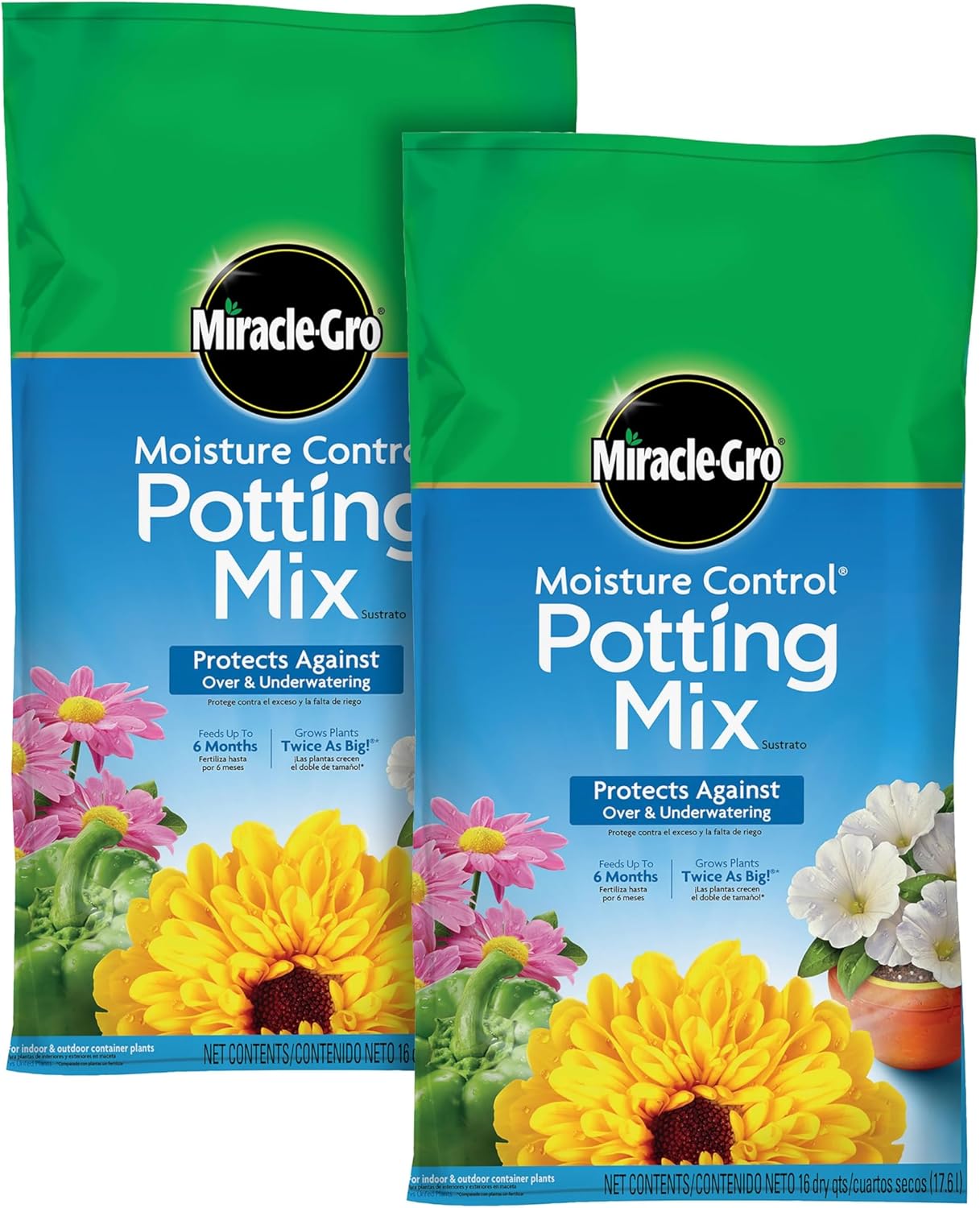
| Number of Packs | 2 |
|---|---|
| Item Type Name | Miracle-Gro Moisture Control Potting Mix |
| Feeds Plants | Up to 6 months |
| Best For | Containers & planters |
This two-pack of Miracle-Gro Moisture Control Potting Mix is built for container gardening and is easy to use when potting mint or other herbs. The mix contains an AquaCoir formula with sphagnum peat moss, coir, and a wetting agent that helps it absorb more water than basic potting soils, which reduces the risk of both over- and under-watering in pots. It is light and airy so roots can breathe and it includes nutrients that feed plants for up to six months, cutting back on how often you need to fertilize young mint plants. Typical use is straightforward: pick a pot with drainage, fill about one third, plant, top off, and water through. For someone growing mint in patio pots or herb containers this mix simplifies watering and supports vigorous root development. It is not a replacement for annual repotting or supplemental feeding beyond six months, and container gardeners who prefer fully organic mixes should look elsewhere.
Best for: Practical container gardeners who want an easy, low-maintenance potting mix that stabilizes watering and supports steady root growth for mint and other potted herbs.
Less Ideal for: Growers who prioritize fully organic inputs or who want a long-term in-pot soil that never needs replenishing should consider other specialty or homemade mixes.
- Moisture-control formula absorbs up to 33% more water than basic potting soil, helping prevent over- and under-watering
- Feeds plants for up to six months, reducing immediate need for additional fertilizer
- Airy texture supports healthy root growth in containers and hanging baskets
- Pack includes two 16 qt. bags, covering multiple 12-inch pots
- Not marketed as a fully organic potting mix, which may matter to some herb growers
- Nutrient feeding lasts up to six months so plants will need repotting or additional fertilizer afterward
Verdict: A convenient moisture-control potting mix that makes watering mint in pots more forgiving while providing up to six months of nutrition.
Miracle-Gro Organic Outdoor Potting Mix, 16 qt.

| Volume | 1 cubic feet |
|---|---|
| Item Weight | 13.1 pounds |
| Item Highlight | Plant Soil For Outdoor Container Plants, Contains Quick-Release Natural Fertilizer, OMRI Listed |
| Brand Name | Miracle-Gro |
This 16 qt. Miracle-Gro Organic Outdoor Potting Mix is designed for outdoor container gardening and is a practical choice when repotting herbs like mint. The bag contains responsibly sourced peat and upcycled green waste and comes OMRI listed for organic use. It includes a quick-release natural fertilizer that the manufacturer says will feed plants for up to two months, which reduces how often you need to add nutrients early on. For mint in pots the mix’s moisture-retention and nutrient content help new transplants establish quickly and produce vigorous leaf growth. Use it to fill or top up 12-inch containers and repot biannually to avoid compaction. Limitations to note are that the bag is a single 16 qt. unit so larger or multiple pots will require multiple bags, and the mix is optimized for outdoor containers rather than indoor houseplants. Expect to supplement feeding after the initial two months for long-season harvests and to monitor drainage in very wet climates.
Best for: Gardeners who want an organic-certified, ready-to-use potting mix for outdoor containers and prefer a product that supplies short-term nutrients to get herbs like mint established quickly.
Less Ideal for: People who need large-volume soil for many containers or who primarily grow plants indoors should consider larger bags or mixes formulated for indoor use.
- OMRI listed so suitable for organic container gardening
- Contains quick-release natural fertilizer that feeds up to two months
- Formulation helps retain moisture for outdoor pots exposed to sun and wind
- Made with responsibly sourced peat and upcycled green waste
- Single 16 qt. bag provides limited coverage so multiple bags are needed for several pots
- Fertilizer effect lasts about two months so follow-up feeding is required for long-term crops
Verdict: A convenient OMRI-listed potting mix that gives outdoor container-grown mint an easy nutrient boost during the critical establishment period.
FoxFarm Happy Frog Potting Soil, Container Garden, 2 cu ft (with 2 Plant Tags)

| Brand | FoxFarm |
|---|---|
| Unit Count | 600 Ounce |
| Style Name | Container Garden |
| Volume | 2 cubic feet |
FoxFarm Happy Frog Potting Soil is a pre-mixed container blend designed to give potted plants a nutrient-rich, biologically active growing medium. It is typically used to fill planters and pots for ornamentals, herbs, and small trees; the mix is pH-adjusted and contains mycorrhizal fungi and soil microbes to help roots take up nutrients more efficiently. Notable features include earthworm castings, bat guano, and aged forest products that add organic matter and slow-release fertility, plus two plant tags for labeling. In practical use the soil is easy to work with right out of the bag, supports vigorous vegetative growth, and is particularly well suited to container herbs like mint where root health and drainage are important. Limitations are that it is a bagged potting mix, so you must monitor fertility over time for heavy feeders and repot or top-dress as plants grow; also it comes in a 2 cu ft volume which may be more than needed for very small pots. For reliability-focused gardeners this product reduces the guesswork of mixing amendments while delivering a consistent, ready-made medium.
Best for: Gardeners who want a consistent, low-effort potting mix for reliable results in containers and prefer a biologically active soil that supports healthy root development.
Less Ideal for: Growers who prefer to custom-blend media for specific crops or those needing a sterile, soilless seed-starting mix for seedlings.
- Ready-to-use amended mix with beneficial microbes and mycorrhizal fungi
- Contains organic amendments (earthworm castings, bat guano, aged forest products) for slow-release nutrition
- pH adjusted to promote nutrient uptake
- Formulated specifically for container gardening so it drains and holds moisture appropriately
- Bagged mix will require replenishing or additional fertilizer over time for heavy-feeding plants
- 2 cu ft volume may be excessive for very small pots or single small herb containers
Verdict: Choose this potting soil when you want a dependable, nutrient-rich container mix that promotes strong root health and consistent results for potted mint and other herbs.
Miracle-Gro Indoor Potting Mix for All Plants, 6 qt., 2-Pack

| Number of Packs | 2 |
|---|---|
| Item Highlight | Feeds for up to 6 Months |
| Ingredients | Sphagnum Peat Moss, Coir, Perlite, Fertilizer, Wetting Agent |
| Volume | 6 quarts |
Miracle-Gro Indoor Potting Mix is a lightweight, ready-to-use soil blend for container houseplants that combines sphagnum peat moss, coconut coir, and perlite with a built-in fertilizer and wetting agent. It is used straight from the bag to pot or repot indoor plants: fill a drained container, position the plant, backfill and water. The formula retains moisture while releasing it to roots, which helps potted herbs like mint avoid both waterlogging and rapid drying. Because the mix excludes compost and bark it is less attractive to fungus gnats, a common problem in indoor herb pots. Practical benefits include consistent texture for easy repotting, nutrients that feed plants for months so transplant shock is minimized, and a neutral base suitable for most mint varieties grown in pots. Limitations are that the product is a standard all-purpose indoor mix rather than a mint-specific formula, so heavy feeders or gardeners wanting custom drainage or organic-only ingredients may prefer to amend it or choose a different substrate.
Best for: Indoor gardeners who want a convenient, low-maintenance potting mix to repot or start potted mint with minimal prep and fewer pest issues.
Less Ideal for: Growers seeking an organic-only soil, custom nutrient profiles, or specialized fast-draining cactus/succulent mixes should consider alternatives or amendments.
- Ready-to-use blend requiring no mixing for quick potting and repotting.
- Contains peat moss, coir, and perlite for balanced water retention and drainage.
- Includes fertilizer that feeds plants for up to six months, reducing early feeding chores.
- Bark- and compost-free formula reduces habitat for fungus gnats.
- Not formulated specifically for mint so may need amendment for very vigorous or flavor-driven crops.
- Contains pre-mixed fertilizer and wetting agents which some organic-only growers may want to avoid.
Verdict: A convenient, pest-reducing indoor potting mix that makes repotting and growing mint in containers quick and low-effort.
Back to the Roots Organic Indoor Potting Mix, 6 Quart

| Unit Count | 192 Fluid Ounces |
|---|---|
| Item Type Name | Indoor Potting Mix 6qt |
| Item Highlight | Peat-free, 100% organic, made in the USA |
| Ingredients | Coconut Coir, Yucca, Mycorrhizae, Perlite, Horticultural Sand |
This 6-quart indoor potting mix is formulated for potted houseplants and container herbs like mint. The blend lists coconut coir as the primary media, with yucca extract to help retain moisture and mycorrhizae to support root development and nutrient uptake. In practice it feels light and airy, so it drains well while holding enough moisture for frequent-misting indoor routines. Because it is peat-free and made without bark or compost, it is less likely to attract fungus gnats in small pots, which is helpful for mint started in containers. Users will appreciate the neutral pH balancing from dolomitic limestone so nutrient availability stays steady. The bag size is best for a few small pots or top-ups rather than filling large containers or multiple planters. If you need a very large volume of soil or a heavier moisture-holding mix for long intervals between watering, this lighter indoor blend may require more frequent watering or amendment with extra moisture-retentive material.
Best for: Buyers who want a low-risk, organic indoor potting mix for a few mint pots or other houseplants and prioritize clean, pest-resistant soil that supports root health.
Less Ideal for: Not a good fit for gardeners who need large volumes of soil for many containers or those who need a very heavy, long-lasting moisture reservoir for infrequent watering.
- Peat-free organic blend suitable for indoor plants and herbs
- Contains yucca extract to improve moisture retention without becoming waterlogged
- Includes mycorrhizae to support healthy root growth and nutrient uptake
- Small 6 qt bag is not enough for many or large containers
- Lightweight, airy texture may dry faster than heavier potting mixes
Verdict: A lightweight, peat-free organic potting mix that reduces indoor pest risk and boosts root health for mint in small to medium pots.
Choosing the Right Soil for Mint in Pots: Key Factors to Consider
Drainage and Aeration
Mint prefers soil that does not stay waterlogged. In a pot, excess water has nowhere to go, so mixes with coarse components such as perlite, coarse sand, or pieces of bark create channels that speed drainage and keep the root zone oxygenated.
Without sufficient aeration, potted mint quickly shows yellowing leaves and root decline. When evaluating a soil, look for visible porous elements and a crumbly feel when moist because those properties reduce the risk of root rot in containers.
Moisture Retention Balance
Mint likes consistently moist but not soggy conditions. Too-dry mixes with only coarse grit will stress the plant between waterings, while overly heavy mixes hold too much water and invite disease. A balanced mix contains components like peat or coco coir that hold moisture, paired with coarse elements that prevent saturation.
This balance matters more in small pots because the limited volume dries out faster in wind and sun. Consider the pot size and your watering schedule: smaller pots need mixes with slightly better water-holding capacity to avoid daily watering.
Nutrient Availability and Feed Schedule
Container soils must supply or retain nutrients since potted plants cannot forage like those in the ground. Look for mixes with an initial nutrient charge from compost or slow-release granules, or choose a neutral base you can feed regularly with liquid fertilizer.
Nutrient-holding capacity also ties to organic matter content. High-organic mixes feed mint steadily but may require occasional top-dressing or replacement after several seasons to restore fertility.
Soil Texture and Ease of Repotting
Texture affects how roots spread and how easy it is to repot. A lightly friable, well-structured soil allows roots to penetrate without compacting, making repotting and division simple. Dense, cloddy soils compact after repeated watering and make root inspection and division difficult.
Gardeners who plan to divide mint yearly should favor mixes that hold shape but crumble easily when disturbed, so you can separate rhizomes without damaging roots.
pH and Salt Levels
Mint performs best in a slightly acidic to neutral pH range. Very acidic or alkaline soils reduce nutrient availability and can stunt growth. Commercial mixes often list pH; when they do not, ingredients such as peat tend to lower pH while lime raises it.
Pay attention to salt content when using soilless mixes or recycled potting material. High soluble salts from fertilizer buildup will burn tender mint roots over time, so low-salt starting mixes are safer for potted herbs.
Sterility and Pest Pathogen Risk
Potted plants are at higher risk from pot-bound pests and soilborne pathogens. Starting with a clean, sterilized potting medium reduces the chance of carrying over fungal pathogens or soil pests into a new pot. Sterile mixes also let you control beneficial microbes by adding compost inoculants if desired.
If you reuse garden soil or old potting mix, be aware that pathogens and weed seeds can persist. For long-term mint health, fresh, disease-free potting medium is often the safer choice.
Container Size and Soil Choice
Pot size directly affects the type of soil you should use. Larger containers buffer moisture swings and allow for mixes with slightly higher organic content, while smaller pots need faster-draining blends to avoid waterlogging.
When planting in small window pots, choose a lighter mix with good moisture retention but quick drainage to prevent frequent root stress. For larger patio planters, richer soil with more compost provides steady nutrition and supports more vigorous growth.
- Shallow pots dry out faster; favor mixes with coco coir or peat for moisture buffering.
- Deep planters tolerate added compost for longer nutrient supply and root development.
Indoor Vs Outdoor Containers
Mint grown indoors encounters lower light and less air movement, which slows evaporation. Indoor mixes should retain a bit more moisture but still drain well to prevent damp conditions that lead to crown rot.
Outdoor containers experience rain and greater temperature swings. Use a mix with excellent drainage and consider adding a small layer of coarse material at the bottom or improving pot drainage to keep roots healthy during heavy rain.
- Indoors: slightly higher water-holding components and careful watering schedule.
- Outdoors: emphasis on aeration and rain management to avoid saturation.
Amending Existing Potting Mixes
If you already have a basic potting soil, small amendments can tailor it for mint. Adding perlite or coarse sand improves drainage, while a handful of compost increases nutrient content. For a less acidic balance, add a light dusting of dolomitic lime if a pH test shows low values.
Avoid adding heavy garden loam or clay to potting mixes. Those materials compact in containers and reduce aeration, counteracting the benefits of a good potting base.
- Add perlite for aeration without losing moisture retention.
- Use compost sparingly to boost nutrients but avoid over-rich blends that encourage leggy growth.
Watering Practices That Match Soil
Match your watering to the soil's characteristics. Fast-draining mixes need more frequent but smaller waterings, while mixes that hold more moisture tolerate less frequent deep soaks. Check soil moisture with your finger or a meter rather than relying on a fixed schedule.
Allow the top third of the potting mix to dry slightly between waterings for most mint varieties. That approach supports healthy root oxygenation while keeping foliage lush.
- Use saucers for outdoor pots to avoid standing water; empty after watering if not needed.
- Mulch the top of large planters with coarse materials to reduce evaporation and moderate soil temperature.
Refreshing and Replacing Potting Soil
Container soil loses structure and nutrients over time. Refresh the top few inches of soil annually and replace the entire mix every one to three years depending on plant performance and visible compaction. Replacing soil is also an opportunity to divide and rejuvenate mint clumps.
When replacing soil, rinse old pots and examine roots for pests or disease. Moving to a fresh, balanced potting mix restores aeration and nutrient availability without disturbing the plant more than necessary.
- Top-dress with compost or slow-release feed in spring for sustained nutrition.
- Replace compacted mixes sooner to avoid long-term root stress.
How We Chose the Best Soil for Mint in Pots
We selected mixes that match the needs of mint grown in containers, prioritizing characteristics that affect plant health in small volumes of growing medium. Editorial filters included physical drainage rate, water-holding capacity, nutrient availability and slow-release feeding potential, texture and ease of repotting, and organic matter content that supports root health. We also considered pH suitability for mint and whether the mix resists compaction over several watering cycles. Exclusions: blends formulated specifically for succulents, cacti, or heavy clay garden beds were not considered because they do not meet moisture or nutrient expectations for mint in pots. The final list emphasizes balanced blends that perform reliably in typical patio pots, windowboxes, and indoor containers.
FAQ
What type of potting mix pH does mint prefer?
Mint generally prefers slightly acidic to neutral soil, roughly pH 6.0 to 7.0. If you are unsure, test the potting mix and adjust with small amounts of lime or sulfur as needed.
Can I use garden soil from my yard in a mint pot?
Garden soil is usually too dense and can compact in containers, reducing drainage and aeration. It also may contain pests or weed seeds, so a purpose-made potting mix or amended soilless blend is a safer choice for potted mint.
How often should I repot or refresh soil for mint in pots?
Refresh the top couple of inches of soil each spring and consider full repotting every one to three years. Frequency depends on how quickly the mix compacts, how quickly nutrients are depleted, and the health of the root system.
Do I need to add fertilizer to potting soil for mint?
Most potting mixes have some initial nutrient content, but container-grown mint benefits from regular feeding. Use a balanced liquid feed every few weeks during the growing season or a slow-release granular fertilizer according to package directions.
Is coco coir a good base for potting mint?
Coco coir is a good water-retentive, aerated base that resists compaction and has neutral pH. It often needs supplemental nutrients because it is low in natural fertility, so plan to feed potted mint regularly when using coir.
Final Verdict
Choosing the right soil for mint in pots means balancing drainage with moisture and ensuring adequate nutrient supply. Prioritize mixes that combine porous components for aeration with modest organic matter to hold moisture and feed roots. Remember that pot size, indoor versus outdoor placement, and your watering routine will change which mix works best. Final verdict: favor a well-draining yet moisture-holding potting mix with moderate compost or an initial nutrient charge, then refresh or repot periodically. That combination gives potted mint the steady, oxygenated root environment it needs to grow vigorous, flavorful foliage.
