

Note: This article contains affiliate links. If you click on these links and make a purchase, I may earn a small commission at no extra cost to you. This helps support my research and content. Read my full affiliate disclosure here.
Picking the right soil for Monstera Deliciosa matters for more than potting day. The wrong mix holds too much water or dries out too fast, stressing roots and slowing growth. In typical home conditions-indirect light, average humidity, and container culture-you want a blend that drains well while holding enough moisture and nutrients to feed those big leaves. This guide shortlists seven top soils formulated for Monstera Deliciosa and explains the practical differences you will notice in the pot, from watering frequency to root health. We evaluate mixes for drainage, aeration, water retention, and nutritional support so you can choose the right option for your setup.
Top Picks at a Glance
| Best Overall The best all-around choice for most situations | Rosy Soil Aroid Potting Mix, Chunky Biochar Potting Soil, 4 Quarts |  |
| Best Quality Built to a higher standard if you want something more solid | Grow Queen Craft Aroid Potting Mix — Chunky, Peat-Free Soil for Monstera & Tropical Houseplants, 2 qt |  |
| Best Value The sweet spot between price and what you get | Soil Sunrise Monstera Potting Soil Mix (12 Quarts) |  |
| Best Budget The cheapest option that still gets the job done reliably | Kapecute Monstera Potting Mix, 2 Quart |  |
| Highest Rated A top-rated pick with lots of positive feedback | Top Tier Genetics AROID Potting Mix for Monstera and Aroids (4 qts) |  |
| Most Popular A crowd favorite that many people choose with confidence | Miracle-Gro Houseplant Potting Mix (4 qt) |  |
| Best Seller A high-volume bestseller chosen again and again | Back to the Roots Organic Expanding Coconut Coir Potting Soil Brick |  |
Rosy Soil Aroid Potting Mix, Chunky Biochar Potting Soil, 4 Quarts

| Unit Count | 128 Ounce |
|---|---|
| Volume | 4 quarts |
| Item Highlight | for Monstera, Philodendron, Anthurium & Tropical Plants – Peat-Free, Microbially Active, Superior Aeration & Drainage |
| Style Name | Aroid Soil |
Rosy Soil Aroid Potting Mix is a chunky, well-draining indoor potting soil designed with aroids in mind. It combines pine bark fines, pumice, and biochar to create open structure so roots get airflow and water moves through quickly, which helps prevent root rot in Monstera deliciosa during repotting or routine soil refreshes. The mix is enriched with worm castings, mycorrhizae, and compost to support a microbially active environment that can improve nutrient uptake and root strength over time. Because it is peat-free and uses biochar and volcanic pumice, it is lighter on wetland resources and resists compaction longer than fine peat-based mixes. The 4 quart bag is convenient for repotting a few medium plants and the resealable packaging helps keep the mix fresh. Important limitations are volume for larger specimens and the chunky texture can dry faster, so you may need to adjust watering frequency for larger or thicker-rooted Monsteras.
Best for: Plant owners who want a ready-made, aroid-specific mix that promotes airflow and microbial health for Monstera and similar tropical houseplants and who prefer an eco-friendlier, peat-free option.
Less Ideal for: People repotting large mature Monsteras or filling many pots at once who need bulk quantities or a heavier, moisture-retentive mix.
- Chunky, well-draining composition prevents waterlogging and improves root aeration
- Contains biochar and beneficial microbes to support soil biology and nutrient uptake
- Peat-free formulation uses pumice and bark, reducing compaction and environmental impact
- Resealable 4 quart bag suitable for repotting multiple medium houseplants
- 4 quart volume is small for large Monsteras or multiple big repots
- Chunky mix dries faster, requiring more frequent watering adjustments
Verdict: Choose this chunky, microbially active, peat-free mix when you want a Monstera-friendly soil that maximizes root airflow and reduces compaction.
Grow Queen Craft Aroid Potting Mix — Chunky, Peat-Free Soil for Monstera & Tropical Houseplants, 2 qt

| Volume | 2 quarts |
|---|---|
| Ingredients | Douglas fir bark, pumice, lava rock, tree fern fiber, coco coir, biochar, worm castings, alfalfa, gypsum |
This aroid potting mix is built specifically for Monstera and similar tropical houseplants and performs like a repotting-ready, chunky rainforest substrate. The blend mixes Douglas fir bark, pumice, lava rock and tree fern fiber to create large pores that keep roots airy and water moving, while coco coir and charged biochar retain modest moisture so the mix is not bone dry between waterings. It also includes worm castings, alfalfa and gypsum to feed beneficial microbes and give plants gentle nutrition from day one. Practical benefits include reduced risk of compaction, easier recovery from overwatering, and less frequent repotting due to a balanced moisture profile. The bag arrives pre-moistened and ready to use for immediate repotting. Important limitations are the small 2 quart size for larger specimens and that very moisture-loving plants that prefer constantly damp soil may still need a different, denser mix. Also the absence of perlite means you lose a very lightweight aeration particle some growers prefer.
Best for: Growers who prioritize plant performance and root health for Monsteras and other aroids and want a ready-to-use, botanist-formulated mix that reduces compaction and overwatering risk.
Less Ideal for: People repotting large mature Monsteras who need bulk quantities or gardeners who require a continuously moist, heavy potting medium.
- Chunky mix with bark, pumice and lava rock for strong aeration and fast drainage
- Includes charged biochar and worm castings to provide immediate, living nutrition
- Peat-free and perlite-free formulation for a more sustainable substrate
- pH balanced toward slightly acidic conditions preferred by aroids
- Small 2 quart bag is limited for repotting larger Monsteras
- Lacks perlite which some growers use for very lightweight aeration
- May be too well draining for plants that need consistently moist substrate
Verdict: If you want a ready-to-use, performance-focused chunky soil that keeps Monstera roots airy and well fed, this botanist-crafted aroid mix delivers.
Soil Sunrise Monstera Potting Soil Mix (12 Quarts)

| Volume | 12 quarts |
|---|---|
| Ingredients | Peat, perlite, coir, charcoal, worm casting, lime |
Soil Sunrise Monstera Potting Soil is a ready-to-use 12-quart mix made specifically for Monstera varieties like deliciosa and Thai Constellation. It blends peat, coir, perlite, horticultural charcoal, worm castings, and lime to create a chunky, well-aerated medium that helps roots expand without compacting. Use it for planting, repotting, or refreshing a Monstera’s container to improve water management and provide slow-release organic nutrition from worm castings. Notable features include visible perlite for drainage, charcoal to reduce odors and improve soil health, and a texture designed to hold moisture where roots can access it while shedding excess water. Practical benefits are healthier root systems, less risk of soggy crowns, and reduced need for frequent repotting. Limitations are that the mix contains peat and will decompose over time so potted plants may need annual top-ups or repotting, and it does not include specific synthetic fertilizers for immediate high-nitrogen boosts, so growers wanting rapid leaf flushes may still need to supplement.
Best for: Buyers who want a purpose-made, low-maintenance potting mix that supports steady, healthy Monstera growth without constant fiddling.
Less Ideal for: Growers seeking an all-in-one high-feeding mix for rapid growth spurts or indoor gardeners who avoid peat in potting media.
- Formulated for Monstera with a balance of drainage, aeration, and moisture retention
- Contains worm castings for natural, slow-release fertility
- Includes perlite and horticultural charcoal to improve root health and reduce odor
- Chunky, loose texture that resists compaction and supports root expansion
- Contains peat which will compress and break down over time requiring refresh or repotting
- No built-in synthetic fertilizer for an immediate nutrient spike
Verdict: A ready-made, plant-focused mix that simplifies repotting and promotes healthy root development in Monstera plants.
Kapecute Monstera Potting Mix, 2 Quart

| Brand | Kapecute |
|---|---|
| Item Type | Monstera Soil |
| Volume | 2 quarts |
| Unit Count | 7.4 Ounce |
This 2 quart Kapecute Monstera potting mix is formulated specifically for Swiss cheese plants and other aroid houseplants. The blend of sphagnum moss debris, pine bark and perlite creates a fluffy, well-draining medium that holds some moisture without compacting, which helps reduce the risk of root rot while still supplying dampness between waterings. It arrives compressed into a small package but expands when fluffed, making it convenient for spot repotting, cuttings or topping up mixes. The listing notes handpicked components and a light balanced granular fertilizer, so plants get a modest nutrient boost after repotting. Limitations are the small net volume and the necessity of occasional supplemental fertilizer for ongoing growth; you will likely need multiple bags for larger pots or repeat repots. For casual Monstera keepers on a budget this is an accessible, plant-focused option that performs as a drainage-forward amendment or single-use repotting mix for small to medium plants.
Best for: Buyers who want an affordable, Monstera-focused repotting mix for small to medium plants or for refreshing potting media without complicated DIY recipes.
Less Ideal for: Those repotting large plants, filling many pots at once, or who need a complete long-term fertilizer solution should choose larger bags or mixes formulated for extended feeding.
- Formulated blend of sphagnum moss, pine bark and perlite for good drainage and moisture retention
- Fluffy, non-compacting texture that helps prevent root suffocation and root rot
- Includes a light balanced granular fertilizer to support initial growth
- Handpicked components with dust and small particle removal for cleaner potting media
- Very small net volume so multiple packages are needed for larger pots or multiple plants
- Compressed packaging requires fluffing and may not fully expand to match loose mixes
Verdict: A budget-friendly, plant-focused mix that gives Monsteras better drainage and moisture balance for small repots and cuttings.
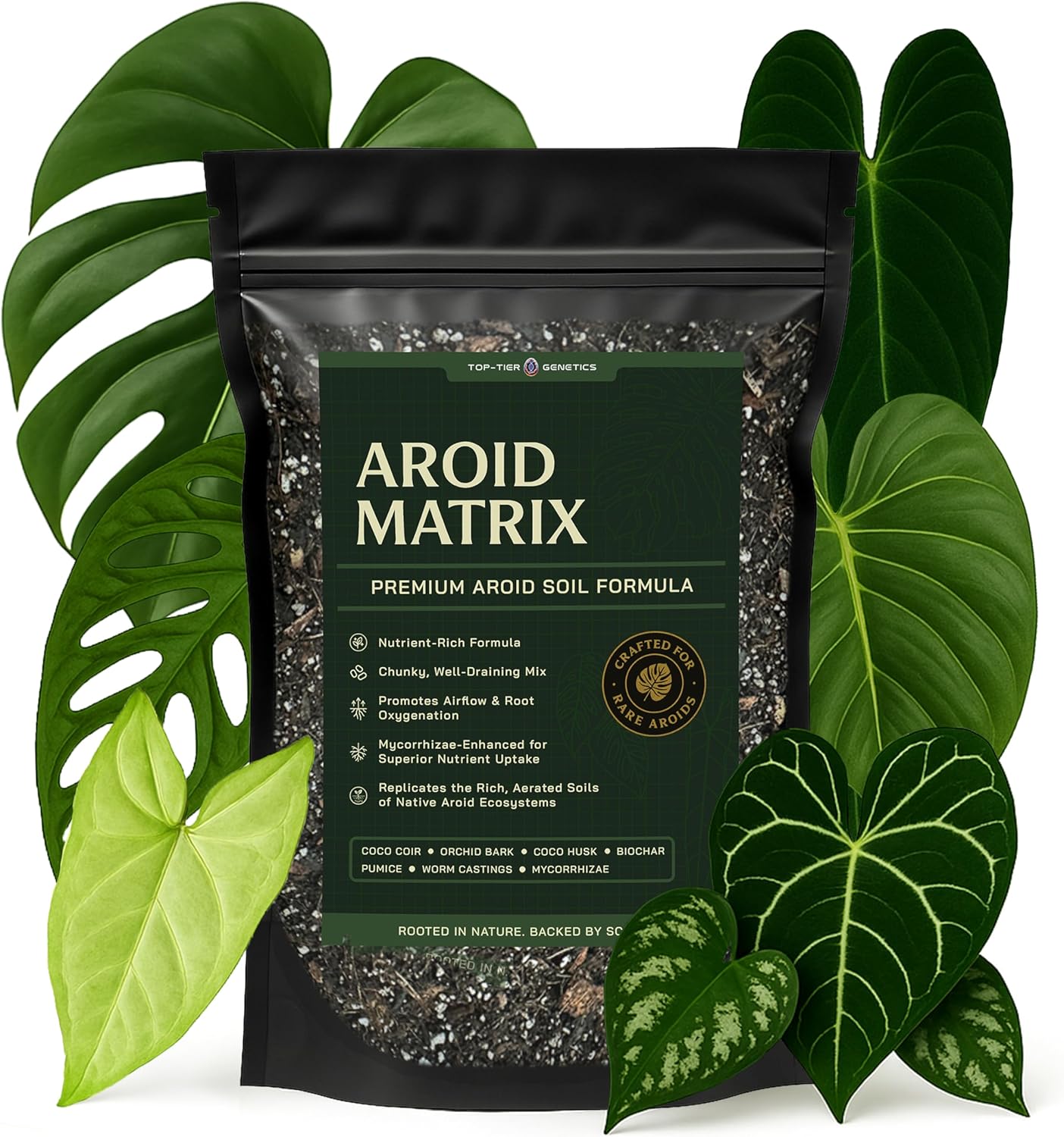
Top Tier Genetics AROID Potting Mix for Monstera and Aroids (4 qts)
| Brand | Top Tier Genetics |
|---|---|
| Unit Count | 128 Ounce |
| Ingredients | Orchid bark; Coco coir; Pumice; Coco husk; Worm castings; Biochar; Mycorrhizae |
| Volume | 4 quarts |
This AROID potting mix is formulated specifically for monsteras and other aroids and is ready to use straight from the bag. The chunky texture from orchid bark, coco husk, and pumice gives strong drainage and aeration, which helps prevent waterlogged roots and encourages fibrous root growth in large-leaved tropicals. Coco coir provides moisture retention without compaction, while worm castings and mycorrhizae supply a gentle, ongoing nutrient and microbial boost for healthier foliage. Biochar adds longer-term soil health benefits by improving nutrient retention and supporting microbial life. It is practical for repotting and regular refreshes of Monstera deliciosa because you do not need to mix components yourself. The main limitation is the small 4 quart volume, which makes it best for individual plant repots or top-ups rather than filling large containers or multiple plants at once. Shoppers who want a dependable, aroid-focused medium will appreciate the balanced moisture control and built-in biological amendments.
Best for: Buyers who want a reliable, ready-made potting medium tailored to Monstera and other aroids and prefer a mix that minimizes setup and reduces repotting risk.
Less Ideal for: Gardeners needing large volumes for many plants or big container fills who should look for bulk mixes or larger bags.
- Chunky mix (orchid bark, coco husk, pumice) provides excellent drainage and root aeration
- Contains worm castings and mycorrhizae to support steady nutrient availability and root health
- Coco coir balances moisture retention without promoting compaction
- Includes biochar to improve long-term soil microbial activity and nutrient holding capacity
- Small 4 quart bag size is insufficient for large pots or multiple repots
Verdict: A convenient, aroid-focused potting mix that delivers reliable drainage, moisture balance, and microbial support for healthy Monstera growth.
Miracle-Gro Houseplant Potting Mix (4 qt)

| Unit Count | 128 Ounce |
|---|---|
| Item Highlight | Fertilized, Perlite Soil for Indoor Gardening, Designed to Be Less Prone to Gnats |
| Volume | 5 quarts |
| Ingredients | Perlite, Sphagnum Peat Moss, Fertilizer, Wetting Agent, Coir |
Miracle-Gro Houseplant Potting Mix is a ready-to-use indoor potting soil blended from perlite, sphagnum peat moss, coir, a wetting agent and a built-in fertilizer to support common houseplants. You use it straight from the bag to repot pothos, monsteras, philodendrons and other tropicals by filling a drained container, seating the root ball and topping up around the roots. The mix is noticeably airy because of the perlite, so it drains and aerates roots better than plain peat alone, and the included fertilizer feeds plants for up to six months so you can delay the first feeding. It is also formulated without compost or bark, which helps reduce the likelihood of fungus gnat infestations in indoor pots. Limitations to note are that the bag is small for larger monsteras and you will still need to monitor watering and repot annually to refresh nutrients. For growers who want convenience and a gnat-reduced starting medium, this streamlines repotting and early care for common houseplants.
Best for: Plant owners who want a low-effort, ready-to-use potting mix for common tropical houseplants and who prioritize easy repotting and reduced pest risk.
Less Ideal for: Collectors growing large or fast‑growing monsteras who need bulk volumes or custom mixes with heavier amendment proportions should look for larger bags or specialist blends.
- Prefertilized to feed indoor plants for up to six months
- Perlite-rich blend improves drainage and root aeration
- Formulated without compost or bark to be less attractive to fungus gnats
- Includes wetting agent and coir for good moisture retention and handling
- 4‑quart bag is small for repotting larger specimens and frequent repots
Verdict: A convenient, perlite‑forward potting mix that simplifies repotting and helps keep fungus gnats away while feeding houseplants for months.
Back to the Roots Organic Expanding Coconut Coir Potting Soil Brick

| Item Highlight | 10 lb compressed coco coir brick; peat-free; OMRI Listed |
|---|---|
| Item Type Name | Coconut Coir |
| Volume | 2 cubic feet |
This expanding coco coir block provides a lightweight, pH-balanced potting medium you hydrate and fluff into roughly 2 cubic feet of soil. Typical use is to rehydrate the compressed brick, break it apart, and either use it alone for seed starting and potted plants or blend it with existing mixes to improve aeration and water retention. Notable features include OMRI listing for organic use, peat-free formulation, and a compact, easy-to-store 10 pound compressed format. For Monstera deliciosa this coir offers good drainage with enough moisture retention to keep roots healthy while reducing the risk of waterlogged crowns. It is convenient for users who want a clean, consistent substrate without hauling heavy bags. Limitations are that it is a single-ingredient coir, so you may want to add compost, slow-release fertilizer, or bark for extra nutrients and long-term structure when potting mature monsteras.
Best for: Buyers who want a reliable, easy-to-handle growing medium for indoor tropical plants and seed starting and prefer predictable, organic substrates that make potting and repotting low hassle.
Less Ideal for: Gardeners seeking an all-in-one fertilized potting mix or those who prefer pre-amended, long-term houseplant soils that require no further additions.
- Expands to roughly 2 cubic feet from a compact 10 lb block for easy storage and transport
- Peat-free and OMRI listed, appropriate for organic growing
- Balanced pH and good combination of aeration and water retention suited to aroid root health
- Simple to use for seed starting or as a component when mixing custom Monstera potting blends
- Pure coco coir contains little to no nutrients so additional fertilization is needed for long-term potted plants
- Single-ingredient texture may compress over time unless amended with chunky materials like bark or perlite
Verdict: A tidy, organic coco coir block that makes preparing a well-draining, moisture-retentive potting base for Monstera easy and low-mess.
Choosing the Right Soil for Monstera Deliciosa: Key Factors to Consider
Particle Size and Mix Texture
Particle size controls how easily water moves through the soil and how much oxygen reaches roots. Coarse components like pine bark, orchid bark, and large perlite pieces create macropores that prevent waterlogging and allow roots to breathe. Finer particles such as peat or coir hold moisture and nutrients but can compact if used alone, reducing aeration.
For Monstera Deliciosa, a heterogeneous texture is ideal: visible chunks for airflow plus some moisture-retentive fines. That balance reduces watering frequency without sacrificing oxygen, which limits root rot risk and supports rapid root branching.
Drainage Versus Water Retention Balance
Monstera roots prefer a medium that does not stay waterlogged but also does not dry out between waterings. Fast-draining mixes reduce the chance of standing water around root crowns, which causes rot. At the same time, mixes that include moisture-holding components such as coir, compost, or aged leaf mold provide a buffer so the plant can draw water between sessions.
Consider your watering habits and pot size: heavy potters or large pots can tolerate mixes with more fines because volume holds moisture, while small pots and infrequent watering benefit from higher coarse content to avoid soggy soil.
Nutrient Content and Feed Schedule
Soil for container Monstera should supply some nutrients initially and allow for predictable feeding. Organic components like compost, worm castings, or slow-release granules give a baseline of fertility that supports new leaf expansion. However, highly active organic mixes can tie up nitrogen as they break down, so gardeners should be ready to supplement with a balanced houseplant fertilizer.
Stable, low-salt nutrient profiles are important because Monsteras are sensitive to salt buildup. Look for mixes that work well with a monthly or biweekly liquid feed rather than requiring constant fertilization.
pH and Salt Considerations
Monstera Deliciosa favors slightly acidic to neutral soil pH, typically around 5.5 to 7.0. pH affects nutrient availability; if the mix is too alkaline or too acidic, certain elements become harder for the plant to absorb, slowing growth or causing leaf discoloration.
Also check for salt levels in amended soils. Excess soluble salts from fertilizers or some composts can harm roots. Good mixes either have low soluble salt readings or are formulated to be used with freshwater irrigation and routine leaching when needed.
Air Porosity and Root Health
Air spaces in the soil are as important as water retention because roots need oxygen to metabolize and grow. A mix that compacts or becomes paste-like after repeated wetting will suffocate roots and encourage anaerobic microbes that damage tissues.
Components that maintain long-term porosity-chunks of bark, pumice, or coarse perlite-help roots explore the pot and form a healthy, fibrous root system. This structural integrity is especially important for climbing Monsteras that produce heavy foliage.
Consistency Over Time
Some soils break down quickly, losing their original texture after a few months. Fast decomposition increases compaction and forces more frequent repotting. For Monstera owners who prefer lower-maintenance care, choose mixes with stable, slow-decomposing ingredients or plan to refresh the top layer and repot on a predictable schedule.
Consider how long you want a pot to go between repots and whether you will top-dress or fully replace the soil when it begins to compact.
Matching Soil to Container Type
Different containers change how soil behaves. Unglazed clay pots wick moisture away through the walls, so mixes with higher moisture retention help prevent rapid drying. Plastic or ceramic pots hold moisture longer, making a coarser mix preferable to avoid staying soggy. For tall or narrow pots, prioritize aeration to stop water pooling at the base.
- Unglazed clay pots: prefer mixes with more moisture-retaining fines.
- Plastic or glazed pots: prefer coarser mixes for faster drainage.
- Hanging planters: lean toward lighter, well-draining blends to reduce weight.
Adjusting Mixes for Indoor Climate
Humidity and indoor temperature influence how fast soil dries. In dry, heated rooms, mixes that include more coir or peat can prevent the root ball from desiccating. In humid bathrooms or bright, cool rooms, a chunkier mix reduces the chance of extended wetness. You can tweak commercial mixes by adding perlite, pumice, or orchid bark to increase drainage, or add a small amount of compost to boost moisture retention and fertility.
- Low humidity: increase moisture-holding components moderately.
- High humidity: increase coarse components for airflow.
- Cold, low-light rooms: avoid overly rich mixes that keep the root zone cool and wet.
Maintenance Tips to Keep Soil Healthy
Routine care extends the life of potting soil. Flush the pot with clear water occasionally to prevent salt buildup from fertilizers. Replace the top inch or two of soil annually to refresh organic matter without disturbing roots, and plan full repotting when you see compaction or root crowding.
Maintaining a consistent watering schedule, watching drainage after watering, and inspecting the root ball during repotting will help you decide when the soil needs refreshing. Avoid top-heavy plants in undersized pots to reduce stress on both roots and soil structure.
- Leach pots quarterly if salts accumulate.
- Top-dress with fresh, light compost once a year.
- Repot when roots circle or soil compacts significantly.
DIY Amendments and Simple Recipes
You can modify an off-the-shelf soil to better suit Monstera Deliciosa. A common approach is to blend a standard indoor potting mix with orchid bark and coarse perlite or pumice at roughly a 3:2:1 ratio to increase drainage and aeration while retaining some fines for water retention. For a moisture-richer mix, increase the potting mix portion and add a small amount of coir or compost.
Avoid adding too much garden soil, which compacts and brings pests or disease. Use aged, pest-free bark and horticultural-grade perlite or pumice for the best results.
- Coarse mix example: 3 parts potting mix, 2 parts bark, 1 part pumice.
- Moisture-richer option: increase potting mix and add 1 part coir.
- Do not substitute garden topsoil for potting mix.
How We Chose the Best Soil for Monstera Deliciosa
We selected soils based on attributes that directly affect Monstera Deliciosa health in container settings. Primary evaluation criteria included drainage and aeration, because Monsteras need oxygen around their roots; moisture retention, since a balance prevents both underwatering and root rot; nutrient availability and slow-release feeding properties to support steady leaf growth; physical stability, meaning the mix keeps structure over months without compacting; and pH suitability, with slightly acidic to neutral ranges favored by this plant. We also considered ingredient transparency and suitability for indoor growers, such as the presence of chunky components like bark or perlite that improve airflow. Exclusions included mixes formulated only for succulents or exclusively for outdoor beds, and any soil lacking clear composition information. The result is a set of soils that perform well for Monstera culture in pots, covering different watering routines and container types.
FAQ
How often should I water a Monstera in a new potting mix?
It depends on the mix and pot size, but generally water when the top 1 to 2 inches feel dry. Faster-draining, chunkier mixes will need more frequent checks. Allowing the top layer to dry slightly between waterings reduces rot risk.
Can I use regular garden soil for Monstera Deliciosa?
Regular garden soil usually compacts in containers and restricts root oxygen, so it is not recommended. Use a light, well-draining potting mix amended with chunky materials for aeration.
Should I add fertilizer to soil formulated for Monsteras?
Most mixes provide baseline nutrients, but Monsteras benefit from regular, balanced feeding during the growing season. Use a diluted liquid fertilizer or slow-release option according to the product instructions and flush the pot occasionally to avoid salt buildup.
How can I tell if my soil is too compacted or retaining too much water?
Signs include yellowing lower leaves, a musty smell, slow new growth, and water pooling on the surface or around the pot base. Gently remove the plant to inspect roots; brown, mushy roots indicate overwatering or compaction.
Final Verdict
Choose a soil that balances visible chunky components with moisture-holding fines to match your pot type and watering routine. Prioritize drainage and long-term porosity if you repot infrequently, or select mixes with more organic fines if you prefer fewer waterings. Watch for compaction and salt buildup and refresh or repot when the mix loses structure. With the right soil, you will see steadier growth, fewer root issues, and easier watering management for Monstera Deliciosa.
