

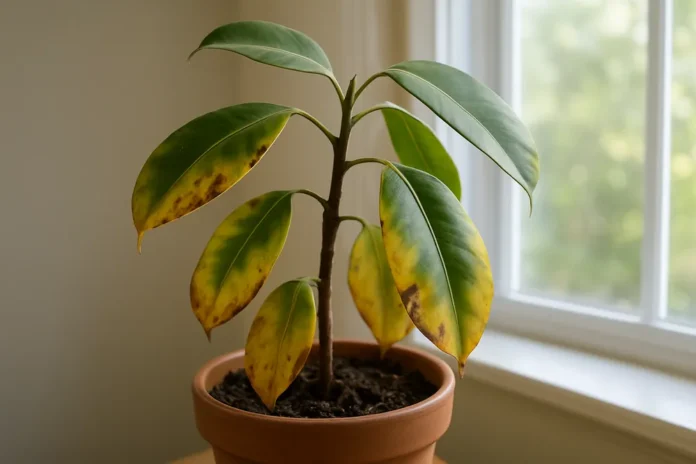
A rubber plant usually starts dying because of watering stress, low light, root damage, cold drafts, or pests. Most cases come from roots staying too wet for too long or the plant slowly weakening in dim indoor conditions.
A rubber plant can look sturdy for months and then suddenly start dropping leaves, developing brown spots, or going limp. When that happens, the problem is usually not random. These plants decline in fairly predictable ways, and the visible symptoms often point back to watering, light, temperature stress, roots, or pests.
I have found that rubber plant dying complaints often come from a slow buildup of stress rather than one dramatic mistake. A plant may tolerate dim light, soggy soil, or chilly air for a while, then cross a tipping point. The good news is that if the stem is still firm and there is healthy tissue near the top or base, recovery is often possible.
The key is to match the symptom pattern to the likely cause instead of trying three or four fixes at once. A yellowing plant with soft stems needs a different response than one with dry crispy leaf edges or sudden leaf drop after being moved.
What a Dying Rubber Plant Usually Looks Like
Rubber plants rarely just "die overnight" unless they have been exposed to cold damage or severe root rot. More often, the plant gives several warning signs first. You may notice lower leaves turning yellow, leaves dropping one by one, limp growth, blackened stems near the soil line, brown patches, curling, or a plant that stops producing new leaves entirely.
Some symptoms matter more than others. A single older leaf dropping now and then is not unusual. A cluster of leaves yellowing at once, soft mushy stems, a sour smell from the pot, or widespread spotting is more serious. If the newest leaves are affected, the issue is often active and needs quicker attention.
- Yellow leaves often point to overwatering, poor drainage, or low light.
- Crispy brown edges often suggest underwatering, dry air, salt buildup, or inconsistent care.
- Black spots or mushy tissue often signal rot or cold injury.
- Leaf drop after a move can be stress from changed light, temperature, or watering rhythm.
- Stalled growth usually means the plant lacks enough light or has cramped, stressed roots.
When I diagnose a struggling rubber plant, I look at which leaves are failing first. Older bottom leaves dropping slowly often means cumulative stress, while damaged new leaves usually tell me the problem is current and more urgent.
Overwatering and Root Rot Are the Most Common Causes
If I had to pick the most common reason a rubber plant declines indoors, it would be overwatering. These plants like evenly moist soil during active growth, but they do not want to sit in a wet pot for long periods. When roots stay deprived of oxygen, they begin to rot, and the plant can no longer take up water properly even though the soil is wet.
Signs the Soil Is Staying Too Wet
- Yellowing leaves, especially several at once
- Leaf drop with no crispy texture
- Drooping even though the potting mix feels damp
- Soft or darkened stem tissue near the base
- A pot that stays heavy and wet for many days
- A musty or sour smell from the soil
Overwatering is not only about frequency. It can also come from a pot without drainage, a dense potting mix, a container that is too large for the root ball, or a plant sitting in a dim room where soil dries very slowly. Many growers water on a schedule, but rubber plants do better when watering is based on how quickly the soil actually dries in that spot.
How to Tell if Root Rot Has Started
If the plant is limp in wet soil, gently slide it from the pot and inspect the roots. Healthy roots are usually firm and pale tan to light brown. Rotten roots look dark, mushy, or stringy, and the outer layer may slough off when touched. If much of the root system is compromised, the plant can collapse fast.
If you confirm root rot, I would not just let the pot dry and hope. Trim dead roots, repot into fresh airy mix, and only judge recovery by new growth, not by whether damaged old leaves improve.
Underwatering and Inconsistent Moisture Can Look Similar
Rubber plants do not like drought stress either. When the root ball becomes bone dry again and again, leaves can droop, curl inward, develop crisp edges, or fall. The confusing part is that both overwatered and underwatered plants may look wilted. The difference is usually in the soil feel and the leaf texture.
A thirsty rubber plant often has dry potting mix that pulls from the sides of the pot, lighter-weight containers, and leaves that feel thin or papery rather than soft and waterlogged. Brown damage from drought tends to be tan and crispy, especially at the margins and tips.
- Soil is dry several inches down
- Leaves curl or droop but stems are not mushy
- Brown edges feel crisp, not soft
- Lower leaves may yellow and drop after repeated dry spells
- New growth can stall if the plant cycles between very dry and very wet
Inconsistent watering is especially stressful. A plant that goes from drought to saturation over and over can lose roots on both ends of the spectrum. That often leads gardeners to water even more, which deepens the problem.
Insufficient Light Slowly Weakens the Plant
Rubber plants are often sold as easy indoor foliage plants, but they still need good light to stay healthy. They handle bright indirect light very well and can tolerate some gentle direct sun indoors. In a dim room, the plant may survive for quite a while, yet it gradually loses vigor. Growth slows, spacing between leaves stretches, older leaves yellow more easily, and the soil stays wet much longer after watering.
This matters because low light does not just cause a cosmetic issue. It changes how the plant uses water. A rubber plant in a dark corner may be watered the same way it was in summer near a bright window, but now the roots stay wet too long and start to fail. That is why poor light and overwatering often work together.
Clues Your Rubber Plant Needs More Light
- Little to no new growth during the growing season
- Long gaps between leaves on new stems
- Leaves appear smaller than older ones
- The plant leans strongly toward a window
- Soil takes a long time to dry after watering
If your plant is far from a window, behind heavy curtains, or in a room that feels bright to you but not to the plant, weak light may be a major factor. Most rubber plants bounce back better when moved to a spot with bright filtered light and a more stable day length.
Temperature Shock and Drafts Can Trigger Sudden Decline
Rubber plants are tropicals, so they resent cold drafts, abrupt temperature swings, and chilly window glass in winter. A plant that was healthy can begin dropping leaves quickly after exposure to an air conditioner vent, a heater blast, a cold front through a leaky window, or a move outdoors and back.
Cold injury often shows up as dark blotches, limp leaves, or sudden leaf drop shortly after exposure. Heat vents can dry the plant too quickly and create crispy edges, but cold tends to be more damaging because it can injure tissue directly.
- Leaf drop after a move or weather change
- Darkened patches on leaves after cold exposure
- A plant sitting right against winter glass
- Drafts from doors, vents, or poorly sealed windows
- Rapid drying and edge browning near heating systems
I pay close attention to timing here. If a rubber plant drops leaves within days of being moved, placed by a drafty door, or exposed to cold night air, that timing is often more revealing than the leaf color itself.
Drainage, Pot Size, and Soil Mix Can Quietly Cause Trouble
Sometimes the watering habit is not the main issue. The real problem is that the potting setup keeps the root zone wet too long. Rubber plants prefer a loose, well-draining mix that holds some moisture but still allows air around the roots. If they are planted in heavy, compacted soil, root health declines even when you water carefully.
Pot size matters too. A small plant in a very large pot has more wet soil around it than its roots can use. That unused soil remains damp and increases rot risk. On the other hand, a severely rootbound plant may dry out too fast, struggle to absorb water evenly, and stop growing.
Potting Issues That Can Make a Rubber Plant Fail
- No drainage holes
- Decorative cachepots that trap runoff water
- Heavy peat-rich mix that stays soggy
- A container much larger than the root ball
- Compacted old soil that repels water on top but stays dense below
- Roots circling tightly with very little soil left
A good repotting mix usually includes standard potting soil plus chunky material like perlite, bark, or pumice to improve airflow. If the plant is in poor soil but still has healthy roots, changing the mix can make a dramatic difference.
Pests and Disease Can Drain the Plant Over Time
Although watering and light cause most rubber plant problems, pests can also weaken the plant enough to make it look like it is dying. Common offenders include spider mites, scale, mealybugs, and sometimes thrips. These insects feed on plant sap, stressing leaves and slowing growth.
Spider mites are especially common in dry indoor air. They can cause stippling, dull leaves, fine webbing, and gradual leaf drop. Scale and mealybugs tend to cluster on stems and leaf undersides, leaving sticky residue behind. A badly infested plant may lose vigor for months before the issue is noticed.
Symptoms That Suggest Pests Instead of Watering Trouble
- Speckled or stippled leaves rather than broad yellowing
- Sticky honeydew on leaves or nearby surfaces
- Tiny bumps along stems or leaf veins
- Cottony white clusters in leaf joints
- Fine webbing, especially under leaves
Leaf spot diseases are less common indoors than cultural problems, but they can happen when leaves stay wet, airflow is poor, or damaged tissue gets infected. If spots are spreading and look water-soaked, dark, or ringed, isolate the plant from others while you assess the cause.
How to Diagnose the Real Cause Before You Treat It
A dying rubber plant is easier to save when you slow down and read the whole pattern. Start with the roots and environment, not just the leaves. Leaves show the damage, but the cause is often in the pot, the soil, or the room conditions.
- Feel the soil several inches down, not just the surface.
- Check whether the pot has drainage holes and whether water pools in a saucer or outer pot.
- Look at the light level the plant gets for most of the day.
- Inspect the base of the stem for softness or darkening.
- Examine leaf undersides and stems for pests.
- Think back to recent changes like repotting, moving, drafts, or missed waterings.
If the soil is wet and the plant is yellowing, start by suspecting root stress. If the soil is dry and the damage is crispy, drought is more likely. If the plant has been in low light for a long time, that may be the underlying reason other problems developed. Matching the symptom to the growing conditions saves time and avoids stacking unnecessary treatments.
How to Help a Struggling Rubber Plant Recover
Once you know the likely cause, recovery is mostly about removing stress and giving the plant a stable environment. Rubber plants can rebound surprisingly well if the stem and some roots are still healthy. What they do not respond well to is constant interference.
If Overwatering Is the Problem
- Let the mix approach moderate dryness before watering again.
- Empty standing water from saucers or cachepots.
- Move the plant to brighter indirect light so the mix dries more normally.
- Repot if the soil is dense or roots are rotting.
- Remove badly damaged leaves only after the plant is stable.
If Underwatering Is the Problem
- Water thoroughly until excess drains out.
- Rehydrate very dry soil slowly if it has become hydrophobic.
- Adjust your routine so the root ball does not swing from bone dry to soaked.
- Consider repotting if the plant is severely rootbound and dries out too fast.
If Light Is Too Low
- Move the plant closer to a bright window.
- Acclimate it gradually if introducing some direct sun.
- Reduce watering frequency until growth improves.
If Pests Are Involved
- Isolate the plant from nearby houseplants.
- Wipe leaves and stems to remove visible pests.
- Use insecticidal soap or horticultural oil as labeled for indoor plants.
- Repeat treatments because eggs and hidden insects are often missed the first time.
Do not expect damaged leaves to return to perfect health. The goal is healthy new growth and a stop to further decline. If the top growth is gone but the stem is still alive, patience is worthwhile because dormant buds can sometimes push new shoots.
When the Plant Can Still Be Saved and when It May Be Too Far Gone
A rubber plant still has a good chance if the main stem is firm, at least some roots are healthy, and there is green tissue under the bark when lightly scratched. Even a partly defoliated plant can recover if its root system and stem are viable.
The outlook is poorer when the stem base is mushy, roots are mostly black and collapsing, or the entire plant has gone soft after prolonged wetness or cold damage. In those cases, salvage may mean taking healthy stem cuttings from any remaining firm growth rather than trying to save the original root system.
- Promising signs include firm stems, viable roots, and visible buds.
- Concerning signs include foul odor, stem collapse, and widespread mushy tissue.
- If only part of the plant is affected, prune back to healthy wood and stabilize care.
- If the root system is mostly gone, propagation may be the better option.
How to Prevent Future Problems
Healthy rubber plants are not complicated, but they reward consistency. The best prevention is a bright spot, a pot with drainage, a loose mix, and a watering routine based on the plant's actual drying speed instead of the calendar.
- Give bright indirect light most of the day.
- Water deeply, then wait until the upper soil has partly dried before watering again.
- Use a fast-draining potting mix and a container with drainage holes.
- Keep the plant away from cold drafts and harsh heat vents.
- Check leaves regularly for mites, scale, and mealybugs.
- Repot when roots are crowded or the mix has broken down.
In my experience, the healthiest rubber plants are the ones that are left in a stable place and observed closely rather than fussed over constantly. Small adjustments made early are what keep a temporary setback from turning into a dying plant.
FAQ
Can a Rubber Plant Come Back After Losing All Its Leaves?
Sometimes, yes. If the stem is still firm and alive and the roots are not badly rotted, the plant may push new growth from dormant buds. If the stem base is soft or the roots have failed, recovery is much less likely.
Should I Cut Off Yellow Leaves From My Rubber Plant?
You can remove fully yellow leaves, but it is more important to fix the cause first. If the plant is actively declining, removing too much foliage at once can add stress.
How Often Should I Water a Rubber Plant Indoors?
There is no perfect schedule because light, pot size, season, and soil type all change drying speed. Water when the upper portion of the mix has dried somewhat, then soak thoroughly and let excess drain.
Why Is My Rubber Plant Dropping Leaves After I Moved It?
Rubber plants often react to changes in light, temperature, and humidity. A move can also disrupt your watering rhythm because the soil may now dry faster or slower than it did before.
Do Rubber Plants Need Direct Sunlight?
They do best in bright indirect light, though many can handle some gentle indoor direct sun. Sudden exposure to harsh afternoon sun can scorch leaves, especially if the plant was previously in lower light.
What Does Root Rot Look Like on a Rubber Plant?
Root rot usually shows up as dark, mushy, weak roots and often comes with yellowing leaves, drooping in wet soil, and sometimes a sour smell. The stem base may also soften if the damage is advanced.
Can Low Humidity Kill a Rubber Plant?
Low humidity alone usually does not kill a rubber plant, but it can contribute to brown edges, slower growth, and spider mite problems. It becomes more serious when combined with drought stress or hot indoor air.
Want the right fix faster? Read our guide to the best indoor plant soil mixes, moisture meters, and pest treatments so you can choose the products that actually help a struggling rubber plant recover.
