

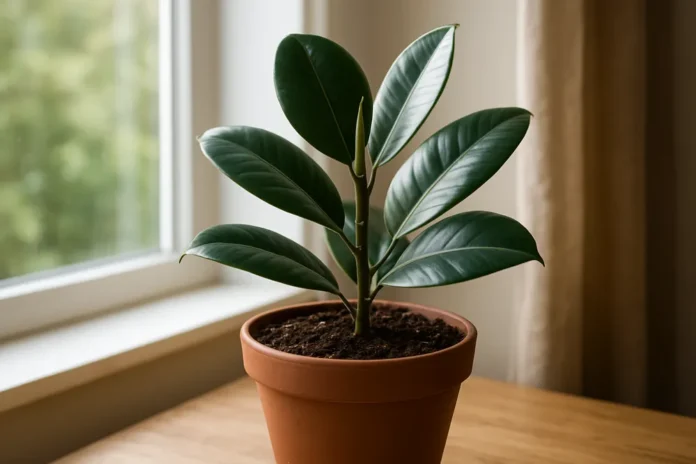
A rubber plant usually stops growing because it is not getting enough light, warmth, root space, or balanced moisture. Slow growth can also be normal during winter or after stress from repotting, moving, or pruning.
A rubber plant that has not pushed a new leaf in weeks or months can be frustrating, especially when the foliage still looks mostly healthy. In many homes, the problem is not one dramatic mistake. It is usually a combination of conditions that keep the plant in maintenance mode instead of active growth.
When I troubleshoot a rubber plant not growing, I start with the basics: light, watering, roots, temperature, and season. Rubber plants are tougher than people think, but they are also very good at slowing down when something feels slightly off. The good news is that once you correct the main issue, new growth often resumes from the tip or side buds without much drama.
Below are the most common reasons a rubber plant stalls, how to tell which one fits your plant, and what changes are most likely to help.
What Normal Growth Looks Like in a Rubber Plant
Before assuming something is wrong, it helps to know what healthy growth actually looks like. A rubber plant, also called Ficus elastica, does not grow at the same pace year-round. Indoors, it often grows in flushes, putting out a new leaf every few weeks in spring and summer, then slowing sharply in fall and winter.
A young plant in bright light may produce leaves steadily and gain noticeable height over one growing season. A mature plant, a plant kept in moderate light, or one recovering from stress may grow much more slowly. If the leaves are firm, glossy, and well-colored, and the plant is simply not getting taller quickly, you may be dealing with slow growth rather than a serious health problem.
- Active growth usually happens fastest in spring and summer.
- New leaves emerge from the growing tip wrapped in a sheath.
- Older indoor plants may grow more in width and leaf size than in height.
- Growth often pauses after repotting, relocation, or pruning.
Low Light Is the Most Common Reason Growth Stalls
Rubber plants tolerate medium light, but they do not thrive there. If your plant sits several feet from a window, in a dim corner, or behind heavy curtains, it may hold onto its leaves while doing almost nothing else. The plant is conserving energy rather than producing new tissue.
Inadequate light often causes slow or stalled growth, smaller new leaves, wider spacing between leaves on stretched stems, and a slight lean toward the light source. Variegated rubber plants are even more demanding. They usually need brighter conditions than the solid green types to keep growing well.
When I see a rubber plant that looks healthy but has done nothing for months, light is my first suspect. These plants can survive in average indoor light for a long time, which makes the real issue easy to miss.
How to Improve Light Without Shocking the Plant
Move the plant closer to a bright window with lots of indirect light. An east window works well, and a south or west window can also be excellent if harsh midday sun is filtered. If the plant has been in a dark spot for a long time, increase light gradually over a week or two so the leaves do not scorch.
- Place it within a few feet of a bright window instead of across the room.
- Rotate the pot every week or two for even growth.
- Use a grow light if your home is naturally dark or winter light is weak.
- Expect new growth to respond more than old leaves. Existing leaves rarely change much.
Watering Problems Can Keep the Plant in Survival Mode
Both overwatering and underwatering can stop a rubber plant from growing. Overwatered plants often struggle because roots need oxygen as much as moisture. If soil stays soggy, roots weaken and the plant cannot support new growth. Underwatered plants also stall because they do not have enough consistent moisture to expand leaves and stems.
The tricky part is that both problems can show up as drooping, dull leaves, and inactivity. Overwatering is more likely if the pot feels heavy for days, the soil smells musty, or lower leaves yellow and drop. Underwatering is more likely if the soil pulls from the pot edge, leaves curl slightly, and the pot dries out very quickly.
What Better Watering Looks Like
Water thoroughly, then let the top inch or two of soil dry before watering again. The exact timing depends on light, pot size, temperature, and season, so avoid rigid schedules. A plant in bright summer light may need water much more often than the same plant in winter.
I prefer to judge a rubber plant by the weight of the pot as much as the soil surface. If the top looks dry but the container still feels heavy, I wait another day or two.
- Always use a pot with drainage holes.
- Empty saucers after watering so roots do not sit in runoff.
- Reduce watering frequency during winter slowdowns.
- Do not give tiny sips on a schedule. Deep watering is usually better.
Root Problems Often Hide Below the Soil Line
If light and watering seem reasonable but the plant still refuses to grow, check the root situation. A severely rootbound rubber plant can become stalled because the roots have little room left to absorb water and nutrients efficiently. On the other hand, a plant in an oversized pot can sit in too much wet soil and grow slowly because the roots are staying overly damp.
Common signs of a too-tight root system include roots circling the inside of the pot, water rushing straight through, and the plant drying out much faster than it used to. Signs of root rot include mushy roots, blackened sections, foul odor, and persistent wilt despite wet soil.
When and How to Repot
Repot when roots are clearly crowded or the potting mix has broken down into a dense mass. Move up only one pot size, usually 1 to 2 inches wider than the current pot. Use a loose, well-draining indoor plant mix that holds some moisture but does not stay swampy. A mix with potting soil, bark, perlite, or pumice works well.
Do not expect instant top growth right after repotting. Rubber plants often spend a few weeks adjusting and rebuilding roots before they start pushing new leaves.
Poor Soil and Missing Nutrients Can Slow New Leaves
A rubber plant does not need heavy feeding, but it does need enough nutrition to support new growth. If the same soil has been in the pot for years, nutrients may be depleted or the mix may have compacted so badly that roots cannot function well. In either case, the plant may sit still even if it is otherwise alive and stable.
Nutrient-related slow growth often comes with pale new leaves, smaller leaves than normal, or a general loss of vigor. This does not always mean you need strong fertilizer right away. Sometimes fresh potting mix is the better first fix, especially if drainage has also become poor.
How to Feed Without Overdoing It
During spring and summer, feed with a balanced liquid houseplant fertilizer at a mild rate, often half strength, every few weeks or according to label directions. Stop or reduce feeding in fall and winter when growth naturally slows. Too much fertilizer can burn roots and create a different set of problems, including stalled growth.
- Feed only during active growth.
- Never fertilize a badly wilted or bone-dry plant.
- Flush the soil occasionally if you suspect fertilizer salt buildup.
- If the soil is old and dense, repotting may help more than feeding.
Cool Temperatures and Dry Drafts Can Pause Growth
Rubber plants are tropical plants, and they are much happier in warm, stable indoor conditions. If your plant is near a cold window, drafty door, air conditioner vent, or heater blast, it may stop growing even if everything else looks acceptable. Growth slows naturally when temperatures drop, but repeated temperature swings can be especially disruptive.
Most rubber plants grow best when temperatures stay roughly between 65 and 80 degrees Fahrenheit. Once they are exposed to colder conditions, especially below about 55 degrees, they often become sluggish. Leaves may droop, curl, or develop stress marks, and new growth may pause entirely.
How to Make Conditions Steadier
- Keep the plant away from heating and cooling vents.
- Do not let leaves press against freezing winter glass.
- Avoid frequent moves between very different rooms or temperatures.
- Aim for consistency more than perfection.
Seasonal Dormancy and Recent Stress Can Explain a Long Pause
Sometimes a rubber plant is not growing because it is simply resting. Indoor plants often enter a low-energy phase in winter due to shorter days, weaker light, and cooler rooms. A healthy plant may look almost frozen in place from late fall through winter and then resume growth once spring returns.
Recent stress also matters. If you just repotted, moved the plant across the house, brought it home from a store, pruned it, or let it dry out badly, it may need time before it starts growing again. Plants do not recover and grow at full speed simultaneously. They usually stabilize first.
I try not to judge a rubber plant too harshly in winter. A plant that makes no new leaves from November through February may still be perfectly fine if its foliage stays firm and healthy.
Pests and Disease Can Quietly Drain Energy
Rubber plants are fairly sturdy, but pests can absolutely slow them down. Spider mites, scale, mealybugs, and thrips feed on plant sap and reduce the energy available for new leaves. Sometimes the plant does not look obviously infested at first. It just stops growing and gradually loses shine or vigor.
Look closely under leaves, along stems, and around the growing tip. Spider mites may leave faint stippling or fine webbing. Scale can look like small brown bumps. Mealybugs appear as white cottony clusters. Root disease is also possible if the potting mix stays wet and stale.
What to Do if You Find Pests
Isolate the plant from others, wipe down leaves, and treat with insecticidal soap, neem, or another houseplant-safe option appropriate for the pest. Repeat treatments as needed, since one round is rarely enough. If rot is involved, treatment focuses on pruning damaged roots, improving drainage, and correcting watering habits.
Pruning, Pot Size, and Expectations Can Affect How Growth Appears
A rubber plant does not always grow in the way people expect. If you pruned the top, the plant may pause before branching from lower nodes. If it is in a decorative cachepot with a tight nursery pot inside, roots may be more crowded than you realize. If it is a compact cultivar, it may naturally stay shorter and denser.
Growth can also seem stalled when the plant is investing in thicker stems or larger roots rather than adding height. This is especially common after pruning or when light has recently improved. The next visible change may be a side branch rather than a taller central stem.
How to Get Your Rubber Plant Growing Again
The best fix is usually a simple one done consistently. Do not change five things at once, or you will not know what helped. Start with the factor most likely to be limiting the plant, which is often light, then correct watering and root issues if needed.
- Move the plant into brighter indirect light.
- Water deeply only when the top layer of soil has dried.
- Check for root crowding, compacted soil, or rot if growth still does not resume.
- Feed lightly during spring and summer only.
- Keep temperatures warm and stable.
- Inspect for pests every week until you see healthy new growth.
After conditions improve, judge success by new growth, not by old leaves changing. A damaged or undersized older leaf may stay that way. What you want to see is a healthy new sheath, a fresh leaf unfurling, or a new side shoot forming.
FAQ
How Long Can a Rubber Plant Go Without Growing?
A rubber plant can go several months with little visible growth, especially in winter or after stress. If leaves remain firm and healthy, a temporary pause is not always a sign of decline.
Do Rubber Plants Need Direct Sunlight to Grow?
They do not need strong direct sun all day, but they do need bright light to grow well indoors. Gentle morning sun or very bright indirect light is usually ideal.
Should I Fertilize a Rubber Plant That Is Not Growing?
Only if the plant is in active growing season and the basics are already in good shape. Feeding a plant in poor light, cold conditions, or soggy soil usually does not solve the problem.
Will Repotting Make My Rubber Plant Grow Faster?
Repotting can help if the plant is rootbound or stuck in compacted old soil. It will not speed growth if the real problem is low light, poor watering, or winter dormancy.
Why Is My Rubber Plant Healthy-looking but Not Making New Leaves?
This often happens when the plant has enough resources to maintain existing foliage but not enough to push active growth. Low light and seasonal slowdown are the most common reasons.
Can a Rubber Plant Recover After Overwatering and Start Growing Again?
Yes, if root damage is not too severe and conditions improve quickly. Once the roots recover and the soil drains properly, new growth can return.
Does Pruning Stop a Rubber Plant From Growing?
Pruning usually pauses upward growth temporarily, but it often encourages branching later. Give the plant time to redirect energy before expecting new shoots.
Want faster, healthier houseplant growth? Read our guide to the best indoor plant fertilizers and potting mixes so you can choose the right setup for your rubber plant.
