

Note: This article contains affiliate links. If you click on these links and make a purchase, I may earn a small commission at no extra cost to you. This helps support my research and content. Read my full affiliate disclosure here.
Choosing the right soil for planting and establishing trees affects survival, root patterning, and long-term growth more than most gardeners realize. The wrong mix can trap water, stunt roots, or flush nutrients away before a young tree gets established. This guide reviews seven top soil options for trees, shortlisted for real garden situations from small yard plantings to new landscape specimens. We evaluated mixes and amendments by how they handle drainage, structure, and nutrient release so you can pick soil that suits your planting method and site conditions. Read on to see which soil profiles we considered and why each decision matters for rooting, stability, and health.
Top Picks at a Glance
| Best Overall The best all-around choice for most situations | Soil Sunrise Citrus Tree Potting Soil Mix (30 Quarts) |  |
| Best Quality Built to a higher standard if you want something more solid | FoxFarm Happy Frog Potting Soil, Container Garden, 2 cu ft (with 2 Plant Tags) |  |
| Best Value The sweet spot between price and what you get | FoxFarm Ocean Forest Potting Soil, 12 Qt (4 Bags) |  |
| Best Budget The cheapest option that still gets the job done reliably | Doter Citrus Tree Potting Soil Mix (1 qt) |  |
| Highest Rated A top-rated pick with lots of positive feedback | GARDENWISE Organic Olive Tree Potting Mix (3 Quarts) |  |
| Most Popular A crowd favorite that many people choose with confidence | FoxFarm Ocean Forest Potting Soil, 12 Quart |  |
| Best Seller A high-volume bestseller chosen again and again | Back to the Roots Organic Expanding Coco Coir Potting Soil Brick (10 lb) |  |
Soil Sunrise Citrus Tree Potting Soil Mix (30 Quarts)

| Volume | 30 quarts |
|---|---|
| Ingredients | Peat moss, perlite, sand, worm castings, lime |
| Unit Count | 1 Count |
| Style Name | Sandy |
This Soil Sunrise mix is a lightweight, well-draining potting soil designed for container fruit trees. It combines peat moss for water retention, perlite and coarse sand for quick drainage and aeration, worm castings for slow-release nutrients, and lime to keep pH suitable for acid-sensitive fruit. In use you would fill pots or repot rootballs with this blend to reduce soggy roots and encourage steady growth and fruiting. The resealable 30-quart bag and all-natural ingredient list make it a low-fuss option for regular repotting and seasonal top-ups. Important limitations: the formula is targeted at citrus and formulated with lime, so its pH profile and ingredient balance are optimized for citrus preferences rather than apple-specific needs; heavier-feeding or larger potted apple varieties may also require supplemental fertilizer over time. For growers seeking a clean, airy base for container fruit trees this mix provides a reliable starting medium, but you should monitor soil fertility and adjust amendments for apples as they mature.
Best for: Home gardeners who want a clean, well-draining base mix for potted fruit trees and prefer an all-natural, low-maintenance soil to encourage steady growth.
Less Ideal for: Growers who need a soil tailored precisely to apple tree pH or nutrient demands, or those planting large standard apple trees in oversized containers without planned fertilization.
- Designed for container fruit with a balance of peat, perlite, and sand to prevent waterlogging
- Includes worm castings to provide natural nutrients and improve soil biology
- Lime added to stabilize pH for fruit-bearing trees that prefer slightly higher pH
- All-natural, hand-blended ingredients with no fillers listed
- Resealable bag and 30-quart volume suited to repotting small to medium trees
- Formulated specifically for citrus so pH and lime content may not match apple preferences exactly
- May require additional fertilization for heavier-feeding apple varieties over a growing season
Verdict: A well-draining, all-natural container mix that gives small to medium potted fruit trees a healthy airy foundation and low-maintenance starting point.
FoxFarm Happy Frog Potting Soil, Container Garden, 2 cu ft (with 2 Plant Tags)

| Brand | FoxFarm |
|---|---|
| Style Name | Container Garden |
| Unit Count | 600 Ounce |
| Volume | 2 cubic feet |
FoxFarm Happy Frog Potting Soil is a premixed container blend made to nourish potted plants without additional amendments. It comes ready to use and is formulated with beneficial microbes and mycorrhizal fungi alongside organic inputs such as earthworm castings, bat guano, and aged forest humus to support root development and nutrient uptake. For growing hot peppers in containers this mix offers a nutrient-rich, well-amended medium that encourages strong vegetative growth and flowering when paired with proper watering and feeding. The included plant tags make keeping track of varieties and planting dates convenient. Practical limits to note are that this is a potting soil designed for containers rather than field beds, so peppers in ground or very large planters may still need different soil or additional bulk amendments. Also, while the mix is nutrient-dense at planting, active growers should plan a feeding schedule because high-demand fruiting crops benefit from supplemental fertilizer over the season.
Best for: Growers who want a dependable, ready-made potting medium for container-grown hot peppers and prefer a product that supports root health out of the bag.
Less Ideal for: Gardeners planting directly in raised beds or open ground who need large volumes of soil or want to custom-blend base soil at scale.
- Pre-amended with earthworm castings, bat guano, and aged forest products for immediate nutrient availability
- Contains beneficial microbes and mycorrhizal fungi to improve root health and nutrient uptake
- Ready to use straight from the bag for quick potting and repotting
- Includes plant tags to track varieties and planting dates
- Formulated specifically for containers so may not be ideal for in-ground garden beds
- Nutrient levels diminish over time for heavy-feeding crops and require supplemental fertilization
Verdict: A reliable, microbe-rich potting mix that simplifies container pepper growing by delivering immediate nutrients and strong root support.
FoxFarm Ocean Forest Potting Soil, 12 Qt (4 Bags)

| Brand | FoxFarm |
|---|---|
| Item Highlight | Ready-to-use, aerated soil with fish emulsion, crab meal and earthworm castings. |
| Number of Packs | 4 |
| Volume | 12 quarts |
FoxFarm Ocean Forest is a pre-mixed potting soil designed to give seedlings, container plants, and raised-bed plantings a nutrient-dense, well-aerated growing medium straight from the bag. The mix combines aged forest products, sandy loam and sphagnum peat moss for good drainage and air porosity while organic inputs such as fish emulsion, crab meal and earthworm castings provide immediate feeding for young plants. In practice it is most useful for transplanting seedlings, filling pots and topping raised beds where you want plants to establish quickly without a long wait for soil amendments. Notable features include an airy texture that reduces compaction and a built-in nutrient profile that can delay the need for early fertilizers. Important limitations are that it is sold in 12 quart bags which may require many bags for large raised beds and that the peat-based content may dry faster than heavier garden soils, so more frequent watering can be necessary. For gardeners focused on vigorous starts and faster establishment, it is a straightforward, high-performance potting mix.
Best for: Gardeners who prioritize fast, vigorous establishment in containers and raised beds and want a high-performance, plug-and-play soil to get plants growing quickly.
Less Ideal for: Those building large in-ground beds who need bulk topsoil or want a lower-maintenance, water-retentive soil for drought-prone sites should consider bulk garden soil alternatives.
- Ready-to-use, no mixing required for quick planting
- Aerated, light texture that reduces compaction and improves root oxygenation
- Contains organic amendments (fish meal, crab meal, earthworm castings) for immediate nutrient availability
- Small bag volume means multiple bags are needed for larger raised beds
- Peat-based mix can dry out faster than heavier soils, requiring more frequent watering
Verdict: Choose this mix when you want a ready-made, nutrient-rich potting soil that gives seedlings and raised-bed plantings a fast, high-performance start.
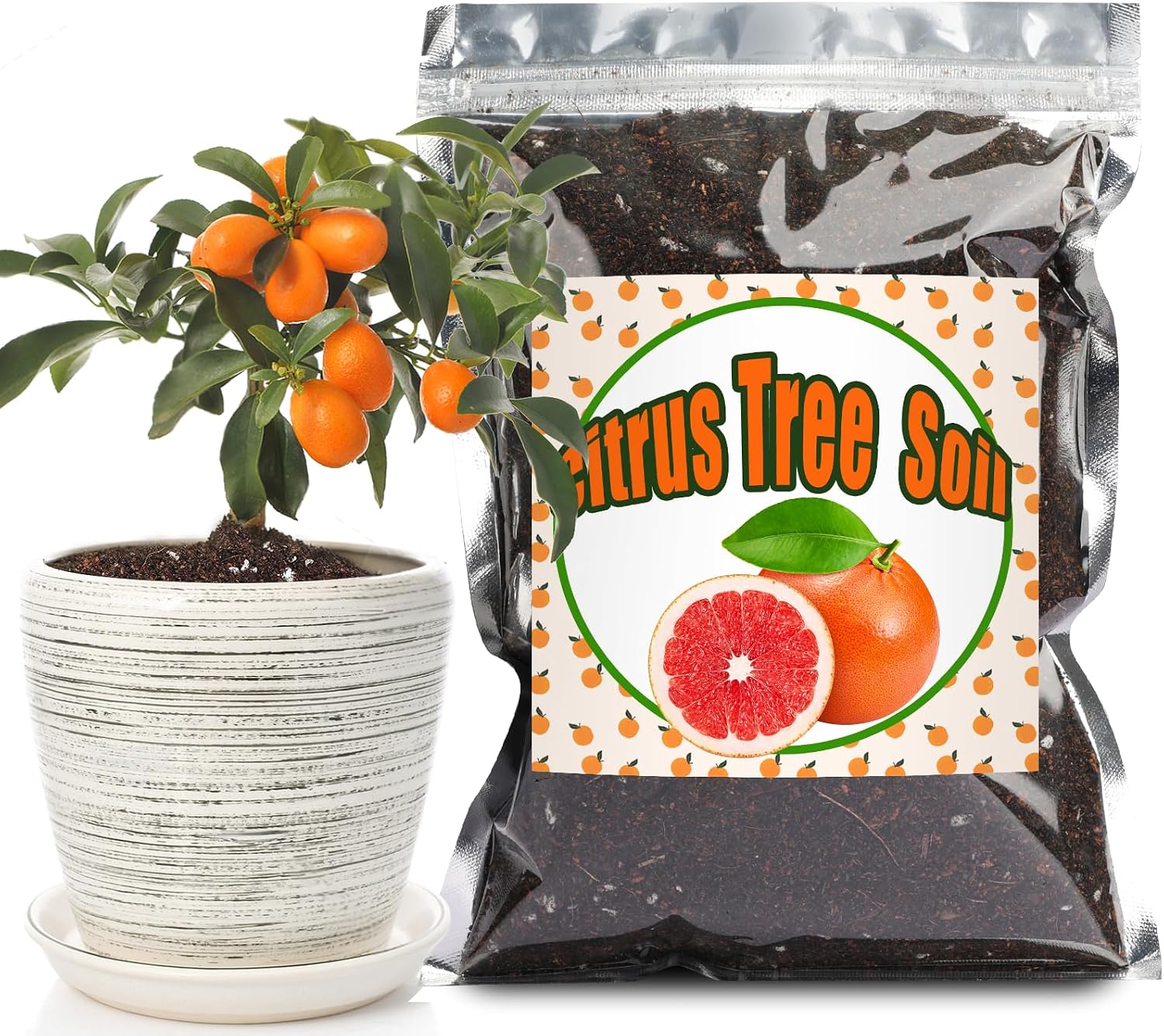
Doter Citrus Tree Potting Soil Mix (1 qt)
| Brand Name | Doter |
|---|---|
| Item Type Name | Garden soil |
| Volume | 1 quarts |
| Item Weight | 224 g |
This Doter citrus potting mix is a small, 1-quart, ready-to-use soil blend designed for container-grown lemon, lime, orange and other citrus trees. It mixes organic and mineral components to deliver a balanced nutrient profile and claims an ideal pH between 6.0 and 7.1, which helps citrus roots access nutrients. The formulation emphasizes drainage and aeration so pots do not stay waterlogged, and the bagged format makes it convenient for repotting seedlings or refreshing the top layer in containers. For budget-conscious gardeners the single-quart size is useful for small projects, trial runs, or blending into larger mixes, but you will likely need multiple bags for a single mature container tree. The product works best as a component or short-term potting medium rather than a sole long-term planting substrate for large trees. Expect good seedling establishment and faster drainage compared with generic garden soil, but plan to supplement with larger volumes or slow-release fertilizer for sustained feeding on mature citrus.
Best for: Gardeners looking for an inexpensive, small-batch citrus-specific soil to repot seedlings, top-dress containers, or trial a citrus blend before committing to larger quantities.
Less Ideal for: Growers with mature potted citrus or those who need large volumes for in-ground planting should choose bulk soils or custom mixes instead.
- Formulated pH between 6.0 and 7.1, suitable for citrus nutrient uptake
- Designed for improved drainage and aeration to reduce root rot risk
- Nutrient-rich blend of organic and mineral components to support growth
- Ready-to-use bag convenient for repotting seedlings and small containers
- Small 1-quart volume means multiple bags are required for larger pots or trees
- Not marketed as a long-term complete potting substrate for mature trees
Verdict: A convenient, budget-friendly small bag of citrus-specific potting mix ideal for repotting seedlings and topping up container citrus plants.
GARDENWISE Organic Olive Tree Potting Mix (3 Quarts)

| Unit Count | 96 Fluid Ounces |
|---|---|
| Included Components | Coco coir, sand, perlite, worm castings, orchid bark, compost, manure |
| Item Type Name | Olive Tree Soil |
| Volume | 5 liters |
This GARDENWISE mix is formulated specifically for olive and other Mediterranean-type trees, combining coco coir, sand, perlite, orchid bark, worm castings, compost and manure to produce a fast-draining, nutrient-rich medium. You would use it for repotting container olive trees or refreshing the top potting layer for established potted specimens; the blend is designed to balance moisture retention with good aeration to reduce the risk of root rot. Notable features include organic amendments for slow-release nutrition and components that promote long-term structure so plants do not compact quickly. Practical benefits are easier moisture control, reduced need for frequent feeding for several months, and a safer product profile for homes because it is marketed as chemical-free. Limitations are that volume is modest at the listed unit size, so larger trees or multiple pots will require multiple bags, and the mix is prepared for Mediterranean species so it may not suit acid-loving or moisture-loving trees without amendments.
Best for: Buyers who want a low-maintenance, plant-safe potting mix tailored to olive trees and Mediterranean plants and who prioritize consistent, reliable growing conditions over DIY blending.
Less Ideal for: Gardeners growing acid-loving, moisture-preferring trees or those needing large volumes for in-ground planting should consider alternate mixes formulated for those conditions.
- Blended for fast drainage and root health using sand, perlite and orchid bark
- Contains organic amendments like worm castings and compost for sustained nutrients
- Formulated to replicate Mediterranean conditions for olive trees
- Suitable for both indoor and outdoor container use
- Small unit volume limits use to individual pots or requires multiple purchases for larger trees
Verdict: A purpose-built organic potting mix that gives olive trees Mediterranean-style drainage and steady nutrition for dependable container performance.
FoxFarm Ocean Forest Potting Soil, 12 Quart

| Item Form | Granules |
|---|---|
| Specific Uses For Product | Dry Fertilizer |
| Coverage | 4.8 sq ft |
| Mixing Ratio | 1:1 |
FoxFarm Ocean Forest is a pre-mixed potting soil that combines aged forest products, sandy loam and sphagnum peat moss with organic amendments like fish meal, crab meal and earthworm castings. It is sold ready to use straight from the bag for planting in containers, seed starting or top dressing; the manufacturer recommends no additional nitrogen fertilizer for the first 30 days. The mix has a light, aerated texture that promotes drainage while still retaining moisture, and the built-in micronutrients make it practical for growers who want strong early growth without immediate feeding. Practical benefits include easy pot filling, good root zone aeration for roses in containers, and built-in organic fertility to support blooms. Limitations to consider are that the bag is best for containers or small beds only and heavier feeders may need supplemental feeding after the initial month; users should also follow handling precautions to avoid skin or eye irritation.
Best for: Gardeners who want a high-quality, nutrient-rich potting medium to get container roses or plant starts off to a strong, flowering start and prefer a ready-made organic blend.
Less Ideal for: Large in-ground rose beds or landscapers needing bulk soil amendments should look for bulk garden soil or custom rose mixes instead.
- Ready-to-use out of the bag so you can pot immediately
- Organic amendments (fish meal, crab meal, earthworm castings) supply early nutrients
- Light, aerated texture that supports drainage and root development
- pH adjusted for optimal nutrient uptake per product description
- Pack size (12 qt) covers a small area and may require multiple bags for several roses
- No long-term feeding provided after the first 30 days so additional fertilizer is needed for sustained heavy bloom
Verdict: Choose this soil if you want a ready-made, organically amended potting mix that jump-starts container roses and seedlings with good drainage and early fertility.
Back to the Roots Organic Expanding Coco Coir Potting Soil Brick (10 lb)

| Item Highlight | 10 lb compressed coco coir brick; peat-free; OMRI Listed |
|---|---|
| Item Type Name | Coconut Coir |
| Volume | 2 cubic feet |
| Ingredients | Coconut Coir |
| Style Name | Expanding Potting Soil |
This compressed coco coir brick provides a lightweight, peat-free potting medium that expands when you add water to create loose, airy substrate for containers and seed flats. It is typically used by hydrating the 10 lb block to about 2 cubic feet of coir and then using it alone for potted plants, mixing it into garden soil to improve drainage and aeration, or blending with compost for starting seeds. Notable features include OMRI listing for organic use, a balanced pH suited to a wide range of plants, and compact storage before expansion which saves space. Practical benefits are improved root aeration and water retention compared with heavy garden loam, easier handling than bulky bags, and versatility across vegetables, herbs, and ornamentals. Important limitations are that coco coir is a soilless substrate and does not supply significant nutrients on its own so you will need to add fertilizer or compost for long-term potted herbs like rosemary, and the product requires time and a water source to expand before use.
Best for: Buyers who prioritize low-risk, easy-to-handle, organic potting media and want a versatile base for container herbs and seed starting without dealing with heavy bags.
Less Ideal for: Gardeners who want a ready-to-plant, nutrient-rich potting mix out of the box or those who prefer soil with built-in slow-release fertilizer.
- Peat-free OMRI listed organic coco coir suitable for organic growing
- Expands from a compact brick to about 2 cubic feet for easy storage and transport
- pH balanced and airy texture that improves drainage and root aeration
- Versatile use: can be used alone, for seed starting, or mixed into existing soil
- Provides little inherent fertility so supplemental feeding or compost is needed for nutrient-hungry plants
Verdict: A compact, peat-free coco coir brick that expands into an airy, pH-balanced base ideal for low-risk organic container gardening and seed starting when paired with fertilizer or compost.
Choosing the Right Soil for Trees: Key Factors to Consider
Soil Texture and Porosity
Texture controls how air and water move through the root zone. Loamy soils with a balanced mix of sand, silt, and clay provide good aeration without letting water drain so fast roots dry out. Heavy clay holds water and nutrients but can suffocate young roots if it becomes compacted; sandy soils drain rapidly and may need organic matter to retain moisture.
When choosing soil for trees, consider how texture will interact with the native subsoil: a light, airy topsoil can perform poorly when placed over dense clay unless amended to prevent a perched water table. Particle size distribution also influences how easily roots penetrate and how stable the planting pit remains during wet weather.
Organic Matter Content and Nutrient Release
Organic matter feeds soil biology, improves structure, and acts as a slow-release nutrient reservoir. Well-composted organic material increases cation exchange capacity so roots can access nutrients over months rather than only in the first few weeks. However, fresh or high-nitrogen amendments can temporarily lock up nutrients or stimulate excessive top growth at the expense of roots.
For planting trees, look for soils with stable, well-aged organic matter that supports microbial life without creating heat or nitrogen drawdown. The type and maturity of the organic component will determine how the soil releases nutrients through the first growing seasons.
Drainage and Water-Holding Balance
Trees need a balance: too little water and they wilt, too much and roots rot. A soil that drains well but holds enough moisture at depth reduces irrigation frequency and encourages deeper rooting. Water-holding capacity depends on texture, organic matter, and pore size distribution. Soils designed for trees should have a mix of macro-pores for aeration and micro-pores that retain plant-available water.
Consider local rainfall patterns and irrigation practices when choosing a soil. In wet sites, prioritize mixes that shed excess water quickly. In dry landscapes, choose soils with higher moisture retention that still allow oxygenated pores for roots.
Soil pH and Chemical Balance
Soil pH affects nutrient availability and microbial activity. Different tree species have preferred pH ranges, and soils should be within a compatible window or easily adjustable with amendments. A stable buffer capacity helps maintain that pH over time even as organic matter decomposes and irrigation chemistry varies.
Testing pH before large plantings lets you choose or amend soil to match species needs. Avoid soils with extreme pH or high soluble salts, which can stress young trees and hinder root establishment.
Structure, Compaction Resistance, and Rooting Space
A tree's root system needs loose, stable soil to spread and anchor the trunk. Soil structure describes how aggregates hold together while still allowing root penetration. Materials that resist compaction under foot traffic or when backfilled will preserve pore space and oxygen availability.
Evaluate how a soil will behave when tamped into a planting hole. Some mixes settle excessively and create dense layers that impede roots. Choose soils that maintain friability over time so roots can expand and the tree gains long-term stability.
Suitability for Planting Method and Site
Installation technique matters: soils intended for in-ground tree backfill should support contact between existing root mass and the surrounding earth, while soils for container-grown trees must allow roots to escape the root ball and avoid circling. The chosen soil should match how you will plant and the particular site constraints such as slope, drainage, and nearby structures.
Consider whether the soil will be used to amend a planting pit, as a topdress, or in raised beds. Each use calls for different particle sizes, organic content, and compaction behavior to achieve proper root establishment.
How Soil Choice Affects Early Root Development
The first few months after planting set the pattern for a tree's root system. Soils that allow steady oxygen exchange and moderate moisture encourage roots to grow outward and deeper rather than staying concentrated near the original root ball. That deeper rooting improves drought resilience and anchorage over time.
Poorly draining or overly compacted soils can stunt root growth and lead to chronic stress even if above-ground foliage looks acceptable for a season. Aim for soils that balance porosity and moisture retention to promote healthy early root architecture.
- Aeration encourages fine root production.
- Moderate moisture supports root extension without rot.
- Stable structure prevents development of restrictive layers.
Amendments That Improve Tree Plantings
Not all amendments behave the same in a tree planting. Well-aged compost and coarse wood fines improve structure and microbial activity without causing nitrogen drawdown. In contrast, fresh high-carbon materials like raw wood chips can temporarily tie up nitrogen and should be used cautiously in root zones.
Mineral amendments such as sand or small gravel can improve drainage in heavy soils, but coarse additions must be blended carefully to avoid creating abrupt texture contrasts that lead to perched water tables.
- Use mature compost for steady nutrient release.
- Blend coarse materials gradually to avoid layering.
- Avoid fresh, high-carbon amendments directly against roots.
Matching Soil to Site Conditions
Base your choice on the site's natural drainage and the tree species' preferences. In clay-dominant sites, choose a mix that increases porosity and resists compaction. In sandy or drought-prone sites, favor soils with higher organic matter that retain moisture but do not restrict air flow.
For urban or compacted locations, prioritize structure and compaction resistance so roots can penetrate compacted subsoils over time. If planting near slopes or structures, consider erosion control and stability of the soil blend.
- Clay sites need improved porosity and drainage.
- Sandy sites need moisture retention without reducing aeration.
- Compacted urban sites need mixes that resist settling.
Practical Planting Tips for Using Tree Soil
Prepare a wide, shallow planting pit rather than a deep narrow hole. Looser soil at the sides encourages roots to leave the root ball and colonize the surrounding soil. Backfill with the chosen soil, firming gently to remove large air pockets but avoiding over-compaction.
Water slowly and deeply after planting and monitor moisture over the first growing season. Adjust irrigation to keep the root zone evenly moist but not saturated. Mulch the surface to conserve moisture and moderate temperature, keeping mulch away from the trunk flare.
- Plant wide and shallow to encourage lateral rooting.
- Avoid over-compaction when backfilling.
- Mulch conserves moisture but keep it off the trunk.
Long-Term Soil Care Around Established Trees
After establishment, soil management shifts from building structure to preserving it. Topdressing with compost every few years replenishes organic matter and supports microbial life. Avoid deep cultivation near the trunk to protect surface roots and mycorrhizal networks.
Monitor irrigation and adjust with seasonal needs. Overwatering mature trees can be just as damaging as drought because it reduces oxygen availability in the root zone. Maintain a balance that matches the tree species and local climate.
- Topdress with compost rather than frequent deep digging.
- Protect surface roots from heavy traffic and grade changes.
- Adjust irrigation seasonally to prevent chronic wetness.
How We Chose the Best Soil for Trees
We focused on criteria that directly affect a tree's early establishment and long-term vigor. Key filters included soil texture and porosity because root oxygen and water movement dictate survival after planting. Nutrient release profile and organic matter content were weighed to predict how quickly a tree will access essential nitrogen, phosphorus, and potassium without risk of salt burn. We also assessed drainage behavior and water-holding balance to match soils with common site conditions such as compacted backfill, clay subsoils, or sandy dry sites. Structure and particle size distribution were evaluated to ensure mixes do not compact around roots or shed water too quickly. pH and buffering capacity were considered to determine how soils interact with typical tree species preferences. We excluded blends made only for annual beds or potting mixes intended solely for container gardening because those formulations prioritize rapid drainage or lightness over root anchorage and long-term nutrient availability. Finally, we prioritized options that are stable in the landscape and that reduce transplant shock while supporting steady root spread.
FAQ
How deep should soil amendment go when planting a tree?
Amend the planting pit laterally rather than deeply. A wide, shallow zone of improved soil encourages roots to leave the root ball. Generally, loosen and amend the top 12 to 18 inches of the planting area while leaving deeper subsoil intact to provide drainage and anchorage.
Is topsoil alone enough for new tree plantings?
Topsoil can be adequate if it has good structure and balanced organic matter. However, many site topsoils are compacted or low in organic content, so blending with mature compost or a specifically designed tree soil often yields better establishment and long-term health.
Can I use garden compost as the primary soil for trees?
Mature garden compost is a useful component but is rarely ideal as the sole planting medium. Compost improves nutrient supply and biology but should be blended with mineral material to maintain structure and drainage. Avoid using fresh or uncomposted organic matter directly in the root zone.
How does soil pH affect which trees I can plant?
Soil pH influences nutrient availability and microbial activity. Some trees prefer slightly acidic soils while others tolerate neutral to alkaline conditions. Test your soil pH and choose species or amendments that bring the root zone into the preferred range for the tree you plan to plant.
When should I avoid amending the native soil around a tree?
Avoid heavy amendment when the native soil is already well-draining and fertile; excessive additions can change moisture dynamics and root behavior. Also avoid adding high-carbon or uncomposted materials that can cause nutrient tie-up. Use light topdressing and periodic compost applications instead.
Final Verdict
Selecting soil for trees means balancing drainage, structure, organic matter, and chemical balance to suit both the species and the planting site. Prioritize mixes that encourage root spread and resist compaction while providing steady nutrient availability. Consider the planting method, local drainage, and long-term maintenance when choosing a soil so the tree establishes quickly and grows with fewer problems.
