

Note: This article contains affiliate links. If you click on these links and make a purchase, I may earn a small commission at no extra cost to you. This helps support my research and content. Read my full affiliate disclosure here.
Picking the right soil mix for container plants changes how often you water, how roots develop, and how well pot-grown specimens flower or fruit. Containers create a limited root volume and different moisture dynamics than in-ground beds, so a mix tailored for pots matters more than generic garden soil. This guide covers seven shortlisted soil mixes suited for container plants and explains the practical traits that matter in real patios, balconies, and raised planters. We evaluate mixes for water management, aeration, and nutrient delivery so you can match a mix to the plants and pots you already have.
Top Picks at a Glance
| Best Overall The best all-around choice for most situations | Miracle-Gro Potting Mix, 16 qt. |  |
| Best Quality Built to a higher standard if you want something more solid | FoxFarm Ocean Forest Potting Soil, 12 qt |  |
| Best Value The sweet spot between price and what you get | Miracle-Gro Moisture Control Potting Mix, 16 qt. (2-Pack) |  |
| Best Budget The cheapest option that still gets the job done reliably | Back to the Roots Organic Indoor Potting Mix, 6 Quart |  |
| Highest Rated A top-rated pick with lots of positive feedback | FoxFarm Happy Frog Potting Soil, 2 cu ft (Container Garden) with 2 Plant Tags |  |
| Most Popular A crowd favorite that many people choose with confidence | Miracle-Gro Indoor Potting Mix for All Plants, 6 qt., 2-Pack |  |
| Best Seller A high-volume bestseller chosen again and again | Back to the Roots Organic Expanding Coco Coir Potting Soil Brick |  |
Miracle-Gro Potting Mix, 16 qt.

| Unit Count | 592 Ounce |
|---|---|
| Volume | 16 quarts |
| Item Highlight | Feeds up to 6 Months |
| Manufacturer | The Scotts Company LLC |
Miracle-Gro Potting Mix is a premixed soil designed for outdoor and indoor container plants, including flowers, vegetables, annuals and perennials. You use it straight from the bag: fill a pot about one third, set the plant, top up and water. The mix combines organic components, perlite for drainage, and a built-in fertilizer that the manufacturer says feeds plants for up to six months, which simplifies upkeep for busy gardeners. It also contains a wetting agent to help water absorb evenly and is formulated to reduce compaction compared with plain garden soil. Practical benefits include predictable performance in pots, easier repotting each season, and the claim of noticeably larger, more floriferous plants versus unfed soil. Important limitations are that it is a bagged, single-use potting mix so you will need to repot or replenish annually and it contains added fertilizer so it is not ideal when you need full control over feeding schedules or are managing sensitive seedlings.
Best for: Gardeners who want an easy, reliable potting mix that delivers good drainage and built-in feeding for typical container flowers and vegetables without fuss.
Less Ideal for: Growers who need custom soil recipes, are cultivating sensitive seedlings, or prefer to manage every nutrient input should consider a more tailored mix or plain components.
- Formulated for containers with perlite and components that improve drainage and aeration.
- Includes a slow-release fertilizer claimed to feed plants up to six months, reducing the need for frequent feeding.
- Wetting agent helps water penetrate evenly and prevents dry spots.
- Ready-to-use straight from the bag for simple repotting and seasonal refreshes.
- Contains added fertilizer which limits control for growers who prefer to manage nutrient inputs precisely.
- Single bag volume means frequent purchases for gardeners with many or large containers.
Verdict: A convenient, ready-to-use potting mix that makes container gardening low-effort by combining good drainage with built-in fertilizer for healthier, fuller plants.
FoxFarm Ocean Forest Potting Soil, 12 qt

| Item Form | Granules |
|---|---|
| Specific Uses For Product | Dry Fertilizer |
| Coverage | 4.8 sq ft |
| Mixing Ratio | 1:1 |
FoxFarm Ocean Forest is a professional-style potting soil intended for container gardening and houseplants. The mix is ready to use from the bag and combines aged forest products, sandy loam and sphagnum peat moss for a light, aerated texture that drains well while holding moisture. It also contains organic amendments such as fish meal, crab meal and earthworm castings so seedlings and plant starts get an initial nutrient boost without immediate feeding. Typical use is filling pots or top-dressing containers and watering in; the manufacturer recommends no extra fertilizer for the first 30 days. Practical benefits include easy transplanting, improved root aeration and fewer watering problems compared with heavy garden soils. Important limitations are that it is pre-amended so long-term feeding schedules may still be required after the first month and the bag is a single 12 quart unit so larger projects need multiple bags or bulk supply planning. Handle with gloves to avoid skin irritation and store dry to maintain texture.
Best for: Growers who prioritize vigorous early growth and reliable container performance and want a ready-made mix that promotes strong root development and easy transplanting.
Less Ideal for: People doing large-scale potting or landscaping projects who need bulk volumes or fully customizable mixes and those who prefer completely inorganic, no-organic-fertilizer soils.
- Ready-to-use blend that requires no immediate fertilizer for about 30 days
- Light, aerated texture that improves drainage and root oxygenation
- Contains organic amendments (fish meal, crab meal, earthworm castings) for early nutrient support
- Suitable for seedlings, plant starts and general container planting
- Single 12 quart bag is small for larger container projects
- Pre-amended nutrient levels decline after about a month so follow-up feeding is needed
Verdict: Choose this mix when you want a ready-made, nutrient-rich potting soil that gives container plants fast, healthy starts.
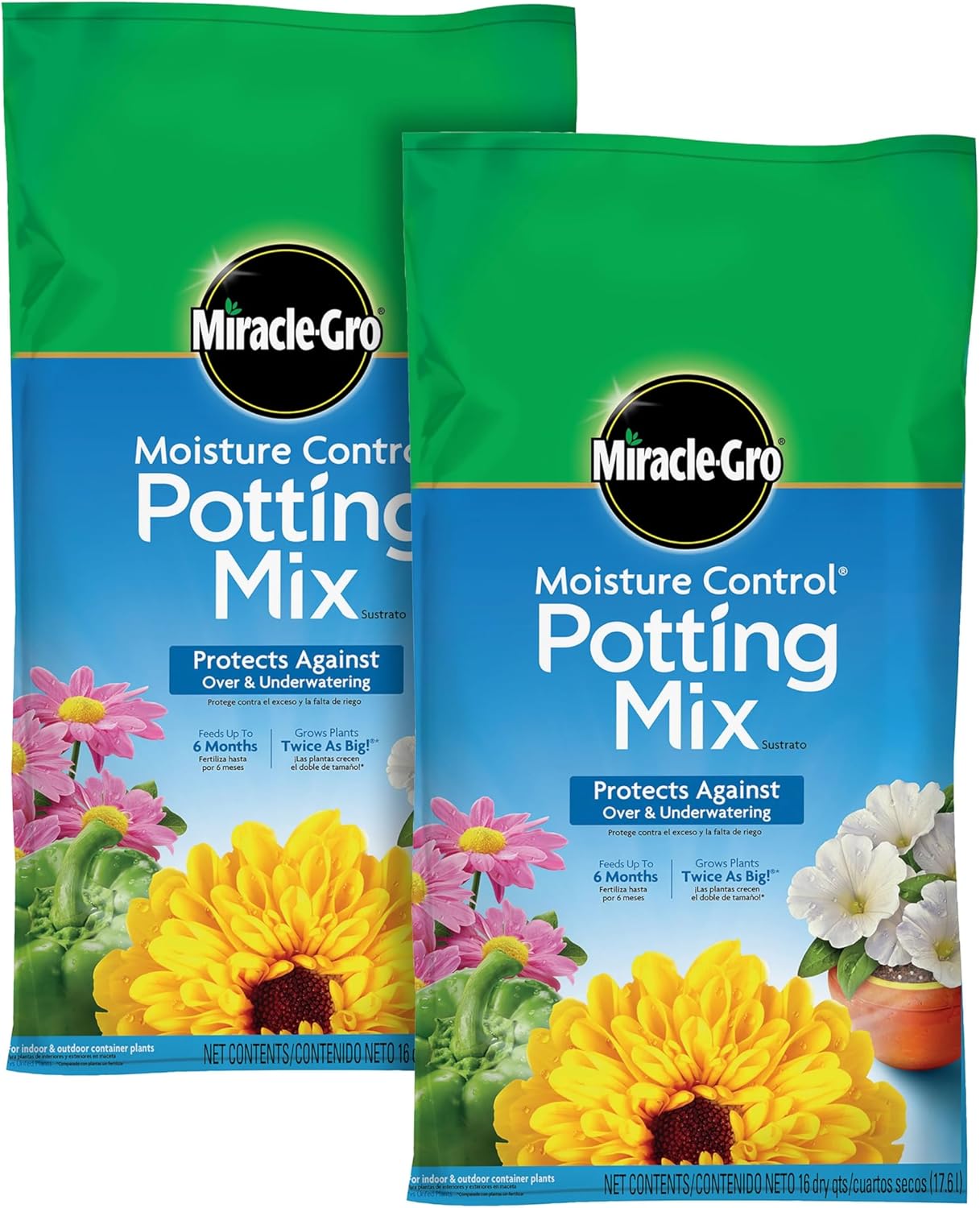
Miracle-Gro Moisture Control Potting Mix, 16 qt. (2-Pack)
| Number of Packs | 2 |
|---|---|
| Style Name | 16 qt. |
| Feeds Plants | Up to 6 months |
| Intended Use | Containers & planters |
This two-pack of Miracle-Gro Moisture Control Potting Mix is designed specifically for pots, hanging baskets, and other container plantings. The AquaCoir formula combines sphagnum peat moss, coir, and a wetting agent to absorb more water and help the mix hold moisture without staying soggy. It also contains plant food that is listed to feed for up to six months, so newly potted flowers, vegetables, and ornamentals get a nutrient boost without immediate fertilizing. Typical use is straightforward: pick a pot with drainage, fill about a third, set the plant, top off, and water through until drainage. The mix is described as airy to encourage healthy root growth and is marketed to reduce watering frequency while preventing waterlogged roots. Limitations are that it is made for containers rather than in-ground beds and will need annual repotting to avoid compaction and refresh nutrients; gardeners wanting an organic or in-ground soil amendment should look elsewhere. For container-focused gardeners this is a convenient, ready-to-use option that balances water retention and drainage.
Best for: Gardeners focused on container plant performance who want a low-effort, ready-to-use mix that reduces watering fuss and gives an initial nutrient boost.
Less Ideal for: People seeking an organic-certified mix or a soil amendment for in-ground beds should consider other products tailored to those needs.
- Formulated for containers to balance moisture retention and drainage
- AquaCoir/wetting agent absorbs up to 33% more water than basic potting soil
- Includes plant food that feeds up to six months for initial growth boost
- Light, airy texture intended to promote healthy root aeration
- Intended for container use only and not a substitute for in-ground garden soil
- Requires annual repotting to prevent compaction and replenish nutrients
Verdict: A ready-to-use container potting mix that simplifies watering and gives potted plants a six-month nutrient head start.
Back to the Roots Organic Indoor Potting Mix, 6 Quart

| Unit Count | 192 Fluid Ounces |
|---|---|
| Item Type Name | Indoor Potting Mix 6qt |
| Item Highlight | Peat-free, 100% organic, made in the USA |
| Ingredients | Coconut Coir, Yucca, Mycorrhizae, Perlite, Horticultural Sand |
Back to the Roots Indoor Potting Mix is a small 6 quart bag of peat-free, organic potting soil designed for houseplants and small containers. It contains coconut coir for water retention, yucca extract to help the mix stay hydrated, horticultural sand and perlite for improved drainage and aeration, plus mycorrhizae to support root development. In practice this mix works well for repotting pothos, philodendron, ferns and other common indoor species where balanced moisture and root health matter. The lightweight, bark-free formula reduces the chance of fungus gnats compared with some compost-heavy mixes and is easy to handle for quick repots or top-ups. The main limitation is the small 6 qt volume, so you will need multiple bags for larger pots or multiple plants, and serious container gardeners may prefer larger bulk options to save time and cost. For everyday container use it provides consistent moisture management and a plant-friendly biological boost.
Best for: Buyers looking for an easy-to-use, plant-friendly potting mix for individual houseplants or a few containers who prioritize organic ingredients and low pest risk.
Less Ideal for: People outfitting many large containers, raised beds, or whole-container gardens who need larger volumes or lower per-quart cost should consider bulk potting soil options instead.
- Peat-free and 100% organic blend suitable for eco-minded indoor gardeners
- Yucca extract helps retain moisture without waterlogging
- Includes mycorrhizae to promote stronger root growth and nutrient uptake
- Lightweight, bark-free formula that is less prone to indoor gnats
- Small 6 quart volume is insufficient for multiple large containers or frequent repotting
- Not sold in bulk here, so cost per volume is higher than larger bagged soils
Verdict: A compact, organic potting mix that keeps container houseplants healthy with moisture-retaining yucca and root-boosting mycorrhizae.
FoxFarm Happy Frog Potting Soil, 2 cu ft (Container Garden) with 2 Plant Tags

| Brand Name | FoxFarm |
|---|---|
| Item Highlight | Ready-to-Use Amended Container Blend with Soil Microbes, Earthworm Castings, Bat Guano, and Aged Forest Products |
| Volume | 2 cubic feet |
| Style Name | Container Garden |
| Unit Count | 600 Ounce |
FoxFarm Happy Frog Potting Soil is a ready-to-use container mix designed to support potted trees, shrubs, ornamentals, and edibles. It is typically used to fill pots and planters for indoor or outdoor container gardening and comes with two plant tags for tracking varieties or planting dates. The mix is amended with beneficial ingredients such as earthworm castings, bat guano, aged forest humus, and a proprietary blend of soil microbes and mycorrhizal fungi to improve root development and nutrient uptake. In practice this means faster establishment, more vigorous vegetative growth, and better flowering or fruiting compared with plain potting mixes. It is pH adjusted for nutrient availability and claims to avoid cheap fillers, so you get a premium-feeling texture and drainage suitable for many container-grown plants. Important limitations are that it is a 2 cu ft bag meant for containers rather than large in-ground beds and some gardeners may prefer to supplement with fertilizer over time for heavy feeders despite the initial amendments.
Best for: Buyers who want a dependable, ready-to-use premium potting mix that promotes strong root development and healthy container growth without DIY blending. Ideal for gardeners who prioritize consistent, low-hassle results for potted ornamentals, fruiting containers, and small trees in pots.
Less Ideal for: Gardeners who need large volumes of soil for in-ground planting or who want a product that supplies complete season-long fertilization without supplemental feeding.
- Formulated for containers with amendments that support root health and nutrient uptake
- Contains beneficial microbes and mycorrhizal fungi to improve establishment and growth
- Includes organic amendments like earthworm castings and aged forest products for natural fertility
- pH adjusted for efficient nutrient availability right out of the bag
- Sold as a 2 cu ft bag which may require multiple bags for larger container collections or big planters
- Not a complete long-term fertilizer solution for heavy-feeding plants over a full season
Verdict: A reliable, ready-to-use premium potting mix that jumpstarts root growth and nutrient uptake for container plants.
Miracle-Gro Indoor Potting Mix for All Plants, 6 qt., 2-Pack

| Number of Packs | 2 |
|---|---|
| Item Highlight | Feeds for up to 6 Months |
| Unit Count | 400.58 Ounce |
| Ingredients | Sphagnum Peat Moss, Coir, Perlite, Fertilizer, Wetting Agent |
| Style Name | 6 QT |
This two-pack of Miracle-Gro Indoor Potting Mix is a lightweight, all-purpose soil for container houseplants. The blend of sphagnum peat moss, coconut coir, and perlite is formulated to retain and release moisture so roots have access to water between waterings while remaining airy for root health. It includes a slow-release fertilizer that the brand says feeds plants for up to six months, and the absence of compost and bark aims to reduce habitat for fungus gnats. Typical use is straightforward: fill a drainage-capable container, add the plant and top up with the mix, then water. Practical benefits include easier repotting, consistent texture that keeps pots from compacting quickly, and suitability across common indoor types such as foliage, herbs, tropicals, and flowering houseplants. Limitations are that nutrient longevity depends on plant size and watering habits so supplemental feeding may be needed sooner for heavy feeders, and the bagged format requires storage space and careful pouring to avoid mess.
Best for: Buyers who want a convenient, reliable indoor potting mix that supports a variety of container houseplants and reduces common pest risk while minimizing mixing or amendment work.
Less Ideal for: Gardners who prefer fully organic-approved soils or who grow very large, high-nutrient-demand specimens in containers should consider specialty or nutrient-rich alternatives.
- Balanced water retention and drainage from peat moss, coir, and perlite blend
- Includes slow-release fertilizer to feed plants for up to six months when used as directed
- Bark- and compost-free formula reduces common fungus gnat habitat
- Ready-to-use mix suitable for a wide range of indoor container plants
- Feeding duration varies with plant size and may require additional fertilizer for heavy feeders
- Requires dry, nearby storage and can be messy to pour from the bag
Verdict: A convenient, pest-reducing indoor potting mix that gives most houseplants good moisture balance and up to six months of starter nutrition.
Back to the Roots Organic Expanding Coco Coir Potting Soil Brick

| Item Highlight | 10 lb compressed coco coir brick; peat-free; OMRI Listed |
|---|---|
| Item Type Name | Coconut Coir |
| Volume | 2 cubic feet (expanded) |
This compressed coco coir brick provides an easy, lightweight alternative to bagged potting soil for container plants and seed starting. Add water and the 10 lb block expands into roughly 2 cubic feet of loose, airy coir that improves drainage and water retention compared with heavy garden soil. It is OMRI listed and peat-free, so it fits organic and sustainable gardening approaches. Typical use is as a standalone potting medium for herbs, flowers, and vegetables in pots or mixed with existing soil to lighten texture and increase aeration. The brick stores compactly until needed and reduces mess when moving between indoor and outdoor containers. Limitations to know: coco coir has low inherent nutrients, so regular feeding or blending with compost or fertilizer is necessary for long-term container growth, and pH can vary slightly between batches so beginners should monitor soil conditions. For gardeners who prefer ready-made, nutrient-rich mixes, this is best used as a component rather than the sole amendment for heavy-feeding plants.
Best for: Buyers who want a low-mess, peat-free base for container plants or seed starting and prefer a reliable, easy-to-store medium they can amend to suit specific plants.
Less Ideal for: Gardeners who want a complete, nutrient-rich ready-to-use potting mix or those unwilling to monitor and supplement fertility over time should consider a finished potting soil instead.
- Expands to about 2 cubic feet from a compact 10 lb brick for convenient storage
- Peat-free and OMRI listed for organic and sustainable gardening
- Light, airy texture improves drainage and aeration in containers
- Versatile use alone or mixed with existing soil for seed starting and potted plants
- Contains no significant nutrients so regular fertilization or mixing with compost is required
- May require soaking and fluffing to fully rehydrate and break apart before use
Verdict: A tidy, peat-free coco coir brick that gives you an airy, container-friendly growing medium you can safely amend for reliable container results.
Choosing the Right Soil Mix for Container Plants: Key Factors to Consider
Water Retention Versus Drainage
Containers dry out faster than ground soil because they have limited volume and greater exposed surface area. A good mix balances the ability to hold moisture with channels that let excess water drain. If a mix holds too much water, roots can suffocate and rot; if it drains too quickly, plants become drought stressed and need frequent watering.
Assess the mix ingredients to predict behavior. Materials like coconut coir and peat hold moisture, while coarse sand, perlite, and pumice improve drainage. The right ratio depends on pot size, plant water needs, and whether containers sit in trays that can retain water.
Aeration and Root Space
Roots need oxygen more than they need water. Particle size and mix texture determine how easily roots penetrate and access air. Fine, compacted mixes reduce pore space and limit root growth, while mixes with coarser components create long-lasting air pockets.
Consider the plant type when choosing structure. Vegetables and fast-growing ornamentals benefit from looser mixes that promote rapid root expansion. Succulents and cacti need especially coarse mixes to avoid root rot, while shallow pots require mixes that retain enough moisture without becoming waterlogged.
Nutrient Content and Feeding Schedule
Some mixes come pre-loaded with starter nutrients, while others are largely inert and rely on your fertilizer routine. Pre-fertilized mixes simplify early growth but may deplete after a few weeks, requiring scheduled feeding. Inert mixes give you more control but demand a consistent fertilizer plan.
Match nutrient strategy to plant needs. Heavy feeders like tomatoes need mixes with good nutrient holding capacity or a plan for regular fertilization. Also think about whether the mix contains slow-release fertilizers and how long those are rated to last so you can plan top-ups or repotting.
pH and Mineral Suitability
Container plants vary in pH preference. A mix that is too alkaline or acidic can lock out certain nutrients even when they are present. Knowing the typical pH range of the mix helps avoid nutrient deficiencies and reduces corrective inputs.
Look for mixes with stated pH ranges or neutral to mildly acidic profiles, which suit most ornamentals and vegetables. For acid-loving plants or calcifuge species, choose mixes formulated or amendable to a lower pH. Testing pH periodically in long-term containers is a good practice.
Longevity and Resistance to Compaction
Container mixes break down over time as organic components decompose and fine particles settle, reducing aeration and drainage. A durable mix contains components that resist rapid breakdown, such as aged bark, perlite, or pumice, and maintains structure across a growing season.
Consider how often you want to refresh or repot. For low-maintenance containers, choose mixes with greater longevity. For seasonal containers where you repot yearly, more biodegradable mixes may be acceptable and can contribute organic matter back into the system.
Weight and Suitability for Container Type
The weight of a soil mix affects container handling, balcony load limits, and planter stability. Denser mixes with heavy mineral content can be impractical for hanging baskets or rooftop planters. Conversely, very light mixes may not anchor taller plants well.
Match mix weight to the container material and location. For large ceramic or stone pots, weight is less of a concern and can help stabilize plants. For mobile planters or those on upper floors, prioritize lighter mixes with good structure so you do not sacrifice drainage and aeration.
Adjusting Mix Ratios for Different Plants
A single shop-bought mix rarely fits every container crop. Adjusting ratios of components lets you tune moisture retention and aeration to specific plant families. For vegetables and annuals, increase the fraction of organic matter and fine compost to provide nutrients and moderate moisture. For succulents, increase coarse mineral components and reduce organic fines.
Small pots dry faster than large ones, so lean toward mixes with slightly higher water retention for small containers. Conversely, for big planters, more drainage-focused components help prevent waterlogged pockets around roots.
- Vegetables and heavy feeders: more compost, moderate perlite/pumice.
- Flowering annuals: balanced organic matter and aeration.
- Succulents and cacti: high proportion of coarse mineral grit and low organic fines.
Repotting and Refreshing Container Soil
Container mixes lose structure and nutrients over time. Repot annually or every two years for most potted ornamentals to restore aeration and fertility. When repotting, refreshing only the top third of medium can suffice for vigorous plants if roots are not pot-bound.
For long-season vegetables or fruiting crops, plan for mid-season nutrient boosts and consider partial media replacement after harvest to avoid disease carryover.
- Inspect roots before repotting: look for circling roots or dense matting.
- Break apart compacted mix and add fresh coarse material if drainage is poor.
DIY Container Mix Recipes
Making your own mix gives control over ingredients and cost. A versatile base for many container plants is equal parts high-quality compost, coir or peat alternative, and a drainage component such as perlite, pumice, or coarse sand. Adjust relative proportions for specific plant needs as discussed earlier.
Sterilize or heat-treat homemade mixes if using unprocessed garden soil or compost to reduce pests and weed seeds. Label and store dry mixes to keep them consistent between seasons.
- Balanced all-purpose: 1 part compost, 1 part coir, 1 part perlite.
- Moisture-retentive mix for small pots: 2 parts compost, 1 part coir, 1 part perlite.
- Fast-draining succulent mix: 1 part compost, 1 part coarse grit, 1 part pumice.
Dealing With Common Container Soil Problems
Soggy soil, poor root growth, and frequent nutrient deficiencies are often signs of the wrong mix. Soggy conditions point to inadequate drainage or a too-fine texture. Improving aeration by mixing in coarse material and checking container drainage holes usually resolves this.
If plants show stunted growth despite frequent feeding, the mix may be compacted or lacking in nutrient-holding capacity. Repot into a mix with more organic content and slow-release nutrients, and monitor pH to ensure nutrient availability.
- Salt buildup from fertilizers: flush containers periodically and refresh top media.
- Persistent sogginess: increase coarse components and verify drainage holes are clear.
Sourcing Sustainable Mix Ingredients
Sustainability matters when choosing components like peat, which has environmental concerns. Alternatives such as coconut coir, composted bark, and well-made compost provide similar water-holding properties with lower ecological impact. Choose recycled or sustainably produced amendments when possible.
Local compost and yard waste can be excellent components if well-aged and screened. Using locally sourced materials reduces transport footprint and supports circular gardening practices.
- Prefer coir or compost over fresh peat where available.
- Ask about sourcing and processing for commercially prepared components to reduce environmental impact.
How We Chose the Best Soil Mix for Container Plants
We focused on attributes that directly affect container horticulture, not broad claims or marketing. Our selection filtered for mixes designed specifically for pots or explicitly adaptable to container use. We prioritized mixes showing consistent moisture control, good root aeration, appropriate nutrient content for potted growth, and stable structure that resists compaction over a growing season. Evaluation criteria included measured water retention and drainage behavior, particle size and aeration, initial nutrient levels and slow-release compatibility, pH suitability for common container plants, and long-term stability including resistance to compaction and breakdown. We excluded mixes formulated only for in-ground use or those that rely primarily on heavy garden loam without amendments. Also excluded were products lacking clear ingredient transparency or those clearly designed for a single niche (for example bulb-specific blends) when the goal was broadly usable container mixes. The final list emphasizes practical performance in typical container scenarios: small pots, large planters, and mixed-species containers. These criteria align with the scoring metrics used in our per-product scorecards.
FAQ
How often should I water container plants in a new soil mix?
It depends on pot size, container material, and plant type. Check moisture by hand or meter; many mixes need watering when the top inch feels dry for ornamentals. Smaller pots and fast-draining mixes need more frequent checks, while heavier mixes hold moisture longer.
Can I use garden soil in pots if I amend it first?
Garden soil is often too dense for containers unless heavily amended. Mixing garden soil with plenty of coarse material and compost can work, but sterilize or screen it to remove pests and weed seeds and ensure a light, airy texture suitable for roots.
Should I add fertilizer to a pre-fertilized mix?
Pre-fertilized mixes usually contain starter nutrients that taper off. Monitor plant growth and supplement with fertilizer according to plant needs once the initial nutrients decline. Heavy feeders will require more frequent feeding regardless of starter levels.
How do I lower or raise the pH of my container mix?
To lower pH, add elemental sulfur in small amounts or use acidifying fertilizers formulated for that purpose. To raise pH, garden lime can be applied carefully. Always test pH first and adjust incrementally to avoid shocking plants.
Is it better to repot annually or top-dress containers?
Annual repotting benefits fast-growing or pot-bound plants. For stable, established containers, top-dressing with fresh mix and fertilizer can maintain vigor. The choice depends on plant growth rate and observed media breakdown.
Final Verdict
Choosing the right soil mix for container plants means balancing moisture control, aeration, and nutrient delivery to match your pot size and plant choices. Prioritize mixes that provide stable structure and the correct moisture profile for the species you grow, and plan a feeding and repotting rhythm that maintains root health. Weigh tradeoffs between lightweight mixes and long-term stability, and adjust DIY or commercial blends to suit specific crops. With the right mix and a simple maintenance routine, container gardening becomes more reliable and productive.
