

Note: This article contains affiliate links. If you click on these links and make a purchase, I may earn a small commission at no extra cost to you. This helps support my research and content. Read my full affiliate disclosure here.
Picking the right soil mix for starting seeds determines whether your seedlings emerge strong or struggle from day one. The wrong texture or nutrient level can lead to poor germination, damping-off, or leggy, weak starts that never catch up in the garden. This guide covers seven top seed-starting mixes shortlisted for indoor and sheltered sowing. We evaluate blends on moisture control, drainage, and nutrient support so you can choose a mix that matches your sowing method and crops. Read on for practical tips that make transplant-ready seedlings more consistent and resilient.
Top Picks at a Glance
| Best Overall The best all-around choice for most situations | SunGro Seedling Mix Organic Seed Starting Mix, 8 Quart |  |
| Best Quality Built to a higher standard if you want something more solid | Espoma Organic Seed Starter Premium Potting Mix, 16 qt |  |
| Best Value The sweet spot between price and what you get | Burpee Organic Coconut Coir Seed Starting Mix (Coir Brick, expands to 8 qt) |  |
| Best Budget The cheapest option that still gets the job done reliably | Back to the Roots 3-in-1 Seed Starting Mix, 6 Quart, Organic, Peat-Free |  |
| Highest Rated A top-rated pick with lots of positive feedback | Sol Soils Seedling & Propagation Mix |  |
| Most Popular A crowd favorite that many people choose with confidence | Miracle-Gro Indoor Potting Mix for Seed Starting, 8 qt. (2-Pack) |  |
| Best Seller A high-volume bestseller chosen again and again | ZeeDix 30mm Peat Pellets Seed Starter Pods (55 pcs) |  |
SunGro Seedling Mix Organic Seed Starting Mix, 8 Quart

| Style Name | Peat Moss |
|---|---|
| Volume | 8 quarts |
| Unit Count | 1 Count |
This SunGro seedling mix is designed specifically for starting seeds of vegetables, herbs, and flowers indoors or in protected flats. The fine texture and water-retentive peat-based formula holds moisture evenly, which helps tiny seeds stay consistently damp without becoming waterlogged. It includes an organic wetting agent for uniform water absorption and a silicon-enriched additive called RESiLIENCE intended to support seedling vigor and reduce wilting during early growth. Typical use is filling seed trays or small pots, sowing seeds shallowly, and maintaining gentle, regular moisture until true leaves develop. Practical benefits include OMRI listing for organic production and a lightweight, fine substrate that makes transplanting delicate roots easier. Important limitations are small package volume for gardeners who start many flats at once and the need to handle peat moss with gloves because it can irritate skin or eyes; additional fertilization will be needed once seedlings are established because seed mixes are not long-term nutrient sources.
Best for: Home gardeners who start modest numbers of vegetable, herb, or flower seedlings indoors and want an organic, reliable mix that promotes even germination and easy transplanting.
Less Ideal for: Growers who start large quantities of seedlings or need a long-term potting medium for established plants should choose larger bulk seed mix or a nutrient-rich potting soil instead.
- Fine, consistent texture that promotes even seed germination
- Water-retentive formula with an organic wetting agent for uniform moisture
- OMRI listed for organic gardening and safe for edible seedlings
- Includes a silicon-enriched additive to help reduce early wilting and support vigor
- Small 8 quart volume may require multiple bags for larger seed starting projects
- Contains peat which can irritate skin and eyes so handling precautions are advised
Verdict: A reliable OMRI-listed seed starting mix with fine texture and good moisture control ideal for organic home seed starting.
Espoma Organic Seed Starter Premium Potting Mix, 16 qt

| Volume | 16 quarts |
|---|---|
| Unit Count | 598.4 Ounce |
| Brand Name | Espoma |
Espoma Organic Seed Starter is a ready-to-use mix designed specifically for germinating seeds and rooting cuttings. The blend of sphagnum peat moss and perlite provides light aeration and good moisture retention, while added yucca extract helps wet the mix evenly and lime adjusts pH for more consistent germination. The inclusion of endo and ecto mycorrhizae (Myco-Tone) supports early root establishment, which is useful when you plan to transplant seedlings. It arrives in a manageable 16 quart bag and is intended for organic gardening since it contains no synthetic fertilizers. Practical benefits include easy handling for tray or cell planting, dependable moisture balance that reduces damping-off risk when combined with correct sanitation, and a biological boost for roots. Limitations are that it does not contain starter nutrients for later transplant growth so you will need to pot up into a richer potting mix or begin light feeding as seedlings develop, and peat-based mixes may compact over repeated uses.
Best for: Serious home gardeners who prioritize reliable germination and stronger root establishment for seedlings and cuttings and plan to transplant or pot up seedlings into richer media later.
Less Ideal for: Casual users who want an all-in-one potting solution that feeds plants through multiple growth stages or those seeking a non-peat, fully reusable propagation medium.
- Light, well-aerated peat and perlite blend that promotes seed germination
- Contains endo and ecto mycorrhizae to encourage stronger early root growth
- Formulated for even wetting with yucca extract, reducing dry spots in trays
- Organic ingredients with no synthetic plant foods or chemicals
- No built-in fertilizer for seedling growth beyond germination
- Peat-based formula can compress after repeated watering cycles
Verdict: Choose this mix if you want an organic, lightweight seed starter that boosts early root development for higher germination success.
Burpee Organic Coconut Coir Seed Starting Mix (Coir Brick, expands to 8 qt)

| Brand | Burpee |
|---|---|
| Item Highlight | OMRI Listed coconut coir expands with water to 16 qts of growing mix; ideal for seed starting and seedlings. |
| Included Components | Coir |
| Unit Count | 512 Fluid Ounces |
| Item Type Name | Organic Coconut Coir Concentrated Seed Starting Mix, 16 Quart |
This Burpee coconut coir brick is a compact, OMRI-listed seed starting mix that expands with water into about 8 quarts of loose growing medium. You rehydrate the compressed brick, fluff the coir, and use it straight in seed trays or small pots for starting vegetables, herbs, and flowers. The mix holds moisture well while still offering good aeration for young roots, so it helps consistent germination without becoming waterlogged. Because it is a single-ingredient coir product, it is clean, low-dust, and mixes easily with a pinch of compost or slow-release starter fertilizer when more nutrients are needed. The main limitation is that coir provides little native fertility, so beginners expecting a ready-to-go potting soil will need to add feed for seedlings after cotyledons appear. Also the brick yields a modest volume per unit, so plan quantity if you are starting many trays. For efficient storage and predictable moisture control it is a practical, space-saving choice for seed starting.
Best for: Gardeners who want a tidy, sustainable seed-starting medium that stores compactly and gives predictable moisture control for small to medium numbers of trays.
Less Ideal for: Those who need a nutrient-rich, ready-to-use seed mix or who are starting very large batches of seeds without planning to add fertilizer or additional volume.
- OMRI listed organic coconut coir made from recycled coconut husks
- Expands from a compressed brick to usable seed-starting mix when water is added
- Good moisture retention with improved aeration for root development
- Compact, space-saving storage until expanded
- Contains no nutrients so seedlings will need supplemental fertilizer
- Single brick yields a limited volume requiring multiple bricks for larger projects
Verdict: Choose this compact organic coir brick if you want a sustainable, easy-to-store seed-starting medium that reliably holds moisture and promotes healthy root growth.
Back to the Roots 3-in-1 Seed Starting Mix, 6 Quart, Organic, Peat-Free

| Unit Count | 192 Fluid Ounces |
|---|---|
| Style Name | 3-in-1 Seed Starting Mix |
| Brand Name | Back to the Roots |
This 3-in-1 seed starting mix is designed for beginning gardeners who want an easy, organic option for starting seeds indoors or in containers. It combines coconut coir, mycorrhizae, yucca extract and nutrient-rich amendments to encourage strong root growth and improve water uptake while avoiding peat. The texture is light and airy so seedlings get good drainage and aeration, and the added plant food and worm castings give a nutritional boost for the first true leaves. Typical use is filling trays or small pots, sowing seeds, and transplanting once roots are established. Practical benefits include peat-free composition for eco-conscious buyers, balanced pH from dolomitic limestone, and convenience of a ready-mixed bag. Watch that a 6 quart bag is modest in volume so one bag covers only a few flats of seedlings; larger projects will need multiple bags. Also the commercial nutrient level means you may want to reduce added fertilizer in early weeks to avoid overfeeding very small seedlings.
Best for: Gardeners on a budget who want a ready-to-use, organic seed starting mix for small batches of herbs, vegetables, or flowers and prefer an eco-friendly peat-free option.
Less Ideal for: Growers starting dozens of flats or larger-scale nursery work who need larger-volume commercial mixes and more control over nutrient levels.
- Peat-free organic blend with coconut coir and worm castings for sustainable seed starting
- Includes mycorrhizae and yucca extract to boost root uptake and moisture management
- Light, well-aerated texture that promotes drainage and healthy root development
- pH-balanced with dolomitic limestone so fewer initial adjustments are needed
- Small 6 quart volume is limited for larger seed-starting projects
- Pre-mixed nutrient content may be strong for the tiniest seedlings without dilution
Verdict: A compact, peat-free organic seed starting mix that’s convenient and effective for small-scale seed trays and beginner gardeners.
Sol Soils Seedling & Propagation Mix

| Brand Name | sol soils |
|---|---|
| Style Name | Seedling & Propagation Mix |
| Unit Count | 128 Ounce |
| Volume | 1 gallons |
Sol Soils Seedling & Propagation Mix is a fine-textured medium designed for starting seeds and rooting cuttings. It combines calcined clay for moisture buffering, coconut husk for water retention and aeration, hardwood biochar to support microbial life and nutrient retention, and earthworm castings to supply gentle nutrients safe for delicate roots. In practice the mix is easy to work with in trays or small pots, holds moisture without becoming soggy, and gives seedlings steady access to oxygen so roots establish quickly. The sterile coconut husk base reduces disease risk compared with garden soil and the inclusion of biochar helps reduce nutrient leaching, which is useful for repeat watering in a tray. Bags are hand-mixed in small batches so texture varies slightly between bags, and the product notes a need to soak coconut husk to remove tannins before use. Also observe basic dust precautions when filling cells. For gardeners who want a reliable, peat-free starter medium that encourages steady early growth, this mix performs as advertised; those wanting an all-in-one fertilized plug for immediate heavy feeding may need to supplement later.
Best for: Gardeners who prioritize reliable, low-risk seed starting and want a peat-free mix that maintains steady moisture and encourages consistent root development.
Less Ideal for: Growers seeking a heavy-feeding or pre-fertilized plug mix for rapid early growth or those who prefer a completely uniform commercial texture.
- Formulated for seedlings and cuttings with fine texture suited to trays and small pots
- Good moisture buffering from calcined clay to prevent over- or under-watering
- Biochar and earthworm castings support beneficial microbes and gentle nutrient supply
- Peat-free coconut husk base reduces disease risk and improves aeration
- Hand-mixed small batches that prioritize ingredient quality and consistency
- Some batch-to-batch variation in texture due to small-batch hand mixing
- Coconut husk component may require soaking to remove tannins before use
- Contains fine particles so care is needed to avoid inhaling dust when filling pots
Verdict: Choose this mix if you want a dependable, peat-free seed starting medium that balances moisture retention and aeration for healthy, consistent seedlings.
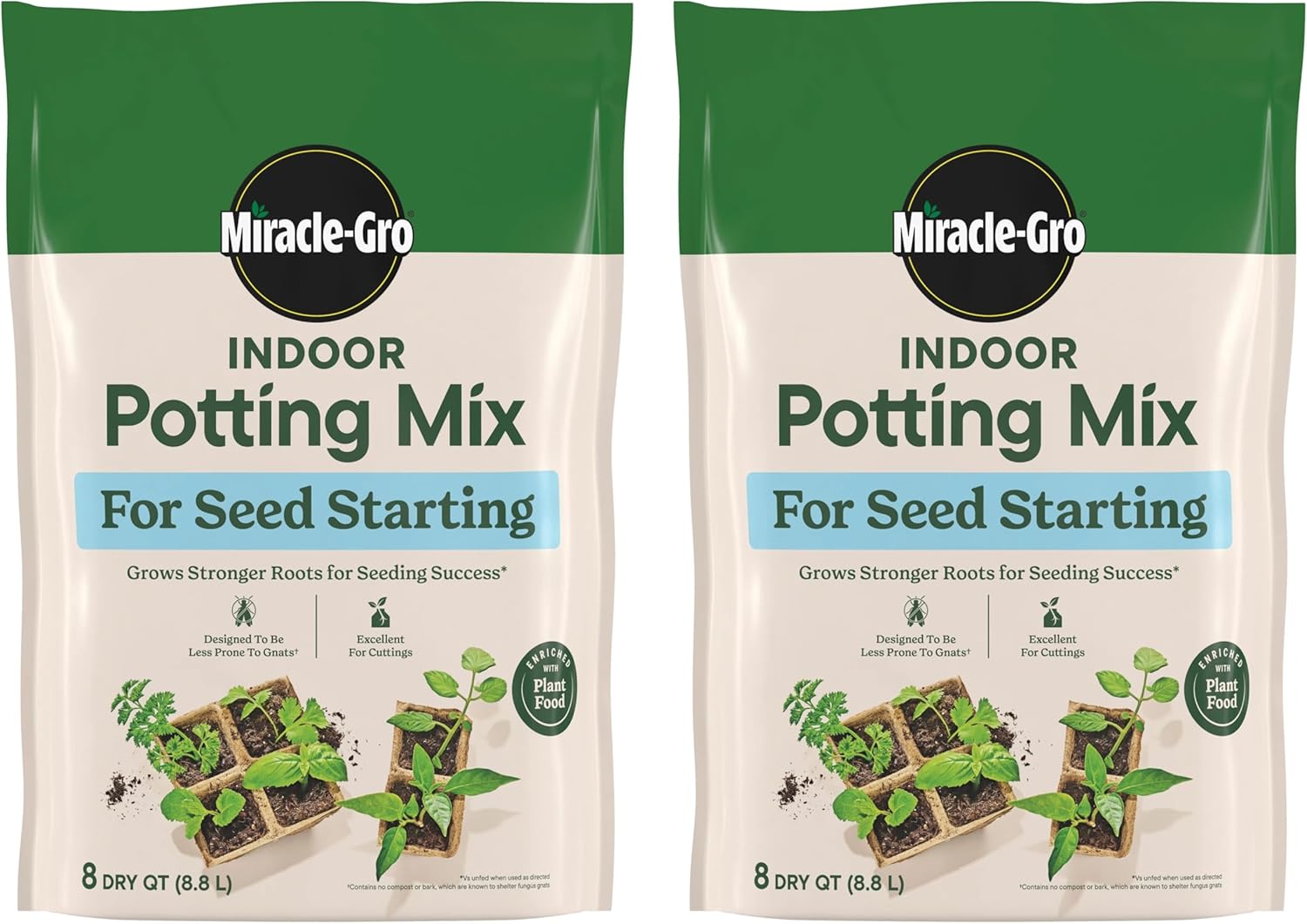
Miracle-Gro Indoor Potting Mix for Seed Starting, 8 qt. (2-Pack)
| Number of Packs | 2 |
|---|---|
| Unit Count | 512 Ounce |
| Item Type Name | Potting Mix |
| Item Highlight | For Starting Vegetable, Flower, and Herb Seeds Indoors |
This seed-starting mix is designed to give seedlings and cuttings a fast, low-risk start indoors. The lightweight formula is enriched with plant food so tiny roots get nutrition from the first potting stage, and the blend deliberately omits compost and bark to reduce the likelihood of fungus gnat issues. Use it to fill cell trays or small containers, keep the mix consistently moist and out of direct sun, and transplant seedlings after the first true leaves appear. The bag claim that one 8 qt. bag fills roughly three 72-cell trays makes planning straightforward for small-scale seed runs. Practical benefits include fewer pest-prone ingredients, built-in feed for early growth, and a texture suited to germination and rooting cuttings. Limitations are that it is a seed-starting mix rather than an all-purpose potting soil so it will need to be replaced or amended for long-term container growth, and it contains fertilizer so handle carefully to avoid inhalation and runoff concerns.
Best for: Home gardeners who want a low-risk, ready-to-use mix for starting vegetable, flower, or herb seeds and propagating cuttings, and who value products with clear pest-reduction features and built-in feed.
Less Ideal for: Gardeners who need a general-purpose potting soil for mature containers or those who prefer fully organic, compost-based mixes for seed starting.
- Lightweight texture formulated for seed germination and rooting cuttings
- Contains plant food to support stronger root development from the start
- No compost or bark included, which reduces habitat for fungus gnats
- Sold as a two-pack so you have enough mix for multiple trays
- Not formulated for long-term container use and may need replacing or amendment
- Contains fertilizer that requires careful handling to avoid inhalation or environmental runoff
Verdict: A convenient, low-risk seed-starting mix that includes starter nutrition and is formulated to reduce fungus gnat problems, making it a reliable choice for indoor seed runs.
ZeeDix 30mm Peat Pellets Seed Starter Pods (55 pcs)

| Unit Count | 50 Count |
|---|---|
| Material | Sphagnum peat moss |
| Style Name | Indoor & Outdoor Gardening |
| Item Weight | 0.28 kg |
These ZeeDix peat pellets are small compressed sphagnum peat moss plugs wrapped in a non-woven net that expand when watered to form ready-to-seed starter pods. Use them in a seed tray or small pots: add water, let the pellets swell, drop in seeds, keep evenly moist, then transplant the whole pod directly into larger containers or the garden without disturbing roots. The net cover makes moving seedlings and direct planting easier and helps keep growing medium intact. For beginners or cautious growers the pellets simplify setup and reduce mess compared with loose mix, and the peat holds moisture well to support germination. Important limitations are that these are straight peat plugs with no added controlled-release nutrients and peat is not a sustainable material choice for everyone. They also come in a fixed 30 mm size so very large seedlings will need potting up sooner. For starting common vegetables, herbs, flowers and small succulents this is a low-effort option that minimizes handling stress during transplanting.
Best for: Gardeners who want a low-mess, straightforward seed-starting method that minimizes handling and makes transplanting easier, especially useful for beginners or anyone prioritizing reliable germination.
Less Ideal for: Growers who prefer peat-free or custom nutrient-rich starting mixes or who need larger starting volumes for big-seeded or fast-growing seedlings.
- Ready-to-use compressed pellets that expand with water for quick setup
- Netted outer cover allows direct transplanting without disturbing roots
- Good water retention from sphagnum peat to support consistent germination
- Compact 30 mm size fits standard seed trays and simplifies organization
- Contains plain peat with no added fertilizer or balanced nutrients
- Peat is a nonrenewable resource and may be an environmental concern for some buyers
- Fixed pellet size limits time before seedlings need repotting
Verdict: If you want a simple, low-mess way to start many common seeds and transplant them intact, these net-wrapped peat pellets make seed starting fast and easy.
Choosing the Right Soil Mix for Starting Seeds: Key Factors to Consider
Moisture Retention and Watering Rhythm
How a seed-starting mix holds water affects how often you need to water and how reliable germination will be. A mix that retains a moderate amount of moisture keeps tiny seeds from drying out between waterings but still allows oxygen to reach developing roots. Overly thirsty mixes can stay soggy and promote diseases, while mixes that dry too quickly risk failed germination.
Think about your daily routine and whether you can check trays every day. If you prefer less frequent watering or are using a warm drafty location, choose a mix with higher moisture retention. If you mist or bottom-water frequently, a faster-draining blend may be better.
Drainage and Aeration for Healthy Roots
Good drainage and aeration let roots breathe and prevent waterlogged conditions that cause damping-off. Seedlings need tiny air pockets in the medium so their fine roots can take up oxygen while still accessing moisture.
A mix with coarse components such as perlite, vermiculite, or coarse sand improves drainage and creates stable air spaces. That structure also helps when transplanting, because roots are less likely to become compacted or root-bound in a light, airy medium.
Nutrient Suitability and Starter Fertility
Newly germinated seedlings need only a small amount of nutrient until they develop true leaves and can be lightly fed. A seed-starting mix should generally be low in soluble fertilizer to avoid burning delicate roots and to encourage root foraging behavior.
Look for mixes formulated for seedlings or those labeled low‑fertility. That gives you control over feeding once seedlings have several true leaves and are ready for diluted nutrient solutions or potting up into richer soil.
Texture, Particle Size, and Consistency
Uniform particle size and consistent texture make sowing and germination more predictable. Fine, dusty mixes may compact and reduce airflow, while mixes with uneven chunks can create pockets that dry or stay wet unpredictably.
A balanced, consistent medium gives even moisture distribution across trays and reduces the need to relevel or repot. For small seeds, a slightly finer top layer helps maintain seed-to-soil contact without burying seeds too deeply.
Sterility and Disease Risk
A sterile or pasteurized mix lowers the chance of introducing fungal pathogens that cause damping-off and other seedling diseases. Seed trays and small pots are high-risk environments for pathogens because they are warm and humid while seedlings have limited defenses.
Sterile commercial seed mixes or those labeled pathogen-reduced are safer starting points. If you use homemade blends, consider heat-treating components or using sterilized base materials to reduce disease risk.
Best Mix Types by Seed Size and Crop
Different seeds have different needs. Tiny seeds such as basil, thyme, and many annual flowers require a finer, flatter surface to ensure good seed-to-soil contact and even moisture. Larger seeds like beans or peas tolerate slightly coarser mixes and benefit from improved drainage as they develop larger roots.
- Fine-texture mixes for very small seeds help maintain surface moisture without burying seeds.
- Coarser, aerated blends suit larger vegetable and herb seeds and reduce risk of rot for seeds that sit in the soil longer.
How to Rehydrate Compressed or Dry Mixes
Many commercial seed mixes arrive compressed or very dry. Rehydrating them properly affects their structure and performance. Add water slowly to a tray or bucket, fold the mix gently, and let it rest so moisture distributes evenly. Avoid creating a muddy slurry. The right moisture level is a damp sponge consistency where the mix holds shape briefly when squeezed and does not drip freely.
- Pour water into the dry mix gradually and stir to avoid clumps.
- Let rehydrated mix sit 10 to 30 minutes for full absorption before filling trays.
Containers and How They Interact with Mixes
Container type changes how a mix behaves. Shallow seed trays dry faster and benefit from mixes with slightly higher water retention. Deeper pots and cells allow more room for roots and work well with lighter, faster-draining blends. Whatever container you use, ensure there is adequate drainage and choose a mix that matches your container depth and watering method.
- Shallow trays: choose mixes that maintain surface moisture.
- Deep cells: use more aerated mixes to encourage strong root systems.
Transitioning Seedlings to Potting Mix or Garden Soil
When seedlings are ready to be moved, they often need a richer medium to support faster growth. Gradually increase nutrient availability by potting up into a looser potting mix or amending the root ball carefully so plants are not shocked by sudden fertility changes. Harden off seedlings outdoors before final planting to adjust them to light and wind.
- Pot up when true leaves appear and roots begin to show through cells.
- Use gentle feeding after transplanting rather than high concentrations of fertilizer immediately.
Organic Options and Growing Media Additives
Organic seed mixes usually rely on components like peat, coconut coir, composted fine bark, and mineral amendments. These can be excellent choices, but check how much initial fertility is present. Some organic mixes include compost or worm castings, which give a nutrient boost but may be too rich for very small seeds. Additives like mycorrhizal inoculants are more useful after seedlings have established roots and are being potted up rather than at the very first sowing stage.
- Look for labeled seed-starting organic blends if you prefer organic inputs.
- Reserve nutrient-rich amendments for later potting stages to avoid burning seedlings.
How We Chose the Best Soil Mix for Starting Seeds
We selected products using practical, garden-tested criteria that matter when starting seeds indoors or in a protected space. Primary considerations included moisture management, because too wet or too dry media directly affects germination rates and root health; drainage and aeration, to prevent damping-off and encourage strong root development; and nutrient profile, focusing on low initial fertility with options for gentle feeding so seedlings do not burn or become stretched. We also evaluated texture consistency and particle size, since uniform medium makes sowing, transplanting, and moisture control predictable. Sterility and pathogen risk were reviewed to prioritize mixes less likely to introduce disease. Ease of handling and rehydration behavior mattered for common containers from trays to small pots. Excluded from the list were heavy garden soils, unamended topsoil, and mixes with high starter fertilizer levels that can harm small seeds. We favored blends that perform well across a range of common vegetable, herb, and flower seeds and those compatible with standard indoor sowing practices.
FAQ
Can I use garden soil to start seeds?
Garden soil is usually too heavy and may contain pests and pathogens. It also compacts easily and limits airflow around tiny roots. For reliable germination, use a light seed-starting mix or a sterilized medium designed for seeds.
How often should I water seeds in a tray?
Frequency depends on mix and conditions, but check daily. Aim for a consistently moist surface without standing water. Many growers mist tops or bottom-water by setting trays in shallow water for short intervals.
When should I start fertilizing seedlings?
Wait until seedlings have at least one set of true leaves. Use a diluted, balanced fertilizer at a low rate so roots are not burned and to encourage healthy aboveground growth.
Is peat or coir better for starting seeds?
Both can work. Peat holds moisture well but is denser; coconut coir is more renewable and often drains and rehydrates predictably. Choose based on your watering routine and environmental preferences.
How deep should I sow small seeds?
Many small seeds are surface sown or covered with a very fine dusting of mix. Follow seed packet depth guidance and ensure good seed-to-soil contact to prevent drying out.
Final Verdict
Choose a seed-starting mix that balances moisture retention with good drainage and low initial fertility. Match mix texture to seed size and container type so seedlings can develop strong roots without disease risk. Prioritize sterility, consistent particle size, and a rehydration profile that fits your watering routine. By focusing on those tradeoffs you can pick a mix that reduces common failures like damping-off and poor germination. That approach makes it easier to produce resilient, transplant-ready seedlings for the garden.
