

Note: This article contains affiliate links. If you click on these links and make a purchase, I may earn a small commission at no extra cost to you. This helps support my research and content. Read my full affiliate disclosure here.
A well-chosen solar fountain for pond does more than add visual interest. It improves water circulation, raises oxygen levels, and helps limit algae and mosquito larvae without running grid power. For gardeners with small to medium ponds or water features, solar fountains offer an easy, low-maintenance way to keep water moving. This guide covers our five shortlisted solar fountains for pond use, each selected for reliable flow, weather resistance, and straightforward installation. Below we explain the decision criteria used, the key factors to consider when choosing a unit for your pond, and practical tips for getting the most from solar-powered circulation. Read on to find the right balance of flow, durability, and convenience for your setting.
Top Picks at a Glance
| Best Overall The best all-around choice for most situations | POPOSOAP 12W Solar Water Fountain Pump with Adjustable Nozzles and Solar Panel |  |
| Best Quality Built to a higher standard if you want something more solid | My Natural Pond 100W Floating Solar Fountain Pump Kit |  |
| Best Value The sweet spot between price and what you get | POPOSOAP 6.5W Solar Fountain Pump with 3000mAh Battery Backup for Bird Baths |  |
| Highest Rated A top-rated pick with lots of positive feedback | POPOSOAP 6.5W Solar Pond Filter with Battery Backup Fountain Pump |  |
| Most Popular A crowd favorite that many people choose with confidence | AISITIN 3.5W Solar Fountain Pump with Separated Panel and Multiple Nozzles |  |
POPOSOAP 12W Solar Water Fountain Pump with Adjustable Nozzles and Solar Panel

| Power Source | Solar Powered |
|---|---|
| Flow Rate | 900 liters per hour |
| Maximum Lifting Height | 4.9 feet |
| Voltage | 18 volts |
This POPOSOAP 12W solar water fountain pump is a plug-and-play kit for adding a circulating fountain to small ponds, birdbaths, or wildlife-friendly garden water features. The package includes a tempered-glass solar panel with aluminum frame, a submersible pump with two-way filter and replacement sponges, 6.56 ft clear tubing, and four spray nozzles. In bright sun the panel drives up to about 160 GPH and the twistable control valve lets you reduce lift or flow for shallower features; the pump also has dry-run protection to shut off if it runs out of water. The detachable pump and included sponges make debris cleaning straightforward, and the long 16.5 ft cable and adjustable mounting bracket give flexibility in panel placement. Limitations are typical of small solar units: performance falls off in cloudy conditions and the fountain does not run at night, and the 4.9 ft maximum lift and 12W power mean it is best for small to medium shallow features rather than large ponds or high waterfalls. Regular cleaning is required to avoid clogging in outdoor settings.
Best for: Gardeners who want a low-maintenance, electricity-free fountain to add movement and attract wildlife to a small or medium pond and who prioritize simple installation and weather-resistant components.
Less Ideal for: Owners of large ponds or those who need continuous nighttime circulation or high vertical lift should consider a higher-power or AC-driven pump solution.
- Complete kit with solar panel, pump, tubing, mounting bracket and four nozzle options
- Tempered glass solar panel and aluminum frame for weather resistance
- Adjustable flow valve and multiple nozzles for different spray styles
- Dry-run protection and detachable two-way filter for easier maintenance
- Dependent on direct sunlight so output drops in cloudy weather and it will not run at night
- 12W power and 4.9 ft max lift limit use to smaller ponds and low waterfalls
Verdict: A ready-to-install solar fountain kit that reliably adds movement and wildlife appeal to small ponds during sunny conditions.
My Natural Pond 100W Floating Solar Fountain Pump Kit

| Power Source | Solar Powered |
|---|---|
| Maximum Lifting Height | 10 feet |
| Horsepower | 100 watts |
| Material Type | Plastic |
This My Natural Pond kit is a solar-powered, floating fountain designed for larger ponds and lakes that need circulation and visual impact. The floating pump mounts on the water surface and connects to two 50W solar panels via the included cable and anchors, so setup is straightforward and does not require permanent mounting. In bright sun it delivers an 8–10 foot spray and moves up to about 1,300 GPH, which helps aerate water and reduce stagnation in ponds at least 3 feet deep and roughly 10 feet wide or larger. You get three interchangeable nozzles for different spray patterns and a dome option for broader coverage. The unit is plastic-bodied and depends on direct sunlight to run, so output falls off quickly on cloudy days and it does not run at night without the separately sold battery pack. Cable length and included stands give flexibility for panel placement, but buyers who need guaranteed operation in low light should budget for the optional battery accessory.
Best for: Experienced pond owners focused on strong daytime circulation and aeration who want a ready-to-install solar solution for larger ponds and water gardens.
Less Ideal for: Those who need reliable nighttime operation or consistent performance in frequently cloudy climates should consider systems that include batteries or AC-powered pumps instead.
- Powerful 100W twin-panel setup produces an 8–10 ft spray and up to ~1,300 GPH for strong circulation
- Floating design self-adjusts to water level and avoids complicated mounts
- Three interchangeable nozzles plus dome option for varied spray patterns and aeration
- Includes panels, stands, 32 ft cable and anchor kit for quick out-of-the-box setup
- No battery included so pump runs only in daylight unless you add the optional battery pack
- Performance drops significantly in cloudy or low-light conditions
Verdict: Choose this kit when you want a high-output, daylight-only solar fountain that delivers strong spray and circulation for larger ponds without permanent mounting.
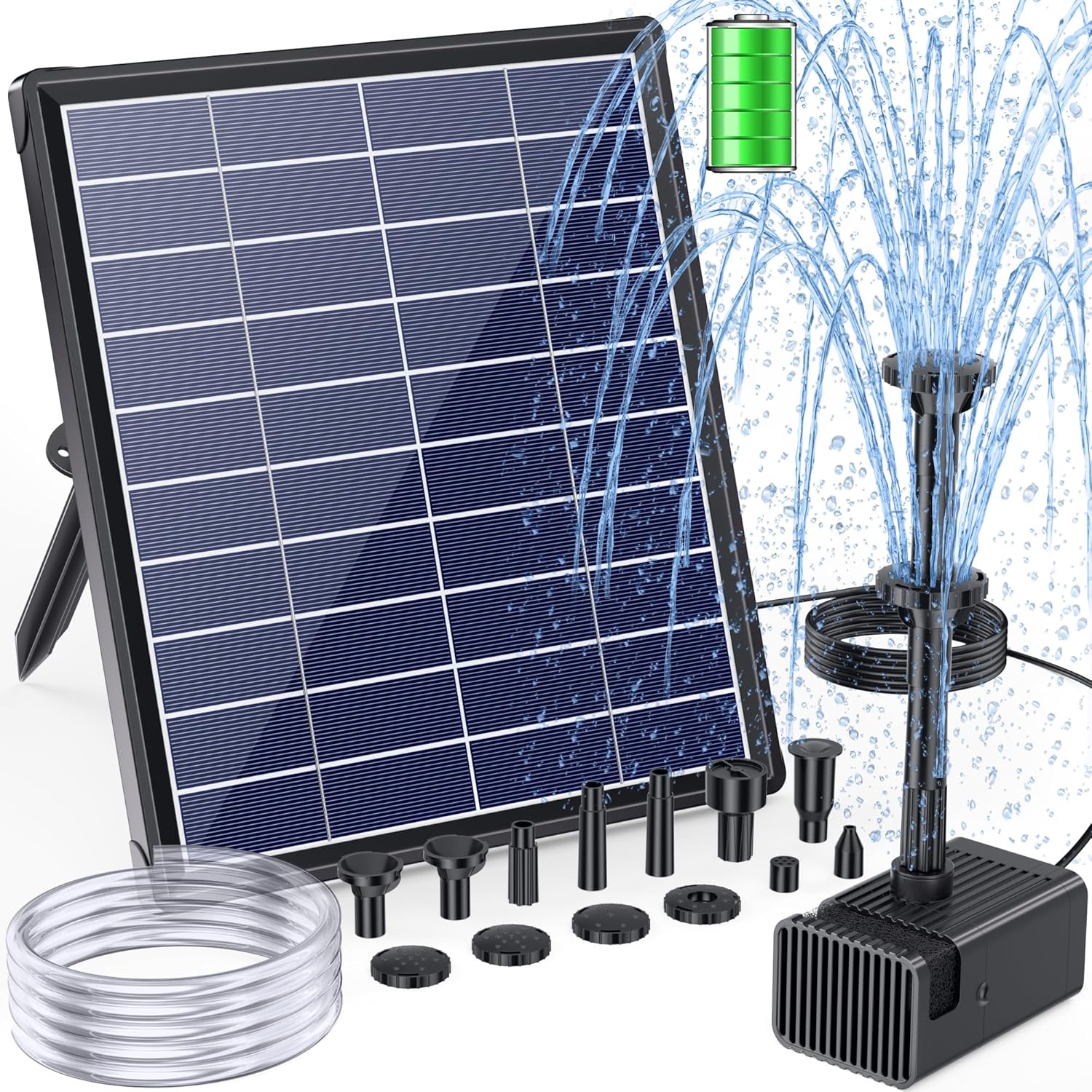
POPOSOAP 6.5W Solar Fountain Pump with 3000mAh Battery Backup for Bird Baths
| Power Source | Solar Powered |
|---|---|
| Flow Rate | 300 liters_per_day |
| Maximum Lifting Height | 65 inches |
| Voltage | 10 volts |
| Horsepower | 6.5 watts |
This POPOSOAP 6.5W solar fountain pump is built for steady daytime performance in bird baths and small backyard water features. The unit pairs a 6.5W solar panel with a 3000mAh rechargeable battery so it keeps running on cloudy days once charged, and the plug-and-play design makes installation simple: stake or mount the panel, float or submerge the pump and choose one of eight nozzles. Practical features include dry-run protection and an anti-clog filter to reduce maintenance and protect the motor, plus a 5 ft tubing for DIY setups or directing flow to a bubbler or small waterfall. The pump delivers up to about 300 liters per day and a maximum lift suited to shallow basins, so it produces a lively spray without emptying small baths. Expect quiet operation that attracts birds and wildlife. Limitations are that it does not operate at night and output depends on sun exposure, so taller or larger ponds will need a higher-capacity unit or wiring for stronger flow.
Best for: Gardeners who prioritize reliable daytime performance from a compact, low-maintenance solar pump for bird baths and small water features and who want a ready-to-install unit with flexible spray options.
Less Ideal for: People who need continuous nighttime operation or high flow for larger ponds should consider mains-powered or higher-wattage solar pumps instead.
- Built-in 3000mAh battery allows operation into cloudy periods after charging
- Dry-run protection and anti-clog filter help prevent pump damage and reduce maintenance
- Includes eight nozzle options and 5 ft tubing for flexible spray patterns and DIY features
- Easy plug-and-play installation with rotatable ground stake for the solar panel
- Does not operate at night despite the battery backup
- Flow and lift are limited by solar input, so performance drops in low sun or for larger ponds
Verdict: Choose this pump if you want a compact, easy-to-install solar fountain that delivers dependable daytime flow and low-maintenance protection for bird baths and small water features.
POPOSOAP 6.5W Solar Pond Filter with Battery Backup Fountain Pump

| Power Source | Solar Powered |
|---|---|
| Voltage | 10 volts |
| Horsepower | 6.5 watts |
| Material Type | Acrylonitrile Butadiene Styrene (ABS) |
The POPOSOAP 6.5W Solar Pond Filter combines a solar panel, rechargeable battery backup, and a filter box to keep small ponds and bird baths circulating and clearer during variable light. It is typically used by setting the solar panel in direct sun, submerging the pump in the water feature and choosing one of eight included spray nozzles or routing the supplied PVC tubing for a small waterfall or stream. Notable features are the bio-ceramic filtration media that traps debris, dry-run protection that stops the motor if water levels drop, and a 3600mAh battery that stores energy so the pump can run on cloudy days. In practice this reduces clogging and lowers maintenance compared with bare solar pumps, while the multiple nozzles let you tailor spray height and pattern. Important limitations are that the system does not run at night and the battery backup is sized for limited cloudy-day operation rather than extended after-dark use; the ABS construction is lightweight but may not match heavier-duty metal pumps for long-term industrial exposure.
Best for: Buyers who prioritize a low-maintenance, dependable pump for bird baths or small ponds and want a system that continues to run during cloudy conditions rather than requiring constant sun.
Less Ideal for: Not a great choice for users who need nighttime fountain operation or high-capacity circulation for large ponds; landscapers needing industrial-grade metal pumps should look elsewhere.
- Built-in 3600mAh rechargeable battery provides operation on cloudy days
- Filter box with bio-ceramic media reduces debris and helps prevent clogging
- Eight nozzle options and included tubing allow versatile spray patterns and small DIY water features
- Dry-run protection helps prevent motor damage if water level falls
- Does not operate at night despite battery backup
- Battery capacity is limited so extended low-light runtime is not guaranteed
Verdict: If you want a reliable, low-maintenance solar fountain for a bird bath or small pond that keeps running on cloudy days, this pump delivers steady filtration and backup power.
AISITIN 3.5W Solar Fountain Pump with Separated Panel and Multiple Nozzles

| Power Source | Solar Powered |
|---|---|
| Model Number | 3.5wPump |
| Other Special Features of the Product | DIY Water Feature, Solar Bird Bath Fountain, Solar Water Pump |
The AISITIN 3.5W solar fountain pump is a plug-free kit that runs directly from its separate solar panel and is intended for small ponds, bird baths, and DIY water features. In practice you mount or float the compact plastic pump in water, position the solar panel in full sun (a 9.8 ft cord lets you place the panel away from shaded basins), and choose from several nozzles and a retractable stand to control spray pattern and center the unit in the basin. Notable features include a higher 3.5W solar panel for stronger spray, a selection of rotating, double, and vertical nozzles for different effects, an upgraded filter assembly for easier cleaning, and anti-drift brackets to keep the pump centered. The separate-panel design is useful for shaded pond edges but the unit requires direct sunlight to run and does not store power for evening use. Expect regular cleaning to prevent clogging and modest noise when operating; the pump is best suited to small to medium basins rather than large decorative ponds that need higher flow rates.
Best for: Buyers who want an easy, no-wires water feature for a small pond or bird bath and who prioritize visible performance supported by user feedback and practical reliability tips.
Less Ideal for: Not a good choice for owners of large ponds or elaborate water features that require continuous flow, nighttime operation, or heavy-duty, long-term outdoor durability.
- Separate solar panel with a 9.8 ft cord lets you place the panel in full sun while the pump sits in shaded basins
- Multiple nozzle options and a retractable stand allow adjustable spray styles and centered placement
- Upgraded filter and removable rotor make routine cleaning and clog prevention straightforward
- 3.5W solar panel provides stronger output than lower-watt kits for higher spray heights
- Operates only in direct sunlight and has no energy storage for cloudy days or nighttime operation
- Plastic construction feels lightweight and may be less durable than metal alternatives
Verdict: A versatile, separate-panel solar fountain kit that delivers stronger spray and adjustable styles for small ponds and bird baths when you can provide consistent direct sunlight.
Choosing the Right Solar Fountain for Pond: Key Factors to Consider
Pump Flow and Nozzle Variety
Flow rate determines how much water the fountain moves and how effectively it circulates the pond. Higher flow helps oxygenate deeper water and breaks surface tension to discourage algae, while adjustable nozzle patterns let you choose a gentle circulating pattern or a decorative spray depending on pond depth and edge conditions.
Pay attention to manufacturer flow ratings and whether they list flow at head height. Real-world output can vary with light levels and head pressure, so a model with multiple nozzle tips and variable flow settings provides flexibility across seasons.
Solar Panel Performance and Placement
Solar output is the single biggest factor affecting day-to-day performance. Panel wattage, efficiency, and whether the panel is tethered to the pump or separate for flexible placement affects how reliably the fountain runs in partial shade or low-sun months.
Separate panels with longer leads let you place the panel in full sun while the pump sits in a shaded or deeper pond area. Built-in panels are tidier but can struggle if the water feature is shaded. Check the cable length and whether the panel can be angled for morning and afternoon sun.
Weatherproofing and Build Materials
Fountains are exposed to water, sun, and temperature swings, so corrosion-resistant materials and proper sealing around electrical connections are essential. Look for pumps with IP-rated protection or clear manufacturer statements about outdoor and water exposure tolerance.
Consider freeze protection if you live where temperatures drop below freezing. Units meant for year-round outdoor use will be easier to winterize and less likely to suffer damage from ice or prolonged wetting.
Installation Ease and Mounting Options
Home gardeners benefit from units that require minimal tools and clear instructions. Consider whether the pump floats, sits on the pond floor, or mounts to a liner or edge. Floating units are quick to place but can be affected by surface debris; weighted or bottom-mounted pumps are steadier but may require more effort to install.
Also check if the kit includes mounting stakes or brackets for the solar panel and whether hose or nozzle fittings are standard sizes that adapt to existing pond hardware.
Maintenance and Serviceability
Pumps and nozzles will clog with debris and mineral buildup over time, so easy access for cleaning extends useful life. Removable inlet screens, simple disassembly, and availability of replacement nozzles or impellers make routine service quick.
Assess whether critical parts are user-replaceable and whether the manufacturer documents routine maintenance steps. Units that allow simple winter removal and dry storage reduce freeze damage risk.
Power Backup and Run Modes
Some solar fountains include battery backup or capacitor-based short-run storage to keep water moving during passing clouds or early morning and late afternoon. Backup systems vary in capacity and complexity; a modest storage feature can smooth output but adds components that may need maintenance.
Decide if continuous flow during low light is important for your pond ecology. For aesthetic-only features, intermittent daytime-only operation may be acceptable, but for fish or deeper ponds you might prioritize models with some backup or compatibility with a small auxiliary power source.
Sizing a Solar Fountain to Your Pond
Match pump flow to pond volume and surface area rather than just choosing the largest output. For small garden ponds under 200 gallons, modest flow is often enough to keep the surface moving without splashing water out of the bowl. Larger ponds need greater circulation to move water across the entire surface and through any filters or skimmers you use.
- Estimate pond volume and look for manufacturers that list flow performance at various head heights.
- Consider the maximum spray height only as a decorative metric; prioritize lateral surface circulation for oxygen exchange and algae control.
- If you have fish, aim for more consistent circulation rather than intermittent large sprays.
Placement and Panel Optimization
Panel placement can make or break a solar fountain. Place the panel where it receives the most direct sun for the longest part of the day, free from shade cast by trees, buildings, or garden structures. If the kit uses a separate panel, route the cable safely and anchor the panel so it does not move or tilt with wind.
- Angle panels toward midday sun for peak output during the brightest hours.
- Use adjustable stakes or brackets to fine-tune orientation as seasonal sun angle changes.
- Avoid placing panels near reflective surfaces that create hot spots or glare which can overheat electronics.
Seasonal Care and Winterizing
Solar fountains require simple seasonal attention. In autumn, remove leaves and oversized debris; inspect the impeller and nozzle for blockages. In climates that freeze, drain and store pumps indoors or remove panels and store them flat to prevent ice damage.
- Clean inlet screens monthly during heavy leaf fall.
- Disconnect and dry electronic parts before storing for winter.
- Check seals each spring and replace worn gaskets to prevent leaks.
Integration With Pond Filtration
Consider how a solar fountain will work with existing filters or biological systems. Fountains primarily move surface water and increase aeration rather than replace mechanical filtration, so think of them as complementary. Positioning the fountain to encourage flow through a skimmer or over a biological filter improves overall water quality.
- Use the fountain to direct surface flow toward your filter inlet when possible.
- Avoid directing a strong spray directly over fish resting areas or shallow edges.
- Combine moderate fountain flow with a separate pump-driven filtration system for heavy stocking densities.
How We Chose the Best Solar Fountain for Pond
We selected products for this list using practical, garden-focused filters that matter to pond owners. Primary evaluation criteria included pump flow and nozzle options to judge how well a unit moves water and creates surface agitation; solar panel output and panel placement flexibility to assess performance under variable light; build materials and sealing to determine long-term weather and freeze resistance; and ease of installation and maintenance so gardeners can set up and service the fountain without special tools. We prioritized models that provide consistent flow across common pond sizes rather than units optimized only for very small decorative bowls. Exclusions included devices requiring complex electrical hookups or that lacked basic weather sealing. We also considered warranty support and available replacement parts where that information was clearly documented. The scoring labels below reflect these same dimensions so readers see how each product performs on concrete, gardener-relevant measures.
FAQ
Will a solar fountain for pond run in partial shade?
It often depends on the panel and pump design. Units with larger or separate panels and higher-efficiency cells perform better in partial shade. Some models include short-run storage to bridge brief cloud cover, but full shade markedly reduces output.
Can I leave a solar fountain in the pond year-round?
That depends on your climate. In mild, frost-free areas some gardeners leave units installed year-round. In freezing climates it is safer to remove the pump and/or panel and store them indoors to prevent ice damage to seals and impellers.
Are solar fountains strong enough to aerate a fish pond?
Solar fountains can contribute to aeration but their effectiveness varies with pump size and sunlight. For ponds with fish, prioritize models that provide steady surface circulation across the pond and consider supplementary aeration or filtration if stocking is heavy.
How often do I need to clean the pump and nozzles?
Frequency depends on debris load and water chemistry but monthly checks during active seasons are common. Remove the intake screen and impeller for a quick rinse; nozzles may need soaking to remove mineral buildup.
Can I position the solar panel away from the pond?
Yes, many kits include long leads so the panel can sit in full sun while the pump is in shade. Check specified cable length and weatherproofing of the connection to ensure reliable placement.
Final Verdict
Choosing the right solar fountain for pond use comes down to balancing reliable flow, durable outdoor construction, and installation flexibility. Focus first on pump flow and panel placement so the unit can provide consistent circulation for your pond size. Then weigh weatherproofing, maintenance access, and whether short-run storage or panel flexibility matters for your light conditions. Prioritize steady surface movement and ease of service over decorative spray height if water quality and fish health are important. With those tradeoffs in mind, you can pick a fountain that keeps water clearer, improves oxygenation, and fits your garden routine.
