

Note: This article contains affiliate links. If you click on these links and make a purchase, I may earn a small commission at no extra cost to you. This helps support my research and content. Read my full affiliate disclosure here.
Choosing the right sphagnum moss for orchids matters because orchid roots need steady moisture, good aeration, and minimal salts. The wrong moss holds too much water or breaks down quickly, causing root rot or poor plant vigor. This guide covers the top shortlisted options for orchid growing, focusing on how moss behaves in pots, baskets, and mounted arrangements. We evaluated each option for water retention, cleanliness, and structure so you can match a moss type to your watering routine and potting style. Below are our top picks and practical notes to help you pick the best moss for your orchids.
Top Picks at a Glance
| Best Quality Built to a higher standard if you want something more solid | SuperMoss Orchid Sphagnum Moss, Dried Mini Bale (1 lb) |  |
| Best Value The sweet spot between price and what you get | besgrow Premium New Zealand Sphagnum Moss, AAA Premier (150g) | 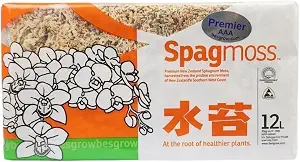 |
| Best Budget The cheapest option that still gets the job done reliably | Legigo Natural Sphagnum Moss, 4 qt (approx. 3–4 oz) |  |
| Highest Rated A top-rated pick with lots of positive feedback | ZeeDix Natural Sphagnum Moss, 3 Qt |  |
| Most Popular A crowd favorite that many people choose with confidence | Better-Gro Premium Sphagnum Moss for Orchids & Plants, 190 cu in |  |
| Best Seller A high-volume bestseller chosen again and again | Sukh Sphagnum Moss for Reptiles, 5 oz |  |
SuperMoss Orchid Sphagnum Moss, Dried Mini Bale (1 lb)

| Unit Count | 17.6 Ounce |
|---|---|
| Included Components | Sphagnum Moss |
| Item Type Name | Orchid Sphagnum Moss Dried |
| Number of Packs | 1 |
SuperMoss Orchid Sphagnum is a long-fiber, preserved sphagnum packaged as a mini bale that functions as both a moisture-retentive top dressing and a lightweight potting/liner material for orchids and other potted plants. You can use it to line hanging baskets, top-dress orchid pots, or mix with potting media when repotting to increase water-holding capacity while maintaining aeration. The fibers absorb a large amount of water and release moisture gradually, which helps reduce watering frequency for moisture-sensitive epiphytes. The product is cleaned to remove dust and sold in a convenient retail bale that is easy to pull apart and shape around roots or baskets. Important limitations are typical of dried sphagnum: it can harbor mold if kept constantly wet and should be handled carefully to avoid inhaling dust when dry. For growers focused on reliable water retention and root oxygenation in orchid culture, this moss performs exactly as intended, though it requires sensible storage and occasional replacement in long-term pots.
Best for: Growers who prioritize reliable moisture management and root aeration for orchids and epiphytic houseplants and want an easy-to-use, long-fiber sphagnum for repotting and basket lining.
Less Ideal for: People who need a completely maintenance-free medium or those who prefer inert, no-organic potting mixes for very frequent wet conditions.
- Long fibers provide excellent water retention while maintaining good aeration for orchid roots
- Versatile: works as hanging-basket liners, potting medium additive, or top-dressing
- Cleaned to remove most dust and small particles for easier handling and fewer contaminants
- Sustainably procured and preserved for convenient retail use
- Prone to mold if left continuously wet or stored damp
- Can produce dust when handled dry which requires care to avoid inhalation
Verdict: Choose this long-fiber sphagnum when you need a proven, moisture-retentive liner or potting additive that supports healthy, well-aerated orchid roots.
besgrow Premium New Zealand Sphagnum Moss, AAA Premier (150g)
| Brand Name | besgrow |
|---|---|
| Unit Count | 5.3 Ounce |
| Style Name | AAA Premier (6" Strands) |
| Volume | 1 liters |
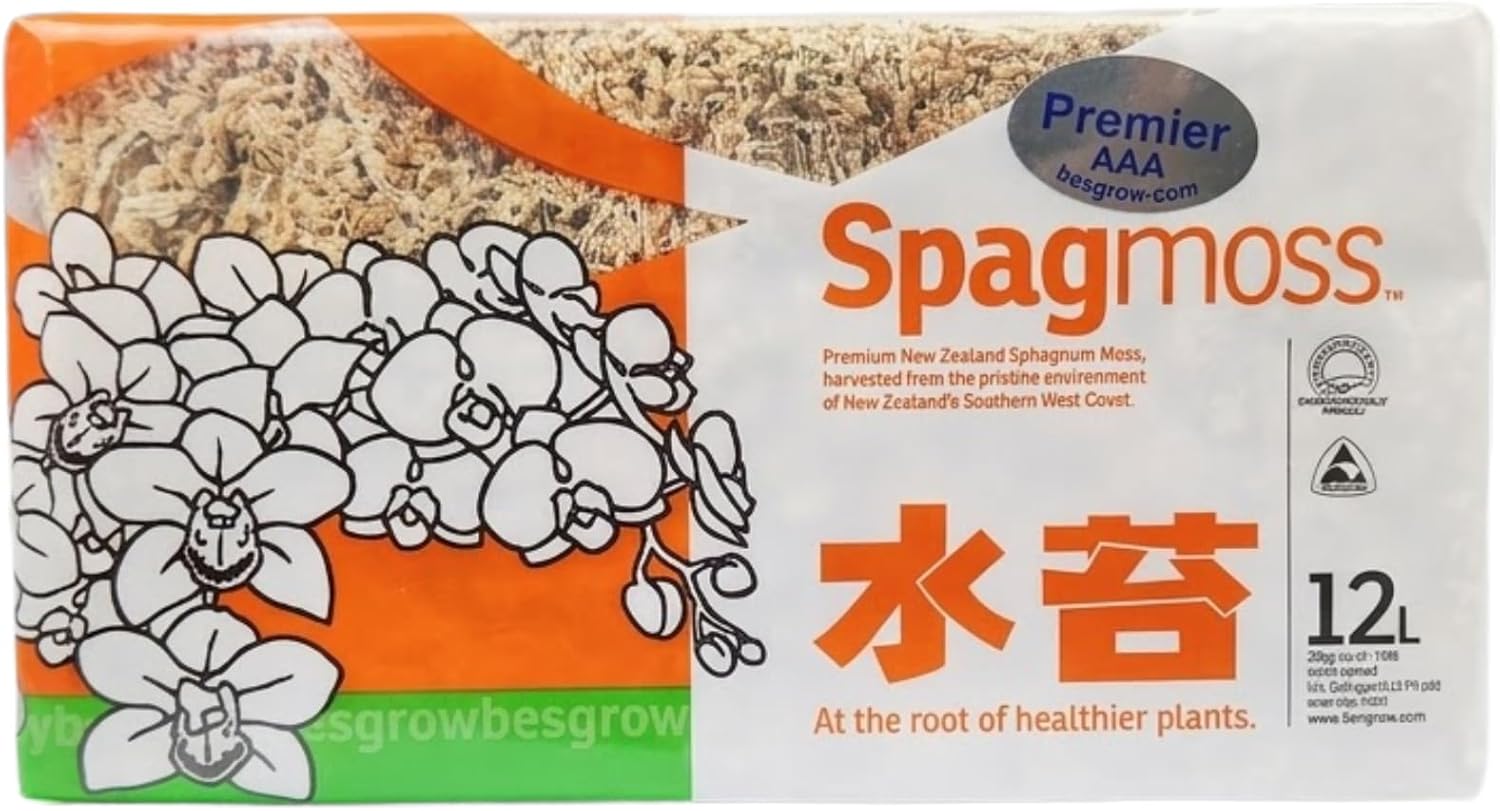
This besgrow premium New Zealand sphagnum moss is a dried, hand-picked product aimed at growers who need a stable, high-water-retention substrate for orchids and other moisture-loving plants. Typical use is as a potting medium or liner for pots and baskets, a top dressing to improve moisture retention, or as bedding for terrariums and reptile enclosures. Notable features include long, strong 6-inch strands, low soluble-salt content, and a structural fiber that soaks up water and releases it slowly to roots. Practical benefits are improved root hydration for sensitive orchids, easier moisture management in hanging baskets and clear rooting environments, and a relatively sterile starting material that reduces initial contamination risks. Limitations are that it arrives dry so it needs rehydration before use and it is sold in a small single pack that may require multiple purchases for larger plant collections or repotting projects. Also it is a natural product so batch variability and occasional small foreign matter are possible.
Best for: Growers who prioritize reliable moisture control and healthier root development for orchids or other moisture-loving plants and who prefer a minimally processed, ready-to-use natural substrate.
Less Ideal for: Gardeners who need a bulk, low-cost substrate for large beds or those who prefer a pre-mixed potting blend with added nutrients and fertigation-ready components.
- High water-holding capacity that supports consistent moisture for orchids and carnivorous plants
- Long, strong strands useful for lining pots, wrapping roots, or creating stable mounts
- Low soluble salt levels and relatively sterile composition reduce early root stress
- Hand-picked and air-dried with minimal processing so it is usable straight from the pack
- Sold as a small single pack that may be insufficient for large collections or repeat repottings
- Requires rehydration before use which adds an extra prep step
Verdict: Choose this premium New Zealand sphagnum moss if you want a high-quality, high–water-retention substrate that supports healthier orchid roots and precise moisture control.
Legigo Natural Sphagnum Moss, 4 qt (approx. 3–4 oz)

| Brand | Legigo |
|---|---|
| Material | Natural Sphagnum Moss |
| Unit Count | 3 Ounce |
| Volume | 4 quarts |
Legigo's sphagnum moss is a simple, no-frills growing medium that delivers the basic benefits orchid growers expect: high water retention, good aeration around roots, and a lightweight, fibrous texture that can be used as a pot lining, repotting medium or decorative top layer. It arrives clean and largely free of twigs or debris and expands after soaking, so a little goes further when rehydrated. Typical uses include lining hanging baskets, mixing with bark for orchid pots, re-misting orchid mounts and topping terrarium substrates to help maintain humidity. Practical advantages are its moisture-holding capacity and breathability, which help keep orchid roots moist without sitting in water. Limitations are its small unit size and light pack weight, which mean you will need multiple bags for several plants or larger pots, and dry moss can be slow to rewet if left bone dry. For growers looking for an inexpensive, natural sphagnum to refresh a few orchid pots or to trial using moss, this product is a straightforward choice.
Best for: Orchid or indoor plant owners on a tight budget who want a natural, easy-to-use sphagnum for lining pots, topping mixes, or maintaining humidity for a few plants.
Less Ideal for: Large-scale growers or collectors who need bulk quantities or long-term supply for many pots should choose larger-volume commercial packs instead.
- Good water retention while still allowing air to reach roots
- Clean, mostly debris-free natural fibers suitable for orchids and terrariums
- Versatile: usable as pot lining, topping, or terrarium substrate
- Expands when soaked so a small bag can cover multiple small pots
- Small package size means multiple purchases are needed for larger collections
- Can be difficult to rehydrate if it becomes completely dry
Verdict: A low-cost, no-frills sphagnum moss that gives hobbyist orchid growers an effective moisture-retentive medium for a few pots or terrariums.
ZeeDix Natural Sphagnum Moss, 3 Qt

| Brand Name | ZeeDix |
|---|---|
| Item Type Name | soil |
| Manufacturer | ZeeDix |
| Volume | 3 quarts |
ZeeDix Natural Sphagnum Moss is a simple, ready-to-use medium for orchid growers who need consistent moisture retention without compacting around delicate roots. Gardeners typically use it straight in orchid pots, as a top dressing, or blended with bark or perlite to tune drainage. The product emphasizes long fibers and natural structure, which help keep air around root crowns while holding water so you do not need to water as often. It is described as chemical-free and biodegradable, making it suitable for hobbyists who prefer a natural substrate and for terrarium or reptile setups that require humidity. Limitations are few but practical: the package is a modest 3 quarts, so larger collections of orchids will require multiple bags, and sphagnum alone may hold too much moisture for plants that prefer drier mixes unless combined with chunkier materials. For growers focused on predictable moisture and healthy root aeration, this moss is an easy, no-prep option.
Best for: Growers who prioritize a reliable, natural substrate that holds moisture and preserves root aeration for orchids and other humidity-loving plants.
Less Ideal for: People who need a large bulk supply for many plants or who grow species that require very fast-draining, dry mixes.
- High water retention while maintaining airflow for orchid roots
- Long natural fibers that protect delicate roots and keep structure over time
- Chemical-free and biodegradable for eco-conscious growing and terrarium use
- Small 3 quart volume means frequent repurchase for multiple plants
Verdict: Choose this ready-to-use sphagnum moss when you want a dependable, chemical-free medium that maintains moisture and air around orchid roots.
Better-Gro Premium Sphagnum Moss for Orchids & Plants, 190 cu in

| Unit Count | 104.61 Ounce |
|---|---|
| Item Type Name | Sphagnum Moss |
| Included Components | Orchid Moss |
| Item Highlight | 100% natural, imported orchid moss |
Better-Gro Premium Sphagnum Moss is a loose, organic sphagnum product intended to retain moisture around roots while still allowing some drainage, making it useful for wet-soil tolerant plants and containers that need consistent humidity. You typically use it as a lining for hanging baskets, a top dressing or mulch for moisture-loving ferns and hostas, a medium for propagating cuttings, or a mounting and potting amendment for orchids. Notable features include its natural, chemical-free composition and a soft, feathered texture that fits wire or wooden baskets and provides a decorative finish. Practically, it reduces transplant shock, helps keep root zones evenly moist, and can extend time between watering for plants that prefer damp conditions. Important limitations are that loose sphagnum compresses over time and will need occasional replenishing, and it can compact in heavy pots so it is best mixed with coarser media for long-term container culture. Also handle with care if you have moss allergies and avoid inhaling dust when unpacking.
Best for: Gardeners who want a reliable, natural moisture-retaining medium for wet-soil tolerant plants, hanging baskets, or propagating cuttings and prefer low-risk, proven products.
Less Ideal for: Those wanting a long-term sole potting mix or a sterile, dust-free planting medium should consider structured mixes or commercial potting soils instead.
- 100% natural sphagnum moss suitable for orchids and moisture-loving plants
- Good water retention while allowing excess to drain, helping maintain humid root zones
- Soft, attractive texture works well as basket lining or decorative top dressing
- Loose material compresses and will need periodic replacement
- Can compact in dense containers so it should be mixed with chunky media for long-term pot culture
Verdict: Buy this if you want a natural, low-risk moisture-retaining moss to keep root zones consistently damp for wet-soil plants and hanging baskets.
Sukh Sphagnum Moss for Reptiles, 5 oz
| Size | 5 Ounces |
|---|---|
| Material | Sphagnum moss |
| Intended use | Reptile substrate and plant moisture retention |
| Manufacturer | H-Re-SphagnumMoss |
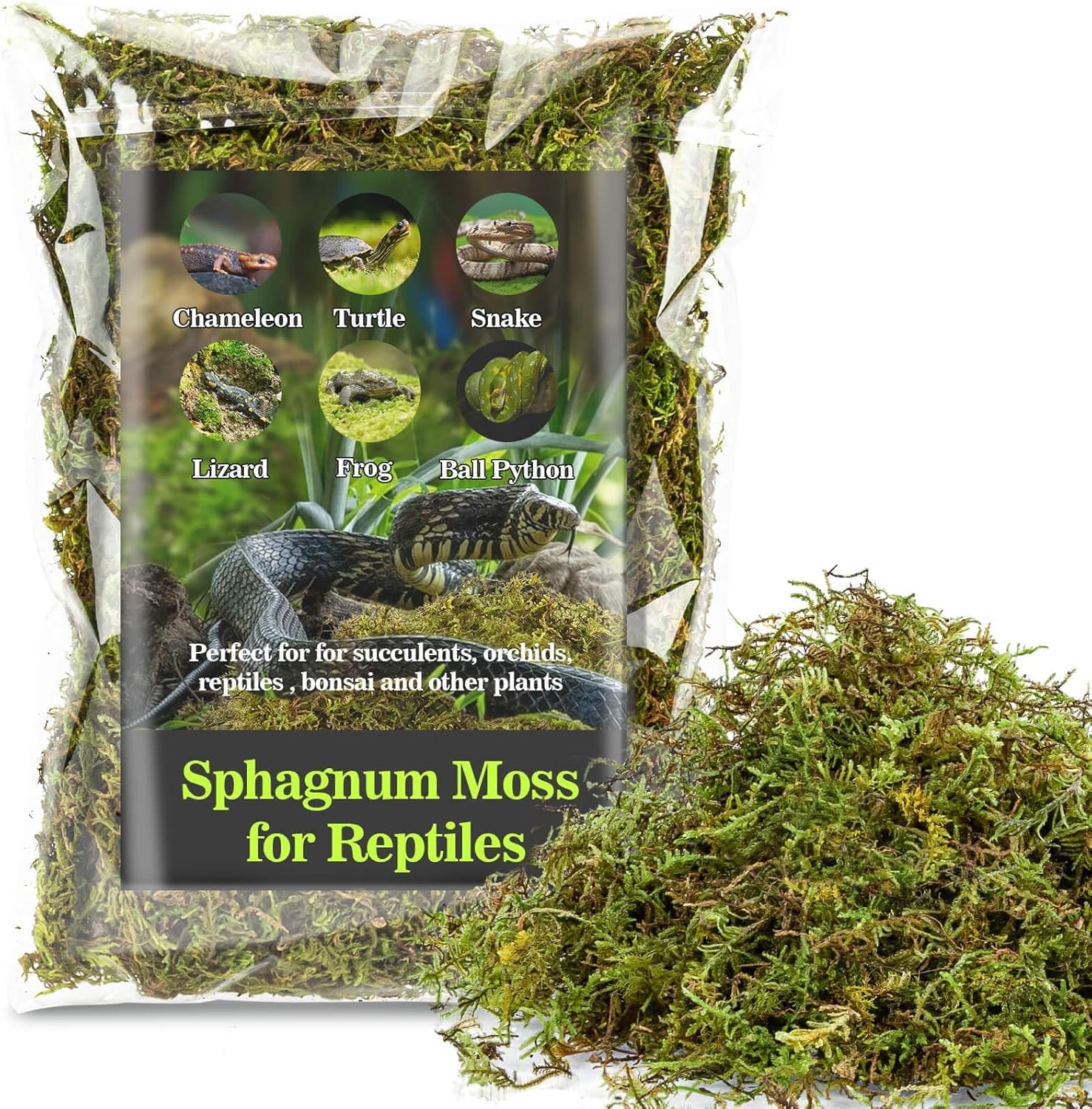
This 5 ounce pack of Sukh sphagnum moss is a versatile, highly absorbent moss intended to hold humidity in terrariums and plant applications. In practice it is used as a top layer or mixed into substrate for reptiles that need high humidity, as nesting or burrowing material, and as a moisture-retentive medium around orchid roots or in hanging baskets. Notable features include long fibers that trap and hold water for extended periods and a soft texture that encourages natural behaviors such as digging and egg-laying. For orchid growers it helps maintain consistent moisture at the root zone without compacting like potting mixes do and can be used for lining baskets or wrapping bare roots. Limitations are the small 5 ounce quantity which suits small pots or trial use rather than repotting many plants, and the fact that moss requires regular cleaning and replacement to avoid mold if kept overly wet.
Best for: Buyers who want a reliable, easy-to-use moss to maintain humidity for a few orchids or a single small terrarium and who prefer low-risk, established materials.
Less Ideal for: Growers who need large volumes for multiple repottings or those looking for a ready-to-use, sterile potting mix without periodic upkeep.
- High moisture retention suitable for maintaining humid microclimates
- Long fiber structure useful for orchid root wrapping and basket lining
- Soft texture provides natural hiding and nesting material for small animals and plants
- Small sealed pack is easy to store and use for spot applications
- Small pack size limits use to a few plants or small terrariums
- Needs regular maintenance to prevent excess moisture and potential mold growth
Verdict: A convenient small pack of long-fiber sphagnum moss that reliably holds moisture for orchids and small humid terrariums.
Choosing the Right Sphagnum Moss for Orchids: Key Factors to Consider
Water Retention Vs Aeration Balance
Sphagnum moss holds water differently depending on how finely chopped or how intact the strands are. Intact long-fiber sphagnum tends to form air pockets between strands that keep roots oxygenated while still holding moisture. Overly fine or compacted moss holds more water but reduces airflow and raises the risk of root rot.
Consider your watering frequency and the pot type. If you water infrequently, choose moss with higher moisture capacity but ensure it still has structure. If you water often or have a humid environment, prioritize aeration to prevent saturation.
Cleanliness and Salt Content
Orchid roots are sensitive to salts, fertilizer residues, and debris that can build up in potting media. Clean, thoroughly processed sphagnum reduces the chance of unwanted salts and organic contaminants that can harm roots or encourage pests.
Look for moss that is free of sand, soil particles, and obvious plant debris. While full lab analysis is rare on packaging, well-processed moss usually looks uniform and has fewer dark fragments. Clean moss also reduces the need for frequent repotting because there is less breakdown material to compact around roots.
Fiber Length and Structure
Long, intact fibers provide channels for both water and air, supporting healthy root growth for many epiphytic orchids. Short, shredded moss can pack tightly and loses its structural benefits sooner, requiring more frequent replacement.
Think about how you plan to pot the orchid. For mounted or basket plants, longer strands wrap around the root mass and help anchor the plant while maintaining airflow. For small pots, a mix of slightly shorter fibers may be easier to work with but expect reduced longevity.
Rewetting Behavior
Some sphagnum dries to a hydrophobic state and takes time to rehydrate, while others accept water quickly. Rewetting ease matters if you rely on quick soak-and-drain routines or need a media that responds well to bottom-watering.
Test rehydration by soaking a small sample. Good sphagnum will absorb water throughout the mass within minutes, not just on the surface. Moss that resists rewetting can lead to uneven moisture around roots and unpredictable watering results.
Longevity and Breakdown Rate
All organic media decompose, but the rate varies with fiber condition and processing. Moss that breaks down quickly turns to fine peat that compacts and smothers roots, necessitating earlier repotting and increasing stress on the plant.
Choose moss that retains loft over multiple wet-dry cycles. Longevity reduces labor and disturbance to plant roots. For growers who prefer low-maintenance, slower-breaking moss is worth prioritizing even if initial handling is slightly more difficult.
Choosing Moss for Different Orchid Types
Epiphytic orchids like Phalaenopsis and Cattleya generally do best with moss that balances moisture and airflow. Use longer-fiber sphagnum in baskets or wrapped around root balls to mimic tree-limb conditions. Terrestrial or semi-terrestrial orchids may tolerate mixes with coarser particles but still benefit from some sphagnum to boost moisture retention.
Compact-growing orchids in small pots need a moss that does not stay saturated for long. In contrast, species that prefer higher humidity can handle denser moss as long as the container drains well. Match the moss to how the species naturally grows and to your container choice.
- Epiphytes: Long-fiber moss for airflow and anchoring
- Terrestrials: Mix with coarser media for drainage
- Small pots: Use looser, quicker-drying moss to avoid saturation
Preparing and Rehydrating Sphagnum
To rehydrate dried sphagnum, soak it thoroughly in warm water until fibers are evenly wet. Break apart larger clumps while soaking to ensure water penetrates. Squeeze gently when appropriate to remove excess water before planting.
For mounted orchids, moisten the moss so it is pliable but not dripping. Pack it gently around roots and allow some air pockets to remain. For potted orchids, aim for a slightly damp but not saturated mass when potting to reduce initial settling and compaction.
- Soak in warm water until fully saturated
- Gently massage clumps to distribute moisture
- Squeeze out excess water for mounted setups
When to Repot and Refresh Moss
Repot when the moss has compressed into fine material, roots circle tightly, or plants show signs of poor aeration such as yellowing leaves or limp growth. For many growers, this occurs every 12 to 24 months depending on moss quality and watering habits.
If your moss smells musty, contains visible debris, or retains standing water for long periods, plan to replace it. Regular checks of root color and texture will tell you whether the moss is still providing a healthy environment.
- Common repot interval: 12 to 24 months
- Replace sooner if moss compacts or smells musty
- Inspect roots for firm, white or green tips as a health indicator
Storing and Handling Moss
Store unopened, dry sphagnum in a cool, dry place away from direct sunlight to preserve fibers and reduce mold risk. Once opened, keep excess in breathable packaging to avoid trapping moisture that can promote decay.
When handling, wear gloves if you have sensitive skin and rinse hands after working with moss. Avoid compressing stored moss; keep it loosely packed so strands retain loft for future use.
- Keep dry moss in a cool, ventilated area
- Use breathable bags for opened moss
- Avoid compressing to maintain fiber loft
Mixing Sphagnum with Other Media
Many growers blend sphagnum with coarser components like bark, perlite, or charcoal to customize drainage and nutrient-holding traits. A common approach is to use sphagnum for moisture retention and finer root contact while adding bark to preserve large air gaps and speed drying.
Adjust proportions by pot size and species needs. For vigorous, fast-draining setups use a higher bark ratio. For slower-drying or frequently watered setups favor a higher sphagnum proportion but monitor for compaction.
- Use bark to improve large air spaces
- Add perlite for additional porosity
- Increase sphagnum percentage for more moisture hold
How We Chose the Best Sphagnum Moss for Orchids
We selected candidates based on horticultural traits that directly affect orchid health in everyday growing situations. Primary evaluation criteria included water retention behavior, how well the moss maintains structure and airflow around roots, and the level of cleanliness or processing to limit pests, debris, and excess salts. We also considered ease of rewetting and long-term durability so the moss does not collapse into fine peat after a few months. For exclusions we removed any products with unknown origin, obviously mixed media labeled only as “peat mix,” or items with reports of heavy contaminants. We favored sphagnum harvested and packaged to preserve long strands where possible because intact fibers keep air spaces for orchid roots. The scoring emphasized measurable, gardener-relevant factors: moisture-holding capacity under typical watering, structural integrity after repeated wet-dry cycles, absence of sand or chemical residues, and how quickly the moss rehydrates. These filters help identify moss suited to pots, baskets, and mounted displays rather than generic landscaping peat.
FAQ
How often should I water orchids potted in sphagnum moss?
Watering frequency depends on container, moss density, and environment. Typically water when the top layer feels slightly dry but roots still appear plump. In warm, dry conditions this can be weekly; in cool or humid situations it may be every 10 to 14 days.
Can I reuse old sphagnum moss when repotting?
You can reuse clean, intact moss if it still has loft and no foul smell. Rinse and sanitize by soaking in clean water and inspecting for pests or breakdown. Discard moss that is compacted, slimy, or heavily contaminated.
Is long-fiber moss always better than chopped moss?
Long-fiber moss offers better airflow and durability for many epiphytes, but chopped moss can be easier to pack in small pots. The best choice depends on pot size, orchid type, and your watering routine rather than a single universal rule.
How do I tell if sphagnum moss has too much salt or contaminants?
Excess salts or contaminants often show as white crusts, odd residues, or poor root responses after potting. If you suspect high salts, soak and rinse the moss repeatedly and consider replacing it with a cleaner supply to avoid stress to sensitive orchid roots.
Will sphagnum moss retain fertilizer, and does that cause problems?
Sphagnum can hold soluble fertilizer, which may concentrate over time. Use light feeding schedules and flush media occasionally to avoid buildup. Monitoring plant response and occasionally leaching the potting media helps prevent nutrient imbalance.
Final Verdict
Match the moss to the orchid type and your watering habits. Prioritize moss that keeps a balance between moisture retention and airflow, shows minimal contaminants, and rehydrates reliably. Expect to refresh media when fibers compress or roots show stress. Focus on the tradeoff between longevity and initial handling ease: longer-lasting, intact fibers reduce repotting but may require more careful preparation. Use the decision factors above to pick moss that fits your container style and care routine so your orchids stay healthy and bloom consistently.
