

Note: This article contains affiliate links. If you click on these links and make a purchase, I may earn a small commission at no extra cost to you. This helps support my research and content. Read my full affiliate disclosure here.
If you want safe, attractive surfaces through beds and between pavers, choosing the right stepable ground cover matters. The best options must tolerate repeated foot traffic, recover quickly from compaction, and coexist with nearby plants without stealing moisture or nutrients. This guide shortlists five stepable ground covers that fit patios, narrow paths, and high-traffic garden strips. We focus on how each type behaves under feet, its drainage and soil interaction, and how it affects nearby plantings. Read on for practical notes that will help you pick a ground cover suited to traffic patterns, climate, and planting goals.
Top Picks at a Glance
| Best Overall The best all-around choice for most situations | Plants for Pets 10" x 20" Sedum Groundcover Mat |  |
| Best Budget The cheapest option that still gets the job done reliably | Carpet Creeping Creeping Thyme Seeds (Ground Cover, 145,000 count) |  |
| Highest Rated A top-rated pick with lots of positive feedback | Isotoma fluviatilis (Blue Star Creeper) Groundcover, 1 Quart |  |
| Most Popular A crowd favorite that many people choose with confidence | HOME GROWN Verbena Moss Seeds (6,000 Seeds) |  |
| Best Seller A high-volume bestseller chosen again and again | Outsidepride Irish Moss (Sagina subulata) Ground Cover Seeds, 10,000 Pack |  |
Plants for Pets 10" x 20" Sedum Groundcover Mat

| Indoor Outdoor Usage | Indoor, Outdoor |
|---|---|
| Sunlight Exposure | Full Sun |
| USDA Hardiness Zone | 3, 4, 5, 6, 7 |
| Soil Type | Sandy Soil |
| Moisture Needs | Moderate Watering |
This pre-planted sedum mat arrives as a 10 by 20 live tile of mixed sedum varieties intended for fast groundcover and vertical accents in full-sun locations. You can lay the mat directly into a well-drained, sandy bed, separate it into sections for multiple small plantings, or attach it to a living wall frame; the drought- and heat-tolerant succulents need bright sun and infrequent watering once established. Notable features include a ready-to-plant live mat that blooms in late spring to early summer, biodegradable material, and plant mixes that tolerate neglect and resume growth after dry periods. Practical benefits are quick visual coverage without transplanting many small pots, low watering needs for waterwise landscapes, and suitability for hardiness zones listed by the maker. Important limitations are the small tray size that covers only a modest area per unit and the seasonal sensitivities of some sedum types which may go semi-dormant under 50°F, so multiple tiles or dividing the mat is necessary for larger projects.
Best for: Buyers who want a low-maintenance, fast-establishing groundcover for sunny beds or living walls and prioritize reliable drought performance and easy installation.
Less Ideal for: Not a great fit for large-scale monoculture lawns where bulk coverage and uniformity are needed or for gardeners who need shade-tolerant groundcovers.
- Ready-to-plant live mat simplifies installation and speeds groundcover establishment
- Drought and heat tolerant sedum mix reduces watering and maintenance needs
- Versatile use for beds, edging, green roofs and vertical gardens
- Biodegradable mat material integrates into soil over time
- Small 10×20 mat covers a limited area so larger projects require multiple tiles
- Some varieties may go dormant or thin in cooler temperatures below about 50°F
Verdict: An easy-to-install live sedum mat that delivers fast, drought-tolerant groundcover for sunny spots where low maintenance and quick coverage matter.
Carpet Creeping Creeping Thyme Seeds (Ground Cover, 145,000 count)

| Indoor Outdoor Usage | Outdoor |
|---|---|
| Other Special Features of the Product | Attracts Pollinators, Fragrant, High Germination Rate |
| Expected Blooming Period | Spring to Fall |
| Sunlight Exposure | Full Sun |
| Moisture Needs | Moderate Watering |
These creeping thyme seeds are intended for establishing a fragrant, pollinator-friendly ground cover that blooms from spring through fall. They are typically sown in sandy, well-drained soil in full sun during the recommended planting period and will germinate in about two to four weeks. The listing emphasizes high germination, organic non-GMO seed stock, and suitability for dry, low-water sites, which makes it practical for rock gardens, between pavers, and large areas where a low mat of flowers is desired. Because the packet is a very large unit count, it suits budget-conscious gardeners covering wide areas or restoring erosion-prone slopes. Expect to maintain moderate watering while plants establish and occasional trimming to keep a neat carpet. Limitations are that thyme prefers full sun and sandy soils so it will perform poorly in heavy clay or dense shade, and establishing a uniform stand requires patience through the germination window and proper site prep.
Best for: Buyers who need an affordable way to establish a wide swath of flowering ground cover and prefer low-water, pollinator-friendly plantings in sunny sites.
Less Ideal for: Gardeners who want a ground cover for shady, moisture-retentive soils or those seeking a small packet for container-only planting.
- Very large seed count suitable for covering large areas on a single purchase
- Non-GMO, heirloom, organic seed sourcing
- Adapted to dry, sandy soils and full sun for low-water landscaping
- Attracts pollinators and produces fragrant blossoms across spring to fall
- Not well suited to heavy clay soils or shaded locations
Verdict: A budget-friendly, high-count seed option for quickly establishing a drought-tolerant, pollinator-attracting flowering carpet in sunny, sandy sites.
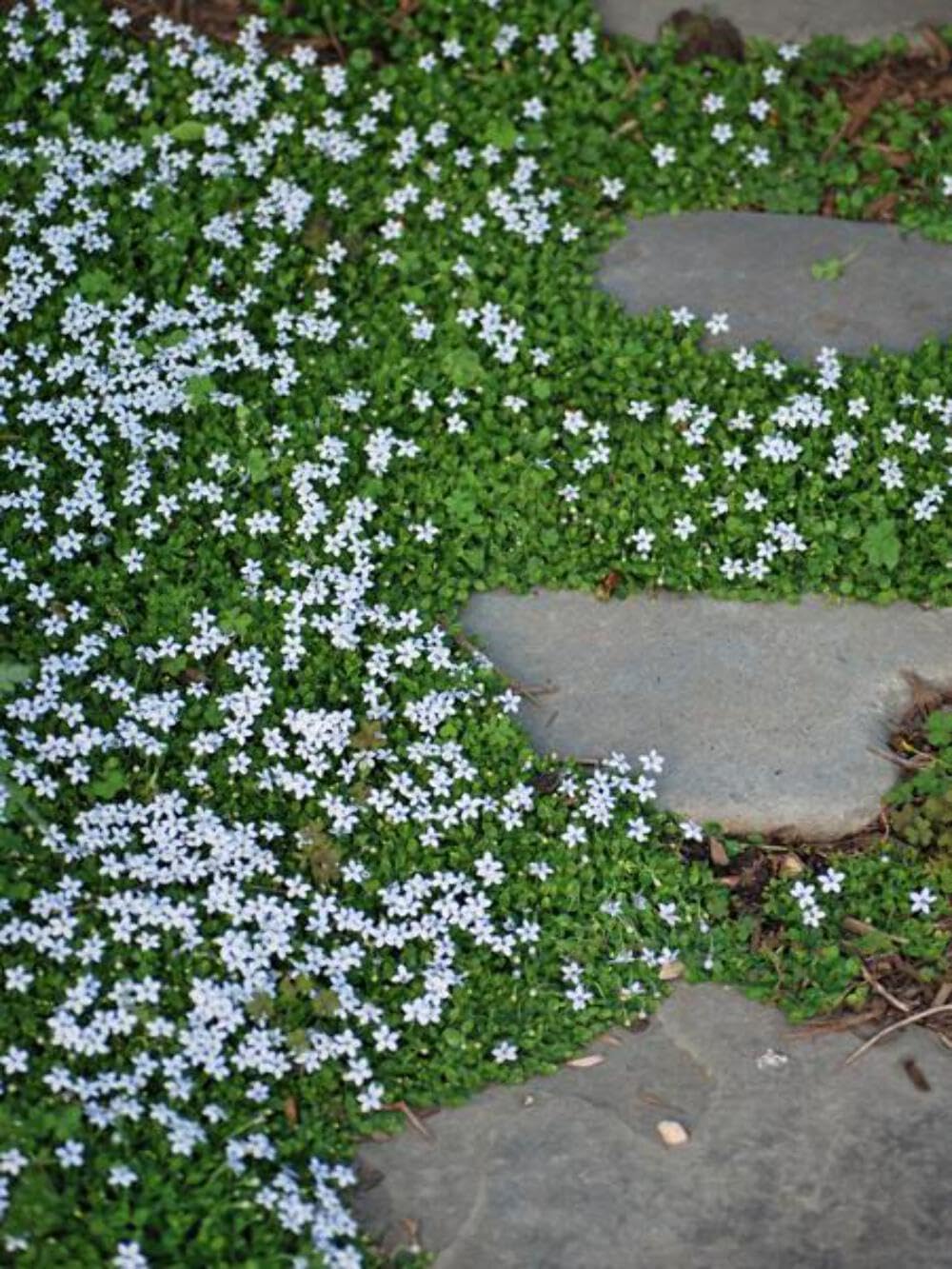
Isotoma fluviatilis (Blue Star Creeper) Groundcover, 1 Quart
| Manufacturer | Perennial Farm Marketplace |
|---|---|
| Pot size | 1 Quart |
| Flower color | Sky-blue |
Isotoma fluviatilis (Blue Star Creeper) is a hardy, low-growing groundcover that forms a 2–3 inch dense mat dotted with sky-blue, star-shaped flowers from late spring through summer. It is typically planted in 1-quart pots around stepping stones, in small sunny patches, or as a replacement for small lawn areas where a fine-textured groundcover is desired. Key features are its tolerance of varied moisture levels and heavy foot traffic, plus its ability to creep into tight joints which helps suppress weeds and soften pathways. The immediate benefit is quick visual fill-in and seasonal color without frequent mowing. Limitations are that this is a shallow, mat-forming plant so it is best for small areas rather than large lawns, and it requires establishment time before it can handle regular traffic at full density. Expect to give it a season to spread and occasional trimming at edges to keep it neat.
Best for: Gardeners who need a tough, low-growing groundcover for sunny spots and want quick seasonal blooms and a durable mat for pathways or small lawn replacements.
Less Ideal for: People looking to cover large lawn areas quickly or those who need a tall, plush turf substitute for heavy continuous use.
- Produces sky-blue star-shaped flowers from late spring through summer for seasonal interest
- Forms a dense 2–3 inch mat that creeps between stepping stones to reduce weed growth
- Tolerant of heavy foot traffic once established, suitable for pathways and small lawn replacements
- Adapts to a range of moisture levels and soil types, easing site selection
- Slow to fully establish across larger areas so not ideal for instant full coverage
- Best suited to small patches rather than large lawns due to low mat height
Verdict: Choose this Blue Star Creeper when you want a durable, flowering low mat that fills gaps between stepping stones and handles occasional foot traffic in sunny small areas.
HOME GROWN Verbena Moss Seeds (6,000 Seeds)

| Expected Blooming Period | Spring to Fall |
|---|---|
| Sunlight Exposure | Full Sun |
| USDA Hardiness Zone | 2, 3, 4, 5, 6, 7, 8, 9, 10, 11 |
| Number of Pieces | 6000 |
| Moisture Needs | Moderate Watering |
These HOME GROWN Verbena Moss seeds provide a high-count mix (6,000 seeds) of Verbena tenuisecta designed for mass planting as a colorful ground cover. Intended for full‑sun sites, the seeds produce compact, feathery foliage topped by rounded clusters of tiny star-shaped flowers in shades from white to purple, blooming from spring through fall. The packet is marketed as heirloom and non-GMO and comes with an online grow guide, which helps with sowing, establishing, and basic care. In practice this mix is useful for filling borders, rock gardens, slopes, or bare patches to create a continuous floral carpet and to attract pollinators. Strengths are the very high seed count for wide coverage, long blooming season, and low maintenance once established. Expect moderate watering and loam soil for best results, and treat it as a perennial only where frost is mild; in colder zones it behaves more like an annual. Buyers should allow time for germination and establishment before judging density, and plan for deadheading or light pinching to keep plants tidy and encourage reblooming.
Best for: Gardeners who want an easy, showy ground cover for sunny beds and borders and who value social proof and guidance when trying a larger scale planting.
Less Ideal for: Shade gardeners or those needing an immediate, fully established lawn‑like cover; also unsuitable for planting sites where winter survival is critical and perennial habit is mandatory.
- Very high seed count suitable for large beds or mass plantings
- Heirloom non-GMO seed mix with an included online grow guide to support success
- Long bloom window from spring to fall for sustained garden color
- Low maintenance once established and attractive to pollinators
- Suitable for poor soils and erosion control on slopes
- Perennial performance depends on local winter hardiness so may behave as an annual in cold climates
- Requires full sun and moderate watering so not suited to shade or very dry xeric sites
Verdict: Choose this large non‑GMO seed pack when you want an affordable, pollinator‑friendly ground cover that delivers long, low‑maintenance color across large sunny areas.
Outsidepride Irish Moss (Sagina subulata) Ground Cover Seeds, 10,000 Pack

| Unit Count | 10000 Count |
|---|---|
| USDA Hardiness Zone | 4 |
| Sunlight Exposure | Partial Sun |
| Expected Blooming Period | Spring to Fall |
| Moisture Needs | Moderate Watering |
Outsidepride Irish Moss seeds (Sagina subulata) are sold as a bulk packet intended to establish a dense, carpet-like ground cover that stays 1 to 2 inches tall. Typical use is surface-sowing in well-drained soil in spring, then keeping the seedbed consistently moist until seedlings are established; the packet claims coverage up to about 100 square feet when sown at recommended rates. Notable features include shade tolerance, small white spring-to-summer flowers, and suitability for light foot traffic between pavers or on pathways. Practically, it is a low-maintenance option that suppresses bare soil, helps retain moisture, and creates a soft, barefoot-friendly surface where a low-profile look is desired. Limitations are that it prefers consistent moisture and cooler conditions in warm regions, can be slow to fill in compared with faster-spreading lawn alternatives, and is intended only for light traffic situations rather than play areas or heavy use.
Best for: Gardeners and landscapers who need a tidy, low-profile ground cover for shaded paths, rock gardens, or between stepping stones and prioritize a neat, long-term carpet effect over rapid coverage.
Less Ideal for: Those needing an immediate, dense turf for heavy foot traffic areas or for locations with prolonged drought and high heat where moisture is difficult to maintain.
- Very low growth habit creates a neat, 1–2 inch living carpet ideal for filling gaps between stones
- Tolerates partial shade so it works in shaded borders and under trees
- Produces delicate white blooms that add seasonal interest without increasing height
- Bulk pack (10,000 seeds) can cover a substantial area when sown at recommended rates
- Requires consistent moisture and well-drained soil for reliable establishment
- Slower to establish and fill in than some aggressive ground covers
Verdict: Choose these Irish Moss seeds when you want a low-growing, shade-tolerant living carpet between pavers or in rock gardens that creates a soft, long-term ground cover.
Choosing the Right Stepable Ground Cover: Key Factors to Consider
Traffic Tolerance
Traffic tolerance determines how well a ground cover holds up when regularly stepped on. Some species compress and recover quickly, retaining a neat look, while others thin out, leaving bare patches that invite weeds. Think about the type of foot traffic the area gets: occasional stepping over a garden bed is different from a frequently used narrow path. Higher tolerance usually means denser, lower-growing mats that root closely to the soil surface.
Choosing a ground cover with matched traffic tolerance reduces patchiness and the need for frequent replanting or repairs.
Recovery and Resilience
Recovery refers to how fast a cover returns to a healthy appearance after compaction or partial damage. Fast-resuming ground covers fill in worn spots from runners or stolons, while slower types require hand-seeding or plugs to maintain coverage. Consider seasonal effects: growth slows in cool weather, so some covers will need more attention if the main walking seasons coincide with dormancy.
Resilience also covers resistance to pests and diseases that can spread in dense mats and create larger bare areas if unchecked.
Soil Moisture and Drainage Compatibility
Different stepable ground covers have distinct moisture preferences. Some species thrive in well-drained, rocky soils and tolerate drought, making them ideal between pavers or in gravel paths. Others prefer consistently moist soils and will struggle in dry, sunny walkways. Poor drainage can lead to rot in sensitive species, while very dry conditions can turn lush mats into brittle patches.
Match the ground cover to your site conditions or adjust soil and drainage before planting to avoid repeated failures.
Rooting Habit and Establishment Speed
How a ground cover establishes-by seed, plugs, runners, or spread of stolons-matters for how quickly a usable stepping surface appears. Fast-establishing covers give functional surfaces sooner and suppress weeds earlier. Some spreads are aggressive and will quickly knit a surface, while others form looser clumps that leave gaps longer.
Plan for initial irrigation and protection during establishment; newly planted areas need lighter foot traffic until roots are set.
Maintenance Requirements
Maintenance ranges from near-zero care to periodic trimming, dividing, or spot-replanting. Mowing or shearing might be needed if the cover grows taller than desired for stepping. Some types shed seed or flower heads that require cleanup to keep paths tidy, while others retain a clean, low profile.
Consider how much time you can invest in upkeep and whether you prefer an informal worn-in look or a tidy, managed path.
Plant Compatibility and Aesthetic Fit
A stepable ground cover should play well with neighboring plants. Some covers compete strongly for nutrients and moisture and can overrun small perennials, while others stay contained and complement bed plantings. The visual texture and seasonal coloration are also considerations; a cover that browns out in winter might be acceptable in informal beds but not in a formal stepping-stone path.
Choose a cover that balances aesthetic goals with ecological compatibility in the planting area.
Where to Use Stepable Ground Cover in the Garden
Stepable ground cover works best in narrow routes where a full paved path would feel heavy or in spaces where you want a softer surface between stepping stones. They are ideal for cottage-style borders, vegetable garden aisles, and around low-growing shrub plantings where occasional pedestrian traffic is expected.
Consider microclimates: places that stay moist under tree drip lines favor different covers than hot, exposed edges of raised beds. Use ground cover in spots where soil can be amended or drainage improved if needed.
- Between large stepping stones to create a softer, green walkway
- Along garden beds to reduce weed pressure in lightly walked areas
- Around patios and seating areas where occasional foot traffic occurs
Installation and Establishment Tips
Prepare the soil by removing weeds, loosening the top few inches, and adding organic matter if the soil is poor. Firm the soil surface gently to provide consistent rooting contact but avoid over-compacting areas meant for stepping.
Planting as plugs or small sections often gives faster usable coverage than seed alone. Water consistently until plants develop a strong root network, then ease back to the natural moisture regimen of the site. Temporarily divert traffic or use stepping boards while the cover establishes.
- Space plugs or transplants according to species recommendations for faster knitting
- Keep young plantings moist but not waterlogged for the first 4 to 8 weeks
- Use a light mulch sparingly around young plants to retain moisture without smothering growth
Seasonal Care and Winter Considerations
Many stepable covers slow growth or go dormant in cold months. Plan for thicker coverage in late summer to withstand winter trampling. In frost-prone areas, avoid heavy traffic on frozen mats that can crush foliage and damage crowns.
In spring, rake lightly to remove debris and assess winter damage. Replace thin patches with plugs and avoid aggressive fertilization that encourages tender growth right before cold snaps.
- Reduce foot traffic on frozen or waterlogged mats to prevent permanent compaction
- Repair thin spots in early spring or late summer when growth activity resumes
Pairing Ground Cover with Hardscape
When using ground cover between stepping stones or pavers, choose species that tolerate periodic footfall and short dry spells. Leave a small gap for soil depth so roots can establish; very shallow pockets will need more frequent watering and may not support robust growth.
Consider edging to prevent aggressive spreads into beds where they are not wanted, and use permeable joint materials that allow water infiltration rather than impermeable mortar which can trap water and harm roots.
- Allow at least 2 to 3 inches of soil depth between stones for most low-growing covers
- Install low-profile edging where needed to contain runners
Managing Weeds and Competing Plants
Dense, healthy ground cover reduces weed establishment, but thin or newly planted areas will need attention. Pull weeds by hand or use shallow cultivation to avoid disturbing the cover's roots. Avoid broad, repeated herbicide use near desirable living ground covers.
Overplanting in the first season helps suppress weeds later. Plan for periodic spot planting to maintain an even surface in high-use corridors.
- Monitor thin spots and repair quickly before weeds gain a foothold
- Use companion plantings that do not outcompete the ground cover
How We Chose the Best Stepable Ground Cover
We shortlisted options that are commonly used as stepable ground cover and filtered them against garden-specific performance needs. Key evaluation criteria included wear resistance under repeated foot traffic, recovery rate after being stepped on, tolerance for varying soil moisture and drainage, compatibility with surrounding plantings, and maintenance needs such as trimming or occasional replanting. We also checked cold- and heat-tolerance ranges to ensure year-round appearance in a range of climates. Exclusions included species that spread invasively into beds without control, ground covers that require constant irrigation in dry climates, and plants that have brittle foliage that quickly dies back from moderate trampling. Practical gardener-focused factors such as ease of establishment, seed or plug availability, and how the cover interacts with mulch or gravel paths were also part of the selection process. Our scores and choices reflect these garden-use realities rather than botanical rarity or decorative only traits.
FAQ
How long does it take for stepable ground cover to become durable enough for regular foot traffic?
It usually takes several weeks to a few months depending on species, planting method, and growing conditions. Plugs and established transplants often reach usable strength faster than seeds, and warm, moist conditions speed rooting.
Can I walk on ground cover year-round without damaging it?
That depends on the species and season. Many covers tolerate light, occasional traffic but will suffer if repeatedly walked on when wet or frozen. Avoid heavy use during dormancy or when plants are waterlogged to prevent lasting harm.
Will stepable ground cover prevent weeds in my path?
A dense, healthy mat reduces weed seed germination by limiting light and space. However, newly planted or thin areas will still need weed control until the cover fully establishes.
How much maintenance do stepable ground covers require?
Maintenance ranges from low to moderate. Expect occasional trimming, spot replanting, and seasonal cleanup. Some species need little more than an annual tidy, while others benefit from periodic shearing to keep a flat surface.
Are there ground covers that tolerate both drought and occasional foot traffic?
Yes. Several low-growing, drought-tolerant species can handle occasional stepping if well established. Selection should match site drainage and sun exposure, and initial irrigation helps them become resilient.
Final Verdict
When choosing stepable ground cover, prioritize traffic tolerance and recovery over purely decorative traits. Match the cover to site moisture and sun conditions, and plan for proper establishment so the surface becomes durable quickly. Expect tradeoffs between low maintenance and aggressive spreading; select a species that fits your maintenance willingness and desired aesthetic. With the right match, you can create green, resilient walkways that soften hardscapes and reduce bare soil.
