

Note: This article contains affiliate links. If you click on these links and make a purchase, I may earn a small commission at no extra cost to you. This helps support my research and content. Read my full affiliate disclosure here.
If you manage larger yards, commercial properties, or frequent landscaping chores, the right string trimmer makes routine maintenance faster and less fatiguing. A trimmer built for landscaping behaves differently than a homeowner model: it sustains longer cuts, handles thicker growth, and stands up to heavier daily use. This guide spotlights six shortlisted string trimmers for landscaping and explains the specific tradeoffs gardeners and landscape pros should weigh. We evaluate each pick on cutting capability, durability, and runtime so you can match a tool to your mowing schedule and the conditions you work in.
Top Picks at a Glance
| Best Overall The best all-around choice for most situations | Husqvarna 320iL Cordless String Trimmer and 230iB Leaf Blower Bundle |  |
| Best Quality Built to a higher standard if you want something more solid | Husqvarna 525L 25.4cc Straight-Shaft Gas String Trimmer |  |
| Best Value The sweet spot between price and what you get | BLACK+DECKER 20V MAX 12" Cordless String Trimmer and Edger (LST300) |  |
| Highest Rated A top-rated pick with lots of positive feedback | ECHO PAS-225VPB 21.2 cc Straight-Shaft Gas String Trimmer with Speed-Feed Head and 100 MPH Blower Kit |  |
| Most Popular A crowd favorite that many people choose with confidence | BLACK+DECKER 6.5-Amp 14-inch AFS Electric String Trimmer/Edger (BESTA510) |  |
| Best Seller A high-volume bestseller chosen again and again | WORX 20V 12" 2-in-1 Cordless String Trimmer & Lawn Edger (WG163) |  |
Husqvarna 320iL Cordless String Trimmer and 230iB Leaf Blower Bundle

| Power Source | Battery Powered |
|---|---|
| Cutting width | 16 inches |
| Speed | 560 rpm |
| Number of Batteries | 1 Lithium Ion (included) |
This Husqvarna bundle combines a cordless 320iL string trimmer and 230iB leaf blower into a single kit aimed at routine landscaping and yard cleanup. The trimmer offers a 16-inch cutting width and a dual-direction head for quicker edging and trimming, while the blower delivers up to 650 CFM for clearing leaves and debris. Both tools run from the included 40V 4 Ah B140 battery and use Husqvarna’s active cooling system to maintain consistent power and extend battery life. In practice the trimmer’s lighter design and faster cutting speed make it easier to work longer without fatigue, and the blower produces strong airflow while remaining relatively easy to handle. Notable features are boost mode for short bursts of extra power and the included charger so the kit is ready to use out of the box. Limitations to consider are runtime constraints typical of cordless tools under heavy use and the need to manage battery charge for larger properties, and the bundle focuses on trimming and blowing rather than heavy-duty mowing or commercial-scale clearing.
Best for: Homeowners and landscaping-minded DIYers who want a balanced cordless setup for routine trimming, edging, and debris clearing around medium-sized yards.
Less Ideal for: Professional landscapers or users who need extended runtime for large properties should consider higher-capacity or gas-powered equipment.
- Includes both a 16-inch trimmer and a 650 CFM leaf blower for common landscaping tasks
- Comes with a 4 Ah B140 battery and 40-C80 charger so tools are ready to use
- Lightweight trimmer design and faster cutting speed reduce operator fatigue
- Active cooling system helps maintain performance and prolong battery life
- Battery runtime may be limited for large properties or prolonged heavy use
- Not intended to replace heavier gas or commercial-grade equipment for intensive jobs
Verdict: This bundle is a convenient, ready-to-use cordless combo that balances light weight, usable power, and convenience for typical landscaping and yard maintenance.
Husqvarna 525L 25.4cc Straight-Shaft Gas String Trimmer

| Power Source | Gas Powered |
|---|---|
| Cutting width | 17 inches |
| Engine Displacement | 25.4 CC |
| Engine Cycle | 2-Cycle |
| Attachment Capable | No |
The Husqvarna 525L is a gas-powered straight-shaft string trimmer built for regular yard maintenance and light professional use. It uses a 25.4cc X-Torq 2-cycle engine with Smart Start and Air Purge to reduce startup effort and fuel consumption, and a Tap-n-Go head that makes line advancement and reloads quick. The 17-inch cutting width covers more area per pass than compact consumer trimmers, and the intuitive controls and high-capacity line head help when edging, clearing overgrown grass, or doing seasonal cleanup. Practical benefits include stronger cutting performance than battery models and a durable design intended for frequent use. Important limitations are the typical noise and vibration of a gas two-stroke unit and the need for fuel mixing, routine maintenance, and hearing protection for longer sessions. This model is not attachment-capable, so you cannot expand it with other tools, but it delivers straightforward, reliable trimming where cordless runtime or power would be a constraint.
Best for: Buyers who prioritize dependable gas power for frequent trimming and want a machine that starts easily and handles heavier grass without relying on battery runtime.
Less Ideal for: Those who need a quiet, low-maintenance option for small yards or who prefer cordless convenience and zero-emission operation.
- Powerful 25.4cc X-Torq engine for robust cutting and improved fuel efficiency
- Smart Start and Air Purge reduce effort when starting the trimmer
- Tap-n-Go trimmer head for fast line advance and easier reloading
- 17-inch cutting width speeds up work on larger patches and edges
- Two-cycle gas engine requires fuel mixing and regular maintenance
- Higher noise and vibration levels compared with electric or battery trimmers
- Not compatible with attachments for other yard tools
Verdict: Choose the 525L when you need a reliable, easy-starting gas trimmer that handles frequent trimming and heavier grass better than cordless alternatives.
BLACK+DECKER 20V MAX 12" Cordless String Trimmer and Edger (LST300)

| Power Source | Battery Powered |
|---|---|
| Cutting width | 12 inches |
| Speed | 6200 rpm |
| Number of Batteries | 1 Lithium Ion (included) |
The BLACK+DECKER LST300 is a compact, battery-powered 2-in-1 string trimmer and wheeled edger designed for routine yard maintenance and edging tasks. It uses a 20V Powerconnect lithium-ion battery (included) and a PowerDrive transmission to deliver higher torque at the cutting head, while a 12-inch cutting swath makes it easy to navigate around garden beds and sidewalks. The automatic feed spool keeps line length correct without bumping, and adjustable height plus a textured handle improves comfort for longer sessions. Because it is cordless and lightweight it starts quietly and avoids the fuss of gas tools, and the included wall-mountable charger simplifies storage. Expect solid performance on standard grass and moderate overgrowth; however the 12-inch head and single included 2.0 Ah battery limit runtime and may require slower passes or a second battery for large yards or very thick weeds. For homeowners focused on convenience and everyday trimming, this model balances ease of use with enough cutting power for typical light-to-moderate jobs.
Best for: Homeowners who want an easy-to-use, low-noise cordless trimmer for regular lawn touch-ups and clean edging around sidewalks and beds and who value simplicity and proven performance.
Less Ideal for: Those with several acres, dense brush, or frequent heavy clearing needs should look at higher-voltage cordless or gas-powered trimmers instead.
- Converts quickly between string trimmer and wheeled edger for two common tasks
- Automatic Feed Spool (AFS) keeps line fed without bumping
- PowerDrive transmission increases torque for stronger cutting at the head
- Lightweight with adjustable handle and height for comfortable use
- Includes 20V lithium-ion battery and charger so it is ready to use out of the box
- 12-inch cutting swath and single 2.0 Ah battery limit runtime and may be slow on large yards or very thick weeds
- Not suited for heavy-duty brush cutting compared with more powerful gas or higher-voltage cordless models
Verdict: A lightweight, easy-to-use 2-in-1 cordless trimmer that is ideal for everyday light-to-moderate lawn trimming and edging tasks.
ECHO PAS-225VPB 21.2 cc Straight-Shaft Gas String Trimmer with Speed-Feed Head and 100 MPH Blower Kit

| Power Source | Gas Powered |
|---|---|
| Cutting width | 17 inches |
| Speed | 100 miles_per_hour |
| Brand Name | ECHO |
| Model Number | PAS-225VPB |
This ECHO PAS-225VPB package pairs a 21.2 cc straight-shaft 2-stroke trimmer with a Speed‑Feed bump head and an included 100 MPH leaf blower, aiming at heavy-duty yard work. The straight shaft and gas power make it well suited for larger yards and ground-level cutting where reach and cutting force matter, while the Speed‑Feed head lets you reload line quickly without disassembling the head. The single-tool kit also covers cleanup with the blower, so you can trim and then clear clippings and leaves without swapping brands or tools. Practical benefits include strong cutting performance for thick grass and the convenience of a ready-to-use blower. Expect the usual considerations for gas two-stroke equipment: routine fuel mixing, louder operation, and periodic spark plug/air filter maintenance. The kit is heavier than electric alternatives and requires more storage and maintenance, but it delivers the performance and durability many pros and demanding homeowners prefer.
Best for: Buyers who prioritize cutting power and durability for larger lawns or frequent heavy-duty trimming and want a single kit that also handles debris cleanup.
Less Ideal for: Casual users with small yards, those who prefer low-noise or low-maintenance tools, or anyone wanting an emission-free electric option.
- Straight-shaft design provides good reach and stable cutting angle for larger areas
- 21.2 cc gas engine delivers robust power for thick grass and tougher jobs
- Speed‑Feed head allows fast line replacement without tools
- Includes a 100 MPH blower for same-session cleanup
- Durable commercial-style components suitable for frequent use
- Requires two-stroke fuel mixing and routine engine maintenance
- Heavier and louder than battery or electric trimmers
Verdict: Choose this ECHO straight-shaft trimmer kit when you need professional-level cutting power and a ready-to-use blower for efficient, heavy-duty yard work.
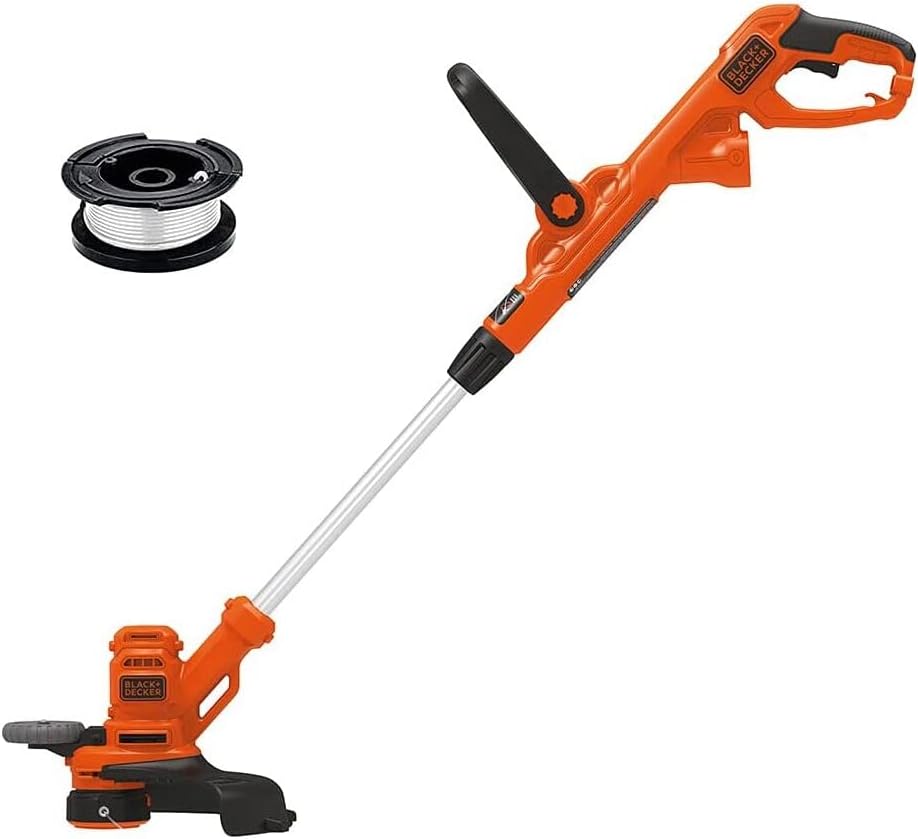
BLACK+DECKER 6.5-Amp 14-inch AFS Electric String Trimmer/Edger (BESTA510)
| Power Source | Corded Electric |
|---|---|
| Cutting width | 14 inches |
| Speed | 8000 rpm |
| Included Components | AF-100 Spool, Auxiliary Handle, Guard |
| Manufacturer Warranty Description | 2 Year Limited Warranty, 30 Day Money Back Guarantee |
This BLACK+DECKER model is a straightforward corded electric trimmer that converts to a wheeled edger, letting you trim tight spots and define borders without buying two tools. The 6.5‑amp motor with POWERDRIVE transmission supplies steady torque for grass and light overgrowth, while the 14‑inch cutting swath gets jobs done quickly. AFS automatic feed spool removes the need to bump the head and keeps line feeding consistent, and the integrated cord retention reduces accidental unplugging during use. The tool is relatively lightweight and includes an auxiliary handle and adjustable positions for more comfortable handling. Because it is corded, runtime is effectively unlimited but you are limited by reach from an outlet and need to manage an extension cord for larger yards. The edging wheel converts easily but is basic compared with dedicated gas or battery pro edgers. For homeowners on a budget who need reliable, low-maintenance edging and trimming around sidewalks, driveways, and flower beds, this is a practical choice.
Best for: Homeowners who want an affordable, no-frills electric trimmer that also converts to an edger for routine lawn edge and small-yard trimming tasks.
Less Ideal for: People with large properties who need cordless mobility or professionals who require heavy-duty gas-powered edging and cutting performance.
- 2‑in‑1 trimmer and wheeled edger covers both tasks without extra tools
- AFS automatic feed spool eliminates bump feeding for uninterrupted work
- 6.5‑amp motor with POWERDRIVE transmission delivers steady torque for common yard weeds and grass
- Integrated cord retention prevents accidental unplugging during use
- Lightweight with adjustable handle for easier control and comfort
- Corded design limits reach and requires managing an extension cord
Verdict: A budget-friendly corded trimmer that doubles as a simple wheeled edger and reliably handles routine edging and trimming around the yard.
WORX 20V 12" 2-in-1 Cordless String Trimmer & Lawn Edger (WG163)

| Power Source | Battery Powered |
|---|---|
| Cutting width | 12 inches |
| Speed | 7600 rpm |
| Number of Batteries | 2 Lithium Ion batteries required. (included) |
The WORX WG163 is a compact 2-in-1 cordless string trimmer that converts quickly to a wheel-guided edger for straight, clean borders. It uses a Command Feed spool so you only advance line when you want to, and the head tilts 90 degrees to reach slopes and tight areas. Rubberized support wheels help guide edging for consistent results and the adjustable spacer guard protects flowers and landscaping during trimming. Included with the tool are two 20V PowerShare batteries and a charger, which makes it ready to work on small to medium yards and lets you swap batteries across other WORX 20V tools. At about 5.5 pounds it is easy to maneuver and less fatiguing for longer sessions. Limitations to consider are the modest 12-inch cutting swath and single-speed motor, so it is not the fastest option for very large properties or heavy brush. The Command Feed system reduces bump-feed interruptions but you will still need to keep replacement line on hand for sustained use.
Best for: Buyers who want a lightweight, easy-to-use 2-in-1 trimmer and edger for small to medium lawns and value included batteries and proven features backed by many user reviews.
Less Ideal for: Not well suited for homeowners with large acreage, dense brush, or who need variable-speed power for heavy-duty cutting tasks.
- Converts quickly between trimmer and wheel-guided edger for two tools in one
- Command Feed spool provides on-demand line advance without bumping
- Two 20V PowerShare batteries included so you can work longer and use batteries across other WORX tools
- 90° tilting head and adjustable spacer guard improve access and protect plants
- Lightweight design eases fatigue during extended use
- 12-inch cutting width and single-speed motor limit efficiency on large yards or thick vegetation
Verdict: Choose the WORX WG163 if you want a lightweight, battery-ready 2-in-1 trimmer and edger that is easy to use and works well on small to medium lawns.
Choosing the Right String Trimmer for Landscaping: Key Factors to Consider
Cutting Power and Line Size
Cutting power determines whether a trimmer can handle thick grass, tall weeds, and light brush without bogging down. For battery models this relates to motor wattage and how well the system sustains RPM under load; for gas machines it ties to engine displacement and torque. Line diameter and the number of lines on the head affect how aggressively the tool bites into vegetation. Thicker lines cut through coarse stems more effectively but require more motor or engine torque to maintain speed.
Pay attention to how the power spec is presented and to real-world reports of performance under continuous cutting. Landscaping tasks often expose trimmers to heavier loads than occasional homeowner use, so prioritize models with documented capacity for thicker line sizes or higher torque ratings.
Run Time, Fuel Capacity, and Recharge Speed
Run time affects how much area you can cover before recharging or refilling. With battery systems, look at amp-hour ratings and whether a second battery or fast charger is available; many landscapers run two batteries to avoid downtime. For gas units, fuel tank volume and engine fuel consumption determine how often you stop to refuel. Also consider how performance drops as charge depletes or as the fuel load lightens.
Recharging infrastructure, swapability of batteries, and availability of spare batteries matter if you work long shifts. For gas machines, simple refueling and easy access to the tank cap reduce downtime on the job.
Head Design, Line Reloading, and Line Capacity
A robust cutting head reduces time spent reloading and increases uptime. Features to note include bump-feed versus automatic feed, ease of replacing spools, and the maximum line diameter the head accepts. Heads with larger spools and simple reloading patterns speed work when you need to swap line in the field. Some heads accept twisted or heavy-duty lines that last longer around abrasive surfaces like gravel or hardscaping.
Durable gear housings and solid attachment points help the head survive knocks and repeated reloading. For landscaping, you will want a head that tolerates heavier line without frequent tangles or breakage.
Shaft Strength and Build Durability
A straight, reinforced shaft resists bending and transmits torque more directly from the motor or engine to the cutting head. Professional landscaping increases exposure to impacts, brush, and debris, so material choice matters. Metal shafts generally provide more toughness than thin plastics, but weight and corrosion resistance are also considerations, especially in wet climates.
Check for solid collar connections, sealed bearings near the head, and a shaft design that prevents wobble. Durable construction reduces service needs and keeps cutting geometry consistent for cleaner results.
Ergonomics and Vibration Control
Comfort affects how long you can operate a trimmer without fatigue. Look for balanced weight distribution, adjustable harness compatibility, anti-vibration features, and comfortable grips. Dual-handle designs or harness-ready mounting points let you move heavier tools with less strain on shoulders and lower back.
Vibration damping not only improves comfort but can reduce long-term wear on fasteners and the operator. For landscaping where you may use a trimmer for hours, ergonomics directly impact productivity and the risk of repetitive strain.
Maintenance Needs and Serviceability
Easier maintenance means more time trimming and less time in the shop. For gasoline trimmers consider access to spark plugs, air filters, and carburetor adjustments. For battery models evaluate whether batteries are user-replaceable, how easy it is to access the motor and gearbox, and how straightforward line replacement is. The availability of common replacement parts like spools, drive cables, and bump caps also affects long-term ownership costs.
Routine maintenance intervals, required tools for basic service, and the clarity of owner documentation should all factor into your decision when a tool will see heavy landscaping use.
When Battery Trimmers Make Sense
Battery-powered trimmers have advanced enough for many landscaping jobs, especially where noise limits, emissions, or quick startup are priorities. High-voltage systems deliver strong torque and often pair with larger batteries to approach the runtime of small gas engines for typical cut cycles.
Choose battery systems when you value lower vibration, easier starting, and cleaner operation. If you plan to work long shifts, factor in carrying spare batteries and access to fast chargers to keep productivity steady.
- Quieter operation for noise-sensitive areas
- Instant throttle response and easier maintenance
- Bring spare batteries for extended work periods
When Gas Trimmers Still Prevail
Gas models retain advantages in raw, sustained power and quick refueling. On sites without electrical access or where continuous heavy cutting is required, a gas trimmer can be easier to keep running for long stretches. Gas units also tend to accept thicker lines and heavier-duty heads more readily.
Consider gas when you frequently encounter thick brush, sapling shoots, or wide open areas where swapping batteries would be impractical.
- Refuel quickly to restore full power
- Better for heavy, continuous cutting loads
- Requires routine engine maintenance
Line Types and When to Use Them
Line material and cross-section affect cutting efficiency and longevity. Round line is common and works well on grass, while twisted or serrated lines cut coarser stems more cleanly. Some lines include a core or are heavier gauge for abrasion resistance near concrete or stone.
Match line type to the environment. Use heavier or specialized line where you hit hard surfaces often, and lighter round line for fine finishing around beds and ornamental plants.
- Round line for general lawn trimming
- Twisted or serrated line for thicker weeds and brush
- Heavy-gauge line near hardscaping for durability
Harnesses, Accessories, and Practical Setup
A well-fitted harness transforms a heavy trimmer into a manageable tool. Look for models with attachment points for shoulder straps and consider adding a hip pad for long shifts. Accessories such as edging guides, debris shields, and replacement heads should be easy to swap.
Set up your kit with spare line spools, at least one extra battery or a fuel jug, and common tools for quick service in the field. A compact toolkit prevents small issues from stopping work mid-job.
- Use a harness for extended tasks
- Carry spare spools or batteries
- Pack basic maintenance tools
Safety Practices for Landscaping Use
Proper protective gear is essential when trimming in landscaping contexts. Wear eye protection, hearing protection for gas units, long pants, and sturdy boots. Inspect the area for rocks, wire, or other hazards that can be thrown by the line.
Keep bystanders and pets well clear while operating. Regularly check the trimmer guard and replace worn components to prevent accidents from debris or broken line.
- Wear eye and hearing protection
- Clear the work area of debris
- Replace worn guards and guards promptly
How We Chose the Best String Trimmer for Landscaping
We prioritized features that matter when a trimmer is used for landscaping rather than occasional yard touch-ups. Selection started with machines designed to handle extended daily use and thicker vegetation. We filtered out tools intended only for light residential trimming or strictly decorative edging. Editorial criteria focused on cutting power and line capacity, battery run time or fuel efficiency, head durability and ease of reloading, ergonomic handling for long shifts, and maintenance requirements that affect uptime. Only trimmers with documented specs for line diameter or engine displacement were considered, plus clear information about battery amp-hours or fuel tank volume. We excluded models meant primarily for small lawns or indoor use. The remaining candidates were scored against measurable dimensions: sustained cutting ability over varied growth, usable run time between charges or refills, head and shaft robustness, and operator comfort during extended periods. These same dimensions form the scoring bars used on each product card.
FAQ
How long does a typical battery run when used for landscaping tasks?
Run time varies by battery capacity and cutting load but often ranges from 20 minutes to over an hour per battery under heavy use. Using a larger amp-hour battery or swapping batteries will extend continuous operation.
Can a battery trimmer handle thick weeds and small brush?
Many high-voltage battery trimmers can handle thick weeds and light brush, but performance depends on motor torque and line size. For consistently heavy brush, a higher-displacement gas model or a high-torque battery system is usually more reliable.
What line diameter should I use for landscaping work?
Line diameter depends on vegetation. For most landscaping tasks 0.095 to 0.105 inch line provides a good balance of durability and cut. Thicker, heavy-gauge lines are better where you encounter abrasive surfaces or woody stems.
Is a straight shaft better than a curved shaft for landscaping?
Straight shafts typically offer better reach and shaft rigidity for heavy-duty trimming, making them a common choice for landscaping. Curved shafts are lighter and more maneuverable for tight areas but may flex more under heavy loads.
How often should I replace the trimmer line during landscaping projects?
Replacement frequency depends on contact with hard surfaces and the density of vegetation. Expect to reload spools more often when working near hardscaping or gravel; heavy-duty lines last longer but will still need replacement after several hours of continuous cutting.
What maintenance should I perform to keep a trimmer reliable in landscaping use?
Regularly inspect and replace worn line, check fasteners and guards, clean air filters on gas models, and keep batteries charged and stored properly. Lubricate gearheads if recommended and address any shaft wobble or unusual noises promptly.
Final Verdict
Choose a trimmer for landscaping by prioritizing the dimensions that match the workload: cutting power for dense growth, run time or fuel capacity for uninterrupted shifts, and a durable head and shaft to reduce downtime. Account for operator comfort with harnesses or anti-vibration features if you spend many hours trimming. Balance the tradeoffs between lower maintenance and cleaner operation of battery systems versus the sustained raw power and quick refuel capability of gas machines. Decide which criteria matter most for your sites and schedule, then pick the trimmer whose strengths align with those priorities so you can maintain clean edges and tidy beds efficiently day after day.
