

Note: This article contains affiliate links. If you click on these links and make a purchase, I may earn a small commission at no extra cost to you. This helps support my research and content. Read my full affiliate disclosure here.
When you spend hours on trails, a reliable tick repellent matters as much as proper footwear and navigation. The right formula reduces time spent inspecting clothing and skin, lowers the chance of hitchhiking ticks, and helps you enjoy hikes without constant worry. This guide looks at the top shortlisted tick repellents for hikers to help you pick an option suited to day hikes, overnight backpacking, or multi-day treks. We evaluated each product for how long it protects, how it feels on skin and fabric, and how practical it is to carry and reapply on the trail. Read on to see which options matched those criteria and why they made our list.
Top Picks at a Glance
| Best Overall The best all-around choice for most situations | Sawyer SP657 Premium Permethrin Insect Repellent Spray for Clothing & Gear, 24 oz |  |
| Best Quality Built to a higher standard if you want something more solid | Ranger Ready P2Pak Permethrin + Picaridin Insect Repellent (Scent Zero, 8 oz) |  |
| Best Value The sweet spot between price and what you get | Sawyer Premium Insect Repellent Lotion with 20% Picaridin, 4 oz |  |
| Best Budget The cheapest option that still gets the job done reliably | OFF! Deep Woods Dry Insect & Mosquito Repellent Spray, 2.5 oz |  |
| Highest Rated A top-rated pick with lots of positive feedback | OFF! Deep Woods Tick & Mosquito Repellent Spray, 6 oz |  |
| Most Popular A crowd favorite that many people choose with confidence | Repel 100 Insect Repellent Pump Spray, 4 oz (98% DEET) |  |
| Best Seller A high-volume bestseller chosen again and again | OFF! Clean Feel Picaridin Insect & Mosquito Repellent Spray, 5 oz |  |
Sawyer SP657 Premium Permethrin Insect Repellent Spray for Clothing & Gear, 24 oz

| Active ingredient | 0.5% Permethrin |
|---|---|
| Application type | Trigger Spray |
| Duration | Up to 6 weeks or 6 washings |
| Fragrance | Odorless after drying |
This 24-ounce Sawyer permethrin trigger spray is designed to add a long-lasting insect barrier to clothing and outdoor gear rather than skin. You spray garments, socks, shoes, tents, or sleeping bags from about 6 to 8 inches until lightly moistened, let them dry, and the active ingredient bonds to fabric fibers to repel or kill ticks, mosquitoes, and other pests for up to 42 days or six washings. For hikers the practical benefits are clear: it dramatically lowers tick attachment risk when applied to footwear and clothing, is odorless after drying, and is formulated not to stain or damage fabrics or common gear. The bottle size treats multiple outfits, so a single container covers several trips. Important limitations are that it is not for direct skin application, effectiveness degrades with UV exposure and machine washing, and correct application takes time to treat both sides of garments. Users should follow EPA and label directions for coverage per outfit and allow treated items to dry fully before use.
Best for: Hikers who want a dependable, fabric-based layer of protection against ticks and mosquitoes and who are willing to treat clothing and gear before trips to reduce bite risk.
Less Ideal for: People who need an all-in-one topical solution for skin protection or who prefer immediate, wash-resistant protection without retreating gear.
- Bonds to fabric for extended protection up to 6 weeks or 6 washings
- Specifically formulated for use on clothing, tents, sleeping bags, and other gear
- Odorless after drying and labeled not to stain or damage fabrics
- Large 24 oz trigger-spray bottle treats multiple outfits for repeated trips
- Not for application to skin so must be paired with a topical repellent for exposed skin
- Effectiveness reduces with UV exposure and machine washing so reapplication is needed for long trips
- Takes time and care to apply correctly to each side of garments for full coverage
Verdict: A practical, long-lasting way for hikers to protect clothing and gear from ticks and mosquitoes so you can reduce bite risk on the trail.
Ranger Ready P2Pak Permethrin + Picaridin Insect Repellent (Scent Zero, 8 oz)

| Active ingredients | Picaridin 20%, Permethrin 0.5% |
|---|---|
| Body protection duration | Up to 12 hours (picaridin) |
| Clothing protection duration | Up to 5 washings or ~40 days sun exposure (permethrin) |
This two-piece kit pairs a fast-acting 20% picaridin spray for skin with a 0.5% permethrin spray formulated for clothing and gear. Hikers can spray the picaridin directly on exposed skin for up to 12 hours of protection from ticks and mosquitoes, while the permethrin is applied to clothes, boots, and pack where it bonds to fabric and remains effective through multiple washings or about 40 days of sun exposure. The permethrin bottle uses a 360-degree trigger for easier coverage of seams and hard-to-reach areas. Because the formulas are scent free and non-greasy, they are comfortable for long days on the trail and will not stain clothing or damage common outdoor gear. Important practical limits are that permethrin must be applied outdoors and left to dry before wearing, and it is intended for clothing and not direct skin use. For hikers focused on reliable, layered protection against ticks and other biting insects, this kit provides both immediate personal protection and durable treatment of clothing and equipment.
Best for: Hikers who prioritize dependable, performance-focused protection and want both long-lasting clothing treatment and extended personal repellency on multi-hour or multi-day outings.
Less Ideal for: Casual users who only need short, occasional protection for backyard use or who prefer a single spray product rather than a two-step body plus clothing system.
- Combines body and clothing protection for a layered defense against ticks and mosquitoes
- Picaridin 20% offers up to 12 hours of skin protection without greasy feel or strong odor
- Permethrin 0.5% bonds to fabrics and lasts through multiple washings or about 40 days of sun exposure
- 360-degree trigger spray makes it easier to treat seams, socks, and hard-to-reach gear areas
- Permethrin must be applied outdoors and allowed to fully dry before wearing treated items
- Permethrin is for clothing and gear only and should not be applied directly to skin
Verdict: For hikers who want high-performance, layered tick protection, this kit delivers long-lasting clothing treatment plus all-day skin repellency.
Sawyer Premium Insect Repellent Lotion with 20% Picaridin, 4 oz

| Active ingredient | 20% Picaridin |
|---|---|
| Protection duration (skin) | Up to 14 hours (lotion) for mosquitoes and ticks; 8 hours for biting flies |
| Form | Topical lotion |
| Volume | 4-ounce |
Sawyer Premium Insect Repellent lotion uses 20% picaridin to provide extended protection from mosquitoes and ticks while remaining non-greasy and nearly odorless. Typically applied to exposed skin before hikes or outdoor activities, the lotion claims up to 14 hours of protection against mosquitoes and ticks and about 8 hours versus biting flies and gnats. It is safe to use on the whole family and is designed not to damage plastics or synthetic coatings so it can be used around watches, sunglasses, packs, and gear. The lotion format spreads easily and absorbs quickly, which hikers will appreciate when applying on trail or at camp. Limitations to note are that it protects skin only and should be paired with a clothing repellent for full coverage in high‑tick areas, and directions should be followed for safe use around children. For hikers who want a comfortable, long‑lasting skin repellent, this is a practical, easy-to-carry option.
Best for: Hikers and outdoor enthusiasts who prioritize comfortable, long-lasting skin protection and want a low-odor lotion they can apply quickly before a day on the trail.
Less Ideal for: People who need repellents that treat clothing or provide all‑around coverage without reapplication should consider pairing this with a clothing permethrin spray or choosing a fabric treatment product instead.
- 20% picaridin provides long-lasting protection against mosquitoes and ticks
- Non-greasy, low-odor lotion that absorbs quickly for comfortable trail use
- Safe for use around gear and synthetic fabrics without damaging plastics or coatings
- Suitable for family use and easy to apply from a portable 4-ounce bottle
- Protects skin only and does not treat clothing or gear
- Contains ethanol and should be used according to directions around children and sensitive skin
Verdict: A comfortable, low-odor lotion that gives hikers long-lasting skin protection from mosquitoes and ticks.
OFF! Deep Woods Dry Insect & Mosquito Repellent Spray, 2.5 oz
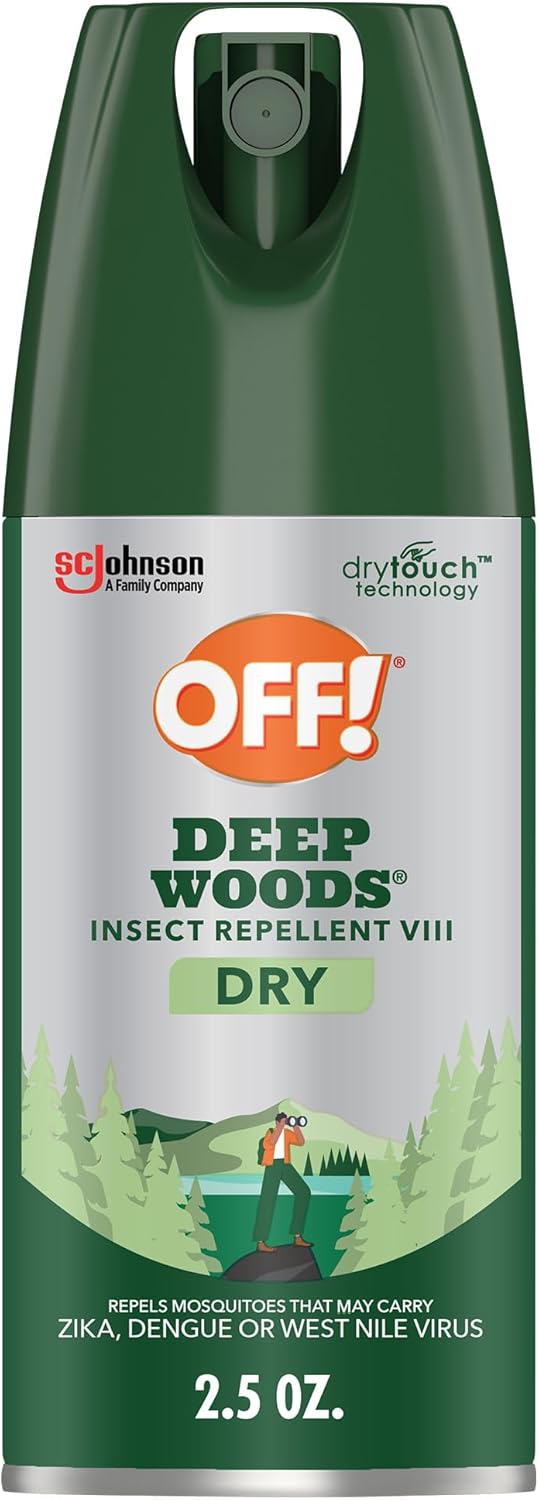
| Active ingredient | 25% DEET |
|---|---|
| Formulation | Aerosol dry spray |
| Indications | Hunting, fishing, camping, backpacking |
| Longevity | Up to 8 hours |
OFF! Deep Woods Dry is a small aerosol repellent designed for active outdoor use like hiking, fishing, and hunting. The formula contains 25% DEET and is intended to provide up to eight hours of protection against ticks and a range of biting insects while feeling non-greasy on skin. It is applied by holding the can 6 to 8 inches from skin or clothing and sweeping a light coating over exposed areas; it can also be sprayed on outer clothing for added tick protection. Practical benefits include broad-spectrum coverage and a powder-dry finish that avoids the sticky, oily feel of some repellents, plus a compact 2.5 ounce size that fits in a pack or pocket. Important limitations are the DEET content, which requires careful use around children, certain fabrics, and near eyes or wounds, and the product is flammable so it must be kept away from heat and open flame. Users should follow label directions for application frequency and wash treated skin after returning indoors.
Best for: Hikers who want a compact, effective repellent they can stash in a daypack and rely on for long periods outdoors without a greasy feel. It suits outdoor enthusiasts prioritizing straightforward, proven tick protection on the go.
Less Ideal for: People looking for DEET-free or unscented options, or caregivers who need a formulation specifically labeled for frequent application to young children should consider alternative products.
- Contains 25% DEET for proven tick and mosquito protection
- Powder-dry, non-greasy formula that is comfortable for long wear
- Compact 2.5 oz aerosol is easy to carry for day hikes
- Provides multi-insect protection including ticks, mosquitoes, biting flies, gnats, and chiggers
- Aerosol is extremely flammable and must be kept away from heat and open flame
- DEET requires cautious use around children and on some synthetic fabrics
Verdict: A pocketable, long-lasting DEET spray that gives hikers reliable, dry-feeling protection against ticks and other biting insects.
OFF! Deep Woods Tick & Mosquito Repellent Spray, 6 oz

| Active Ingredient | DEET 25% |
|---|---|
| Form | Aerosol |
| Net Quantity | 6 oz |
OFF! Deep Woods Tick & Mosquito Repellent is a DEET-based aerosol intended for outdoor use where ticks and biting flies are a concern. Sprayed onto clothing and exposed skin from a distance, its 25% DEET formula offers extended protection against ticks that can carry Lyme disease plus mosquitoes, gnats, chiggers, fleas and black flies. The aerosol delivers a dry, non-greasy finish and the spray format makes quick reapplication in the field simple. For hikers the practical benefits are straightforward: dependable, broad-spectrum coverage and an easy-to-use can that fits in a pack or daypack pocket. Important limitations are that it contains DEET so you should avoid eye contact, follow label directions for application, and it is not fragrance-free. Also it is an aerosol can, so it must be carried and stored safely during travel and not applied near open flames. If you want long-lasting, proven tick protection in a compact spray, this product performs predictably on trails and in brushy terrain.
Best for: Hikers who prioritize reliable, long-lasting protection from ticks and biting insects on multi-hour or multi-day outings and want a compact spray they can reapply on the trail.
Less Ideal for: People seeking a DEET-free or fragrance-free repellent or those who prefer lotion or pump sprays instead of aerosol cans.
- 25% DEET formula provides extended, proven protection against ticks and a wide range of biting insects
- Aerosol spray delivers quick, even coverage and a non-greasy, non-staining finish
- Compact 6 oz can fits easily in a daypack for on-trail reapplication
- Effective against multiple pests including ticks that may transmit Lyme disease
- Contains DEET which requires careful application and avoidance of eyes and sensitive skin
- Aerosol format needs cautious transport and cannot be used near open flames
Verdict: Choose this spray if you want compact, trustworthy tick protection for hiking backed by a 25% DEET formula.
Repel 100 Insect Repellent Pump Spray, 4 oz (98% DEET)

| Active ingredient | DEET 98.11% |
|---|---|
| Protection duration | Up to 10 hours |
| Form | Pump spray |
| Net volume | 4 oz |
Repel 100 is a small, travel-friendly pump spray formulated with 98.11% DEET for heavy-duty insect protection. You apply it to exposed skin or outer clothing to repel mosquitoes that can carry Zika, West Nile, Dengue and other viruses, as well as ticks, gnats, biting flies, chiggers and fleas. The 4-ounce bottle is convenient to carry in a daypack and the manufacturer claims up to 10 hours of protection in severe conditions, which makes it suitable for long hikes, camping, and extended outdoor work. Practical features include a pump spray for controlled application and clear label directions about avoiding sensitive areas and washing treated skin afterward. The main limitation is the very high DEET concentration, which requires careful use around children, and can damage some materials and finishes, so you need to avoid contact with plastics, leather, watches and certain fabrics. Users who want a milder or scented repellent should consider lower DEET percentages or alternative active ingredients.
Best for: Buyers who prioritize maximum, long-duration insect protection for extended outdoor activities and want a compact, easy-to-carry repellent for severe conditions.
Less Ideal for: People looking for low-DEET, fragrance-free, or natural alternative repellents and those who need a product safe for frequent use on children or on delicate gear.
- Very high DEET concentration for strong, long-lasting protection in severe insect conditions
- Compact 4 oz pump bottle that is easy to carry for travel and day trips
- Effective against a wide range of pests including mosquitoes, ticks, biting flies, chiggers and fleas
- Label provides specific use and safety directions for clothing, children, and post-exposure washing
- High DEET content can damage plastics, leather, painted or varnished surfaces and some synthetic fabrics
- Not suitable for users seeking low-odor or natural ingredient repellents
Verdict: Choose Repel 100 when you need compact, maximum-strength DEET protection for long outdoor outings in severe insect conditions.
OFF! Clean Feel Picaridin Insect & Mosquito Repellent Spray, 5 oz

| Active ingredient | Picaridin 20% |
|---|---|
| Form | Aerosol spray |
| Protection duration | Up to 8 hours |
OFF! Clean Feel is a lightweight, fragrance-free aerosol repellent that uses 20% picaridin to protect against mosquitoes, ticks, and biting flies for up to eight hours when applied as directed. It sprays on evenly from a distance and spreads easily with hands, drying quickly without leaving a sticky or oily residue, which makes it convenient for hikers who want a no-fuss application on the trail. The formula is DEET-free and designed not to stain clothing or leave a strong scent, so it is a good option for people sensitive to odors or greasy feel. Important practical limits are that it must be reapplied after heavy sweating or every 90 minutes if needed and that aerosol cans require careful storage and handling on long treks. Also, it is for external use only and should not be used on very young infants. For routine outdoor use, the product balances effective, proven protection with a skin-friendly, easy-to-use delivery.
Best for: Hikers and outdoor walkers who prioritize dependable, dermatologist-recommended protection without DEET and prefer a lightweight, scent-free repellent that is easy to apply on the go.
Less Ideal for: Ultra-light backpackers who must minimize carry weight and avoid aerosol cans or caregivers needing a repellent formulated specifically for infants under six months should consider alternative formats.
- 20% picaridin formula repels mosquitoes, ticks, and biting flies with long-lasting protection
- Fragrance-free and non-greasy, dries quickly without sticky residue
- Aerosol spray applies evenly and spreads easily for fast use on the trail
- Does not stain clothing according to the manufacturer
- Needs reapplication after heavy sweating or extended exposure
- Aerosol format requires careful packing and cannot be used in some air travel or wildfire-prone areas
Verdict: Choose this picaridin aerosol if you want reliable, long-lasting tick protection in a lightweight, non-greasy, fragrance-free spray that is easy to apply on hiking trips.
Choosing the Right Tick Repellent for Hikers: Key Factors to Consider
Protection Duration and Coverage
How long a repellent keeps ticks from attaching matters more on longer hikes and multi-day trips. A product that advertises several hours of protection reduces how often you must reapply on the trail, which is especially valuable when you have limited water or time. Duration can vary with activity level, temperature, and sweating, so understand the typical hours of coverage the formulation provides and whether that expectation holds under active conditions.
Also consider the area of coverage. Sprays and aerosols cover large outer layers quickly, while lotions may be better for focused skin application. For hikers who move through dense vegetation, products that protect both skin and clothing help create layered protection against ticks crawling onto gear and body.
Skin Tolerance and Sensitivities
Hikers often apply repellent directly to exposed skin, sometimes after a long day of sun and wind, so skin comfort is important. Some formulations can sting sunburned skin or irritate sensitive areas. Look for options labeled for sensitive skin or that use milder active ingredients if you have a history of reactions. Testing a small patch before a long outing is a simple precaution.
Consider how the product feels as you sweat and move. Sticky or greasy products can be uncomfortable under base layers or in warm weather. Fragrance can also be a factor; strongly scented repellents may be distracting during quiet nature experiences. Choose a balance between tolerability and effectiveness that fits the environments where you hike.
Compatibility With Clothing and Gear
A major choice for hikers is whether to treat clothing, skin, or both. Some repellents are safe to use on fabrics and maintain protection after light abrasion, while others are intended strictly for skin application. Clothing-compatible options can be useful for shielding ankles, cuffs, and pant legs where ticks often latch on.
Check whether a repellent will stain or degrade technical fabrics, waterproof membranes, or treated garments. Some formulations can affect breathability or water repellency on high-performance outerwear. If you rely on specialized clothing, pick products explicitly marked as safe for fabrics you carry.
Packability and Trail Application
Hikers need repellents that are easy to carry and simple to apply on the move. Compact bottles, spray triggers that tolerate rough handling, and non-spill designs reduce hassle in a pack. Travel-friendly sizes that meet carry rules are helpful for overnight trips or air travel to trailheads.
Ease of reapplication matters too. Quick-drying sprays or wipes let you recoat exposed areas without sitting down for long. Consider whether you want a product that can be applied with gloves or that comes in single-use wipes for minimal fuss when hands are dirty or cold.
Water and Sweat Resistance
Trail conditions often involve sweat, rain, and brushing through wet vegetation. A repellent that loses effectiveness when wet may leave you exposed after river crossings or heavy perspiration. Seek products that advertise sweat or water resistance and read user reports about performance during active use.
No repellent is fully waterproof, so also plan for reapplication intervals after heavy exposure to moisture. Knowing how quickly protection degrades in wet conditions helps you schedule top-ups during long hikes and reduces risk when you are far from shelter.
How Different Active Ingredients Work
Repellents rely on distinct active ingredients that deter ticks by smell, taste, or sensory irritation. Some types create a protective zone that confuses parasites and discourages attachment, while others reduce the chance a tick latches on long enough to bite. Understanding these modes helps you match a product to your tolerance for smell, need for long duration, and whether you prefer skin or clothing application.
Consider that some ingredients perform better on fabric, while others are optimized for direct skin application. Knowing the general behavior of an ingredient can inform whether you should top up clothing as well as skin when heading into dense brush.
- Clothing-compatible actives form a barrier on fabric fibers.
- Skin-focused actives often require careful dosing and reapplication.
- Some formulations are designed to work in humid or sweaty conditions better than others.
Using Repellent With Layered Clothing
Layering is a practical strategy for hikers. Treat outer layers or cuffs and use skin-safe products on exposed areas like neck, wrists, and ankles. This layered approach keeps ticks from reaching skin as easily and reduces the need to apply heavy coverage to every garment.
When applying to clothing, follow fabric care guidance to avoid staining or affecting waterproof treatments. For peak comfort, avoid heavy applications under insulating layers where trapped product can cause skin irritation.
- Apply to cuffs, ankle areas, and hat brims for barrier protection.
- Reapply to clothing after heavy abrasion or washing.
- Avoid treating inner base layers that contact skin directly unless labeled safe.
Trail-Day Checklist for Tick Safety
A short checklist helps you combine repellent use with other practical measures. Pack a small application bottle or wipes, wear light-colored clothing to spot ticks, and perform regular checks during breaks. Pay special attention to ankles and behind knees where ticks often climb.
Also carry a compact mirror or use a partner to inspect spots you cannot easily see. If you find a tick attached, know the local guidance for safe removal and plan clothing changes if you get wet or heavily soiled.
- Small refillable bottle or single-use wipes for quick reapplication
- Light-colored long pants and socks to cover ankles
- Regular body and gear checks during rest stops
Environmental and Seasonal Considerations
Tick activity and the effectiveness of repellents vary by region and season. In many areas, ticks are most active in spring and early summer, but some species remain a risk into fall. Check local tick seasonality before planning exposure and adjust repellent frequency when temperatures and humidity change.
Vegetation type matters too. Thick leaf litter and tall grasses increase the chance of contact, so expect to reapply more often when moving through those habitats. Plan repellent strategy around the terrain you intend to cross.
- Increase application frequency in humid, hot conditions
- Expect higher contact risk in leaf litter and tall brush
- Review local seasonal tick activity before multi-day trips
Storing and Transporting Repellent Safely
Store repellent in a cool, dry place away from direct heat to maintain stability. For long trips, use rugged secondary containers or protective sleeves to prevent leaks. Avoid storing near food or fuel and keep inaccessible to children.
When flying to trailheads, follow carry rules for liquids and transfer to appropriately sized containers if needed. Mark containers clearly so you do not confuse them with hydration supplies.
- Use protective caps or sleeves to prevent accidental discharge
- Store away from high heat and direct sunlight
- Keep labeled and separate from consumables
How We Chose the Best Tick Repellent for Hikers
We started by focusing on repellents that are realistic for hikers to use in the field. Key filters included protection duration, compatibility with clothing and gear, ease of application, and skin tolerability. Products had to offer documented hours of repellency or consistent field reports of multi-hour protection. We prioritized formulations that can be applied to both skin and outer layers or that pair safely with treated clothing. Ease of carrying and reapplying on trail ranked highly because hikers often need compact, spill-resistant packaging and predictable dosing. We excluded heavy-duty or industrial formulations intended only for professional use, indoor-only products, and items that require special laundering or long pre-treatment times unsuitable for spontaneous trips. We also filtered out products with widespread reports of severe skin reactions or impractical application methods for hikers. Final selections balanced duration, comfort, and trail practicality to match real-world hiking conditions.
FAQ
How often should hikers reapply tick repellent on long outings?
Reapplication depends on the product's stated duration and conditions. Often you should top up every few hours if you sweat heavily or pass through wet vegetation. Follow the label for maximum safe frequency.
Can I use the same repellent on skin and clothing?
Some formulations are designed for both skin and fabric, while others are skin-only or clothing-only. Check product directions to avoid fabric damage or skin irritation and treat clothing and skin according to labeling.
Are natural or oil-based repellents effective for hikers?
Natural options can provide modest protection but often have shorter duration and need more frequent reapplication. They may be suitable for short hikes if you accept the need for more frequent top-ups and are comfortable with potentially lower longevity.
Will repellent wash out of clothing after a rainy hike?
Many repellents lose effectiveness after heavy rain or repeated wetting. Clothing treatments that are water-resistant perform better, but you should plan to reapply after prolonged exposure to moisture.
Is it safe to use repellent on children or pregnant hikers?
Safety depends on the active ingredient and product labeling. Some products are formulated for use on children and pregnant individuals with specific precautions. Always follow label guidance and consult a healthcare provider for personal medical concerns.
How should I remove ticks found on my skin during a hike?
Use fine-tipped tweezers or a tick removal tool to grasp the tick close to the skin and pull steady, even pressure until it releases. Clean the area with antiseptic and monitor for signs of infection. Seek medical advice if you are concerned about symptoms.
Final Verdict
Selecting a tick repellent for hikers is about balancing protection time, skin comfort, and practical use on the trail. Prioritize products that deliver sufficient hours of repellency for the length of your outings, play well with the clothing you wear, and do not cause irritation when you sweat. Plan for layered protection and carry easy-to-use reapplication options so you can maintain coverage during long or wet hikes. With realistic expectations about reapplication and terrain-related exposure, you can choose a repellent that keeps time on the trail focused on the walk, not on worry about ticks.
