

Note: This article contains affiliate links. If you click on these links and make a purchase, I may earn a small commission at no extra cost to you. This helps support my research and content. Read my full affiliate disclosure here.
A transfer garden shovel changes how you handle soil, transplants, and root removal around the yard or in containers. The right shovel makes planting and moving soil faster, reduces strain on your body, and improves control when working near delicate roots or hard surfaces. This guide shortlists six top-performing transfer shovels chosen for the kinds of tasks gardeners do most often. We evaluated each tool for blade shape and strength, handle ergonomics, balance, and overall durability so you can match a shovel to the way you garden. Read on to see which designs suit tight spaces, heavy soil, or frequent transplanting, and why those features matter for everyday yard work.
Top Picks at a Glance
| Best Overall The best all-around choice for most situations | Plexon 27" Short-Handle Square Point Shovel with Hardened Manganese Steel Blade and Fiberglass Shaft |  |
| Best Quality Built to a higher standard if you want something more solid | Fiskars PRO 42" D-Handle Transfer Shovel |  |
| Best Value The sweet spot between price and what you get | Ashman 41-Inch Heavy-Duty Transfer Shovel with D-Grip |  |
| Best Budget The cheapest option that still gets the job done reliably | FreshFarm Small Square Garden Shovel with Metal Handle |  |
| Highest Rated A top-rated pick with lots of positive feedback | Razor-Back 48in Square Point Transfer Shovel |  |
| Most Popular A crowd favorite that many people choose with confidence | AgroPro 58" Square Garden Shovel with Fiberglass Handle |  |
Plexon 27" Short-Handle Square Point Shovel with Hardened Manganese Steel Blade and Fiberglass Shaft

| Blade Material | Manganese Steel |
|---|---|
| Handle Material | Fiberglass |
| Grip Type | Ergonomic D-grip |
| Style Name | Square |
This 27-inch Plexon square-point shovel is built for moving and transferring loose materials like mulch, gravel, and topsoil in confined garden spaces. The heat-treated 50Mn manganese steel blade resists bending and chipping, so repeated scooping of damp mulch and gravel holds up without deforming. The square blade makes lifting, leveling, and spreading material easier than a round-point digging shovel, and the powder-coated finish helps resist rust when stored outdoors seasonally. The shorter handle increases control and leverage in raised beds, tight beds, and around plantings where a full-length shovel is cumbersome. A fiberglass shaft keeps the tool lighter than steel, resists moisture, and dampens vibration while the contoured polypropylene D-grip improves leverage and comfort during extended scooping tasks. Expect excellent material transfer performance, but the short handle reduces reach for deep trenches or heavy digging and is not meant as a primary tool for breaking hard ground.
Best for: Gardeners who prioritize efficient material transfer and control in raised beds, narrow beds, or small yards and want a durable, low-maintenance tool for spreading mulch and gravel.
Less Ideal for: Those needing a general-purpose digging shovel for deep trenches or breaking hard, compacted ground should choose a longer-handled digging shovel instead.
- Hardened 50Mn manganese steel blade resists bending and chipping for heavy scooping tasks
- Square point profile efficiently lifts, levels, and spreads mulch and loose materials
- Fiberglass handle is lightweight, moisture-resistant, and reduces vibration
- Ergonomic D-grip improves leverage and comfort during repeated scooping motions
- Short 27-inch handle limits reach for deep digging or tasks that need standing leverage
- Not designed for breaking very compacted or rocky soil where a full-length digging shovel is preferable
Verdict: A durable, compact square-point shovel built to move and spread mulch and loose materials with superior control in tight garden spaces.
Fiskars PRO 42" D-Handle Transfer Shovel
| Material Type | Aluminum |
|---|---|
| Handle Material | Aluminum |
| Blade Material | Aluminum |
| Grip Type | Full Wells |
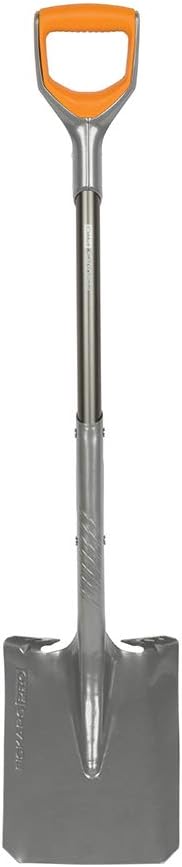
The Fiskars PRO 42" D-handle transfer shovel is built for moving heavy loads of soil, gravel, and debris with less fatigue than a standard garden spade. Its heavy-gauge aluminum blade resists rust and stands up well to frequent use while the extended shank and large step let you drive the blade into material and transfer full loads efficiently. The D-handle and teardrop-shaped shaft keep the wrist neutral and give better control when lifting and dumping, and Softgrip touchpoints improve comfort during long sessions. Because the tool is aluminum it stays relatively light compared with steel transfer shovels, so you can work longer without tiring, but the lighter metal is not as rigid as some steel designs for prying very compacted ground. This shovel is sized for both confined and larger areas, and the simple, heavy-duty construction makes it a reliable choice for landscapers or serious home gardeners who move bulk materials often.
Best for: Buyers who need a durable, ergonomic transfer shovel for frequent material-moving tasks and who prioritize comfortable handling and efficient load transfers during landscaping or garden projects.
Less Ideal for: Those who regularly need a tool for prying roots, breaking compacted clay, or heavy demolition should consider a steel bladed or purpose-built pry tool instead.
- Heavy-gauge aluminum blade resists rust and handles frequent material moving
- Ergonomic D-handle and teardrop shaft reduce wrist strain and improve control
- Extended shank and large step make digging in and transferring full loads efficient
- Lightweight construction reduces user fatigue during extended use
- Aluminum blade is less rigid than steel for prying compacted or rocky ground
- May not be ideal where maximum blade strength is required for heavy demolition tasks
Verdict: A lightweight, ergonomically designed transfer shovel built for frequent material-moving with professional-level durability and comfort.
Ashman 41-Inch Heavy-Duty Transfer Shovel with D-Grip

| Blade Material | Metal |
|---|---|
| Handle Material | Plastic |
| Grip Type | Ergonomic |
| Number of Items | 1 |
| Style Name | Transfer Shovel |
The Ashman 41-inch transfer shovel is a basic heavy-duty garden tool built for repeated digging, scooping, and material transfer. It pairs a heat-hardened metal blade with a long plastic handle and D-grip so you can use two-handed leverage for tougher soil, edging, trenching, or moving soil and mulch. The square/round blade profile and sharpened edge make it effective at cutting compacted soil, slicing small roots, and scraping level surfaces. Practical features include an ergonomic grip for comfort and a relatively lightweight construction that reduces fatigue during extended use. The plastic handle resists rot and needs little maintenance compared with wooden shafts, but it will feel less rigid than steel or fiberglass under very heavy loads. Expect good performance on compact or dry ground and typical landscaping chores, while extreme pry or rock-busting tasks may push the handle and blade connection more than this design intends.
Best for: Buyers who want a reliable, low-maintenance transfer shovel for regular landscaping, garden edging, and transferring soil or mulch and who prioritize practical durability and ease of use.
Less Ideal for: Not the best choice for users who frequently need to pry large rocks, break extremely hard ground, or require a professional-grade pry bar alternative.
- Heat-hardened metal blade that pierces and cuts compacted soil
- Long 41-inch shaft with D-grip for two-handed leverage and control
- Ergonomic grip reduces hand fatigue during extended use
- Plastic handle resists rot and requires minimal maintenance
- Plastic handle is less stiff than steel or fiberglass for heavy prying tasks
- Blade and handle connection may be stressed by repeated extreme leverage
Verdict: A no-nonsense, low-maintenance transfer shovel that gives good digging and scooping power for everyday garden and landscaping jobs.
FreshFarm Small Square Garden Shovel with Metal Handle

| Material Type | Stainless Steel |
|---|---|
| Blade Material | Carbon Steel |
| Handle Material | Stainless Steel |
| Grip Type | Padded |
This FreshFarm small square shovel is a compact garden tool built for digging, trenching, and moving loose material in tight spaces or on the go. The 43.3-inch overall length and metal handle give it more reach and rigidity than a hand trowel while keeping the tool small enough to store in a car or shed. The blade is carbon steel for cutting into soil and the padded grip improves comfort during repetitive transfers. Practical uses include transplanting, edging, scooping sand or gravel at a campsite or beach, and light trenching around beds. Because it is a straightforward, single-piece design it is simple to maintain and durable for routine gardening work. The shovel is not designed as a heavy excavation tool for roots or frozen ground and the compact blade limits how quickly you can move very large volumes of material, so expect it to work best for small to medium transfer tasks rather than heavy-duty digging.
Best for: Buyers who want an inexpensive, no-frills shovel for transplanting, scooping, and light digging around the yard or for taking on outdoor trips where storage space and portability matter.
Less Ideal for: People who need a tool for heavy excavation, removing large roots, or rapidly moving large amounts of soil should choose a full-size digging shovel or a specialized trenching tool instead.
- Compact length and slim blade make it easy to store in a car or shed for transfer tasks
- Metal handle and carbon steel blade provide solid rigidity and cutting performance for typical garden soils
- Padded grip increases comfort during repeated scooping or transplanting
- Versatile for gardening, camping, beach use and light trenching
- Blade and handle are sized for smaller transfer jobs and will be slow for moving large volumes
- Not suited for heavy root work or digging in frozen or very compacted ground
Verdict: A budget-friendly, portable square shovel that handles transplanting and light transfer work reliably for gardeners and outdoor users.
Razor-Back 48in Square Point Transfer Shovel

| Blade Material | Alloy Steel |
|---|---|
| Handle Material | Wood |
| Grip Type | Ergonomic |
The Razor-Back 48in square point transfer shovel is a straightforward, no-frills digging tool designed for daily garden and landscaping work. Its alloy steel blade offers strength for digging, transferring soil, and scooping bulk materials while the 48-inch wooden handle provides leverage for longer reach and reduced bending. The ergonomic grip helps control the tool during heavy use and the tab socket construction secures the blade to the handle for reliable performance. This shovel is typically used for moving soil, compost, or gravel, planting larger shrubs and trees, and general bed preparation. Practical benefits include a durable blade material that resists bending and a comfortable handle profile that lessens user fatigue on repetitive tasks. Limitations are the traditional wooden handle which can require maintenance over time and the tool lacks specialized coatings or shock-absorbing features found on higher-end models. For gardeners who value a simple, robust shovel that handles everyday transfer tasks, this is a dependable choice.
Best for: Buyers who prioritize a dependable, workhorse shovel for everyday garden and landscaping transfer tasks and want a straightforward tool that performs reliably over time.
Less Ideal for: People seeking a lightweight or ultra-durable pro-grade shovel with composite handles or rubberized shock absorption should consider other models.
- Alloy steel blade provides strong edge resistance for digging and scooping
- Ergonomic grip improves control during repetitive transfer tasks
- 48-inch wooden handle offers good leverage and reach
- Tab socket construction secures blade to handle for reliable assembly
- Wooden handle can require periodic maintenance and is less impact-resistant than fiberglass
- No specialty coatings or shock-absorption features for heavy-duty, high-impact use
Verdict: A sturdy, no-nonsense transfer shovel that delivers reliable performance for routine garden and landscaping work.
AgroPro 58" Square Garden Shovel with Fiberglass Handle

| Material Type | Fiberglass, High Carbon Steel |
|---|---|
| Handle Material | Fiberglass |
| Blade Material | High Carbon Steel |
| Grip Type | Ergonomic |
This AgroPro square shovel is built for heavy-duty garden work where durability matters. The high-carbon steel blade is forged and coated to resist wear and rust, and the double-rivet connection keeps the head firmly attached during tough digging and prying. The 58-inch fiberglass handle resists bending and reduces shock, while the dual-section ergonomic rubber grip improves control and comfort during extended use. The oversized footplate helps the blade penetrate compacted soil and makes moving soil, sand, or gravel more efficient. It is most useful for transplanting, soil turning, landscaping, and general yard maintenance where a sturdy, long-handled tool is needed. The tool is focused on strength and longevity rather than lightweight travel; the longer handle and robust construction add weight and bulk that may be unnecessary for delicate tasks or frequent transport. Overall, the shovel delivers a reliable balance of leverage, comfort, and build quality for regular heavy garden work.
Best for: Buyers who prioritize a durable, low-maintenance shovel for frequent heavy garden and landscaping tasks and want a tool that stands up to tough soil and regular use.
Less Ideal for: Casual gardeners who need a lightweight, compact shovel for small container beds or those who prefer a pointed digging blade for narrow holes.
- Forged high-carbon steel blade with rust-resistant coating for long-term durability
- Double-rivet reinforced head-to-handle connection for secure, stable use
- Fiberglass handle resists bending and absorbs shock compared with wooden shafts
- Ergonomic anti-slip rubber grip improves control and comfort during extended work
- Oversized footplate provides better leverage to penetrate compacted soil
- Long 58-inch length and sturdy build make it heavier and less convenient to store or transport
- Square blade is optimized for transfer and edging rather than digging narrow holes
Verdict: Choose this shovel when you need a dependable, heavy-duty tool that lasts through frequent tough digging and material-moving jobs.
Choosing the Right Transfer Garden Shovel: Key Factors to Consider
Blade Shape and Tip Geometry
Blade shape determines how well a transfer shovel slices into soil and controls the load you move. A narrower, slightly pointed tip penetrates compacted beds and works well around root balls, while a wider rounded blade carries more soil per scoop but reduces precision. Consider the typical tasks you do most: pruning out plants and moving small clods favors a pointed or semi-pointed profile, while moving potting mixes benefits from a broader scoop.
Edge thickness and beveling also affect how cleanly the shovel cuts. A thinner, sharper edge slices through sod and roots more easily but may wear quicker in rocky ground. A reinforced edge sacrifices a little cutting speed for longer life when the shovel encounters gravel or frequent heavy use.
Blade Material and Construction
Durable metals and heat-treated blades resist bending when prying and maintain shape through repeated impacts. Look for blades made from medium- to high-carbon steels or well-formed stamped steel with a corrosion-resistant finish. Welded seams, full-tang designs, or blades formed from a single piece of metal resist separation at the neck, which is a common failure point.
How the blade is attached to the shaft matters. A securely riveted collar or a solid socket reduces wobble and extends working life. Finish treatments such as powder coating or baked enamel slow rusting when you use fertilizer or wet soils frequently.
Handle Length, Shape, and Grip
Handle length affects leverage and control. Shorter handles give superior maneuverability in raised beds and tight beds, while longer handles increase leverage for prying and moving heavier loads. The grip shape and material influence fatigue: contoured grips that fit the hand, non-slip texturing, or cushioned sleeves reduce blisters and help control the shovel during wet work.
Consider also how the handle ties into your body mechanics. A slight bend or ergonomic offset can reduce wrist hyperextension when scooping, and a comfortable top knob or T-grip helps when using two-handed pressure for stubborn roots.
Weight and Balance
Overall weight affects how long you can use a shovel without tiring. Lighter tools are easier to carry and maneuver for hours of container work, but too light can make the tool feel unstable when prying or lifting compacted soil. Good balance-where the head and handle feel aligned under load-reduces wrist strain and makes each scoop predictable.
Think about the soils you work in: heavy clay often requires a sturdier, slightly heavier shovel, while sandy or loamy mixes let you favor lighter designs. A well-balanced transfer shovel should feel like an extension of your arm when tipping a load.
Connection Quality and Maintenance
The joint between blade and shaft is a frequent failure point. Look for secure mechanical fastenings, through-rivets, or one-piece forged designs that minimize movement and avoid wobble. Sealed collars or ferrules help keep moisture out of the joint and slow rot if the handle is wooden.
Maintenance matters: regularly cleaning mud, drying the tool, and applying a light oil to metal parts prolongs life. For wooden handles, occasional sanding and linseed oil prevent splintering and keep the grip comfortable. Consider whether you prefer easily replaceable handles or a more permanent one-piece construction.
Suitability for Specific Garden Tasks
Transfer shovels sit between trowels and full-size spades, so matching the shovel to your common tasks is important. If you transplant frequently, prioritize precise tips and a comfortable grip for many repetitions. For container fills and moving potting mix, a wider scoop and good balance speed the job. If you often work near plant roots or in built beds, a shorter, more maneuverable handle avoids accidental damage to nearby plants.
Also consider seasonal tasks. A transfer shovel that excels at fine transplanting may not be ideal for late-fall digging and dividing perennials. Decide whether versatility or task-specific optimization matters more for your garden.
When to Use a Transfer Shovel Instead of a Trowel or Spade
Transfer shovels bridge the gap between small hand trowels and full spades. They are meant for moving modest amounts of soil quickly while retaining enough control to work around roots and plant stems. Use one when you need more carrying capacity than a trowel but still need to work in confined beds or containers.
They are handy for filling pots, transplanting seedlings and small shrubs, dividing perennials, and scraping shallow trenches for planting. If a task requires heavy breaking of compacted ground or deep trenching, switch to a spade or digging fork instead.
- Ideal for container filling and plant transfers
- Better control around roots than a full spade
- Not intended for deep trenching or heavy sod removal
Caring for Your Transfer Shovel
Regular cleaning and storage will keep a shovel working season after season. Knock off soil after each use, rinse stubborn dirt, dry the metal parts, and wipe a thin film of oil on the blade to reduce rust. Wooden handles benefit from occasional sanding and oiling to prevent cracking.
Check fastenings and ferrules for looseness and tighten or service them before a big project. If the edge dulls, a few passes with a file will restore penetration. For painted or coated blades, touch up chips to keep moisture from reaching bare metal.
- Clean and dry after use
- Oil metal and treat wooden handles occasionally
- Inspect joints regularly for looseness
Choosing a Handle Material: Wood, Fiberglass, or Metal
Wood handles are comfortable and absorb shock well, but they require more maintenance and can splinter or rot if neglected. They are often favored by gardeners who value feel and are willing to maintain the tool.
Fiberglass handles resist weather and last a long time with minimal upkeep. They are light and can reduce vibration, though some users find them less warm to the touch in cold weather.
Metal handles are very durable and low maintenance but can be heavier and transmit more shock to the hands. Consider whether a cushioned grip or sleeve is included if you prefer a metal shaft.
- Wood: comfortable, needs care
- Fiberglass: low maintenance, light
- Metal: durable, may be heavier
Modifying a Shovel for Special Tasks
Small adjustments can tailor a transfer shovel to your specific needs. Adding a non-slip sleeve or wrapping the top handle with grip tape improves control for wet conditions. Slightly sharpening the edge makes it cut through roots and sod with less force.
For heavy-duty backyard work, adding a small foot plate or welding a reinforcement to the toe can increase leverage and life. Keep in mind that modifications can change balance and may void warranties, so weigh the benefit against potential downsides.
- Grip tape for wet handling
- Edge sharpening improves penetration
- Reinforcements increase longevity but alter balance
Working Safely with a Transfer Shovel
Use proper body mechanics to protect your back when prying or lifting. Bend at the knees, keep the shovel close to your body, and avoid twisting while carrying heavy loads. When working near established plants, use the tip of the shovel for controlled digging rather than broad forces that can sever roots.
Wear gloves and sturdy footwear. Inspect the working area for hidden rocks or irrigation lines before plunging a shovel into the ground. Secure any loose handle parts before use to avoid sudden failures when the tool is under load.
- Bend at the knees and keep load close
- Use the tip for precise digging near roots
- Wear gloves and check for buried hazards
How We Chose the Best Transfer Garden Shovel
We picked tools that suit real garden tasks rather than hobby display. Our shortlist focused on transfer shovels that combine precise blade geometry with durable construction and user-friendly handles. We prioritized blades shaped for controlled digging and scooping, materials that resist bending or chipping in compacted soils, and handle designs that reduce wrist and back strain during repetitive transfers. Balance and weight were assessed to favor shovels that feel stable when prying or lifting clumps. We also checked connection points and fastenings for longevity under regular outdoor use. Excluded from consideration were lightweight novelty trowels and multi-tools that do not perform consistent soil transfer work, plus any items with obvious structural weak points that limit useful life. The final selection emphasizes shovels suitable for container work, close-quarter bed work, and medium-duty transplanting tasks while filtering out tools meant only for heavy trenching or decorative use.
FAQ
What size transfer shovel is best for container gardening?
A shorter-handled transfer shovel with a moderately wide blade usually works best for containers. It gives good carrying capacity while staying easy to maneuver inside pots and tight shelving areas.
Can a transfer shovel be used in clay soil?
Yes, but choose a sturdier blade with a reinforced edge and expect to apply more leverage. In very heavy clay, breaking the soil first with a fork or moistened conditioning can make transfer work easier.
How often should I sharpen the blade?
Sharpen the edge when penetration becomes noticeably harder or after heavy root work. For typical home use, a few light filings each season are usually sufficient.
Is a wooden handle better than fiberglass for comfort?
Wood often feels warmer and absorbs shock well, making it comfortable for long sessions. Fiberglass is lower maintenance and lighter, so the best choice depends on whether comfort or minimal upkeep is your priority.
How do I replace a worn handle?
Many transfer shovel handles are replaceable if they attach with a ferrule or through-rivets. Follow the manufacturer's instructions for removal and fit a properly sized replacement to keep the connection tight and safe.
Will a transfer shovel damage plant roots during transplanting?
When used carefully with the tip and shallow cuts, a transfer shovel reduces root disturbance compared with large spades. Technique matters: take small, deliberate scoops and avoid prying under root balls aggressively.
Final Verdict
Choosing the right transfer garden shovel comes down to matching blade geometry, material, and handle design to the tasks you do most. Prioritize blade shape and edge strength for precision digging and root work, and pick a handle length and material that keep you comfortable through repetitive use. Consider balance and connection quality to avoid surprises in the garden. Weigh the tradeoffs between maneuverability and carrying capacity, and select the design that aligns with your typical soil and planting situations. With the right transfer shovel, routine transplanting and container work becomes faster, safer, and less tiring.
