

Note: This article contains affiliate links. If you click on these links and make a purchase, I may earn a small commission at no extra cost to you. This helps support my research and content. Read my full affiliate disclosure here.
If you need a quick, reliable green cover for bare soil, annual ryegrass is a go-to option for many gardeners and landscapers. Picking the right annual ryegrass garden seed affects how fast the stand establishes, how dense the turf will be, and how long it will hold through the season. This guide covers seven top-rated annual ryegrass seed options shortlisted for rapid germination, seed purity, and suitability for common garden uses like overseeding, erosion control, and temporary lawns. We'll explain the practical tradeoffs and the evaluation criteria used so you can match a seed choice to your site conditions and goals.
Top Picks at a Glance
| Best Overall The best all-around choice for most situations | La Crosse Seed ColdSnap Annual Ryegrass Seed — 50 lb Bulk |  |
| Best Quality Built to a higher standard if you want something more solid | Eretz Annual Ryegrass Seed (5 lb) — Willamette Valley, Oregon Grown |  |
| Best Value The sweet spot between price and what you get | Annual Rye Grass Seed, 50 lb — Covers up to 10,000 sq. ft. |  |
| Best Budget The cheapest option that still gets the job done reliably | Eretz Annual Ryegrass Seed (8 oz) |  |
| Highest Rated A top-rated pick with lots of positive feedback | CountryMax Annual Ryegrass Cover Crop Seed, 50 lb |  |
| Most Popular A crowd favorite that many people choose with confidence | Pennington Annual Ryegrass Seed, 10 lb |  |
| Best Seller A high-volume bestseller chosen again and again | Eretz Annual Ryegrass Seed (25 lb) |  |
La Crosse Seed ColdSnap Annual Ryegrass Seed — 50 lb Bulk

| Expected Blooming Period | Days to Emergence: 14 |
|---|---|
| Expected Planting Period | Fall, Spring, Late Summer |
| USDA Hardiness Zone | 2-10 |
| Moisture Needs | Regular Watering |
| Other Special Features | High Germination Rate |
ColdSnap Annual Ryegrass is a fast-germinating, cool-season grass sold in a 50-pound bulk bag for larger projects. It is used to quickly establish temporary ground cover on bare soil, slopes, construction sites and as a seasonal cover crop to protect and build soil between cash crops. Notable features include a high germination rate and emergence around 14 days under favorable conditions, wide USDA hardiness zone suitability and suitability for multiple soil types and light exposures. In practice this seed works well when planted in late summer, fall or early spring and kept watered during establishment; it also provides short-term forage in managed pastures. Limitations are that it is an annual rather than a long-term turf solution so it will not replace perennial lawns, and performance depends on correct seeding rate and local planting window. Expect quick green-up and erosion control benefits for one season with minimal management beyond watering and appropriate planting timing.
Best for: Gardeners, land managers and farmers who need a quick-establishing, seasonal grass for erosion control, cover cropping or temporary forage on larger areas and who prioritize rapid ground cover over permanent lawn solutions.
Less Ideal for: Homeowners seeking a permanent, low-maintenance lawn or anyone needing a long-lived perennial turf should choose a perennial grass mix instead.
- Fast germination with typical emergence around 14 days under good conditions
- 50-pound bulk bag suited for larger areas like slopes, construction sites and farms
- Versatile use as temporary ground cover, erosion control, cover crop and cool-season forage
- Wide USDA zone range (2-10) and compatibility with multiple soil types
- Annual variety that provides only seasonal cover and will not establish as permanent turf
- Effectiveness depends on correct planting timing and regular watering during establishment
Verdict: Buy this 50 lb bag if you need a fast-establishing annual ryegrass to quickly protect bare soil and provide seasonal cover or forage across larger areas.
Eretz Annual Ryegrass Seed (5 lb) — Willamette Valley, Oregon Grown

| Plant or Animal Product Type | Rye |
|---|---|
| Material Features | Organic |
| Sunlight Exposure | Full Sun, Partial Shade, Partial Sun |
| Moisture Needs | Moderate Watering |
| Expected Blooming Period | Winter |
This 5 lb bag of Eretz Annual Ryegrass is formulated for quick germination and rapid, vigorous growth, making it useful for overseeding lawns, soil stabilization, erosion control, and temporary cover crops. Typical use is broadcast or drill-seeded on prepared, leveled soil with light raking to cover seed and consistent moisture until establishment. Notable features include Oregon-sourced, weed-seed-free seed and organic material characteristics that support reliable stand establishment. In practice the seed produces dense, fast green-up and can reach 2 to 3 feet if left unmowed, which is helpful where rapid biomass or quick cover is the goal. Coverage is listed at roughly 3 to 5 lb per 1,000 ft2 depending on whether it is sown alone or mixed, so plan seeding rates to match your objective. Limitations are that annual rye is short-lived and will reseed rather than provide a permanent lawn solution in warm-season climates, and it prefers cooler conditions for best performance. It also requires regular watering during establishment and will need mowing or termination if used as a temporary cover crop.
Best for: Buyers who need quick, high-performance green-up or temporary cover for erosion control, overseeding cool-season lawns, or productive cover cropping and want predictable, vigorous establishment.
Less Ideal for: Gardners seeking a long-term, permanent turf solution in warm-season climates or those who cannot maintain frequent watering during establishment.
- Very fast germination and rapid early growth for quick cover and green-up
- Weed-seed-free, Willamette Valley Oregon source for consistent purity
- Versatile use: overseeding, erosion control, cover crop and forage
- Produces substantial biomass that helps stabilize soil and suppress weeds
- Annual lifecycle so it will not produce a permanent turf in warm climates
- Requires regular moisture for reliable establishment
Verdict: Choose this seed when you need fast, vigorous annual ryegrass for quick cover, overseeding, or erosion control in cool-season situations.
Annual Rye Grass Seed, 50 lb — Covers up to 10,000 sq. ft.

| Weight | 50 lb |
|---|---|
| Covers | Up to 10,000 sq. ft. |
| Hardiness zones | 1-7 |
This 50 lb bag of annual ryegrass seed is formulated for rapid germination and broad coverage, advertised to cover up to 10,000 square feet. It is typically used for fall or spring overseeding, temporary winter cover, or when you need fast green-up before a slower perennial grass establishes. Notable features include a large bag size that reduces purchase frequency and suitability for cold hardiness zones 1 through 7, which makes it usable across most cooler-climate yards. Practical benefits are straightforward: quick germination gives visible turf within days under good conditions and the coverage rating simplifies planning for medium to large lawns. Important limitations are that this is an annual rye variety, so it provides temporary turf rather than a long-term perennial lawn solution, and performance depends on proper seedbed preparation and watering. Also the bag lists coverage as an estimate so actual seeding rate may need adjustment for bare soil or thicker application needs.
Best for: Buyers who want a practical, cost-efficient way to green up or overseed medium to large lawns quickly, especially for seasonal or temporary cover.
Less Ideal for: Homeowners seeking a permanent, low-maintenance perennial lawn should choose a perennial grass blend instead.
- Large 50 lb quantity reduces the need to buy multiple bags for medium to large lawns
- Advertised coverage up to 10,000 sq. ft. simplifies planning
- Suitable for cold hardiness zones 1–7, covering a wide range of cooler climates
- Annual rye establishes quickly but does not replace perennial grasses for long-term lawns
Verdict: Choose this 50 lb annual rye seed when you need fast, economical green-up or overseeding across a medium to large lawn.
Eretz Annual Ryegrass Seed (8 oz)

| Sunlight Exposure | Full Sun, Partial Shade, Partial Sun |
|---|---|
| Moisture Needs | Moderate Watering |
| Unit Count | 1 Count |
This 8 oz bag of Eretz Annual Ryegrass is aimed at gardeners who need rapid germination and quick green cover. It is typically broadcast or raked into tilled soil, kept moist until seedlings establish, and can be used alone for fast growth or mixed with clover and other cover crops. Notable features include Willamette Valley Oregon origin with weed‑seed‑free seed and suitability for full sun to partial shade with moderate watering needs. In practice it establishes quickly and produces vigorous growth useful for overseeding thin lawns, temporary forage, or stabilizing bare soil against erosion. Expect plants to reach up to 2–3 feet if left unmowed and to self‑reseed unless cut. Limitations are its annual lifecycle, so it will not provide a permanent turf solution, and coverage per 8 oz is limited so larger areas will require multiple bags or bulk seed.
Best for: Gardeners on a budget who need quick green cover or short‑term erosion control and want an easy seed to establish without complex care.
Less Ideal for: Homeowners seeking a long‑term, permanent lawn substitute or those who need coverage for large acreages from a single purchase.
- Fast germination and vigorous early growth for quick green cover
- Suitable for full sun to partial shade making it versatile in many yards
- Weed‑seed‑free, Oregon‑grown seed for reliable establishment
- Good for multiple uses: overseeding, erosion control, cover cropping
- Small 8 oz package provides limited coverage for larger lawns
- Annual species that will die out and need reseeding for long‑term turf
Verdict: Buy this if you want an inexpensive, fast‑germinating annual ryegrass to quickly green up bare spots, provide temporary cover, or aid erosion control.
CountryMax Annual Ryegrass Cover Crop Seed, 50 lb

| Unit Count | 800 Ounce |
|---|---|
| Expected Blooming Period | Fall |
| Sunlight Exposure | Full Sun |
| Moisture Needs | Regular Watering |
This 50 lb CountryMax annual ryegrass bag supplies a large quantity of dry seed for seasonal planting and cover crop use. It is designed to germinate quickly, so you can establish green cover fast when warm-season grasses are dormant or when you need erosion control and soil protection. Typical uses are overseeding garden beds, creating a temporary green cover between crops, or planting on small fields and larger garden areas where a rapid, uniform grass stand is wanted. Notable features listed include high germination rate, fast establishment, and low maintenance once established. The dry seed format makes measuring and broadcasting straightforward whether you hand-seed or use a spreader. Limitations are that it is an annual species so it will not provide multi-year turf and it needs regular watering during establishment to achieve the advertised quick germination. Also this product does not include application rates or localized planting advice, so buyers should plan seeding rates and timing for their climate and soil conditions.
Best for: Gardeners or small-scale growers who need a reliable, high-germination cover crop to establish quick green cover across multiple beds or seasonal plantings and who plan their own seeding rates and irrigation timing.
Less Ideal for: Homeowners seeking a permanent lawn or a multi-year turf solution and people who prefer seed mixes tailored to specific local climates without calculating rates themselves.
- Large 50 lb quantity suitable for multi-bed gardens or small field cover cropping
- Fast germination and establishment for quick green cover
- Dry seed format is easy to measure and distribute for broadcast or spreader application
- Described as low maintenance after establishment
- Annual ryegrass will not persist year to year and requires replanting for continued cover
- No localized seeding rates or step-by-step planting guidance provided in the product information
Verdict: Buy this 50 lb bag when you want a dependable, high-germination annual ryegrass to quickly establish green cover for seasonal planting and cover cropping.
Pennington Annual Ryegrass Seed, 10 lb

| Bag weight | 10 lb |
|---|---|
| Sun exposure | 6 to 8 hours |
| Germination time | 3 to 7 days |
This 10 lb bag of Pennington Annual Ryegrass is designed primarily for overseeding to give lawns fast green cover during the cooler months. It establishes quickly with visible growth in three to seven days and is recommended for areas receiving about six to eight hours of sun. Typical uses include overseeding Bermuda, Zoysia, and other warm-season lawns for winter color, or filling in thin spots on northern lawns as a temporary solution. Notable features are its fast germination, good wear tolerance under light foot traffic, and disease resistance, which make it practical for patios, play areas, and lightly used yards. The seed is presented as a seasonal, short-term fix rather than a permanent lawn replacement, so expect it to decline as temperatures rise. If you need a reliable, fast-acting rye for winter color or quick coverage before an event, this delivers; for long-term lawn renovation choose a perennial turf mix instead.
Best for: Buyers who need quick winter green-up or short-term coverage for lawns and want a dependable seed that establishes fast and tolerates light use.
Less Ideal for: Homeowners seeking a long-term, permanent turf solution or those who need a seed mix tailored to shade-dominant yards should consider other options.
- Very fast germination with visible results in 3 to 7 days
- Works well for overseeding warm-season grasses like Bermuda and Zoysia
- Good tolerance to foot traffic for temporary use
- Described as disease-resistant for healthier short-term growth
- Annual ryegrass is temporary and will decline as temperatures warm
- Not intended as a permanent replacement for established perennial turf
Verdict: Choose this ryegrass when you want fast, reliable winter green-up and temporary turf support for overseeding projects.
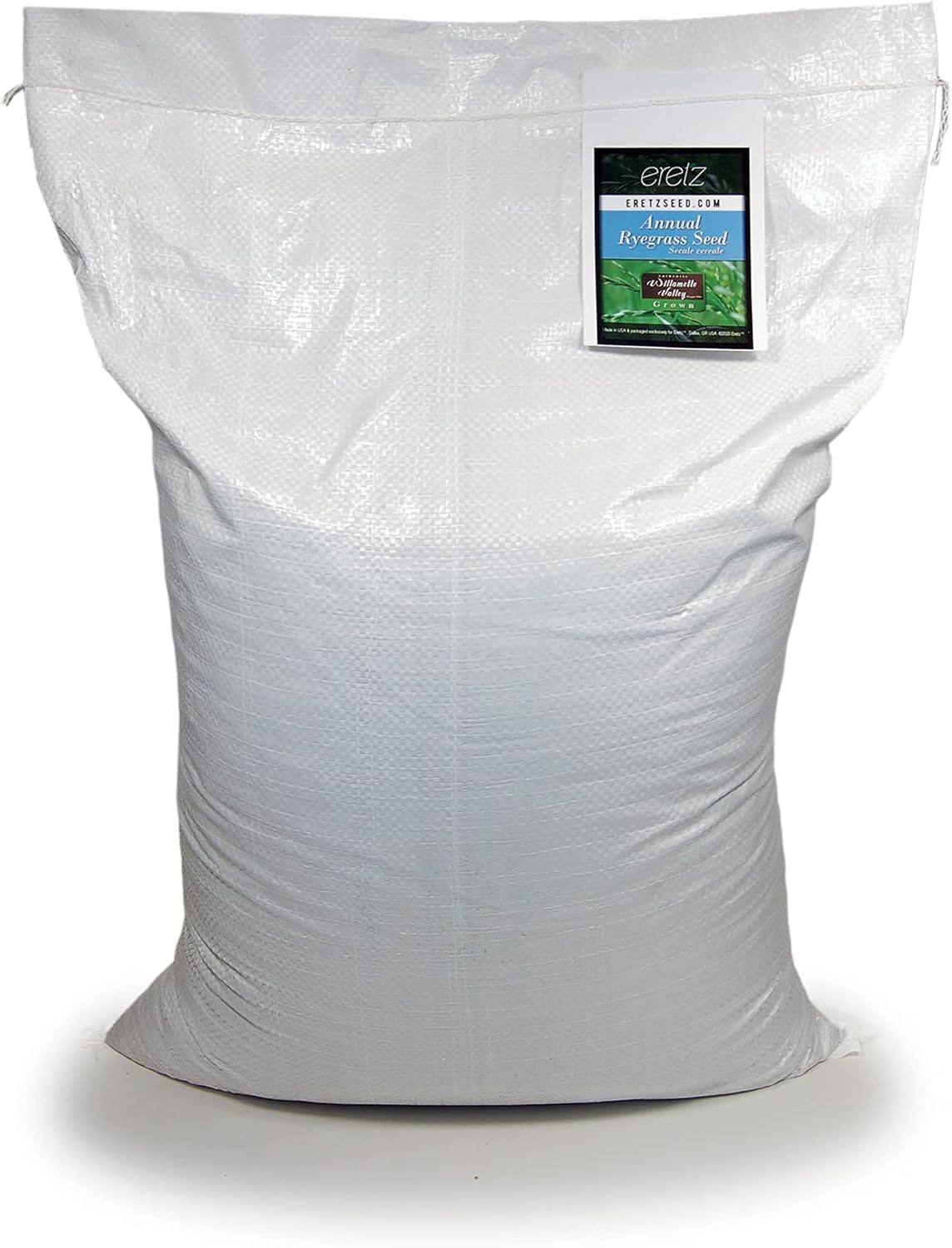
Eretz Annual Ryegrass Seed (25 lb)
| Plant or Animal Product Type | ryegrass |
|---|---|
| Sunlight Exposure | Full Sun, Partial Shade, Partial Sun |
| Moisture Needs | Moderate Watering |
| Material Features | Organic |
This 25 lb bag of Eretz Annual Ryegrass is designed to establish very quickly and produce vigorous, tall growth for temporary cover or overseeding. Gardeners typically broadcast seed over tilled or raked soil, gently incorporate it, and keep the soil consistently moist until seedlings are established. Notable features include organic material labeling, Willamette Valley Oregon provenance, and suitability for full sun to partial shade. In practice that means you can use it to green up worn turf quickly, stabilize slopes against erosion, or add a fast-growing cover crop for garden beds and forage. Coverage guidance in the product description helps estimate seeding rates for different goals. Limitations are that this is an annual grass so it will not produce a permanent lawn and left unmown it can reach 2 to 3 feet and self-seed; it is best used for temporary or seasonal applications rather than a long-term turf solution.
Best for: Buyers who want a reliable, quick-establishing cover crop or short-term overseeding solution for lawns, slopes, or garden beds and prefer low-risk, proven seed sources.
Less Ideal for: Gardeners seeking a permanent, year-after-year turf or a low-growing, walkable lawn should choose a perennial turf grass mix instead.
- Fast germination and vigorous growth for quick cover or overseeding
- Suitable for erosion control and soil stabilization on slopes and bare areas
- Oregon grown and listed as organic material features
- Versatile sunlight tolerance for full sun to partial shade situations
- Annual life cycle so it will not provide a permanent lawn surface
Verdict: Choose this seed when you need fast, reliable annual ryegrass for quick greening, erosion control, or temporary overseeding.
Choosing the Right Annual Ryegrass Garden Seed: Key Factors to Consider
Germination Rate and Seed Viability
Germination rate directly affects how quickly seed will sprout and how uniform the stand looks. Higher viability means fewer bare patches and less need to overseed. For gardeners, a lab-tested germination percentage gives a realistic expectation of coverage and helps calculate how much extra seed to buy for patchy areas.
Seed viability declines with time and poor storage. Check the packaging date or guaranteed germination period and adjust seeding rates upward for older lots to compensate for lower viability. Faster germination also reduces exposure to erosion and weed competition in the critical first weeks.
Seed Purity and Weed Seed Content
Purity measures how much of the bag is actual annual ryegrass seed versus other crop seed, inert material, or weed seed. Higher purity reduces the chance of introducing unwanted plants that can complicate maintenance and compete with young ryegrass seedlings.
Weed seed content matters for long-term lawn or garden health. Bags with high weed counts can change the species composition of a flower bed or lawn. For sensitive sites, prioritize seed that lists low weed seed percentages and a clear seed analysis on the label.
Cultivar Type and Intended Use
Annual ryegrass comes in turf, forage, and cover crop varieties. Turf-type strains tend to produce finer leaves and create a denser appearance suitable for overseeding lawns, whereas forage or cover crop types may grow faster and coarser, offering quicker soil protection and biomass.
Match the cultivar type to your purpose. For temporary green cover and erosion control choose fast, vigorous types. For overseeding or aesthetic uses, select strains marketed for turf or fine texture. The label and variety description usually indicate the intended use.
Seeding Rate and Seeding Method
Correct seeding rate affects final density and overall success. Too little seed leaves gaps and invites weeds; too much wastes seed and can cause uneven growth. Rates vary by use-overseeding a lawn uses far less seed per square foot than establishing a bare patch or cover crop.
Seeding method also influences success. Broadcast spreaders, drop spreaders, and hand-broadcasting each have pros and cons for coverage uniformity. Lightly raking seed into contact with soil and ensuring consistent moisture during germination are critical regardless of the seeding method.
Site Conditions and Timing
Soil temperature, moisture, and sunlight dictate when and how well annual ryegrass will germinate. It prefers cooler spring or fall temperatures and moist seedbeds. Planting into dry, hot conditions reduces germination and increases failure risk.
Prepare the site by removing heavy debris, loosening compacted soil, and addressing drainage problems. If erosion control is the goal, prioritize quick cover and choose a seeding window that maximizes cool, moist weather to speed establishment.
Storage, Packaging, and Practical Handling
For small-scale gardeners packaging size and resealable bags matter. Smaller resealable packages help preserve viability if you do not plant the whole bag at once. Bulk or large bags are useful for bigger plots but require proper on-site storage to prevent moisture and heat damage.
Ease of handling also includes how evenly the seed flows through spreaders and whether it clumps. Some seed lots include anti-caking treatments or specific sizes that make mechanical spreading easier and produce a more uniform stand when seeded with common garden equipment.
When to Plant Annual Ryegrass
Annual ryegrass establishes fastest in cool, moist conditions. For most temperate regions, the best windows are early spring when soils warm after frost or early fall as the heat eases off. Soil temperatures in the mid-50s to mid-60s Fahrenheit promote rapid germination.
If you are seeding for erosion control, prioritize timing that gives seedlings several weeks of growth before expected dry or hot weather. Avoid mid-summer plantings in hot, dry climates unless you can provide frequent irrigation.
- Early spring for quick spring green-up
- Early fall for strong establishment before winter
- Avoid peak summer heat without irrigation
Preparing the Seedbed for Best Results
Preparation improves soil-to-seed contact and reduces competition. Remove large debris, rake to a firm but friable surface, and correct low spots where water pools. Loosening only the top half-inch to one inch is usually enough for annual ryegrass seed.
If soil is compacted, lightly aerate to improve rooting. A starter fertilizer with modest nitrogen can boost initial growth, but avoid heavy fertilizer that encourages excessive top growth at the expense of root development.
- Rake to a smooth, firm surface
- Light aeration for compacted soils
- Apply starter fertilizer sparingly
Seeding Techniques and Coverage Tips
For small patches, hand broadcasting followed by a light raking works well. For larger areas use a handheld or tow-behind spreader to ensure even distribution. Calibrate your spreader with a small test area to estimate coverage before seeding the whole site.
After spreading, press seed into the soil with a roller or by tamping to improve contact. Keep the seeded area consistently moist with light, frequent waterings until seedlings are established, then reduce frequency and increase depth to encourage deeper rooting.
- Calibrate spreader on a test strip
- Lightly press seed into contact with soil
- Maintain consistent moisture during germination
Managing Annual Ryegrass After Establishment
Once seedlings reach mowing height, transition to a maintenance schedule. Mowing at a moderate height removes seed heads and keeps the stand dense. For seasonal cover, allow the ryegrass to complete its life cycle if you need biomass for erosion control, or mow regularly for a tidy appearance.
Monitor for common issues such as thinning, disease, or weed encroachment. Nitrogen applications can extend green-up and vigor but apply according to soil test or visible need to avoid excessive growth that will die back quickly.
- Mow at moderate height to control seed heads
- Watch for thinning and treat with overseeding if needed
- Use nitrogen sparingly to maintain green-up
Using Annual Ryegrass with Other Plants
Annual ryegrass can be used as a nurse cover for establishing perennials, vegetable beds, or slopes where quick soil stabilization is needed. Seed it in separate strips or intersperse at lower rates when you do not want it to outcompete slower-establishing plants.
If overseeding lawns that include perennial grasses, choose a turf-type ryegrass and plan to thin it out over the season or allow it to die back, depending on whether the ryegrass appearance is acceptable in the mixed stand.
- Use as a nurse crop for quick stabilization
- Interseed at lower rates near slower perennials
- Select turf-type strains when mixing with lawns
How We Chose the Best Annual Ryegrass Garden Seed
We prioritized traits that matter most for annual ryegrass in home gardens and small landscapes. Key evaluation criteria included germination rate, which predicts how quickly and evenly a patch will green up; seed purity and weed seed content, because contaminants reduce establishment and invite pests; and cultivar type, distinguishing standard, turf, or forage strains that differ in growth habit and longevity. We also assessed seed lot freshness and recommended seeding rates for typical garden applications, since expired or low-viability lots perform poorly even if the variety is appropriate. Establishment under common garden conditions-soil preparation tolerance, responsiveness to fertilization, and early-season cold tolerance-was another filter. Practical handling factors such as ease of spreading and packaging sizes were considered for small-scale gardeners. We excluded mixes dominated by other grasses and seed lots with high inert matter or excessive weed content. The final list balances fast establishment with reasonable durability for seasonal cover, reflecting what most gardeners need from annual ryegrass garden seed.
FAQ
Can I plant annual ryegrass in summer?
Planting in summer is possible but less reliable because high soil temperatures and dry conditions reduce germination. If you must seed in summer, choose cooler mornings, irrigate regularly, and aim for shaded or north-facing areas to improve success.
How much seed do I need per square foot?
Seeding rates depend on purpose. Overseeding an existing lawn uses much less seed than establishing a bare area. Typical recommendations range from light overseeding rates up to several times higher for full establishment or erosion control. Adjust rates for seed viability if the lot is older.
Will annual ryegrass invade my garden beds?
Annual ryegrass is not perennial and usually dies out after its season, but it can self-seed in some conditions. To avoid unwanted seedlings, avoid heavy seeding near delicate perennial beds and remove seed heads before they mature if you want to limit reseeding.
How long does annual ryegrass last?
Annual ryegrass typically provides robust cover through one growing season. Its lifespan depends on climate, competition, and management. In mild climates it may persist longer through reseeding, while in hot summers it often declines quickly.
Can I mix annual ryegrass with other grass seeds?
Yes. Mixing with perennial turf grasses or other quick-establishing species can provide both immediate cover and longer-term persistence. Match seed sizes and seeding rates to avoid dense competition and choose compatible cultivars for the intended appearance.
Final Verdict
Prioritize seed germination rate and seed purity when choosing annual ryegrass garden seed, because these factors determine how fast and how uniformly your groundcover will establish. Match cultivar type and seeding rate to the intended use, whether that is overseeding a lawn, temporary erosion control, or a nurse cover for other plantings. Consider timing and site preparation as equally important variables that influence real-world success. With those tradeoffs in mind, select a seed lot that balances fast establishment with acceptable season-long behavior for your garden goals.
