

Note: This article contains affiliate links. If you click on these links and make a purchase, I may earn a small commission at no extra cost to you. This helps support my research and content. Read my full affiliate disclosure here.
Growing pole beans on a purpose-built trellis changes how you plant, maintain, and harvest. The right trellis keeps vines vertical, improves air circulation, and makes pods easier to find and pick. For gardeners using limited space, containers, or traditional rows, choosing a trellis suited to pole beans avoids limp vines, tangled stems, and lost yields. This guide covers seven shortlisted trellises chosen for common bean garden situations. We evaluate each option for structural strength, ease of setup, and how it affects training and harvest. Read on to match a trellis to your plot, support needs, and maintenance style.
Top Picks at a Glance
| Best Overall The best all-around choice for most situations | Gardener's Supply Company Large Bean Tower Plant Support, 75" H |  |
| Best Quality Built to a higher standard if you want something more solid | Vego Garden 6.5 ft Metal Frame Trellis for Climbing Plants |  |
| Best Value The sweet spot between price and what you get | Alxcellion Adjustable A‑Frame Steel Garden Trellis (Collapsible) |  |
| Best Budget The cheapest option that still gets the job done reliably | VRIEZOP Spiral Adjustable Metal Garden Trellis (12 to 58 in) |  |
| Highest Rated A top-rated pick with lots of positive feedback | ANPHSIN 2-Pack Heavy-Duty A-Frame Metal Trellis for Raised Garden Beds |  |
| Most Popular A crowd favorite that many people choose with confidence | Adorox Metal Garden Arch Trellis, Powder-Coated Black |  |
| Best Seller A high-volume bestseller chosen again and again | VRIEZOP Spiral Metal Trellis for Climbing Plants, Adjustable 12–72 in |  |
Gardener's Supply Company Large Bean Tower Plant Support, 75" H

| Height | 75" |
|---|
This bean tower is a tall, four-sided steel trellis intended to give pole beans and similar vining vegetables firm vertical support. It installs by pushing the legs into soil around the plant and the hinged panels fold flat for off-season storage. The powder-coated steel frame and 7.5-inch square openings keep vines ventilated and allow easy hand access for harvesting while resisting weathering better than untreated metal. In practice it works well in raised beds and compact vegetable plots where you want to maximize vertical yield without complicated assembly. The tower’s rigidity helps plants stay upright in wind and rain, but because it is a standalone metal frame you will want to set it firmly in dense soil or pair it with soil-packed feet for heavy crops. It is sized for single-plant or small-cluster plantings rather than long rows, so gardeners growing many plants will need multiple units. Easy setup and durable finish make it a practical, low-maintenance support for summer vines.
Best for: Gardeners who want a durable, easy-to-install vertical support to boost pole bean yields in raised beds or small vegetable plots and who value low-maintenance, compact solutions.
Less Ideal for: People planning to support long rows of beans or large-scale plantings should choose continuous trellising systems or linear supports instead.
- Powder-coated steel frame resists weathering and provides sturdy vertical support
- 7.5-inch square openings allow good ventilation and easy hand access for harvesting
- Hinged panels fold flat for compact off-season storage
- Designed for quick installation in raised beds and small-space gardens
- Best suited to individual plants or small clusters rather than long continuous rows
- Requires firm soil or additional anchoring for very heavy crops or strong winds
Verdict: A sturdy, easy-to-use vertical trellis that lets backyard gardeners maximize pole bean production in small beds with minimal fuss.
Vego Garden 6.5 ft Metal Frame Trellis for Climbing Plants

| Material Type | Stainless Steel |
|---|---|
| Finish Type | Powder Coated |
| Size | 6.5 Ft |
The Vego Garden 6.5 ft metal frame trellis is built to give serious pole bean growers a robust vertical support that mounts to raised beds. It uses a powder-coated steel frame with 304 stainless steel rings and supplied 4 mm jute twine so you can set up Florida weave, single-string training, or add netting for denser coverage. In practice the rigid frame and heavy twine make it easy to train vigorous pole beans upward, improving airflow and simplifying harvest. The design is intended to attach directly to common Vego raised-bed configurations, so installation is quicker and the trellis stays stable under a heavy crop load. The use of stainless rings and a professional outdoor powder finish promises long service life, and the compostable twine means end-of-season removal is simple. Limitations are that it is sized for 6.5 foot beds and expects a compatible raised-bed edge for mounting, so standalone in-ground use will require additional stakes or modifications.
Best for: Experienced gardeners who prioritize reliable, heavy-duty support for vigorous pole beans and want a trellis that mounts to raised beds for clean, space-saving vertical training.
Less Ideal for: Casual or container gardeners who need a small freestanding trellis or buyers who cannot mount to a raised-bed edge without custom brackets.
- Sturdy powder-coated steel frame with stainless steel rings for long-term durability
- Supports multiple training methods (Florida weave, single string, or netting) for flexible plant management
- Includes compostable jute twine for easy end-of-season removal and eco-friendly disposal
- Designed to mount to raised beds for quick installation and stable support under heavy crops
- Sized specifically for 6.5 ft raised-bed configurations so may need extra hardware for other setups
- Not intended as a freestanding in-ground trellis without additional stakes or anchors
Verdict: A heavy-duty raised-bed trellis built for productive pole bean crops that need durable, long-lasting vertical support.
Alxcellion Adjustable A‑Frame Steel Garden Trellis (Collapsible)

| Material Type | Steel |
|---|---|
| Finish Type | Powder Coated |
| Shape | A-Shape |
| Size | 1 Pcs |
This adjustable A‑frame trellis provides a rigid, reusable support for climbing plants and heavy fruiting vines. It folds from a low 17" profile up to 50" to match plant growth and installs as preassembled panels joined with six hand‑tightened bolts, so you can set it up quickly in raised beds or containers. The dense steel grid and 1cm reinforced outer frame give strong vertical support that resists sagging under heavier loads such as melons or trained berry canes. Powder coating protects the steel from rust and weather, and the hinge design is factory fused to reduce wobble compared with multi‑part kits. Limitations are that the listed height tops out at 50" so very tall cane blackberry varieties may need additional support, and the A‑frame footprint is 17" wide which is compact but may restrict access for pruning in tight rows. For gardeners who need a sturdy, low‑maintenance frame that adapts as plants grow, this trellis performs reliably season after season.
Best for: Gardeners who prioritize strong, long‑lasting support for productive vines and fruiting canes and want a quick, low‑effort solution for raised beds or patio containers.
Less Ideal for: Growers planning to train very tall erect blackberry varieties or those who need wide, walk‑through trellis access should consider taller or wider support systems.
- Adjustable height from 17" to 50" to follow plant growth stages
- Dense steel grid and reinforced outer frame minimize sag under heavy fruit loads
- Powder-coated steel resists rust for multi-season outdoor use
- Pre-assembled panels and hand‑tightened bolts enable quick setup without tools
- Maximum height may be short for very tall blackberry varieties or multi-tier training systems
- 17" width creates a narrow footprint that can limit access for pruning or harvesting
Verdict: Choose this trellis when you want a compact, heavy‑duty, adjustable frame that reliably supports fruiting vines and productive canes in raised beds.
VRIEZOP Spiral Adjustable Metal Garden Trellis (12 to 58 in)

| Material Type | Metal |
|---|---|
| Finish Type | Painted |
| Size | 12 to 58" |
| Model Number | 16zhiwuPTZJ-HZ-4jie |
This spiral trellis is a simple, budget-friendly support for pole beans and other climbing plants. It assembles without tools and expands from a low starter height to a taller tower, so you can install it early and extend it as vines grow. The spiral frame guides plants naturally upward and improves air flow and light exposure compared with flat panels, which helps reduce leaf crowding and disease in dense bean plantings. Built from painted metal with a reinforced center pole and screw-lock coils, it is designed to stay planted through normal wind and rain and folds flat for compact seasonal storage. Limitations to note are its moderate load capacity and thinner wire compared with heavy commercial cages, so very large tomato clusters or heavy fruiting vines may sag the frame. Also the painted finish can rust if left in extreme weather long term, so occasional maintenance is advisable.
Best for: Gardeners seeking an inexpensive, easy-to-use support for pole beans and other light-to-moderate climbing vegetables in pots, raised beds, or small backyard plots.
Less Ideal for: Growers who need industrial-strength cages for heavy fruiting plants or permanent, weatherproof commercial supports should look for heavier-gauge steel alternatives.
- Adjustable height from 12 to 58 inches lets you extend support as pole beans grow
- Spiral design guides vines upward for better airflow and light penetration
- Tool-free assembly and fold-flat storage for easy seasonal setup and storage
- Reinforced center pole and screw-lock coils improve stability in typical garden conditions
- Not intended for very heavy fruit loads or large indeterminate tomato plants
- Painted finish can corrode if exposed to extreme weather without maintenance
Verdict: A practical, low-cost spiral trellis that makes training pole beans easy with adjustable height, tool-free setup, and foldable storage.
ANPHSIN 2-Pack Heavy-Duty A-Frame Metal Trellis for Raised Garden Beds

| Material Type | Iron |
|---|---|
| Finish Type | Powder Coated |
| Wire Diameter | 4.5mm |
| Number of Packs | 2 |
This 2-pack A-frame trellis is built to give reliable vertical support for pole beans and other vining vegetables in raised beds. Each kit includes four panels that connect quickly without tools to form a stable A-frame that inserts into the soil with ground-piercing legs. The 4.5 mm iron wire and welded construction provide noticeable stiffness, so the structure holds heavy vines and larger fruit like squash or melons without sagging. The 4×7 inch grid spacing gives vines plenty to grab onto while allowing airflow and light penetration to reduce disease risk. A green powder-coated finish protects the metal from rust and outdoor exposure, and the panels fold flat for compact off-season storage. The trellis is primarily designed for in-ground or raised-bed installation, so if you need a freestanding or decorative indoor solution you will want a different style. Also the ground legs are effective for stability but require careful placement in rocky or compacted soil to get a secure anchor.
Best for: Gardeners who prioritize a durable, no-fuss support for heavy-climbing vegetables in raised beds and want a long-lasting, weather-resistant solution that sets up quickly.
Less Ideal for: People who need a freestanding, decorative, or indoor trellis or who cannot drive ground legs into their planting area should consider alternate styles.
- Thick 4.5 mm iron wire and welded panels provide strong load-bearing support for heavy vines.
- A-frame design maximizes vertical growing space in raised beds and improves airflow and light exposure.
- Powder-coated finish resists rust and weathering for multi-season outdoor use.
- Foldable panels connect without tools and store flat to save space.
- Includes multiple panels and fasteners so two complete trellises are ready out of the box.
- Ground-piercing legs require sufficiently soft or worked soil and can be difficult to install in rocky or compacted beds.
- Not intended as a decorative indoor or freestanding portable trellis without soil anchoring.
Verdict: A sturdy, weather-resistant A-frame trellis that reliably supports heavy pole beans and other climbing vegetables in raised beds.
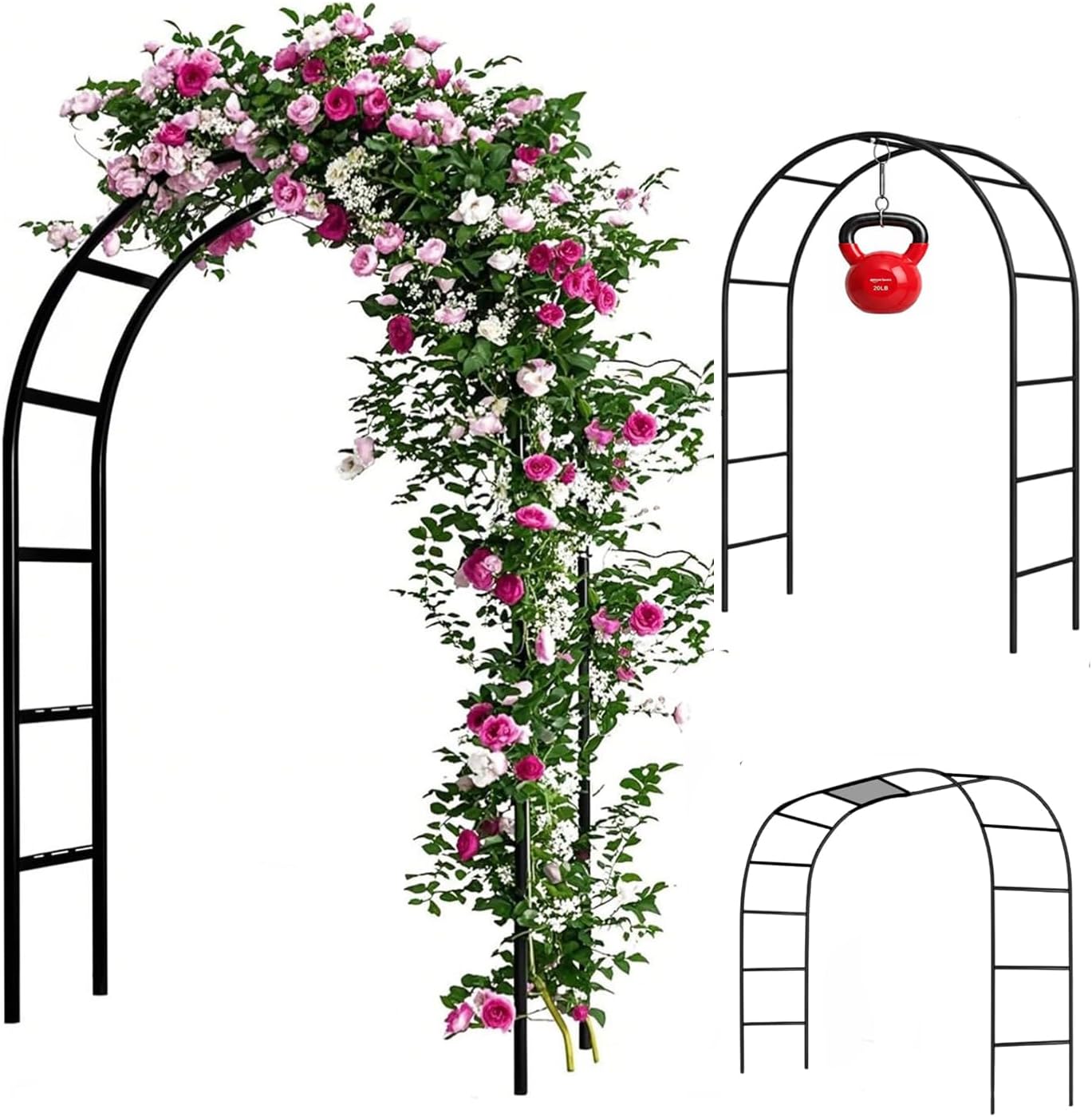
Adorox Metal Garden Arch Trellis, Powder-Coated Black
| Material Type | Metal |
|---|---|
| Finish Type | Powder Coated |
| Shape | Single Arch |
| Size | Standard |
This Adorox garden arch is a straightforward metal arbor that gives climbing roses, clematis, vines, or seasonal decorations a neat vertical framework. It arrives as sectional metal pieces with a powder-coated finish and assembles in simple steps to create a single arched entrance or focal point for a walkway, garden bed, or event backdrop. The open-frame design lets plants weave through the bars and provides height without blocking sightlines, while the powder coating helps resist rust in typical outdoor conditions. Because it is relatively lightweight and sectional, it is easy for two people to position and plant around, and it is also simple to dress with string lights or fabric for celebrations. Expect to secure it into the ground or use anchors before loading with heavy mature vines, since the slim metal sections will perform best when planted with lighter to moderate climbers rather than very heavy, established growth. Assembly is convenient but may require basic tools and a second person to steady the arch while tightening connections.
Best for: Buyers who want an attractive, easy-to-install arch to add vertical interest and support for climbing plants or seasonal decor, and who prefer a straightforward product with visible user feedback to inform the choice.
Less Ideal for: Gardeners seeking a heavy-duty permanent arbor to bear large mature vines or climbing shrubs should look for a sturdier, commercial-grade structure with integrated anchoring.
- Simple sectional design that is easy to assemble and position
- Powder-coated metal finish improves resistance to outdoor corrosion
- Open-arch framework allows vines and flowers to weave naturally and creates visual height
- Lightweight enough for two people to handle and decorative enough for events or pathways
- Relatively lightweight construction needs anchoring before supporting heavy, mature vines
- No built-in ground stakes or heavy bases included for long-term high-wind stability
Verdict: A lightweight, powder-coated metal arch that quickly creates a decorative entry or plant support for garden paths and small to moderate climbers.
VRIEZOP Spiral Metal Trellis for Climbing Plants, Adjustable 12–72 in

| Material Type | Stainless Steel |
|---|---|
| Size | 12 to 72" |
| Item Weight | 1.1 kg |
| Finish Type | Unfinished |
This stainless-steel spiral trellis provides vertical support for climbing plants by giving vines a continuous spiral to wrap around as they grow. It expands from a compact 12 inches to about 72 inches, so you can start plants in pots or raised beds and extend the trellis as they mature. The reinforced center pole and welded screw-locks secure the spiral coils to prevent upward shifting, which improves stability in wind and under plant weight. Tool-free assembly and a fold-flat storage design make it simple to set up and put away for seasonal use. Because the spiral follows the natural climbing direction of vines it reduces tying and helps improve air flow and light exposure for healthier foliage. Limitations to note: the metal is relatively thin and the product is intended for small to medium fruiting canes and vines rather than very heavy, mature blackberry canes or large trained trellis systems, and sharp edges mean you should handle it carefully during installation.
Best for: Gardeners who want a compact, low-fuss support that can grow with container or raised-bed vines and prefers simple setup and seasonal storage.
Less Ideal for: Growers needing a heavy-duty framework for full-size, fruiting blackberry rows or multi-cane brambles should choose a sturdier, purpose-built trellis system.
- Adjustable height from about 12 to 72 inches to suit pots, raised beds, and taller plants
- Stainless steel construction and reinforced center pole offer season-long outdoor durability
- Spiral shape encourages natural vine climbing which reduces the need for tying
- Welded screw-lock system keeps coils secured and limits wobble once installed
- Tool-free setup and fold-flat storage for easy seasonal use
- Not designed to support very heavy or mature blackberry canes or large trained trellis systems
- Metal edges can be sharp so careful handling is required during installation
Verdict: Buy this if you want an easy-to-install, expandable spiral trellis that saves space and reduces tying for small to medium climbing plants.
Choosing the Right Trellis for Pole Beans: Key Factors to Consider
Material and Durability
Trellis materials range from wood and bamboo to metal and synthetic mesh, and each behaves differently over time. Wood can be sturdy and blends into a garden but may rot where it contacts moist soil unless treated or elevated. Bamboo is lightweight and renewable but can split under heavy vine loads unless thick poles are used. Metal frames offer high strength and long life but may need coatings to resist rust.
Consider the expected lifespan relative to how long you plan to keep the trellis in place. A permanent, in-ground metal structure is overkill for a short-season crop in a rented lot, while a lightweight, replaceable mesh trellis might not hold a full season of mature pole bean vines in a windy site.
Load Capacity and Height
Pole beans produce long, heavy vines that can easily reach 6 to 10 feet. A trellis must support the vertical weight as vines, leaves, and wet pods accumulate. Assess both breaking strength and flex. Some trellis styles sag under load, pulling tendrils down and reducing airflow.
Height matters for variety and pruning plans. If you grow tall indeterminate pole beans, choose a trellis that gives clearance for full vertical growth and allows top training if desired. Shorter trellises can be easier to harvest but may require more frequent pruning or bushier varieties.
Anchoring and Wind Resistance
Garden trellises act like sails in wind, so secure anchoring prevents collapse that can damage plants. Anchoring methods include deep ground stakes, screw-in auger anchors, pegged bases, and tie-downs to fixed structures. Soil type affects anchor choice: loose sandy soils need deeper or wider anchors, while compact clay holds shorter anchors better.
Think about seasonal exposure. Sites on ridges or open patios need stronger anchoring than sheltered beds. Also consider how anchors affect winter removal or bed tilling; some gardeners prefer temporary anchors that can be pulled easily after harvest.
Ease of Setup and Seasonal Storage
A trellis that takes excessive time or tools to erect will be used less and may be abandoned midseason. Look for systems with snap-fit connections, pre-cut lengths, or simple tensioning. Modular or fold-flat designs speed winter storage and let you reuse the structure in different beds.
If you need to assemble trellises alone, prioritize lightweight components and clear connection points. For rented plots or community gardens, choose non-invasive anchors and quick-release fittings that do not require deep digging or permanent alterations.
Plant Access and Harvesting
Harvest access determines how much time you spend picking and how gently you can handle vines. Dense netting or tightly spaced wires can hide pods and make harvest awkward. Open-grid, ladder, and teepee styles usually provide better sightlines and reach.
Also think about pruning, disease scouting, and pest control. A trellis that allows you to reach inner vines without dismantling the structure makes these tasks easier and can reduce lost yield from missed issues.
Compatibility with Garden Layouts
Your bed type and spacing influence trellis choice. Raised beds and containers need lightweight, shallow-anchoring systems that will not uplift soil or stress root systems. Long row plantings benefit from continuous nets or fence-style trellises, while small patio containers suit single obelisk or cage-style supports.
Consider future uses for a trellis. If you rotate crops or change beds annually, choose a portable design that adapts to different widths and lengths. Permanent garden installations should match bed spacing and leave access for wheelbarrows or foot traffic.
Common Trellis Styles and How They Work
Different trellis formats suit different training habits and harvest preferences. Netting and mesh mount across a frame and provide many attachment points for tendrils, spreading load across many strands. Ladder and wire trellises concentrate support along vertical runs, letting you wrap vines directly around supports. Teepees and obelisks converge at the top to encourage vines to meet, which can be useful for compact spaces.
When deciding on a style, match the trellis geometry to how you want to harvest. Open frameworks and vertical poles usually make pods easier to see and pick, while dense meshes can support heavy foliage but hide pods among leaves.
- Mesh/net: many attachment points, distributes load
- Wire/ladder: strong vertical runs, good for single rows
- Teepee/Obelisk: space-saving, centers growth upward
- Frame panels: modular for long rows or raised beds
Installing Trellises in Raised Beds and Containers
Raised beds and containers restrict anchor depth, so choose trellises designed for shallow anchoring or external bracing. Use broad-base stakes or tie trellises to external posts if bed walls are thin. For containers, insert supports into deep soil-filled pots and consider cross-bracing to resist tipping once vines load the frame.
Plan planting distance from the trellis so young plants have room to establish roots without being crowded at the base. In small containers, stagger planting or use dwarf pole bean varieties to limit weight and root competition.
- Use wide-base anchors or external ties for shallow beds
- Cross-bracing prevents tipping in windy spots
- Match plant spacing to container root volume
Training and Pruning Pole Beans on a Trellis
Encourage vines to climb by planting close to the trellis and gently wrapping new growth around supports in the first few weeks. Many pole bean varieties will find supports on their own, but early guidance improves vertical growth and reduces tangling.
Prune only to remove damaged or diseased material and to open up crowded centers. Over-pruning reduces total yield. If vines are overloading a trellis, consider harvesting more frequently or thinning some secondary shoots to reduce weight and improve airflow.
- Start training when vines are 6 to 12 inches tall
- Guide tendrils gently to vertical supports
- Prune sparingly to maintain airflow and reduce weight
Winter Care and Off-Season Storage
Plan for winter by choosing trellises that can be disassembled or safely left in place without causing bed damage. Removable anchors and foldable frames simplify cleanup and protect components from prolonged ground moisture. If you leave a trellis in place, check for wood rot or rust in spring and replace compromised pieces.
Store lightweight parts in a dry shed to prolong life. Metal frames with protective coatings typically survive outdoor wintering better, but all trellis types will last longer if cleaned of plant debris before storage.
- Disassemble or lift wood off soil to prevent rot
- Store small parts indoors when possible
- Inspect for rust or rot before reusing next season
Adapting Trellises to Different Bean Varieties
Pole beans vary in vigor, leaf density, and length. Heavier, high-yielding varieties need stronger supports and thicker anchors. If you grow mixed varieties, build the trellis to suit the most vigorous type so weaker vines still find enough support.
For compact or ornamental pole beans, lighter mesh or obelisk styles may suffice and improve aesthetics. Match trellis height to the variety's typical mature length and allow some headroom for growers who encourage top growth.
- Build for the most vigorous variety in mixed beds
- Choose headroom based on mature vine length
- Use heavier supports for dense-leaved types
How We Chose the Best Trellis for Pole Beans
We focused selection on attributes that matter for supporting pole beans from first tendril to full canopy. Primary evaluation criteria were structural strength under loaded vines, anchoring and stability in common soil types, ease of setup and seasonal removal, access for harvesting and pruning, and material longevity against sun and moisture. We also considered compatibility with different planting arrangements such as single-row beds, raised beds, and containers. Products that required complicated tools for basic assembly or that offered poor anchoring options were excluded. We filtered out trellises intended only for lighter annual climbers or indoor decorative use. The final list favors solutions that balance load-bearing capacity with straightforward installation and user-friendly access during harvest and maintenance. These criteria align with the scoring metrics used in the product cards so gardeners can compare strength, stability, installation time, harvest access, and durability at a glance.
FAQ
How tall should a trellis be for pole beans?
Most pole bean varieties benefit from 6 to 8 feet of vertical support, though some vining types reach 10 feet. Choose a trellis that gives headroom for your variety and for harvesting; shorter trellises are easier to pick from but may require pruning.
Can I reuse a trellis year after year?
Yes often, provided the materials remain sound. Remove plant debris, inspect for rot or corrosion, and repair anchors before reusing. Modular or foldable designs are easiest to store and reassemble across seasons.
Is netting or rigid poles better for heavy crops?
Rigid poles or wire ladders typically handle concentrated loads better because the load is transferred to strong vertical supports. Netting distributes load across many strands and can work if the frame and attachment points are rated for heavier weight.
How do I anchor a trellis in windy sites?
Use deep stakes, screw-in anchors, or tie-downs to fixed structures to resist uplift. Cross-bracing and wider bases reduce tipping. Also consider lowering trellis height or adding windbreaks on exposed sides to reduce load from gusts.
Can I grow pole beans in containers with a trellis?
Yes, but choose deep, wide containers with sufficient soil volume and use broad-base anchors or external bracing. Shallow pots and light trellises are prone to tipping once vines load the support.
Final Verdict
Pick a trellis that matches the size and vigor of your pole bean varieties and the realities of your garden site. Prioritize structural strength and secure anchoring in windy or exposed beds, and favor designs that allow easy harvest access and straightforward seasonal removal. Tradeoffs are inevitable: heavier, permanent supports offer longevity but cost more effort to install, while lightweight, portable options are easier to handle but may need reinforcement under heavy load. Decide which factors matter most for your plot and seed selection, then match a trellis style and materials to those priorities so your pole beans climb well and yield reliably each season.
