

Note: This article contains affiliate links. If you click on these links and make a purchase, I may earn a small commission at no extra cost to you. This helps support my research and content. Read my full affiliate disclosure here.
If you grow vining squash in a small garden, on a patio, or against a fence, the right trellis changes how productive and manageable your plants are. A Trellis for Squash keeps fruit off the soil, reduces rot and pest pressure, and makes pruning and picking simpler. This guide covers six shortlisted trellises chosen for real garden use, focusing on structural strength, ease of installation, and how they affect plant health and harvest times. Read on to see how different styles perform for heavy, sprawling squash vines and which features matter most for your space and skill level.
Top Picks at a Glance
| Best Overall The best all-around choice for most situations | Gardener's Supply Company Titan Extra-Tall Garden Arch (80 in) |  |
| Best Quality Built to a higher standard if you want something more solid | Anleolife ANT001 4×6 ft Heavy-Duty Double-Arch Garden Trellis |  |
| Best Value The sweet spot between price and what you get | HIHADUUM Heavy-Duty Adjustable A-Frame Trellis, 2-Pack |  |
| Best Budget The cheapest option that still gets the job done reliably | Groumh U-Shape Foldable Garden Trellis for Climbing Plants |  |
| Highest Rated A top-rated pick with lots of positive feedback | LIANTRAL A‑Frame Metal Garden Trellis, 2‑Pack |  |
| Best Seller A high-volume bestseller chosen again and again | PyraLine 50" x 17" Heavy-Duty Steel A-Frame Garden Trellis (1 Pack) |  |
Gardener's Supply Company Titan Extra-Tall Garden Arch (80 in)

| Material Type | Metal |
|---|---|
| Frame Material | Polyethylene-coated steel tubing |
| Netting | Nylon netting |
| Size | 80 inches |
| Weight limit | 70 lbs |
This Titan Extra-Tall Garden Arch is a heavy-duty arch trellis made from polyethylene-coated steel tubing with nylon netting to support sprawling vines. It is typically used over rows or beds as a squash tunnel or arched trellis to train melons, zucchini, and other large vining plants vertically, freeing soil space and improving air circulation. The steel core and weatherproof poly coating resist rust and sun damage for multiseason durability, and the nylon netting gives many points to tie or weave vines. Assembly is straightforward and tool-free for most gardeners, and the unit disassembles to store compactly at season end. The frame is rated to hold up to 70 pounds, so it handles heavy fruit loads but is not meant for continuous industrial weight. Because it is a freestanding arch, it benefits from being staked or sited in firm ground to prevent tipping in high winds. Overall this is a practical, long-lasting choice if you want a neater, space-saving support for large squash and melon plants in a home garden.
Best for: Gardeners who want a durable, space-saving support to train squash, melons, and other large vining crops vertically while keeping maintenance simple.
Less Ideal for: People needing a permanent, windproof structure for very large commercial yields or those who prefer low-profile ground covers rather than raised vine supports.
- Durable polyethylene-coated steel frame resists rust and UV for long life
- Nylon netting provides multiple attachment points for heavy vines and fruit
- Designed to elevate sprawling crops to save garden space and improve harvesting
- Holds up to 70 lbs so it can support heavy fruits like melons and large squash
- Easy to assemble and disassemble for seasonal storage
- Freestanding arch can tip in strong wind if not anchored to firm soil
- 70 lb weight limit may be low for very large or multiple clustered fruits
Verdict: A rugged, weatherproof arch trellis built to lift heavy vining squash and melons off the ground and reclaim valuable garden space.
Anleolife ANT001 4×6 ft Heavy-Duty Double-Arch Garden Trellis

| Finish Type | Galvanized |
|---|---|
| Item Highlight | Raised-Bed or In-Ground; Deep-Insert Stability |
| Model Number | ANT001 |
| Size | 4x6ft |
| Number of Items | 1 |
This double-arch trellis is built for heavy vining vegetables and tailored to squash growers who need robust overhead support. The galvanized square-steel frame uses swaged steel-to-steel joints and passed a 210 lb static-load test, so it resists wobble as fruits and dense foliage accumulate. Its walk-through semi-circular tunnel gives easy access beneath the canopy for training vines, pruning and harvesting, while 17 horizontal crossbars and supplied jute rope provide many tie and training points so squash vines can be spread and supported rather than left to trail on the ground. Installation can be in raised beds using included hardware or by inserting the pointed legs into firm soil, giving flexibility for different garden layouts. Expect a stable, long-lasting structure that makes vertical growing feasible for larger fruiting crops, but plan time for assembly and anchoring since the heavy steel frame is less portable than lightweight alternatives and requires solid ground or bed attachment to maximize stability.
Best for: Growers focused on high-yield, heavy-fruiting crops who need a durable, walk-through support to train and elevate squash and similar vines for larger harvests.
Less Ideal for: Casual gardeners who prefer lightweight, portable supports or those with very small containers where a large tunnel cannot be accommodated.
- Galvanized swaged steel frame tested to support heavy loads for reliable support of fruiting vines
- Walk-through tunnel design allows comfortable access for training, pruning and harvest
- Seventeen crossbars plus jute rope offer abundant tie points to spread and support squash vines
- Compatible with raised beds or direct soil insertion for flexible placement
- Heavier steel construction requires careful assembly and permanent anchoring for best stability
Verdict: If you want a sturdy, walk-through support that holds heavy squash and pumpkins off the ground for bigger, cleaner harvests, this heavy-duty double-arch trellis is built for that purpose.
HIHADUUM Heavy-Duty Adjustable A-Frame Trellis, 2-Pack

| Material Type | Iron, Metal |
|---|---|
| Finish Type | Powder Coated |
| Grid Size | 3.15"×3.94" |
| Frame Thickness | 1.2 cm outer frame |
| Number of Items | 2 |
These HIHADUUM A-frame trellises are built to support climbing vegetables like cucumbers, tomatoes, peas, and beans in raised beds and small garden plots. Each kit includes two preassembled panels that fold flat and bolt together to create a 17 to 50 inch tall A-frame with dense 3.15"×3.94" grid spacing that guides vines and spreads fruit weight across the frame. The powder-coated iron construction and reinforced 1.2 cm outer frame make the trellis noticeably stiffer than thin-wire options, and the factory-forged hinge avoids wobble at the top. Setup is straightforward: panels connect with a few hand-tightened bolts and the unit collapses for compact storage. The box also includes plant clips, twist wire, tape, and gloves so you can tie and protect stems without buying extras. Expect a sturdy, low-maintenance support for medium to heavy vine crops, though the fixed grid spacing and A-frame shape suit vertical training more than sprawling varieties and the pair is sized for raised beds rather than large field rows.
Best for: Gardeners who want a durable, no-nonsense support for vertical vegetable production in raised beds and who value easy assembly and included accessories.
Less Ideal for: Growers who need trellises for wide sprawling crops or long single-row trellises for large-scale beds should consider different shapes or longer panels.
- Reinforced 1.2 cm powder-coated steel frame resists sagging and corrosion
- Adjustable 17" to 50" height and fold-flat design for flexible use and compact storage
- Dense grid spacing provides more attachment points to support heavy fruit
- Includes clips, twist ties, tape, and gloves so no extra accessories are required
- A-frame shape and dimensions are optimized for raised beds and may not fit larger garden rows
- Fixed grid spacing limits training options for very large sprawling plants
Verdict: A practical, heavy-duty trellis pair that gives raised-bed gardeners a sturdy, easy-to-install vertical support with all the accessories needed to train medium and heavy vine crops.
Groumh U-Shape Foldable Garden Trellis for Climbing Plants

| Material Type | Alloy Steel, Plastic |
|---|---|
| Finish Type | Plastic-coated |
| Unit Count | 1 Count |
This lightweight U-shape trellis is a budget-friendly support for climbing vegetables and flowering vines. It assembles with cross-shaped connectors and a plastic-coated steel core, so one person can set it up quickly in a raised bed, container, or along a patio. The plastic coating protects the metal from rust and reduces wear on plant stems, while the foldable A-frame design keeps vines off the ground to improve air circulation and make harvesting easier. Because it is compact and easy to disassemble, it works well where space is limited or when you want seasonal supports that store flat. Expect modest height and span suited to smaller squash varieties and vining cucumbers rather than heavy, large-fruited squash; very heavy loads may need a heavier commercial trellis or additional reinforcement. The straightforward assembly and corrosion resistance make it a practical, low-cost choice for DIY vegetable gardeners who need simple, reliable plant support.
Best for: Gardeners on a tight budget who want an easy-to-assemble, rust-resistant trellis for small to medium vining vegetables in raised beds or containers.
Less Ideal for: Growers planning to train large, heavy-fruited squash or permanent structural supports should choose a heavier-duty, larger trellis system instead.
- Plastic-coated steel construction resists rust and protects plant stems
- Foldable A-frame design is easy to assemble and disassemble by one person
- Compact footprint fits raised beds, containers, patios, and small gardens
- Included trellis netting and cross connectors simplify setup
- Limited height and span may not support very large or heavy squash varieties
- Lightweight build can need extra anchoring for heavy wind or heavy fruit loads
Verdict: A cost-conscious, rust-resistant foldable trellis that gives small-plot gardeners quick, effective support for vining squash and other climbing vegetables.
LIANTRAL A‑Frame Metal Garden Trellis, 2‑Pack

| Number of Packs | 2 |
|---|---|
| Material Type | Alloy Steel |
| Finish Type | Powder Coated |
| Shape | A-Shape |
The LIANTRAL A‑Frame trellises provide two sturdy climbing surfaces in a compact, self‑supporting triangle that works well for squash, cucumbers, beans and other vining vegetables. Each kit includes two foldable A‑shaped frames made from powder‑coated alloy steel; the grid panels are sized to guide vines and help fruit hang clear of soil. Assembly is tool‑free and the frames have soil‑insert feet for anchoring, so they are quick to place along a row or at the back of a raised bed. The metal construction and powder finish resist corrosion and sun damage for season‑to‑season use, and the open grid lets air circulate to reduce disease risk. Because the height is moderate, larger heavy squash varieties may need additional horizontal support or more frequent tying as fruits develop. Also the pair is relatively narrow per frame, so very wide plants may outgrow a single A‑frame without combining units or using extra bracing.
Best for: Gardeners who prioritize long‑lasting, low‑maintenance supports for climbing vegetables and want a quick, stable solution for raised beds or small plots.
Less Ideal for: Growers of very large, heavy squash cultivars who prefer single wide structures or trellises built specifically for heavy fruit loads.
- Self‑supporting A‑frame gives two climbing faces and inherent wind stability
- Powder‑coated alloy steel construction resists rust and outdoor wear
- Tool‑free assembly and foldable design for easy setup and storage
- Dense grid spacing supports vines and improves air circulation
- Moderate height may require extra support for very heavy squash fruits
- Each frame is relatively narrow for very sprawling plants without pairing or bracing
Verdict: Buy this when you need a reliable, rust‑resistant A‑frame trellis that quickly provides stable climbing surfaces for squash and other vining vegetables.
PyraLine 50" x 17" Heavy-Duty Steel A-Frame Garden Trellis (1 Pack)
| Material | Steel |
|---|---|
| Finish | Powder Coated |
| Shape | A-Shape |
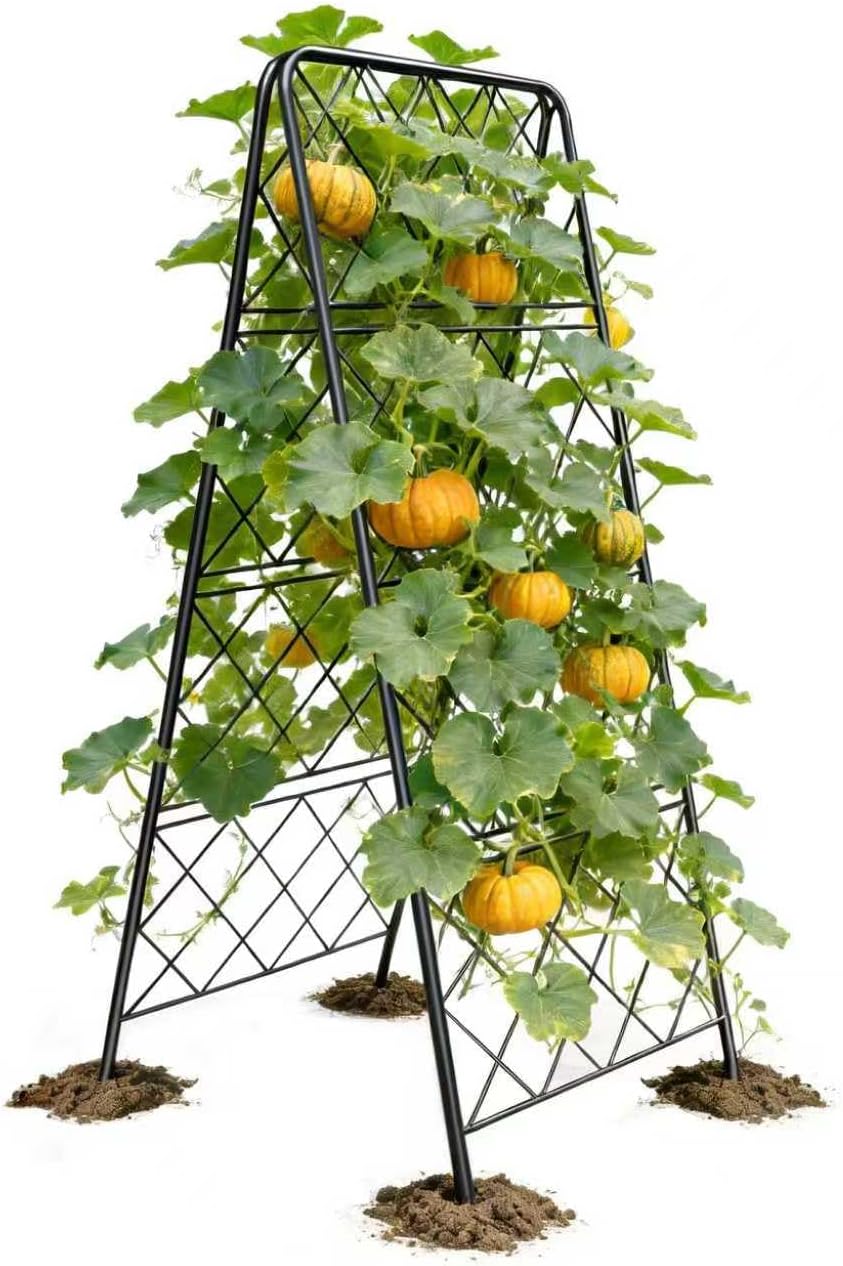
This PyraLine A-frame trellis is a one-piece, powder-coated steel support designed to hold heavy vines and fruiting crops. It sets up as a stable A-frame with high-density rhombus steel grids that distribute weight across the panel, so cucumbers, tomatoes, beans, and even small melons can climb without overly stressing individual bars. The hinge is factory-fused rather than bolted, which keeps the frame rigid under load and reduces the need for periodic tightening. The trellis adjusts from a low height to full 50 inches as plants grow and then folds flat for compact storage after the season. Practical benefits include strong wind resistance from the thick steel frame, rust protection from the powder coating, and quick deployment in raised beds or containers. Limitations are that it is a single-panel solution so larger climbs may require multiple units or additional anchoring, and its steel construction makes it heavier to move compared with lightweight bamboo or plastic supports.
Best for: Gardeners who prioritize long-lasting, load-bearing plant supports and want a sturdy, low-maintenance trellis for heavy fruiting vines in raised beds or containers.
Less Ideal for: People who need long continuous trellis runs, extremely lightweight temporary supports, or those who prefer completely tool-free, ultra-light structures for annual annuals.
- High-density rhombus steel grid evenly distributes plant weight and reduces sagging
- Factory-fused one-piece hinge increases rigidity and stays solid under heavy vines
- Powder-coated steel finish resists rust, UV, and outdoor weathering
- Collapses flat for compact off-season storage
- Single 1-pack panel may require multiple units for longer trellising runs
- Heavier steel construction is less portable than bamboo or plastic options
Verdict: Buy this trellis if you need a durable, rust-resistant steel support that holds heavy cucumbers and tomatoes upright season after season.
Choosing the Right Trellis for Squash: Key Factors to Consider
Load Capacity and Structural Strength
Squash fruits, especially mature specimens, can be heavy and exert significant downward force on supports. A trellis must resist bending under weight and provide secure anchor points so vines do not pull the structure out of soil or containers. Look for materials and joint designs that avoid wobble and allow weight to be distributed across the frame.
For growers, a strong trellis reduces the need for constant repairs and prevents fruit damage from collapse. Consider whether additional fruit slings or secondary supports will be needed for the largest squashes and whether the frame can be reinforced if necessary.
Footprint and Garden Space Fit
The trellis footprint determines how much garden or container space the structure occupies and how it affects planting density. Vertical trellises free up ground space by training vines skyward but require enough headroom and sunlight exposure. Leaning or A-frame styles change the planting layout and can serve as living fences or shade elements.
Measure the planting area and imagine vine spread at peak growth to choose a trellis that fits without shading neighboring plants. In containers, make sure the base can be anchored or weighted to prevent tipping.
Ease of Installation and Adjustability
Gardeners vary in DIY skill and available tools, so installation complexity is important. Some trellises assemble with simple clips and stakes, others require brackets, drilling, or heavy anchors. Choose a design that matches the installation effort you are willing to do and the permanence you want in the garden.
Adjustability matters because vine training often requires moving ties, lowering or widening panels, or adding reinforcement midseason. Systems that allow quick reconfiguration save time and reduce stress on vines during growth.
Material and Weather Resistance
Exposure to sun, rain, and frost affects how long a trellis will last. Metal parts should resist corrosion and joints should maintain integrity after repeated wet-dry cycles. Wooden elements need rot-resistant species, coatings, or regular maintenance. Plastic or composite components must resist UV degradation and cracking.
Durable materials reduce long-term maintenance and avoid sudden failures during the harvest season. Consider whether the trellis will stay in place year-round or be stored; storage-friendly materials change the durability tradeoffs.
Vine Training, Spacing, and Fruit Support
Different squash varieties present different vine habits: some are long and sprawling, others are more compact but still produce heavy fruit. Trellis mesh size, rung spacing, or grid design affects how well vines can climb and how easy it is to tie and secure stems. Wider spacing may let large leaves and fruit through, while tighter grids give more contact for tendrils.
Good vine support reduces rubbing and stem abrasion and helps keep fruit suspended. Plan for supplemental slings or netting for very large fruit and for systems that allow tying at multiple points to guide growth without constriction.
Maintenance Needs and Harvest Accessibility
A trellis that is hard to access will make routine pruning, pest checks, and picking more difficult. Consider how easily you can reach fruits at different heights and whether the design lets you remove or lower sections for harvest. Simple, open designs offer quick access but may sacrifice some load capacity, while more enclosed systems protect fruit but require extra steps for harvest.
Think about seasonal care such as removing dead foliage, cleaning supports of soil or sap, and storing the trellis off-season. Lower-maintenance designs save time across the growing season.
Trellis Styles and When to Use Them
Different trellis shapes suit different garden plans. Vertical panel trellises work well where ground space is limited and you need to keep vines compact, while A-frame or lean-to styles support heavier loads and can be easier to anchor in open beds.
Consider freestanding frames near the middle of a bed when you want access from both sides, and use wall-mounted systems along fences or sheds to make use of existing support. Mesh panels are forgiving for smaller vines but may require additional reinforcements for very heavy fruit.
- Vertical panels: space-saving, good for narrow plots
- A-frame: strong and stable, accessible from two sides
- Lean-to/wall-mounted: uses existing structure, minimal footprint
- Freestanding arches: decorative, but may need stronger anchoring
Using Fruit Slings and Secondary Supports
Even robust trellises can benefit from fruit slings for the largest squashes. Slings cradle the fruit and transfer load to the frame, preventing stem breakage and reducing stress on single attachment points.
Slings can be made from breathable fabric, netting, or soft garden cloth and should be attached at multiple secure points. Plan where you will add slings before fruit sets so training is less disruptive later.
- Position slings before fruit becomes heavy
- Use breathable materials to avoid trapping moisture
- Attach slings to multiple frame points for even load distribution
Anchoring and Ground Preparation
Proper anchoring prevents tipping and shifting, especially in windy sites or when fruits are heavy. Deep-set posts, ground spikes, or concrete footings are options depending on permanence and soil type. In containers, use weighted bases or tie the frame into nearby fixed structures.
Soil preparation around anchor points also matters. Loosen compacted soil to allow deep post placement and avoid shallow anchoring that can pull out as vines grow. For colder climates, check that anchor methods resist frost heave.
- Use deep anchors for long-term installations
- Consider removable anchors if you need seasonal storage
- Match anchor type to soil conditions to prevent pullout
Training Squash Vines Without Damaging Them
Start training early by gently encouraging young vines upward and securing them with soft ties that allow stem expansion. Avoid tight knots that can girdle the stem as it thickens. Guide side shoots toward open grid areas rather than forcing them through small holes.
Regularly check ties and reposition them as vines grow. Removing crowded leaves improves light penetration and reduces disease pressure, but do this gradually to avoid shocking the plant.
- Use soft, wide ties to prevent stem injury
- Retie vines every few weeks to accommodate growth
- Prune selectively to improve airflow and fruit development
Seasonal Care and Off-Season Storage
After harvest, clean the trellis of plant debris and inspect for damage. Removing diseased foliage reduces overwintering pests and fungal spores. Metal frames can be lightly washed and dried before storage; wooden frames may need a touch-up of preservative if they will be left in place.
If you plan to reuse the trellis, label detachable parts and store them in a dry location to prolong life. For permanent installations, plan for periodic maintenance checks each spring.
- Clean and dry components before storage
- Replace damaged ties or webbing to avoid midseason failures
- Inspect hardware and anchor points each year
How We Chose the Best Trellis for Squash
We picked trellises for squash by applying gardening-focused filters that prioritize real-world performance and durability. Structural strength was a primary filter because squash fruit can become heavy and needs a support system that resists sagging or collapse. Installation and adaptability were evaluated to reflect how easily a gardener can set a trellis into beds, containers, or against existing structures. Material resistance to weather and rot was considered so options last through a full growing season and beyond. Plant compatibility was assessed by how well the trellis shape and spacing accommodate different squash varieties and vine habits. Ease of harvest and maintenance was examined to favor designs that make pruning, training, and fruit removal straightforward. We excluded flimsy, single-season-only options and any designs clearly intended for lightweight annual vines rather than heavy-fruiting squash. The final shortlist emphasizes balanced tradeoffs among load capacity, footprint, and gardener effort.
FAQ
Can all squash varieties be trained on a trellis?
Many summer and some winter squash varieties can be trained, but success depends on vine vigor and fruit size. Long-vined types adapt well to vertical support, while very heavy-fruiting varieties may need supplemental slings or ground support.
When should I start training vines onto a trellis?
Begin training when seedlings have several true leaves and vines are flexible. Early guidance prevents stems from becoming too woody and reduces the chance of breakage when you first secure them to the frame.
How do I prevent a trellis from tipping in wind or storms?
Use deep or heavy anchors, tie the structure to fixed points if available, and avoid overly tall, narrow builds in exposed locations. Adding cross-bracing and anchoring multiple points into the ground reduces sway and tipping risk.
Do I need fruit slings for every squash?
Not always. Smaller fruits often need only the trellis contact, but larger winter squash frequently benefit from slings to prevent stem stress. Monitor fruit size and add slings before the fruit becomes too heavy.
What materials last longest in a wet climate?
Galvanized or stainless metal and rot-resistant woods or treated composites perform well in wet climates. Ensure joints and fasteners are corrosion-resistant and consider removable parts for winter storage to extend lifespan.
Can I use a trellis in a container garden?
Yes, but choose a design that can be securely anchored or weighted. Containers require either heavy bases, stake-through setups into the soil, or attachment to nearby fixed structures to avoid tipping as vines and fruit grow.
Final Verdict
Choosing the right trellis for squash comes down to matching structural strength, footprint, and ease of use to your garden conditions and the squash varieties you grow. Prioritize load capacity and anchoring if you expect heavy fruit, and opt for adjustable, accessible designs if harvest convenience matters most. With the right balance of durability, support, and maintenance needs, a trellis will increase yield, reduce disease risk, and make seasonal care simpler.
