

Note: This article contains affiliate links. If you click on these links and make a purchase, I may earn a small commission at no extra cost to you. This helps support my research and content. Read my full affiliate disclosure here.
Growing watermelons on a trellis changes how you plan space, support fruit, and manage vine health. Using the right trellis keeps fruit off wet soil, improves air circulation to reduce disease risk, and can make harvesting simpler in a small backyard or on a patio. This guide gathers seven shortlisted trellises for watermelon suited to common home garden situations, from compact yards to larger allotments. We evaluate practical details gardeners care about, such as load capacity, installation method, material durability, and how easy it is to add slings or netting for heavy melons. Read on to see which trellis styles fit your garden and growing goals.
Top Picks at a Glance
| Best Overall The best all-around choice for most situations | PyraLine 50" x 17" Heavy-Duty Steel A-Frame Garden Trellis (1 Pack) |  |
| Best Quality Built to a higher standard if you want something more solid | Alxcellion Adjustable A‑Frame Steel Garden Trellis (Collapsible) |  |
| Best Value The sweet spot between price and what you get | Suteck 39" A‑Frame Cucumber Trellis — 2‑Pack, Foldable PVC‑Coated Metal |  |
| Best Budget The cheapest option that still gets the job done reliably | K-Brands 50 x 50" A‑Frame Vegetable Trellis with Netting |  |
| Highest Rated A top-rated pick with lots of positive feedback | MQHUAYU Adjustable Heavy-Duty A‑Frame Trellis, 50 x 17 inches |  |
| Most Popular A crowd favorite that many people choose with confidence | Generic Heavy-Duty A-Frame Cucumber Trellis, 2-Pack (Galvanized Steel) |  |
| Best Seller A high-volume bestseller chosen again and again | MQHUAYU U‑Shape Garden Trellis for Climbing Plants (Medium) |  |
PyraLine 50" x 17" Heavy-Duty Steel A-Frame Garden Trellis (1 Pack)
| Material | Steel |
|---|---|
| Finish | Powder Coated |
| Shape | A-Shape |
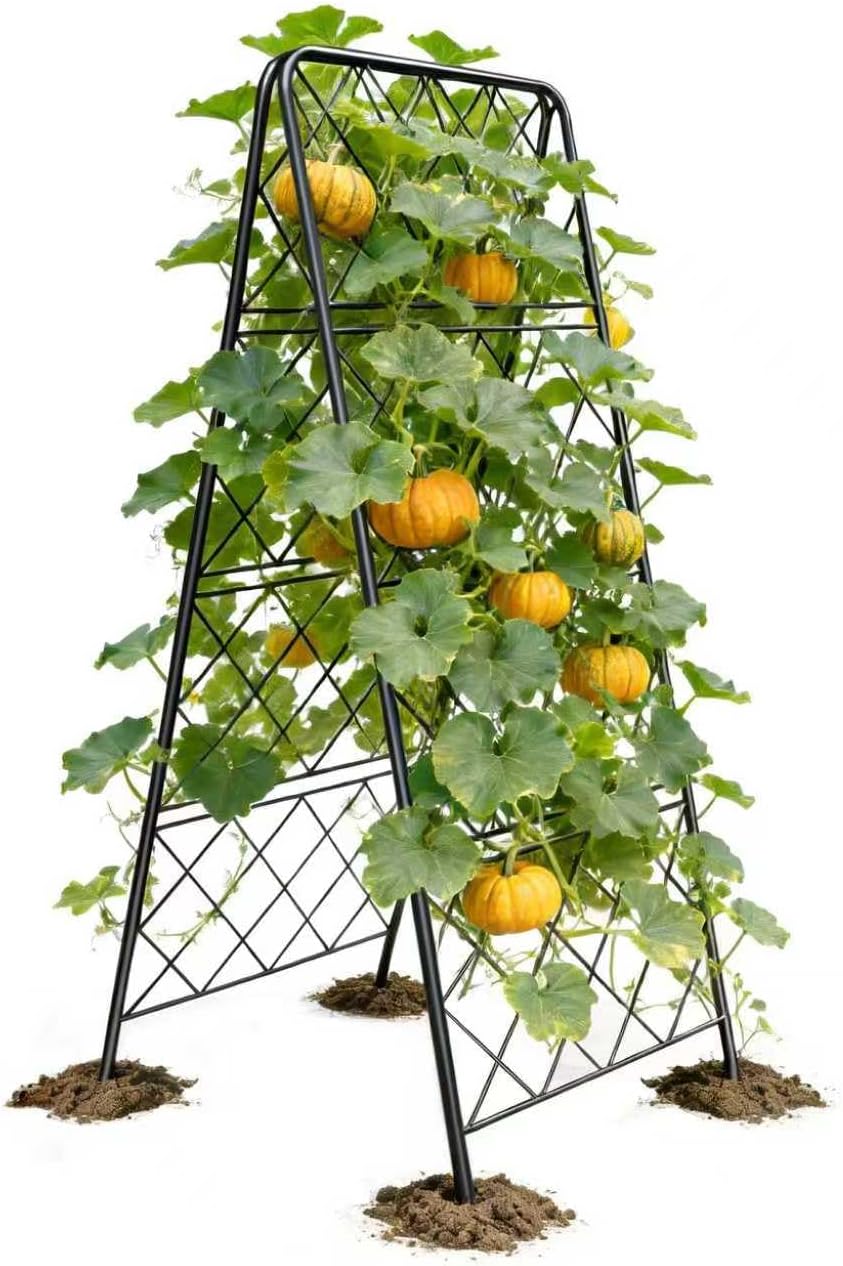
This PyraLine A-frame trellis is a one-piece, powder-coated steel support designed to hold heavy vines and fruiting crops. It sets up as a stable A-frame with high-density rhombus steel grids that distribute weight across the panel, so cucumbers, tomatoes, beans, and even small melons can climb without overly stressing individual bars. The hinge is factory-fused rather than bolted, which keeps the frame rigid under load and reduces the need for periodic tightening. The trellis adjusts from a low height to full 50 inches as plants grow and then folds flat for compact storage after the season. Practical benefits include strong wind resistance from the thick steel frame, rust protection from the powder coating, and quick deployment in raised beds or containers. Limitations are that it is a single-panel solution so larger climbs may require multiple units or additional anchoring, and its steel construction makes it heavier to move compared with lightweight bamboo or plastic supports.
Best for: Gardeners who prioritize long-lasting, load-bearing plant supports and want a sturdy, low-maintenance trellis for heavy fruiting vines in raised beds or containers.
Less Ideal for: People who need long continuous trellis runs, extremely lightweight temporary supports, or those who prefer completely tool-free, ultra-light structures for annual annuals.
- High-density rhombus steel grid evenly distributes plant weight and reduces sagging
- Factory-fused one-piece hinge increases rigidity and stays solid under heavy vines
- Powder-coated steel finish resists rust, UV, and outdoor weathering
- Collapses flat for compact off-season storage
- Single 1-pack panel may require multiple units for longer trellising runs
- Heavier steel construction is less portable than bamboo or plastic options
Verdict: Buy this trellis if you need a durable, rust-resistant steel support that holds heavy cucumbers and tomatoes upright season after season.
Alxcellion Adjustable A‑Frame Steel Garden Trellis (Collapsible)

| Material Type | Steel |
|---|---|
| Finish Type | Powder Coated |
| Shape | A-Shape |
| Size | 1 Pcs |
This adjustable A‑frame trellis provides a rigid, reusable support for climbing plants and heavy fruiting vines. It folds from a low 17" profile up to 50" to match plant growth and installs as preassembled panels joined with six hand‑tightened bolts, so you can set it up quickly in raised beds or containers. The dense steel grid and 1cm reinforced outer frame give strong vertical support that resists sagging under heavier loads such as melons or trained berry canes. Powder coating protects the steel from rust and weather, and the hinge design is factory fused to reduce wobble compared with multi‑part kits. Limitations are that the listed height tops out at 50" so very tall cane blackberry varieties may need additional support, and the A‑frame footprint is 17" wide which is compact but may restrict access for pruning in tight rows. For gardeners who need a sturdy, low‑maintenance frame that adapts as plants grow, this trellis performs reliably season after season.
Best for: Gardeners who prioritize strong, long‑lasting support for productive vines and fruiting canes and want a quick, low‑effort solution for raised beds or patio containers.
Less Ideal for: Growers planning to train very tall erect blackberry varieties or those who need wide, walk‑through trellis access should consider taller or wider support systems.
- Adjustable height from 17" to 50" to follow plant growth stages
- Dense steel grid and reinforced outer frame minimize sag under heavy fruit loads
- Powder-coated steel resists rust for multi-season outdoor use
- Pre-assembled panels and hand‑tightened bolts enable quick setup without tools
- Maximum height may be short for very tall blackberry varieties or multi-tier training systems
- 17" width creates a narrow footprint that can limit access for pruning or harvesting
Verdict: Choose this trellis when you want a compact, heavy‑duty, adjustable frame that reliably supports fruiting vines and productive canes in raised beds.
Suteck 39" A‑Frame Cucumber Trellis — 2‑Pack, Foldable PVC‑Coated Metal

| Material Type | Metal |
|---|---|
| Finish Type | PVC Coated |
| Number of Items | 2 |
| Shape | A-Shape |
The Suteck 39" A‑Frame trellis set provides a simple, no‑assembly support for vining vegetables like cucumbers, peas, and beans. Each unit stands as an A-shaped frame that can be used singly or paired to create a double‑sided planting plane that improves sunlight exposure and airflow around plants. Constructed from PVC‑coated steel, the frames resist rust and weathering and fold flat for compact storage when not in use. The package includes cable ties and hook-and-loop straps so you can start training vines immediately. Because the panels are relatively short, they work best in raised beds, containers, or small backyard plots rather than for very tall indeterminate varieties. The frames are lightweight and ready to use out of the box, making them a low‑hassle option for gardeners who prefer predictable, durable supports without complicated installation.
Best for: Gardeners who want a low‑effort, reliable support for cucumbers and other short to medium vining vegetables in raised beds, containers, or small backyard plots.
Less Ideal for: Growers planning to train very tall indeterminate varieties or to create large vertical structures for heavy fruiting vines should consider taller, heavier trellises or arbors.
- Ready to use with no assembly required and foldable for compact storage
- PVC‑coated steel construction offers weather resistance and sturdy plant support
- Two frames allow double‑sided planting to increase yield per linear foot
- Includes cable ties and hook-and-loop straps for immediate plant training
- Relatively short height limits use with very tall or heavy indeterminate vines
Verdict: A compact, rust‑resistant two‑pack trellis that delivers dependable, no‑fuss support for cucumbers and other short to medium climbing vegetables.
K-Brands 50 x 50" A‑Frame Vegetable Trellis with Netting
| Material Type | Metal, Plastic |
|---|---|
| Finish Type | Powder Coated |
| Product Style | Classic |
| Shape | A-Shape |
| Unit Count | 1 Count |
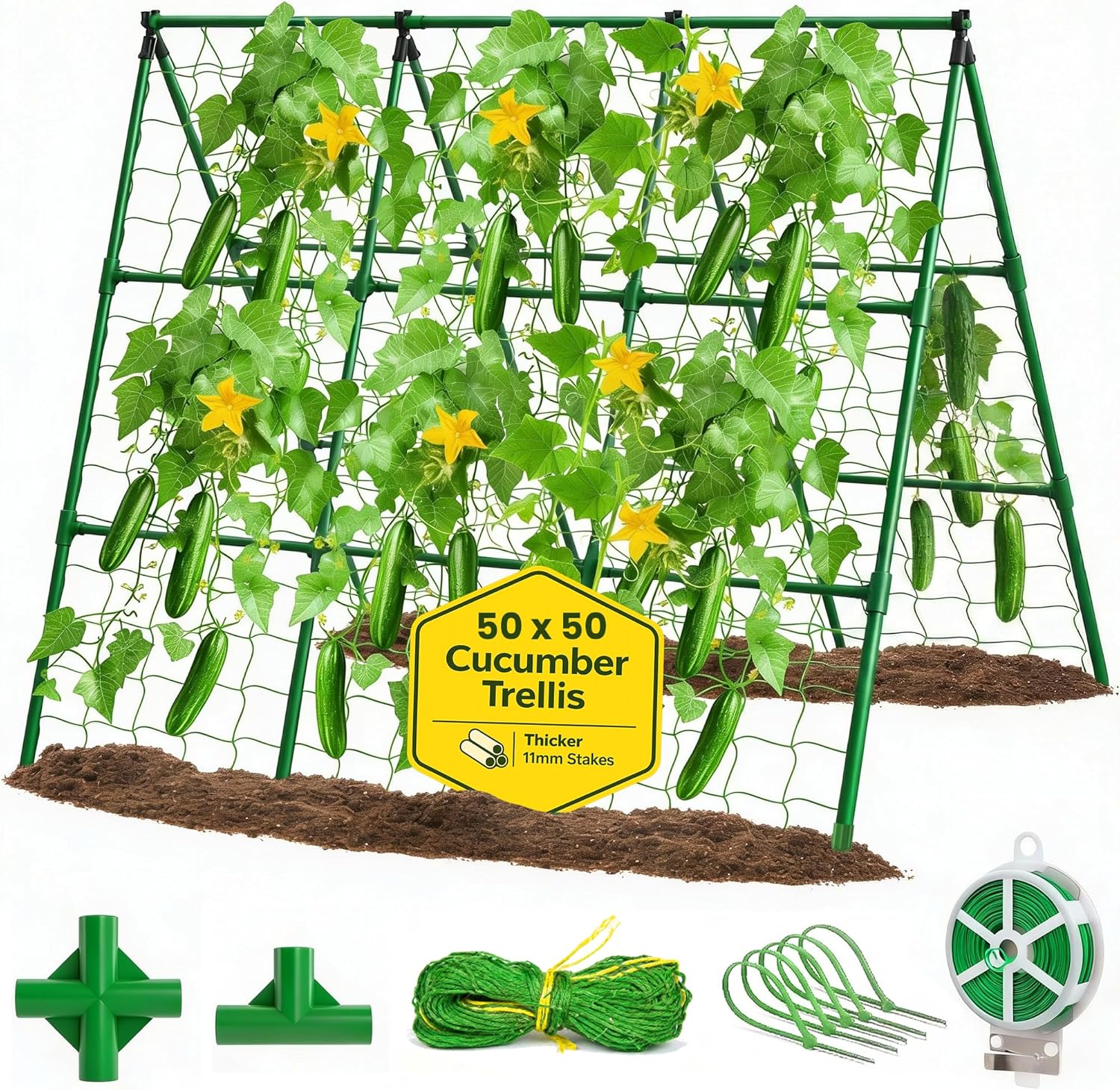
This A-frame trellis provides a quick way to add vertical support to a raised bed or large container. The kit snaps together without tools using easy-connect joints and includes heavy-duty netting, twist ties and zip ties so you can install it and train vines the same day. Powder-coated steel tubing resists rust and the A-frame shape gives a stable two-sided support that works well for pole beans and lighter vining crops. The trellis is compact enough to fit inside raised beds while still offering generous vertical area for multiple plants. Because it is relatively lightweight, it can be moved or repositioned during the season but should be secured in windy locations. The included netting and ties simplify setup, though very heavy fruiting vines may need additional anchoring or stronger supports as they mature. Sharp edges are noted in the safety info, so handle assembly with care.
Best for: Gardeners who want a practical, no‑fuss trellis to maximize vertical space in raised beds or containers and prefer ready-to-use kits that minimize extra purchases and setup time.
Less Ideal for: Growers planning to support very heavy fruiting vines or large pumpkins who need heavier, permanent structures should consider sturdier, anchored supports.
- Tool-free, quick assembly with easy-connect joints
- Powder-coated steel frame for rust resistance
- Includes netting and multiple ties so no extra purchases are required
- A-frame design offers two-sided support and fits well inside raised beds
- Lightweight frame may need extra anchoring for very heavy or mature vines
- Sharp edges reported so careful handling during assembly is required
Verdict: A fast, ready-to-use A-frame trellis that saves bed space and gets beans and other vining vegetables up and off the soil with minimal fuss.
MQHUAYU Adjustable Heavy-Duty A‑Frame Trellis, 50 x 17 inches
| Material Type | Galvanized Metal, Steel |
|---|---|
| Finish Type | Powder Coated |
| Adjustable Height | 17" to 50" |
| Style | Heavy Duty |
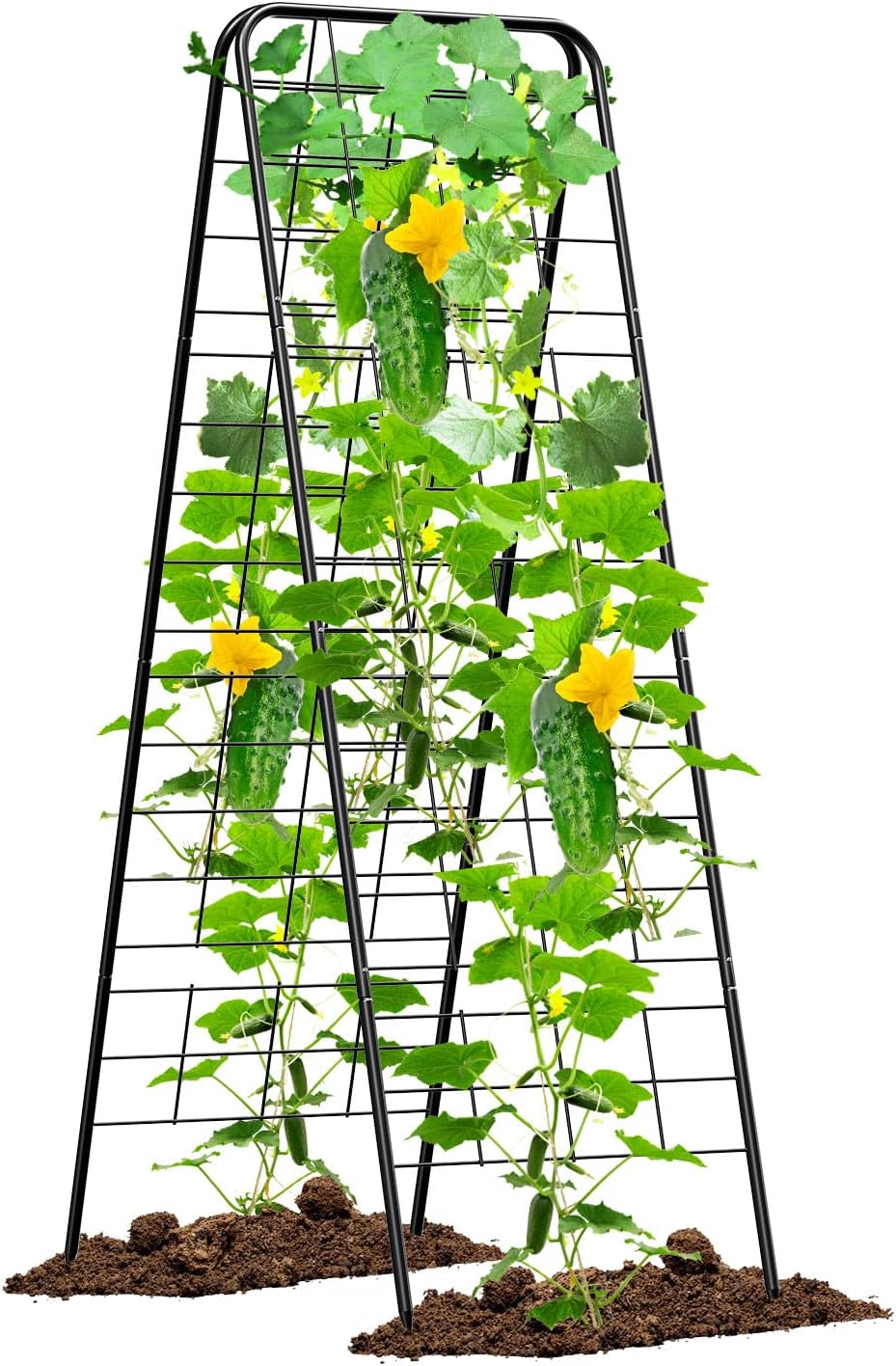
This MQHUAYU A-frame trellis is a sturdy, tool-free support for peas and other vining crops in raised beds or containers. The preassembled panels unfold and hand-tighten in minutes, letting you set the trellis anywhere without digging or complicated assembly. Its dense galvanized steel mesh and a 1cm thickened frame create a rigid grid that resists sagging under heavy yields and holds vines upright as they climb. The factory-fused hinge and included ground stakes improve wind stability, while the powder-coated, rust-resistant finish lets it stay outdoors across seasons. The trellis adjusts from 17 to 50 inches tall, so it works for early seedlings and mature pea plants; when the season ends the panels fold flat for compact storage. Limitations to note: the 17-inch width is narrow, so it is best for single-row beds or narrow planters rather than wide double-rows, and it is a fixed A-frame rather than a free-standing tall obelisk for very large trellis layouts.
Best for: Gardeners who want a reliable, low-maintenance trellis that installs fast and holds heavy pea crops in raised beds or narrow containers.
Less Ideal for: Growers planning wide double-row plantings or large-span trellis systems who need broader or taller single-plane supports.
- Tool-free, quick assembly with hand-tighten bolts for fast seasonal setup
- Dense galvanized steel mesh and thick frame reduce sagging under heavy vine loads
- Factory-fused hinge and ground stakes improve wind resistance and overall stability
- Powder-coated, rust-resistant finish suitable for multi-season outdoor use
- Narrow 17" width limits coverage per unit, requiring multiple trellises for wider rows
- A-frame shape is not ideal for creating very tall single-plane trellis runs
Verdict: If you need a compact, no-tools trellis that keeps pea vines upright and resists sagging, this heavy-duty adjustable A-frame is a dependable choice.
Generic Heavy-Duty A-Frame Cucumber Trellis, 2-Pack (Galvanized Steel)

| Material Type | Metal |
|---|---|
| Finish Type | galvanized steel |
| Number of Packs | 2 |
| Shape | A-shape, Rectangular |
This two-pack of galvanized-steel A-frame trellises is designed to give quick, sturdy vertical support for cucumbers, peas, beans and similar vining vegetables. The panels arrive ready to use with no assembly required and connect together with supplied springs and twist ties so you can make a wider span by pairing units. The metal grid and galvanized finish resist rust for outdoor use and the A-frame shape provides stable support for fruiting vines while allowing airflow and easier harvesting. Practical benefits include quick setup straight out of the box, compact folding for off-season storage, and compatibility with raised beds or small plots. Important limitations are the modest height and single-panel width per unit, which means very heavy gourds or large pumpkins may need additional bracing or multiple units chained together; the panels also have sharp edges so careful handling and secure anchoring in windy sites are necessary. If you want a simple, low-maintenance way to add vertical space for common garden vines, these trellises do the job with minimal fuss.
Best for: For gardeners who prefer low-effort, reliable support for common climbing vegetables and want something ready to install without tools or complex setup.
Less Ideal for: Not the best choice for growers of very large melons or pumpkins who need extra height and heavy-duty bracing, or for landscapers seeking decorative trellis styles.
- No assembly required so units are usable straight from the box
- Galvanized steel grid offers rust resistance for outdoor seasons
- A-frame design gives stable, breathable support for climbing vegetables
- Includes connectors and ties to join panels for wider coverage
- Folds flat for compact storage when not in use
- Height and single-panel width limit support for very large or heavy fruiting vines
- Edges can be sharp and require careful handling during installation
Verdict: A simple, no-assembly galvanized-steel trellis pair that quickly adds durable vertical support for everyday vining vegetables.
MQHUAYU U‑Shape Garden Trellis for Climbing Plants (Medium)

| Material Type | Plastic, Stainless Steel |
|---|---|
| Finish Type | Plastic Coated |
| Shape | Semicircular |
| Indoor Outdoor Usage | Indoor&Outdoor |
This MQHUAYU U‑shape trellis is a straightforward support system for cucumbers, peas, beans, tomatoes and other vining plants in a raised bed or border. The powder‑coated metal frame with a stainless steel core gives a weather‑resistant structure that slips into the soil and creates an arch you can plant on both sides, which saves horizontal bed space and improves airflow around vines. Assembly is simple thanks to cross connectors and included netting, clips and ties, so you can adjust height and length to match plant growth. Practical details like packaged clips, many leaf ties and an installation manual make it usable for gardeners who want a no‑frills setup. The plastic coating reduces surface rust and protects stems from abrasion, but very heavy crops or high winds will benefit from extra anchoring. This is a good value option when you want a compact, reusable trellis that keeps harvests cleaner and makes vertical training easier, provided you secure it well in loose or windy soil.
Best for: Gardeners looking to optimize raised beds and small plots by training vegetables and flowering vines vertically with a compact, easy‑to‑assemble support.
Less Ideal for: People who need a heavy professional support for very large melons, mature grapevines, or permanent landscape arches should choose a heavier gauge or anchored structure.
- U‑shape arch lets you plant and train vines on both sides to maximize bed space
- Plastic‑coated stainless steel core resists rust and protects plant stems
- Comes with netting, clips and many ties so it is ready to install and use
- Cross‑connector design simplifies assembly and allows height/length adjustments
- May need additional anchoring or heavier supports for very large fruiting vines or high‑wind sites
- Plastic coating can hide underlying metal so inspect for damage over time to avoid corrosion
Verdict: Choose this trellis when you want an affordable, rust‑resistant arch that saves raised bed space and makes vertical training easy.
Choosing the Right Trellis for Watermelon: Key Factors to Consider
Load Capacity and Structural Strength
A trellis for watermelon must bear substantially more weight than one for lighter vine crops. Heavy fruit can pull on stems and seams, so choose a design rated for loads well above the expected fruit weight. Consider the maximum single-point load and the distributed load across the frame. Robust posts, reinforced joints, and thicker wire or tubing reduce the chance of sagging or collapse.
If you plan to grow larger watermelons, factor in the additional strain of multiple fruits forming on a single vine. Overbuilding the trellis slightly provides a safety margin and reduces the need for midseason repairs or additional bracing.
Attachment Options and Sling Compatibility
A trellis alone may not safely cradle a mature melon. Look for structures that allow easy attachment of fabric slings, mesh hammocks, or netting to support individual fruit. Attachment points should be strong and placed at regular intervals so you can add slings wherever fruit sets.
Consider how slings will be secured to the frame. Simple hooks, clip points, or knot-friendly rails make it faster to add or adjust supports during the season. Compatibility with common sling materials gives you more flexibility in the field.
Material and Weather Resistance
Outdoor exposure means the trellis materials must resist rot, corrosion, and UV degradation. Galvanized steel, powder-coated metal, rot-resistant wood, or heavy-duty composite materials last longer and maintain structural integrity. Pay attention to weld quality, fastener type, and finish treatments, which all affect longevity.
In wetter climates, avoid untreated wood and uncoated metals that will degrade quickly. A more durable trellis reduces long-term maintenance and replacement frequency.
Installation Method and Footprint
How a trellis installs determines where you can use it. In-ground posts anchored deeply will support more weight than surface-mounted frames, but they require digging and a more permanent commitment. Lightweight, free-standing frames are easier to move but may need additional anchoring or guying to resist wind and fruit weight.
Consider the trellis footprint relative to available space. Vertical systems save ground area but require strong anchoring. Lean-to or angled supports reduce vertical strain on stems and can be easier to harvest from in small gardens.
Access, Harvesting, and Plant Management
Good access for pruning, inspecting for pests, and harvesting is crucial. Trellises should allow you to reach fruits comfortably without causing damage to vines when removing melons. Wider spacing between rails or a walkable aisle behind the trellis helps when you have multiple ripe fruits.
Think about how you will train vines, tie leaders, and place slings during the season. Structures that complicate seasonal tasks increase labor and can lead to neglected supports or poorly secured fruit.
Adaptability to Garden Type
Different gardens need different trellis solutions. Container or patio growers need lighter, modular systems that still provide sufficient support. Raised-bed and in-ground gardeners can use heavier posts and fixed frames for greater load-bearing capacity. Assess whether the trellis can be retrofitted into existing beds or whether it requires dedicated installation space.
Adaptable designs let you reuse the trellis for other heavy vine crops if you rotate crops seasonally, increasing long-term value.
Trellis Styles That Work for Watermelon
Several trellis styles can support watermelon vines when combined with proper fruit supports. A-frame and ladder-style trellises distribute weight across multiple points and are often easier to brace than single-plane vertical panels. Arched or tunnel systems can spread vines and offer many attachment points for slings.
Vertical panels save ground space but demand the strongest anchors and more frequent sling placement. Freestanding cages or heavy-duty stakes can work for smaller melons or for gardeners who prefer to keep vines closer to the ground while reducing soil contact.
- A-frame: good load distribution and easier access from both sides
- Vertical panel: space-efficient, requires strong anchoring
- Arched tunnel: many attachment points, gentle vine angles
- Freestanding cage: best for compact gardens or container setups
How to Add Fruit Slings and Netting
When fruit begins to set, add supportive slings to every developing melon. Use soft, breathable fabric such as old pantyhose, lightweight landscape fabric, or purpose-made mesh slings to cradle the fruit and avoid pressure points. Tie or clip slings to the trellis at multiple points so weight is shared between the sling and the frame.
Adjust sling height as the fruit grows to keep the melon from hanging at a sharp angle that stresses the stem. Check slings regularly and loosen or replace them if they start to chafe stems or concentrate weight at a single fastener.
- Place slings early, when fruit is small, to let stem thicken before full load
- Use wide fabric straps to distribute pressure across the fruit surface
- Secure with clips or carabiners that allow quick adjustments
Anchoring and Bracing Tips for Heavy Fruit
Proper anchoring prevents trellis failure under sudden wind or when multiple fruits ripen. For in-ground installations, set posts deep and consider concrete footings for long-term stability. For portable systems, use ground anchors, sandbags, or guy lines to resist tipping.
Bracing corners and cross members reduces racking and keeps attachment points stable. Add diagonal braces or horizontal ties at several heights to keep the frame rigid as fruit weight shifts during the season.
- Drive posts at least one-third of their length into the ground when possible
- Use diagonal bracing on tall or narrow panels to prevent sway
- Check and tighten all fasteners midseason after initial settling
Training Watermelon Vines on a Trellis
Start training when vines are young and flexible. Guide primary leaders upward and secure them loosely to the trellis so they do not rub or girdle. Pinch or remove side shoots selectively to prevent overloading attachment points and to focus plant energy on fruit set.
Avoid forcing heavy vines into tight angles that can damage stems. Allow vines to drape gently and use secondary ties or slings to support sections carrying fruit. Rotate training practices across the season as new growth and fruit develop.
- Begin with soft ties that allow for stem growth
- Remove dead or crowded foliage to improve airflow
- Redistribute fruit-bearing shoots to avoid clustering heavy melons
Seasonal Maintenance and Winter Care
Inspect trellises regularly for rust, loose fasteners, or cracked wood. Tighten or replace worn ties and retension guy lines after storms. During the growing season, trimming excess foliage improves light penetration and reduces disease pressure.
At season end, remove slings and any debris to reduce overwintering pests and disease. If the trellis is reusable, clean and dry it before storage. For permanent installations, check for rot or corrosion and make repairs before the next planting season.
- Clean attachments to remove sap and soil residue
- Store removable trellis parts indoors to extend life
- Inspect foundation posts each spring for movement or decay
How We Chose the Best Trellis for Watermelon
We focused on features that matter for supporting heavy, trailing fruit and keeping vines healthy. Our selection criteria prioritized structural strength and load capacity because watermelons are unusually heavy for trellised crops. We also evaluated attachment flexibility so gardeners can add slings or netting, and installation adaptability for in-ground, raised-bed, or container setups. Material durability and weather resistance were assessed to ensure the trellis can withstand outdoor seasons without frequent replacement. Ease of access for pruning and harvesting was included so the structure does not become a nuisance during the growing season. Finally, we considered space efficiency and footprint to identify options suitable for small gardens or intensive spacing. We excluded lightweight decorative trellises and structures intended only for small vine crops that cannot safely carry melon weight. The resulting picks balance load-bearing design, practical attachment options, and real-garden usability.
FAQ
Can all watermelon varieties be trained on a trellis?
It depends. Smaller and semi-determinate varieties are easiest to trellis because they produce lighter fruit and more compact vines. Large, heavy-fruiting types can be trellised with robust support and individual slings, but they demand stronger anchors and more frequent maintenance.
How do I prevent the melon stem from breaking when it hangs on a trellis?
Use broad, soft slings to cradle the fruit and attach them to multiple points on the trellis so the load is shared. Add slings when the fruit is small so the stem can thicken before bearing full weight. Check slings periodically and adjust to avoid chafing or concentrated pressure.
Are there ideal materials for a trellis exposed to wet or coastal climates?
Choose rust-resistant metals like galvanized or powder-coated steel, rot-resistant treated wood, or durable composites in wet or salty environments. Regular inspections and protective finishes extend life in harsher climates.
How far apart should trellis posts be for watermelon support?
Spacing depends on design and material strength. Heavy-duty posts can be spaced farther apart, while lighter panels need closer supports. As a rule, place anchors where they will support expected fruit clusters and add cross members to distribute load between posts.
Can I retrofit an existing fence to support watermelons?
Often yes, if the fence is sturdy and well-anchored. Reinforce weak posts, add horizontal rails for attachment points, and use slings to support fruit. Avoid relying on decorative or lightweight fencing that is not designed for significant loads.
Final Verdict
Choosing a trellis for watermelon is about balancing strength, access, and garden fit. Prioritize load capacity and secure attachment points so fruit can be cradled safely with slings. Match the installation style to your space and be prepared to brace or anchor structures for lasting stability. With the right combination of a durable frame and consistent sling use, you can keep fruit off the ground, reduce disease risk, and make harvesting easier.
