

Note: This article contains affiliate links. If you click on these links and make a purchase, I may earn a small commission at no extra cost to you. This helps support my research and content. Read my full affiliate disclosure here.
Choosing the right vegetable garden weed barrier changes how much time you spend on maintenance and how well your crops establish. The wrong fabric can hold moisture against roots, prevent seedlings from pushing through, or fall apart after a season. This guide covers six shortlisted options that gardeners commonly choose for beds, raised planters, and container-grown vegetables. We evaluate each pick on factors that matter in the patch: long-term durability in sun and soil, water and air permeability, how easy it is to install and maintain, and how it affects soil biology. Read on to find barriers that fit your planting style and the growing conditions in your garden.
Top Picks at a Glance
| Best Overall The best all-around choice for most situations | Happybuy 6 ft x 300 ft Heavy-Duty Weed Barrier Landscape Fabric |  |
| Best Quality Built to a higher standard if you want something more solid | DeWitt Pro-5 Heavy-Duty Woven Weed Barrier Fabric (5 oz) |  |
| Best Value The sweet spot between price and what you get | Sunocity 3.2 oz Heavy-Duty Weed Barrier Fabric, 4 ft x 300 ft (with 90 Staples) |  |
| Best Budget The cheapest option that still gets the job done reliably | LGJIAOJIAO 3.2 oz Heavy-Duty Weed Barrier Landscape Fabric (3 ft x 50 ft) |  |
| Highest Rated A top-rated pick with lots of positive feedback | DeWitt Sunbelt Woven Weed Barrier Fabric, 3.2 oz, 4 x 300 ft |  |
| Most Popular A crowd favorite that many people choose with confidence | LAVEVE Heavy Duty Weed Barrier Landscape Fabric, 4 ft x 100 ft (two 4×50 ft rolls) |  |
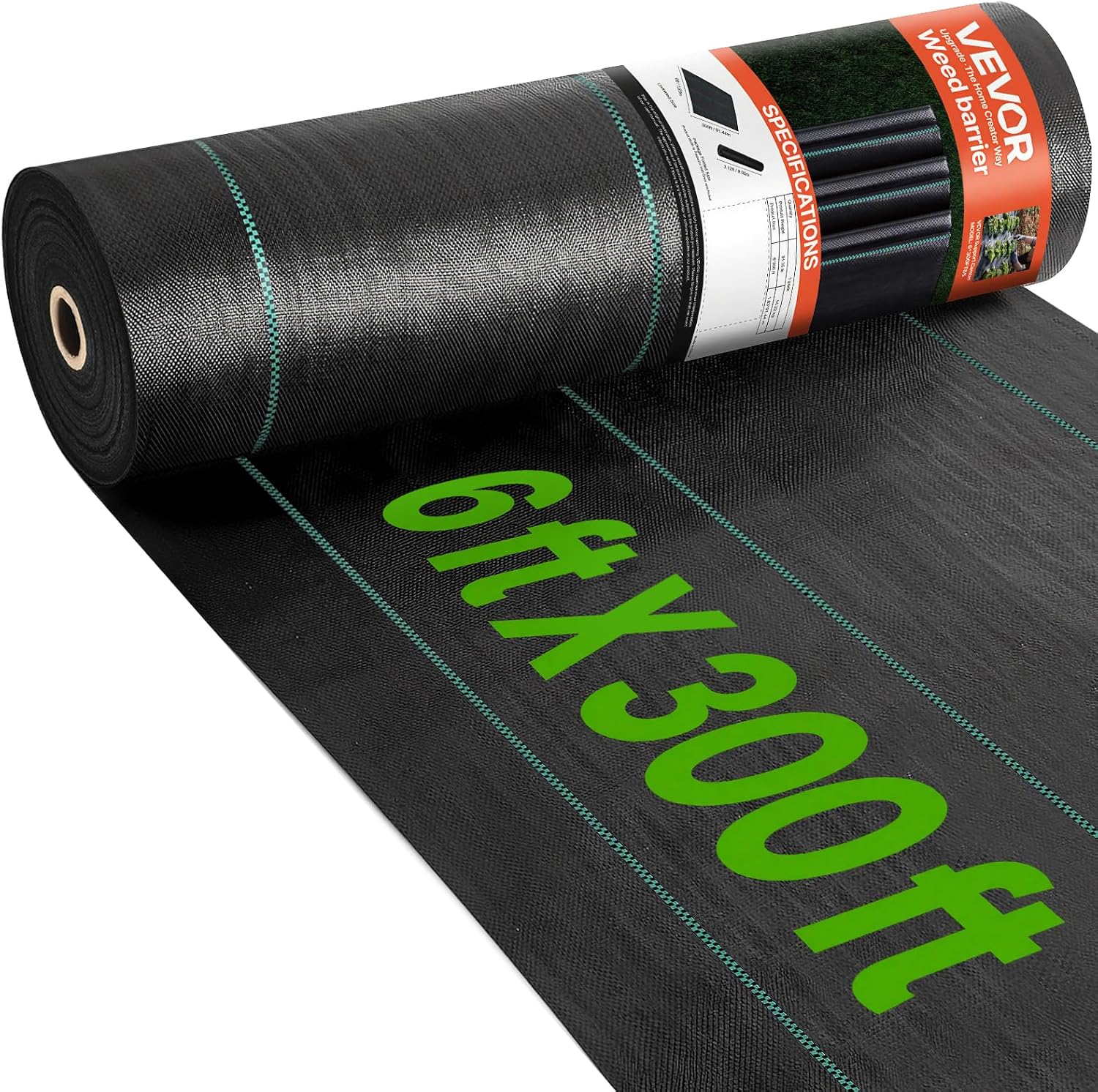
Happybuy 6 ft x 300 ft Heavy-Duty Weed Barrier Landscape Fabric
| Material | Polypropylene fabric |
|---|---|
| Size | 6 ft x 300 ft |
| Weight (fabric density) | 2.4 oz (density 12) |
This Happybuy landscape fabric is a heavy-duty woven polypropylene weed barrier sold as a 6 by 300 foot roll that covers roughly 1800 square feet when unrolled. It is used as an underlayer for beds, paths, driveways, and around plantings to suppress weeds while letting water and air reach the soil. Notable features include a tear-resistant woven construction, green guide lines for cutting and layout, and a breathable design that helps retain soil moisture without puddling. In practice the fabric is easy to cut and position and works well under mulch, gravel, or pavers; staples or landscape pins (not included) are recommended to keep edges secure. Limitations are that the black fabric will eventually show wear in high-traffic areas and persistent perennial weeds can grow through seams or holes, so occasional maintenance and careful overlap are needed. Also the roll is bulky to handle solo, so two people make installation faster on larger areas.
Best for: Gardeners or homeowners who want a practical, durable fabric to reduce routine weeding across medium to large beds and hardscape underlayers and who value easy installation and long coverage.
Less Ideal for: People needing a decorative surface finish as this is a functional underlayer rather than a visible landscape material and those with very small container or indoor plantings where a roll this large is impractical.
- Large coverage area reduces number of seams for medium to large beds
- Woven polypropylene construction offers tear resistance and weatherproofing
- Permeable design lets water and air through to protect soil health
- Printed guide lines make cutting and aligning plants easier
- Bulky roll can be awkward for one person to unroll and position
- Not a permanent barrier against aggressive perennial weeds that can exploit gaps or edges
Verdict: Choose this heavy-duty 6×300 ft woven polypropylene fabric when you need broad, breathable weed suppression that is easy to cut and lay for medium to large garden projects.
DeWitt Pro-5 Heavy-Duty Woven Weed Barrier Fabric (5 oz)

| Manufacturer | Dewitt |
|---|---|
| Item model number | P5 |
| Fabric weight | 5 oz |
| Intended use | Landscaping and commercial installations |
The DeWitt Pro-5 is a heavy-duty woven weed barrier intended for large landscaping and commercial garden use. In practice you roll it out under mulch, gravel, or along planting rows to suppress weeds while still letting water, air, and nutrients pass through to the soil. Its 5 oz woven construction resists tears and punctures during installation and in higher-traffic areas, and gold alignment stripes every 12 inches make it easy to lay straight rows and space plants accurately. The material is durable enough for pathways, raised beds, and long planting runs where a longer service life is important. Expect easier maintenance and fewer chemical controls when used correctly, but be prepared to cut planting holes for perennials or vegetables and secure the fabric with staples or pins to prevent shifting. The fabric does not remove the need for good edging or periodic weed removal where soil and debris collect on top of the mat, and it is heavier than lightweight options which can make handling on very large rolls more demanding.
Best for: Buyers who prioritize long‑term, professional performance for large beds, pathways, or commercial landscaping and want a durable fabric that reduces recurring weed work.
Less Ideal for: Casual gardeners with only small container or potted projects who prefer lightweight, easy‑to‑handle covers or temporary solutions.
- Commercial‑grade 5 oz woven construction resists tears and punctures during installation and use
- Permits air, water, and nutrients to reach soil to support plant health
- Gold alignment stripes every 12 inches simplify straight rows and plant spacing
- Durable enough for paths, raised beds, and high‑traffic landscape areas
- Heavier, bulkier rolls that can be harder to handle for solo installers
- Requires cutting and securing for planting which adds installation time
Verdict: Choose DeWitt Pro‑5 when you need a tough, long‑life woven barrier that keeps weeds down while allowing water and air to reach the soil.
Sunocity 3.2 oz Heavy-Duty Weed Barrier Fabric, 4 ft x 300 ft (with 90 Staples)

| Material | Woven polypropylene |
|---|---|
| Fabric weight | 3.2 oz |
| UV protection | UV-stabilized |
| Included accessories | 90 staples |
This Sunocity woven weed barrier is a heavy-duty ground cover made for long-term weed suppression in gardens, beds, and paths. It is typically laid under mulch, gravel, or artificial turf and pinned in place with the included staples; the 3.2 oz fabric is UV-stabilized so it resists degradation outdoors and can be cut to size for irregular beds. Its breathable, water-permeable weave lets water and air reach the soil, which helps plants stay healthy while stopping most surface weeds. The material is robust enough for DIY and professional landscaping projects, and the roll width and length provide broad coverage that reduces seams and installation time. Expect easier maintenance and tidier beds, though heavy-duty fabric can make installing deep-rooted perennials or revising beds more work later because it reduces easy access to soil. Also, it does not prevent roots from some aggressive perennial weeds, so combine it with proper prep and edging for best results.
Best for: Gardeners and landscaping-minded homeowners who want a durable, low-maintenance ground cover to reduce weeding and tidy beds while keeping soil healthy.
Less Ideal for: People who frequently redesign garden beds, plant deeply rooted or spreading perennials, or need a bare-soil planting approach should consider alternatives that allow easier access to soil.
- UV-stabilized woven polypropylene resists tearing and outdoor degradation
- Permeable construction allows water and air to reach soil for healthy plant growth
- Large 4 ft x 300 ft roll reduces seams and speeds installation
- Includes 90 staples for immediate installation and secure anchoring
- Can complicate later bed renovation or planting of deep-rooted species
- May not stop aggressive perennial weeds that spread beneath the fabric
Verdict: Choose this heavy-duty, UV-stable woven fabric when you need wide, long-lasting ground cover that reduces weeds while letting water and air reach the soil.
LGJIAOJIAO 3.2 oz Heavy-Duty Weed Barrier Landscape Fabric (3 ft x 50 ft)

| Material | Polypropylene |
|---|---|
| Fabric weight | 3.2 oz |
| Available roll sizes | 3 x 50 ft (also other widths/lengths) |
This LGJIAOJIAO landscape fabric is a straightforward weed-control ground cover intended for flower beds, vegetable plots, pathways, and driveway underlayment. Made from 3.2 oz polypropylene, the woven material resists tearing and holds up to foot and occasional vehicle traffic when used as a stabilizing underlayer. It is typically rolled out over prepared soil, cut for plant holes, secured with pins or staples, and covered with mulch or gravel to hide the fabric and improve aesthetics. The fabric lets water and nutrients pass through while suppressing weeds by limiting light, and its heavier weight compared with lightweight options means it lasts longer before needing replacement. Expect easier seasonal maintenance and fewer weeds around plantings, but installation requires some cutting and anchoring work and it is not a permanent barrier for deep-rooted perennials that can work through or around the fabric over time. Also the darker woven surface can be visible through thin mulches unless covered adequately.
Best for: Buyers who want a reliable, heavier-weight fabric to reduce routine weeding and prefer products with established customer feedback and practical, multi-use performance.
Less Ideal for: If you want a zero-installation organic approach or need a temporary surface cover for seasonal planting beds, lighter-weight or biodegradable options may be a better fit.
- Heavy 3.2 oz polypropylene weave offers good tear resistance and longer lifespan than thin fabrics
- Allows water and nutrients to pass through so planted beds remain irrigated
- Versatile for beds, paths, vegetable gardens and as a driveway underlayment
- Comes in roll form that can be cut to fit irregular beds and layouts
- Requires cutting and securing during installation which adds labor
- May become visible under thin mulch and is less effective against deep-rooted weeds over many seasons
Verdict: Choose this heavier 3.2 oz woven polypropylene fabric if you want a durable, proven ground cover that substantially cuts down on hand-weeding across beds and paths.
DeWitt Sunbelt Woven Weed Barrier Fabric, 3.2 oz, 4 x 300 ft

| Fabric weight | 3.2 oz |
|---|---|
| Material | Woven polypropylene |
| Roll length | 4 x 300 ft |
| UV-stabilized | Yes |
This DeWitt Sunbelt woven weed barrier is a commercial-grade ground cover for large garden and landscape projects. The dense polypropylene weave blocks most weed growth while remaining permeable so water and nutrients still reach the soil, which makes it suited for raised beds, greenhouse floors, garden rows, and long planting runs. The material is UV-stabilized and resists tears and punctures from foot traffic, tools, and repositioning, so it holds up under frequent use. Golden alignment stripes every 12 inches simplify straight-row layout and spacing when installing in nursery or orchard rows. Installation is straightforward but requires staples or pins for secure anchoring, and the roll size means handling and cutting can be bulky for one person. It is a practical, durable choice when you need dependable, long-lasting weed suppression across large areas, though smaller hobby gardeners may find the roll unwieldy to manage alone.
Best for: Gardeners and landscapers who need a robust, long-lasting ground cover for large beds, greenhouse floors, or long planting rows and value durability and ease of layout.
Less Ideal for: Small-plot or container gardeners who want a lightweight, easy-to-handle product or anyone looking for a temporary, disposable fabric option.
- Woven polypropylene construction lets water and air through while blocking weeds.
- UV-stabilized for sustained outdoor exposure without rapid degradation.
- Durable against tears and punctures from tools and foot traffic.
- 12-inch alignment stripes help lay out straight rows and consistent plant spacing.
- Large roll size can be bulky and awkward for a single person to unroll and position.
- Requires pins or staples to secure; not a standalone solution for weed control.
Verdict: Choose this fabric when you want a durable, UV-stable woven barrier that provides long-term weed suppression and easy row alignment across large garden or landscape areas.
LAVEVE Heavy Duty Weed Barrier Landscape Fabric, 4 ft x 100 ft (two 4×50 ft rolls)

| Material | Polypropylene |
|---|---|
| Permeability | Breathable, allows water and air flow |
| UV resistance | Resistant to sun exposure |
| Package | Two rolls totaling 4 ft x 100 ft |
This LAVEVE landscape fabric is a heavy-duty woven polypropylene ground cover intended to suppress weeds while letting moisture and air reach the soil. It ships as two 4 ft x 50 ft rolls (total 4 ft x 100 ft) with printed guide lines that make cutting and alignment straightforward. In practice it is laid over prepared beds, cut for plantings, and secured with U-shaped pegs; the fabric’s permeability helps reduce erosion and allows irrigation to penetrate. The material is UV-resistant and built for typical garden uses such as flower beds, vegetable plots, gravel paths, and sidewalks. Because it is a woven polypropylene, it is sturdier than thin nonwoven mats and stands up to foot traffic when covered with mulch or gravel. Limitations to expect are that surface-seeded weeds or seeds blown onto mulch can still germinate on top, and long-term burial or heavy soil compaction can reduce effectiveness; occasional maintenance and proper installation around plants are required to keep beds weed-free.
Best for: Gardeners who want a durable, breathable ground cover to reduce routine weeding and tidy beds across medium-length runs of pathway or planting area, and who value a product with solid usage feedback.
Less Ideal for: People seeking a permanent, maintenance-free solution or those who prefer chemical weed control methods; also not the best choice for beds where frequent deep digging or planting changes are required.
- Woven polypropylene construction provides durable, tear-resistant coverage
- Permeable design allows water and air to reach soil, reducing erosion
- Printed guide lines make measuring and cutting easier during installation
- Suitable for multiple applications including beds, paths, and under gravel
- Comes as two rolls totaling 4 ft x 100 ft for extended coverage
- Does not prevent weeds that germinate in mulch or on top of the fabric
- Requires proper securing and occasional maintenance to stay effective
Verdict: A sturdy, breathable woven fabric that gives reliable, easy-to-install weed suppression for medium garden beds and paths backed by strong user approval.
Choosing the Right Vegetable Garden Weed Barrier: Key Factors to Consider
Material and UV Resistance
The base material determines how long a barrier lasts exposed to sun and foot traffic. Woven polypropylene and heavier nonwoven fabrics resist UV better than thin plastics, so they stay intact through a season or multiple seasons. If you leave fabric down between crops, prioritize materials rated for UV exposure to avoid rapid breakdown and microplastic shedding.
Also consider knitted versus woven construction. Woven fabrics generally have higher tensile strength and resist tearing when you push stakes through them. Nonwoven fabrics often allow more water movement but can be weaker under stress. For beds that get a lot of foot traffic or mulching work, choose a sturdier weave.
Water Permeability and Drainage
A good vegetable garden weed barrier must let water pass readily so roots do not dry out or become waterlogged above the fabric. Permeability influences whether irrigation soaks through to the root zone or simply runs off the surface. Look for products that specify an appropriate flow rate or that are designed for horticultural use rather than landscaping.
Permeability also affects where salts and nutrients accumulate. Poorly draining barriers can trap fertilizer or soluble salts near the surface, which may stress seedlings. Ensure the fabric maintains a balance so water moves, yet the surface still blocks light that fuels weed germination.
Soil Contact, Microbial Life, and Temperature Effects
Any barrier placed on or in the soil changes the microclimate. Some fabrics warm the soil by reducing evaporative cooling while others hold moisture and reduce daily temperature swings. For cool-season crops, that warming can help early growth, but for summer crops, excessive heat buildup may stress roots.
Barriers also affect soil organisms. Earthworms and beneficial microbes are more active in loose, well-aerated soil. Fabrics that permit gas exchange and do not form an impermeable layer are less disruptive. If maintaining long-term soil health is a priority, choose a barrier that encourages moisture cycling and oxygen exchange rather than completely isolating the soil surface.
Installation and Maintenance Practicalities
How a barrier is installed determines how likely you are to keep it effective. Fabrics that are easy to cut, lay flat, and secure reduce installation time and reduce tearing. Simple anchoring methods like landscape staples, pins, or buried edges keep the fabric from billowing in wind and from weeds finding pockets to grow through at seams.
Maintenance matters too. Some barriers are designed for reuse and can be lifted, shaken off, and stored; others are intended for single-season use and degrade quickly. Consider whether you will be rotating crops, adding compost on top, or frequently transplanting. Choose a fabric that matches the level of ongoing handling you expect.
Compatibility With Planting Methods
Vegetable gardeners use direct-seeding, transplanting, and container culture. Some weed barriers are ideal for beds with transplant holes cut into the fabric while others are better under mulch or in containers where full coverage would restrict pot drainage. The ease of cutting clean holes and how the fabric performs around stems or crowns matters when you want neat planting collars and minimal tearing.
Also think about edges and bed shapes. Flexible fabrics conform around raised-bed boards and irregular in-ground beds better than stiff, brittle sheets. If you use row covers, hoops, or drip irrigation, check that the barrier works alongside these systems without interfering with anchors or emitter placement.
When To Use a Weed Barrier in Vegetable Beds
Weed barriers are most helpful in established beds where you want to reduce perennial weed pressure or in pathways and high-traffic areas to keep maintenance low. They are also useful when you are mulching heavily and want a stable base layer to prevent weed seedlings from exploiting loose mulch. Use them cautiously in freshly prepared plots where you plan to do frequent bed-turning or deep cultivation, because fabric can get in the way of those operations.
- Good for perennial bed edges and pathways
- Useful under heavy organic mulch to stabilize material
- Less useful where frequent soil mixing or hand hoeing is routine
Layering With Organic Mulch
Combining a breathable weed barrier with a 2 to 4 inch layer of organic mulch gives dual protection: the fabric blocks light and the mulch suppresses seedlings and moderates moisture. When layering, set the fabric as a base and apply mulch on top instead of the reverse. This approach reduces direct sunlight on the fabric and extends its useful life. Replace or replenish the mulch each season without disturbing the fabric unless it is degraded.
- Place fabric first, then add organic mulch
- Mulch thickness affects weed control and moisture retention
- Replenish mulch seasonally to extend fabric life
Using Barriers in Raised Beds and Containers
Raised beds and large containers have different drainage and root confinement challenges. In raised beds, lay fabric on the bed surface and cut planting holes for transplants so roots grow into the loosened soil beneath. For containers, avoid covering the bottom drainage holes; instead, use fabric as a liner under potting mix where it will not block flow. In both cases, check that the barrier does not divert water away from the root zone or trap excess moisture against wooden bed frames, which can accelerate rot.
- Cut clean planting holes for transplants
- Do not block container drainage holes
- Inspect edges near wooden frames to prevent moisture buildup
Repairing and Replacing Fabric
Small tears and rips will happen, especially during installation. Repair options include overlapping a patch of the same material and securing it well with staples or pins. For larger failures, remove the damaged section and replace it so weeds do not find gaps to exploit. Plan to inspect barriers before each planting season and after windy weather to ensure they are still doing their job.
- Patch small tears with overlapping material
- Replace badly degraded sections promptly
- Inspect annually and after storms
How We Chose the Best Vegetable Garden Weed Barrier
We focused on practical, gardener-centered dimensions that determine whether a weed barrier will work in real vegetable beds. First, durability in sunlight and soil was essential because barriers left in place must resist UV breakdown and abrasion for at least a growing season. Second, water and air permeability had to be sufficient so irrigation and rainfall can wet the root zone and microbes still get oxygen. Third, ease of installation and handling matters where many beds are small and planted by hand; quick anchoring and the ability to cut holes cleanly for transplants are key. Fourth, effects on soil life and temperature were considered since barriers influence earthworms, microbial activity, and warmth for early crops. Finally, compatibility with different bed types was assessed, including in-ground rows, raised beds, and containers. We excluded products intended only for landscape or long-term permanent installation where removal and seasonal planting are impractical. We also filtered out flimsy fabrics that tear on first use. The shortlist balances materials and construction styles that meet these criteria, so gardeners can compare options that perform well across durability, permeability, installation, and soil health.
FAQ
Will a weed barrier stop all weeds in my vegetable garden?
No. Most barriers suppress seedling weeds by blocking light, but perennial weeds with deep roots can still push through or emerge at bed edges. Combining barriers with mulch and targeted weeding gives the best control.
Can I use plastic sheeting as a weed barrier?
Plastic sheeting blocks light well but often prevents water and air movement, which can harm roots and soil life. For vegetables, breathable fabrics or paired mulching approaches are usually better choices.
How long can a garden weed barrier be left in place?
It depends on material and UV exposure. Heavier horticultural fabrics can last several seasons in protected spots; lightweight landscape fabrics may degrade within a single season. Check the maker's durability rating and inspect the fabric annually.
Will a weed barrier affect soil fertility or composting?
A breathable barrier has minimal direct effect on soil fertility, but it can change where organic matter accumulates. If you add compost on top of fabric, decomposition rates may slow compared with direct soil application. Periodically lifting the fabric to incorporate amendments helps maintain fertility.
Are weed barriers safe for earthworms and beneficial insects?
Barriers that allow gas and water exchange are less disruptive to soil fauna. Impermeable plastics can reduce surface-dwelling organisms. Using breathable materials and adding organic mulch encourages earthworm activity.
Final Verdict
Choose a vegetable garden weed barrier by balancing durability, permeability, and how you manage beds. Prioritize materials that stand up to sun and handling while still letting water and air reach roots. Match the barrier style to your planting method: easy-to-cut, breathable fabric for transplants and raised beds, and sturdier woven options where foot traffic is common. Be realistic about maintenance tradeoffs-barriers reduce routine weeding but require inspection, occasional patching, and compatible mulching to preserve soil health. With the right selection and simple care, a weed barrier can cut garden chores and keep beds focused on productive vegetables.
