

Note: This article contains affiliate links. If you click on these links and make a purchase, I may earn a small commission at no extra cost to you. This helps support my research and content. Read my full affiliate disclosure here.
Choosing the right water lily plant food makes a visible difference in bloom counts, flower size, and foliage health in ponds and container gardens. The wrong fertilizer can foul still water or promote algae, while the right formulation feeds submerged roots without compromising water quality. This guide covers seven shortlisted options that excel for established pond lilies, container-grown specimens, and small water features. We evaluated nutrient ratios, application method, and pond safety so you can pick a feeding approach that fits how you garden. Read on for practical guidance and the criteria we used to narrow the list.
Top Picks at a Glance
| Best Overall The best all-around choice for most situations | CrystalClear Thrive Aquatic Plant Fertilizer Tablets (200 count) |  |
| Best Quality Built to a higher standard if you want something more solid | CrystalClear Thrive Aquatic Plant Fertilizer Tablets (60 Count) |  |
| Best Value The sweet spot between price and what you get | Aquascape Once-A-Year Pond Plant Fertilizer Capsules (6-Pack) |  |
| Best Budget The cheapest option that still gets the job done reliably | TPS NUTRIENTS Water Plant Fertilizer, Liquid Plant Food, 8 oz |  |
| Highest Rated A top-rated pick with lots of positive feedback | Plantabbs PondTabbs Aquatic Plant Fertilizer Tablets, 300 ct |  |
| Most Popular A crowd favorite that many people choose with confidence | API Pondcare Aquatic Plant Food Tablets, 25 Count |  |
| Best Seller A high-volume bestseller chosen again and again | PondBloom Pond Fertilizer Tablets (20-count) |  |
CrystalClear Thrive Aquatic Plant Fertilizer Tablets (200 count)

| Fertilizer analysis (N-P-K) | 10-14-8 |
|---|---|
| Form | Tablets |
| Target species | aquatic plants |
| Unit count | 200 Count |
CrystalClear Thrive is a tablet-style fertilizer made specifically for container and potted aquatic plants such as water lilies and lotus. You push individual tablets into the planting media near the crown and reapply every 2–4 weeks when water temperatures exceed about 75°F. Each tablet delivers a 10-14-8 N-P-K balance plus trace micronutrients to encourage root development, fuller foliage, and larger blooms. The tablet format makes dosing straightforward for multiple containers and larger ponds where you need repeatable, measured feedings. Practical benefits include an easy application that keeps fertilizer in the soil rather than dissolved in the pond water and a formulation that is labeled safe for fish and common aquatic life when directions are followed. Limitations are that the product is intended for use in planted soil or media rather than broadcast into open water and that feeding guidance is temperature dependent, so it is less useful in cooler seasons or climates where water rarely reaches the recommended temperature for application.
Best for: Buyers who want a low-effort, reliable way to feed potted water lilies and lotus across a season and who prioritize predictable dosing and fish-safe formulations.
Less Ideal for: Not a good choice for ponds relying on submerged oxygenators that do not use planting media or for gardeners in cool climates where water temperatures rarely reach the recommended level.
- Tablet form gives simple, repeatable dosing for individual pots and lilies
- Balanced 10-14-8 N-P-K formula plus trace micronutrients to support blooms and root growth
- Labelled safe for fish and common pond animals when used as directed
- Large 200‑tablet count suitable for season-long feeding of multiple plants
- Designed for placement into planting media so not suitable for fertilizing submerged plants by dissolving in open water
- Requires water temperatures above about 75°F for recommended feeding schedule
Verdict: If you want an easy, fish-safe tablet fertilizer that reliably promotes bigger blooms in potted water lilies and lotus, this 200‑tablet pack delivers season-long, measured feedings.
CrystalClear Thrive Aquatic Plant Fertilizer Tablets (60 Count)

| Item Form | Tablets |
|---|---|
| Specific Uses For Product | Plant Growth, Root Development |
| Coverage | 1-2 Tablets per 1 Water Lily |
| Unit Count | 60 Count |
| Fertilizer Analysis | N 10% · P2O5 14% · K2O 8% |
These pre-measured tablets are designed to be pushed into the planting media of potted pond plants to deliver a balanced 10-14-8 nutrient mix that encourages root development, lush foliage, and more blooms. Typical use is straightforward: insert one to two tablets per gallon of soil or one to two tablets per water lily every two to four weeks when water temps are above 75°F; lotus plants get a higher dose. The tablet form makes dosing simple and keeps nutrients in the root zone instead of dispersing through the water column. Practical benefits include targeted feeding for containerized water lilies and other marginal plants, an easy schedule for seasonal maintenance, and a formula labeled safe for fish and other pond animals when directions are followed. Limitations to expect are the need for regular reapplication during warm months and reduced usefulness in fully submerged oxygenating plants, which generally do not require tablet feeding. Also the product relies on adequate water temperatures to be effective, so performance will be limited in cooler climates or early season use.
Best for: Buyers who want an easy, reliable way to boost blooms and root growth in potted water lilies and other marginal pond plants and who prefer simple, low-fuss dosing.
Less Ideal for: Gardeners managing planted ponds dominated by fully submerged oxygenators or those needing an all-season solution for cool-climate ponds.
- Balanced 10-14-8 N-P-K formula tailored for flowering aquatic plants
- Tablet form for simple, measured dosing and root-zone application
- Formulated and labeled safe for fish and common pond wildlife when used as directed
- Clear dosing guidance for lilies and lotus simplifies seasonal feeding
- Requires warm water temperatures (above about 75°F) to be most effective
- Not intended for fully submerged oxygenating plants that absorb nutrients from the water column
Verdict: An easy-to-use tablet fertilizer that reliably feeds potted water lilies and marginal pond plants to promote bigger blooms and healthier roots.
Aquascape Once-A-Year Pond Plant Fertilizer Capsules (6-Pack)

| Item Form | Capsules |
|---|---|
| Application Method | Push into soil |
| Coverage | 6 1-gallon pots |
| Target Species | Pond Plants |
These Aquascape capsules are designed to simplify feeding for waterlilies, lotus, and other pond plants by providing a single push-in dose that releases nutrients for up to 180 days. The 11-3-14 NPK ratio emphasizes potassium to encourage flowering while keeping phosphorus low to reduce algae risk, and the low extra nitrogen helps avoid stressing aquatic plants. Use the capsules by inserting them into the planting media of potted aquatic plants or established baskets at planting or in spring maintenance. The convenience of a once-a-year application is the main strength here for owners who want reliable, long-running nutrition without monthly dosing. Practical limitations are that coverage is specified as six 1-gallon pots per pack, so larger ponds or many plants will need multiple packs, and the capsule form is less convenient for broadcast feeding of unpotted marginals. The formula is fish-safe and made specifically for pond species, making it a focused choice for maximizing blooms with minimal upkeep.
Best for: Gardeners who prioritize dependable performance and big, consistent blooms with minimal maintenance and who manage potted or basketed pond plants.
Less Ideal for: People with large naturalized ponds, extensive plantings, or those who prefer broadcast or liquid feeding methods should consider alternatives.
- Time-release formula feeds plants for up to 180 days from a single application
- NPK 11-3-14 with higher potassium to promote stronger flowering
- Capsule form pushes into soil for neat, no-mess application
- Designed for pond plants and labeled safe for fish
- Pack coverage is limited to six 1-gallon pots so multiple packs are needed for larger collections
- Capsules are not ideal for directly treating unpotted or widely spaced marginal plants
Verdict: Choose these time-release capsules to get big, reliable blooms from waterlilies and other pond plants with a single annual feeding.
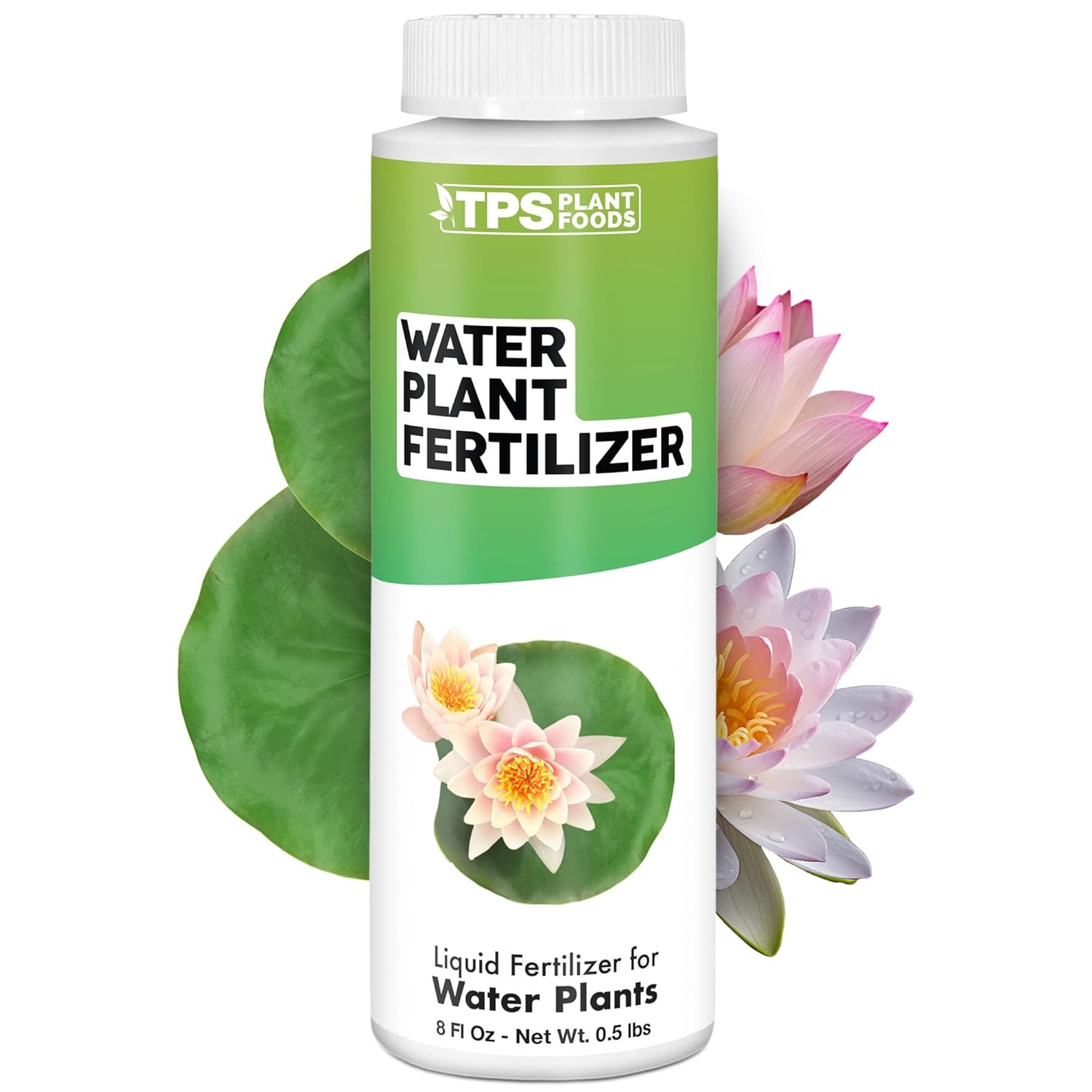
TPS NUTRIENTS Water Plant Fertilizer, Liquid Plant Food, 8 oz
| Item Form | Liquid |
|---|---|
| Specific Uses For Product | Aquatic Plant Growth |
| Target Species | Water Plants |
| Liquid Volume | 8 fluid ounces |
| Mixing Ratio | 1:0:0 |
This 8 oz liquid fertilizer is made specifically for plants grown in water and supplies a balanced, low-nitrogen feed with iron and micronutrients to support foliage and root development. It is typically mixed at the recommended rate (1 teaspoon per gallon) and applied weekly, making it easy to use for small water gardens, indoor propagation jars, and container pond plants. The formulation emphasizes gentle nutrition for aquatic species, so it helps keep leaves green without encouraging excessive algae that high-nitrogen feeds can cause. Practical benefits include targeted support for water-grown plants and clear dosing instructions, plus compatibility with other TPS products like Aqua Soil and Aqua CO2 for hobbyists building a complete setup. Limitations are the small 8 oz volume, which means frequent repurchase for larger or multiple ponds, and the safety note to avoid skin and eye contact and not to allow fertilizer into natural water sources. This product suits routine weekly maintenance but is not intended to replace larger-volume pond treatments for sizable water features.
Best for: Gardeners who maintain small water gardens, indoor water planters, or propagation jars and want a gentle, easy-to-dose fertilizer tailored to aquatic plants.
Less Ideal for: Owners of large outdoor ponds or commercial water features that need bulk dosing or long-interval treatments should look for higher-volume pond fertilizers.
- Formulated specifically for aquatic plants, including water lilies and lotus
- Low nitrogen formula with added iron and micronutrients to support green foliage
- Simple weekly dosing (1 teaspoon per gallon) for easy routine use
- Liquid form mixes readily in water for even nutrient distribution
- Small 8 oz bottle limits coverage for larger ponds or multiple containers
- Contains instructions to avoid entry into natural water sources which requires careful application
Verdict: A compact, easy-to-use liquid fertilizer that delivers gentle, aquarium-safe nutrition for small water gardens and indoor aquatic plant setups.
Plantabbs PondTabbs Aquatic Plant Fertilizer Tablets, 300 ct

| Item Form | Tablets |
|---|---|
| Specific Uses For Product | outdoor |
| Target Species | aquatic plants |
| Mixing Ratio | 1 tablet per 1 gallon of soil |
| Liquid Volume | 300 liters |
PondTabbs are compact fertilizer tablets designed specifically for pond and aquatic plants such as water lilies. You insert a tablet into the soil near the plant crown and nutrients begin to release within minutes, supplying a balanced 10-14-8 N-P-K dose. The product is intended for monthly feeding during the growing season and for heavier feeding every two weeks once water temperatures exceed 72°F. In practice the tablets make routine maintenance simple: you can dose individual plants without measuring liquids, and the tablet form reduces mess and overapplication. The 300-tablet pack is well suited for large plantings or long-term stocking. Important limitations are that the instructions assume a soil-based planting zone (one tablet per gallon of soil) so using these in marginally planted pots or floating baskets may require judgment, and frequent application in warm water increases labor. The manufacturer states the formulation is safe for fish and will not promote algae when used as directed, but users should still monitor water quality after repeated applications.
Best for: Buyers who want a straightforward, low-mess way to feed individual water lilies and other planted pond species on a predictable schedule and who value long-lasting stock on hand.
Less Ideal for: People managing purely floating plants without soil or very small container plantings where tablet placement and dosing are impractical.
- Formulated specifically for aquatic plants with a balanced 10-14-8 N-P-K analysis
- Tablet form delivers measured, low-mess dosing to individual plants
- Large 300-count supply reduces refill frequency for multi-plant ponds
- Quick nutrient release within minutes after insertion
- Directions are tied to soil volume so use in pots or non-soil setups needs adjustment
- Frequent applications at higher temperatures increase maintenance time
Verdict: A simple, measured tablet fertilizer that makes feeding water lilies easy and keeps you stocked for many seasons.
API Pondcare Aquatic Plant Food Tablets, 25 Count

| Item Form | Tablets |
|---|---|
| Specific Uses For Product | Plant Food |
| Coverage | Full |
| Target Species | Aquatic Plants |
| Unit Count | 25 Count |
These API Pondcare Aquatic Plant Food Tablets are slow-release nutrient tablets made to push directly into the soil of potted pond plants, including water lilies. Each tablet delivers a balanced mix of nitrogen, phosphorus, potassium and trace minerals such as iron and boron so roots get nutrients where they are needed. Typical use is seasonal: start feeding in spring when water reaches about 50°F, apply once a month until mid-season and increase to twice a month up to 70°F, then stop in fall. The tablets are simple to place 3 inches from the crown and 3 to 6 inches deep, which keeps the fertilizer localized and reduces surface runoff in self-contained ponds. Practical benefits include less frequent dosing than liquid feeds and targeted root feeding that encourages lush foliage and better blooms. Limitations are that the directions specify use only in artificial, self-contained ponds and the dose guidance is tied to soil volume rather than plant count, so larger tubs may require careful calculation to avoid over- or under-feeding.
Best for: Gardeners who keep small, self-contained ornamental ponds or tubs and want a low-effort, root-targeted fertilizer to encourage fuller foliage and better water-lily blooms.
Less Ideal for: Owners of natural or flowing ponds, streams, or larger landscape water features that require different treatment approaches or regulatory-safe products.
- Slow-release tablets place nutrients directly at the root zone for sustained feeding
- Contains iron and boron in addition to NPK to promote green leaves and flower formation
- Clear seasonal dosing instructions tied to water temperature make timing straightforward
- Compact 25-tablet pouch simplifies storage and monthly dosing for small ponds
- Approved only for artificial, self-contained ponds so not suitable for natural waterways
- Dose guidance uses soil volume (one tablet per gallon) which can be awkward to apply in larger or mixed planting containers
Verdict: An easy, root-focused monthly fertilizer that simplifies feeding water lilies and other potted pond plants for richer foliage and improved blooms.
PondBloom Pond Fertilizer Tablets (20-count)

| Item Form | Tablets |
|---|---|
| Specific Uses For Product | Plant Growth, Root Development |
| Application Method | Push into soil |
| Target Species | Aquatic Plants |
PondBloom Pond Fertilizer Tablets are slow-release root tabs made for water lilies, lotus and other rooted aquatic plants. You push a tablet into pond soil near the plant crown and the tablet gradually supplies nitrogen, phosphorus, potassium and micronutrients to support root development, greener foliage and bigger blooms. The root-zone delivery reduces nutrient loss to the water column so you are less likely to cause clouding or short-lived nutrient spikes compared with liquid feeds. These tablets are easy to use for koi ponds, decorative water gardens and container ponds and can help plants look fuller and support clearer water over time. On the downside the product is a single-purpose root tab so it does not replace routine pond maintenance or broad-spectrum water treatments, and you must place tablets individually which takes time for larger plantings. For budget-focused gardeners this offers a straightforward, low-effort way to keep lilies and marginal plants fed without frequent applications.
Best for: Gardeners who want an easy, low-maintenance way to feed water lilies and other rooted pond plants and prefer targeted, root-zone nutrition over frequent liquid applications.
Less Ideal for: People managing very large ponds or extensive plantings who need bulk, automated feeding solutions or who expect a single product to address algae and overall water chemistry.
- Slow-release root delivery that limits nutrient loss to the pond water
- Formulated for aquatic plants including water lilies and lotus
- Simple application: push tablet into soil near roots
- Includes micronutrients as well as NPK to support blooms and root growth
- Requires placing tablets individually so it can be time-consuming for many plants
- Not a substitute for routine pond water care or algae management
Verdict: An affordable, easy-to-use slow-release root tab that reliably boosts water lily and pond plant growth with minimal impact on pond water.
Choosing the Right Water Lily Plant Food: Key Factors to Consider
Nutrient Ratio Focused On Blooms
Water lilies need a different balance of nutrients than upland garden plants because most commercial pond lilies get nutrients through submerged roots. A formulation higher in phosphorus relative to nitrogen encourages flower production, while too much nitrogen will favor leaf growth and can cloud the water. Look for ratios and labeling that emphasize flowering and root uptake rather than general foliage feeding.
Understanding the advertised N-P-K and how those nutrients are delivered helps you predict the plant response. For long bloom runs, staggered feeding that supplies phosphorus and potassium at key growth stages is often more effective than a single high-nitrogen dose.
Delivery Method And Root Placement
Water lilies absorb the majority of nutrients through their rhizomes and roots, so how the fertilizer reaches the root zone is crucial. Tablets or spikes that you press into the soil at the crown reduce nutrient dispersal into the water column, lowering algae risk. Soluble feeds can work for shallow containers or when applied carefully, but they require precise dosing and timing to avoid water quality issues.
Consider the depth of your pond or container and the growth habit of your lilies when choosing a delivery method. Pelleted slow-release products are often the most forgiving for hobbyist pond stewards because they feed over weeks and place nutrients where roots can access them.
Impact On Water Clarity And Algae
Any fertilizer added to a pond has the potential to fuel algae if nutrients reach the open water. Products designed for aquatic use tend to reduce this risk by keeping nutrients localized in the substrate. Even with pond-safe formulations, overfeeding or applying during warm, still conditions can trigger algal blooms. Timing feeds for cooler mornings, following label rates, and avoiding surface application help protect water clarity.
If your pond already struggles with algae or has limited filtration, choose lower-dose options and increase mechanical or biological filtration rather than simply cutting back fertilizer, since plants still need nourishment to outcompete algae.
Feeding Frequency And Longevity
Different products provide nutrients on variable schedules. Slow-release tablets often feed for four to eight weeks, which simplifies maintenance, while soluble fertilizers require more frequent application. Frequency affects both labor and the stability of nutrient supply. For intensive bloom production you may need a combination of slow-release base feeding with occasional soluble boosts during peak bloom periods.
Assess how often you want to work at the pond. If you prefer low-maintenance care or have many features, longer-duration feeds reduce chores. For showy displays with tight timing, choose options that let you tweak feeding in the weeks before peak bloom.
Safety For Fish And Wildlife
If your pond contains fish, amphibians, or frequent wildlife visitors, select fertilizers labeled safe for aquatic ecosystems and follow application guidance closely. Some formulations can spike dissolved nutrient levels if misapplied, stressing fish or encouraging excessive algae. Root-placed products minimize exposure risk compared with surface-applied soluble feeds.
Also consider local regulations or recommendations about nutrient input into open water bodies. For wildlife safety, avoid anything that lists copper or other heavy metals as active ingredients and choose products with clear aquatic compatibility statements.
Container Versus In-Ground Pond Needs
Container-grown water lilies and those in shallow ornamental basins behave differently than lilies in larger, established ponds. Containers have limited substrate volume and can concentrate nutrients quickly. That makes slow-release tablets or measured soluble feeds with clear dilution instructions more important. Larger ponds with deeper substrate and filtration can tolerate different feeding strategies but may still benefit from root-targeted delivery.
Match the product to the planting situation. For portable containers on patios, pick low-dust, easy-measure formats. For planted shelves and margins in larger ponds, choose options that accommodate depth and longer feed intervals.
When To Start And Stop Feeding
Begin feeding water lilies after they have finished initial leaf expansion in spring and the water temperature consistently reaches the plant's active growth range. Early-season feeding too soon can waste nutrients when growth is still slow. Stop or reduce feeding as days shorten and plants enter dormancy to avoid stimulating late growth that will not harden off before cold weather.
Monitor bloom cycles and local climate rather than fixed calendar dates. In mild climates a longer feeding window may be appropriate, while colder regions should compress the feeding season to avoid stressing overwintering rhizomes.
- Start when water and soil temperatures support active growth
- Avoid feeding late in the season to prevent tender new shoots
- Adjust timing for container plants that warm faster than large ponds
Practical Application Tips
Place tablets or spikes into the planting medium near the crown or root mass, not scattered on the surface, to keep nutrients where the lily will take them up. Wear gloves and follow label instructions for handling and spacing to avoid over-application. If using a soluble feed, measure carefully and apply to the substrate or near roots rather than broadcasting across the water surface.
Rinse hands and measuring tools after handling fertilizer. Keep a simple calendar or pond log to track feed dates so you do not double up applications.
- Insert root tablets at recommended depth and spacing
- Use a consistent feeding schedule to avoid nutrient spikes
- Record applications to prevent accidental overfeeding
Troubleshooting Poor Blooming
If lilies produce lots of leaves but few flowers, check light exposure, crowding, and nutrient balance first. Excessive shade or a crowded planting can limit blooms even with ample fertilizer. Also consider whether the product supplies enough phosphorus and whether the delivery method places nutrients at the roots.
Inspect for pests, disease, or damaged rhizomes that can divert plant energy away from flowering. Adjust feeding only after ruling out cultural problems and ensure you are following recommended dosages and schedules.
- Verify at least six hours of direct sunlight for many flowering lilies
- Thin overcrowded plantings before increasing feed rates
- Check that feeds are targeted to the root zone rather than dispersing in the water
Feeding For Different Pond Sizes
Small water features and containers require proportionally less fertilizer and are more sensitive to dosing errors. Use low-dose or slow-release formats and apply cautiously. Larger ponds can absorb slightly higher inputs if they have adequate depth, substrate, and biological filtration but still benefit from root-targeted feeding.
When feeding multiple features, standardize your approach so each container or planting gets the right amount based on planting volume rather than surface area alone.
- Scale applications to planting volume in containers
- Consider staggered feeding dates across multiple beds to reduce nutrient spikes
- Use slow-release tablets for low-maintenance small ponds
Combining Fertilizer With Pond Maintenance
Fertilizing is most effective when paired with routine pond care such as debris removal, skimming, and maintaining filtration. Removing excess organic matter reduces nutrient competition and the risk of algae. Avoid major water changes immediately after feeding soluble fertilizer as that can remove nutrients before plants use them.
Coordinate fertilization with spring cleaning and midsummer maintenance so plants benefit from a clean growing environment. Consider a light pruning of old foliage before a feeding cycle to direct energy into new growth and blooms.
- Clean tanks and remove debris before major feed cycles
- Avoid water disturbances immediately after soluble applications
- Prune damaged leaves before feeding to focus resources on flowers
How We Chose the Best Water Lily Plant Food
We selected products that are formulated specifically for water lilies or aquatic flowering plants and that provide clear application instructions for pond or container use. Our filters favored nutrient balances geared toward flowering, formulations that minimize water column contamination, and delivery methods that place nutrients at the root zone where lilies absorb them. We prioritized pond-safe labels, slow-release pellet or tablet systems, and soluble options with clear dilution guidance for small features. Evaluation criteria included N-P-K ratio for bloom support, nutrient delivery method and root placement, impact on water clarity and algae risk, ease of measuring and applying the feed, and suitability for different pond sizes and container depths. We excluded general-purpose garden feeds that lack aquatic dosing information and soluble fertilizers without guidance for roots versus foliar application. Products missing safety data for aquatic life or ponds were also removed from consideration.
FAQ
Can I use regular garden fertilizer on water lilies?
Regular garden fertilizers are usually not formulated for aquatic use and can release nutrients into the water column, raising algae risks. Use products specified for water lilies or aquatic plants and follow dosing guidance for root placement and pond safety.
How often should I feed my water lilies?
Feeding frequency depends on the product. Slow-release tablets often feed for four to eight weeks, while soluble feeds require more frequent applications. Match frequency to the product label and the growth vigor of your lilies.
Will fertilizer harm fish or frogs in my pond?
When used as directed, root-placed, pond-safe fertilizers minimize risk to aquatic life. Over-application or surface broadcast of soluble feeds can spike nutrient levels and stress animals, so follow aquatic-use instructions and avoid overdosing.
What signs show my lilies need more nutrients?
Pale leaves, reduced bloom numbers, and slow seasonal growth are common indications of nutrient deficiency. Check light, crowding, and rhizome health first, then adjust feeding if cultural conditions are adequate.
Are slow-release tablets better than liquid feeds?
Slow-release tablets are generally safer for ponds because they deliver nutrients at the root zone over time and reduce water nutrient spikes. Liquids can be effective for quick corrections or small containers when dosed precisely, but they require more careful handling.
Should I fertilize container-grown lilies differently than pond lilies?
Yes. Containers have limited substrate volume and can concentrate nutrients quickly, so use measured, lower-dose formats or tablets and follow container-specific dosing. Large ponds have more buffering capacity but still benefit from root-targeted feeding.
Final Verdict
Prioritize products that deliver nutrients to the root zone, offer a bloom-focused nutrient profile, and minimize nutrient release into the water column. Balance feeding frequency with your maintenance schedule and the sensitivity of your pond to algae. For most gardeners, slow-release root tablets provide a reliable, low-risk way to support bigger blooms with less fuss. If you need faster results for a show or container plants, use soluble options carefully and monitor water clarity closely.
