

Note: This article contains affiliate links. If you click on these links and make a purchase, I may earn a small commission at no extra cost to you. This helps support my research and content. Read my full affiliate disclosure here.
If clover has become a persistent patchy problem in your lawn, choosing the right weed killer matters for both control and turf recovery. A targeted product for clover in grass needs to remove broadleaf plants without damaging desirable turf grasses, and it must fit your mowing schedule, watering, and seasonal timing. This guide shortlists six top-rated weed killers for clover in grass and explains the evaluation criteria we used. Read on for practical notes about application timing, lawn safety, and how different active ingredients behave in real-yard conditions before you pick the best fit.
Top Picks at a Glance
| Best Overall The best all-around choice for most situations | Roundup for Lawns Ready-to-Use with Extend Wand, 1.33 gal |  |
| Best Value The sweet spot between price and what you get | Spectracide Weed Stop for Lawns Concentrate, 40 oz |  |
| Best Budget The cheapest option that still gets the job done reliably | Spectracide Weed Stop for Lawns Ready-to-Use Spray, 32 oz | 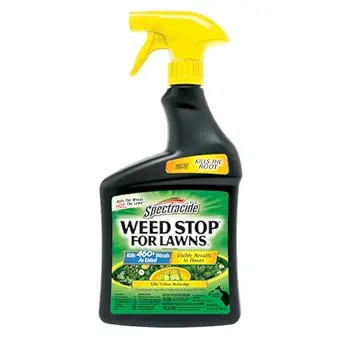 |
| Highest Rated A top-rated pick with lots of positive feedback | PBI/Gordon SpeedZone EW Lawn Weed Killer, 20 fl oz |  |
| Most Popular A crowd favorite that many people choose with confidence | Ortho WeedClear Weed Killer for Lawns with Comfort Wand, 1 gal. |  |
| Best Seller A high-volume bestseller chosen again and again | Spectracide Weed Stop for Lawns Plus Crabgrass Killer, Ready-to-Use, 1 Gal |  |
Roundup for Lawns Ready-to-Use with Extend Wand, 1.33 gal

| Coverage | 5,000 square feet |
|---|---|
| Item Form | Liquid |
| Liquid Volume | 1.33 gallons |
| Active Ingredients | Mcpa, Dimethylamine Salt, Quinclorac, Dicamba, Satrentrazone |
Roundup for Lawns Ready-to-Use is intended as a homeowner spot-treatment herbicide for northern turf grasses. The 1.33 gallon jug includes an extendable spray wand and continuous spray delivery so you can treat patches of clover, dandelions, crabgrass and many other listed weeds without mixing. It starts working quickly with visible effects in hours and is rainproof in about three hours, which helps when weather windows are short. The formula is labeled for use on common northern grasses such as Kentucky bluegrass, perennial ryegrass, fescues and zoysiagrass and claims up to three months of control on certain weeds when used as directed. Practical limits are that it is for spot applications rather than blanket lawn renovation, and it should only be used when weeds are actively growing and daytime temperatures are within the labeled range. Users must keep people and pets off treated areas until sprays have dried and follow the included weed list and directions for repeat treatments if needed.
Best for: Homeowners with northern cool-season lawns who want an easy, targeted solution to remove clover and other common lawn weeds without mixing concentrate.
Less Ideal for: People seeking an all-purpose product for southern warm-season turf or those wanting to treat an entire lawn uniformly should consider a different approach or professional options.
- Ready-to-use formulation requires no mixing for quick spot treatments
- Extendable spray wand and continuous spray make targeted application easier
- Starts working quickly and becomes rainproof in about three hours
- Labeled for control of many broadleaf and grassy weeds commonly found in northern lawns
- Designed for spot treatment rather than full-lawn broadcast application
- Restricted to listed northern grass types and specific temperature windows
Verdict: A convenient ready-to-use spot-treatment that effectively targets clover and other common weeds in northern cool-season lawns with minimal prep.
Spectracide Weed Stop for Lawns Concentrate, 40 oz

| Item Form | Liquid |
|---|---|
| Coverage | 20000 square_feet |
| Unit Count | 40 Fluid Ounces |
Spectracide Weed Stop for Lawns is a concentrated liquid herbicide intended for spot or broadcast application with a garden sprayer to control common broadleaf lawn weeds such as clover, dandelion and chickweed. You mix the 40 oz concentrate with water at rates on the label and apply when weeds are actively growing, typically spring or fall, and under daytime temperatures between 60 and 85 F. The formula is fast acting by contact and claims visible results within hours and root kill for longer control; it becomes rainproof after about six hours. Practical benefits include large coverage from one bottle and targeted control that will not harm turf when used correctly. Limitations are the need for a separate sprayer for application, careful mixing and timing to avoid stressing desirable grass, and occasional repeat spot treatments for very tough weeds.
Best for: Homeowners who want a cost-effective, concentrated treatment to remove clover and other broadleaf weeds across a lawn and who are willing to mix and apply product carefully with a sprayer.
Less Ideal for: Gardeners seeking an all-in-one ready-to-use applicator or those who prefer non-chemical weed control methods.
- Concentrated 40 oz formula covers up to 20,000 sq ft when mixed per label
- Kills over 200 listed broadleaf weed types, including clover, down to the root
- Fast-acting contact formula with visible results in hours and rainproof in 6 hours
- Formulated to spare lawn grass when applied according to directions
- Requires a separate garden sprayer and correct mixing for safe, effective use
- Some tough weeds may require repeat spot treatment after three weeks
Verdict: A high-coverage concentrated lawn herbicide that reliably removes clover and other broadleaf weeds while preserving turf when mixed and applied correctly.
Spectracide Weed Stop for Lawns Ready-to-Use Spray, 32 oz

| Item Form | Spray |
|---|---|
| Liquid Volume | 32 |
| Coverage | Up to 10,000 square feet (for cool season grasses) |
Spectracide Weed Stop for Lawns is a pre-mixed spray designed to target common lawn weeds such as clover, dandelions and chickweed while leaving established grass intact when applied correctly. It is used by spraying weeds until wet across your lawn during recommended temperatures; visible browning often appears within hours because the formula kills by contact down to the root. The bottle covers up to 10,000 square feet on cool-season grasses, so single-application spot treatments or larger broadcast applications are straightforward with no measuring or mixing required. Important practical points are following label temperature limits and waiting for treated areas to dry before allowing people or pets back on the lawn. Users should also avoid applying to grass just coming out of dormancy or to zoysiagrass in early stages. For everyday clover control on a budget this product is convenient and effective, though repeat applications may be needed for heavy infestations and care is required on sensitive turf types and in hot weather.
Best for: Homeowners who want a low-effort, cost-conscious solution to remove clover and other common lawn weeds without mixing products, and who will apply treatments during recommended temperature windows.
Less Ideal for: People managing newly sprouted lawns, zoysiagrass just out of dormancy, or those needing a systemic long-term weed control program for heavy infestations should consider other products or professional services.
- Ready-to-use spray requires no mixing or measuring
- Kills a wide range of listed weeds including clover and dandelion
- Visible results within hours due to contact action
- Coverage claim up to 10,000 sq ft for cool-season grasses
- Not safe for applying to turf just emerging from dormancy or during high temperatures
- Contact-kill action may require follow-up for deep or established root systems
Verdict: A convenient, budget-friendly ready-to-use spray that quickly removes clover and many common lawn weeds without mixing.
PBI/Gordon SpeedZone EW Lawn Weed Killer, 20 fl oz

| Unit Count | 20 Fluid Ounces |
|---|---|
| Item Form | Liquid |
| Coverage | Mix 1.8 fl oz per 0.5–1 gal water to treat 1000 sq ft (warm-season); 1.5 fl oz for cool-season |
| Active Ingredients | 2,4-D; Dicamba; Carfentrazone-ethyl; Mecoprop-p |
SpeedZone EW is a ready-to-mix, post-emergent liquid herbicide designed for spot or broadcast treatment of broadleaf weeds in established lawns. You mix small amounts into a sprayer and apply to cool-season and warm-season turf listed on the label; the formula targets more than 90 broadleaf species including clover and dandelion and shows visible injury within hours with plant death in about 7 to 10 days. Notable features include four active ingredients for broad-spectrum control, formulations for cool-weather performance, and relatively fast rainfast time so treatments are less likely to wash off. It is practical for routine clover control across common lawn grasses and for homeowners who want dependable, chemical control without switching products by season. Important limitations are that label directions and safety precautions must be followed closely, timing and correct dilution matter for turf tolerance, and it is intended for established lawns only so use on new seedings or non-listed turf should be avoided.
Best for: Gardeners and homeowners who prioritize a reliable, chemical solution to persistent clover in established lawns and want a product that performs in cool weather.
Less Ideal for: People establishing new turf, overseeding immediately after treatment, or those seeking an organic or nonchemical approach to weed control.
- Broad-spectrum control of 90+ listed broadleaf weeds including clover and dandelion
- Four active ingredients improve efficacy against difficult weeds
- Visible effects within hours and plant death typically in 7 to 10 days
- Rainfast in about 3 hours so treatments hold up to light weather after application
- Requires careful mixing and strict adherence to label for turf safety and reseeding intervals
- Not labeled for use on new lawns or unspecified turf species
Verdict: Choose SpeedZone EW when you need a dependable, fast-acting chemical treatment to control clover and other broadleaf weeds in established cool- or warm-season lawns.
Ortho WeedClear Weed Killer for Lawns with Comfort Wand, 1 gal.

| Unit Count | 128 Fluid Ounces |
|---|---|
| Item Form | Spray |
| Coverage | 16000 square feet |
| Item Highlight | Kills over 250 listed weeds |
Ortho WeedClear is a 1 gallon ready-to-use lawn herbicide with an attached Comfort Wand for precise spot or broadcast application. It contains a mix of three active ingredients that target more than 250 broadleaf weeds such as clover and dandelions and claims visible die-back within hours and rainproofing after one hour. Typical use is spot treating individual weeds with the wand or diluting slightly for wider coverage following the label rate. Practical benefits include a lawn-safe formula when directions are followed, the convenience of a continuous-spray wand for accurate application around desirable turf, and a large 128 fl oz volume that covers substantial area. Limitations to note are that it is designed for actively growing broadleaf weeds in spring or fall and will not prevent future weeds long term like year-long products; it also contains common synthetic herbicides so users must follow safety and re-entry guidance. For buyers prioritizing clear results and easy, targeted application this product simplifies clover control in turf but requires correct timing and careful use around non-target plants.
Best for: Homeowners who want a straightforward, proven solution to remove clover and other common broadleaf weeds from established lawns and value easy, targeted application and fast results.
Less Ideal for: People seeking long‑term residual weed prevention, those who need a brush or vine killer, or gardeners who prefer non-chemical or organic weed control methods.
- Kills a wide range of broadleaf lawn weeds including clover and dandelions
- Comfort Wand applicator enables precise, continuous spraying for spot or small-area treatments
- Visible results within hours and rainproof after one hour for timely applications
- Ready-to-use 1 gallon size covers large areas without mixing for many spot treatments
- Not formulated for year-long prevention or for controlling tough brush and vines
- Contains synthetic active ingredients so careful handling and adherence to label safety instructions are required
Verdict: A ready-to-use, wand-equipped lawn herbicide that gives fast, targeted control of clover and other broadleaf weeds while being safe for turf when used as directed.
Spectracide Weed Stop for Lawns Plus Crabgrass Killer, Ready-to-Use, 1 Gal

| Item Form | Spray |
|---|---|
| Coverage | Up to 5,000 sq ft |
| Liquid Volume | 1 gallons |
Spectracide Weed Stop for Lawns Plus Crabgrass Killer is a one-gallon, ready-to-use spray formulated to kill a wide range of lawn weeds by contact down to the root. You use it by spraying affected areas after mowing and when daytime temperatures are between 45 and 90 degrees F; the label warns about possible temporary discoloration on Bermudagrass at higher temperatures. Notable features include a no-mix formulation, advertised coverage up to 5,000 square feet, and a contact-action formula that produces visible wilting in about five hours. For clover in lawns this product is effective because it is designed to kill broadleaf weeds without harming turf when applied as directed. Important limitations are that it kills on contact, so complete coverage of foliage is necessary, and timing and temperature restrictions must be followed to avoid lawn stress on certain grass types. Also, as a spray it treats only visible weeds and does not provide residual preemergent control.
Best for: Buyers who want a simple, ready-to-use spray to remove visible clover and other broadleaf weeds quickly without mixing chemicals, and who prefer following label directions to protect their lawn.
Less Ideal for: People seeking long-term prevention of new weed growth or a solution for large commercial turf areas where broadcast application and residual control are needed should consider alternative products.
- Ready-to-use spray requires no mixing and is easy to apply to spot infestations
- Claims visible results in about five hours, so you can confirm effectiveness quickly
- Broad spectrum label lists 470+ weed types including clover and crabgrass
- Advertised coverage up to 5,000 sq ft from the one-gallon container
- Kills by contact so it requires thorough leaf coverage to be effective
- Temperature restrictions and potential temporary yellowing on Bermudagrass limit when it can be used safely
- No residual or preemergent activity so it will not prevent new weed germination
Verdict: A user-friendly, ready-to-use spray that quickly kills clover and other listed broadleaf weeds when applied carefully and at the right temperatures.
Choosing the Right Weed Killer for Clover in Grass: Key Factors to Consider
Active Ingredient and Mode of Action
The active ingredient determines how the weed killer attacks clover and whether it is selective for broadleaf plants. Some actives are systemic and translocate into roots, giving longer control of perennial clover, while contact actives burn foliage quickly but may not stop regrowth. Understanding mode of action helps set expectations for how many applications will be needed and how quickly you will see visible results.
Different modes of action also influence turf safety. Selective actives target broadleaf physiology and leave grasses largely unharmed when applied correctly. Nonselective actives will damage any green tissue and are best for spot treatments where you do not want grass to survive.
Timing and Lawn Growth Stage
Application timing affects both efficacy and turf recovery. Treating clover in active growth, typically spring or early fall depending on your climate, produces the best uptake for systemic herbicides. Avoid applying during drought stress or extreme heat, when plants are not actively translocating nutrients, because uptake and control will be reduced.
Timing also matters relative to overseeding or reseeding. Many weed killers have restrictions on seeding windows after application to avoid harming new grass. Read label intervals for when you can safely seed and plan treatments around any lawn renovation.
Selectivity and Turf Compatibility
Selectivity is crucial for maintaining a uniform lawn. Products labeled for use on common cool-season and warm-season turf grasses indicate tested safety margins. Some formulations are safe on bluegrass, fescue, and rye but may injure fine fescue or certain warm-season grasses. Knowing your dominant turf species helps you choose a product that minimizes discoloration or thinning.
If you manage a mixed-species lawn, opt for materials with broader turf compatibility or plan spot treatments in problem areas to reduce risk to sensitive grass types.
Application Method and Coverage
Application delivery affects both effectiveness and waste. Ready-to-use sprays are convenient for small patches, while hose-end sprayers and concentrated mixes are better for larger lawns because they reduce time and packaging. Proper calibration of broadcast sprayers ensures even coverage and avoids streaking that can leave untreated clover islands.
Consider droplet size and nozzle selection during windy conditions to reduce drift onto flower beds or ornamentals that may be sensitive. Spot treatment methods reduce non-target exposure but require more hands-on time.
Environmental Persistence and Rainfastness
Residual behavior influences re-treatment intervals and non-target risk. Some products have short residual activity and break down quickly in soil, which is preferable near desirable ornamentals or vegetable beds. Others provide longer residual control of clover but increase the window during which newly seeded grass or adjacent plants may be affected.
Rainfastness determines how long you must wait after application before irrigation or rainfall. Short rainfast windows require planning to avoid washing the product off treated foliage; longer windows give more flexibility but may increase environmental exposure.
Safety, Label Instructions, and Reentry
Safe handling and clear label instructions are essential for home gardeners. Labels specify protective equipment, reentry intervals, and restrictions for pets and play areas. Some formulations require extended waiting periods before children or pets can access treated turf, while others allow normal use after drying.
Also review disposal, storage, and mixing instructions to reduce accidental overapplication. Products with straightforward, well-written labels reduce mistakes and increase the odds of safe, successful control.
When to Treat Clover Versus Improving Lawn Health
Not all clover presence needs immediate chemical control. In thin, stressed lawns, clover often fills gaps where grass is weak. Addressing soil compaction, fertility imbalances, and mowing height can reduce clover pressure over the long term. Fertile, dense turf suppresses many broadleaf weeds naturally.
Use weed killers when clover is widespread or when quick aesthetic control is desired. Combining cultural fixes with targeted treatments gives better long-term results than a single chemical intervention.
- Raise or lower mowing height thoughtfully to favor your turf species.
- Aerate compacted areas and overseed thin spots during recommended seeding windows.
- Test soil pH and adjust nutrients if persistent nutrient deficiency is contributing to weed invasion.
Spot Treatments and Safe Use Around Flower Beds
Spot treating isolated clover patches limits non-target exposure and preserves beneficial plants nearby. Use a hand sprayer or sponge applicator and avoid spraying on windy days. Keep droplets off ornamental leaves and blooms that are sensitive to broadleaf herbicides.
Create physical barriers or water the soil near ornamentals before treatment to help protect roots from incidental runoff.
- Target only the clover leaves and stems when possible.
- Avoid applying near newly planted perennials or vegetable beds within the product's restricted buffer distance.
Managing Repeat Regrowth and Integrating Follow-up Care
Clover can regrow from seed or surviving root crowns. After initial control, monitor treated areas for new emergence and apply follow-up treatments only as label allows. Improving turf density through overseeding and proper fertilization reduces the chance of re-infestation.
Regular mowing and consistent irrigation practices help grass outcompete clover. If you plan to reseed, follow label guidance on how long to wait after a herbicide application to avoid damage to seedlings.
- Inspect treated areas weekly for regrowth.
- Plan overseeding during cool, moist conditions that favor grass establishment.
Organic and Nonchemical Options
For gardeners preferring nonchemical approaches, manual removal and improving soil fertility are valid strategies. Hand-pulling is effective for small patches, especially when soil is moist. Cultural practices that thicken turf reduce open niches for clover to establish.
Some nonchemical products can scorch clover foliage temporarily but may require repeated applications and do not guarantee eradication of deep-rooted or perennial clover.
- Pull clover after watering when the soil is soft to remove roots more effectively.
- Consider spot-sodding or overseeding thin areas rather than repeated surface treatments.
Safety Around Pets and Play Areas
If pets or children use the lawn frequently, choose formulations with short drying times and clear reentry instructions. Many products require that treated turf be dry before allowing activity, and some have longer wait periods for pets to lie on treated areas.
Follow label guidance on when to allow mowing, watering, and foot traffic after application to avoid tracking residues into the house or onto toys.
- Keep pets off treated areas until the spray has dried completely and label reentry times have passed.
- Store herbicides safely out of reach and in their original containers.
How We Chose the Best Weed Killer for Clover in Grass
We focused on products and formulations that specifically address broadleaf clover growing inside turf stands. Selection prioritized materials with demonstrated selectivity between common lawn grasses and broadleaf clovers, reliable control when applied at recommended timings, and clear safety and reentry guidance for typical home lawn care routines. Our editorial filters included efficacy against common clover species, documented turf safety across cool- and warm-season grasses, and flexible application options for spot treatment versus broadcast use. We also considered ease of application, label clarity for timing and watering, and residual behavior to assess risk to newly seeded or overseeded lawns. Products lacking lawn-specific labeling, those primarily designed for garden beds rather than turf, or formulations that require specialist equipment were excluded. We compared items across the same real-world gardener concerns: how well the active ingredient targets clover, how it affects grass recovery, practical application features, and safety and environmental guidance. These criteria align with the scorecard metrics used on each product block.
FAQ
Will treating clover kill my grass too?
It depends. Selective weed killers formulated for lawns target broadleaf plants and are designed to spare most turf grasses when applied per label directions. Nonselective products will injure any green plant and should only be used for spot removal where grass loss is acceptable.
How long after treatment can I mow the lawn?
Mowing intervals vary by product, but many labels advise waiting until the spray has dried and often 24 hours or more. Mowing too soon can reduce herbicide contact with clover leaves and lower effectiveness, so follow the specific timing on the product label.
Can I overseed after applying a weed killer?
Often you must wait a specified number of days before seeding to avoid harming new grass. The waiting period depends on the active ingredient and formulation. Check label directions for minimum seeding intervals and plan treatments around any lawn renovation schedule.
Is it safe to use weed killers on lawns with children and pets?
Many herbicides are safe when label instructions are followed, including recommended reentry times and precautions. Choose formulations with short dry times and follow guidance on lawn use, pet access, and cleanup to reduce exposure risks.
How many applications will it take to control established clover?
Established clover, especially perennial types, may require more than one application spaced according to the product label. Systemic herbicides applied during active growth are more likely to give multiweek control, but follow-up treatments and cultural improvements are commonly needed for long-term suppression.
Will rain wash the product off and reduce effectiveness?
Rainfastness varies. Some products become rainfast within a few hours, while others require a longer dry period. Rain shortly after application can wash material off treated foliage and reduce control, so check the label for recommended dry windows before expected precipitation.
Final Verdict
Choose a weed killer for clover in grass by matching the active ingredient and formulation to your turf species, timing needs, and safety priorities. Prioritize selective products with clear label guidance if you want to preserve turf, and plan treatments around seeding windows and weather for best uptake. Combine targeted chemical control with basic cultural improvements like overseeding, proper mowing, and soil care to reduce long-term clover pressure and keep your lawn dense and uniform.
