

Note: This article contains affiliate links. If you click on these links and make a purchase, I may earn a small commission at no extra cost to you. This helps support my research and content. Read my full affiliate disclosure here.
Driveway cracks are a persistent, visible source of weeds that can widen joints and make a paved area look neglected. Picking the right weed killer for driveway cracks matters because you need something that moves into roots, resists washing away, and does not discolor concrete, pavers, or asphalt. This guide covers seven shortlisted options chosen for common driveways and small gaps, and explains the performance and handling characteristics that matter in real outdoor conditions. Below we summarize how each product behaved on common weed types, plus the safety and application considerations gardeners should weigh before treating tight cracks.
Top Picks at a Glance
| Best Overall The best all-around choice for most situations | Roundup Weed & Grass Killer with Comfort Wand, 1.33 gal. |  |
| Best Quality Built to a higher standard if you want something more solid | Roundup Dual Action 365 Weed & Grass Killer Plus 12 Month Preventer (1 gal) |  |
| Best Value The sweet spot between price and what you get | Spectracide Weed & Grass Killer Concentrate, 32 oz (AccuMeasure) |  |
| Best Budget The cheapest option that still gets the job done reliably | Ortho GroundClear Super Weed & Grass Killer with Comfort Wand, 0.5 gal | 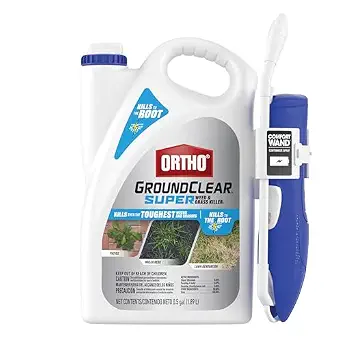 |
| Highest Rated A top-rated pick with lots of positive feedback | Spectracide Weed & Grass Killer Concentrate, 1 Gallon |  |
| Most Popular A crowd favorite that many people choose with confidence | Spectracide Weed & Grass Killer with AccuShot Power Sprayer, 1.33 Gal |  |
| Best Seller A high-volume bestseller chosen again and again | Roundup Weed & Grass Killer4 with Pump 'N Go 2 Sprayer, 1.33 gal. |  |
Roundup Weed & Grass Killer with Comfort Wand, 1.33 gal.

| Item Form | Liquid |
|---|---|
| Coverage | 400 sq. ft. |
| Liquid Volume | 1.33 gallons |
This Roundup formulation is a straightforward, ready-to-use herbicide aimed at killing broadleaf weeds and grasses down to the root. It comes in a 1.33 gallon jug with a Comfort Wand that provides one-touch continuous spray, which makes treating cracks, edges, and small patches less tiring than using a separate pump sprayer. The product advertises visible results within hours and becomes rainproof in roughly 30 minutes, so treated driveway cracks and walkways can hold up to light weather soon after application. It lists a broad spectrum of targets including dandelion, crabgrass, clover, and poison ivy, and the stated coverage is about 400 square feet. Limitations are standard for nonselective herbicides: you must avoid drift onto desirable plants, follow replanting intervals, and keep people and pets away until treated surfaces have dried. The built-in wand simplifies spot treatment but the container size and one-time coverage mean this is best for medium-sized jobs rather than whole-acre applications.
Best for: Homeowners who want an easy, no-mixing solution for spot-treating weeds in driveway cracks, walkways, and small beds and who value a comfortable wand for targeted application.
Less Ideal for: People managing large lawns or commercial properties who need high-volume concentrated products or broadcast application systems.
- Ready-to-use liquid with integrated Comfort Wand for one-touch continuous spraying
- Fast visible results and rainproof in about 30 minutes
- Kills a wide range of common weeds and grasses to the root
- Covers up to approximately 400 square feet per container
- Nonselective formula can damage desirable plants if drift occurs
- Not intended for very large properties where concentrated or bulk treatments are more economical
Verdict: A convenient, ready-to-use herbicide with a comfort wand that makes targeted driveway crack and walkway weed control quick and easy.
Roundup Dual Action 365 Weed & Grass Killer Plus 12 Month Preventer (1 gal)

| Unit Count | 128 Fluid Ounces |
|---|---|
| Item Form | Spray |
| Coverage | 300 square feet |
| Active Ingredients | Triclopyr; Fluazifop-P-butyl; Imazapic; Diquat Dibromide |
This Roundup Dual Action 365 jug is designed to both kill established weeds and provide long-lasting prevention in non-lawn areas like driveway cracks, sidewalks, patios, and gravel. The product is used by spraying the entire target area with the included Comfort Wand, which offers one-touch continuous spray to cover cracks and crevices without hand fatigue. It starts working within hours and becomes rainproof in about 30 minutes, so treated areas are protected quickly. Notable features include a formulated mix of active ingredients targeting broadleaf and grassy weeds and a coverage claim of up to 300 square feet per gallon. Practical benefits for hardscape maintenance are straightforward: fewer repeat treatments and less frequent spot weeding through the season. Important limitations are that you must coat the whole area to prevent new growth rather than just spraying visible weeds, and the product is intended for non-lawn surfaces only and requires careful handling and adherence to safety directions to keep people and pets out during application.
Best for: Gardeners and homeowners who prioritize a high-performance, long-lasting solution for weeds in driveways, sidewalks, and other hardscape areas and want to reduce repeat spot treatments.
Less Ideal for: Those looking for a selective lawn-safe product or users who prefer spot-only treatment methods should consider alternatives better suited to turf or minimal-application approaches.
- Kills existing broadleaf and grassy weeds and also prevents new weeds for up to 12 months
- Comfort Wand with one-touch continuous spray makes treating cracks and hard-to-reach crevices easier
- Fast visible results in hours and becomes rainproof in about 30 minutes
- Requires spraying the entire area to create an effective preventive barrier rather than spot treatment
- Formulation is for non-lawn hardscape areas only and must be used according to safety directions
Verdict: Choose this product if you want a single treatment that kills weeds now and creates up to a year of prevention for driveway cracks and other hardscape areas.
Spectracide Weed & Grass Killer Concentrate, 32 oz (AccuMeasure)

| Unit Count | 32 Fluid Ounces |
|---|---|
| Coverage | 1,350 sq ft |
| Item Form | Spray |
| Active Ingredients | Diquat Dibromide |
This Spectracide concentrate is built for spot treating weeds and grass in driveways, sidewalks, patio cracks and along foundations. Mixable with water and dispensed via the AccuMeasure cap, it is applied with a pump or tank sprayer to thoroughly coat leaves so the active ingredient can be absorbed and kill the root. The formula advertises visible results in as fast as three hours and becomes rainproof in about 15 minutes, which is useful when timing treatments before expected showers. Because it is nonselective you must protect desirable plants and avoid overspray, but the concentrate format stretches a single bottle across multiple small treatments and the labeled coverage figures make planning straightforward. Practical users will appreciate the easy-measure cap and quick replant window of one day where allowed, while those who need a selective lawn-safe option or who cannot avoid drift should consider alternatives.
Best for: Homeowners who want a practical, fast-acting solution to clear weeds from driveway and walkway cracks and prefer a concentrate they can measure out for multiple spot treatments.
Less Ideal for: People who need a selective lawn-safe product or who cannot control spray drift near ornamental or edible plants should look at targeted or selective herbicides instead.
- Concentrate with AccuMeasure cap simplifies accurate mixing for spot treatments
- Rainproof within 15 minutes so treatments are not easily washed away
- Rapid visible results often within about three hours
- Nonselective formula kills weeds and grasses down to the root for lasting control
- Nonselective action requires careful protection of nearby desirable plants
- Must be mixed and applied with a separate sprayer, adding prep time
Verdict: A concentrated, easy-to-measure nonselective herbicide that quickly clears weeds and grass from driveways and cracks while minimizing mess when mixing.
Ortho GroundClear Super Weed & Grass Killer with Comfort Wand, 0.5 gal

| Unit Count | 64 Fluid Ounces |
|---|---|
| Item Form | Spray |
| Coverage | Broad spectrum coverage |
| Liquid Volume | 0.5 gallons |
Ortho GroundClear Super Weed & Grass Killer is a ready-to-use spray designed to remove stubborn weeds and grasses in outdoor hardscape areas and landscape beds. It pairs a contact ingredient with root-penetrating actives so you see leaf damage within hours and full control in days to a couple of weeks. The attached Comfort Wand gives a continuous, targeted spray that makes treating driveway cracks, patios, and along fences easier and reduces overspray compared with an untargeted sprayer. It is rainfast in about 15 minutes so you do not need long dry windows. Practical limits include the need for calm, active-growth conditions for best results and following protective-use instructions around desirable plants and pets. Because it is a ready-to-use formula you do not mix concentrate, but larger areas may require multiple bottles for full coverage compared with concentrated options.
Best for: Homeowners who need a straightforward, no-mix solution to remove weeds from driveway cracks, patios, and around hardscapes and who prioritize ease of use and quick results on small to medium areas.
Less Ideal for: People managing large acreage or entire lawns who prefer concentrated products for cost-per-area efficiency should consider a concentrate or professional application instead.
- Ready-to-use spray with attached comfort wand for precise application in cracks and edges
- Dual-action formula that works on contact and penetrates to kill roots
- Fast visible results within hours and rainfast in about 15 minutes
- Ready-to-use volume may be insufficient for very large areas compared with concentrates
- Must avoid application in windy conditions and keep away from desirable plants and edible areas
Verdict: A simple, ready-to-use spray with a comfort wand that quickly and precisely kills tough weeds in driveway cracks and other small hardscape areas.
Spectracide Weed & Grass Killer Concentrate, 1 Gallon

| Unit Count | 128 Fluid Ounces |
|---|---|
| Coverage | Non-selective broad spectrum coverage |
| Item Form | Liquid |
Spectracide Weed & Grass Killer Concentrate is a liquid, non-selective herbicide designed for treating weeds and grass in hardscape cracks and other targeted spots. You mix the concentrate with water in a tank sprayer and apply so leaves are fully covered; the label recommends 7 fl oz per gallon of water to treat roughly 300 sq ft per mix. The formula is fast acting with visible browning in as little as three hours and becomes rainproof after about 15 minutes, letting you get reliable results even if weather changes shortly after application. It kills down to the root so treated vegetation does not bounce back quickly, and you can replant in treated areas after one day. Important limitations are that it will kill desirable plants on contact and is non-selective, so careful masking of nearby vegetation and attention to drift are required. Also you must follow temperature guidance and label directions for safe, effective application.
Best for: Homeowners and property caretakers who need a dependable, fast-acting solution for weeds in driveways, sidewalks and patios and prefer a product that delivers consistent, root-killing results.
Less Ideal for: People who need a selective lawn-safe product or who do not want to handle concentrated herbicides should consider alternative, plant-safe options.
- Concentrated formula mixes with water for multiple treatments and extended coverage
- Fast visible action with results in about three hours
- Rainproof in 15 minutes so light showers soon after application are less likely to reduce effectiveness
- Kills to the root to reduce regrowth and limit repeat treatments
- Non-selective formula will damage any plants it contacts so precise application is required
- Requires a separate tank sprayer and proper protective measures during use
Verdict: Choose this concentrate when you want a reliable, fast, root-killing herbicide for persistent weeds and grasses in driveway and walkway cracks.
Spectracide Weed & Grass Killer with AccuShot Power Sprayer, 1.33 Gal

| Unit Count | 170 Fluid Ounces |
|---|---|
| Item Form | Spray |
| Coverage | 1 gallon |
| Active Ingredients | Diquat Dibromide 0.12%, Fluazifop-p-butyl 0.06%, Dicamba 0.04% |
Spectracide Weed & Grass Killer pairs a concentrated non-selective formula with a battery-powered AccuShot sprayer to clear weeds from driveway cracks, patios and around foundations. The product is used by aiming and spraying foliage until leaves are covered; the active ingredients move through the leaf to the root and can show visible die-back in as little as three hours. The AccuShot wand is extendable and provides continuous spray without manual pumping, which improves accuracy for narrow cracks and reduces hand fatigue during larger jobs. It is rainproof within 15 minutes, so treated areas are protected quickly. Practical benefits include fast results that let you replant or resume use of the area within a day and a reusable sprayer for follow-up applications. Important limitations are that the herbicide is non-selective so it will kill any plant it contacts, it requires careful handling and PPE to avoid skin or eye exposure, and the sprayer runs on four AA batteries that must be replaced periodically. Follow label directions to avoid runoff into water.
Best for: Buyers who want a fast, no-nonsense solution for weeds growing in driveways and hard surfaces and who prioritize tools with clear user feedback and proven results.
Less Ideal for: Gardeners who need a selective lawn-safe treatment, people unwilling to follow pesticide safety precautions, or those treating areas adjacent to water features.
- AccuShot battery-powered wand gives continuous spray for accurate application in tight cracks
- Formula moves through foliage to kill weeds down to the root with visible results in about three hours
- Rainproof after 15 minutes so treatments are not easily washed away by brief showers
- Covers approximately 300 square feet per gallon, suitable for multiple crack-treatment sessions
- Non-selective herbicide will damage any desirable plants it contacts
- Sprayer requires four AA batteries and occasional replacement to maintain function
- Product is toxic to aquatic life and must not be used near water or allowed to run off
Verdict: A fast-acting, easy-to-aim non-selective herbicide with a battery-powered wand that is well suited to reliably clear weeds from driveway cracks and other hard surfaces.
Roundup Weed & Grass Killer4 with Pump 'N Go 2 Sprayer, 1.33 gal.

| Unit Count | 170 Fluid Ounces |
|---|---|
| Item Form | Spray |
| Coverage | 300 Square_Feet |
| Active Ingredients | Triclopyr, Triethylamine Salt, Fluazifop-P-Butyl, Diquat Dibromide |
This Roundup kit combines a 1.33 gallon container of Weed & Grass Killer4 with a Pump 'N Go 2 sprayer so you can treat cracks, edges, and beds without mixing chemicals or bending over. The ready-to-use spray is formulated to kill broadleaf weeds and many grasses down to the root and produces visible browning in hours. The extendable wand and 10-minute continuous spray help when treating multiple driveway cracks and walkways, and the product claims rainproofing in as little as 30 minutes so light rain is less likely to wash it away. It is also marketed as allowing replanting between 1 and 30 days depending on instructions. Important practical limitations are safety and containment: the label warns to keep people and pets out of treated areas until dry and to wear protective clothing because the active ingredients are potent. Also, this is a nonselective herbicide so care is needed around desirable plants and mulch beds. For someone looking for a convenient, no-mix solution to treat driveways and hardscape edges, this product simplifies application but requires careful handling and strict adherence to safety directions.
Best for: Homeowners who want a convenient, ready-to-use solution to clear weeds from driveways, sidewalks, and other hardscape areas and who prioritize straightforward application and quick visible results.
Less Ideal for: People who need a selective or organic control method for lawn or garden beds or who prefer spot treatments that avoid using synthetic herbicides.
- Comes ready-to-use with a Pump 'N Go 2 sprayer so no measuring or mixing is required
- Extendable wand and up to 10 minutes continuous spray for easier coverage of driveway cracks and edges
- Produces visible results in hours and is rainproof in about 30 minutes, reducing reapplication risk after light rain
- Formulated to kill a broad range of weeds and grasses down to the root
- Nonselective formula can damage desirable plants if oversprayed
- Contains potent active ingredients that require protective clothing and area exclusion until spray dries
Verdict: For a risk-averse homeowner who wants a no-mix, easy-to-use spray to eliminate weeds in driveway cracks and hardscape edges, this all-in-one Roundup kit delivers fast, visible results with minimal setup.
Choosing the Right Weed Killer for Driveway Cracks: Key Factors to Consider
Active Ingredient and Mode of Action
Understanding whether a product is systemic or contact-based changes how and when you use it. Systemic weed killers translocate to the root and are generally better for persistent weeds that regrow from root fragments. Contact herbicides scorch exposed foliage quickly but often leave roots alive when weeds grow from protected pockets inside cracks.
The active ingredient also dictates the range of species controlled. Some actives are broad-spectrum and will affect grasses and broadleaf plants alike, while others are more selective. Consider the weeds you see in the cracks and choose an active ingredient with a track record against those types.
Surface Compatibility and Staining Risk
Driveway materials vary: poured concrete, interlocking pavers, and asphalt all respond differently to chemicals. Some formulations contain carriers, solvents, or dyes that can bleach, darken, or etch surfaces. For visible driveways you use frequently, minimizing cosmetic damage is as important as killing weeds.
Check label guidance for surface-specific warnings and look for formulations designed for hardscape use. Application method matters too: granular or gel treatments that stay in the crack reduce accidental contact with surrounding surfaces compared with broad sprays.
Application Method and Precision
Treating narrow cracks requires tools and dispensers that let you apply product exactly where it belongs. Trigger sprayers, wand tips, foam applicators, and brush-on gels all help reduce overspray and runoff. Ready-to-use spray bottles with fine nozzles are usually the most convenient for small jobs.
Consider whether you need a concentrated product to treat a large area or a ready-to-use option for quick spot work. Also think about wind, slope, and the proximity of garden beds; misapplication can harm desirable plants or carry active ingredients into soil outside the crack.
Residual Control and Re-sprout Prevention
Some weed killers leave residual activity in the soil that slows re-invasion, while others only affect current growth. Residual control helps in high-traffic or seed-heavy areas where weeds reappear quickly. However, residuals can impact nearby desirable plants if runoff occurs, so placement and timing are important.
Follow-up treatments or combined mechanical removal may be necessary for deep-rooted perennials. A treatment plan that includes an initial kill, removal of dead material, and a follow-up touch-up often yields longer-lasting results than a single application.
Environmental and Safety Considerations
Runoff from driveway treatments can reach storm drains, lawn areas, and ornamental beds. Choose products with clear instructions to avoid off-target damage and follow label directions for safe disposal and PPE. Consider non-chemical control where appropriate, or use low-toxicity formulations in sensitive sites.
Timing matters as well. Avoid application before heavy rain, and keep children and pets away from treated surfaces until recommended drying times have passed. Read label restrictions about use near water features and comply with local regulations on herbicide use.
Cost and Coverage Practicality
For many gardeners the real cost calculation is coverage per bottle and how often reapplication is needed. Concentrates may seem cheaper per unit but require correct dilution and careful measuring for narrow work. Ready-to-use products are more convenient for small jobs but may be less economical for larger driveways.
Estimate the total crack length and width to calculate how much product you will need. Also factor in the labor for follow-up treatments and any added tools like a nozzle extension or foam applicator that reduce waste and increase precision.
When to Treat Driveway Cracks
Treating weeds while they are young and actively growing makes knockdown and root uptake more reliable. Annual weeds and seedlings are easiest to control, while established perennials may need repeated applications and physical removal. Timing treatments in spring or early summer when plants are actively translocating nutrients increases the chance a systemic product will move into the root.
If you have heavy seed set or a history of re-infestation, plan a short maintenance schedule: an initial treatment, removal of dead material after it dries, and a follow-up spot treat later in the season. Avoid treating immediately before heavy rainfall which can wash product out of the crack and reduce effectiveness.
- Target young, actively growing weeds for best results
- Avoid application before rain to reduce runoff
- Follow up after initial dieback to remove dead material
Non-chemical Alternatives and Complementary Methods
Physical controls can reduce reliance on herbicides. Pulling, scraping with a wire brush, or using a heated wand melts and removes young weeds from narrow gaps. Bent metal rakes or narrow weeding tools designed for joints can reach deep roots in many species.
Filling or sealing wide cracks after removing vegetation prevents seed bed formation and reduces future weed pressure. Combining mechanical removal with a spot herbicide treatment for stubborn roots gives a longer-lasting outcome than either approach alone.
- Manual removal is effective for small infestations
- Sealing wide cracks reduces future weed growth
- Heat treatments work well on small, shallow-rooted weeds
Protecting Nearby Plants and Hardscape
When treating cracks next to planted beds or turf, create a simple physical barrier such as plastic sheeting or a folded cardboard shield to prevent drift or splash. Avoid applying product upslope of sensitive plantings, and rinse any accidental spills immediately according to label instructions.
For porous surfaces like older concrete or pavers, test a small inconspicuous area first if possible. Some solvents or dye-containing formulations may change the appearance of a surface. Work carefully to minimize contact with desirable landscape elements.
- Use shields to prevent drift toward plants
- Test products on an inconspicuous hardscape spot
- Avoid applying on windy days
Seasonal Timing and Weather Considerations
Temperature and humidity affect weed-killer uptake and drying time. Most products work best in mild, dry conditions without extreme heat. Very cold temperatures slow plant metabolism and reduce systemic uptake, while heavy rain shortly after application can wash product away.
Plan treatments when the forecast is dry for at least 24 hours and avoid midday heat that can increase evaporation. Repeat treatments timed to the plant's growth cycle yield better long-term control than single, poorly timed applications.
- Apply during mild, dry weather for best absorption
- Avoid freezing conditions and high heat
- Allow adequate drying time before watering or rain
Tools and Accessories That Improve Results
A few simple tools make crack treatments easier and safer. Narrow spray wands, foam applicators, and brush-on bottles let you place product exactly where it is needed and reduce overspray onto walkways or adjacent vegetation. Gloves, eye protection, and a controlled kneeling pad help you work comfortably while maintaining precision.
For larger driveways, consider a pump sprayer with an adjustable nozzle and a shutoff wand to deliver a steady bead of product into cracks without excessive misting. Keep spare nozzles and a small hand scraper on hand for removing dead material between treatments.
- Use narrow wands or foam applicators for precision
- Wear basic PPE to limit skin and eye exposure
- Keep hand tools nearby for dead plant removal
How We Chose the Best Weed Killer for Driveway Cracks
We evaluated products for effectiveness against common crack-invading species such as annual grasses, clover, chickweed, and perennial broadleaf weeds. We prioritized systemic action or translocation so the active ingredient reaches roots in narrow soil pockets rather than only burning leaf tissue. Contact-only formulas were allowed if they offered fast surface control for cleanup situations. Surface compatibility was a key filter. We excluded any product formulations or delivery methods known to noticeably stain, bleach, or degrade concrete, pavers, or asphalt. We also screened for realistic application options for tight spaces: narrow-spray nozzles, ready-to-use straw applicators, or gel/foam formulations that reduce overspray. Persistence and re-sprout prevention mattered. We considered labelled residual activity and practical measures to reduce regrowth such as follow-up treatment intervals and integration with physical removal. Ease of use and safety precautions were evaluated, including clear mixing instructions, PPE guidance, and measures to limit runoff into plantings or storm drains. Products missing clear directions for crack treatment, lacking data on species control, or relying on highly corrosive carriers were excluded. The list focuses on options that combine root-killing performance with surface safety and practical application for homeowners and gardeners.
FAQ
Can I use a general lawn weed killer in driveway cracks?
Often you can, but not all lawn products are formulated for hardscape use. Lawn concentrates may require dilution and produce overspray or runoff that harms nearby plants. Choose formulations or application methods tailored for cracks to reduce surface staining and off-target movement.
How long before I can reseal cracks after treatment?
Wait until treated vegetation is fully dead and the surface is dry, typically several days to a week depending on product and weather. Follow label guidance; some materials require additional curing time to avoid trapping active ingredients under a seal.
Will vinegar or boiling water remove weeds from driveway cracks?
Vinegar and boiling water can kill top growth and work on small, young weeds, but they often do not reach roots deeply enough to prevent regrowth. For persistent perennials, a systemic option or mechanical removal is usually more reliable.
Is it safe to apply weed killer near storm drains or drainage channels?
Exercise caution. Avoid applying treatments that can run off into drains. Use minimal volume, precision applicators, and avoid treating before heavy rain. If in doubt, choose non-residual contact methods and prevent runoff with absorbent barriers.
How often should I expect to re-treat stubborn perennial weeds in cracks?
Stubborn perennials often need multiple treatments spaced several weeks apart, combined with digging or scraping to remove root fragments. Frequency depends on species, crack depth, and the product's residual activity.
Can I use a brush-on gel or foam in narrow gaps?
Yes. Brush-on gels and foams are designed to stay where placed, reducing drift and protecting surrounding surfaces. They are particularly useful when you need precise placement in narrow or vertical joints.
Final Verdict
Choosing the right weed killer for driveway cracks comes down to balancing root control, surface safety, and application precision. Prioritize a product with systemic or deep-root action for persistent weeds, and use precision applicators or gels when working on visible hardscape. Combine chemical treatment with removal and sealing where practical to extend results. With careful timing, proper protective measures, and a modest maintenance plan, you can keep cracks clear and prevent recurring growth without harming surrounding landscaping.
