

Note: This article contains affiliate links. If you click on these links and make a purchase, I may earn a small commission at no extra cost to you. This helps support my research and content. Read my full affiliate disclosure here.
Poison ivy can spread quickly and cause painful rashes, so choosing the right weed killer matters for both effectiveness and safety in your yard. This guide focuses on weed killers for poison ivy and explains how different products behave when sprayed, painted on, or applied to cut stems. We shortlisted seven top options that perform well in real garden settings and evaluated them on key gardener concerns like how fast they act and how long they protect treated areas. Read on to understand application methods, safety steps, and what to expect from each control approach.
Top Picks at a Glance
| Best Overall The best all-around choice for most situations | Roundup Poison Ivy Plus Tough Brush Killer with Comfort Wand, 1 gal. |  |
| Best Quality Built to a higher standard if you want something more solid | BioAdvanced Poison Ivy Killer Plus Concentrate, 32 oz |  |
| Best Value The sweet spot between price and what you get | Bonide Poison Ivy & Brush Killer BK-32, 16 oz Concentrate |  |
| Best Budget The cheapest option that still gets the job done reliably | Bonide Poison Oak & Ivy Killer Ready-to-Use Spray, 32 oz |  |
| Highest Rated A top-rated pick with lots of positive feedback | Ortho GroundClear Poison Ivy & Tough Brush Killer, 1 gal Ready-to-Use |  |
| Most Popular A crowd favorite that many people choose with confidence | Roundup Weed & Grass Killer4 Concentrate, 1 gal. |  |
| Best Seller A high-volume bestseller chosen again and again | Ortho WeedClear Weed Killer for Lawns with Comfort Wand, 1 gal. | 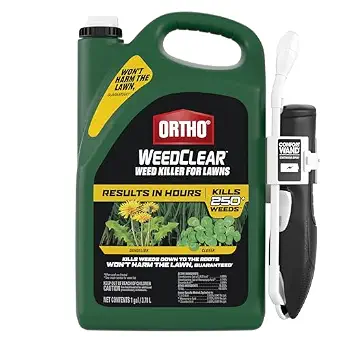 |
Roundup Poison Ivy Plus Tough Brush Killer with Comfort Wand, 1 gal.

| Unit Count | 128 Fluid Ounces |
|---|---|
| Item Form | Spray |
| Coverage | 300 square feet |
| Liquid Volume | 1 gallons |
This 1-gallon Roundup formula is built to tackle poison ivy, poison oak, poison sumac and other stubborn brush like wild blackberry and kudzu. It comes as a spray with a reusable Comfort Wand that lets you apply the product precisely without bending, making spot treatments along fence lines, around structures, or on vines up poles much easier. The label promises rainproof protection in about 30 minutes and visible dieback within hours, and the product information notes you can replant in 1 to 30 days depending on the planting. Coverage is listed at about 300 square feet per container, so it is suited to targeted infestations rather than whole-acre treatments. Ingredients include triclopyr and other active herbicides effective on woody and broadleaf species. Important practical limits are safety and site restrictions: keep people and pets out until spray dries and follow the label for planting intervals and use locations. For larger or non-target-sensitive areas consider a professional application or a product formulated for broader acreage coverage.
Best for: Gardeners and homeowners who need a reliable, fast-acting solution for localized poison ivy and tough brush infestations and prefer a convenient wand for precise spot treatment.
Less Ideal for: Large-acreage properties or users seeking an organic or non-chemical approach should look for alternatives or professional services.
- Targets woody broadleaf weeds and poison ivy species effectively
- Comfort Wand provides one-touch precision application and reduces bending
- Rainproof in about 30 minutes so treatments are not easily washed away
- Visible results in hours for quick confirmation of effectiveness
- Coverage is limited to about 300 sq ft per gallon so multiple containers may be needed for larger areas
- Contains strong active herbicides that require careful handling and strict adherence to label safety directions
Verdict: Choose this product if you want a ready-to-use, fast-acting spray that makes precise control of poison ivy and other tough brush easy with a reusable comfort wand.
BioAdvanced Poison Ivy Killer Plus Concentrate, 32 oz

| Unit Count | 32 Fluid Ounces |
|---|---|
| Coverage | Up to 4,000 square feet |
| Item Form | Liquid |
| Active Ingredients | Triclopyr, triethylamine salt 8.8% |
This 32 oz BioAdvanced concentrate is designed for fast, lasting control of poison ivy, poison oak, blackberries, kudzu and more than 70 listed brush and vine species. It is a systemic formulation containing triclopyr that is absorbed through foliage and shoots and moves to roots, which makes it suitable for treating entire plants and preventing regrowth. Typical use is spraying mixed solution over foliage in infested fence lines, wooded edges, or clearing dense patches; the label also permits applying undiluted concentrate to fresh stumps to stop sprouts. The product’s stated coverage of up to 4,000 sq ft makes it practical for larger yards and overgrown zones, and the concentrate format reduces packaging waste and shipping bulk compared with ready-to-use bottles. Important limitations are that it targets brush and woody vines rather than general turf weeds and must be applied carefully to avoid contact with desirable plants; follow label directions and protective equipment guidance when mixing and spraying.
Best for: Gardeners and property owners who need a performance-focused, long-term solution for heavy infestations of poison ivy and other woody vines across large or overgrown outdoor areas.
Less Ideal for: If you only need spot-control in lawn turf, delicate garden beds, or want a selective turf-safe herbicide, choose a product formulated for those uses instead.
- Systemic action that moves to roots for lasting control of regrowth
- Concentrate treats up to 4,000 sq ft so one bottle covers large areas
- Effective on a long list of tough brush and vines including poison ivy and kudzu
- Can be applied undiluted to freshly cut stumps to prevent sprouting
- Not formulated for broadleaf weeds in turf or small garden beds where selectivity is required
Verdict: Choose this concentrate when you want a performance-oriented, systemic herbicide that kills poison ivy and other woody vines down to the root across large areas.
Bonide Poison Ivy & Brush Killer BK-32, 16 oz Concentrate

| Item Form | Concentrate |
|---|---|
| Liquid Volume | 16 fluid ounces |
| Coverage | over 240 weed species |
Bonide Poison Ivy & Brush Killer BK-32 is a liquid concentrate designed to target woody brush, vines, and broadleaf weeds including poison ivy and poison oak. You mix the concentrate with water and apply it with a tank or hose-end sprayer for spot or larger-area treatment; for stubborn targets like freshly cut stumps you can apply it undiluted with a brush. The formula claims control of over 240 weed species and is labeled for use on common turf grasses when applied properly, so it lets you remove invasive brush without killing lawn grass. Practical benefits include a versatile concentrate that treats both small patches and tougher woody growth, and a clear label with directions for sprayer and stump use. Important limitations are that it is a nonselective solution for brush and broadleaf weeds so careful application and protective measures are required, and you must follow safety instructions to avoid skin or eye contact and protect children and pets. Expect visible results after a single application for many species but follow reapplication guidance on the label for persistent infestations.
Best for: Homeowners who want a practical, multipurpose herbicide to remove poison ivy and other tough brush without harming established turf when applied carefully.
Less Ideal for: People seeking an organic, nonchemical solution or those who need a ready-to-use spray without mixing should consider alternatives.
- Concentrate form lets you mix only the amount needed for spot treatments or larger areas
- Effective on woody brush, vines, and over 240 weed species including poison ivy and poison oak
- Can be applied undiluted to freshly cut stumps for direct stump-killing
- Labeled for use on common turf grasses when directions are followed, reducing risk to lawn
- Requires careful mixing and application to avoid damage to desirable plants
- Hazardous if it contacts skin or eyes and not suitable for indoor use
Verdict: A versatile concentrate built to remove poison ivy, woody brush, and many stubborn weeds while allowing safe use on lawns when mixed and applied as directed.
Bonide Poison Oak & Ivy Killer Ready-to-Use Spray, 32 oz

| Unit Count | 32 Ounce |
|---|---|
| Item Form | Spray |
| Coverage | approximately 1000 square feet |
| Included Components | Bonide Poison Ivy & Oak Killer Ready-To-Use, 32 oz |
| Active Ingredients | Herbicide |
This Bonide ready-to-use spray is a straightforward spot treatment for poison ivy and poison oak around the yard. The trigger bottle requires no mixing, so you can aim and spray directly where the vines and patches are actively growing. It is a systemic herbicide, so it moves into the plant to kill roots rather than only burning foliage, and the product becomes rainfast once dry—helpful if weather is uncertain. Coverage is listed at approximately 1,000 square feet from the 32 ounce bottle, making it a practical choice for small to medium problem areas. Important considerations are following label directions to avoid drift onto desirable plants and wearing protection to prevent skin or eye contact. The formula is intended to spare lawn grasses when applied properly, but it is not selective for all garden plants, so care is needed around beds and ornamentals.
Best for: Buyers who want an easy, no-mix solution to tackle small to moderate poison ivy or poison oak patches quickly and without complex preparation.
Less Ideal for: People managing large-scale infestations, extensive acreage, or those who need a selective product for mixed garden beds should consider professional treatments or concentrate products designed for larger areas.
- Ready-to-use trigger bottle requires no mixing and is simple to apply
- Systemic action that targets roots for longer-term control of poison ivy and oak
- Rainfast after drying so treatment holds up if it rains within a short window
- Advertised to be safe for lawn grasses when used according to directions
- Limited volume for large infestations so multiple bottles may be needed
- Non-selective herbicide risk if accidentally sprayed on desirable plants
Verdict: A simple, ready-to-use systemic spray that kills poison ivy and oak down to the root and is ideal for small to medium yard patches.
Ortho GroundClear Poison Ivy & Tough Brush Killer, 1 gal Ready-to-Use

| Unit Count | 128 Fluid Ounces |
|---|---|
| Item Form | Spray |
| Coverage | Over 60 types of listed tough weeds and brush |
| Active Ingredients | Triclopyr; Triethylamine Salt; Pelargonic Acid and related fatty acids |
Ortho GroundClear Poison Ivy & Tough Brush Killer is a 1 gallon ready-to-use herbicide with a Comfort Wand sprayer designed for targeted removal of poison ivy, poison oak, kudzu, wild blackberry and over 60 other listed tough weeds. You connect the battery-powered wand, set the spray pattern, and wet foliage, stems or trunks until thoroughly covered. The formula begins showing visible effects within an hour and becomes rainproof in about two hours, so treated areas can withstand light weather shortly after application. Practical benefits include the long list of labeled weeds it controls, the precision offered by the wand to reduce overspray, and a user-friendly spray trigger that avoids bending or pumping. Important limitations are that it is intended only for non-garden areas and will damage desirable plants and grasses if contacted, and some persistent species may need repeat applications after the recommended waiting period. Use with standard safety precautions and keep product out of water runoff to protect the environment.
Best for: Homeowners who need a dependable, no-mix solution to remove poison ivy and other tough brush from fences, trails and other non-garden areas and who prioritize straightforward, reliable performance.
Less Ideal for: Gardeners wanting a selective lawn or landscape herbicide for mixed plantings or for use inside planted beds should choose a product labeled for lawns and desirable plants instead.
- Ready-to-use 1 gallon formulation requires no mixing
- Battery-powered Comfort Wand allows precise, fatigue-free spraying
- Controls over 60 listed tough weeds and brush including poison ivy and kudzu
- Starts showing visible effects in about 1 hour and is rainproof in 2 hours
- Not safe for use on lawns or desirable plants and will kill any contacted vegetation
- Some hard-to-kill species may require retreatment per label directions
Verdict: Choose this ready-to-use, wand-equipped formula when you need a reliable, targeted solution to kill poison ivy and other tough brush in non-garden areas.
Roundup Weed & Grass Killer4 Concentrate, 1 gal.

| Unit Count | 128 Fluid Ounces |
|---|---|
| Liquid Volume | 1 gallons |
| Coverage | 300 Square_Feet per gallon of spray solution |
| Active Ingredients | Triclopyr, Triethylamine Salt, Puazifop-P-Butyl, Diquat Dibromide |
This Roundup concentrate is a fast-acting liquid herbicide designed for spot or larger-area applications to eliminate broadleaf weeds and grasses, including poison ivy. You dilute the concentrate per label directions and apply with a tank or hose-end sprayer, with each gallon of finished spray covering about 300 sq. ft. Notable features include multiple active ingredients for broad control, visible results in hours, and rainproofing in as little as 30 minutes, which helps maintain effectiveness after light showers. The product also notes planting windows and safety guidance so you can replant certain areas 1 to 30 days after treatment. Practical benefits are clear control of persistent species to the root and flexible use around beds, driveways, fences, and stumps. Important limitations are that it requires careful application to avoid drift onto desirable plants, strict adherence to maximum application rates, and keeping people and pets away until sprays have dried; users should read label directions for mixing rates and safety precautions before use.
Best for: Gardeners and homeowners who prioritize effective, fast control of persistent broadleaf weeds like poison ivy and want a concentrate that can treat both spot infestations and larger areas with proven performance.
Less Ideal for: People who need a nonchemical or pet-safe long-term maintenance solution or who cannot reliably prevent spray drift onto nearby desirable plants should consider alternative approaches.
- Targets a wide range of broadleaf weeds and grasses including poison ivy
- Produces visible results in hours and becomes rainproof in about 30 minutes
- Concentrated formula supplies many gallons of spray for spot or large-area use
- Can be used in multiple landscape locations such as flower beds, driveways, and around trees when label directions are followed
- Requires careful mixing and application to avoid damaging desirable plants
- Safety restrictions limit entry to treated areas until surfaces are dry and require observing replanting intervals
Verdict: Choose this concentrate when you need a fast, rainproof herbicide that reliably kills tough broadleaf weeds like poison ivy to the root across spot treatments and larger areas.
Ortho WeedClear Weed Killer for Lawns with Comfort Wand, 1 gal.

| Unit Count | 128 Fluid Ounces |
|---|---|
| Item Form | Spray |
| Coverage | 16000 square feet |
| Active Ingredients | 2,4-D, Mecoprop-p, Dicamba (listed percentages) |
Ortho WeedClear is a one-gallon ready-to-use lawn herbicide designed for spot and broadcast use with a continuous-spray Comfort Wand for precise application. It combines three active ingredients to attack broadleaf weeds down to the root and lists over 250 weeds it controls, including poison ivy. For typical use you shake the bottle, attach the wand and either spray individual plants or mix a small amount for wider coverage; the label gives a broadcast rate for treating lawns. The formula shows visible results within hours and becomes rainproof about one hour after drying, so treatments are reasonably resilient to light weather changes. Notable benefits include the built-in wand for accurate application around desirable turf and clear directions for when to use it for best effectiveness. Important limitations are that this product is formulated for weeds in lawns and is not intended for heavy brush or very large perennial vines, and it must be applied when weeds are actively growing and not under extreme heat for best results.
Best for: A homeowner who wants a low-effort, reliable lawn-safe solution to remove poison ivy and other broadleaf weeds with minimal risk to turf and straightforward application.
Less Ideal for: Gardeners needing a product for thick brush, woody vines, or large-scale non-lawn infestations should choose a stronger brush-and-vine or professional-grade herbicide instead.
- Ready-to-use with attached Comfort Wand for precise spot treatment
- Kills over 250 listed broadleaf lawn weeds, including poison ivy
- Visible results in hours and rainproof about one hour after drying
- Clear label directions for spot and broadcast application
- Not formulated for heavy brush, vines, or non-lawn woody growth
- Contains multiple synthetic herbicides so users seeking organic options will need alternatives
Verdict: An easy, lawn-safe ready-to-use option for homeowners who want to quickly and precisely remove poison ivy and other broadleaf weeds without harming grass when used as directed.
Choosing the Right Weed Killer for Poison Ivy: Key Factors to Consider
How Quickly It Kills Aboveground Growth
Speed matters because poison ivy's visible foliage carries urushiol and can re-sprout quickly after partial damage. Products that provide rapid contact burn-down reduce the window that urushiol-laden leaves remain active and contagious. Fast-acting foliar contact control is especially useful when you need immediate reduction of leaf biomass before removal or disposal.
However, rapid top-kill alone does not guarantee long-term control. Many fast contact agents only desiccate leaves and may leave roots intact, requiring follow-up treatments or physical removal. Plan for additional measures when choosing a product that excels mainly at aboveground speed.
Ability To Kill Roots Through Systemic Action
Poison ivy often regrows from extensive root systems and crown tissues. Systemic herbicides that translocate from leaves to roots offer better odds of stopping regrowth after a single well-timed application. Look for formulations and application timing that promote downward movement of the active ingredient into perennial root reserves.
Systemic uptake can be slower to show visible symptoms, so expect a lag between treatment and complete dieback. For large vine infestations, systemic activity reduces repeat labor compared with contact-only products, provided applications follow label guidance and are done when plants are actively growing.
Length of Residual Suppression in Soil and On Re-Sprouts
Residual suppression determines how long treated areas resist new shoots or seedling establishment. Some products leave little soil activity and allow re-sprouting from surviving roots, while others offer weeks of reduced regrowth. Consider how long you want treated patches to remain fallow or protected before replanting desirable groundcovers or shrubs.
Longer residual activity can be helpful in heavy infestations but may restrict replanting timelines and can increase nontarget risk. Choose a level of residual action that matches your landscape plans and follow label directions for re-entry intervals and planting restrictions.
Application Method and Adaptability
Poison ivy occurs in varied settings: along fences, under trees, in open lawn, or steep slopes. Application flexibility matters because different scenarios call for targeted spot sprays, brush-on gel for individual vines, or stump/painting after cutting. Some formulations are designed for wick or paint application to limit drift, while others are suitable for broadcast or backpack sprayers.
Think about how easy the product is to mix, how compatible it is with the equipment you have, and whether you need a low-drift or low-volatility option near ornamentals or water features. Precise application methods reduce nontarget damage and improve effectiveness where access is difficult.
Safety for People, Pets, and Desirable Plants
Safety is a top concern when treating poison ivy because accidental exposure can cause serious skin reactions. Pay attention to labeled precautions, required personal protective equipment, and re-entry intervals after application. Some active ingredients pose higher risks to pets or to nearby ornamentals through spray drift or root uptake.
Also consider how treated foliage and cut vines will be handled and disposed of. Choosing formulations and application methods that reduce runoff, volatilization, and drift helps protect family, pets, and beneficial plants while still achieving control.
Follow-up and Monitoring Requirements
Effective poison ivy control often needs monitoring and repeat action because small root fragments or missed shoots can regenerate. Products differ in how many follow-up passes are typically required and how soon re-treatment is allowed. Understand label guidance on timing between applications and on signs to look for when deciding whether to reapply or switch methods.
A realistic maintenance plan reduces long-term workload: schedule inspections for new shoots, plan for targeted retreatment of isolated regrowth, and combine chemical control with physical removal when appropriate to minimize recurring issues.
When To Treat Poison Ivy During the Season
Timing affects how well a weed killer moves into roots. Treat actively growing plants in late spring through early fall when leaves are photosynthesizing and translocation is strong. Mid-summer applications often work well, but avoid targeting plants under drought stress because translocation can be reduced.
For late-season work, a well-timed treatment before leaf drop can still move herbicide to roots, but cold or dormant conditions limit systemic action. Repeat inspections after seasonal dieback are useful to catch any surviving shoots that re-emerge.
- Treat when foliage is healthy and fully leafed out for best systemic uptake
- Avoid application during drought or when plants are waterlogged
- Re-check treated areas after a few weeks for regrowth
Safe Handling and Personal Protection
Protecting yourself is critical because poison ivy causes allergic reactions independent of herbicide use. Wear long sleeves, gloves, and eye protection when working around infested patches, and wash clothing separately after treatment. Use disposable gloves or ones you can thoroughly clean to avoid carrying urushiol.
Follow label PPE requirements for the chosen product. If you will be cutting and then treating stumps, take extra care to avoid transferring oils from plant material to skin.
- Wear chemically resistant gloves and long clothing
- Wash exposed skin and equipment after handling
- Avoid touching face or eyes while working with plants
Mechanical Removal and Chemical Combo Strategies
Combining mechanical removal with targeted herbicide use can speed control while reducing chemical volume. For single vines, cut-stump treatment where you immediately paint or apply herbicide to the cut surface can limit nontarget exposure and move product into the root system.
For large infestations, mow or cut aboveground growth to reduce biomass, then apply systemic products to resprouts when they leaf out. This staged approach lowers disposal needs and improves root uptake when fresh leaves are actively growing.
- Cut and immediately treat stumps for focused root control
- Use targeted spot applications after mechanical reduction to limit drift
- Dispose of cut vines carefully to prevent urushiol spread
Avoiding Nontarget Damage in Mixed Plantings
Poison ivy often grows near desirable plants. Minimize collateral damage by choosing low-drift nozzles, using wick applicators, or selecting brush-on formulations that stick to targeted vines. Consider creating temporary physical barriers or spraying from the downwind side to limit drift.
Be mindful of root grafts and close root proximity; some systemic products can move into adjacent plants through interconnected roots. When treating near ornamentals or trees, prefer spot methods and follow label restrictions about proximity to sensitive species.
- Use low-drift equipment and avoid broadcast sprays near ornamentals
- Consider brush-on or wick application for single-vine control
- Check label warnings for use near desirable shrubs and trees
Disposal and Cleanup After Treatment
Handling and disposing of poison ivy debris is part of a safe treatment plan. Do not burn plants that have been treated or that contain urushiol, and avoid composting unless you are certain material will completely desiccate and is allowed by local guidance. Bag cut vines and sealed disposal prevents accidental exposure.
Clean tools and gloves thoroughly after working in infested areas to remove urushiol and herbicide residues. Follow product label instructions for rinsate disposal and tank cleaning before using equipment on other garden tasks.
- Bag and seal cut vines rather than leaving them loose
- Clean tools and equipment immediately after use
- Follow label directions for disposal and rinsate handling
How We Chose the Best Weed Killer for Poison Ivy
Our selection process prioritized products and formulations that address the particular challenges of poison ivy: vigorous perennial growth, deep root systems, and urushiol-bearing leaves that require reliable contact or systemic action. We evaluated candidates for speed of visible control, residual activity in the soil and on re-sprouts, application flexibility for spot treatment versus broadcast use, and documented safety considerations for people, pets, and desirable plants nearby. We also considered ease of mixing and applying in typical backyard conditions, label clarity for follow-up treatments, and compatibility with common removal techniques like cutting or digging. Excluded items included vague home remedies without demonstrated efficacy, products lacking clear label instructions for woody or perennial vines, and broad agricultural formulations not labeled for residential or ornamental settings. The final list reflects options that, based on authoritative guidance and label directions, give gardeners practical choices for stopping poison ivy with attention to safety and follow-up control.
FAQ
Will one application usually kill poison ivy completely?
It depends. Fast contact products can kill foliage quickly but may not kill roots. Systemic treatments applied when plants are actively growing have a better chance of killing roots, but large or established patches often require follow-up applications and monitoring.
Is it safe to treat poison ivy near shrubs and flowers?
Often it is safe if you use targeted methods and follow label directions. Choose low-drift nozzles, brush-on applicators, or spot treatments to reduce nontarget exposure. Some systemic products can affect nearby plants through root contact, so exercise caution in mixed plantings.
How long after treatment can I replant the area?
That depends on the active ingredient and the product label. Some treatments leave little residual activity and allow replanting within weeks, while others require longer waiting periods. Always follow label guidance for replanting intervals to avoid damage to new plants.
Can I cut vines and then treat the stump?
Yes. Painting or applying a concentrated treatment to the fresh cut surface is an effective way to deliver herbicide into the root system while limiting drift. Follow product instructions for timing and concentration when using cut-stump methods.
What precautions should I take to avoid spreading urushiol while working?
Wear protective clothing and gloves, avoid touching your face, and wash exposed skin and clothing after handling plants. Seal cut material in bags and clean tools thoroughly to prevent transferring the oil to other areas.
Final Verdict
Choosing the right weed killer for poison ivy is a balance between immediate foliage control and long-term root suppression. Prioritize products and application methods that match your setting: fast contact products reduce leafy biomass quickly, while systemic options offer a better chance of killing roots when applied during active growth. Plan for follow-up inspections and combine chemical control with mechanical tactics where practical to reduce repeat treatments. Ultimately, select an approach that fits your tolerance for replanting timelines, nontarget risk, and the level of follow-up you can commit to. With cautious application and proper protective steps, you can regain control of infested areas while protecting people, pets, and desirable plants.
