

Note: This article contains affiliate links. If you click on these links and make a purchase, I may earn a small commission at no extra cost to you. This helps support my research and content. Read my full affiliate disclosure here.
If you want to remove weeds without harming the lawn, choosing a weed killer formulated to spare grass makes the difference between a tidy yard and patchy turf. You need a solution that controls common broadleaf and grassy intruders where they appear, yet leaves desirable turfgrass intact. This guide covers five shortlisted options suited to the goal of killing weeds while protecting grass and explains the practical tradeoffs gardeners face in real yards, including timing, application method, and selectivity. Read on for the factors we used to evaluate products and the key details to help you pick the right treatment for your lawn.
Top Picks at a Glance
| Best Overall The best all-around choice for most situations | Roundup For Lawns Ready-to-Use Weed Killer with Extended Wand, 1.33 gal |  |
| Best Quality Built to a higher standard if you want something more solid | Nufarm Change Up Premium Selective Herbicide, 32 oz |  |
| Best Value The sweet spot between price and what you get | Ortho WeedClear Weed Killer for Lawns Concentrate, 32 fl. oz. |  |
| Best Budget The cheapest option that still gets the job done reliably | Spectracide Weed Stop for Lawns Concentrate, 32 oz Ready-to-Spray | 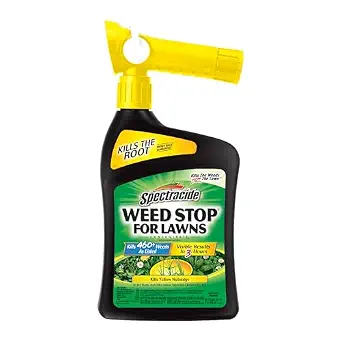 |
| Most Popular A crowd favorite that many people choose with confidence | Sedgehammer Plus Turf Herbicide Nutsedge Killer, 13.5 g Packet |  |
Roundup For Lawns Ready-to-Use Weed Killer with Extended Wand, 1.33 gal

| Unit Count | 170.24 Fluid Ounces |
|---|---|
| Item Form | Spray |
| Coverage | Lawn Weeds & Bugs |
| Active Ingredients | MCPA, Quinclorac, Dicamba, Sulfentrazone |
Roundup For Lawns Ready-to-Use is a spot‑treatment weed killer designed for homeowners who want fast, targeted control without harming established turf. The unit attaches to a garden hose and the extended wand lets you treat weeds without bending, making it convenient for spot applications across a lawn. The formula targets more than 250 weeds including crabgrass, dandelions, clover and yellow nutsedge and begins working on contact; the label states treated areas become rainproof in about three hours. Active ingredients include MCPA, quinclorac, dicamba and sulfentrazone, which together control a broad mix of broadleaf and grassy weeds down to the root. Practical benefits are ease of use, quick action and the ability to treat small patches without broadcasting chemicals over the whole yard. Limitations are that it is a ready‑to‑use hose product so it is best for spot treatment rather than large acreage, and users should follow safety and application directions carefully because it contains multiple herbicides that require precise use around desirable plants.
Best for: Homeowners who prioritize fast, effective lawn weed control and want a convenient spot‑treatment solution that leaves turf intact.
Less Ideal for: People managing very large lawns who need broadcast or tank-mixed solutions or those seeking an organic or non-chemical approach.
- Ready-to-use hose attachment with extended wand for easy spot treatment without bending
- Formulated to control over 250 lawn weeds including hard-to-kill species like crabgrass and nutsedge
- Starts working on contact and is rainproof in about 3 hours for reliable short-term performance
- Combination of active ingredients addresses both broadleaf and grassy weeds for broad-spectrum control
- Designed primarily for spot treatments so not efficient for treating very large lawns
- Contains multiple strong herbicides so careful application is required to avoid damage to nearby plants
Verdict: Choose this ready-to-use, extended-wand weed killer when you want fast, targeted elimination of tough lawn weeds without harming the turf.
Nufarm Change Up Premium Selective Herbicide, 32 oz

| Item Form | Liquid |
|---|---|
| Coverage | 1000 square feet |
| Active Ingredients | MCPA, fluroxypyr, dicamba |
| Unit Count | 32 Ounce |
Nufarm Change Up is a concentrated liquid selective herbicide designed for turf managers and homeowners who need strong control of broadleaf weeds without harming common turfgrasses. It combines MCPA, fluroxypyr and dicamba to deliver fast knockdown on more than 200 species, including dandelion, plantain, oxalis and thistles. The product is mixed and applied to lawns at labeled rates to treat up to about 1,000 square feet per bottle's coverage indication, and it is labeled for both cool- and warm-season grasses so it fits a wide range of lawns. Practical benefits include broad spectrum efficacy, relatively quick visual control, and formulation that avoids 2,4-D for properties sensitive to that ingredient. Important limitations are that it is a chemical treatment requiring careful rate calculation and following label precautions, and it targets broadleaf weeds so grassy weed control will require different products or cultural practices. Users should expect to follow safety and application guidelines closely to avoid off-target damage.
Best for: Buyers who prioritize powerful, fast broadleaf weed control for maintained lawns and want a single selective product that works across common turf types.
Less Ideal for: People seeking organic or nonchemical weed control, or those whose main problem is grassy weeds rather than broadleaf species.
- Controls over 200 broadleaf weed species including hard-to-kill varieties
- Labeled for both cool- and warm-season turfgrasses for wide turf compatibility
- Contains a blend of three active ingredients for faster and more complete control
- Coverage listed to treat about 1,000 square feet from the unit volume
- Not formulated to control grassy weeds so additional products or methods are needed
Verdict: Choose Nufarm Change Up when you need a fast, turf-safe selective herbicide that reliably knocks out a wide range of broadleaf weeds across cool- and warm-season lawns.
Ortho WeedClear Weed Killer for Lawns Concentrate, 32 fl. oz.

| Unit Count | 32 Fluid Ounces |
|---|---|
| Coverage | 16000 square_feet |
| Item Form | Spray |
| Active Ingredients | Herbicide |
Ortho WeedClear Concentrate is a ready-to-dilute herbicide intended for treating broadleaf weeds in lawns. You mix the concentrate with water per the label and apply with a tank sprayer or an Ortho hose-end applicator to actively growing weeds in spring or fall. The formula claims fast visible results in hours, becomes rainproof about an hour after drying, and covers up to 16,000 square feet from a 32 fl. oz. bottle when diluted correctly. Notable features include labeled compatibility with many common lawn grasses and a claim to kill more than 250 listed weeds down to the root, including dandelions and clover. Practical benefits are wide coverage per bottle, quick action that reduces repeat spot treatments, and straightforward dilution instructions for common sprayers. Important limitations are that it must be applied only to the grasses listed on the label to avoid damage and users must keep people and pets off the treated area until the spray dries and follow safety precautions. Results depend on proper mixing, application timing, and treating actively growing weeds.
Best for: Homeowners who want a versatile, fast-acting weed control solution for common lawn grasses and prefer a concentrate for treating medium to large lawns.
Less Ideal for: People with small ornamental lawns planted with unlisted grass varieties or those who need a nonchemical or pet-safe alternative should consider other options.
- Concentrated formula treats up to 16,000 sq. ft. when diluted per directions
- Targets over 250 listed broadleaf weeds and claims to kill to the root
- Rainproof within one hour after the spray dries, reducing wash-off risk
- Compatible with a wide range of common lawn grasses when label directions are followed
- Only safe for grasses listed on the label so misuse can damage nonlisted turf
- Requires correct dilution and application equipment for effective coverage
Verdict: A concentrated, fast-acting lawn weed killer that treats large areas and controls many common broadleaf weeds while being safe for listed turf when used as directed.
Spectracide Weed Stop for Lawns Concentrate, 32 oz Ready-to-Spray

| Coverage | 8,000 square feet |
|---|---|
| Liquid Volume | 32 fluid ounces |
| Item Form | Liquid |
| Active Ingredients | 2,4-D, Mecoprop-P, Dicamba, Sulfentrazone |
Spectracide Weed Stop for Lawns is a hose-attach ready-to-spray concentrate designed to control broadleaf weeds across common turf types. It kills by contact and down to the root, listing over 460 weeds such as clover, dandelion and chickweed, and promises visible browning in around three hours. The QuickFlip sprayer makes treatment fast for larger yards and the formula is labeled for use on bluegrass, fescue, Bermuda and perennial rye, though you should avoid zoysiagrass coming out of dormancy and not spray above 90°F. Practical benefits include quick application without mixing and one-hour rainproofing so treatments are less weather-dependent. Important limitations are temperature restrictions for safe use, the need to keep people and pets off the lawn until dry, and the usual reseeding wait time of three to four weeks. For homeowners focused on routine clover control, this product offers a straightforward, time-saving option, but follow label directions closely to protect desirable turf and nearby plants.
Best for: Homeowners who want an inexpensive, no-mix solution to knock back clover and other broadleaf weeds quickly across a typical lawn and value fast application.
Less Ideal for: Gardens that need constant reseeding, very young lawns or yards with delicate ornamentals close to treatment areas should consider more targeted options.
- Ready-to-spray QuickFlip hose attachment speeds up application for medium to large lawns
- Kills broadleaf weeds including clover, dandelion and chickweed with visible results in about three hours
- Rainproof in one hour which reduces the chance of losing treatment to light rain
- Works on a variety of common turf types when used as directed
- Should not be applied when daytime temperatures exceed 90°F which limits use in hot weather
- Requires waiting 3–4 weeks before reseeding treated areas
Verdict: A convenient ready-to-spray concentrate that quickly controls clover and other broadleaf weeds for budget-minded homeowners who want fast, low-effort treatments.
Sedgehammer Plus Turf Herbicide Nutsedge Killer, 13.5 g Packet

| Item Form | Powder |
|---|---|
| Coverage | 1000 sq ft per packet |
| Liquid Volume | 1 gallons per packet |
| Active Ingredients | Herbicide |
Sedgehammer Plus is a selective post-emergent herbicide sold as pre-measured 13.5 gram packets that you pour into one gallon of water and spray over active weeds. It is designed specifically to reach nutsedge tubers and nutlets as well as green kyllinga and a range of other broadleaf and sedge weeds, with visible yellowing in 10 to 14 days and full control in a few weeks. Each packet includes a built-in non-ionic surfactant so no extra additive is required, and one packet treats about 1,000 square feet. The product is intended for use on established warm- and cool-season turfgrasses when applied according to directions; you should avoid mowing for 48 hours and not spray if rain is expected within four hours. Practical benefits include targeted control of persistent sedges without harming most common turfgrasses and simple, no-measure mixing. Important limitations are that treated mix degrades within 24 hours so you must spray immediately, repeat treatments may be needed for heavy infestations, and personal protective equipment and pet precautions are required during application.
Best for: Homeowners who want a selective, proven solution to kill nutsedge and similar lawn weeds while preserving common turfgrasses and who prefer a product with clear usage instructions and visible results backed by many user reviews.
Less Ideal for: People needing an all-purpose weed-and-grass herbicide for non-turf areas or users who want a ready-to-use spray rather than mixing packets should look elsewhere.
- Targets nutsedge tubers and nutlets for deeper, longer-lasting control
- Pre-measured packet with built-in surfactant for easy one-gallon mixing
- Selective formulation safe on many established turfgrasses when used as directed
- One packet treats approximately 1,000 square feet, simplifying coverage planning
- Mixed solution degrades within 24 hours so it must be applied immediately after mixing
- May require repeat applications for heavy or recurring infestations
Verdict: Choose Sedgehammer Plus when you need a targeted, easy-to-mix treatment that effectively controls nutsedge without harming established turf.
Choosing the Right Weed Killer Not Grass Killer: Key Factors to Consider
Selectivity and Turf Compatibility
Selectivity determines whether a product targets weeds while sparing turf species. A selective herbicide is formulated to exploit physiological differences between common lawn grasses and broadleaf weeds, so it kills unwanted plants but leaves desirable grass intact.
When evaluating selectivity, check that the active ingredients are labeled for the specific turfgrass you have. Warm-season and cool-season grasses can react differently to the same chemistry. Using a product not rated for your grass type increases the risk of brown spots or thinning.
Application Method and Accuracy
How you apply a weed treatment matters as much as which treatment you choose. Spot-spray formulations or ready-to-use trigger-sprayers let you target individual weeds and greatly reduce the chance of contacting turf. Hose-end sprayers and concentrates can cover larger areas but require careful calibration to avoid over-application.
Pay attention to droplet size, nozzle type, and wind conditions. Small droplets drift more easily and can damage adjacent plants or turf. For precision, use a low-pressure, coarse-spray setting and apply on calm days.
Timing and Environmental Conditions
Weed control effectiveness depends on plant growth stage and environmental factors. Many selective herbicides work best when weeds are actively growing and not stressed by drought or extreme heat. Early-season application often controls young weeds more completely than treating mature plants.
Soil moisture and recent mowing also affect uptake. Follow label guidance on mowing intervals before and after application and avoid treating when rain is expected within the window specified on the product label to prevent wash-off and turf injury.
Residual Activity and Re-treatment Needs
Some products have residual activity in the soil that controls new seedlings for a period, while others act only on the foliage and require follow-up applications to catch late germinants. Residual herbicides can reduce future weed flushes but may restrict overseeding or lawn renovation for a time.
Understand whether a product gives immediate knockdown only or provides lasting control. If you plan to overseed or repair turf soon, choose a product with little to no residual soil activity or observe the recommended waiting period.
Safety, Handling, and Environmental Considerations
Safe handling protects you, pets, and beneficial organisms in the yard. Look for clear personal protective equipment instructions and directions to minimize exposure to non-target plants. Consider formulations with lower volatility to reduce off-target movement.
Also consider runoff risk near water features, and follow label restrictions for use near edible gardens or water. Proper storage, mixing, and disposal instructions on the label reduce accidental contamination and keep the yard ecosystem healthier.
Label Clarity and Lawn Species Guidance
Labels should list which grass species are compatible and include detailed application rates, timing windows, and restrictions. A clear label reduces guesswork and lowers the chance of turf injury from misapplication.
Products that provide examples of common weeds controlled and recommended application scenarios make it easier to match a product to your lawn problem. If label language is vague, the risk of unintended turf damage increases.
When Spot Treatment Beats Blanket Application
Spot-treating individual weeds keeps the bulk of the turf undisturbed and reduces chemical use. For isolated dandelions, clover patches, or plantain, a targeted approach using a wand or trigger sprayer puts the herbicide where it is needed without exposing the rest of the lawn.
Reserve broadcast or blanket applications for situations with heavy, widespread infestations where selectivity is still maintained. Otherwise, doing spot treatments in early season and monitoring for new growth reduces total chemical input and lowers the chance of turf stress.
- Use spot treatment for few isolated weeds
- Broadcast when infestation is widespread and product is turf-safe
- Monitor treated spots and reapply only if weeds regrow
Managing Lawn Care Around Herbicide Use
Coordinate mowing, irrigation, and fertilization with timing of herbicide applications. Avoid mowing shortly before treatment unless label guidance allows it, because a fresh flush of regrowth improves herbicide uptake. Similarly, avoid heavy fertilization immediately after some herbicide treatments as vigorous grass growth can mask damage or complicate recovery.
After treatment, maintain normal lawn care that supports recovery. Water according to label instructions and keep foot traffic off treated areas for the interval recommended to prevent tracking and uneven results.
- Check label for mowing and watering windows
- Allow treated weeds time to yellow and die before removing
- Keep foot traffic and play off treated areas briefly
Overseeding and Renovation Considerations
If you plan to overseed or renovate turf, timing around herbicide use is critical. Residual products can inhibit seedling establishment, so select a treatment with an appropriate waiting period or schedule renovation well after the herbicide's restricted window. For spot-treated areas, cleaning up dead weed material before seeding improves seed-to-soil contact and germination.
When renovating, consider mechanical methods like dethatching and aeration in combination with selective weed control to give new grass the best chance to establish. Read the product label for specific intervals between treatment and seeding.
- Delay seeding until label-specified waiting period ends
- Use mechanical prep to improve seed contact after herbicide use
- Choose low-residual options if overseeding soon
Dealing with Common Lawn Weeds Practically
Identify whether weeds are broadleaf, grassy, or sedge. Many selective herbicides target broadleaf weeds and will not control grassy weeds or sedges. For grassy intruders or sedges, different chemistries or cultural controls are usually required.
Hand-pulling, improving turf density through proper fertility and irrigation, and spot applications are complementary tactics. Combining cultural care with targeted treatments reduces reliance on repeat chemical applications.
- Match herbicide chemistry to weed type
- Combine cultural practices with selective treatments
- Reassess and re-treat only persistent problem areas
Safe Use Around Children, Pets, and Edible Zones
Consider the labeled re-entry and pet-access intervals for any treatment you use. Granular products and localized spot sprays often allow shorter wait times before normal activity resumes, but always follow label guidance to reduce exposure risks.
If edible gardens are nearby, observe buffer distances and do not apply products that list restrictions for proximity to food crops. Use physical barriers or apply treatments on calm days to minimize drift into sensitive areas.
- Follow re-entry and pet restrictions on the label
- Use physical barriers when treating near edible plants
- Apply on calm days to reduce drift
How We Chose the Best Weed Killer Not Grass Killer
We prioritized products that specifically aim to remove weeds while minimizing damage to desirable turf. Selection centered on demonstrated selectivity toward broadleaf weeds or targeted spot treatments that do not rely on nonselective herbicides. We applied editorial filters for formulation type, labeled turf compatibility, and application method to reflect common homeowner and lawn-care scenarios. Evaluation criteria included chemical selectivity and turf safety, accuracy and ease of application, residual activity and re-treatment needs, and label clarity for lawn use. We also considered coverage efficiency and suitability for common lawn species. Exclusions included non-lawn formulations, products labeled for total vegetation removal only, and treatments intended solely for agricultural or industrial use. The result is a list focused on practical lawn treatments that balance weed control with preserving grass health.
FAQ
Will a selective weed killer always protect my grass?
Not always. Selectivity depends on the active ingredient and whether it is labeled for your turf species. Misapplication, treating under stress conditions, or using a product not rated for your grass can still cause damage.
How soon can I mow after applying a weed treatment?
It depends on the product. Many labels recommend waiting a few days to a week to allow the herbicide to translocate. Check the specific product instructions for recommended mowing intervals.
Can I overseed my lawn shortly after using a weed killer?
That depends on residual activity. Foliar-only products may allow quicker overseeding, while residual herbicides often require waiting weeks or months. Follow label guidance to avoid inhibiting seed germination.
Is spot-spraying safer than a broadcast application?
Spot-spraying reduces overall chemical use and limits turf exposure, which often lowers the risk of non-target damage. However, spot treatments require accurate application to be effective and may need repeat visits to catch new weeds.
How do I choose a treatment for grassy weeds versus broadleaf weeds?
Grassy weeds often need a different control approach than broadleaf weeds. Identify the weed type first and select a product or cultural strategy labeled specifically for that category. In many cases, improving lawn vigor reduces grassy weed pressure.
What weather conditions are best for applying a weed killer that won't harm grass?
Apply on calm, dry days when weeds are actively growing and there is no rain expected for the interval specified on the label. Avoid applications during extreme heat or drought stress to reduce the chance of turf injury.
Final Verdict
Focus on matching product selectivity to your turf species and using application methods that minimize contact with desirable grass. Prioritize clear label guidance, proper timing, and targeted application to balance effective weed control with lawn health. With careful selection and sensible turf management, you can reduce weeds while keeping the grass green and intact.
