

Note: This article contains affiliate links. If you click on these links and make a purchase, I may earn a small commission at no extra cost to you. This helps support my research and content. Read my full affiliate disclosure here.
Finding the right planter for African violets matters more than many gardeners expect. These compact houseplants have shallow roots and specific moisture needs, so the wrong pot can lead to root rot or poor flowering. In this guide we shortlisted the top planters built for African violets and evaluated them against real gardener concerns like drainage control, pot size, and material breathability. Below you will find choices suited to windowsills, shelves, and small tabletop displays plus clear notes on why each option works. The selections are based on practical factors you can check before buying, and the evaluation criteria are summarized to help you pick the right pot for your growing situation.
Top Picks at a Glance
| Best Overall The best all-around choice for most situations | Thriving Thicket 6" Ceramic Self-Watering African Violet Pot (1 Pack) |  |
| Best Quality Built to a higher standard if you want something more solid | D'vine Dev 2-Pack 6" Glazed Ceramic Planter Pots with Saucers |  |
| Best Value The sweet spot between price and what you get | LITUDISO 6-inch Ceramic Self-Watering African Violet Pot |  |
| Best Budget The cheapest option that still gets the job done reliably | Melphoe Self-Watering Planters 2‑Pack (Clear Reservoir) |  |
| Highest Rated A top-rated pick with lots of positive feedback | Sanmudecor Self-Watering Ceramic Planter for African Violets, 7-inch |  |
| Most Popular A crowd favorite that many people choose with confidence | Vanavazon 6 Inch Self-Watering Plant Pots, 3-Pack |  |
| Best Seller A high-volume bestseller chosen again and again | Planterhoma 6.7" Self-Watering Plant Pots, 3-Pack |  |
Thriving Thicket 6" Ceramic Self-Watering African Violet Pot (1 Pack)

| Capacity | 0.47 liters |
|---|---|
| Number of Levels | 2 |
| Material Type | Ceramic |
| Indoor Outdoor Usage | Indoor, Outdoor |
This ceramic self-watering pot is built specifically for African violets and uses an inner pot plus an outer reservoir to deliver steady moisture without frequent top watering. You plant into the inner pot filled with airy violet mix, then add water to the outer chamber to the marked fill line that matches the 7, 14, or 21 day levels. The result is bottom-watering that keeps fuzzy leaves drier and reduces overwatering mistakes, which is handy for busy owners or short trips. The kiln-fired painted ceramic looks like home decor rather than a gardening gadget and feels sturdy. Practical limits include the single pot size and modest 0.47 liter reservoir, so very thirsty plants or larger groupings will need more frequent refills or multiple pots. Also the heavier ceramic is durable but less portable than plastic alternatives. For growers who want tidy, low-effort care for individual African violets, this pot simplifies watering and presents well on shelves or windowsills.
Best for: Buyers who want a low-effort, attractive pot tuned to African violets and prefer a decorative ceramic container that reduces watering mistakes during busy weeks or short travel.
Less Ideal for: People who need larger or multiple-plant containers, frequent repositioning, or the lightest portable pots should look elsewhere.
- Self-watering reservoir with marked fill lines for 7, 14, or 21 day intervals
- Designed for bottom-watering to keep African violet leaves drier and reduce overwatering
- Kiln-fired ceramic construction with painted finish for a decorative, durable look
- Compact 6-inch footprint fits windowsills, desks, and small tabletop displays
- Single medium size with limited 0.47 liter capacity may require more frequent refills for larger plants
- Heavier ceramic material is less convenient to move compared with lightweight plastic pots
Verdict: A decorative, ceramic self-watering pot that makes reliable bottom-watering simple for single African violets.
D'vine Dev 2-Pack 6" Glazed Ceramic Planter Pots with Saucers
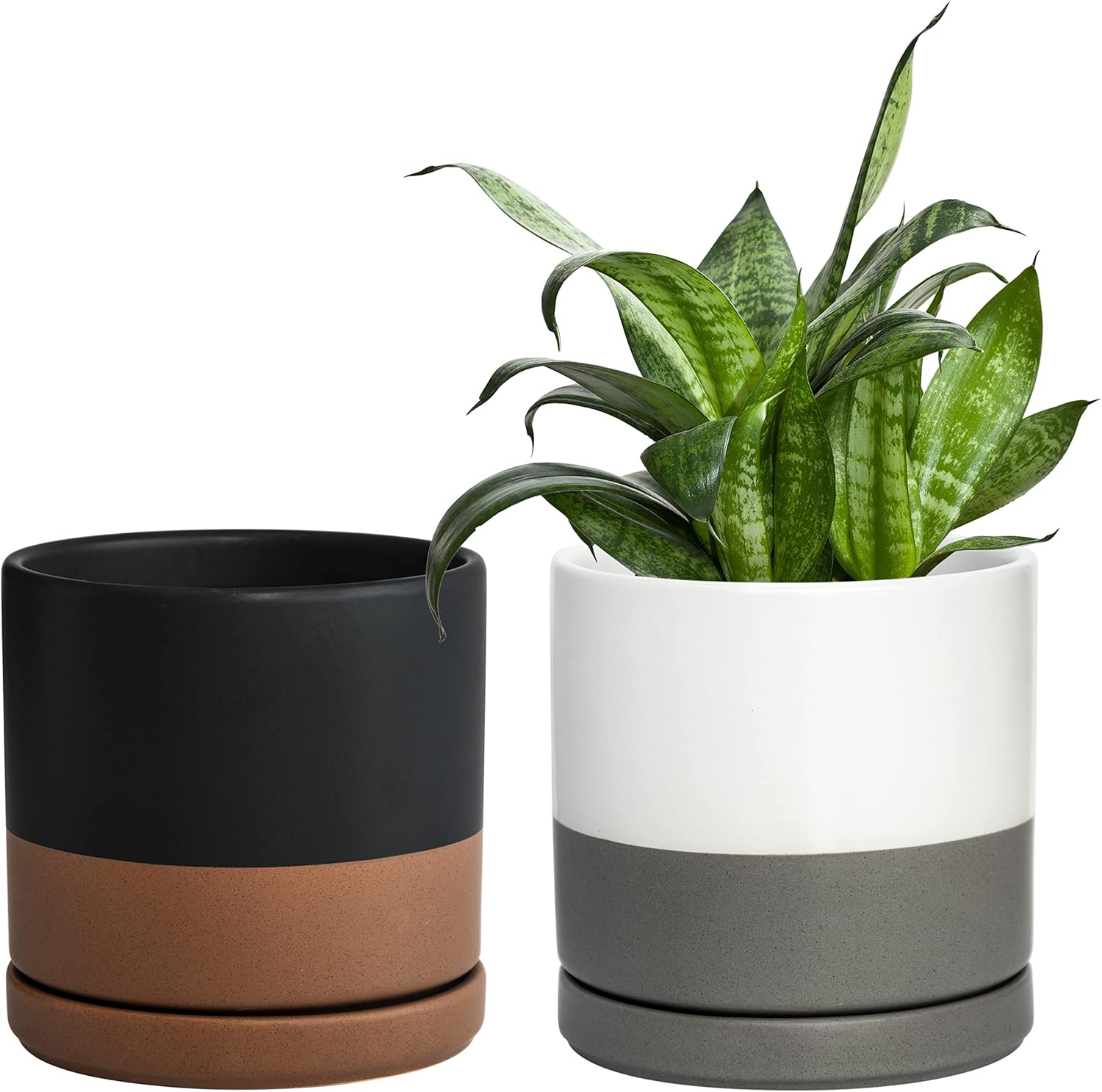
| Material Type | Ceramic |
|---|---|
| Finish Types | Glazed |
| Capacity | 0.5 gallons |
| Included Components | Saucer |
| Indoor Outdoor Usage | Indoor |
These D'vine Dev ceramic planters are a simple, functional set for small indoor plants. Each 6-inch glazed pot comes pre-drilled with a drainage hole and a detachable ceramic saucer, plus mesh nets and tabletop pads to keep soil in and surfaces protected. The high-temperature fired ceramic finish gives a modern look that resists staining and is easy to wipe clean. For typical use with African violets you would place a mesh net over the drain, use the provided filler if you want extra lift, and pot with a light, well-draining mix to avoid waterlogged roots. Practical benefits include finished saucers that neatly catch runoff and pads to prevent scratching delicate furniture. Limitations are that the 6-inch diameter and half-gallon capacity suit only small to medium rosetted varieties and will require more frequent watering and repotting as plants grow. These pots are strictly tabletop indoor planters and are not optimized for outdoor exposure or very large houseplants.
Best for: Buyers who prioritize reliable drainage and clean indoor presentation for small flowering houseplants and want ready-to-use pots that simplify watering care.
Less Ideal for: Growers who need deeper or larger containers for heavy feeders or those planning to keep plants outdoors for extended periods should choose larger or outdoor-rated planters instead.
- Pre-drilled drainage hole with matching ceramic saucers for tidy watering
- Includes mesh nets and tabletop pads to prevent soil loss and surface scratches
- Glazed high-temperature ceramic finish is durable and easy to clean
- Sold as a two-pack so you can group multiple violets or rotate plants
- 6-inch size limits root space and will need repotting sooner for vigorous plants
- Intended for indoor tabletop use only, not designed for outdoor conditions
Verdict: A practical two-pack of glazed ceramic tabletop planters that delivers built-in drainage and tidy saucers ideal for keeping African violets healthy and presentable.
LITUDISO 6-inch Ceramic Self-Watering African Violet Pot

| Material Type | Ceramic |
|---|---|
| Finish Types | Glazed |
| Plant or Animal Product Type | African Violet |
| Indoor Outdoor Usage | Indoor |
| Size | 6 inch |
This LITUDISO ceramic pot is a self-watering planter intended for African violets and other small, moisture-preferring houseplants. It uses an inner absorbent dolomite clay pot that sits above a glazed outer reservoir so water is stored and wicked up into the root zone over days to weeks. In practice that makes it useful for steady moisture delivery during travel or for owners who prefer less frequent watering. The glazed outer pot gives a clean, decorative look for tabletops and shelves while the inner support design aims to keep roots separated from standing water, helping aeration and reducing risk of rot. Because the planter is ceramic and relatively heavy, it stays stable but is not ideal for moving frequently. There is no explicit drainage hole in the outer vessel, so growers who rely on top-down watering or need fast drying should adapt their potting mix or use occasional flushes. For typical African violet care this pot simplifies watering and presents well in indoor spaces.
Best for: Buyers who want a low-maintenance, attractive planter for African violets or other small, moisture-loving indoor plants and prefer bottom-watering over daily attention.
Less Ideal for: Growers who need quick-draining containers, frequently repot or move plants, or who prefer direct top watering methods should consider alternatives.
- Self-watering reservoir that reduces watering frequency
- Absorbent inner pot promotes bottom-up moisture for root development
- Glazed ceramic outer pot provides a decorative, stable tabletop finish
- No visible top drainage so excess salts can build up without periodic flushing
- Ceramic construction adds weight and makes frequent repotting or transport more cumbersome
Verdict: A stylish self-watering ceramic pot that simplifies consistent moisture for African violets, ideal for owners who want attractive, low-maintenance indoor planters.
Melphoe Self-Watering Planters 2‑Pack (Clear Reservoir)

| Material | PET transparent resin |
|---|---|
| Pack quantity | 2 per set |
| Watering system | Wick-fed outer reservoir |
| Suitable plants | Succulents, African violets, small houseplants |
These clear self-watering planters use a double-layer design with an inner pot and a visible outer reservoir that feeds plants through a wick. You plant in the inner pot, fill the outer reservoir, and the cotton rope draws water up as the soil dries, which can supply moisture for about two weeks depending on conditions. The transparent PET resin makes it easy to monitor the water level and the smooth surface rinses clean quickly. Built-in drainage in the inner pot prevents standing water at the roots while still allowing the reservoir to hold reserve water, which helps reduce overwatering for sensitive plants like African violets. The plastic construction keeps the pots lightweight and shatter-resistant for indoor use or sunny windowsills. Limitations are that the wick and reservoir system require occasional cleaning and refilling, and the pots are better for small to medium plants rather than large specimens. For a budget-focused home grower these offer reliable, low-maintenance watering without complicated setup.
Best for: Good for budget-conscious indoor gardeners who want a low-effort way to keep African violets and other small houseplants evenly moist without daily watering.
Less Ideal for: Not ideal for growers who need large planters or those who prefer ceramic or decorative finishes for display-only pots.
- Visible outer reservoir makes it easy to see when to refill
- Wick system provides steady, passive watering for up to about two weeks
- Inner pot drainage reduces risk of root rot while reservoir stores reserve water
- Wick and reservoir will need periodic cleaning to avoid algae or clogging
- Best suited to small and medium plants rather than large specimens
Verdict: A practical, low-cost self-watering planter set that keeps African violets consistently moist with minimal daily attention.
Sanmudecor Self-Watering Ceramic Planter for African Violets, 7-inch

| Capacity | 16 fluid ounces |
|---|---|
| Material Type | Ceramic |
| Finish Types | Glazed Ceramic |
| Number of Pieces | 2 |
| Number of Levels | 2 |
This 7-inch Sanmudecor planter is a two-piece ceramic pot with a bottom reservoir that lets African violets draw water as needed. You use it by placing the inner pot with the plant over the lower reservoir, filling the reservoir occasionally, and letting capillary action supply moisture — a setup that reduces watering frequency and lowers the risk of overwatering. The glazed ceramic feels sturdy and gives a clean look suitable for windowsills, desks, or small tabletops. The scalloped rim adds a decorative touch without affecting function. Because it is made for small houseplants, the 16 fl oz reservoir and compact footprint are well suited to violets and other moisture-loving small plants, promoting downward root growth through bottom watering. Limitations are its modest capacity and size, which mean it is not appropriate for larger or fast-growing plants, and the ceramic construction adds weight compared with plastic options. You should also check drainage and wicking with your potting mix to ensure consistent uptake.
Best for: Buyers who want a low-maintenance, reliable pot for African violets that minimizes watering mistakes and presents well on windowsills or desks.
Less Ideal for: Gardeners who need large containers for fast-growing or outdoor plants or who prioritize ultra-light or unbreakable materials.
- Self-watering reservoir reduces watering frequency and helps prevent overwatering
- Glazed ceramic construction is stable and attractive for display
- Two-piece design makes filling the reservoir and plant access straightforward
- Designed specifically for African violets and other small indoor plants
- Reservoir capacity is small so it still requires regular refills for very warm or sunny spots
- Ceramic makes the pot heavier and more fragile than plastic alternatives
Verdict: Choose this planter if you want a dependable self-watering ceramic pot that keeps African violets consistently and safely hydrated with minimal fuss.
Vanavazon 6 Inch Self-Watering Plant Pots, 3-Pack

| Material Type | Plastic |
|---|---|
| Capacity | 1.7 liters |
| Included Components | 3 Self Watering Pots, Cotton Wick Ropes |
| Indoor Outdoor Usage | Indoor |
| Other Special Features of the Product | Self Watering |
These Vanavazon 6-inch self-watering pots are designed for indoor houseplants and use a double-layer reservoir plus cotton wick to feed water to soil slowly. Typical use is potting small to medium indoor plants like African violets, herbs, or succulents, placing the planter on a windowsill or tabletop and keeping the reservoir topped for about a week between refills. Notable features include the built-in bottom water chamber that helps prevent overwatering, included wick ropes that draw moisture up to the root zone, and durable, non-toxic plastic construction that resists temperature changes. Practical benefits are reduced watering frequency, lower risk of surface drying or root rot when used correctly, and a clean modern look that fits many interiors. Limitations are the 1.7 liter capacity and 6-inch size, which restricts use to smaller specimens, and the plastic material which is less breathable than terracotta so you still need to monitor moisture levels and drainage for moisture-sensitive plants.
Best for: Buyers who want a low-maintenance, reliable pot for small indoor plants like African violets and prefer proven features that reduce daily watering and help prevent overwatering.
Less Ideal for: Growers who need larger containers for mature specimens or those who prefer porous materials like terracotta for plants that require fast-drying soil.
- Self-watering double-layer reservoir reduces how often you need to water
- Cotton wick ropes provide steady capillary feeding to the root zone
- Durable, formaldehyde-free plastic that tolerates temperature changes
- Three-pack gives multiple pots for grouping or staging plants
- 6-inch size and 1.7 L capacity limit use to small plants
- Plastic construction is less breathable than clay which can retain more moisture
Verdict: A convenient three-pack of self-watering 6-inch pots that makes caring for African violets and other small indoor plants easier by reducing daily watering needs.
Planterhoma 6.7" Self-Watering Plant Pots, 3-Pack

| Material Type | Plastic |
|---|---|
| Indoor Outdoor Usage | Indoor |
| Number of Pieces | 3 |
| Included Components | Saucer |
| Item Type Name | Self Watering Plant Pot |
These Planterhoma self-watering pots are built for fuss-free indoor plant care, especially suited to African violets and other small houseplants. Each unit uses a double-layer design: a perforated inner pot with a cotton wick that draws water up from an outer reservoir, plus a visible water-level indicator so you can see when to refill. In practice that means the soil stays evenly moist without daily watering and plants can be left for up to about two weeks between fills. The lightweight painted plastic construction keeps them easy to move and the included saucers protect surfaces. The main limitations are that the pots are fairly small and the plastic finish can chip if handled roughly, so they are best for windowsills, desks, and compact displays rather than large specimens. If you want reliable, low-effort watering for African violets and similar plants, these simplify routine maintenance and reduce the risk of overwatering while adding a tidy, colorful touch to indoor spaces.
Best for: Buyers who want a low-maintenance, reliable pot for African violets or other small indoor plants and prefer visible indicators to avoid overwatering.
Less Ideal for: Growers who need larger containers for bigger plants or who prefer heavy decorative materials such as ceramic or terracotta.
- Self-watering double-layer design with wick keeps soil consistently moist without frequent watering
- Visible water-level indicator makes it easy to know when to refill the reservoir
- Lightweight painted plastic is easy to move and includes saucers to protect surfaces
- Comes as a three-pack, convenient for grouping multiple African violets or small plants
- 6.7-inch size limits use to small plants and tight spaces
- Painted plastic finish may chip with rough handling
Verdict: A simple, reliable self-watering three-pack that keeps African violets consistently moist with minimal effort.
Choosing the Right Planter for African Violets: Key Factors to Consider
Drainage and Water Management
African violets are prone to root rot if left in standing water, so how a planter handles drainage is critical. Look for pots with a bottom hole that can be paired with a properly fitting saucer, or that are designed for top-watering with quick surface drying. Some planters include an internal reservoir or a separate sub-irrigation insert; these can reduce overwatering risk if used correctly, but they also require disciplined maintenance to prevent stale water.
Drainage also affects how often you water and how you fertilize. Pots that wick moisture or have poor drainage will keep media wetter for longer, which changes feeding schedules and can concentrate salts in the root zone. Consider how you normally water and whether you want a planter that supports bottom-watering, top-watering, or reservoir methods.
Appropriate Pot Size and Root Volume
African violets have shallow, compact root systems and generally do best in relatively small containers. Choosing the right pot diameter and depth helps maintain a healthy root-to-soil ratio. A pot that is too large holds excess soil and moisture, increasing rot risk and delaying the plant's natural drying cycle between waterings. Conversely, a pot that is too small will restrict root growth and can stress the plant, reducing bloom production.
Think about the mature leaf spread of your violet and select a pot that gives the roots room to expand horizontally rather than deeply. Also consider whether you plan to let the plant grow for several seasons in the same pot or repot annually; that affects whether you should size up now or choose a snug container.
Pot Material and Breathability
The material of the planter changes how moisture and temperature behave around the roots. Unglazed clay and terracotta are porous and allow more evaporation through the pot walls, which can help prevent overwatering in humid environments. Glazed ceramics and plastics retain moisture longer and warm differently under indoor light, which can be useful in drier homes or cooler spots.
Also consider weight and fragility. Heavy ceramic pots resist tipping on a windowsill but can be cumbersome when repotting. Lightweight plastic is easy to move and often less expensive, but it may not provide the same breathability. Choose a material that suits your microclimate and how often you inspect and water your plants.
Accessibility for Routine Care
Ease of cleaning, access for inspection, and straightforward repotting should influence your planter choice. Pots with wide openings and shallow depths make it easier to deadhead spent blooms, inspect for pests, and refresh the top layer of soil. A removable inner liner or insert simplifies repotting and watering control, especially if you rotate plants or force-bloom for shows.
Consider whether the planter design lets you easily lift the plant for root checks and whether the rim and lip interfere with trimming leaves. Ergonomic design reduces the risk of damage during routine care and helps you maintain healthy plants with less hassle.
Stability and Saucer Compatibility
African violets often sit on windowsills or small shelves where accidental knocks and uneven surfaces are common. A stable base and a pot that pairs well with a saucer prevent spills and protect finishes. Lower, wider pots are generally more stable than tall, narrow ones, and a properly sized saucer collects excess water without leaving the plant sitting in runoff.
If you use a sub-irrigation tray system for multiple pots, check that your chosen planters fit those trays. Also consider feet or ridges on the base that raise the pot slightly to promote air circulation beneath and prevent water from remaining trapped under the pot.
Aesthetic Fit and Light Placement
Planter appearance matters because African violets are often displayed indoors where aesthetics influence placement. Choose pots that match the lighting location; light-toned pots reflect light and can keep the root zone cooler on bright windowsills, while dark pots absorb heat and may suit cooler rooms. Consider the pot finish relative to humidity; glossy glazes show water marks more readily than matte finishes.
Think about grouping: matching rim sizes and complementary heights make it easier to arrange multiple plants under grow lights or on a shelf. Aesthetic choices should support plant needs, not conflict with them-avoid overly deep decorative liners that hide drainage or trap humidity.
Best Planter Shapes for Windowsill Growing
Shallow, wide pots are often the best fit for windowsill African violets because they mirror the plant's natural root spread and keep the center of gravity low. Rounded or slightly tapered shapes promote even soil drying and make it easier to water without splashing the leaves.
Narrow deep pots can hold too much soil and retain moisture near the crown. If your light is limited, choose a shape that allows the foliage to spread horizontally toward the light source rather than forcing vertical growth.
- Shallow bowls or saucer-style pots for small plants
- Wide rim openings that permit easy grooming
- Low-profile feet or pedestals for airflow under the base
Top-Watering Vs Bottom-Watering Friendly Pots
Decide how you normally water. Top-watering is straightforward but risks wetting leaves, which many growers avoid because leaf spots can result. Bottom-watering or using a reservoir keeps foliage dry and encourages roots to take up moisture without wetting the crown.
Planters with detachable inner liners, or those that sit in a shallow saucer, allow both methods. If you prefer bottom-watering, ensure the pot can be lifted from its outer decorative container to refill a saucer or reservoir.
- Inner-liner pots that lift out for soaking
- Reservoir-compatible planters with overflow protection
Materials That Suit Indoor Microclimates
Match pot material to your home conditions. Porous terracotta suits humid rooms or growers who prefer to water frequently because it wicks excess moisture away. Glazed ceramic and plastic retain moisture and are useful if you forget to water occasionally or keep plants in a cooler room.
Also weigh breakage risk. Lightweight plastics are gentler when moving multiple pots; ceramics and terracotta look traditional but may chip or crack if handled roughly.
- Terracotta for breathability and a classic look
- Glazed ceramic for moisture retention and color options
- Durable plastic for lightweight handling and affordability
Design Features That Make Care Easier
Look for planters with features that reduce daily chores. Smooth rims that do not catch dead leaves, removable liners for quick repotting, and raised bases that keep air moving under the pot all make maintenance easier. Integrated saucers or recessed bases reduce spill risk and simplify watering routines.
Subtle design elements like a small lip for lifting or a drainage channel that prevents soil washout pay dividends over many waterings.
- Removable liners for quick swaps and cleaning
- Integrated saucers or recessed bases to catch runoff
- Wide mouths to make grooming and deadheading simple
Arranging Multiple Pots and Group Displays
If you keep several African violets, plan for consistent pot sizes and heights to make light distribution and watering uniform. Grouping similar pots also simplifies tray-based bottom-watering and humidity control. Consider trays or shelves that let you rotate plants for even light exposure.
Spacing matters: crowding increases humidity and disease risk, while spreading pots out helps air circulate and reduces leaf-to-leaf contact that can spread pests.
- Use matching diameters for even watering on shared trays
- Allow airflow between pots to reduce disease pressure
- Elevate some pots on small stands to create visual depth
How We Chose the Best Planter for African Violets
We focused on features that directly affect African violet health and flowering. Key evaluation criteria included drainage systems and water management, pot size and root volume, material and breathability, and ease of routine care. Drainage was prioritized because these plants need consistent but not waterlogged conditions; we assessed whether planters offered bottom holes, saucers, or sub-irrigation compatibility. Size and root zone shape were considered to ensure the container supports the shallow, compact root systems typical of African violets without excessive soil that keeps moisture too long. Material and finish were evaluated for how they affect evaporation and root temperature; breathable ceramics and unglazed clay behave differently from plastics. We also looked at how easy pots are to clean, move, and inspect during repotting or pest checks. Exclusions: extremely large containers, outdoor-only pots, and planters designed exclusively for mass-market mixed houseplants were left out because they do not match the specific cultural needs of African violets. The final list favors planters that help growers control moisture, support frequent blooming, and simplify everyday care.
FAQ
Do African violets need drainage holes in their pots?
Usually yes. Drainage holes help prevent standing water around the roots, which causes rot. If you use a decorative outer container without holes, make sure the inner pot drains freely and remove excess water from the outer vessel after watering.
How big should a planter be for a mature African violet?
Plan for a pot that matches the plant's leaf spread rather than its height. Most mature specimens do well in relatively small, shallow pots; oversized containers hold too much moisture and reduce bloom frequency. Repotting into a slightly larger diameter every couple of years is usually enough.
Is terracotta better than plastic for African violets?
It depends. Terracotta breathes and helps excess moisture evaporate, which suits humid homes or frequent watering. Plastic retains moisture longer and is lighter, which can be helpful in dry homes or for growers who want lower-maintenance pots. Both can work if you adjust watering accordingly.
Can I bottom-water African violets in decorative planters?
Often yes, but the inner pot must be removable or the planter must allow lifting for soaking. Bottom-watering is a good way to avoid wetting leaves, but you must ensure excess water is drained and not trapped in the decorative outer container.
How often should I repot African violets into fresh soil?
Typically every 12 to 24 months depending on growth and soil condition. Repot sooner if the soil becomes compacted, drainage slows, or the plant shows signs of reduced vigor. Shallow repotting into fresh medium often revitalizes flowering.
Final Verdict
Choose a planter that helps you manage moisture, fits the shallow root system, and makes routine care simple. Prioritize drainage and appropriate pot diameter over decorative depth, and match material to your home microclimate so you can control evaporation and temperature at the root zone. Balance stability and accessibility: a low, wide pot with a saucer or removable liner often offers the best combination of healthy roots and easy upkeep. Focus on the practical tradeoffs described here and you will be able to select a planter that keeps your African violets blooming reliably.
