

Note: This article contains affiliate links. If you click on these links and make a purchase, I may earn a small commission at no extra cost to you. This helps support my research and content. Read my full affiliate disclosure here.
Picking the right planter for strawberries changes how well those plants set fruit and how much time you spend on routine care. Whether you have a balcony, small patio, or a sunny corner of the yard, the planter you choose affects drainage, root room, ease of harvest, and how often you need to water. This guide shortlists seven top options for growing strawberries and explains the practical differences you will notice in the garden. We evaluate containers by root depth, drainage, material, and accessibility so you can match a planter to your space and goals.
Top Picks at a Glance
| Best Overall The best all-around choice for most situations | GreenStalk 5-Tier Vertical Garden Planter with Internal Self-Watering System |  |
| Best Quality Built to a higher standard if you want something more solid | Veradek Pure Series Tall Tapered Outdoor Planter with Removable Shelf (2-pack) |  |
| Best Value The sweet spot between price and what you get | COKIELE 5-Pack 5-Gallon Fabric Grow Bags with Handles (300G Nonwoven) |  |
| Best Budget The cheapest option that still gets the job done reliably | FEED GARDEN 5 Gallon Grow Bags, 4-Pack (300G Thickened Non-Woven Fabric) |  |
| Highest Rated A top-rated pick with lots of positive feedback | Roixeeds 6-Tier Stackable Vertical Garden Planter |  |
| Most Popular A crowd favorite that many people choose with confidence | VIVOSUN 5-Tier Stackable Vertical Planter |  |
| Best Seller A high-volume bestseller chosen again and again | Land Guard Galvanized Oval Raised Garden Bed Kit (4×2×1 ft) |  |
GreenStalk 5-Tier Vertical Garden Planter with Internal Self-Watering System

| Number of Levels | 5 |
|---|---|
| Capacity | 120 quarts |
| Material Type | BPA-Free Food Grade Polypropylene Plastic #5 |
| Other Special Features of the Product | Self Watering |
| Mounting Type | Floor Standing |
The GreenStalk 5-Tier Vertical Garden Planter is a soil-based, stackable planter that lets you grow multiple crops in a small footprint using a patented internal watering reservoir. Typical use is outdoor container gardening for strawberries, herbs, lettuces and compact vegetables; you assemble the tiers, fill each with potting mix, then fill the top reservoir to water all levels evenly. Notable features include BPA-free, UV-resistant plastic construction, a 5-tier layout that holds a substantial planting volume, and a self-watering system that reduces the need for daily hand watering. Practical benefits are efficient vertical use of space, consistent moisture distribution to lower tiers without over-saturating the top, and durable materials backed by a five-year crack/fade guarantee for outdoor exposure. Important limitations are that it is a soil-based system so it requires regular potting mix replenishment and does not support hydroponics or electricity-based automation, and its vertical design is better for shallow-rooted plants rather than large indeterminate tomatoes or heavy root crops without additional support.
Best for: Gardeners who prioritize reliable, low-maintenance production of strawberries and other small edibles in tight outdoor spaces and want consistent watering without daily fuss.
Less Ideal for: Growers seeking hydroponic setups, automated irrigation with timers, or those planning to grow very large, heavy root crops in the same planter.
- Patented internal reservoir waters all five tiers from the top for even moisture distribution
- Made from BPA-free, UV-resistant polypropylene with a five-year outdoor durability guarantee
- Compact vertical footprint maximizes planting area for small gardens, balconies, and patios
- Soil-based design works with regular potting mix—no special nutrients or power required
- Not suitable for hydroponic growing or automated, electricity-driven systems
- Better for shallow-rooted or compact plants; large, heavy-rooted crops may need extra support
Verdict: For small-space growers who want reliable, low-effort strawberry production, this 5-tier self-watering planter delivers consistent moisture and durable outdoor performance.
Veradek Pure Series Tall Tapered Outdoor Planter with Removable Shelf (2-pack)

| Capacity | 73.6 liters |
|---|---|
| Number of Pieces | 2 |
| Material Type | Polypropylene Plastic |
| Other Special Features | UV Resistant, Weather Resistant |
| Mounting Type | Floor Standing |
The Veradek Pure Series tall taper planters are designed to deliver durable, low-maintenance container planting for patios, entrances, and balconies. Made from molded polypropylene, the pots are lightweight yet impact resistant and treated for UV and weather exposure so they hold up through sun and colder conditions without cracking or heavy fading. Each set includes a removable insert shelf so you can either fill the body with soil for deep-rooted plantings or use the insert for shallower plant mixes and easier repotting; the insert also offers an optional drainage hole. At 30 inches tall these planters create height and presence for elevated displays of perennials, small shrubs, or dramatic succulents. The single-wall construction keeps them easy to move compared with heavy ceramic or metal alternatives but means they do not offer the insulating mass of heavier materials, so soil can warm and cool faster. For gardeners who prioritize robust, weatherproof planters that are simple to manage, these deliver strong real-world performance with a modern profile.
Best for: Gardeners who want durable, low-maintenance planters that create height and impact while remaining easy to move and manage, especially for patio, balcony, or entryway displays.
Less Ideal for: People seeking heavy, decorative materials with built-in insulation or those who prefer natural stone or ceramic aesthetics for formal garden designs.
- UV and weather resistant finish designed to resist fading and cracking
- Lightweight polypropylene construction makes placement and relocation easy
- Removable insert shelf gives flexibility for deep fills or contained inserts
- Tall 30 inch profile provides strong vertical presence for elevated plantings
- Single-wall plastic lacks the thermal mass of ceramic or stone, so root temperatures fluctuate more
- Not insulated; may need protection in extreme freeze-thaw conditions
Verdict: A weatherproof, lightweight pair of tall planters that deliver reliable, low-maintenance performance and strong vertical presence for outdoor container gardens.
COKIELE 5-Pack 5-Gallon Fabric Grow Bags with Handles (300G Nonwoven)

| Capacity | 5 gallons |
|---|---|
| Material Type | Nonwoven Fabric |
| Included Components | Fabric Pot |
| Mounting Type | Floor Standing |
| Indoor Outdoor Usage | Indoor, Outdoor |
These 5-gallon fabric grow bags are built for practical container gardening. Made from 300G thickened nonwoven fabric they offer breathable sides for faster drainage and air pruning so roots stop circling and develop a healthier, denser root mass. The bags come as a 5-pack and include widened, X-stitched handles and double-sewn seams so you can move filled pots around a patio or balcony without tearing. For strawberries they work well as shallow, wide containers that encourage lateral root growth and reduce waterlogging thanks to the built-in drainage and permeable fabric. Expect reusable performance for a couple of seasons with normal care, though they will eventually show wear at the seams if left outdoors year-round. Because these are fabric pots they hold less standing moisture than plastic and require slightly more frequent watering, which gardeners who monitor irrigation will find manageable. Simple to store when not in use, they are a practical, space-efficient option for optimizing strawberry yields in containers.
Best for: Gardeners who want a compact, efficient way to grow strawberries in containers and prioritize healthy root development and easy mobility.
Less Ideal for: People who prefer low-maintenance, long-lasting rigid planters or who cannot water frequently should consider plastic or ceramic alternatives.
- Breathable nonwoven fabric promotes air pruning and reduces root circling
- Reinforced X-stitched handles and double-sewn seams for easier lifting and relocation
- Built-in drainage and fast water release reduce risk of root rot
- Reusable for multiple seasons with proper care
- Shallow, wide shape suits shallow-rooted plants like strawberries
- Fabric requires more frequent watering than plastic pots
- Durability limited long-term if exposed continuously to sun and weather
Verdict: A practical, space-saving choice for container strawberry growers who want breathable, movable fabric pots that promote healthier roots.
FEED GARDEN 5 Gallon Grow Bags, 4-Pack (300G Thickened Non-Woven Fabric)

| Capacity | 5 gallons |
|---|---|
| Material Type | Nonwoven |
| Number of Pieces | 4 |
| Other Special Features of the Product | Breathable, Drainage Hole, Lightweight, Portable, Weather Resistant |
| Indoor Outdoor Usage | Indoor, Outdoor |
These FEED GARDEN 5 gallon grow bags are a practical choice for small-space vegetable and herb gardening. Made from 300 g/m² nonwoven fabric, the bags hold their shape when filled and let excess water and air move through the entire wall so roots are air-pruned rather than circling. Each set includes four bags with reinforced double-stitched webbing handles that are rated for heavy lift, which makes repositioning containers on a balcony or patio straightforward. Typical use is filling with potting mix for herbs, salad greens, strawberries and compact peppers; the 5 gallon capacity and roughly 10 inch depth suit shallow-rooted crops. Because fabric walls drain across the surface, you get fewer standing-water problems but should place a tray underneath for indoor use. The bags fold flat for offseason storage, saving space compared with rigid pots. Limitations are the shallow depth for big crops like tomatoes or potatoes and the fabric surface will eventually show wear after multiple seasons if left constantly exposed to sun and abrasion.
Best for: Gardeners who want a space-saving, reusable container for herbs, salad greens, strawberries and other shallow-rooted crops and who value easy mobility and breathable soil conditions.
Less Ideal for: Growers planning to raise large, deep-rooted vegetables or full-size tomatoes should choose larger capacity or deeper containers instead.
- Thicker 300 g/m² nonwoven fabric holds shape and resists tearing compared with thinner bags
- Fabric walls provide full-surface drainage and air-pruning to reduce root circling and root rot
- Double-stitched reinforced handles support moving filled bags around the garden
- Folds flat for compact offseason storage, ideal for small patios and apartments
- 10.2 inch depth is too shallow for full-size tomatoes, large potatoes, or other deep-rooted crops
Verdict: A durable, space-efficient 4-pack of 5 gallon fabric grow bags that improve root health and make portable container gardening easy.
Roixeeds 6-Tier Stackable Vertical Garden Planter
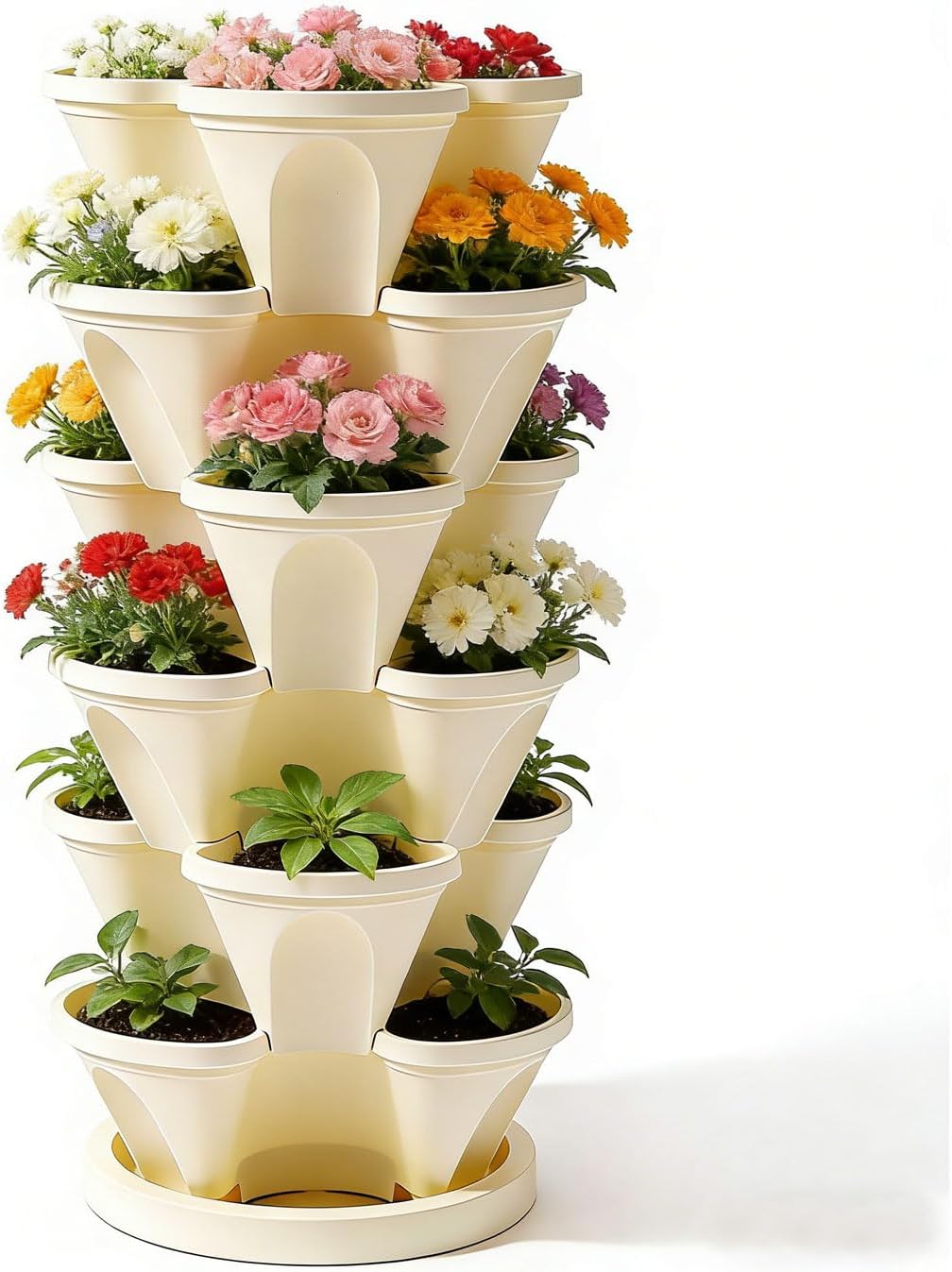
| Number of Levels | 6 |
|---|---|
| Material Type | Plastic |
| Indoor Outdoor Usage | Outdoor |
| Other Special Features | Adjustable Height, Stackable |
This Roixeeds 6-tier stackable vertical planter is a simple, no-tools solution for creating a compact strawberry or herb garden on a balcony, patio, or small yard. The tiers snap together with an interlocking design, so setup is fast and the unit is easy to move or reconfigure. Each level includes a built-in drainage path that channels excess water downward, helping prevent waterlogged roots and keeping moisture more consistent across tiers. Made of plastic, the planter is lightweight and simple to clean, and its vertical footprint lets you grow several plants in the space one pot would occupy. Important limitations are the modest planting volume per tier and the lightweight plastic construction, which can be less durable in very hot sun or heavy winds compared with thicker resin or ceramic alternatives. For reliability-minded gardeners this planter performs well for small fruits and herbs if you monitor watering and anchor or shelter it in exposed locations.
Best for: Gardeners who need a reliable, space-saving solution for growing strawberries or herbs on a balcony or small patio and prefer an easy-assembly, low-maintenance planter.
Less Ideal for: Those who need large single-plant containers or who require heavy-duty materials for permanent exposed installations should consider sturdier, larger alternatives.
- Stackable interlocking tiers for quick assembly and flexible configuration
- Built-in drainage system that directs excess water to lower layers
- Lightweight plastic makes it easy to move and clean
- Six planting levels maximize vertical growing space for strawberries and herbs
- Individual tier planting volume is limited so larger-rooted vegetables may be constrained
- Plastic construction may degrade faster than heavier materials under prolonged sun exposure
Verdict: Choose this planter when you want a dependable, easy-to-assemble vertical solution to grow multiple strawberries or herbs in a small outdoor space.
VIVOSUN 5-Tier Stackable Vertical Planter

| Capacity | 62 liters |
|---|---|
| Number of Levels | 5 |
| Mounting Type | Hanging, Tabletop, Wall Mount |
| Material Type | Plastic |
The VIVOSUN 5-tier stackable planter is a modular vertical pot system intended to maximize planting area in small spaces. Each tier stacks to create five planting pockets and the units can be linked or hung using the included hanger for balcony rail, wall, or tabletop placement. Made from thick PP plastic with a polished, fade-resistant finish, the planter includes drainage holes and a bottom saucer to prevent waterlogging and protect surfaces. For growing strawberries it lets you plant multiple crowns in a tight footprint while allowing runoff to move downward through the tiers and retain some moisture. Assembly is simple and the lightweight construction makes it easy to reposition, but the plastic build is not as sturdy as ceramic or metal and may flex under heavy loads. Capacity is sufficient for small fruiting plants but root depth is limited, so expect smaller yields than ground beds or deep containers. Overall it is a practical, space-saving option for container strawberry gardeners who prioritize convenience and vertical density over maximum harvest size.
Best for: Best for gardeners with limited balcony or patio space who want an easy, low-maintenance way to grow several strawberry plants or herbs vertically.
Less Ideal for: Not ideal for growers who need deep, high-yield containers or who prefer heavy-duty, long-lasting materials for permanent outdoor installations.
- Space-efficient five-tier design fits many plants in a small footprint
- Stackable and mountable for hanging, tabletop, or wall installation
- Made from thick PP plastic with fade-resistant finish for outdoor use
- Built-in drainage and bottom saucer reduce risk of waterlogging and protect surfaces
- Shallow planting pockets limit root space for larger or highly productive plants
- Plastic construction can flex and feels less durable than ceramic or metal alternatives
Verdict: Choose this planter when you want a compact, stackable system that makes growing multiple strawberry plants possible on a balcony or small patio.
Land Guard Galvanized Oval Raised Garden Bed Kit (4×2×1 ft)

| Material Type | Metal |
|---|---|
| Finish Types | Double-layer galvanized |
| Capacity | 7.14 cubic feet |
| Mounting Type | Floor Standing |
This Land Guard raised garden bed is a simple, durable option for planting vegetables, herbs, or mixed annuals in a compact outdoor space. The kit arrives as flat panels that assemble into an oval planter about 4 by 2 feet and 1 foot deep, and setup is straightforward so you can fill and plant in minutes. Its double-layer galvanized steel construction and wave-shaped panels are intended to resist corrosion and add rigidity, and the manufacturer states thicker panels at stress points to reduce deformation. An open base design lets excess water drain and helps avoid root rot if placed on soil or lawn. Practical benefits include low maintenance, a tidy planted border that keeps soil contained, and a metal finish that lasts longer than untreated steel. Limitations are the shallow depth for deep-rooted crops and the likelihood the metal will warm quickly in hot sun, which may require more frequent watering or shade management. It is best used as a portable, long-lasting planter for raised-bed style container gardening rather than a full replacement for deeper in-ground beds.
Best for: Gardeners who want a quick-to-assemble, durable raised planter to grow vegetables or herbs in small outdoor spaces and who prioritize evidence of longevity over decorative complexity.
Less Ideal for: Growers who need deep soil for large root crops, or those looking for insulated or fully enclosed beds to control soil temperature and moisture long-term.
- Galvanized double-layer steel resists corrosion for multi-season outdoor use
- Oval, interlocking panel design assembles quickly with included tools
- Open base allows natural drainage to reduce standing water and root rot
- Compact footprint fits small patios, balconies, and tight garden beds
- Only 12 inches deep which limits planting of larger, deep-rooted vegetables or shrubs
- Metal surface can heat up in full sun and increase watering needs
Verdict: A tough, easy-to-assemble galvanized oval raised bed that gives small-space gardeners a durable, low-maintenance container for vegetables and herbs.
Choosing the Right Planter for Strawberries: Key Factors to Consider
Soil Depth and Root Room
Strawberries have relatively shallow but spreading root systems and need a few inches of uncompacted soil to form healthy crowns and roots. A planter with at least 6 to 8 inches of usable soil depth will support most everbearing and day-neutral varieties in containers. Deeper pots allow larger root volumes, which helps with moisture buffering between waterings and supports stronger fruit set.
Insufficient depth forces roots to become cramped, increasing heat stress and reducing yields. Also consider the planter's shape: wide, shallow trays let you fit more plants but need more frequent watering than taller containers.
Drainage and Water Management
Proper drainage prevents waterlogged soil and crown rot, common problems with strawberries. Look for visible drain holes, raised feet, or designs that separate a water reservoir from the root zone. Good drainage paired with free-draining potting mix helps keep roots oxygenated during wet periods.
If you expect to travel or live in a hot, dry climate, consider planters with bigger reservoirs or self-watering features that reduce daily watering frequency. However, self-watering systems must be monitored for salt buildup and root crowding over time.
Material and Weather Resistance
Planter material affects heat retention, durability, and mobility. Lightweight plastics and resin cope well with freezing and frequent moves but can degrade under long sun exposure unless UV-stabilized. Terracotta breathes well and keeps soil cooler but may crack in freeze-thaw cycles and is heavier to move.
Metal containers can be long-lived but may heat the root zone rapidly in full sun unless lined. Consider how the material ages outdoors where you garden and whether you will need to bring containers inside during extreme weather.
Access for Harvesting and Maintenance
How easy it is to pick fruit, deadhead blossoms, and check crowns matters for daily care-especially if you have limited mobility or tight planting areas. Elevated planters, hanging systems, or wide rims can reduce bending and make harvest faster and cleaner. Conversely, very deep or narrow containers may make reaching the center plants awkward.
Also factor in how the planter opens or cleans for replanting. Planters that allow top-up of fresh mix or that have removable liners simplify yearly refreshes and pest checks.
Planting Density and Airflow
Strawberries spread and need some airflow to reduce disease pressure. The planter surface area determines how many crowns you can plant without overcrowding. Wider containers let you space crowns to balance yield and airflow; vertical towers or multi-pocket planters save floor space but can increase dampness between pockets.
Spacing also affects fertilization and moisture competition. Choose a planter that lets you manage crown spacing to match your chosen strawberry variety and expected harvest size.
Portability and Seasonal Use
How often you plan to move containers influences material choice, size, and whether integrated handles or wheels are useful. Portable planters let you follow the sun, protect plants from late frosts, or move crops indoors for overwintering in colder climates. Heavy, permanent planters may be more stable in wind but limit flexibility.
Consider whether you will store empty containers between seasons and whether the planter's weight when filled fits your practical ability to shift it when needed.
Best Planter Types for Different Spaces
Balconies, patios, and gardens each favor different planter shapes. Wide, shallow boxes work well on narrow balconies because they allow multiple crowns to grow side by side without a deep footprint. Taller, single-plant pots suit a porch or bench where individual specimens get attention.
Vertical pocket planters and stacked towers maximize plant count in small footprints but need more vigilance on watering and airflow. Elevated troughs reduce bending and are useful for gardeners who want easier harvest access while still having room for multiple crown plants.
- Shallow troughs: best for multiple crowns in limited depth.
- Tall pots: good for single plants and improved root insulation.
- Vertical pockets: maximize plant count but increase irrigation needs.
- Elevated planters: improve ergonomics and pest control.
Soil Mix and Fertility Tips for Container Strawberries
Container-grown strawberries need a light, well-draining potting mix with good organic content. A mix combining compost, peat-free alternatives or coconut coir, and coarse perlite or pumice gives structure and moisture retention while keeping drainage open. Avoid garden soil alone; it compacts and holds too much water in a container.
Fertilize regularly with a balanced, water-soluble feed on a reduced schedule after peak flowering to avoid excessive leaf growth at the expense of fruit. Top-dress with compost or slow-release granular fertilizer in spring when renewing the crop.
- Use a free-draining mix with organic matter.
- Feed lightly and regularly during the growing season.
- Refresh the top few inches of mix annually to reduce disease carryover.
Watering Strategies to Reduce Disease and Stress
Consistent moisture is crucial for fruit quality but overwatering invites root and crown disease. Water at the soil level and avoid wetting foliage when possible. Mulch the surface with straw or an approved mulch to protect fruit from soil splash and to moderate moisture loss.
If using self-watering planters, monitor reservoir levels and flush the soil periodically to prevent salt buildup. In hot weather, check containers daily because smaller pots can dry out quickly.
- Water early in the day to let foliage dry.
- Use drip or watering wand aimed at the soil surface.
- Mulch to protect berries and conserve moisture.
Pest and Disease Management in Containers
Containers change the pest landscape by elevating plants away from some ground pests while sometimes concentrating others. Slugs and snails can still reach low planters, and aphids or spider mites may build up on crowded foliage. Regular inspection and prompt removal of damaged leaves reduce spread.
Rotate or replace potting mix every one to two seasons to limit soil-borne pathogens. Good airflow and proper spacing are among the easiest preventive measures you can control at the container level.
- Inspect foliage weekly for pests.
- Replace or disinfect old soil between crops.
- Space crowns to improve airflow and reduce disease risk.
Design Features That Simplify Seasonal Care
Look for planters with removable liners, integrated reservoirs, or accessible planting panels to simplify planting, overwintering, and soil refresh. Drain plugs and feet raise allow easier water egress and reduce standing moisture under the pot. Handles, wheels, or lighter materials make seasonal repositioning practical.
Planters that let you lift a liner or open a compartment make it easier to renew the soil each season without disturbing roots, which is helpful for maintaining healthy yields without full replanting every year.
- Removable liners speed soil changes.
- Drain plugs make flushing and winter draining simpler.
- Integrated handles or wheels aid seasonal moves.
How We Chose the Best Planter for Strawberries
We focused on features that matter in real strawberry production rather than brand buzz. Our selection filtered for planters that offer an appropriate soil depth for strawberry crowns and roots, reliable drainage to prevent root rot, materials suited to outdoor exposure, and designs that simplify planting and harvesting. We also prioritized containers with enough surface area for multiple plants when space allows and considered portability for seasonal placement or frost protection. Excluded were generic pots that do not meet minimum soil depth or lack visible drainage and novelty planters with impractical planting access. We examined container material longevity, drainage design, built-in watering or self-watering capability, and how the shape affects planting density and airflow. Finally, ergonomics for harvesting and maintenance, such as height and edge design, were part of the decision framework.
FAQ
How many strawberry plants fit in a typical planter?
It depends on the planter surface area and variety. In a wide trough you can space crowns 6 to 8 inches apart, allowing multiple plants. Single pots usually hold one crown comfortably. Crowding reduces airflow and increases disease risk.
Is a self-watering planter better for strawberries?
Self-watering planters can help maintain consistent moisture and reduce daily watering, especially in hot weather. They require monitoring for salt buildup and occasional flushing of the soil to avoid nutrient imbalance.
What is the best soil mix for container strawberries?
A light mix with good organic content and added drainage components works best. Combine compost or well-rotted organic matter with coconut coir or peat-free alternatives and perlite or coarse sand to balance moisture retention and drainage.
Can I reuse potting mix from last season?
You can reuse part of the mix if it was healthy, but it is wise to refresh or replace the top few inches yearly and fully replace the mix every one to two seasons to reduce disease and nutrient depletion.
Should I protect container strawberries from frost?
Yes. Containers expose roots to colder temperatures than in-ground planting. Move portable planters to a sheltered spot or insulate them during late frosts to protect crowns and roots.
Final Verdict
Choose a planter for strawberries by prioritizing drainage, sufficient soil depth, and a material suited to your climate and handling needs. Surface area and planting layout determine how many crowns you can grow without crowding, while accessibility features reduce daily work and make harvest easier. Balance portability against stability and expect to refresh potting mix regularly. By focusing on these tradeoffs you can pick a container that fits your space and produces healthy, flavorful fruit year after year.
