

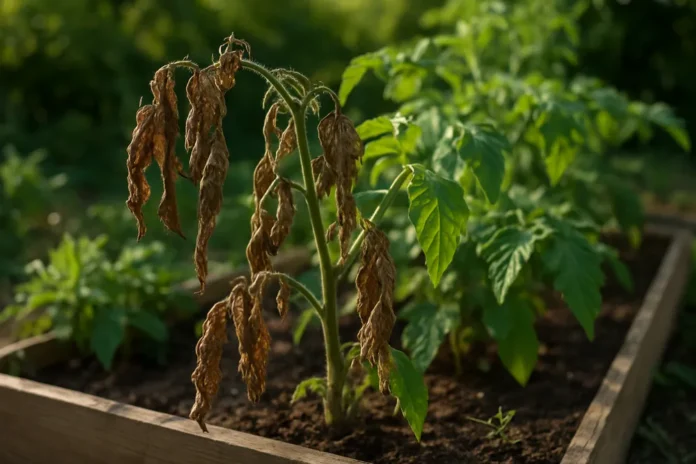
Tomato leaves usually shrivel because the plant is under stress from uneven watering, heat, pests, disease, root injury, or chemical exposure. The exact cause often shows up in how fast the leaves curl, dry, twist, or discolor.
When shriveling tomato leaves show up in the garden, it usually means the plant is reacting to stress rather than a single simple problem. Sometimes the leaves curl inward and feel dry. In other cases they wrinkle, twist, droop, or become thin and papery while the rest of the plant slows down.
The most common reasons include inconsistent watering, high heat, transplant shock, root disturbance, pests, disease, and accidental herbicide exposure. Tomato plants are especially sensitive to changes in moisture and temperature, so leaf symptoms often appear before fruit problems do.
The good news is that shriveled leaves do not always mean the plant is dying. The pattern of damage, where it starts, and whether the leaves are also yellowing, spotting, or browning can help narrow down what is happening.
What Shriveling Usually Looks Like on Tomato Plants
Gardeners use the word shriveling to describe several different leaf symptoms. On tomatoes, it may mean leaves that curl upward or downward, become limp and crinkled, dry out at the edges, twist into narrow shapes, or look puckered and stunted. These details matter because each pattern points to a different kind of stress.
- Soft, droopy shriveling often points to watering problems or root stress.
- Crispy, dry shriveling is more common with heat, drought, sunscald, or severe nutrient imbalance.
- Twisted or cupped new growth can suggest herbicide injury, broad mite damage, or certain viral problems.
- Shriveling with yellowing or spotting is more likely tied to disease, nutrient issues, or root trouble.
If only a few lower leaves are affected and the plant otherwise looks vigorous, the issue may be mild and temporary. If the newest growth is distorted or the entire plant is collapsing, the cause is usually more serious.
Water Stress Is the Most Common Cause
Underwatering
Tomato plants lose water quickly in warm weather, especially in containers, raised beds, and windy sites. When roots cannot take up enough moisture, leaves may curl inward, wrinkle, droop, and eventually become dry or brittle. The soil often feels dry several inches down, and the plant may perk up at night but wilt again during the day.
Overwatering
Too much water can cause leaf shriveling too. Soggy soil pushes oxygen out of the root zone, and suffocating roots cannot support normal leaf growth. Overwatered tomatoes may look wilted even when the soil is wet. Leaves can curl, wrinkle, turn pale, and feel weak rather than crisp.
Inconsistent Watering
The biggest problem is often inconsistency. A cycle of very dry soil followed by heavy watering stresses the plant repeatedly. Tomatoes respond with leaf roll, temporary shriveling, blossom-end rot on fruit, and uneven growth. This is especially common in containers and during hot spells.
- Container tomatoes may need water daily in peak summer.
- Garden tomatoes do best with deep, steady moisture rather than light frequent sprinkling.
- Mulch helps reduce swings in soil moisture and root temperature.
Heat and Environmental Stress Can Make Leaves Curl and Dry
Tomatoes naturally react to hot, bright, and dry conditions by rolling or shrinking their leaves to reduce water loss. This is often called physiological leaf roll. It commonly appears during stretches of high temperatures, intense sun, hot winds, or sudden pruning that exposes foliage and fruit.
With simple heat stress, the leaves usually stay green at first. They may cup upward, feel thinner than normal, and look tired in the afternoon. If the heat continues and the plant cannot keep up with moisture demand, the edges may dry out and the shriveling becomes more obvious.
- Afternoon wilt that improves by evening often suggests heat stress rather than fatal root damage.
- Black plastic, reflective surfaces, and walls can intensify heat around plants.
- Freshly transplanted tomatoes are more likely to shrivel during sudden hot weather.
Root Damage and Transplant Shock Often Affect the Whole Plant
Anything that injures the roots can lead to shriveled leaves because the plant can no longer move water efficiently. This includes rough transplanting, digging too close to the stem, compacted soil, waterlogged soil, root-knot nematodes, and damage from cultivation tools.
Transplant shock is especially common in spring. A young tomato moved from a protected nursery pot into colder, windier, brighter conditions may droop and wrinkle for several days. If the stem remains firm and new growth begins to look normal, the plant often recovers once the roots reestablish.
Clues That Point to Root Trouble
- The whole plant looks stunted, not just a few leaves.
- Shriveling happens after transplanting, digging, or a period of soggy soil.
- The soil stays wet for a long time or has a sour smell.
- Roots are brown, mushy, or sparse instead of white and fibrous.
Pests That Cause Tomato Leaves to Shrivel
Several sap-feeding pests damage leaves by puncturing plant tissue and sucking out moisture and nutrients. This can leave foliage puckered, curled, silvered, or distorted. The exact look depends on the pest and how heavy the infestation is.
Aphids
Aphids cluster on tender stems and leaf undersides. Their feeding can curl and shrivel new leaves, and heavy infestations leave sticky honeydew that attracts ants and sooty mold.
Broad Mites
Broad mites are tiny and hard to see without magnification, but their damage is dramatic. New growth becomes twisted, thickened, bronzed, and shriveled. Flowers may abort, and the growing tip can look deformed.
Spider Mites
Spider mites thrive in hot, dry weather. They cause stippling, bronzing, fine webbing, and dry shriveled leaves, especially on stressed plants. Lower leaves are often affected first.
Whiteflies and Thrips
Whiteflies weaken plants through feeding, while thrips can distort tender growth and spread plant viruses. If leaves are shriveled along with silvery scarring or widespread distortion, these pests deserve a close look.
Diseases That Can Lead to Shriveled Tomato Leaves
Disease becomes more likely when shriveling is paired with yellowing, spotting, stem streaks, or a general decline that does not improve with better watering. Fungal, bacterial, and viral problems can all interfere with normal leaf function.
Fusarium Wilt and Verticillium Wilt
These soilborne diseases block the plant's vascular system. Leaves may yellow, droop, and shrivel because water is no longer moving properly through the plant. Symptoms often begin on one side or on older leaves before spreading upward.
Early Blight and Septoria Leaf Spot
These common fungal diseases usually start with spotted lower leaves. As infection worsens, foliage yellows, dries, and shrivels before dropping. This kind of shriveling tends to be more brittle and patchy than simple water stress.
Tomato Viruses
Viruses such as tomato yellow leaf curl virus, cucumber mosaic virus, and spotted wilt can produce curled, thickened, crinkled, or severely stunted leaves. New growth may come in misshapen, and fruit set can drop sharply. Viral symptoms often look irregular and do not improve after weather changes.
If several plants suddenly show severe distortion at once, compare pest pressure and possible herbicide drift too, since those can mimic some viral symptoms.
Herbicide Drift and Chemical Injury Are Easy to Overlook
Tomatoes are highly sensitive to lawn weed killers and garden herbicides. Even tiny amounts drifting from a nearby application can cause dramatic shriveling, twisting, cupping, and strap-like new leaves. Damage is often worst on the newest growth because those tissues are actively developing.
This kind of injury may happen after a neighbor sprays for broadleaf weeds, after using contaminated compost or manure, or after reusing a sprayer that once held herbicide. The plant can look oddly contorted rather than simply wilted.
- New leaves are narrow, twisted, or fern-like.
- Several sensitive plants in the area show similar distortion.
- Symptoms appear suddenly after spraying nearby.
- Leaves may remain green while growth becomes badly misshapen.
Nutrient Issues and Soil Conditions That Contribute to Shriveling
Nutrient problems usually do not cause shriveling alone, but they can make tomatoes much more vulnerable to it. A plant that is underfed, overfertilized, or growing in poor soil struggles to maintain strong leaf tissue.
Too Much Fertilizer
Excess fertilizer salts can burn roots and pull moisture away from them. The result may look like drought stress, with curling, scorched edges, and shriveled leaves. This is more common in containers where salts build up quickly.
Low Potassium or Magnesium
Potassium helps regulate water movement in plant cells, and magnesium supports chlorophyll production. Deficiencies can weaken leaves, causing edge scorch, interveinal yellowing, and a worn, shriveled appearance over time.
Improper Soil pH
If soil pH is too high or too low, nutrients may be present but unavailable to the plant. Tomatoes generally perform best in slightly acidic soil, and nutrient lockout can show up as poor growth plus foliage stress.
How to Tell Which Cause Is Most Likely
A few simple observations can help separate the most likely causes. The goal is not perfect diagnosis right away, but narrowing the field so you do not treat the wrong problem.
- If leaves shrivel during heat and recover overnight, environmental stress is likely.
- If the soil is dry and the plant droops broadly, underwatering is a strong suspect.
- If the soil is wet but the plant still wilts, look at root stress, disease, or overwatering.
- If only new growth is twisted and misshapen, think herbicide injury, broad mites, or viruses.
- If lower leaves spot, yellow, then dry and shrivel, fungal disease is more likely.
- If you see sticky residue, webbing, tiny insects, or distorted growing tips, inspect for pests.
- If symptoms began after transplanting or root disturbance, shock or root damage may be involved.
Can a Shriveled Tomato Plant Recover?
Many tomato plants recover well from temporary water stress, heat stress, and mild transplant shock. Older damaged leaves may not flatten out again, but healthy new growth can appear once conditions improve. Recovery is less likely when the plant has severe vascular disease, heavy herbicide injury, or advanced viral infection.
A good sign is normal-looking new leaves at the growing tip. A bad sign is continued distortion, spreading wilt, stem discoloration, or rapid decline even after the weather moderates and moisture is corrected.
How to Prevent Tomato Leaves From Shriveling in the Future
Prevention comes down to reducing stress and avoiding avoidable injury. Tomatoes are productive plants, but they are not very forgiving when moisture, roots, and foliage are repeatedly pushed beyond their limits.
- Water deeply and consistently instead of shallowly and irregularly.
- Mulch around plants to stabilize soil moisture and temperature.
- Use containers large enough to support a mature root system.
- Avoid damaging roots when weeding, staking, or cultivating.
- Inspect leaves regularly for aphids, mites, whiteflies, and thrips.
- Provide good spacing for airflow and disease reduction.
- Do not spray herbicides near tomatoes, and avoid contaminated compost or manure.
- Feed with a balanced tomato fertilizer and avoid overapplying nitrogen or salts.
- Choose disease-resistant varieties if wilt diseases are common in your area.
FAQ
Should I Remove Shriveled Tomato Leaves?
Remove leaves only if they are badly damaged, diseased, or mostly dead. If a leaf is still partly green and the plant is stressed by heat or watering issues, it can still help the plant recover.
Can Too Much Sun Make Tomato Leaves Shrivel?
Yes. Intense sun combined with heat and dry wind can cause leaves to curl, thin, and dry at the edges, especially on recently transplanted or under-watered plants.
Why Are Only the Bottom Leaves on My Tomato Plant Shriveling?
Lower leaves are often the first to show age, fungal leaf diseases, splashing soilborne pathogens, and water stress. If the rest of the plant looks healthy, the problem may be limited or early.
Why Are the New Leaves Shriveled but Older Leaves Look Fine?
Shriveled new growth often points to herbicide drift, broad mites, viral infection, or a problem affecting the growing tip. It is less typical of simple drought stress.
Will Epsom Salt Fix Shriveled Tomato Leaves?
Not usually. Epsom salt only helps when the plant truly has a magnesium deficiency, and using it without a need can worsen nutrient imbalance instead of solving the underlying stress.
Can Tomatoes Recover From Herbicide Drift?
Mild exposure sometimes allows partial recovery, especially if roots and stems remain healthy. Severe drift often causes lasting distortion and poor production, and some plants never return to normal growth.
Do Tomatoes Shrivel More Often in Pots than in the Ground?
Yes. Container plants heat up faster, dry out sooner, and build up fertilizer salts more quickly, all of which increase the chance of shriveled leaves.
Need help choosing the right tomato treatment fast? See our guide to the best tomato fertilizers, fungicides, and pest controls so you can protect plants before leaf damage spreads.
