

Note: This article contains affiliate links. If you click on these links and make a purchase, I may earn a small commission at no extra cost to you. This helps support my research and content. Read my full affiliate disclosure here.
If you want consistent power for cultivating small to medium beds without refueling, a corded garden tiller can be a practical choice. These machines deliver continuous torque for breaking compacted soil, mixing amendments, and maintaining vegetable plots or flower beds. Choosing the right corded tiller matters because wattage, tine configuration, and overall handling determine how well it tackles clay, roots, and established sod. This guide covers seven shortlisted corded tillers that suit common garden situations and walks through the evaluation criteria we used, such as motor torque and tine durability, so you can match a tool to your soil and plot size.
Top Picks at a Glance
| Best Overall The best all-around choice for most situations | LawnMaster TE1318M 13.5-Amp Corded Electric Tiller, 18-Inch |  |
| Best Quality Built to a higher standard if you want something more solid | Westinghouse 18-Inch 15A Corded Electric Tiller Cultivator |  |
| Best Value The sweet spot between price and what you get | BILT HARD 14-inch Corded Electric Tiller Cultivator, 10 Amp |  |
| Best Budget The cheapest option that still gets the job done reliably | EWORK 10A 14" Corded Electric Garden Tiller |  |
| Highest Rated A top-rated pick with lots of positive feedback | Sun Joe Corded Electric Garden Tiller & Cultivator TJ604E |  |
| Most Popular A crowd favorite that many people choose with confidence | Sun Joe TJ603E 16-Inch Corded Electric Garden Tiller & Cultivator |  |
| Best Seller A high-volume bestseller chosen again and again | LawnMaster TE1216M Electric Tiller, 12-Amp 16-Inch |  |
LawnMaster TE1318M 13.5-Amp Corded Electric Tiller, 18-Inch

| Power Source | AC |
|---|---|
| Motor | 13.5 Amp |
| Tilling Width | 18-Inch (detachable to 12.6-Inch) |
| Tilling Depth | 9-Inch |
| Blades | 6 steel tines |
The LawnMaster TE1318M is a corded electric tiller built to break ground in medium to large home gardens. It uses a 13.5‑amp motor driving six rust‑resistant steel blades at about 380 RPM to cultivate up to an 18‑inch swath and roughly 9‑inch depth, which makes it useful for preparing planting rows, mixing compost into soil, or renovating small plots. Practical features include mechanical overload protection that stops the unit if the tines bind, detachable tines so you can convert to a narrower 12.6‑inch setup, and adjustable transit wheels that help move and control working depth. The foldable handle saves storage space in a garage or shed. Because it is corded AC power, you get continuous torque without refueling or battery changes, but you will need to manage extension cords and reach. It is a capable, relatively low‑maintenance choice for homeowners who want gas‑free tilling power without the noise and upkeep of a petrol machine.
Best for: Home gardeners who need reliable, gas‑free power to prepare and maintain medium to large beds and value ease of use and low upkeep.
Less Ideal for: Landscapers or gardeners who must till large acreage, work far from power sources, or frequently break very hard, rocky ground should consider more powerful gas or commercial tillers.
- 18‑inch working width with six steel tines for efficient coverage
- 9‑inch tilling depth for thorough soil cultivation
- Mechanical overload protection to shut off the motor if tines bind
- Detachable tines and adjustable transit wheels for versatility and easier transport
- Foldable handle for compact storage
- Corded power limits mobility and requires heavy‑duty outdoor extension cords
- Not intended for very heavy clay or rocky soils compared with larger gas tillers
Verdict: A dependable corded tiller that delivers strong, low‑maintenance tilling for medium to large home gardens without the fuss of gas or batteries.
Westinghouse 18-Inch 15A Corded Electric Tiller Cultivator

| Power Source | ac |
|---|---|
| Operation Mode | Electric |
| Item Type Name | Cultivators/Tillers |
| Material Type | Alloy Steel |
| Manufacturer Warranty Description | 2 Year Limited Warranty |
The Westinghouse 18-inch corded electric tiller is built to move through compacted garden soil quickly without the fuss of gas. It uses a 15 amp motor that delivers up to 400 RPM to power six high-strength steel blades across an 18-inch swath, making short work of breaking and aerating beds for vegetables and flowers. Users set the tilling depth up to 9 inches, which lets you switch between light surface cultivation and deeper soil loosening for new beds. The H-style handle and a reported 24 pound design make the unit easy to guide and fold for storage, and the electric operation keeps maintenance simple compared with petrol models. Expect reliable, even results on small to medium plots, but be aware that corded power limits range and the unit is best for prepared yards rather than extremely rocky ground. Safety guidance recommends keeping clear of moving parts and wearing protective gear when operating.
Best for: Gardeners who prioritize strong, reliable tilling performance for small to medium vegetable beds or flower gardens and prefer low-maintenance electric equipment over gas engines.
Less Ideal for: Large acreage, remote plots without convenient power access, or gardeners who frequently need to break extremely rocky ground should consider heavier gas-powered models instead.
- Powerful 15A motor with up to 400 RPM for efficient tilling
- 18-inch working width and six steel blades for even, fast soil coverage
- Adjustable tilling depth up to 9 inches for shallow or deeper cultivation
- Foldable H-type handle and compact design for easier maneuvering and storage
- Corded power limits how far from an outlet you can work and requires careful cable management
- Not intended for very rocky or root-filled soils where a heavier gas tiller would perform better
Verdict: Choose this Westinghouse corded tiller when you want strong, low-maintenance electric performance for efficient soil preparation on small to medium gardens.
BILT HARD 14-inch Corded Electric Tiller Cultivator, 10 Amp

| Power Source | Corded Electric |
|---|---|
| Working Width | 14" |
| Working Depth | 8.7" |
| Tines | 4 rust-resistant steel blades |
The BILT HARD 14-inch corded electric tiller is built for small vegetable patches, flowerbeds, and light soil prep where maneuverability matters more than heavy-duty power. Its 10 amp AC motor turns four rust-resistant steel tines to till a 14-inch swath to roughly 8.7 inches deep, making short work of breaking up topsoil, mixing in compost, and removing shallow weeds. The unit is compact and light enough for one person to handle and the two-position wheels plus foldable H-handle make transport and storage straightforward. Safety features include a lock button to reduce accidental starts. Practical limitations are its corded power and modest tine setup, which mean it is best for looser soil and smaller plots rather than compacted ground or deep, rocky beds. Expect quicker work on established garden soil and lighter prep tasks but consider a larger electric or gas tiller for heavy duty turning or large acreage.
Best for: Gardeners with small to medium raised beds or flower borders who want an easy-to-handle, low-maintenance tiller for routine soil prep and compost mixing.
Less Ideal for: People preparing large plots, hard-packed ground, or stony soils should look at more powerful gas or larger electric tillers built for heavy-duty turning.
- Lightweight and foldable handle for easy transport and compact storage
- Four rust-resistant steel tines that slice and mix soil for small beds
- Two-position wheels simplify moving between work and transport modes
- Safety lock button reduces risk of accidental activation
- Corded power limits range and requires an appropriately rated extension cable
- Modest tine configuration and 10 Amp motor are not ideal for very hard or rocky soil
Verdict: A compact, easy-to-use electric tiller that handles routine prep of small garden beds quickly and with minimal storage footprint.
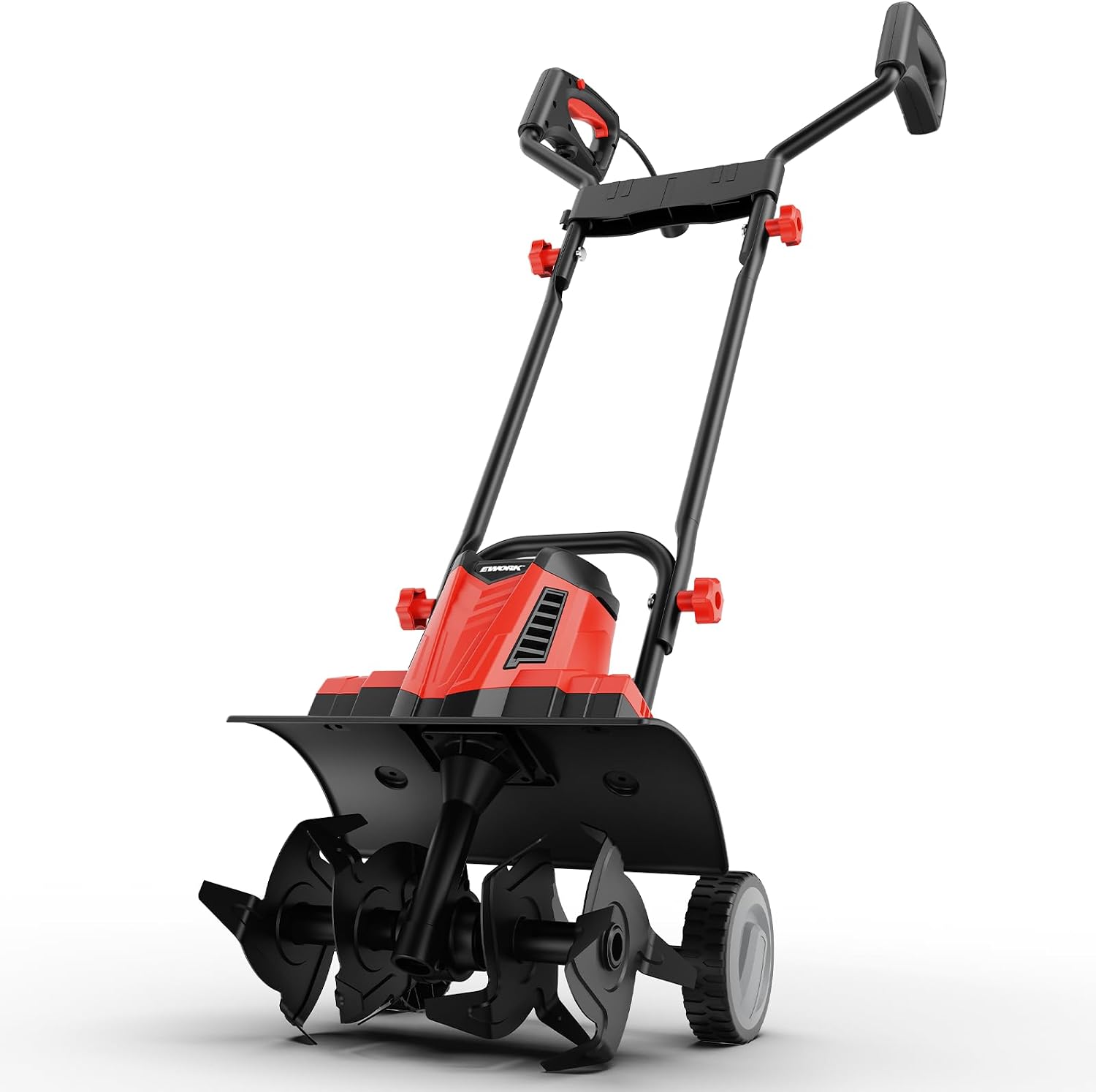
EWORK 10A 14" Corded Electric Garden Tiller
| Power Source | AC |
|---|---|
| Operation Mode | Electric |
| Tilling Width | 14" |
| Tilling Depth | 7" |
| Motor Current | 10A |
The EWORK corded electric tiller is a lightweight, no-gas cultivator meant for prepping small to medium vegetable plots and flower beds. Its 10 amp high-torque motor drives a 14" wide, 7" deep tine assembly that breaks clods and aerates compacted soil in a single pass. The one-piece manganese steel claw disc is built to resist wear and reduce grass wrapping, so you spend less time clearing tangles. Adjustable wheels let you set working depth for different soil types and the unit includes mechanical overload protection and dual safety switches for safer operation. Because it is corded AC power, you get continuous torque without battery limits or fuel maintenance, but you will need an appropriate outdoor extension and are limited by cord reach. Assembly is quick and the foldable handle saves storage space. At about 18 pounds it is easy for most users to maneuver, though it is not meant to replace a heavy-duty petrol tiller for large or very rocky plots.
Best for: Buyers who need an affordable, low-maintenance tiller for regular bed prep in small to medium gardens and prioritize continuous power over cordless convenience.
Less Ideal for: Not a good fit for large acreage, heavily stony ground, or users who need cordless freedom far from power outlets.
- 10A high-torque motor delivers steady, continuous power for breaking clods and aerating compacted soil
- 14" tilling width and 7" depth let you prep beds quickly in one pass
- One-piece manganese steel claw tines resist wear and reduce grass wrapping
- Corded AC design means no batteries or fuel and lower maintenance
- Safety features include dual safety switches and mechanical overload protection
- Corded design limits mobility and requires a suitable outdoor extension cord
Verdict: A budget-friendly corded tiller that delivers continuous 10A torque and effective bed prep for small to medium gardens.
Sun Joe Corded Electric Garden Tiller & Cultivator TJ604E

| Power Source | Corded Electric |
|---|---|
| Motor | 13.5-Amp |
| Tilling Width | Up to 16 inches |
| Tilling Depth | Up to 8 inches |
The Sun Joe TJ604E is a compact corded electric tiller built to prepare small garden plots and flower beds without the fuss of gas maintenance. It runs on a 13.5-amp motor that tills a 16-inch-wide swath up to 8 inches deep, using six angled alloy steel tines that resist rust and handle light to medium soil. The folding handle and three-position wheel adjustment make it easy to store and to control working depth across different soil types. As an electric machine it delivers quieter, cleaner operation and continuous power as long as you have an outlet nearby, which simplifies upkeep compared with small gas tillers. Limitations include dependence on a cord for power, which restricts range and requires care to avoid tangling, and it is best suited for softened or loamy soils rather than heavy clay or rocky ground where a more powerful gas model would perform better.
Best for: Gardeners who want a low-maintenance, easy-to-use cultivator for preparing and refreshing small vegetable beds, flower borders, or starter plots and who prioritize simplicity and reliable electric power.
Less Ideal for: Large-acreage gardeners or those who regularly work compacted clay or rocky ground should consider a heavier gas-powered tiller or professional equipment instead.
- 13.5-amp motor provides steady power for small to medium garden beds
- Six angled alloy steel tines designed to resist rust and cultivate effectively
- Folding handle and compact footprint for easy storage and transport
- Three-position wheel adjustment for better control of tilling depth
- Corded electric design means quieter operation and low maintenance
- Corded power limits working range and requires attention to avoid the cord
- Not intended for very heavy clay, large roots, or rocky conditions
Verdict: If you need a simple, low-maintenance electric tiller to quickly prepare and maintain small gardens, the Sun Joe TJ604E delivers reliable power and easy storage.
Sun Joe TJ603E 16-Inch Corded Electric Garden Tiller & Cultivator

| Power Source | Corded Electric |
|---|---|
| Motor | 12 Amp |
| Tilling Width | 16 Inch |
| Tine Material | Steel |
The Sun Joe TJ603E is a compact corded tiller and cultivator built to break up soil and prepare garden beds quickly. It uses a 12-amp electric motor to power six angled steel tines that cultivate a 16-inch swath and reach about 8 inches deep, making it a good choice for turning small to medium vegetable plots, flower beds, and prepping new planting rows. The folding handle and three-position wheel adjustment make it easy to set working depth and transport or store in a garage. Being electric, it runs cleaner and quieter than gas models and requires little maintenance beyond keeping tines clean. Practical limitations are the corded power source, which restricts reach without an extension, and the unit is intended for lighter soils and moderate workloads rather than heavy, compacted ground or commercial-scale tilling. For gardeners who want reliable, low-maintenance performance for routine bed preparation, this machine delivers straightforward, efficient results.
Best for: Gardens where routine bed preparation and moderate digging are the priority; ideal for homeowners who want a low-maintenance, reliable electric tool to prep vegetable plots and flower beds quickly.
Less Ideal for: Large acreage, professional landscapers, or anyone who needs to break up dense, compacted clay or heavy turf should consider a more powerful gas or heavy-duty tiller instead.
- Decent 12-amp motor for consistent power during typical home gardening tasks
- Six angled steel tines for effective soil turnover and durability
- 16-inch tilling width covers beds efficiently for quicker passes
- Folding handle and adjustable wheel positions for easier transport and storage
- Electric operation reduces maintenance and eliminates gas fumes and oil
- Corded design limits working range without an outdoor extension cord
- Not intended for very hard, compacted soils or commercial-scale tilling
Verdict: A practical, low-maintenance electric tiller that delivers dependable performance for routine garden bed preparation.
LawnMaster TE1216M Electric Tiller, 12-Amp 16-Inch

| Power Source | Corded Electric |
|---|---|
| Blades | 6 Steel Blades |
| Tilling Width | 16-Inch |
| Tilling Depth | 9-Inch |
The LawnMaster TE1216M is a straightforward corded electric tiller built to loosen soil across medium to large garden areas. It runs on a 12-amp motor and uses six rust-resistant steel blades to till up to a 16-inch swath and about 9 inches deep, which makes it useful for preparing planting beds, incorporating compost, and light soil renovation. The two-stage gearbox with an anti-clock mechanical clutch gives steady torque for tougher spots while an adjustable transit wheel lets you set transport height when moving the unit between beds. As a corded model it delivers consistent power without battery downtime but does require access to an outlet and extension management. It is compact and lighter than many gas machines, so setup and basic maintenance are simpler, but it is not intended for the heaviest clay or large-rock conditions where a heavier-duty gas tiller would be better. Safety warnings about tine contact and vibration are important to follow during use and maintenance.
Best for: Gardeners on a tight budget who need a reliable, no-frills electric tiller to prepare large vegetable beds and flower borders without the cost and upkeep of a gas machine.
Less Ideal for: Those who work exclusively on very heavy clay, large acreage without easy power access, or who need a professional-grade gas tiller for continuous, heavy-duty breaking of hardpan.
- 16-inch tilling width covers more ground per pass for quicker bed preparation
- Six rust-resistant steel blades handle compacted soil and residue effectively
- Corded electric power provides consistent torque without needing fuel or batteries
- Adjustable transit wheel eases moving and depth control between jobs
- Requires a nearby electrical outlet and extension cord management for large areas
- Not designed for very rocky ground or the deepest, heaviest clay soils
Verdict: If you want an affordable, easy-to-use electric tiller that speeds up bed prep on large home gardens without gas maintenance, this is a solid pick.
Choosing the Right Corded Garden Tiller: Key Factors to Consider
Motor Power and Torque
Motor power determines how a corded garden tiller performs in different soil types. Higher wattage and better torque translate into steadier digging in compacted clay and heavier root-filled ground, reducing stalling and the need for repeated passes.
Assessing motor power matters because electric motors deliver continuous output only while plugged in; if the power is insufficient for your soil, the tiller will bog down and demand extra physical effort. Look for machines that balance power with thermal protection so the motor can run steadily without overheating during longer sessions.
Tine Design and Material
Tine shape, thickness, and mounting influence how effectively the tiller penetrates and mixes soil. Curved or spiral tines usually pull soil toward the machine and provide good mixing, while straight or claw-style tines can be better for slicing through roots and old sod.
Durable materials and reinforced welds reduce bending and failure when encountering rocks or thick roots. Replaceable tine assemblies are a practical feature because tines wear over time; being able to swap worn blades extends the tool's usable life and keeps performance predictable.
Working Width and Depth Control
Adjustable width and depth let you tailor the tiller to tasks from narrow rows to prepping wide beds. A narrower setting improves maneuverability in tight vegetable rows and around established plants, while a wider setting reduces time when prepping a whole bed.
Depth control is just as important because shallow cultivation helps weed control and seedbed finishing, while deeper passes are required for breaking compacted subsoil or mixing compost. Clear, tool-free adjustments speed setup between tasks.
Handling, Weight, and Vibration
How a tiller feels during use affects both control and fatigue. Good weight distribution makes the tines bite without forcing you to push hard; overly heavy front ends or poorly balanced designs can be tiring in extended sessions.
Ergonomic handles, adjustable heights, and effective vibration damping improve comfort and reduce wrist or back strain. Ease of maneuvering around beds, between plants, and on slopes matters for gardeners who work by hand rather than on wide open plots.
Cord Management and Reach
Because corded tillers rely on an extension cord, cord management and practical reach are important. A tiller that tugs on the cord or requires frequent repositioning adds hassle and creates safety risks near the tines.
Consider the recommended extension length and whether the design helps keep the cord away from the tines. For larger yards, plan for a heavy-duty outdoor extension and think about access to grounded outlets to avoid working too far from a reliable power source.
Maintenance and Serviceability
Low-maintenance tillers are easier to own across seasons. Check accessibility of grease points, tine fasteners, and guards so you can clear debris and perform routine checks without specialized tools.
Parts availability and simple cleaning procedures reduce downtime. Designs that let you inspect tines and replace wear items quickly are better for gardeners who use the tool every season and want predictable performance year after year.
Best Uses by Garden Size and Soil Type
Match the tiller to the scale of the job. For small raised beds and compact plots, a narrow, lightweight corded tiller with moderate torque excels at shallow cultivation, mixing compost into the top few inches and removing weeds. In medium-sized vegetable beds, prioritize a model with higher torque and adjustable width so you can speed up prep passes without losing bite.
For heavy clay or previously uncultivated ground, even the most powerful corded tiller may need multiple passes and might struggle with thick roots. For these situations, plan to break the soil progressively: start with a shallow pass to cut through surface grass and then do a deeper pass to mix in organic matter over several passes.
- Small raised beds: focus on maneuverability and shallow depth control
- Medium beds: prioritize torque and adjustable width
- Heavily compacted or weedy ground: plan incremental passes and robust tine design
Preparing Your Bed Before Tilling
Clearing large surface debris, such as branches and rocks, protects the tines and reduces the chance of damage. Mow or pull out tall weeds and remove stubborn roots where possible to prevent the tiller from binding.
Water content affects how the soil tills. Aim for a slightly moist but not muddy soil condition; overly wet soil forms clods and sticks to tines, while very dry, compacted soil can be harder to penetrate. If conditions are at either extreme, adjust timing or add water and let it settle before using the tiller.
- Remove rocks and large debris first
- Check soil moisture and avoid tilling when waterlogged
- Cut back tall weeds to reduce tine binding
Safe Operation Practices
Always keep clear of the tines and wear eye protection and sturdy footwear. Because corded tillers stay powered while plugged in, adopt a habit of unplugging before any adjustments or when moving the unit away from the work area.
Watch the cord path and use an outdoor-rated extension. Keep fingers and clothing away from rotating parts and work at a steady pace to avoid jerking the machine into obstacles. If the motor struggles or smells hot, stop and let it cool before continuing; repeated stalls can damage the motor.
- Unplug before servicing or clearing tines
- Use eye protection and work gloves
- Monitor motor temperature and avoid continuous stalling
Maintaining Tines and Drive Components
Clean soil and plant residue from the tines after each use to prevent rust and preserve cutting action. Inspect tines regularly for bends, cracks, or excessive wear and replace or rotate them when needed.
Check tine fasteners and protective shields for tightness. Lubricate or grease any manufacturer-specified points periodically, and store the tiller in a dry place to prolong motor and metal component life.
- Brush off soil after use and dry before storage
- Inspect and replace worn or bent tines promptly
- Tighten fasteners and lubricate moving parts as recommended
When to Consider Alternatives to a Corded Tiller
If your garden includes large acres, frequent work far from outlets, or very heavy sod, a corded tiller may not be the most efficient option. Cord length limitations and outlet access restrict how far you can work without dragging long extension cords.
For extremely compacted or rocky ground, consider a dedicated petrol-powered tiller or professional soil preparation before relying solely on a corded unit. That said, corded tillers remain practical for many home gardeners who prioritize continuous power for shorter sessions and manageable plot sizes.
- Large acreage or remote plots: consider other power options
- Extremely compacted or rocky soils may need heavier equipment
- Corded tillers are ideal for accessible, small-to-medium beds
How We Chose the Best Corded Garden Tiller
We evaluated corded garden tillers using several concrete, gardener-facing criteria so the list favors machines that perform reliably in real-world beds. First, motor power and torque were prioritized because continuous electrical power only helps if the drive system translates it into consistent digging force for compacted soil. Second, tine design and durability were assessed to judge how well a tiller penetrates roots, mixes amendments, and resists bending or breaking over repeated use. Third, handling and ergonomics were considered, including weight distribution, handle adjustability, and vibration control, since tilling is physically demanding and posture affects control and fatigue. Fourth, soil depth and width adjustability were reviewed because gardeners need flexibility for shallow weeding versus deeper cultivation. Fifth, maintenance and serviceability were included to prefer models with accessible parts and simple cleaning for long-term use. We excluded corded cultivators that lack sufficient torque for medium compacted soils or that are strictly marketed for light potted-plant use. Units without basic safety features or with unusually high maintenance demands were also removed. The final picks balance usable power, durable tines, adjustable working widths and depths, ergonomic handling, and straightforward maintenance.
FAQ
How deep can a typical corded garden tiller dig?
Depth varies by model, but corded tillers usually reach several inches to about a foot. Many are designed primarily for shallow cultivation and mixing compost rather than deep subsoiling. Check the adjustable depth range to match your intended tasks.
Can a corded tiller handle clay soil?
Corded tillers can work in clay, especially higher-torque models, but expect to make multiple shallow passes rather than one deep pass. Adding organic matter and watering lightly before tilling helps break clay into a more workable texture.
Is an extension cord safe to use with a tiller?
Yes when you use an outdoor-rated, heavy-duty extension cord sized for the tiller's amperage and keep the cord clear of the tines. Avoid daisy-chaining light cords and always watch the cord path during operation to prevent accidental contact.
How often should I check or replace tines?
Inspect tines before or after every season and more frequently if you work in rocky or root-filled soil. Replace tines when they are visibly bent, cracked, or badly worn to maintain consistent digging performance.
Can corded tillers be used for weed control between rows?
Many corded tillers are suitable for shallow inter-row cultivation to disturb weed seedlings, provided the width and depth settings are appropriate. Use a narrow setting and shallow depth to avoid damaging crop roots.
Final Verdict
Focus on the tradeoffs most relevant to your garden: motor torque and tine durability for tougher soils, adjustability and maneuverability for beds and rows, and cord management for reachable plots. Prioritize a tiller with enough torque and a tine design suited to your soil type, and ensure it offers straightforward adjustments and simple maintenance. If you primarily work small raised beds and accessible vegetable plots, a well-balanced corded tiller with replaceable tines and clear depth controls will cover most tasks reliably. For larger or more challenging ground, plan for staged soil preparation or different power options, but for many home gardeners a corded tiller provides efficient, continuous power for regular cultivation.
