

Note: This article contains affiliate links. If you click on these links and make a purchase, I may earn a small commission at no extra cost to you. This helps support my research and content. Read my full affiliate disclosure here.
If you maintain a small vegetable patch, raised beds, or a compact backyard orchard, a budget rear tine garden tiller can make seasonal soil work far less grunt-heavy. These machines break up compacted rows, incorporate compost, and create seedbeds faster than hand tools while staying affordable and practical for hobby growers. This guide covers seven shortlisted options suited to tighter spaces and modest budgets. We evaluated each tiller on power delivery, ease of steering and transport, tine durability, and serviceability so you can choose the machine that matches your plot size and soil conditions. Read on to see which features matter most and which tradeoffs are reasonable for economical soil preparation.
Top Picks at a Glance
| Best Overall The best all-around choice for most situations | Earthquake Pioneer Dual Direction Rear Tine Tiller (127cc Briggs & Stratton) |  |
| Best Quality Built to a higher standard if you want something more solid | NOVUS 18-Inch Rear Tine Tiller with 212cc Gas Engine |  |
| Best Value The sweet spot between price and what you get | NOVUS 17" Dual-Direction Rear Tine Tiller with 212cc Gas Engine |  |
| Best Budget The cheapest option that still gets the job done reliably | SuperHandy Rear-Tine Garden Tiller, 7 HP |  |
| Highest Rated A top-rated pick with lots of positive feedback | Poulan Pro Rear Tine Tiller, 212cc Gas Engine, Full Gear Transmission, 18" Tilling Width |  |
| Most Popular A crowd favorite that many people choose with confidence | EARTHQUAKE Victory Rear Tine Tiller (209cc Viper Engine) |  |
| Best Seller A high-volume bestseller chosen again and again | YARDMAX 18 in. Rear Tine Garden Tiller (212 cc) |  |
Earthquake Pioneer Dual Direction Rear Tine Tiller (127cc Briggs & Stratton)

| Engine | 127cc Briggs & Stratton 4-cycle |
|---|---|
| Tilling Width | 17" |
| Tilling Depth | Up to 11" |
| Tine Modes | CRT and SRT (dual direction) |
| Wheels | Airless rubber tires with steel rims |
The Earthquake Pioneer is a purpose-built rear tine tiller that balances power and user-friendly handling for medium to large garden work. It uses a 127cc Briggs & Stratton 4-cycle engine and a patented transmission to deliver sod-busting torque in Counter Rotating Tine mode and a smoother seedbed in Standard Rotating Tine mode. Instant Reverse lets you back out of tight spots without shifting, which speeds work along fences and in rows. The airless rubber tires on steel rims eliminate flats and give good traction across varied terrain, while the adjustable handlebar and option for one- or two-handed operation help keep footprints out of prepared beds. At a lower weight than many competitors, it is easier to maneuver without extra counterweights, though that lighter package may feel less substantial on extremely rocky ground. The Pioneer is well suited to homeowners who want a reliable, versatile tiller for breaking new ground and finishing seedbeds, but buyers should plan for typical gas-engine maintenance and storage needs.
Best for: Gardeners who want a capable, easy-to-handle rear tine tiller for prepping new plots and maintaining existing beds, and who value maneuverability and versatile tilling modes over the absolute heaviest-duty machine.
Less Ideal for: Commercial landscapers or users who need maximum durability for continuous heavy excavation or frequent rock-filled ground should consider larger industrial-grade tillers.
- Dual-direction tines (CRT and SRT) let you both break new ground and finish a smooth seedbed
- 127cc Briggs & Stratton 4-cycle engine with an efficient transmission provides strong tilling torque
- Instant Reverse handle enables quick backing and tight-turn maneuvering without shifting gears
- Airless rubber tires on steel rims eliminate flats and provide reliable traction
- Adjustable three-position handlebars and optional one-handed operation keep footprints out of beds
- Gas engine requires regular maintenance and winter storage care
- May feel less heavy-duty on very rocky or extremely compacted soils compared with larger, heavier commercial models
Verdict: A well-balanced rear tine tiller that delivers strong sod-busting power and easy maneuverability for homeowners preparing and maintaining garden beds.
NOVUS 18-Inch Rear Tine Tiller with 212cc Gas Engine

| Power Source | gas_powered |
|---|---|
| Tilling Width | 18" |
| Tilling Depth | 4"-10" |
| Transmission | Full Gear |
The NOVUS 18-inch rear tine tiller is designed to tackle large or overgrown garden plots with a 212cc 4-cycle gas engine and a full gear transmission for durable, consistent power. It uses 16 steel tines with selectable standard and counter-rotating modes and two forward speeds plus one reverse, so you can break new ground or work established beds and control how aggressively the soil is worked. The eight-position depth adjustment reaches down to 10 inches, which helps when loosening compacted subsoil or preparing deep vegetable trenches. Airless tires reduce downtime from flats and make moving the machine across rough terrain easier. Expect heavier weight and the usual gas-maintenance tasks such as fuel, oil, and periodic tuneups, and it will be more than you need for tiny raised beds or light surface cultivation. Assembly and storage require space, and the machine is best handled by someone comfortable with engine-driven equipment. For large plots where power, depth range, and durable transmission matter, this tiller performs like a workhorse.
Best for: Gardeners with large plots who need a robust, durable tiller to break compacted soil and prepare new beds and who prefer a powerful, engine-driven machine over lighter electric options.
Less Ideal for: Those with very small raised beds, limited storage, or who want a lightweight electric or handheld cultivator for light surface work.
- Powerful 212cc 4-cycle gas engine suitable for heavy soil and large gardens
- Full gear transmission for durable, low-maintenance power delivery
- Selectable tine rotation and multiple speeds allow both aggressive ground-breaking and gentler bed preparation
- Eight-position depth adjustment to till as deep as 10 inches for robust soil preparation
- Airless tires eliminate flat tires and improve mobility over rough terrain
- Requires regular gas engine maintenance and fuel handling
- Large and heavy so it needs storage space and may be hard to maneuver for small users
Verdict: If you need a hard-working, heavy-duty tiller for large gardens and compacted soil, this NOVUS rear tine model delivers the power and depth control to get the job done.
NOVUS 17" Dual-Direction Rear Tine Tiller with 212cc Gas Engine

| Power Source | gas_powered |
|---|---|
| Engine | 212cc 4-cycle |
| Tilling Width | 17" |
| Tilling Depth | 4"-10" |
The NOVUS 17-inch rear tine tiller is a straightforward, hard-working machine for preparing medium to large garden beds. Its 212cc 4-cycle gas engine supplies enough torque to break up compacted soil, while the dual-rotating tines let you switch between forward and reverse rotation to suit loose or hard ground. Independent control of the wheels and tines makes maneuvering easier when edging beds or backing out of tight spots, and the adjustable handlebars help operators of different heights stay comfortable during longer jobs. The 14-inch flat-free tractor-style wheels reduce maintenance and keep the unit stable on uneven terrain. This model is built around durable alloy-steel components and a simple chain-and-gear transmission that matches its utilitarian focus. Expect solid soil penetration and a 4" to 10" working depth, but be prepared for the usual gasoline-tiller chores such as fuel, oil, and periodic maintenance. Its weight and size make it best handled by one person familiar with rear-tine equipment rather than an absolute beginner.
Best for: Gardeners who want a durable, no-frills rear tine tiller to efficiently prepare larger beds and compacted soil while prioritizing performance per dollar and low ongoing downtime.
Less Ideal for: Small-plot gardeners who need a lightweight cultivator or users who prefer electric, low-noise equipment and minimal maintenance.
- Powerful 212cc 4-cycle engine provides strong torque for compacted soil
- Dual-rotating tines (forward and reverse) adapt to loose and hard ground
- Independent wheel drive and tine control improves maneuverability
- 14-inch flat-free tractor-style wheels reduce downtime from punctures
- Gas engine requires regular fuel, oil, and maintenance
- Relatively heavy and bulky, which can be challenging for inexperienced users
Verdict: If you need affordable, workhorse rear-tine power to break tough soil across larger beds, this NOVUS 212cc tiller delivers the torque and versatile tine control you want.
SuperHandy Rear-Tine Garden Tiller, 7 HP

| Power Source | Gas Powered |
|---|---|
| Material Type | Alloy Steel |
| Tilling Width | 16" |
| Tilling Depth | 12" |
| Engine Power | 7HP |
The SuperHandy rear-tine tiller is a straightforward gas-powered machine designed to break compacted soil and prepare planting beds. It uses a 7 HP engine driving counter-rotating hardened steel tines to cultivate a roughly 16-inch swath down to about 12 inches deep, while three adjustable handle heights and a depth stake let you tune operation for different tasks. The unit is self-propelled with agricultural-style inflatable 13-inch tires that help move it across uneven ground, and the description highlights easy assembly, basic maintenance (uses common SAE 75 or SAE 80 gear oil), and safety reminders. For budget buyers this model delivers core heavy-duty tilling capability without premium frills, so it is useful for breaking new beds, turning compost into soil, and tackling compacted patches. Expect to do regular maintenance, and be prepared that fit and finish or long-term durability may not match higher-end commercial machines. It is a practical value pick if you need reliable soil prep on an occasional to seasonal basis and want more power than a front-tine cultivator.
Best for: Buyers who need a capable, no-frills rear-tine tiller to prepare vegetable beds and break compacted soil on a budget and who prioritize raw tilling power over premium features.
Less Ideal for: Users who need a commercial-grade machine for daily heavy use or who prefer electric or ultra-quiet equipment for small urban gardens.
- Robust 7 HP gas engine for heavy soil work
- Counter-rotating hardened steel tines for efficient 16" tilling width and deep penetration
- Adjustable handle heights and depth stake for comfortable, customizable operation
- Inflatable 13" agricultural-style tires aid mobility over uneven terrain
- Uses common SAE 75 or SAE 80 gear oil for simple maintenance
- Basic finish and components suggest more frequent maintenance compared with premium commercial tillers
- Limited information on long-term durability and parts support
Verdict: If you want the most tilling power for the money, this 7 HP SuperHandy rear-tine tiller delivers essential heavy-duty soil prep without luxury add-ons.
Poulan Pro Rear Tine Tiller, 212cc Gas Engine, Full Gear Transmission, 18" Tilling Width
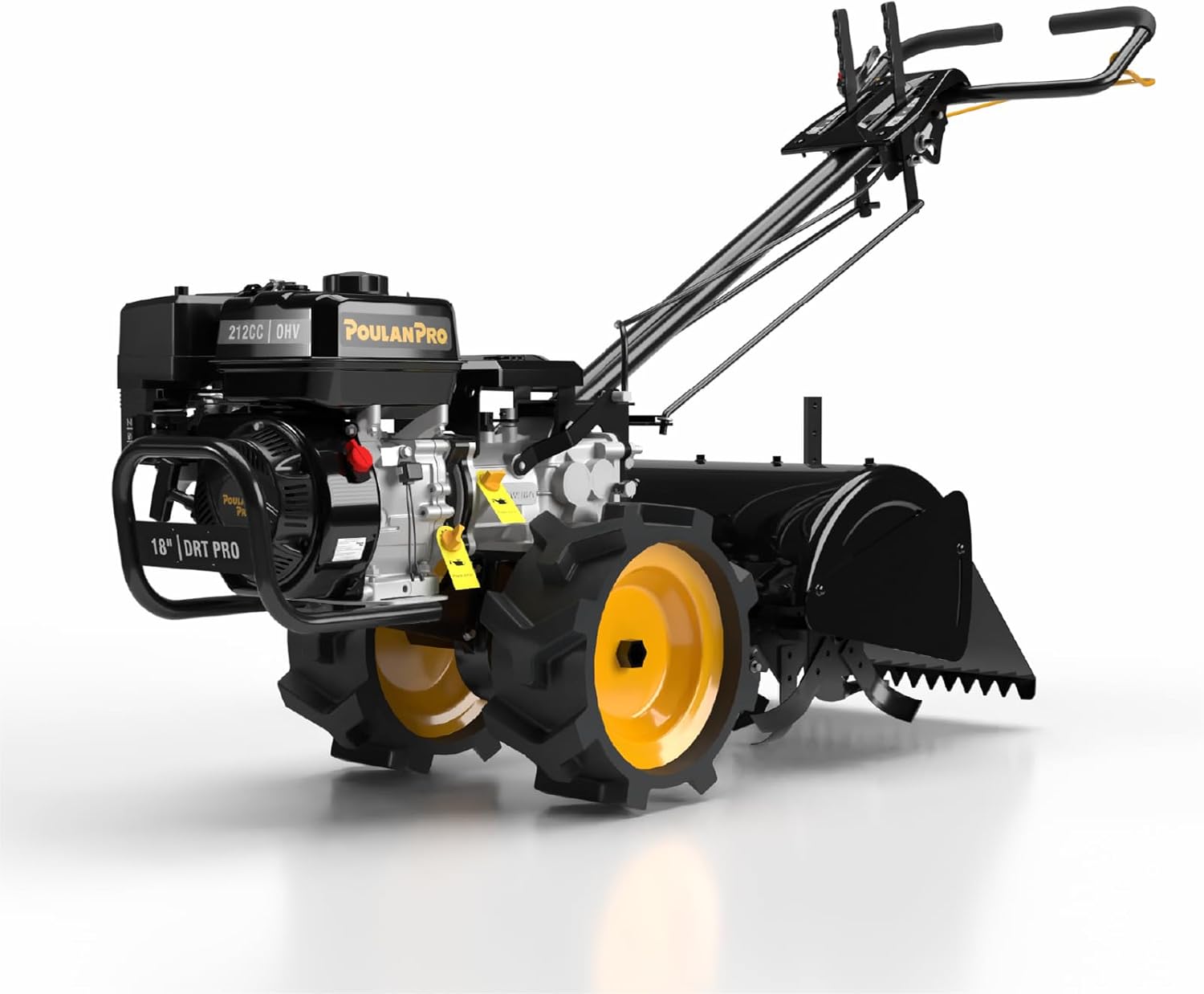
| Power Source | gas_powered |
|---|---|
| Material Type | Alloy Steel |
| Model Number | PPDRT18 PRO |
| Power | 212cc 4-cycle engine |
The Poulan Pro rear tine tiller is built to handle demanding garden tasks where durability and consistent power matter. Its 212cc 4-cycle gas engine paired with a full gear-driven transmission delivers steady torque for breaking compacted soil in vegetable beds, flower borders, and small-acreage plots. The unit uses dual-rotating steel tines across an 18 inch width with adjustable tilling depth, and two forward speeds plus a reverse to help you manage traction and maneuver tight areas. Flat-free tires reduce downtime from punctures and make the machine easier to move between beds. Controls include a dual-grip handlebar that lets you pivot or guide the tiller while staying off freshly tilled ground. Expect lower routine maintenance compared with belt-driven designs thanks to the gear drive, but be aware that as a gas-powered, heavy machine it requires seasonal engine upkeep and storage space. The tiller is best for homeowners and small-scale growers who need a rugged, serviceable machine rather than a lightweight or electric alternative.
Best for: Gardeners and small-scale growers who prioritize a dependable, low-upkeep drivetrain and need a machine that can tackle compacted or heavy soils regularly.
Less Ideal for: People with very small yards, light gardening needs, or those who prefer quieter, low-maintenance electric equipment should consider smaller or electric tillers instead.
- Powerful 212cc 4-cycle engine for heavy soil and sustained use
- Full gear-driven transmission reduces belt maintenance and delivers consistent torque
- Dual-rotating steel tines with adjustable depth for effective soil penetration
- Flat-free tires for stable transport and no puncture downtime
- Gas engine requires regular fuel and engine maintenance and winter storage
- Heavier and bulkier than electric or front-tine models, so it needs space to store
Verdict: Buy this tiller if you want a rugged, gear-driven gas machine that reliably tackles heavy soil with minimal drivetrain maintenance.
EARTHQUAKE Victory Rear Tine Tiller (209cc Viper Engine)

| Engine | 209cc 4-Cycle Viper |
|---|---|
| Tilling width | 16" |
| Max tilling depth | 10" |
| Wheels | 13" pneumatic self-propelled |
The Earthquake Victory is a purpose-built rear tine tiller for homeowners who need serious soil-turning power. Its 209cc Viper 4-cycle engine drives counter-rotating tines that aggressively break compacted soil and new ground, while a durable cast-iron transmission with bronze gears is designed for long service life. The machine tills a 16-inch swath up to about 10 inches deep, and features instant reverse so you can change direction or work close to fences without stopping to shift. Adjustable handlebars and a drag stake let you tune comfort and tilling resistance, and 13-inch pneumatic wheels make positioning and moving the unit over rough ground easier. Side tine shields and a rear smoothing shield help keep dirt away from plants and produce a neater seedbed. This tiller is best suited to gardeners who need a robust, long-lasting tool for breaking new ground and maintaining rows; it is heavier and more powerful than lightweight front-tine models, so storage, transport, and initial assembly should be planned for accordingly.
Best for: Buyers who want a robust, long-lasting rear tine tiller for breaking new ground and maintaining garden rows and who prioritize proven mechanical durability and user control over low weight.
Less Ideal for: Casual gardeners with very small plots, those who need a lightweight portable unit, or users who prefer low-maintenance electric alternatives.
- Powerful 209cc 4-cycle engine for sustained tilling performance
- Counter-rotating rear tines that break compacted soil and new ground effectively
- Instant Reverse handle for easy directional changes and tight-space maneuvering
- Durable cast-iron transmission with bronze gears for long-term reliability
- Adjustable handlebars and drag stake for operator comfort and better seedbed control
- Substantial weight makes it less convenient to move or lift for storage
- Requires gas engine maintenance and winterization unlike electric models
Verdict: Choose the Victory if you want a heavy-duty, mechanically durable rear tine tiller built to break new ground and deliver reliable season-after-season performance.
YARDMAX 18 in. Rear Tine Garden Tiller (212 cc)

| Power Source | gas_powered |
|---|---|
| Operation Mode | Gas |
| Material Type | Alloy Steel |
| Item Type Name | Rear Tine Tiller |
The YARDMAX 18 in. rear tine tiller is a gas-powered machine built to break and prepare garden soil quickly. It uses a 209–212 cc engine (varies by production) paired with true dual-rotation tines so you can till forward to cultivate or reverse to pull through tough ground without excessive strain. Typical use is prepping new beds, turning compost into soil, and working compacted soil before planting; the heavy alloy-steel build and rear-tine layout provide good traction and consistent depth control compared with front-tine consumer models. Practical benefits include faster progress on larger areas and more powerful digging in clay or compacted earth. Important limitations are its weight and size, which make it less suitable for small yards or for users who need a very lightweight, easy-to-store tool, and the requirement for regular gas engine maintenance and fuel storage. Assembly and occasional adjustments to tine depth and belts are expected for long-term reliable performance.
Best for: Best for budget-minded gardeners who need a robust tiller to prepare multiple medium to large beds and who prioritize digging power and durability over compactness.
Less Ideal for: Not a good fit for apartment gardeners, very small yards, or users who need a lightweight, easily stored tool or want electric/zero-emission operation.
- True dual-rotation tines for forward and reverse tilling to handle compacted soil
- Large displacement gas engine (209–212 cc) for strong digging power
- Alloy steel construction for durability during repeated use
- Designed as a rear-tine layout for better traction and consistent tilling depth
- Heavy and bulky, making transport and storage more difficult
- Requires gasoline engine maintenance and periodic adjustments
Verdict: If you want a durable, no-nonsense rear tine tiller that delivers strong digging power for prepping larger garden beds on a budget, this YARDMAX is a solid choice.
Choosing the Right Budget Rear Tine Garden Tiller: Key Factors to Consider
Engine Power and Torque
Engine power is not just about peak horsepower but about usable torque at low speeds. Rear tine tillers need steady low-end torque to drive tines into hard or compacted soil without bogging down. Higher torque makes repeated passes through clay or compacted ground easier and reduces the chance of stalling.
For budget tillers, look for engines with a proven reputation for consistent low-rpm performance and simple controls. Consider how fuel type, choke design, and cold-start behavior will affect first-use reliability in early spring. Remember that more power usually increases weight and fuel consumption, so match engine output to your typical soil resistance and plot size.
Tine Design and Durability
Tine shape, thickness, and heat treatment determine how well the tiller cuts into roots and breaks clods. Narrow, aggressive tines penetrate hard soil more readily, while wider or flatter tines move more soil per pass. Hardened steel tines and replaceable tine sets extend service life in gardens where rocks and roots are common.
Also consider the maximum workable depth the tine configuration allows without overstraining the engine. Some budget models trade tougher tines for lower production cost, so inspect expected wear points and whether replacement parts are available through common channels.
Transmission and Gear Options
A gearbox with multiple forward speeds and at least one low gear makes deep tilling and turning easier. Reverse capability is important for clearing jams and repositioning without manual lifting. Belts and chain drives are common; belts can be quieter and easier to replace, while metal gearboxes tend to be more durable.
For gardeners who will work varied soil types, a model with a low crawl speed and a reliable gear train reduces operator fatigue and improves soil control. Check whether clutch engagement is smooth and whether shifting can be done under light load to avoid wear.
Maneuverability and Weight
Rear tine tillers are heavier than front-tine cultivators because of their robust drivetrains. Weight helps with penetration, but excessive mass makes turning and transport difficult. Compact wheelbase, adjustable handle height, and user-friendly steer controls let you work beds and narrow rows without struggling.
Consider whether the tiller has transport wheels, a foldable handle, or a manageable storage footprint. If you have steep yard transitions, steps, or tight gates, measure clearances and account for how you will move the machine between work areas.
Ease of Maintenance and Serviceability
Budget machines should still be simple to maintain. Accessible oil fill/drain points, straightforward air filter access, and easy spark plug reach reduce downtime. A machine with modular parts and commonly available replacement components will save time and frustration.
Serviceability also covers belt replacement, tine removal, and routine drive-chain lubrication. Check whether the design allows amateur-friendly servicing without special tools and whether clear maintenance intervals are documented.
Vibration, Comfort, and Safety Features
Extended tilling sessions expose you to vibration and strain. Models with basic vibration-damping handle mounts or ergonomic grips let you work longer with less fatigue. Safety features like a dead-man clutch, clear engine shutoff, and effective tine shields prevent injuries and make the machine safer around children and pets.
Budget tillers may omit advanced comfort features, so prioritize the basics: secure throttle control, intuitive clutch engagement, and covers that prevent debris from kicking toward the operator. Good balance and predictable handling are also part of operator comfort.
When a Budget Rear Tine Tiller Makes Sense
A budget rear tine tiller is appropriate when you need more aggressive soil breaking than a garden fork or front-tine cultivator can provide, but you do not require heavy commercial capacity. For small plots, allotments, and larger raised bed systems that accumulate compacted layers, a rear tine unit shortens prep time and reduces manual labor.
These machines are especially useful for breaking virgin turf, incorporating bulky organic matter, and loosening compacted topsoil down to planting depth. They are less suited to delicate transplant beds where light surface raking is preferred.
- Best for plots that are small to medium in size
- Good for initial soil renovation and compost mixing
- Not ideal for fine seedbed finishing
Preparing Your Garden Before Tilling
Clear large debris, rocks, and woody roots before turning the soil. Removing obstructions reduces strain on the tiller, protects tines, and prevents damage to cheap drivetrains. If your plot has invasive perennial roots, consider cutting them back first and making multiple shallow passes rather than one deep pass.
Mark irrigation lines and buried cables so the tiller does not encounter them. Wet soil binds and chews on equipment, so avoid tilling immediately after heavy rain; slightly moist but crumbly soil yields the best results.
- Remove rocks and large roots beforehand
- Avoid tilling when soil is overly wet
- Flag underground utilities and drip lines
Techniques for Efficient Use
Start with one shallow pass to loosen the surface, then follow with deeper passes if needed. Work in rows and overlap slightly so the entire bed gets uniformly loosened. Avoid forcing the tiller; let the engine and tine geometry do the work-excessive downward pressure often stalls the machine or wears tines prematurely.
When finishing, use a rake or garden fork to break large clods and level the bed. For very compacted soil, multiple short passes with increasing depth are safer for the machine and the soil structure.
- Begin with shallow passes, then deepen
- Overlap passes for even coverage
- Finish with hand tools for a refined bed
Storage and Winter Care
Clean the tiller after each season to remove soil and plant residue. A light coat of oil on tines and exposed metal helps prevent rust, especially if you store the machine in a damp shed. Drain fuel or add stabilizer before long storage to avoid carburetor gumming and starting problems.
Perform routine maintenance such as oil changes and air filter cleaning before storing. Label or bag small replacement parts and keep a basic tool kit with the tiller so routine repairs are convenient.
- Clean and lightly oil tines before storage
- Stabilize or drain fuel for long-term storage
- Perform maintenance tasks prior to winter
Common Mistakes to Avoid
Trying to till overly wet ground is a frequent error; it compacts soil when it dries and can damage the machine. Another common mistake is using a tiller that is too small for heavy clay or root-choked ground; repeated bogging down leads to premature wear. Also avoid neglecting routine maintenance. Budget units can last many seasons with routine care, but skipped oil changes, clogged filters, and ignored belt wear quickly escalate into major repairs.
- Do not till when soil is saturated
- Match machine capacity to soil resistance
- Keep up with basic maintenance
How We Chose the Best Budget Rear Tine Garden Tiller
We focused on machines that balance affordability with the durability and power needed for regular garden use. Selection began by filtering for rear tine tillers sized and specified for small to medium plots, excluding heavy-duty commercial units and toy-class machines underpowered for typical garden soils. Key evaluation criteria included engine torque and horsepower relative to tine width, as this determines penetration in compacted or clay soils; transmission and gear options, because reliable low-speed torque and forward/reverse control matter when working furrows or edging beds; tine construction and replaceability, since hardened steel tines and available spares extend working life; handling and maneuverability for turning in tight spaces and transporting between beds; ease of maintenance and access to common service points; and footprint and storage needs for gardeners with limited shed or garage space. We also considered vibration control and operator comfort, which affect how long you can work without fatigue. We excluded units primarily marketed for light landscaping tasks where tine depth, torque, or build quality were insufficient for regular garden tilling. The final shortlist balances real-world durability and useful features that gardeners actually use in seasonal soil management.
FAQ
How deep can a typical budget rear tine tiller dig?
Most budget rear tine tillers reach working depths suitable for seedbed preparation, commonly several inches to the tine's maximum depth. Actual depth depends on tine design, engine torque, and soil type. Multiple shallow passes often produce better results than a single overly deep cut.
Are rear tine tillers safe for raised beds?
Rear tine tillers can be used for raised beds if the bed is wide and deep enough to accommodate the machine and you control depth carefully. For shallow or narrow raised beds, hand tools or smaller front-tine cultivators are usually safer and less likely to damage bed walls.
Can I use a rear tine tiller on rocky soil?
You can use a rear tine tiller on rocky soil, but it increases wear and the chance of damage. Remove larger stones and work slowly, making shallower passes. Choose tine materials and designs known for durability and ensure replacement parts are available.
How often should I change oil and filters on a budget tiller?
Follow the manufacturer's schedule, but as a rule change oil after the first few hours of break-in and then at least once per season for moderate use. Clean or inspect the air filter regularly, especially in dusty conditions, and replace it when visibly clogged.
Will a heavier tiller always perform better in compacted soil?
Weight can help with penetration, but it is not the sole factor. Engine torque, tine geometry, and transmission gearing are equally important. A well-balanced, moderately heavy machine with good low-end torque often outperforms an overly heavy but underpowered unit.
Final Verdict
For gardeners working small to medium plots, a budget rear tine garden tiller is a practical way to speed soil preparation while reducing manual labor. Prioritize machines with adequate low-end torque, durable tine construction, and a gearbox that gives control at slow working speeds. Accepting some tradeoffs on comfort and advanced features can keep costs down, but do not sacrifice serviceability or replaceable wear parts. Matching tiller capabilities to your soil type and storage constraints will help you get seasons of reliable performance from an economical purchase.
