

Note: This article contains affiliate links. If you click on these links and make a purchase, I may earn a small commission at no extra cost to you. This helps support my research and content. Read my full affiliate disclosure here.
When space is limited or beds are small, a compact garden tiller can make the difference between a weekend of backbreaking digging and a quick, tidy planting surface. You want a machine that moves easily between beds, reaches the depth you need, and stores without taking over a shed or garage. This guide shortlists the most practical compact tillers for small gardens, patios, and raised beds and explains how each pick performs across the criteria that matter to home gardeners. We evaluated handling, digging power, depth control, and ease of maintenance to assemble a focused selection of top compact tillers. Read on to see which features matter most for your plot and to find the right balance of size and capability.
Top Picks at a Glance
| Best Overall The best all-around choice for most situations | Endutools Plus 21V Cordless Garden Tiller Cultivator with Dual 4.0Ah Batteries |  |
| Best Quality Built to a higher standard if you want something more solid | Mantis 7940 4-Cycle Tiller/Cultivator with Honda Engine |  |
| Best Value The sweet spot between price and what you get | OGORI Cordless Electric Mini Tiller with Two 4.0Ah Batteries |  |
| Best Budget The cheapest option that still gets the job done reliably | TaskStar Cordless Mini Tiller Cultivator with Dual 4.0Ah Batteries | 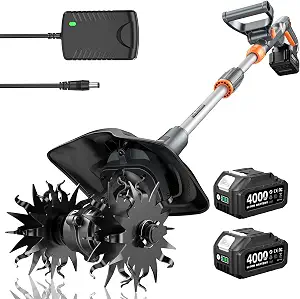 |
| Highest Rated A top-rated pick with lots of positive feedback | Lmozim 21V Cordless Electric Tiller Cultivator with Two Batteries |  |
| Most Popular A crowd favorite that many people choose with confidence | Alloyman 20V Cordless Tiller Cultivator with 2×4.0Ah Batteries |  |
| Best Seller A high-volume bestseller chosen again and again | HEINPRO Cordless Garden Tiller Cultivator (Compatible with DEWALT 20V MAX) |  |
Endutools Plus 21V Cordless Garden Tiller Cultivator with Dual 4.0Ah Batteries

| Power Source | Battery Powered |
|---|---|
| Operation Mode | Battery-powered Cordless |
| Batteries Included | 2 × 21V 4000mAh |
| Tilling Width | 9-inch |
| Tilling Depth | Up to 7-inch |
This compact cordless tiller is built for home gardeners who need an easy-to-use tool for bed preparation, soil aeration, and light weeding. The 360 RPM motor driving four heavy-duty steel tines delivers a 9-inch working width and up to 7-inch tilling depth, which is enough for loosening compact soil and breaking clods in small plots and raised beds. It ships with two 21V 4.0Ah batteries and a fast charger so you can work longer without frequent recharges; the handle battery-level indicator helps avoid surprise shutdowns. At about 10.6 pounds the unit is easy to maneuver and the telescopic handle reduces arm strain while the safety lock prevents accidental starts. Being cordless and battery powered means quiet, emission-free operation and minimal maintenance compared with gas tillers. Limitations are that it is aimed at light-to-moderate soil rather than heavy rocky ground and its 9-inch width makes it slow for large areas, so it is best for small gardens, beds, and edging work rather than full-size plots.
Best for: Home gardeners with small yards or raised beds who want a lightweight, low-maintenance tiller that is easy to handle and provides reliable battery runtime for routine soil preparation.
Less Ideal for: People preparing large plots, commercial gardens, or frequently working in heavy rocky clay should consider a wider, more powerful gas or corded tiller instead.
- Comes with two 21V 4.0Ah batteries and fast charger for extended run time
- Lightweight design and telescopic handle make maneuvering and storage easy
- 360 RPM motor with four steel tines provides up to 7-inch tilling depth for effective bed preparation
- Cordless battery operation offers quiet, emission-free use and low maintenance
- 9-inch working width is slow for larger areas
- Not suited for very rocky or heavy compacted soils
Verdict: A lightweight, easy-to-handle cordless tiller that pairs decent power with dual batteries to make small-bed soil prep fast and fuss-free.
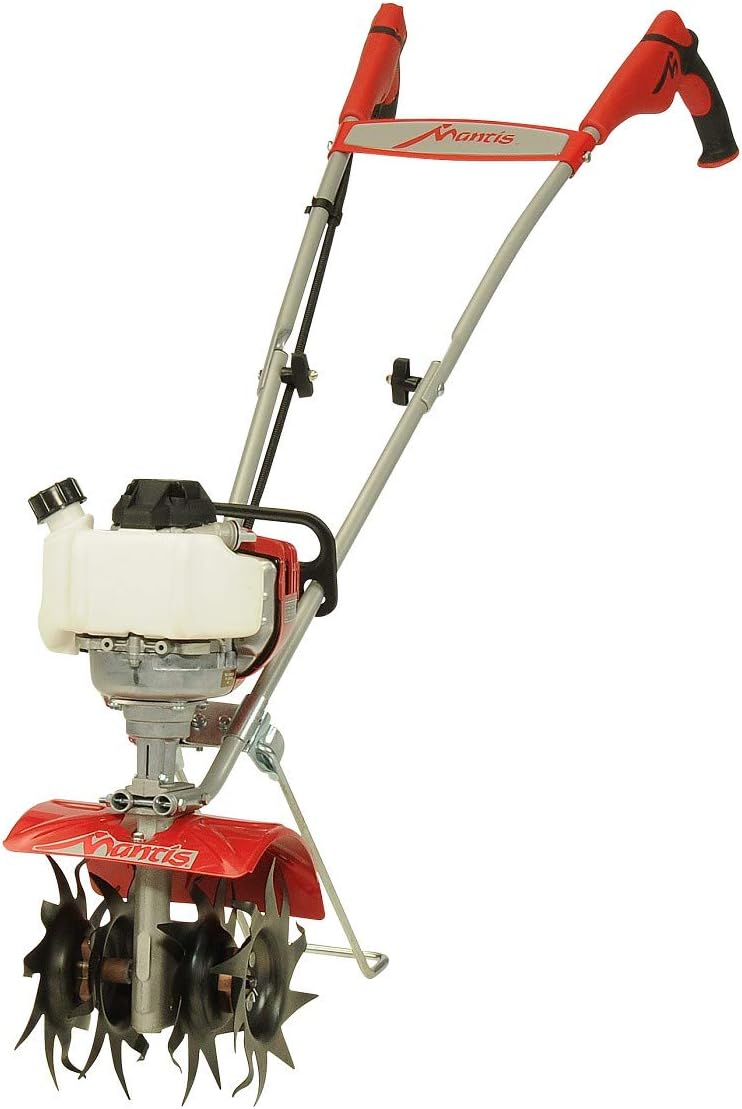
Mantis 7940 4-Cycle Tiller/Cultivator with Honda Engine
| Power Source | gas-powered |
|---|---|
| Material Type | Metal |
| Manufacturer Warranty Description | 2-year limited |
The Mantis 7940 is a compact, performance-focused mini tiller that uses a Honda 4-cycle engine to deliver strong tilling power without the need for fuel mixing. It is typically used to break sod, loosen compacted soil, and prepare planting beds where a full-size tiller would be overkill. Notable features include a high-tine speed (up to 240 rpm), finger-controlled throttle for infinite speed adjustment, ergonomic sure-grip handles, folding handlebars for storage, and a standard kickstand for easy staging. In practice the machine is easy to start and maneuver thanks to its light 24-pound build, yet the transmission and tine design let it dig deeply—claims note up to 10 inches—so you can tackle tougher ground and precision-weed around plants by flipping the tines. The main trade-offs are that it is a small, single-purpose tool: it is ideal for garden beds and rows but not intended to replace larger tillers for very large acreage or heavy-duty landscaping, and being gas-powered it requires routine engine maintenance and hearing/eye protection during use.
Best for: Gardeners who prioritize tilling performance in small to medium beds and want a compact, easy-to-handle machine that still delivers strong digging power for sod and compacted soil.
Less Ideal for: Landscapers or homeowners who need to cultivate large acreages or who prefer zero-emission electric tools for frequent, heavy-duty work.
- Honda 4-cycle engine provides reliable, no-mix gas power and strong tine speed.
- Lightweight 24 lb design makes it easy to carry, maneuver, and store.
- Finger-controlled throttle offers infinite speed control for delicate or aggressive work.
- Folding handlebars and a kickstand improve storage and on-site handling.
- Small, single-tine design is not suited for very large areas or heavy landscaping jobs.
- As a gas engine tool it requires regular maintenance and produces noise and emissions.
Verdict: If you want a lightweight mini tiller that punches above its size for serious bed preparation, the Mantis 7940 delivers reliable Honda-powered performance in a compact package.
OGORI Cordless Electric Mini Tiller with Two 4.0Ah Batteries

| Power Source | dc |
|---|---|
| Operation Mode | Electric |
| Tilling Width | 9" |
| Tilling Depth | 6.3" |
| Battery Capacity | 2 x 4.0Ah |
The OGORI cordless mini tiller is a lightweight, battery-powered cultivator built for small garden beds, raised planters, and tight border spaces. It uses a high-torque motor with four steel tines (12 blades) that spin at about 360 RPM to break up compacted soil and remove weeds, while a 9" wide by 6.3" deep tilling path lets you work precisely around plants. The package includes two 4.0Ah lithium batteries (8.0Ah total) so you can finish most small plots without recharging, and the cordless design keeps operation quiet and mess-free compared with gas tools. Its ergonomic handle and low weight reduce fatigue during longer sessions, and assembly is straightforward. Limitations are that the narrow tilling width and shallow depth make it unsuitable for large beds or deep soil turning, and it is not intended for heavy clay or roots that require a full-size tiller. For gardeners who need a portable, easy-to-use tool for seasonal soil prep and weed control in compact areas, this delivers strong convenience and battery runtime in a small package.
Best for: Gardeners who prioritize efficient, no-fuss soil prep in small plots, raised beds, or tight borders and want a portable cordless tool that finishes the job with minimal effort.
Less Ideal for: Those who need to prepare large vegetable gardens, turn deep soil, or clear heavy roots should choose a full-size gas or corded tiller instead.
- Cordless design with two 4.0Ah batteries provides extended runtime without cords or gas
- High-torque motor and four steel tines reach about 360 RPM for effective soil cultivation
- Compact 9" by 6.3" tilling area fits raised beds, borders, and tight spaces
- Lightweight and ergonomic for reduced user fatigue during extended use
- Narrow tilling width and shallow depth limit use on large plots or for deep turning
- Not designed to handle heavy clay or thick roots that require a full-size tiller
Verdict: If you need a quiet, portable tiller that handles soil prep and weed removal in small beds with long battery runtime, this OGORI mini cultivator is a practical choice.
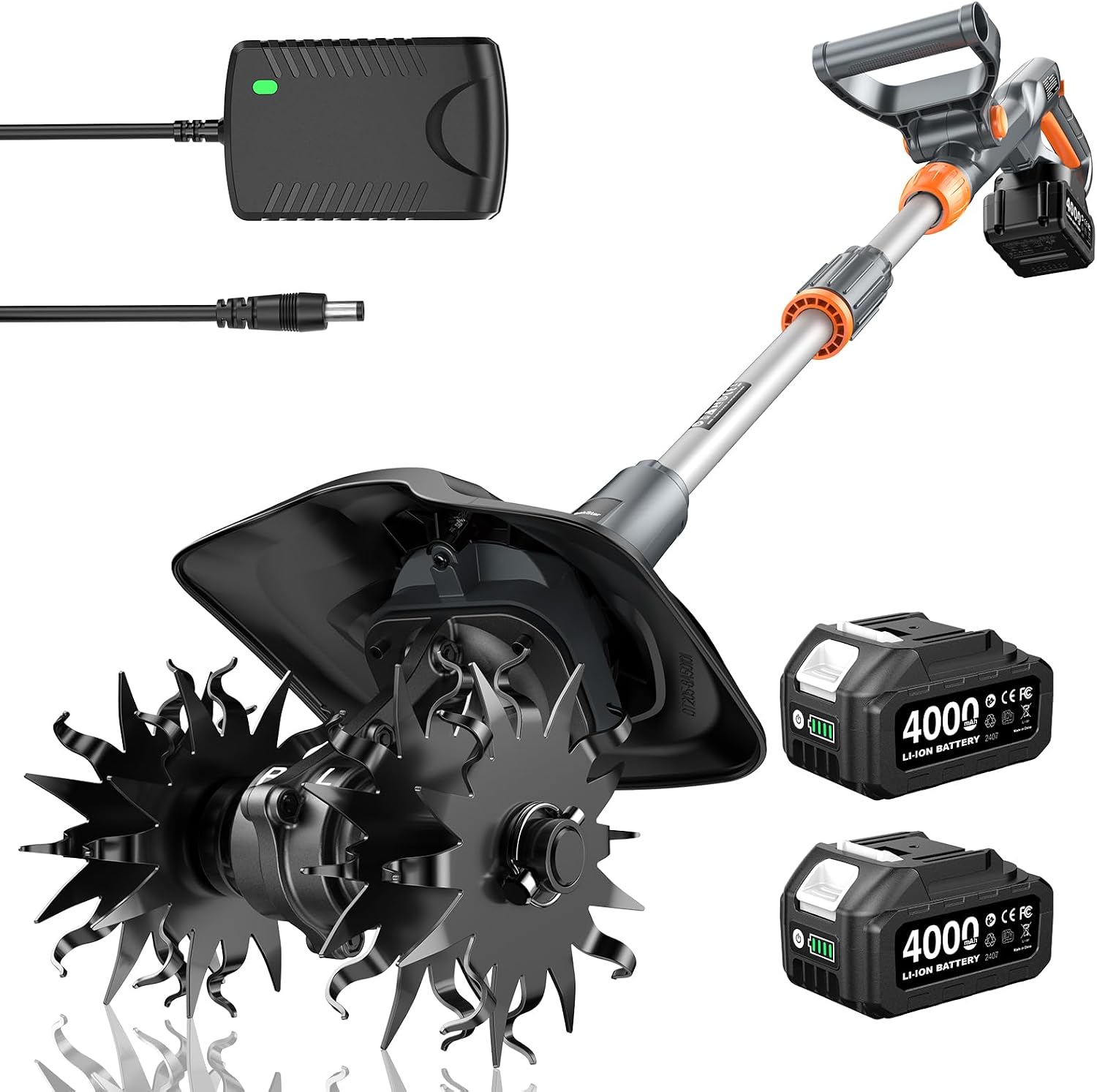
TaskStar Cordless Mini Tiller Cultivator with Dual 4.0Ah Batteries
| Power Source | Battery Powered |
|---|---|
| Working Width | 9 Inch |
| Tilling Depth | 6.6 Inch |
| Batteries Included | 2 x 20V 4.0Ah |
| Tines | 48 Steel Tines |
This TaskStar cordless mini tiller is a compact electric cultivator built for quick soil prep in small vegetable beds, flower borders, and raised planters. Its 9-inch working width and 6.6-inch claimed depth let you cover narrow rows and tight spaces more quickly than a hand fork, while the 360 RPM motor and 48 steel tines provide enough torque to break moderately compacted soil. It ships with two 20V 4.0Ah batteries so you can work longer without recharging and avoid fumes or engine upkeep. The adjustable main handle and front auxiliary handle improve control and comfort during extended use, and the detachable tine assembly simplifies cleaning. Because it is lightweight and cordless, it is easy for beginners and gardeners who prefer low-effort tools. Expect limits on heavy clay or very rocky ground where a larger petrol tiller would be more effective, and run time will depend on soil conditions and how aggressive you work the machine.
Best for: Gardeners who want an affordable, easy-to-use mini tiller for preparing small vegetable beds, raised beds, and flower borders with minimal physical effort.
Less Ideal for: Landscapers or homeowners who need to break heavy clay, large compacted areas, or extensive acreage should choose a larger petrol or heavy-duty electric tiller.
- Compact 9-inch working width fits raised beds and narrow rows
- Comes with two 20V 4.0Ah batteries for extended runtime
- 48 rust-resistant steel tines provide thorough aeration and mixing
- Lightweight, cordless design reduces fatigue and requires no engine maintenance
- Not intended for very heavy clay or large, compacted areas where a full-size tiller is needed
Verdict: A lightweight, battery-driven mini tiller that delivers convenient, low-maintenance soil prep for small gardens and raised beds.
Lmozim 21V Cordless Electric Tiller Cultivator with Two Batteries

| Power Source | Manual |
|---|---|
| Operation Mode | Electric |
| Tilling Width | 9.5" |
| Tine Material | Steel |
| Batteries Included | 2 × 3.0Ah |
This compact cordless tiller is aimed at home gardeners who need a portable tool to break up soil in flower beds, raised planters, and small vegetable plots. It uses a brushless motor driving four steel tines at up to about 360 RPM to till a roughly 9.5 inch wide swath and reach several inches deep, so it replaces bending and manual digging for routine soil preparation. The package includes two 3.0Ah batteries that the listing says run about 30 minutes each, letting you swap batteries for longer sessions without a cord. An adjustable auxiliary handle and a lightweight body make it easier to steer and reduce fatigue during repeated passes, and the dual-safety start helps prevent accidental activation. The tines are detachable for cleaning. Expect good convenience for prepping small to medium garden areas, but plan work in shorter blocks because battery runtime and single-motion tilling power suit light to moderate soil rather than heavy clay or large beds needing a full-width rototiller.
Best for: Gardeners who want a reliable, easy-to-handle tiller for regular maintenance of small beds and raised planters and who prioritize straightforward, low-maintenance tools that finish common prep tasks quickly.
Less Ideal for: Those who need to break sod, work large plots, or regularly till very compacted or clay-heavy soil should choose a heavier-duty, higher-power tiller instead.
- Cordless design with two included rechargeable batteries for uninterrupted swaps during medium sessions
- Brushless motor with steel tines provides consistent soil turnover for light to moderate beds
- Adjustable auxiliary handle and lightweight body improve maneuverability and reduce user fatigue
- Detachable tines make cleaning and basic maintenance straightforward
- Dual-safety start reduces risk of accidental activation
- Not intended for heavy clay or large-scale tilling where a full-size petrol or heavy electric tiller is needed
- Battery runtime (about 30 minutes per battery) limits continuous use without recharging
Verdict: A compact, cordless cultivator that delivers reliable, low-effort soil prep for small gardens thanks to its brushless motor and dual-battery convenience.
Alloyman 20V Cordless Tiller Cultivator with 2×4.0Ah Batteries

| Power Source | Battery Powered |
|---|---|
| Voltage | 20V |
| Tillage width | 9 Inch |
| Tillage depth | 6.6 Inch |
| Running time(single battery) | 45Mins |
The Alloyman 20V cordless tiller is a compact electric cultivator aimed at making light soil prep faster and less physical. It uses two 20V lithium batteries (one provides about 45 minutes) to power a motor that turns four steel tines at up to 360 RPM, cutting a 9 inch swath and roughly 6.6 inches deep per pass. Typical uses are aerating small plots, breaking up raised beds, weeding, and refreshing compacted topsoil where a full-size tiller would be overkill. The adjustable auxiliary handle and light overall weight make it easy to steer and reduce back strain during repeated passes. Practical advantages include cordless mobility for working away from outlets and detachable gears for simpler cleaning after hitting roots or debris. Limitations are its small working width and tine count, so it takes longer to cover larger areas and is not intended for heavy clay or very rocky ground. Also battery runtime will vary with soil resistance, so keep a charged spare for longer jobs.
Best for: Buyers who want a compact, easy-to-use cultivator for raised beds, small lawns, and flower beds and who prioritize cordless convenience and manageable weight over raw power.
Less Ideal for: Do not choose this if you need to prep large acreage or break up heavy compacted clay and rocky ground; those tasks need a larger, more powerful tiller.
- Cordless battery power gives unrestricted mobility for small gardens and tight spaces
- Lightweight, ergonomic design and adjustable auxiliary handle reduce user fatigue
- Detachable gears make cleaning after use easier
- Two 4.0Ah batteries with about 45 minutes per battery minimize downtime when alternating
- Narrow 9 inch working width and four tines make it slow to cover large areas
- Not suited for heavy clay or very rocky soils where a larger petrol tiller is needed
Verdict: A lightweight cordless mini tiller that makes quick, low-effort soil prep in small gardens and raised beds simple and portable.
HEINPRO Cordless Garden Tiller Cultivator (Compatible with DEWALT 20V MAX)

| Power Source | Battery Powered (Battery and Charger not Included) |
|---|---|
| Working Width | 9In tilling width |
| Tilling Depth | 7In depth |
| Blades | 4 hardened steel blades |
| Speed | 360 RPM |
This HEINPRO cordless tiller is a compact electric cultivator aimed at quick soil prep in small plots and raised beds. It uses DEWALT 20V MAX-compatible batteries so you can borrow power from an existing tool collection, and an integrated battery gauge shows runtime at a glance. The unit turns soil with four hardened steel blades at about 360 RPM across a 9-inch working width and up to 7-inch depth, making light plowing, aerating, mixing compost, and weeding straightforward. The tiller is easy to assemble with a three-section pole and quick-release collar and has an adjustable auxiliary handle and non-slip soft grip for better control. Safety is addressed with a dual-switch system to prevent accidental starts. Limitations include modest power and a narrow working width that make it unsuitable for heavy sod, dense grass, or large acreage, and the battery and charger are not supplied. For small vegetable plots and tight garden spaces it is a practical, low-maintenance alternative to gas tillers.
Best for: Buyers who want a simple, low-maintenance electric tiller for small vegetable plots, raised beds, or flower borders and who prioritize safety and ease of use over maximum power.
Less Ideal for: People needing a heavy-duty tiller for large gardens, commercial use, or for removing established turf should consider a larger gas or higher‑power electric model.
- Cordless design compatible with DEWALT 20V MAX batteries for convenient shared power
- Lightweight and ergonomic with adjustable handle and soft grip for reduced user fatigue
- Four hardened steel blades provide efficient soil mixing, aeration, and light plowing
- Dual safety switch reduces accidental starts and improves user safety
- Quick three-section assembly and compact storage for tight sheds and garages
- Not intended for heavy sod or dense grass where blades can tangle
- Battery and charger are not included so runtime depends on separate purchase or existing batteries
- Narrow 9-inch width and modest RPM limit efficiency on larger areas
Verdict: A lightweight, safe cordless tiller that makes quick soil prep in small beds easy using DEWALT 20V MAX batteries.
Choosing the Right Compact Garden Tiller: Key Factors to Consider
Maneuverability and Weight
Maneuverability matters more for a compact tiller than raw horsepower. A lighter, well-balanced machine is easier to steer through narrow paths and between raised beds without disturbing edging or plants. Handle design, clear sightlines to the tines, and wheel placement determine how much effort you need to change direction or correct course.
Weight affects both control and storage. Too heavy and the tiller becomes difficult to lift into a shed; too light and it may bounce or fail to keep tine depth consistent in denser soils. Consider how you will move the tiller to the job site and whether you need folding handles or removable parts for transport.
Tine Design and Soil Penetration
Tine shape, width, and rotation direction influence how a compact tiller breaks up clods, mixes compost, and cuts through turf. Curved tines can pull and pulverize soil more effectively, while straight tines are often better for slicing sod and shallow cultivation.
For small plots, look for a tine configuration that balances penetration with minimal disturbance to adjacent plants. The number of tines and their spacing also affects how cleanly the tiller tills in narrow passes without leaving unworked strips.
Depth Control and Adjustability
Good depth control allows you to set how deeply the tines work so you can prepare seedbeds, incorporate amendments, or perform light cultivation without harming established roots. Adjustable depth skids, variable tine engagement, or multi-position handles give you more precise results across different tasks.
Depth consistency is especially important in compact gardens where beds are close together and uneven tilling can affect drainage or planting depth. Check how easily depth is changed in the field and whether the adjustments hold under load.
Power Source and Torque Delivery
Whether powered by a small gasoline engine, electric motor, or battery, the tiller must deliver steady torque at low speeds to keep tines turning through roots and compacted patches. Electric models are quieter and require less maintenance, but they must provide enough torque for the soil you have. Gas models deliver consistent low-end power but need more upkeep and storage space.
Consider the typical soil conditions in your garden. Heavy clay or sod requires sustained torque and may need a more robust power source, while light, previously worked beds can be managed effectively by lower-power, cleaner-running electric options.
Storage and Portability
Compact tillers are chosen in part for their small footprint, so storage features matter. Folding or removable handles, compact profiles, and wheel locks make it easier to stow the machine in a garden shed or small corner of a garage. Portability also relates to how the unit is transported between garden areas-wheels, carry handles, and quick-release parts simplify that process.
Assess where you will keep the tiller when not in use and whether disassembly is required for regular storage. A model that is slightly larger but easier to move may be a better match than a very small unit that is awkward to lift.
Maintenance and Serviceability
Routine maintenance reduces downtime and keeps the tiller reliable season after season. Easy access to tines, a straightforward gearbox layout, and standard fasteners speed common tasks like tine replacement, belt checks, or oil changes. Electric models reduce some service needs but still require attention to bearings and electrical connections.
Also consider parts availability and whether common wear items are replaceable without specialized tools. A design that simplifies routine checks will save time and keep the machine ready when you need it.
Best Uses for a Compact Garden Tiller
Compact tillers excel in small vegetable patches, raised beds, and urban plots where turning soil with a shovel is inefficient. They are ideal for first-time bed prep, incorporating compost into topsoil, and quick seasonal refreshes before planting.
Use compact models for light cultivation between rows and for mixing surface amendments without excessive soil inversion. They also work well in situations where limited storage space rules out larger machines.
- Preparing small beds for planting
- Incorporating compost and amendments
- Light cultivation and weeding between rows
- Edge-friendly passes around plantings
Electric, Battery, or Gas: Matching Power to Soil
Electric and battery tillers are quieter and require less maintenance, which suits small urban gardens and patios. They are easiest to store and are often lighter for better maneuverability.
Gas-powered compact tillers offer stronger torque for heavier soils and for gardeners who need to dig deeper or break sod. If your beds are compacted clay or include old turf, prioritize a power source with steady low-end torque.
- Electric: low maintenance, quieter, limited by cord or battery life
- Battery: portable and quiet, check battery runtime for larger plots
- Gas: higher torque for tougher soils, requires fuel and maintenance
Working Technique and Bed Preparation Tips
Letting the soil dry to a workable moisture level before tilling makes the job easier and avoids creating clods that take longer to break down. Aim for soil that crumbles when pinched rather than a sticky mess.
Make multiple shallow passes rather than forcing the tiller to a maximum depth in one go. Shallow passes reduce strain on the machine, improve depth control, and produce a finer seedbed when combined with raking and hand tools.
- Check moisture before starting
- Do successive shallow passes for better tilth
- Use hand tools near plant roots to avoid damage
Maintenance Schedule for Compact Tillers
After each use, remove soil and organic matter from tines to prevent rust and reduce wear. For gas models, check oil and air filter condition routinely, and inspect fuel lines before seasonal starts.
Seasonal maintenance should include tine inspection and replacement if bent, bolts tightened, and gearbox checks. For battery and electric models, inspect cords, batteries, and battery contacts for corrosion or wear.
- Clean tines after every use
- Inspect and tighten hardware monthly during season
- Perform engine or battery maintenance at season start
Safety and Handling Best Practices
Always wear eye protection and sturdy footwear when operating a tiller. Keep loose clothing and long hair secured to avoid entanglement with rotating parts. Read and follow the operator guidance for starter and shutdown procedures.
Be mindful of underground utilities, irrigation lines, and shallow roots. Use a hand tool to expose lines before running a tiller over known trench areas, and work slowly around established plantings.
- Wear protective gear and stable footwear
- Confirm there are no hidden lines or obstacles
- Shut off power before inspecting or clearing tines
How We Chose the Best Compact Garden Tiller
We prioritized machines that suit small gardens and tight spaces, focusing on factors gardeners will notice in everyday use. Handling and maneuverability were weighted heavily because compact tillers must be easy to guide between narrow paths and around plants. Soil penetration and tine design were evaluated to ensure each machine can break compacted soil, mix amendments, and work to typical vegetable bed depths. Depth control and adjustability were required criteria so that gardeners can match tilling depth to planting plans and avoid disrupting deeper roots in established beds. Build quality and durability were assessed through materials, tine mounting, and gearbox protections to judge long-term reliability in garden conditions. Maintenance and serviceability were considered to minimize downtime, looking at access to tines, drivetrain layout, and part replacement simplicity. We excluded full-size rototillers and machine classes intended for open acreage because they do not match maneuverability needs for small plots. Units with poor depth control, inadequate protection for working parts, or designs that impede storage were also removed from consideration. The remaining picks meet specific compact garden needs and score well across the concrete dimensions gardeners use to compare tillers.
FAQ
How deep do compact garden tillers typically dig?
Most compact tillers reach blade depths between 4 and 8 inches. Actual depth depends on tine design and whether the unit has adjustable depth skids. For garden beds, gardeners usually prefer multiple shallow passes rather than a single deep cut.
Are electric compact tillers as effective as gas models?
Electric and battery models are effective for light to moderate soils and offer easier maintenance. Gas models usually provide more torque for heavy clay or sod, so effectiveness depends on soil conditions and how deep you need to work.
Can compact tillers be used in raised beds?
Yes. Compact tillers are well suited to raised beds if the bed width allows safe operation and you need to amend soil or prepare seedbeds. Take care near bed edges to avoid damaging the sides and consider using shallower passes.
How often should I replace the tines?
Tine longevity depends on soil type and frequency of use. In abrasive or rocky soils tines may need attention every season, while light garden use can allow multiple seasons. Inspect tines for bending, cracking, and wear and replace when they no longer penetrate cleanly.
What maintenance do battery tillers require compared with gas models?
Battery tillers have fewer routine chores-no oil changes or spark plugs-but still need battery care, contact cleaning, and inspection of bearings and tines. Gas tillers require regular engine maintenance in addition to mechanical checks.
Final Verdict
For small plots and raised beds, prioritize maneuverability, depth control, and a power source suited to your soil. Compact tillers reduce manual labor and speed up bed prep when you match tine design and torque to the conditions you face. Balance storage and maintenance needs against digging capability to choose a tool that will be ready when the season starts. If you need easy handling and storage, favor lighter, well-balanced models with solid depth adjustments. If your soil is heavy or contains old turf, prioritize torque and sturdy tine construction even if that means a slightly larger footprint.
