

Note: This article contains affiliate links. If you click on these links and make a purchase, I may earn a small commission at no extra cost to you. This helps support my research and content. Read my full affiliate disclosure here.
If you tend small vegetable patches, container gardens, or tight patio beds, the right mini garden tiller makes soil prep faster and less tiring. A compact tiller saves space while still turning compacted soil, mixing in amendments, and creating a smooth seedbed for planting. This guide covers our shortlist of seven top mini garden tillers suited to small-scale gardening. We evaluated each option on the practical criteria gardeners care about, including power and torque for breaking soil, ease of handling in narrow spaces, and maintenance needs. Read on to see which features matter most for your plot and why these models made the list.
Top Picks at a Glance
| Best Overall The best all-around choice for most situations | Alloyman 20V Cordless Mini Tiller Cultivator with 2×4.0Ah Batteries |  |
| Best Quality Built to a higher standard if you want something more solid | SOARFLY Cordless Mini Tiller Cultivator with 2×4.0Ah Batteries |  |
| Best Value The sweet spot between price and what you get | reffmov Cordless Electric Garden Tiller Cultivator with Dual 3000mAh Batteries |  |
| Best Budget The cheapest option that still gets the job done reliably | TaskStar Cordless Mini Tiller Cultivator with Dual 4.0Ah Batteries | 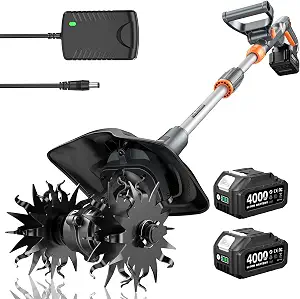 |
| Highest Rated A top-rated pick with lots of positive feedback | XARAZE Mini Cordless Tiller Cultivator, 21V Battery Powered |  |
| Most Popular A crowd favorite that many people choose with confidence | Muylux 20V Cordless Hand Tiller Cultivator with 2 x 2.0Ah Batteries |  |
| Best Seller A high-volume bestseller chosen again and again | HEINPRO Cordless Tiller Cultivator (Compatible with DEWALT 20V MAX Batteries) |  |
Alloyman 20V Cordless Mini Tiller Cultivator with 2×4.0Ah Batteries

| Power Source | Battery Powered |
|---|---|
| Voltage | 20V |
| Tillage width | 9 Inch |
| Tillage depth | 6.6 Inch |
| Battery capacity | 2×4.0AH |
The Alloyman 20V cordless mini tiller is built for small-scale soil preparation around flower beds, raised beds, and compact lawns. It uses a 360 RPM motor driving four steel tines to cultivate up to a 9 inch width and about 6.6 inch depth, and ships with two 4.0Ah batteries so you can swap cells instead of waiting to recharge. The tiller is cord-free for easy access to edges and tight spots and has an ergonomic adjustable auxiliary handle to reduce bending and fatigue. Safety is addressed with a two-step start that requires pressing both a safety button and the trigger. Detachable gears make it simpler to clear debris after use. Be aware this is a lightweight, small-capacity tool aimed at light to moderate garden beds rather than heavy clay or large-scale tilling; its modest tine count and battery power limit performance in very hard or compacted soils. For routine prepping of small plots, though, it is convenient and easy to maneuver.
Best for: Gardeners who need a lightweight, easy-to-maneuver tiller for beds, borders, and small plots and who value cordless convenience and simple maintenance.
Less Ideal for: People who need a heavy-duty tiller for large areas, compacted clay, or frequent deep cultivation should choose a larger petrol or commercial electric model.
- Cordless design with two 4.0Ah batteries for flexible runtime and quick swap between charges
- Compact 9 inch working width and ~6.6 inch depth suited to raised beds and tight garden spaces
- Ergonomic adjustable handle reduces bending and improves control during use
- Safety dual-switch start reduces accidental activation
- Detachable gears allow easier cleaning of tines and gear area after use
- Small tine set and single-speed motor limit effectiveness in very hard, compacted, or rocky soils
- Designed for light to medium garden tasks so not suitable for large-scale tilling projects
Verdict: A compact cordless mini tiller that makes prepping small beds fast and convenient for gardeners who want portability and easy handling.
SOARFLY Cordless Mini Tiller Cultivator with 2×4.0Ah Batteries

| Power Source | Battery Powered |
|---|---|
| Tine Count | 48 Steel Tines |
| Operating Speed | 360 RPM |
| Battery Capacity | 2×4.0Ah |
The SOARFLY cordless mini tiller is a lightweight electric cultivator aimed at small beds, raised planters, and tight garden spots where a full-size tiller would be overkill. It uses four steel tines driven at about 360 RPM and ships with two 4.0Ah lithium batteries so you can swap packs for extended run time; the listing claims up to 120 minutes total. Adjustable height and an auxiliary handle make it easier to position and steer, and a dual safety switch reduces accidental starts. In practice this unit is best for breaking up topsoil, mixing compost into beds, removing light weeds, and loosening moderately compacted soil or moistened clay. Because it is cordless and relatively light it is easy to carry between beds and use where there is no outlet. Expect limits when tackling deep, heavy sod, very compacted subsoil, or lots of rocks and roots since the low RPM and small tine width are meant for small-scale gardening rather than heavy-duty tilling.
Best for: Gardeners who prioritize efficient, portable performance for small to medium beds and raised planters and want a tiller that is easy to maneuver without a gas engine.
Less Ideal for: Owners with larger plots, heavy sod, or deeply compacted ground who need a commercial-grade or gas-powered tiller for more aggressive soil breaking.
- Comes with two 4.0Ah batteries for extended continuous use
- Adjustable height and auxiliary handle improve ergonomics and control
- Cordless design lets you cultivate beds and raised planters without an outlet
- Steel tines and 360 RPM motor suited to breaking up soil and weeding in small areas
- Not powerful enough for deep tilling through roots, heavy sod, or large compacted clay
- Small working width limits how quickly larger plots can be covered
Verdict: A portable, performance-focused mini tiller that delivers extended cordless runtime and adjustable ergonomics for fast soil prep in small gardens.
reffmov Cordless Electric Garden Tiller Cultivator with Dual 3000mAh Batteries

| Power Source | Battery Powered |
|---|---|
| Motor Voltage | 21V |
| Battery Capacity | 3000mAh (x2) |
| Tilling Width | 9.5 in |
| Tilling Depth | 7 in |
This compact cordless tiller is built for everyday garden tasks where maneuverability matters. It uses a 21V motor and 48 steel tines to break up soil, mix compost, and remove weeds across a 9.5 inch swath to a 7 inch depth, making it good for raised beds, vegetable patches, and flower borders. The included two 3000mAh batteries swap quickly for longer sessions and the unit is notably lighter and easier to handle than gas models, which reduces fatigue during repeated passes. Practical touches like an adjustable handle and reinforced motor housing improve control and durability for routine use. Expect efficient performance in loose to moderately compacted soils; very heavy clay or large roots will slow progress and may require smaller passes or a heavier machine. Noise, fumes, and maintenance are minimal compared with petrol tillers, but buyers should plan work in shorter segments since runtime depends on battery charge and conditions. For gardeners who prioritize ease of use and portability, this tiller covers most small-plot needs well.
Best for: Home gardeners who want a low-maintenance, easy-to-handle tiller for small beds, raised boxes, and border work and who prioritize portability and straightforward operation over heavy-duty power.
Less Ideal for: Landscapers or gardeners preparing large new plots or tackling very compacted clay and root-filled ground should choose a larger gas or corded model instead.
- Cordless battery power with two 3000mAh batteries for up to about 80 minutes total runtime
- Lightweight, ergonomic design with adjustable handle for reduced user fatigue
- 48 alloy steel tines and 21V motor provide effective tilling for beds and borders
- Compact 9.5 inch working width fits between plants and in tight spaces
- Limited effectiveness in very heavy clay or where large roots are present
- Battery runtime varies with soil conditions so longer jobs may need recharges or pacing
Verdict: A portable, easy-to-use cordless tiller that makes quick work of small beds and tight garden spaces while avoiding the noise and upkeep of gas models.
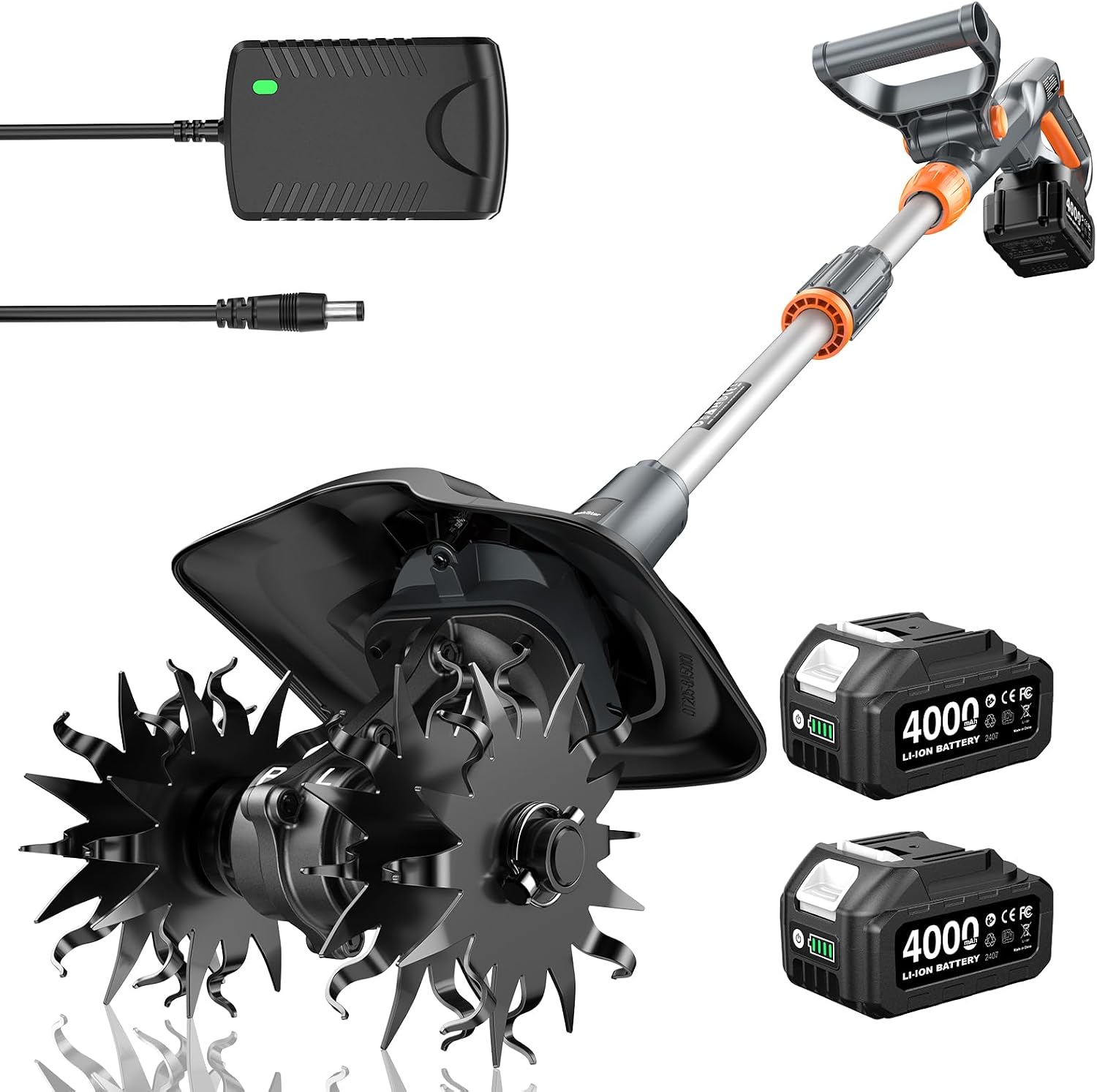
TaskStar Cordless Mini Tiller Cultivator with Dual 4.0Ah Batteries
| Power Source | Battery Powered |
|---|---|
| Working Width | 9 Inch |
| Tilling Depth | 6.6 Inch |
| Batteries Included | 2 x 20V 4.0Ah |
| Tines | 48 Steel Tines |
This TaskStar cordless mini tiller is a compact electric cultivator built for quick soil prep in small vegetable beds, flower borders, and raised planters. Its 9-inch working width and 6.6-inch claimed depth let you cover narrow rows and tight spaces more quickly than a hand fork, while the 360 RPM motor and 48 steel tines provide enough torque to break moderately compacted soil. It ships with two 20V 4.0Ah batteries so you can work longer without recharging and avoid fumes or engine upkeep. The adjustable main handle and front auxiliary handle improve control and comfort during extended use, and the detachable tine assembly simplifies cleaning. Because it is lightweight and cordless, it is easy for beginners and gardeners who prefer low-effort tools. Expect limits on heavy clay or very rocky ground where a larger petrol tiller would be more effective, and run time will depend on soil conditions and how aggressive you work the machine.
Best for: Gardeners who want an affordable, easy-to-use mini tiller for preparing small vegetable beds, raised beds, and flower borders with minimal physical effort.
Less Ideal for: Landscapers or homeowners who need to break heavy clay, large compacted areas, or extensive acreage should choose a larger petrol or heavy-duty electric tiller.
- Compact 9-inch working width fits raised beds and narrow rows
- Comes with two 20V 4.0Ah batteries for extended runtime
- 48 rust-resistant steel tines provide thorough aeration and mixing
- Lightweight, cordless design reduces fatigue and requires no engine maintenance
- Not intended for very heavy clay or large, compacted areas where a full-size tiller is needed
Verdict: A lightweight, battery-driven mini tiller that delivers convenient, low-maintenance soil prep for small gardens and raised beds.
XARAZE Mini Cordless Tiller Cultivator, 21V Battery Powered

| Power Source | Battery Powered |
|---|---|
| Operation Mode | Electric |
| Material Type | Alloy Steel |
| Unit Count | 1 Count |
The XARAZE mini cordless tiller is a lightweight, one‑hand garden cultivator built for quick soil refreshing in raised beds, containers, and narrow rows. Its 21V motor and rotating tines break up compacted soil, mix in compost, and help remove small weeds while the included debris guard keeps splashed soil contained. The kit ships with two 1.5Ah lithium batteries and a charger so you can swap packs to extend runtime without waiting for a single battery to recharge. At just over two pounds and with a slim profile, it is easy to maneuver between plants and comfortable for users who prefer short bursts of work rather than long heavy-duty tilling. Notable practical benefits are cordless convenience, simple two-step safety lock to reduce accidental starts, and hardened steel tines that rinse clean. Expect limitations when tackling deeply compacted ground or large plots because the mini tiller is intended for light cultivation and tight spaces rather than heavy soil breaking or full-size garden beds.
Best for: Gardeners who need a reliable, easy-to-use tool for light cultivation in small plots, raised beds, containers, and tight spaces and who prioritize cordless convenience and simple operation.
Less Ideal for: Those preparing large vegetable plots or breaking new ground in compacted clay should choose a larger, more powerful tiller designed for heavy-duty soil work.
- Lightweight one‑hand design makes it easy to maneuver in raised beds and between plants
- Comes with two 21V 1.5Ah batteries and charger so you can swap packs for extended use
- Hardened steel tines and a debris guard simplify cleanup and protect nearby plants
- Two-step safety lock reduces risk of accidental startup during handling
- Small 4" working width and shallow depth limit effectiveness on heavy or compacted soils
- Battery capacity (1.5Ah) is suited for short sessions rather than long continuous use
Verdict: A dependable, lightweight cordless mini tiller that makes quick, low-effort cultivation and weeding in small beds and containers much easier.
Muylux 20V Cordless Hand Tiller Cultivator with 2 x 2.0Ah Batteries

| Power Source | Battery Powered |
|---|---|
| Operation Mode | Electric |
| Material Type | Alloy Steel |
| Model Number | CT-20LS |
The Muylux 20V cordless hand tiller is a compact cultivator designed for preparing small beds, aerating lawns, and breaking up compacted topsoil. It uses two steel tines that rotate up to 240 RPM to work the soil roughly four inches deep, and the cordless 20V battery setup gives freedom to move around without extension cords. Included dual 2.0Ah batteries let you swap in a fresh pack and keep working, and the ergonomic grip and light overall weight make it easy to handle for short sessions. Practical benefits include fast spot cultivation in tight rows or raised beds and low vibration compared with larger gas tillers. Limitations are the shallow tine depth and modest tine count, which mean it is not suited for initial deep turning of heavy clay or large plots. Users should also follow safety guidance for protective eyewear and keep the tines clear of debris. For small-scale gardeners this is a convenient, portable option for routine bed prep and spot remediation.
Best for: Gardeners who need a portable, easy-to-use tool for prepping small beds, raised planters, and spot-tilling in tight spaces and who value convenience and maneuverability over heavy-duty power.
Less Ideal for: People establishing large vegetable plots or working heavy clay who need deeper, more aggressive tilling should choose a larger, more powerful rototiller.
- Cordless 20V battery power provides unrestricted movement in small gardens
- Two included 2.0Ah batteries allow quick swapping to extend run time
- Steel tines rotate up to 240 RPM to loosen soil to about 4 inches deep
- Lightweight, ergonomic design reduces user fatigue for short jobs
- Only two tines and shallow cultivation depth limit effectiveness on heavy or compacted soil
- Not intended for large beds or primary deep-turning of new garden areas
Verdict: A compact, cordless cultivator that makes quick work of shallow bed prep and spot tilling in small gardens.
HEINPRO Cordless Tiller Cultivator (Compatible with DEWALT 20V MAX Batteries)

| Power Source | Battery Powered (Battery and Charger not Included) |
|---|---|
| Working Width | 9 inches |
| Tilling Depth | 7 inches |
| Blade Speed | 360 RPM |
| Material Type | Alloy Steel |
The HEINPRO cordless tiller is a compact battery-powered cultivator aimed at small vegetable plots, flower beds, and raised beds. It uses a compatible DEWALT 20V MAX battery (not included) to drive four hardened steel blades at about 360 RPM, cultivating up to a 9 inch swath and roughly 7 inches deep to break up soil, mix compost, and loosen seedbeds. Practical features include a dual safety switch to prevent accidental starts, an adjustable auxiliary handle for better control, a three-section pole that breaks down for storage, and a built-in battery charge indicator so you can monitor runtime. At around 9.4 pounds it is easy to maneuver and causes less fatigue than heavier gas models, and it is quieter and maintenance-free. Important limitations are that it is designed for light to medium garden soils and cultivated areas rather than dense grass or very compacted ground where blades can tangle or struggle, and the battery and charger must be supplied separately. For routine prep in small plots this makes soil work quicker and less physically demanding than hand tools.
Best for: Buyers who want a low-effort, safe way to prep soil in small gardens, raised beds, or flower beds and prefer a lightweight cordless tool that is easy to handle and store.
Less Ideal for: Gardeners who need to till large open fields, break heavy compacted ground, or remove deep-rooted turf should choose a larger gas or commercial tiller instead.
- Cordless operation with DEWALT 20V MAX battery compatibility for unrestricted movement
- Lightweight design (about 9.4 lbs) and adjustable handle for easy maneuvering and reduced fatigue
- Dual safety switch and trigger for secure operation
- Four hardened steel blades with 9-inch working width and 7-inch depth for efficient small-bed cultivation
- Breaks down into three sections for compact storage
- Battery and charger are not included
- Not suited for dense grass or very compacted soil where blades may tangle or struggle
Verdict: A lightweight, safety-focused cordless mini tiller that makes quick soil prep in small gardens easy without the noise and fuss of gas machines.
Choosing the Right Mini Garden Tiller: Key Factors to Consider
Power Source and Output
Mini garden tillers come with electric, battery, or small gas engines, and the source determines how you use the tool. Electric corded models give consistent power for uninterrupted jobs but need access to an outlet and extension management in longer sessions. Battery models free you from cords and usually weigh less, but battery capacity and recharge times limit continuous run time.
Small gas engines deliver strong torque for tougher soil but add maintenance tasks such as fuel storage, oil changes, and occasional spark plug checks. Consider how often you will use the tiller and the soil conditions you face. For light, frequent bed refreshes and container gardens, a battery or corded electric unit is often the most convenient. For breaking moderately compacted ground occasionally, a small gas unit may save effort despite extra upkeep.
Tine Type, Width, and Depth Control
Tine design determines how effectively a tiller penetrates, mixes, and chops roots. Narrow, shallow tines are best for delicate beds and shallow mixing of compost into the topsoil. Wider or heavier-duty tines dig deeper and can handle small sod patches or slightly compacted ground but may be harder to steer in narrow rows.
Depth control settings let you limit disturbance when working established beds or go deeper when preparing a fresh planting area. Adjustable tines or depth bars also improve safety around buried utilities or shallow roots. Match tine width and depth capability to the garden tasks you commonly perform: seedbed smoothing, compost incorporation, or light sod removal.
Size, Weight, and Maneuverability
Mini tillers are designed to be compact, but weight and balance vary widely. A lighter machine is easier to carry, tilt, and turn between tight beds, while a slightly heavier model can provide steadier tine engagement and better traction in loose soil. Consider the physical demands of your garden layout, including steps, narrow paths, and raised bed edges.
Handle configuration affects how well you can guide the tiller along rows or around plants. Folding or telescoping handles reduce storage footprint but should lock securely for safe operation. If you have limited storage or need to move tools up and down stairs, prioritize low weight and foldable designs without sacrificing stability during use.
Maintenance and Service Accessibility
How easy a tiller is to maintain will affect whether it stays in reliable working order. Gas models require routine tasks like oil changes, air filter cleaning, and occasional carburetor attention. Battery models demand battery care, including correct charging storage and eventual cell replacement. Corded electrics minimize mechanical maintenance but still need occasional cleaning and inspection of tines and cables.
Look for designs that allow quick access to service points, such as tool-less tine removal, easily reached oil fill caps, and simple battery swaps. Routine maintenance complexity affects long-term costs and downtime and is especially important if you prefer low-effort backyard upkeep.
Noise, Vibration, and Comfort
Noise and vibration influence how comfortable it is to use a tiller for extended periods and may matter in close neighborhoods. Electric and battery models tend to run quieter with lower vibration levels, which makes early-morning or evening use more pleasant. Small gas engines produce more noise and vibration, which can be fatiguing and may require hearing protection for longer sessions.
Ergonomic handles, anti-vibration mounts, and throttle placement all contribute to operator comfort. If you plan to cultivate frequently or for longer sessions, prioritize a machine with better vibration damping and comfortable grips to reduce hand and arm fatigue.
Durability and Build Quality
A mini tiller should stand up to soil, moisture, and the occasional knock from working close to hard edges. Check for robust tine shafts, corrosion-resistant finishes, and a reliable gearbox or transmission. Lightweight plastic housings reduce weight but can wear faster under repeated strain, while metal components usually last longer when exposed to grit and moisture.
Durable construction also reduces the frequency of repairs and preserves resale value. For gardeners who use their tiller several times per season, investing in a sturdier build pays off in fewer failures and a longer service life.
Best Soil Prep Practices for Small Spaces
Prepare small beds by removing debris and shallow weeds before using a mini tiller. Work in short passes across the bed rather than long continuous runs to maintain control and avoid overheating the motor or battery.
Mix amendments like compost or aged manure on the surface first, then run the tiller at a shallow depth to incorporate them evenly without burying light amendments too deeply. For very compacted spots, make multiple shallow passes rather than a single deep pass to protect soil structure and beneficial organisms.
- Clear large rocks and sticks to prevent tine damage
- Run across the bed width for better maneuverability
- Use shallow passes to avoid over-disturbing soil life
Storing and Transporting a Mini Tiller
Store your tiller in a dry, sheltered spot and clean soil from tines and the drive area after each use to prevent rust and grit buildup. If the unit has a folding handle, lock it in the storage position to save space and protect controls from accidental damage.
For battery models, remove the battery for storage and keep it at recommended charge levels to prolong cell life. Drain or stabilize fuel in gas models before long storage intervals to avoid stale-fuel problems.
- Clean and dry tines before storing
- Remove battery or stabilize fuel for long-term storage
- Keep tools off the ground to prevent moisture damage
Using a Mini Tiller Around Established Plants
Work carefully when cultivating near existing plants. Keep the tiller on a shallow setting and use hand tools for final soil detail around crowns and shallow-rooted ornamentals. The compact size of mini tillers helps with access, but a cautious approach prevents root damage.
When refreshing perennial beds, mark root zones you want to avoid and focus mechanical cultivation on walkways and open patches. Always follow a steady, controlled pace to maintain visibility of plant bases.
- Set depth shallow near plant roots
- Use hand tools for precision close to stems
- Mark and avoid root zones of established perennials
Common Troubleshooting Tips
If the tiller struggles to engage soil, check tine sharpness, reduce depth, and clear any wrapped debris. For electric models that lose power, inspect the power supply or battery charge level and look for loose connections.
Unusual noises often indicate bent tines, debris in the gearbox, or mounting hardware that needs tightening. Address these issues promptly to prevent further damage and maintain safe operation.
- Clear wrapped grass and roots from tines
- Check battery charge or power cord connections
- Tighten loose fasteners and inspect tines for bends
How We Chose the Best Mini Garden Tiller
We focused on tools appropriate for small beds, pots, raised planters, and confined urban plots. Our selection filters prioritized machines that deliver enough torque to break light to medium compacted soil while remaining compact and easy to maneuver in tight layouts. We considered engine or motor type and displacement or wattage to assess consistent power delivery, plus tine design and depth control for effective soil turnover without over-disturbing delicate root systems. User ergonomics were another major filter: handle reach and folding features affect how usable a tiller is for gardeners of different heights and storage limits. Durability factors included transmission design, tine material, and overall build quality that determine service life under normal home-garden use. We also weighed maintenance burden, such as oil and air filter access for gas models or battery life and recharge times for electric options. We excluded heavy-duty commercial rototillers and any machine intended solely for deep trenching or large-acre farming. The final list favors machines that balance compact footprints with enough working force for loosening, mixing, and preparing soil in small-scale garden settings.
FAQ
Can a mini garden tiller handle compacted clay soil?
It depends on the degree of compaction. Mini tillers can loosen light to moderate compaction with multiple shallow passes, but very dense clay may need pre-soaking, amendment with organic matter, or a heavier-duty machine to break up effectively.
How deep do mini tillers usually dig?
Most mini tillers offer adjustable depths in the range of a few inches to around six inches. Exact depth capability varies, so choose a model with depth control that matches whether you need surface mixing or deeper soil turnover.
Are electric or battery mini tillers better for small patios?
Electric and battery models are generally better for patios because they run quieter, emit no fumes, and are easier to start. Battery models add mobility, while corded electrics provide unlimited runtime when an outlet is accessible.
How often should I service a mini garden tiller?
Service frequency depends on usage and power type. Light home use may only require annual checks, while heavier seasonal use benefits from mid-season inspections. Gas models need more routine maintenance like oil and air filter checks; electrics mainly need cleaning and tine inspection.
Can I use a mini tiller to remove small patches of sod?
Mini tillers can help loosen thin sod layers, but they work best when combined with prior cutting or loosening with a shovel. For thick or well-rooted sod, a heavier machine or manual removal may be more effective.
Final Verdict
When choosing a mini garden tiller, balance the power you need with the footprint you can handle. Prioritize tine design and depth control for the tasks you perform most, and match the power source to how frequently and where you will work. Consider storage, maintenance, and comfort features to ensure you actually use the tool rather than letting it sit unused. For small beds and patios, a compact tiller that offers reliable torque, easy maneuverability, and simple upkeep will deliver the best long-term value. Focus on the tradeoffs between portability and digging strength to select the model that fits your garden chores and physical handling preferences.
