

Note: This article contains affiliate links. If you click on these links and make a purchase, I may earn a small commission at no extra cost to you. This helps support my research and content. Read my full affiliate disclosure here.
A self propelled garden tiller can save hours of backbreaking work when breaking new ground, renovating beds, or incorporating compost. Choosing the right tiller matters because differences in power delivery, tine configuration, and weight change how deep you can work, how clean the finish looks, and how tiring the job becomes. This guide shortlists six top options built for home gardens and small-acreage plots. We evaluated each machine on traction, digging capability, handling, and reliability so you can pick a tiller suited to your soil type, bed size, and physical needs. Read on for practical buying guidance and what to expect from different tiller designs.
Top Picks at a Glance
| Best Overall The best all-around choice for most situations | Champion Power Equipment 19-Inch Counter Rotating Rear Tine Tiller |  |
| Best Quality Built to a higher standard if you want something more solid | Poulan Pro 18" Rear Tine Tiller with 212cc Gas Engine |  |
| Best Value The sweet spot between price and what you get | NOVUS 18-Inch Rear Tine Tiller with 212cc Gas Engine |  |
| Best Budget The cheapest option that still gets the job done reliably | SuperHandy Rear Tine Tiller — 7 HP Gas Garden Tiller with Counter-Rotating Tines |  |
| Highest Rated A top-rated pick with lots of positive feedback | NOVUS 17" Dual-Direction Rear Tine Tiller with 212cc Gas Engine |  |
| Most Popular A crowd favorite that many people choose with confidence | EARTHQUAKE Victory Rear Tine Tiller (209cc Viper Engine) |  |
Champion Power Equipment 19-Inch Counter Rotating Rear Tine Tiller

| Engine | 212cc |
|---|---|
| Tilling width | 19 in. |
| Tilling depth | 8 in. |
| Tines | Four 13.8-inch hardened steel counter-rotating |
This Champion rear tine tiller is built for medium to heavy garden jobs where you need deep, aggressive cultivation. It uses a 212cc engine driving a cast-iron, gear-driven transmission in a heavy-duty housing to power four hardened steel counter-rotating tines that reach an advertised 8-inch depth across a 19-inch width. The self-propelled 13-inch agricultural tires make it easier to move over uneven ground and reduce operator fatigue when breaking new ground or turning stubborn beds. The cast-iron gearbox and hardened tines are practical for frequent use in compacted or clay soils, and the machine’s traction helps maintain steady forward progress. Trade-offs are typical for a powerful gas tiller: it requires regular engine maintenance, fuel, and more storage space than electric models, and it is heavier to maneuver in tight or delicate planting areas. For gardeners needing reliable, deeper tilling and durability, this unit is a solid choice; casual users with only light surface cultivation needs may prefer a lighter, simpler machine.
Best for: Gardeners who need a durable, capable tiller for preparing new beds or working compacted soil and who prioritize power and deep cultivation over lightweight convenience.
Less Ideal for: Urban gardeners with small raised beds or those who want a low-maintenance electric option for light surface cultivation should consider smaller, quieter alternatives.
- Powerful 212cc engine and cast-iron, gear-driven transmission for durability under heavy use
- Counter-rotating hardened steel tines that provide deep, aggressive tilling up to 8 inches
- 19-inch tilling width balances coverage and maneuverability for typical garden beds
- 13-inch self-propelled agricultural tires improve traction and reduce operator effort
- Gas engine requires regular maintenance and fuel and increases storage needs
- Heavier and less maneuverable in tight spaces compared with lightweight or electric tillers
Verdict: Choose this tiller if you need a robust, self-propelled machine that delivers deep, aggressive cultivation and reliable traction for medium to large garden beds.
Poulan Pro 18" Rear Tine Tiller with 212cc Gas Engine
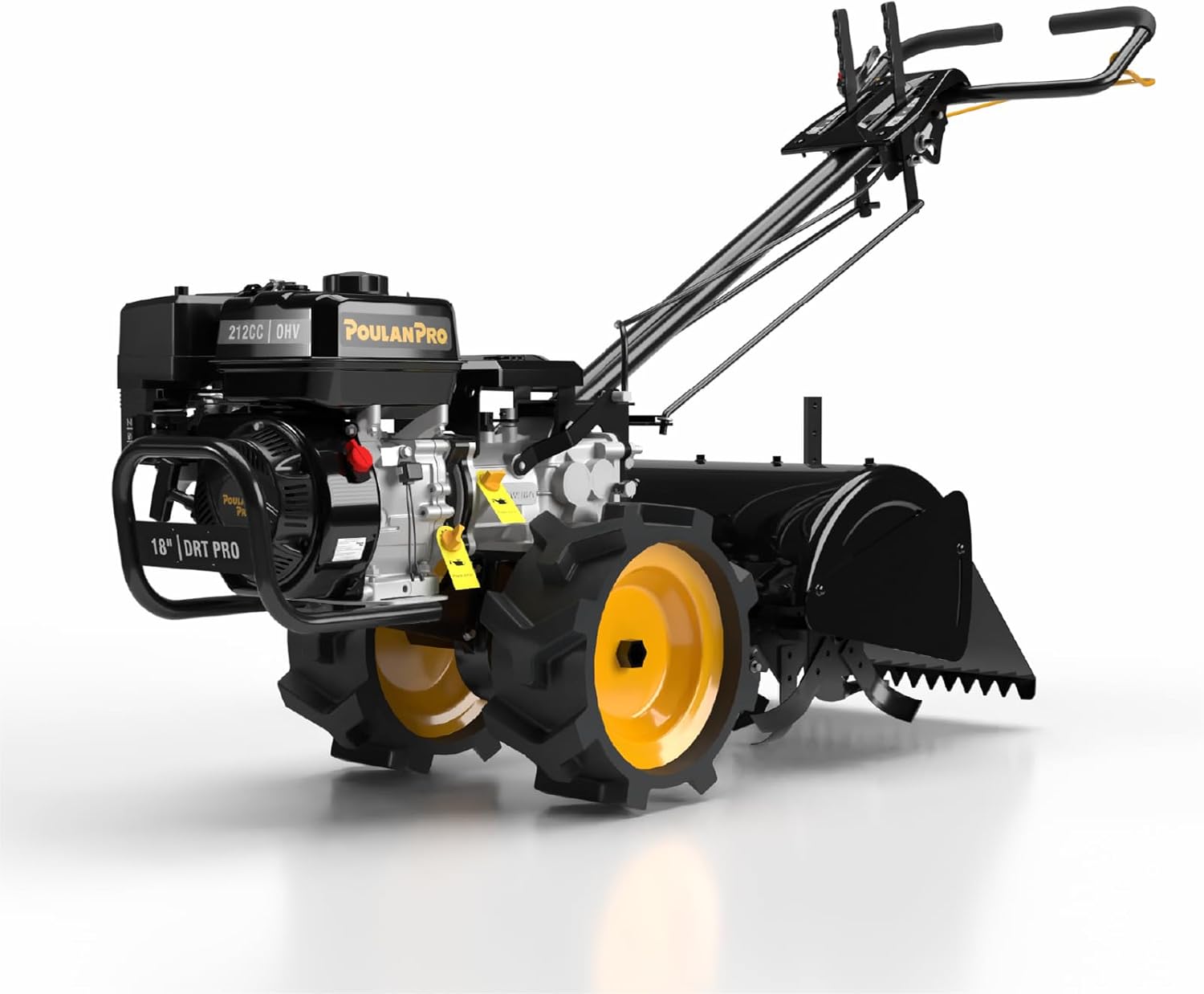
| Engine | 212cc 4-cycle |
|---|---|
| Tilling width | 18" |
| Tilling depth | 4"-10" |
| Tines | 16 steel dual-rotation |
| Transmission | Full gear-driven |
The Poulan Pro 18-inch rear tine tiller is built for repetitive, demanding soil work where reliability matters. Its 212cc 4-cycle gas engine pairs with a full gear-driven transmission rather than belts, which reduces routine adjustments and delivers steady power when breaking hard or compacted ground. The unit uses 16 steel tines with dual-direction rotation and three speeds (two forward, one reverse) so you can control progress and back out without fighting the machine. Flat-free tires and a dual-grip handlebar make maneuvering and pivoting along beds more controlled and low maintenance. Practical benefits include consistent performance in vegetable plots, flower beds, and small acreage prep, plus fewer service headaches thanks to the gear drive. Important limitations are that it is a gas machine so it needs fueling and periodic engine upkeep, and its weight and size make it less suited for very small or raised beds where a compact tool would be easier to handle.
Best for: Gardeners and small-scale growers who prioritize a low-maintenance, workhorse tiller that consistently handles heavy or compacted soil for regular bed preparation.
Less Ideal for: Urban gardeners with very small plots, raised beds, or those who prefer electric or hand tools for lighter, infrequent tilling tasks.
- Full gear-driven transmission reduces belt maintenance and delivers consistent torque
- Powerful 212cc 4-cycle engine handles compacted soil and larger plots
- Dual-rotation 16-tine setup with multiple speeds improves control when tilling and reversing
- Flat-free tires provide long-term durability and stable traction without inflation concerns
- Gas engine requires regular fueling, oil changes, and winter storage care
- Physical size and weight limit ease of use in very small or raised garden beds
Verdict: Choose this tiller when you need a robust, low-maintenance gas tiller that consistently tackles compacted soil on vegetable plots and small farms.
NOVUS 18-Inch Rear Tine Tiller with 212cc Gas Engine

| Power Source | gas_powered |
|---|---|
| Tilling Width | 18" |
| Tilling Depth | 4"-10" |
| Transmission | Full Gear |
The NOVUS 18-inch rear tine tiller is designed to tackle large or overgrown garden plots with a 212cc 4-cycle gas engine and a full gear transmission for durable, consistent power. It uses 16 steel tines with selectable standard and counter-rotating modes and two forward speeds plus one reverse, so you can break new ground or work established beds and control how aggressively the soil is worked. The eight-position depth adjustment reaches down to 10 inches, which helps when loosening compacted subsoil or preparing deep vegetable trenches. Airless tires reduce downtime from flats and make moving the machine across rough terrain easier. Expect heavier weight and the usual gas-maintenance tasks such as fuel, oil, and periodic tuneups, and it will be more than you need for tiny raised beds or light surface cultivation. Assembly and storage require space, and the machine is best handled by someone comfortable with engine-driven equipment. For large plots where power, depth range, and durable transmission matter, this tiller performs like a workhorse.
Best for: Gardeners with large plots who need a robust, durable tiller to break compacted soil and prepare new beds and who prefer a powerful, engine-driven machine over lighter electric options.
Less Ideal for: Those with very small raised beds, limited storage, or who want a lightweight electric or handheld cultivator for light surface work.
- Powerful 212cc 4-cycle gas engine suitable for heavy soil and large gardens
- Full gear transmission for durable, low-maintenance power delivery
- Selectable tine rotation and multiple speeds allow both aggressive ground-breaking and gentler bed preparation
- Eight-position depth adjustment to till as deep as 10 inches for robust soil preparation
- Airless tires eliminate flat tires and improve mobility over rough terrain
- Requires regular gas engine maintenance and fuel handling
- Large and heavy so it needs storage space and may be hard to maneuver for small users
Verdict: If you need a hard-working, heavy-duty tiller for large gardens and compacted soil, this NOVUS rear tine model delivers the power and depth control to get the job done.
SuperHandy Rear Tine Tiller — 7 HP Gas Garden Tiller with Counter-Rotating Tines

| Power Source | Gas Powered |
|---|---|
| Material Type | Alloy Steel |
| Item Type Name | Rear Tine Garden Tiller |
The SuperHandy rear tine tiller is a gas-powered, self-propelled machine designed to break up compacted soil and prepare planting beds. It uses counter-rotating hardened steel tines to till a 16-inch width to about 12 inches deep, and the engine power helps the unit push through heavier ground that small cultivators cannot handle. Typical use is seasonal bed preparation, turning under amendments, and loosening ground before planting. Notable features include an adjustable depth stake, three height-adjustable handles for operator comfort, and inflatable agricultural-style tires that make transporting the unit across the yard easier. Maintenance is straightforward because it accepts standard SAE 75 or SAE 80 gear oil and has user-focused assembly and service guidance. Important limitations are that it is a gas machine, so it requires fuel, regular engine maintenance, and safe storage, and it is comparatively large so it is best for medium to larger plots rather than tiny urban plots. Expect some learning curve when first handling a rear-tine tiller and follow safety guidance to avoid debris hazards.
Best for: Buyers looking for a cost-conscious, capable self-propelled tiller to prep medium to large vegetable beds and gardens who prioritize raw tilling power over electric convenience.
Less Ideal for: People with very small raised beds, balconies, or those who want a low-maintenance electric option should consider smaller electric cultivators instead.
- Powerful 7 HP gas engine capable of handling compacted or heavy soils
- Counter-rotating hardened steel tines provide thorough 16-inch wide, 12-inch deep tilling
- Adjustable depth stake and three height-adjustable handles improve control and comfort
- Inflatable agricultural-style tires make moving and positioning the tiller easier
- Designed for straightforward assembly and accepts common SAE 75 or SAE 80 gear oil for easy maintenance
- Gas-powered operation requires fuel, storage space, and regular engine maintenance
- Size and power make it less practical for very small urban gardens or tight beds
Verdict: A budget-minded choice for gardeners who need robust, gas-powered tilling performance for medium to large beds.
NOVUS 17" Dual-Direction Rear Tine Tiller with 212cc Gas Engine

| Power Source | gas_powered |
|---|---|
| Engine | 212cc 4-cycle |
| Tilling Width | 17" |
| Tilling Depth | 4"-10" |
The NOVUS 17" rear tine tiller is a heavy-duty, self-propelled machine built to break up compacted soil and prepare garden beds with minimal back-and-forth work. It uses a 212cc 4-cycle gas engine to power independent wheel drive and tines, giving you one forward, neutral, and reverse gear plus separate control of wheel movement and tine rotation for precise maneuvering. The unit’s dual-rotating tines let you run forward for loose soil or reverse to power through harder, rocky ground, while a 4"–10" tilling depth and a 17" cutting width cover substantial ground in each pass. Practical features such as adjustable handlebars and 14" flat-free tractor-style wheels reduce operator fatigue and maintenance. The machine’s solid alloy-steel construction and a 2-year warranty suggest a focus on long-term reliability, but its size and 175 lb weight make it a better fit for larger plots rather than tight raised beds or small patios. Assembly and occasional engine upkeep are required as with any gas-powered tiller.
Best for: Buyers who prioritize a durable, no-nonsense tiller for reliably preparing medium to large garden plots and small farm plots and who value machine longevity and controllable power over lightweight portability.
Less Ideal for: People with small raised beds, compact patios, or those who need a lightweight, electric, or battery-powered cultivator for occasional light-duty use.
- Powerful 212cc 4-cycle engine provides consistent torque for breaking compacted soil
- Independent drive and tine controls improve maneuverability and make turns easier
- Dual-rotating tines let you switch between forward and reverse rotation for different soil conditions
- 14-inch flat-free tractor-style wheels reduce punctures and maintenance
- Adjustable handlebars enhance operator comfort during extended use
- Heavy at 175 pounds, making it harder to move or store without help
- Gas engine requires regular maintenance and fuel storage
Verdict: A robust, self-propelled rear tine tiller built for dependable, heavy-duty soil preparation on medium to large gardens.
EARTHQUAKE Victory Rear Tine Tiller (209cc Viper Engine)

| Engine | 209cc 4-Cycle Viper |
|---|---|
| Tilling width | 16" |
| Max tilling depth | 10" |
| Wheels | 13" pneumatic self-propelled |
The Earthquake Victory is a purpose-built rear tine tiller for homeowners who need serious soil-turning power. Its 209cc Viper 4-cycle engine drives counter-rotating tines that aggressively break compacted soil and new ground, while a durable cast-iron transmission with bronze gears is designed for long service life. The machine tills a 16-inch swath up to about 10 inches deep, and features instant reverse so you can change direction or work close to fences without stopping to shift. Adjustable handlebars and a drag stake let you tune comfort and tilling resistance, and 13-inch pneumatic wheels make positioning and moving the unit over rough ground easier. Side tine shields and a rear smoothing shield help keep dirt away from plants and produce a neater seedbed. This tiller is best suited to gardeners who need a robust, long-lasting tool for breaking new ground and maintaining rows; it is heavier and more powerful than lightweight front-tine models, so storage, transport, and initial assembly should be planned for accordingly.
Best for: Buyers who want a robust, long-lasting rear tine tiller for breaking new ground and maintaining garden rows and who prioritize proven mechanical durability and user control over low weight.
Less Ideal for: Casual gardeners with very small plots, those who need a lightweight portable unit, or users who prefer low-maintenance electric alternatives.
- Powerful 209cc 4-cycle engine for sustained tilling performance
- Counter-rotating rear tines that break compacted soil and new ground effectively
- Instant Reverse handle for easy directional changes and tight-space maneuvering
- Durable cast-iron transmission with bronze gears for long-term reliability
- Adjustable handlebars and drag stake for operator comfort and better seedbed control
- Substantial weight makes it less convenient to move or lift for storage
- Requires gas engine maintenance and winterization unlike electric models
Verdict: Choose the Victory if you want a heavy-duty, mechanically durable rear tine tiller built to break new ground and deliver reliable season-after-season performance.
Choosing the Right Self Propelled Garden Tiller: Key Factors to Consider
Engine Power and Torque
Engine output determines how easily a tiller handles compacted ground, clay, and residue. Higher torque at low revs helps the tines bite into heavy soil without stalling, while peak horsepower affects how quickly you can cover ground. Consider the size of the space you need to till and how often you will tackle hard or untouched ground. A machine that is underpowered will bog down and require multiple passes, increasing wear and operator effort.
Fuel type and engine tuning also influence real-world performance. Four-stroke gasoline engines are common for home-use self propelled tillers because they offer a balance of power and serviceability. Look for engines with a reputation for reliable starting and accessible routine maintenance points like spark plug and air filter access.
Tine Configuration and Working Depth
Tine style, number, and spacing control how the soil is broken and how much clod size remains. L-shaped or forward-rotating tines tend to dig aggressively and are good for primary tillage, while counter-rotating tines can give a finer finish. Adjustable tine depth is essential so you can set shallow cultivation for weed control or deeper passes when establishing beds.
Depth control mechanisms vary from simple depth bars to more precise ratcheting skids. For homes with mixed tasks-breaking new ground, incorporating compost, and annual bed prep-choose a tiller with a wide depth range and easily settable stops to avoid overworking soil or creating an uneven seedbed.
Drive System and Traction
Self propelled drive makes the machine pull itself while you guide it, cutting physical strain and improving consistency. The type of drive engagement, whether through a chain, belt, or gear system, affects responsiveness and durability. Effective traction is critical on slopes, loose soil, or when encountering roots and stones.
Look for variable speed forward control and reliable forward/reverse engagement so you can ease into turns and back out of stubborn patches. Wider wheels and good tread patterns help maintain control, and some machines include a differential or transmission setting that improves maneuvering in tight garden beds.
Weight, Balance, and Maneuverability
Weight influences how deeply tines penetrate without sinking the machine or causing handling problems. A heavier tiller can provide better tine contact in compacted soil, but it will be harder to lift, turn, or transport. Balance between front and rear and a low center of gravity make steering easier and reduce tipping risks on uneven ground.
Consider how often you will move the machine between storage and work areas and whether you need to work on beds with limited turning space. Features like adjustable handlebars, foldable handles, and centralized lifting points reduce the practical burden of owning a heavier machine.
Maintenance and Serviceability
Regular maintenance keeps tillers reliable and extends working life. Easy-to-access service points, straightforward belt or chain tensioning, and clear grease fittings reduce the time and skill required for upkeep. The design should make routine tasks such as changing gear oil, replacing tines, and cleaning debris uncomplicated.
Also think about parts availability and the simplicity of common repairs. A tiller that is modular and uses standard fasteners will generally be cheaper and quicker to service over the long term.
Operator Comfort and Controls
Comfort features affect how long you can work without fatigue and how precise your control is. Ergonomic handle grips, vibration-damping mounts, and adjustable handle height accommodate different users and reduce strain. Intuitive control placement for throttle, clutch, and reverse engages lets you focus on line and depth rather than wrestling with levers.
Visibility of the working area and clear markings for depth and speed settings also improve safe operation. If you plan long sessions or have limited physical strength, prioritize models with cushioned grips and easy-to-reach controls.
When to Choose a Self Propelled Tiller
Self propelled tillers are best when you have multiple beds, compacted patches, or larger plots where walking behind a non-powered unit becomes tiring. They shine at breaking new ground, incorporating large volumes of organic matter, and reducing the physical effort of repeated passes.
If you only cultivate small container beds or do light surface cultivation, a lighter cultivator may be sufficient. Choose a self propelled unit when you need sustained forward motion and consistent tine engagement across longer runs.
- Good for medium and larger home plots
- Saves operator effort on long beds and compacted soil
- Useful for establishing new vegetable areas and renovating turf
Preparing Soil Before Tilling
Assess soil moisture first. Tilling very wet soil can create large clods and compacted layers that harm structure. Aim for crumbly but not muddy conditions so tines cut cleanly rather than smearing the profile.
Remove rocks, large roots, and persistent weeds before running the tiller. This reduces wear on tines and the chance of stalling the machine. Mark irrigation lines or buried utilities to avoid accidental damage.
- Ideal moisture is slightly damp but not sticky
- Clear debris and obstacles to protect the tiller
- Plan working passes to avoid repeatedly crossing the same spot
Tilling Techniques for Best Results
Start with a shallow pass to loosen the surface, then deepen in subsequent passes if needed. Multiple shallow passes often create a finer seedbed and prevent overworking soil structure. For new ground, begin with a pass that sets tine depth to break sod, then follow with a shallower finishing pass.
Overlap your passes slightly to avoid unworked strips. Use steady forward speed and let the machine pull itself; forcing the tiller forward can cause uneven digging and excessive wear.
- Begin with shallow passes, then increase depth
- Overlap passes by a few inches for even coverage
- Use steady, consistent forward speed
Storage, Winterizing, and Long Term Care
Clean the tiller after each use, removing soil and plant residue from tines, guards, and the engine area to prevent rust and blockages. Drain fuel or add a stabilizer for extended storage and run the engine briefly to circulate treated fuel.
Store in a dry, sheltered spot off the ground when possible. Inspect belts, cables, and tines before each season and replace worn parts to avoid mid-season failures.
- Remove soil and debris after each use
- Treat or drain fuel before long storage
- Inspect and replace worn tines and belts annually
Safety Around Self Propelled Tillers
Wear eye protection, sturdy footwear, and ear protection when operating a tiller. Clear bystanders and pets from the working area before starting. Be cautious of buried objects and use flagging to mark hazards.
Always disengage drive and stop the engine before making adjustments, clearing jammed tines, or leaving the operator position. Read and follow manufacturer safety labels and local guidelines for mechanical equipment operation.
- Use personal protective equipment
- Disengage drive before making adjustments
- Flag hidden obstacles and maintain a safe distance from others
How We Chose the Best Self Propelled Garden Tiller
We prioritized practical performance traits gardeners notice in the field. Powertrain and torque were assessed for how well a tiller breaks compacted soil and maintains speed under load. Tine design and adjustable working depth were included because they determine finished soil texture and how many passes are needed. Maneuverability was a major filter; we looked for machines with good forward traction, responsive steering, and manageable weight so operators can work tight beds and turn rows easily. Build quality and serviceability covered gearbox durability, ease of routine maintenance, and availability of common replacement parts. Handling and comfort criteria covered vibration control, handle adjustability, and controls placement to reduce operator fatigue. We excluded heavy agricultural rotary hoes and mini-tractors that are unsuitable for typical residential gardens, plus light cultivators that lack adequate depth control for primary tilling. The final picks balance usable engine power, reliable drive systems, and practical features such as depth-stops and forward/reverse control. These are the dimensions that guided scoring and selection.
FAQ
How deep should I set the tines for new garden beds?
For new beds start with a deeper initial pass to break up sod and compacted layers, often 6 to 8 inches depending on soil. Follow with shallower finishing passes to create a fine seedbed. Adjust gradually and avoid working excessively wet soil.
Can a self propelled tiller handle clay soil?
Often yes, if the engine torque and tine design are sufficient. Clay benefits from higher torque and slower forward speed so tines can bite. Work when moisture is right and consider multiple passes rather than forcing deep single passes.
Is it better to do several shallow passes or one deep pass?
Several shallow passes usually give a finer, more consistent finish and reduce damage to soil structure. One deep pass can be effective for initial sod-breaking but may create large clods that need follow-up work.
How do I maintain tines and drivetrain components?
Clean tines after each use, inspect for bends or wear, and replace individual tines when they become thin. Follow the engine and gearbox maintenance schedule for oil changes, belt tensioning, and lubrication to prolong drivetrain life.
Are self propelled tillers safe on slopes?
They can be used on moderate slopes but exercise caution. Traction and a low center of gravity matter. Avoid steep grades, work across the slope where possible, and do not operate alone on hazardous inclines.
How often should I service the engine and transmission?
Service intervals vary, but a seasonal check before heavy use is recommended. Change engine oil and inspect belts and gear oil as specified by the manufacturer or based on hours of operation for best reliability.
Final Verdict
Prioritize the factors that affect how you will use a tiller in your garden: torque and tine depth for breaking and finishing soil, plus traction and handling for comfortable control. Expect tradeoffs between weight for better contact and ease of transport. Decide whether you need aggressive primary tillage or lighter seasonal cultivation, then choose a self propelled machine with the matching drive system, tine configuration, and maintenance accessibility. Focusing on those attributes will help you pick a tiller that does the job reliably and keeps routine upkeep manageable.
