

Note: This article contains affiliate links. If you click on these links and make a purchase, I may earn a small commission at no extra cost to you. This helps support my research and content. Read my full affiliate disclosure here.
If you have a small yard, patio, or balcony and want to extend your growing season without overspending, a budget hobby greenhouse can be a practical investment. The right structure protects seedlings and tender plants from frost, wind, and pests while improving light and humidity control for stronger early growth. This guide covers six shortlisted Budget Hobby Greenhouses chosen for small-space gardeners looking for reliable, low-cost shelter. We evaluated each option for structural durability, thermal performance, ease of assembly, and ventilation so you can match features to your gardening habits. Read on to see which attributes matter most and how the top picks compare on those practical criteria.
Top Picks at a Glance
| Best Overall The best all-around choice for most situations | Gardzen Mini Greenhouse with Waterproof Bottom (36 x 36 x 59 in) |  |
| Best Quality Built to a higher standard if you want something more solid | Palram Canopia Hybrid 6 x 8 ft Polycarbonate Aluminum Greenhouse |  |
| Best Value The sweet spot between price and what you get | Ohuhu Tabletop Mini Greenhouse with Waterproof Mat and Reinforced Metal Frame |  |
| Highest Rated A top-rated pick with lots of positive feedback | Aoodor 4-Tier Mini Greenhouse with PVC Cover and Base |  |
| Most Popular A crowd favorite that many people choose with confidence | EAGLE PEAK 8×6 Pop-Up Walk-In Greenhouse |  |
| Best Seller A high-volume bestseller chosen again and again | MELONFARM 32 x 32 x 63 Inch Grow Tent with Observation Window and Floor Tray |  |
Gardzen Mini Greenhouse with Waterproof Bottom (36 x 36 x 59 in)

| Number of Doors | 2 |
|---|---|
| Number Of Vents | 2 |
| Indoor Outdoor Usage | Indoor, Outdoor |
| Special Features | Heavy Duty, Waterproof Base |
| Cover Material | Plastic |
The Gardzen mini greenhouse is a space-efficient solution for starting seeds, hardening off seedlings, and protecting small plants on a balcony, patio, or in a garage. It stands nearly five feet tall and uses a powder-coated metal frame with a clear plastic cover to deliver 360 degree light exposure while keeping plants sheltered from wind and light rain. Two full-length zippered doors on opposite sides plus two vents let you dial in airflow for temperature and humidity control. The removable waterproof floor mat isolates indoor surfaces from soil and moisture and adds some frost protection when used outdoors. Assembly is tool-free and the compact footprint fits limited outdoor living areas. Expect limitations typical of lightweight pop-up greenhouses: the plastic cover and slender frame are fine for seedlings and seasonal use but are not heavy-duty against extended high winds or large snow loads, and ventilation will need monitoring in hot weather to avoid overheating.
Best for: Gardeners who need a performant, space-saving greenhouse to accelerate seed starting and protect plants in confined outdoor or indoor areas and who prioritize light transmission and ventilation control.
Less Ideal for: Homeowners seeking a permanent, heavy-duty greenhouse for large plants, year-round use in severe climates, or for mounting heavy shelving and large pots should consider sturdier alternatives.
- Tall vertical profile maximizes growing space in a small footprint
- Clear cover provides uniform light for seedlings and young plants
- Dual zippered doors and vents allow precise airflow and climate control
- Removable waterproof base protects floors and adds insulation for frost protection
- Plastic cover and lightweight frame are not designed for prolonged exposure to heavy wind or snow
- Limited internal stability for large pots or heavy shelving
Verdict: A high-light, roomy mini greenhouse that delivers precise ventilation and easy setup for serious seed starting in small spaces.
Palram Canopia Hybrid 6 x 8 ft Polycarbonate Aluminum Greenhouse

| Cover Material | Polycarbonate (PC) |
|---|---|
| Frame Material | Aluminum |
| Number of Doors | 1 |
| Number Of Vents | 1 |
The Palram Canopia Hybrid is a 6 by 8 foot walk-in greenhouse designed for hobby gardeners who want a durable, low-maintenance structure to extend the growing season. It pairs twin-wall roof panels that block UV and diffuse harsh sunlight with clear side panels that allow high light transmission, so seedlings and tender plants get protection without excessive dimming. The aluminum frame and galvanized steel base give it better corrosion resistance than simple plastic hoop houses and the sliding-panel assembly system keeps installation manageable for a determined DIYer. Useful features include an adjustable vent for airflow control, a gutter system for water drainage and a lockable hinged door that can be fitted left or right. Limitations are that it is a small footprint for serious production and assembly requires careful handling of panels and anchoring to withstand wind. For gardeners prioritizing year-round reliability on a modest budget this model delivers sturdy materials and practical features in a compact package.
Best for: A performance-focused home gardener who wants a durable, low-maintenance greenhouse to extend the season and protect transplants without spending on a commercial structure.
Less Ideal for: Not a good choice for growers needing large-scale production space or those who want a fully assembled structure with professional installation.
- Twin-wall roof panels block harmful UV while diffusing light for gentler growing conditions
- Crystal-clear side panels provide high light transmission for plant growth
- Rust-resistant aluminum frame with galvanized steel base improves durability and stability
- Adjustable vent and built-in gutter system help control humidity and water management
- Small 6×8 ft footprint limits planting space for larger hobby projects
- Requires careful assembly and anchoring to perform well in windy conditions
Verdict: A compact, durable greenhouse that gives hobby gardeners season-extension performance and low-maintenance materials at a modest footprint.
Ohuhu Tabletop Mini Greenhouse with Waterproof Mat and Reinforced Metal Frame

| Indoor Outdoor Usage | Indoor, Outdoor |
|---|---|
| Closure Type | Zipper |
| Cover Material | Polyvinyl Chloride (PVC) |
| Frame Material | Metal |
| Number of Doors | 1 |
The Ohuhu Tabletop Mini Greenhouse is a small, easy-to-move grow shelter for seedlings, cuttings, and small potted plants. It sets up in minutes and uses a clear PVC cover over a reinforced metal frame to trap warmth and humidity while admitting light. A zippered roll-up door gives access for watering and ventilation, and the included removable waterproof PE mat protects surfaces from spills and soil. In practice it works well on a patio, balcony, or indoor table where space is limited and you want a stable microclimate for germination or overwintering tender plants. The metal poles and electrophoretic coating improve corrosion resistance compared with thin tubing, but the PVC cover is less durable in prolonged sun and high winds than heavier polyethylene or polycarbonate panels. Its single-door design makes larger access awkward and the compact footprint limits plant height and quantity. For gardeners who want a tidy, low-effort way to boost early growth or protect a few plants, this is a practical, no-fuss option.
Best for: Buyers who need a space-saving, low-maintenance shelter to speed germination and protect a few small plants year-round and who prioritize convenience and tidy placement over large capacity.
Less Ideal for: Growers who need a larger walk-in structure, want heavy-duty UV-stable glazing, or plan to shelter many tall plants should consider a bigger or more rugged greenhouse solution.
- Compact footprint fits on tables, balconies, or small patios
- Clear PVC cover admits light for seedlings and young plants
- Reinforced metal frame with rust-resistant coating for improved stability
- Removable waterproof mat contains spills and simplifies cleanup
- Zippered roll-up door for easy access and ventilation
- PVC cover is prone to wear under constant UV exposure and can tear more easily than heavier covers
- Small interior limits plant height and the number of pots that fit at once
Verdict: A compact, easy-to-assemble mini greenhouse that gives practical, tidy protection for seedlings and a few small pots in tight spaces.
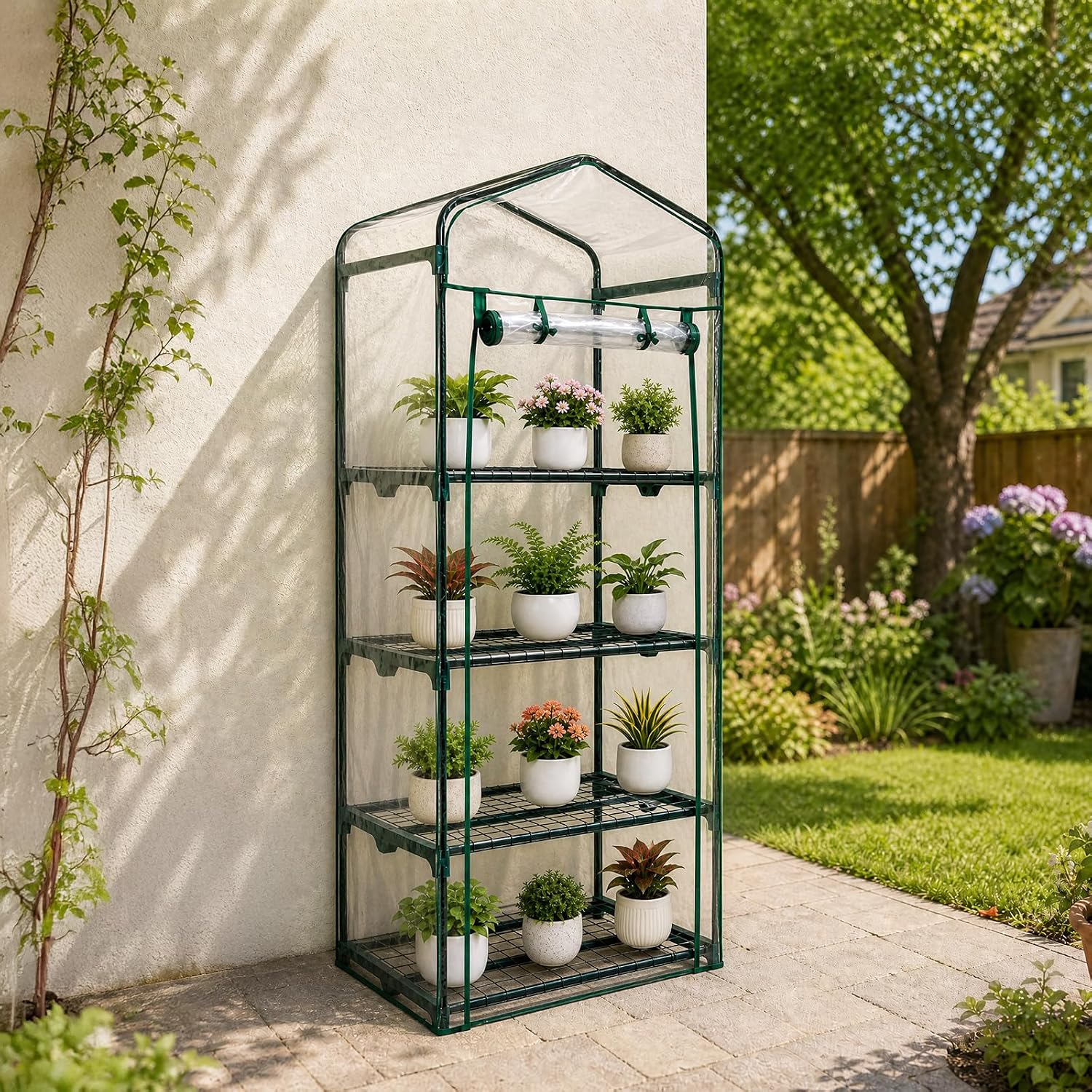
Aoodor 4-Tier Mini Greenhouse with PVC Cover and Base
| Indoor Outdoor Usage | Indoor, Outdoor |
|---|---|
| Special Features | Adjustable Shelves, Protective Cover |
| Cover Material | Polyvinyl Chloride (PVC) |
| Frame Material | Metal |
| Number of Doors | 1 |
This compact 4-tier mini greenhouse organizes seedlings and small potted plants in a narrow footprint for patios, balconies, sunrooms, or garage benches. It assembles from a powder-coated metal frame with four wire shelves that can be repositioned to accommodate seedlings, herb pots, or taller transplants. The PVC cover admits light while buffering temperature swings and helping keep out dust and small pests, and the full enclosed base contains soil and water runoff for cleaner indoor use. Because it is lightweight the unit is easy to move seasonally, and the narrow depth makes it a good choice where space is tight. Expect the materials and cover to perform well for hobby use but not match heavier-duty polycarbonate or welded steel greenhouses for long-term outdoor exposure in severe weather. Assembly is straightforward but the compact size limits plant quantity and the thin cover will need replacement sooner if left outdoors year-round.
Best for: Buyers who want a reliable, low-cost solution for starting seeds and sheltering small plants on a patio, balcony, or inside a sunroom and who prioritize predictable performance and easy seasonal use.
Less Ideal for: Gardeners who need a long-term outdoor structure for large plants or who require heavy-duty weather resistance should consider larger, sturdier greenhouses.
- Compact vertical footprint fits tight patios, balconies, and indoor spaces.
- Adjustable wire shelves let you tailor shelf height for seedlings, herbs, or small pots.
- PVC full-coverage cover creates a more stable microclimate and helps keep out dust and small pests.
- Enclosed base contains soil and water runoff for cleaner indoor or deck use.
- Lightweight metal frame makes seasonal repositioning and storage easy.
- PVC cover and lightweight frame are less durable than heavy-duty greenhouse materials for prolonged outdoor exposure.
- Narrow depth and overall mini size limit the number and size of plants you can grow at once.
Verdict: Aoodor's 4-tier mini greenhouse is a dependable, space-saving choice for hobby gardeners who want an affordable, easy-to-move seed-starting and plant-protection solution.
EAGLE PEAK 8×6 Pop-Up Walk-In Greenhouse

| Size | 8×6 |
|---|---|
| Cover Material | Polyethylene (PE) |
| Frame Material | Alloy Steel |
| Number of Doors | 1 |
| Number Of Vents | 2 |
The EAGLE PEAK 8×6 pop-up greenhouse is a walk-in shelter aimed at extending the growing season and protecting plants from frost and light weather. Its preassembled alloy-steel frame uses extra steel reinforcement and a patented PeakPush center lock so one person can set it up quickly without tools. The PE cover is water-resistant and UV-filtering to help retain warmth and humidity, while the roll-up zippered door and mesh vents let you manage airflow and pest access. It includes stakes and guy ropes for added stability and a ground skirt you can weight down for windy conditions. Practical benefits include ample interior space for shelving or multiple pots, straightforward seasonal use for seed starting or fall protection, and replaceable covers or frames if components wear. Important limitations are that pop-up greenhouses are not engineered for heavy snow loads or sustained high winds so you will need to clear snow and add extra anchoring or weights during storms, and the PE cover will age faster than rigid glazing in strong sun over many seasons.
Best for: Gardeners who want an easy-to-assemble, walk-in greenhouse to start seeds, protect pots, and extend the growing season with minimal setup time and hands-on maintenance.
Less Ideal for: People needing a permanent, year-round structure for heavy snow loads or high-wind exposed sites should choose a rigid-glazed or anchored greenhouse instead.
- One-person, tool-free setup with patented center lock for fast assembly.
- Sturdy alloy-steel frame reinforced for better stability than typical pop-ups.
- Water-resistant, UV-filtering PE cover that traps warmth for season extension.
- Zippered roll-up door and mesh vents for adjustable ventilation and pest control.
- Not built to withstand heavy snow or severe winds without additional reinforcement.
- PE cover will wear faster than rigid glazing and may need replacement after prolonged sun exposure.
Verdict: Buy this if you want a roomy, one-person pop-up greenhouse that balances easy setup with a stronger steel frame for reliable seasonal protection.
MELONFARM 32 x 32 x 63 Inch Grow Tent with Observation Window and Floor Tray

| Material | 600D canvas with reflective mylar lining |
|---|---|
| Features | Observation window and floor tray |
| Assembly | Tool-free installation |
This 32" x 32" x 63" grow tent provides an affordable, compact enclosure for hobby indoor growing. The 600D double-stitched canvas and waterproof reflective mylar lining make it light-proof and durable for repeated use, while the included floor tray and observation windows simplify monitoring and maintenance. It is typically used to contain grow lights, ventilation, and small pots or hydroponic setups in closets, basements, or balconies. Heavy-duty zippers and tool-free assembly let one person set it up quickly, and the design helps retain heat and light to maintain consistent conditions for seedlings, herbs, or a few mature plants. Limitations are its modest internal space, which restricts plant height and the number of plants, and the tent will require proper ventilation and odor control accessories for longer or scent-sensitive grows. For buyers prioritizing simplicity and reliability, it offers the core features needed for a small hobby greenhouse without complex extras.
Best for: Buyers who want a low-risk, easy-to-use indoor grow solution for seedlings, herbs, or a few small plants and value straightforward setup and durable construction.
Less Ideal for: Gardeners needing large-scale production, tall plants, or an integrated ventilation and filtration system should look for larger or more feature-rich grow tents.
- Durable 600D double-stitched canvas and waterproof reflective mylar for light control and longevity
- Tool-free, straightforward assembly suitable for first-time users
- Observation windows and a floor tray simplify plant monitoring and cleanup
- Compact footprint fits closets, balconies, and small indoor spaces
- Limited internal space restricts plant size and number
- No built-in ventilation or filtration components are included
Verdict: A sturdy, no‑frills compact grow tent that gives risk‑averse hobbyists a dependable, easy-to-assemble indoor greenhouse for small-scale growing.
Choosing the Right Budget Hobby Greenhouse: Key Factors to Consider
Frame Material and Strength
A greenhouse frame supports glazing and resists wind and snow loads. Aluminum frames are lightweight and corrosion-resistant, which helps on patios and decks. Steel frames can offer higher stiffness but need good coatings to prevent rust in humid environments.
Check connection points and fasteners. Welded joints or well-designed bracket systems reduce wobble. For small greenhouses you often install yourself, look for frames rated to handle local wind and light snow rather than heavy structural loads.
Glazing and Thermal Performance
Glazing affects how much light and heat the greenhouse retains. Single-layer polyethylene lets in plenty of light and is inexpensive, but it has poor insulating value and short service life. Twin-wall polycarbonate panels trap air and reduce heat loss while still diffusing light to reduce hot spots.
Consider whether you need winter protection or mainly protection from pests and rain. If you want to extend the season into colder months, prioritize glazing that improves nighttime temperature retention. Also think about UV coatings and scratch resistance for long-term clarity.
Ventilation and Climate Control
Good ventilation prevents overheating on sunny days and reduces humidity that fosters fungal problems. Passive vents, doors that open wide, and adjustable roof vents are all useful for managing temperature swings.
For small greenhouses, portable fans, thermostats, or automatic vent openers can add control without complex wiring. Consider how easy it is to add a small heater or fan and where electrical outlets or extension cords would be routed.
Assembly Complexity and Maintenance
A simpler kit with fewer parts and clear instructions saves time and reduces frustration. Single-person assembly is common for small models, but some pieces may require a helper for squaring the frame.
Regular maintenance matters: inspect seals and fasteners seasonally, clean glazing to maintain light transmission, and replace worn polyethylene covers. Think about whether you want a temporary seasonal shelter or a more permanent structure that requires occasional tightening and cleaning.
Footprint and Internal Layout
External dimensions only tell part of the story. Shelving, benches, and circulation space determine how many seedlings or potted plants you can actually manage. Taller greenhouses let you use vertical shelving and hang baskets for more productive use of floor area.
Measure where the greenhouse will sit, check for level ground, and consider access to doors. If you plan to use heat or ventilation equipment, leave space for them without crowding plants.
Durability Against Local Weather
Local climate affects what features matter most. Coastal gardeners need corrosion-resistant components. Areas with heavy seasonal wind benefit from ground-anchoring options. If occasional snow is likely, choose a shape and frame rated to shed snow and avoid flat roofs where accumulation can cause collapse.
Also evaluate how the greenhouse handles UV exposure and whether replacement panels or covers are readily available for the construction type you choose.
Best Locations and Site Preparation
Pick a spot with maximum winter sun exposure and easy access for daily tasks like watering and potting. Level ground is essential; a slight slope can be managed but may need a raised foundation or compacted base to keep the frame square.
Consider proximity to water and electricity if you plan to use a heater, light, or fan. If a permanent foundation is not possible, use a sturdy base frame or anchoring kit to prevent uplift in wind.
- East-west orientation gives longer midday sun in many climates.
- Leave space for doors to open fully and to move benches in and out.
- Avoid placing the greenhouse under large trees where falling branches and shade reduce light and create debris problems.
Season-Extension Strategies
For extending the growing season into chilly shoulder months, focus on thermal mass and insulation. Placing water barrels or stacked paving stones inside can store daytime heat and release it at night, smoothing temperature drops.
Use insulating row covers or internal thermal curtains on the coldest nights for added protection. Even small, low-power electric heaters combined with a thermostat can prevent frost loss for young seedlings.
- Add passive thermal mass for night buffering.
- Apply bubble wrap or supplemental insulation when extreme cold is expected.
- Open vents midday to avoid overheating, then close before nightfall to retain heat.
Managing Light and Plant Placement
Different plants have different light needs. Arrange shelving so shade-tolerant seedlings sit lower and brighter-loving plants get top bench space. Diffusing glazing reduces harsh midday sun and lowers the risk of leaf scorch.
Rotate plants regularly so all sides receive even light. Use reflective surfaces sparingly to boost light in deeper structures, but avoid concentrated hot spots that can stress foliage.
- Place seed trays on benches near lower shelves to protect from direct midday sun.
- Use grow lights only when natural daylength is insufficient, and keep fixtures off foliage to limit heat damage.
Pest and Disease Management in Small Greenhouses
Greenhouses concentrate humidity and plant density, which can increase pest and disease pressure if not managed. Start with clean soil and sterile trays, and inspect incoming plants to avoid introducing pests.
Maintain airflow, practice good sanitation, and remove diseased material quickly. Sticky traps and biological controls can be used inside a greenhouse with fewer side effects than broad insecticide use.
- Quarantine new plants for a week before adding them to the main space.
- Keep floors and benches swept to reduce hiding places for slugs and insects.
- Monitor humidity and water at the base of plants to keep foliage drier.
Upgrading Over Time
Start with a simple setup if you are new to greenhouse gardening, then plan upgrades as needs change. Better glazing, automated vents, and sturdier shelving are common incremental improvements.
Ensure the original frame can accept upgrades such as heavier panels or added anchors. Modular systems that allow swapping panels or adding vents make incremental upgrading easier and more economical.
- Plan access to electrical power for future fans or heaters.
- Choose compatible panel sizes to simplify replacement.
- Label hardware and keep spare fasteners for seasonal repairs.
How We Chose the Best Budget Hobby Greenhouse
We focused on real-world usefulness for small-scale gardening rather than ornamental features. Primary evaluation criteria were structural durability, thermal insulation and heat retention, ventilation and airflow control, ease of assembly and required tools, and footprint versus usable growing area. Durability covered frame material and fastener quality along with resistance to typical backyard weather. Thermal performance considered glazing type, insulating ability, and how well the structure moderates night and daytime temperature swings. Ventilation assessed window and door placement, adjustable vents, and options for passive or active airflow. Ease of assembly examined clarity of instructions, part count, and typical single- or two-person install time. Footprint versus usable growing area measured how much benching or shelving fits relative to the stated external dimensions. We excluded greenhouse kits intended for commercial production or multi-room hobbyists because they exceed the small-space scope. Also filtered out temporary plastic sheeting setups that lack basic frame stability. The remaining picks met minimum standards for weather resistance and practical usability for hobby gardeners focused on seedlings, potted plants, and season extension.
FAQ
Can a budget hobby greenhouse survive winter in cold climates?
Often it depends on the glazing and frame strength. Twin-wall polycarbonate and sturdy frames improve winter survival, while single-layer covers may need removal or extra support. Adding thermal mass and a low-power heater helps protect seedlings on freezing nights.
How much maintenance do small greenhouses need?
Usually seasonal checks suffice: tighten fasteners, clean glazing to maintain light, and inspect seals. Replace worn covers or damaged panels as needed and clear gutters or vents of debris to keep airflow steady.
Is electricity necessary for a hobby greenhouse?
Not always, but electricity expands options for thermostatically controlled heaters, fans, and grow lights. For many gardeners passive ventilation and thermal mass are enough during milder seasons.
What is the best base for a small greenhouse?
A level compacted gravel pad or concrete pavers provide stable support and good drainage. For decks or patios, a lightweight frame with protective pads can work, but ensure anchoring is secure to prevent wind uplift.
Are replacement panels or covers easy to find for budget greenhouses?
Availability varies by construction type. Standard-size polycarbonate panels and common polyethylene covers are widely available, but unique panel profiles may be harder to replace. Choose a common panel size if easy sourcing matters.
Final Verdict
For small-space gardeners a Budget Hobby Greenhouse is about balancing protection, ease of use, and durability. Prioritize frame stability and glazing that fits the seasons you expect to cover, then match ventilation and interior layout to how you garden. Simpler assemblies work well for seasonal use, while slightly heavier-duty kits give longer service if you plan year-round growing. Decide which tradeoffs matter most: lower upfront cost with periodic cover replacement, or a higher initial outlay for better insulation and wind resistance. Use the decision factors above to pick a structure that fits your site and gardening rhythm so you get reliable seed starting and season extension without unnecessary complexity.
