

Note: This article contains affiliate links. If you click on these links and make a purchase, I may earn a small commission at no extra cost to you. This helps support my research and content. Read my full affiliate disclosure here.
A properly chosen garden greenhouse changes how you garden by extending the season, protecting tender seedlings, and stabilizing temperature and humidity for more reliable yields. Whether you want a compact structure for a patio or a larger frame to overwinter plants, the right greenhouse balances light transmission, ventilation, and durability for real-world use. This guide covers seven shortlisted garden greenhouses that suit a range of backyard situations. Below you will find the practical criteria we used, what matters when you install and maintain a greenhouse, and advice to match a greenhouse to your space and goals.
Top Picks at a Glance
| Best Overall The best all-around choice for most situations | EAGLE PEAK 6×4 Pop-Up Walk-In Greenhouse |  |
| Best Quality Built to a higher standard if you want something more solid | Modern Shade 6.5' x 10' Cedar Wood Greenhouse with Polycarbonate Panels and Built-in Faucet |  |
| Best Value The sweet spot between price and what you get | VEVOR Walk-In Tunnel Greenhouse, 14.6 x 6.4 x 6.3 ft, Galvanized Steel Frame |  |
| Best Budget The cheapest option that still gets the job done reliably | Bamworld 3-Tier Wooden Mini Greenhouse with Clear PE Cover |  |
| Highest Rated A top-rated pick with lots of positive feedback | Yorkgargen Garden Dome Tent 12.5 x 7.2 ft (TPU) |  |
| Most Popular A crowd favorite that many people choose with confidence | EAGLE PEAK 8×6 Pop-Up Walk-In Greenhouse |  |
| Best Seller A high-volume bestseller chosen again and again | EAGLE PEAK 8×6 Pop-Up Walk-In Greenhouse (Clear/White) |  |
EAGLE PEAK 6×4 Pop-Up Walk-In Greenhouse

| Cover Material | Polyethylene (PE) |
|---|---|
| Frame Material | Alloy Steel |
| Indoor Outdoor Usage | Outdoor |
| Number Of Vents | 2 |
The EAGLE PEAK 6×4 pop-up walk-in greenhouse is a compact, easy-to-use shelter for extending the growing season and protecting plants from cold, wind, and pests. The frame arrives largely pre-assembled and uses a patented PeakPush center lock so one person can raise the structure quickly without tools. Its polyethylene cover is plant-safe, UV-resistant, and reinforced at stress points to hold up to routine outdoor use. Practical touches include a wide zippered roll-up door for working access, two mesh windows for ventilation, and tie-down ropes and stakes for added stability. Because it is a pop-up tent-style greenhouse with a lighter frame than permanent structures, it is best suited to seasonal use, sheltered yards, or as a staging area for seedlings and potted plants rather than long-term heavy-duty installations. Expect straightforward setup and good humidity control for overwintering and starting seedlings, while anchoring and occasional retensioning will be necessary in very windy conditions.
Best for: Gardeners who want a quick, no-fuss greenhouse to start seedlings, overwinter plants, or organize potted plants in a small backyard or patio and value easy single-person setup.
Less Ideal for: People seeking a permanent, heavy-duty greenhouse for year-round intensive production or for exposed, high-wind sites should consider sturdier framed or rigid-panel alternatives.
- One-person PeakPush center lock enables fast, tool-free setup
- PE cover is UV-resistant and scrim reinforced for plant-safe light diffusion
- Pre-assembled alloy steel frame for quicker assembly and improved rigidity
- Roll-up zippered door and mesh windows give easy access and ventilation
- Tent-style frame is lighter than permanent greenhouses and less suited to extreme weather
- Limited interior space compared with larger walk-in greenhouse models
Verdict: If you want a compact, easy-to-deploy greenhouse for seedlings and seasonal protection that one person can set up quickly, this model delivers.
Modern Shade 6.5' x 10' Cedar Wood Greenhouse with Polycarbonate Panels and Built-in Faucet

| Cover Material | Polycarbonate (PC) |
|---|---|
| Frame Material | Wood |
| Number Of Vents | 4 |
| Indoor Outdoor Usage | Outdoor |
This Modern Shade cedar wood greenhouse is designed as a durable, walk-in workspace for homeowners who want a reliable, year-round structure. The sturdy cedar frame and 6mm polycarbonate roof panels give solid insulation and light transmission while an architectural overhang helps keep panels cleaner and reduces splashback at the doorway. The unit includes four vents with roof windows operated by a pull rod, a symmetrical fan arrangement for cross circulation, and built-in shelving and workspace that make potting and storage convenient. A factory-installed faucet kit with internal piping and a 1/2" brass faucet lets you hook up a standard garden hose directly for easy watering. Practical extras include USB, USB-C and two standard outlets for charging tools or lights. Expect a substantial assembly effort typical of wood greenhouses and ongoing maintenance to preserve cedar outdoors, but the result is a roomy, functional greenhouse that prioritizes climate control and organized work space for serious home gardening.
Best for: Homeowners who want a long-lasting, walk-in greenhouse as a primary potting and propagation workspace and who are prepared to assemble and maintain a wooden structure.
Less Ideal for: Gardeners needing a lightweight, temporary, or easily relocated greenhouse or those who prefer a no-maintenance plastic frame solution.
- Solid cedar frame for durability and natural resistance to rot
- 6mm polycarbonate panels for improved thermal retention and plant protection
- Integrated faucet kit with internal piping and standard hose interface for convenient watering
- Built-in shelving and workspace that simplify organization and potting tasks
- Multiple vents and fan layout for balanced ventilation and climate control
- Requires significant assembly and periodic cedar maintenance to retain longevity
- Larger footprint and wood construction make it less portable than metal or plastic hobby greenhouses
Verdict: Choose this cedar wood greenhouse if you want a roomy, well-ventilated, and professionally equipped home greenhouse built for long-term dependable use.
VEVOR Walk-In Tunnel Greenhouse, 14.6 x 6.4 x 6.3 ft, Galvanized Steel Frame

| Cover Material | Polyethylene (PE) |
|---|---|
| Frame Material | Alloy Steel |
| Number Of Vents | 8 |
| Closure Type | Zipper |
This VEVOR walk-in tunnel greenhouse is a sizeable, value-oriented hoop house built from galvanized steel pipes and a heavy-duty PE cover to protect plants from weather and extend the season. It assembles into a walk-in tunnel with a roll-up zippered door and eight mesh windows that use Velcro closures to balance ventilation with insect exclusion. The reinforced U-stakes, diagonal frame braces, and double-stitched seams improve stability and tear resistance compared with thinner hobby covers. Typical uses are starting seedlings, protecting tender vegetables and herbs, or fitting multiple shelving units for small-scale vegetable production. Expect practical benefits: easy access for watering and pruning, improved warmth in cooler months, and airflow control to reduce mildew. Limitations are typical for this price point: the thin-walled 0.02-inch tubing and PE cover will not perform like rigid polycarbonate or permanent greenhouses in very high winds or heavy snow, and periodic retightening and anchoring are required to maintain structure and cover tension.
Best for: Gardeners who want an inexpensive, easy-access greenhouse to start seedlings, protect vegetables, and extend the season without investing in a permanent structure.
Less Ideal for: People seeking a permanent, all-season greenhouse for heavy snow loads or commercial-scale production should consider rigid-frame polycarbonate or metal greenhouses instead.
- Large walk-in interior for easy access and multiple shelving options
- Galvanized steel frame with diagonal braces and U-stakes for improved stability
- Heavy-duty 140 g/m² PE cover with double-stitched seams for better tear resistance
- Eight mesh windows plus a roll-up zippered door for adjustable ventilation and pest control
- PE cover and 0.02-inch wall thickness tubing are vulnerable in prolonged extreme weather compared with rigid greenhouse materials
Verdict: A roomy, low-cost walk-in tunnel greenhouse that gives budget-focused gardeners a practical way to extend the growing season and protect plants.
Bamworld 3-Tier Wooden Mini Greenhouse with Clear PE Cover
| Number of Doors | 1 |
|---|---|
| Indoor Outdoor Usage | Outdoor |
| Cover Material | Polyethylene (PE) |
| Frame Material | Wood |
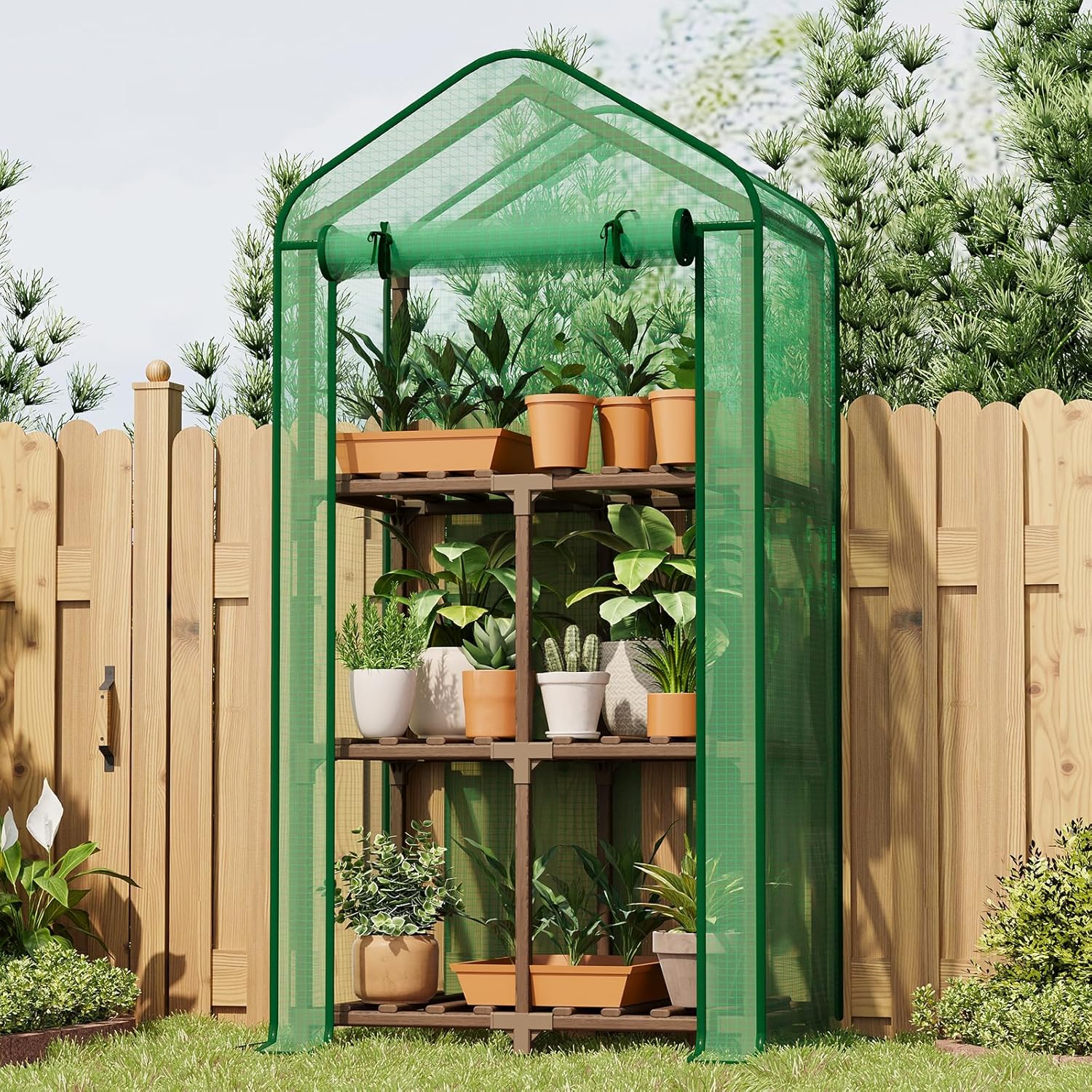
This Bamworld 3-tier mini greenhouse is designed to give homeowners an inexpensive, portable shelter for seedlings, herbs, and small potted plants. The eucalyptus wood push-fit frame snaps together without tools and supports three shelves with about 15.8 inches of clearance each, so standard nursery pots and seed trays fit comfortably. A 75% clear PE cover traps heat and blocks light frost while still transmitting most sunlight, and the roll-up zipper door makes watering and ventilation easy. It is light enough to move between a sunroom, balcony, or covered patio and can extend the growing season by several weeks for overwintering tender plants. Important limitations are its light PE cover and wood frame, which are intended for sheltered locations rather than full exposure to heavy rain or sustained strong winds, and the product does not include ground anchors. For a homeowner on a budget who wants a simple, quick-to-assemble growing shelter, this greenhouse delivers straightforward protection and convenience, but you should plan to anchor or shelter it in windy conditions and expect shorter-term outdoor durability compared with heavier-duty metal and PVC options.
Best for: Homeowners who want an affordable, easy-to-assemble mini greenhouse to start seeds, overwinter herbs, or protect small plants on a sheltered balcony, porch, or sunroom.
Less Ideal for: Gardeners who need a heavy-duty, long-term outdoor greenhouse for exposed sites or larger plants should choose a sturdier metal or polycarbonate model instead.
- Tool-free push-fit wooden frame for quick 10–20 minute assembly
- Three shelves with standard nursery pot clearance for seed starting and small plants
- Clear PE cover transmits 75% of sunlight while trapping heat for frost protection
- Lightweight and portable for use on balconies, porches, or moving indoors
- PE cover and wooden frame are not suited for sustained heavy rain or strong winds
- No included anchors or ground hardware for securing in exposed locations
Verdict: An inexpensive, easy-to-assemble mini greenhouse that gives budget-conscious homeowners a simple way to start seeds and protect small plants in sheltered outdoor or indoor spots.
Yorkgargen Garden Dome Tent 12.5 x 7.2 ft (TPU)

| Floor Area | 86.4 square_feet |
|---|---|
| Top Material Type | TPU |
| Frame Material | Plastic |
| Water Resistance Level | Waterproof |
| Capacity | 4–8 People |
This Yorkgargen dome tent is a freestanding clear TPU shelter built to serve as a backyard greenhouse, dining bubble, or private outdoor room for 4 to 8 people. The geodesic ABS frame snaps together from modular pipes for tool‑free assembly; the manufacturer says two adults can complete setup in roughly 45 minutes. The transparent TPU panels give a 360° view and let in light for plants while providing waterproof protection and some insulation for cooler weather. Included vent windows and a sizeable floor area make it suitable for potting benches, seed trays, or seating and small gatherings. The structure is intended for year‑round light use, resisting rain and light snow, but longevity is limited by material and exposure — expected service life is two to four years with normal care. Practical considerations: it needs space and anchoring, and heavy snow or extreme winds will shorten life and require dismantling. For plant use you may want supplemental shade in hot climates and a ventilation plan for summer heat.
Best for: A buyer who prioritizes a reliable, easy-to-assemble seasonal greenhouse or sheltered outdoor room for casual plant growing and entertaining will appreciate this dome.
Less Ideal for: People needing a permanent, heavy‑duty greenhouse for commercial production or those in exposed, high‑wind climates should consider sturdier, fixed-frame options.
- Transparent TPU panels provide full natural light for seedlings and plant displays
- ABS geodesic frame with modular connectors for relatively quick, tool‑free assembly
- Waterproof construction suitable for rain and light snow use
- Spacious interior supports potting setups, seating, or small events
- Not intended for prolonged exposure to extreme wind or heavy snow without disassembly
- Expected lifespan is modest (2–4 years) under regular use compared with rigid greenhouses
Verdict: Choose this dome if you want a dependable, easy‑to‑assemble year‑round backyard greenhouse or social bubble that balances light transmission with weather resistance.
EAGLE PEAK 8×6 Pop-Up Walk-In Greenhouse

| Size | 8×6 |
|---|---|
| Cover Material | Polyethylene (PE) |
| Frame Material | Alloy Steel |
| Number of Doors | 1 |
| Number Of Vents | 2 |
The EAGLE PEAK 8×6 pop-up greenhouse is a walk-in shelter aimed at extending the growing season and protecting plants from frost and light weather. Its preassembled alloy-steel frame uses extra steel reinforcement and a patented PeakPush center lock so one person can set it up quickly without tools. The PE cover is water-resistant and UV-filtering to help retain warmth and humidity, while the roll-up zippered door and mesh vents let you manage airflow and pest access. It includes stakes and guy ropes for added stability and a ground skirt you can weight down for windy conditions. Practical benefits include ample interior space for shelving or multiple pots, straightforward seasonal use for seed starting or fall protection, and replaceable covers or frames if components wear. Important limitations are that pop-up greenhouses are not engineered for heavy snow loads or sustained high winds so you will need to clear snow and add extra anchoring or weights during storms, and the PE cover will age faster than rigid glazing in strong sun over many seasons.
Best for: Gardeners who want an easy-to-assemble, walk-in greenhouse to start seeds, protect pots, and extend the growing season with minimal setup time and hands-on maintenance.
Less Ideal for: People needing a permanent, year-round structure for heavy snow loads or high-wind exposed sites should choose a rigid-glazed or anchored greenhouse instead.
- One-person, tool-free setup with patented center lock for fast assembly.
- Sturdy alloy-steel frame reinforced for better stability than typical pop-ups.
- Water-resistant, UV-filtering PE cover that traps warmth for season extension.
- Zippered roll-up door and mesh vents for adjustable ventilation and pest control.
- Not built to withstand heavy snow or severe winds without additional reinforcement.
- PE cover will wear faster than rigid glazing and may need replacement after prolonged sun exposure.
Verdict: Buy this if you want a roomy, one-person pop-up greenhouse that balances easy setup with a stronger steel frame for reliable seasonal protection.
EAGLE PEAK 8×6 Pop-Up Walk-In Greenhouse (Clear/White)

| Size | 8×6 |
|---|---|
| Cover Material | Polyethylene (PE) |
| Frame Material | Alloy Steel |
| Number of Doors | 2 |
| Number Of Vents | 2 |
The EAGLE PEAK 8×6 pop-up greenhouse is a walk-in shelter that speeds seed starting and protects plants through cool weather. Its preassembled alloy-steel frame uses a patented PeakPush center lock so one person can raise the structure quickly without tools, and the heavier steel frame offers greater stability than typical lightweight pop-ups. The polyethylene cover is water-resistant and UV-treated to retain warmth and humidity while filtering sunlight, and two roll-up zippered doors plus mesh windows let you manage ventilation. It includes stakes and guy ropes for added security and can be reinforced with weights or snow clearing in bad weather. Expect straightforward use for starting seedlings, overwintering potted plants, and extending the growing season; shelving accessories can increase usable space. Limitations are typical of pop-up greenhouses: it is not a rigid permanent structure, needs anchoring in high wind or snow, and the PE cover will eventually need replacement with prolonged sun exposure.
Best for: Buyers who want a dependable, easy-to-assemble greenhouse to start seedlings and extend the growing season without hiring help, and who prioritize simple setup and reliable customer support.
Less Ideal for: Gardeners seeking a permanent, heavy-duty polycarbonate or glass greenhouse for year-round structural resistance or those needing large commercial-scale capacity.
- One-person PeakPush center lock enables fast, tool-free setup
- Alloy steel frame is heavier and more stable than many pop-up models
- UV-resistant PE cover retains warmth and humidity for season extension
- Roll-up zippered doors and mesh windows provide adjustable ventilation
- Includes stakes and guy ropes for anchoring in light to moderate wind
- Not designed as a permanent rigid structure and requires reinforcement for strong wind or heavy snow
- PE cover will degrade over time with extended sun exposure
Verdict: If you want a reliable, one-person setup greenhouse to extend your growing season with better-than-average frame stability, this pop-up is an excellent choice.
Choosing the Right Garden Greenhouse: Key Factors to Consider
Frame Material and Rigidity
The frame determines how well a greenhouse stands up to wind, snow, and everyday handling. Metal frames such as aluminum offer a good strength-to-weight ratio and resist rot, while steel frames deliver higher load capacity but may require corrosion protection. Lightweight plastic or PVC frames can be economical but are more prone to sagging or failure under heavy loads.
Consider how the frame connects at joints and whether replacement parts are available. Rigid frames support heavier glazing and shelving, and they make installing gutters, shelving, or hanging racks easier. For year-round use in temperate climates, prioritize sturdier materials and examine the warranty or documented lifetime.
Glazing Type and Light Transmission
Glazing controls how much sunlight reaches plants and how well heat is retained. Polycarbonate panels provide diffuse light, better impact resistance, and some insulation compared with single-layer polyethylene film. Twin-wall polycarbonate adds thermal buffering that helps prevent night-time radiational heat loss.
Clear glass transmits light very well but is heavier and more fragile, and it offers little insulation unless double glazed. Plastic films are lightweight and cheap, but they typically need replacement every few seasons. Think about the plants you plan to grow and whether light diffusion or maximum transmission matters more than thermal performance.
Ventilation and Climate Control Options
Effective ventilation prevents overheating on sunny days and controls humidity that can otherwise encourage disease. Look for models with adjustable roof vents, louvered side vents, and door placement that encourages cross-breezes. Passive vents alone work for many small greenhouses, but active solutions such as automatic vent openers or provisions for mounting fans allow better control in hot weather.
Also consider shading options like shade cloth attachments or external covers. Managing airflow will affect how often you need to water, how seedlings harden off, and whether certain crops will thrive during warmer months.
Size, Layout, and Usable Growing Area
A greenhouse's listed footprint does not always reflect how much workable space you have. Benching, shelving, and aisles determine plant capacity and accessibility. Narrow structures may fit tight yards but limit staging for pots and work space. Taller greenhouses let you grow vine crops or larger ornamentals and create vertical staging opportunities.
Plan for future needs: extra propagation trays, a potting bench, or overwintering space. Consider door width for moving wheelbarrows or larger containers. Efficient layout reduces bending and moving plants in and out on busy days.
Ease of Assembly and Maintenance
A greenhouse you can assemble correctly and maintain will last far longer. Clear assembly instructions, pre-drilled parts, and modular sections reduce frustration and misaligned pieces. Maintenance includes cleaning glazing to preserve light, replacing weather seals, and tightening fasteners seasonally.
Check how parts are joined and whether common replacement components like clips, screws, or door hardware are standard sizes. Simpler designs with fewer custom parts are easier to service and repair over time.
Anchoring, Stability, and Weather Resistance
How a greenhouse anchors to the ground affects its safety during storms and strong winds. Anchoring options include ground stakes, concrete footings, perimeter bases, or integrated base rails. Consider the local wind load and whether additional bracing is necessary.
Snow shedding and roof angle matter in colder climates; flatter roofs require more frequent snow removal. Also check seals at doors and vents to prevent drafts and pest entry. A greenhouse that resists weather extremes reduces plant stress and the need for emergency repairs.
Siting and Foundation Basics
Choose a location with maximum winter sun exposure and good drainage. Avoid low spots where cold air pools and moisture accumulates. Proximity to a water source and level ground reduces daily effort.
Decide on a foundation that matches the greenhouse size and permanence. Simple ground anchors work for small poly tunnels, while timber or concrete bases improve stability for larger structures and simplify shelving installation.
- Orient the long axis north-south in cooler climates for even light distribution
- Allow room around doors for unobstructed access and maintenance
- Maintain a slight slope or drain to prevent standing water under the frame
Temperature Management Through the Year
Managing temperature means balancing heat gain on sunny days with retaining enough warmth during cold nights. Use passive solar gains in winter by positioning thermal mass such as water barrels or stone to moderate swings.
In summer, ventilation and shading are the primary tools. Automatic vent openers react to heat and reduce the chance of human error. Combine vents with fans where airflow is otherwise restricted.
- Use thermal mass for night temperature buffering
- Install adjustable vents for seasonal control
- Add removable shade cloth for hot spells
Planting and Workflow Inside a Greenhouse
Plan bench heights and aisle widths to match how you work. Raised benches reduce back strain and make watering and potting easier. Group plants by water and light needs to simplify daily care.
Keep a small tool station and potting area inside or adjacent to the greenhouse so routine tasks are quick. Regular sanitation and monitoring for pests and disease are easier when space is organized.
- Designate areas for propagation, active growth, and overwintering
- Use mobile benches or shelving to adapt space seasonally
- Keep commonly used tools within arm's reach
Seasonal Plant Schedules and Crop Planning
A greenhouse lets you start seedlings earlier and extend harvests later into fall. Schedule sowing dates backward from your last frost to know when to begin propagation under cover. Use heat-tolerant staging for summer crops and move frost-sensitive plants inside before cold snaps.
Rotate crops and clean bench surfaces between seasons to reduce pests and disease carryover. Consider succession planting to make the most of limited space through spring and fall.
- Stagger sowing dates to keep a steady supply of transplants
- Plan overwintering for tender perennials or potted shrubs
- Sanitize flats and trays between crops to prevent disease
Maintenance Checklist for Longevity
Regular maintenance preserves light transmission and structural integrity. Clean glazing each season, check and re-tension film covers, and inspect seals around doors and vents. Tighten loose fasteners and replace worn clips promptly.
Establish a seasonal checklist that includes vent hinge lubrication, anchor inspections after storms, and a winter snow plan when relevant. Keeping spare parts on hand for common fittings reduces downtime.
- Clean glazing and remove algae or grime twice a year
- Inspect anchors and base rails after high winds
- Keep a small stock of fasteners, clips, and seal strips
How We Chose the Best Garden Greenhouse
We shortlisted models that deliver practical, garden-focused performance rather than niche features that look good on paper. Selection prioritized build materials and structural durability for common weather conditions, ventilation and airflow options for summer and seedling stages, and glazing that provides good light with acceptable heat retention. Size and usable growing area were assessed so you can match a greenhouse to available space and the scale of your vegetable or ornamental projects. Ease of assembly and access for regular care were factored in because gardeners use greenhouses season after season; parts that are replaceable and intuitive to maintain scored higher. Stability in wind and snow conditions was considered, with attention to anchoring methods and frame strength. We excluded lightweight, short-lived pop-up covers and experimental DIY kits that lack documented durability. The final picks reflect greenhouses that balance everyday gardening needs: protection for plants, workable microclimate control, and straightforward upkeep. Scoring emphasized measurable dimensions like frame material, glazing type, ventilation options, assembly clarity, and anchoring systems.
FAQ
How much sun does a garden greenhouse need?
Most greenhouses perform best with full sun for several hours daily, especially in spring and winter. Partial shade can work for shade-tolerant crops, but reduced sunlight affects seedling vigor and flowering crops.
Can I use a greenhouse year-round in cold climates?
You can use a greenhouse year-round, but heating, insulation, and snow management become important. Twin-wall glazing, windproof anchoring, and supplemental heat or thermal mass help maintain workable conditions through winter.
What ventilation do I really need?
At minimum, operable roof and side vents are recommended so hot air can escape and cooler air can enter. In warmer seasons or for larger greenhouses, combine passive vents with fans or automatic openers for consistent temperature control.
Is glass glazing worth it for a backyard greenhouse?
Glass offers excellent light transmission and a classic look, but it is heavier and more fragile than plastic options. For many gardeners, polycarbonate offers a practical middle ground with better insulation and impact resistance.
How should I anchor a greenhouse on uneven ground?
On uneven ground, create a level base using compacted gravel, raised sleepers, or a poured perimeter footing. Secure the greenhouse to a continuous base rail or concrete anchors to maintain alignment and resist uplift.
How do I prevent pests inside a greenhouse?
Prevent pests by inspecting plants before bringing them inside, keeping doors closed when possible, and using fine-mesh vent screens where needed. Regular sanitation, removing plant debris, and rotating crops reduce pest habitat and pressure.
Final Verdict
A garden greenhouse is a long-term investment in greater control over your growing season. Prioritize frame strength, appropriate glazing, and ventilation to match your climate and the crops you want to raise. Size and layout should support your regular workflow so routine maintenance and harvesting are efficient. Balance tradeoffs: stronger materials and insulated glazing increase durability and seasonal range but require more robust foundations. Choose the greenhouse that fits your site, planned use, and willingness to maintain it so you can grow with confidence year after year.
